
Stone Floor Polishing & Restoration
Travertine, marble and limestone honed and polished with diamond pads. Slate, flagstone and granite deep cleaned and sealed. Homes, hotels and businesses across Cheltenham and the Cotswolds.


Travertine, marble and limestone
Scratches, dull traffic paths and light etching taken out with diamond pads, then polished back to the finish you want.
- Wet diamond honing – no dust
- Matt, satin or natural shine
- Test area before the whole floor

Flagstone, slate and granite
Dirt lifted out of the pores and grout, old patchy coatings stripped, and the natural colour brought back.
- Machine scrub and extraction
- Old sealers and coatings stripped
- Flagstone cleaning and sealing

Sealing and protection
The sealer is chosen for the stone and the room – kitchen, hallway, bathroom or conservatory – to protect against stains and water.
- Impregnators, colour enhancers and topical sealers
- Finish chosen with you
- Simple aftercare advice
Real results in Cheltenham
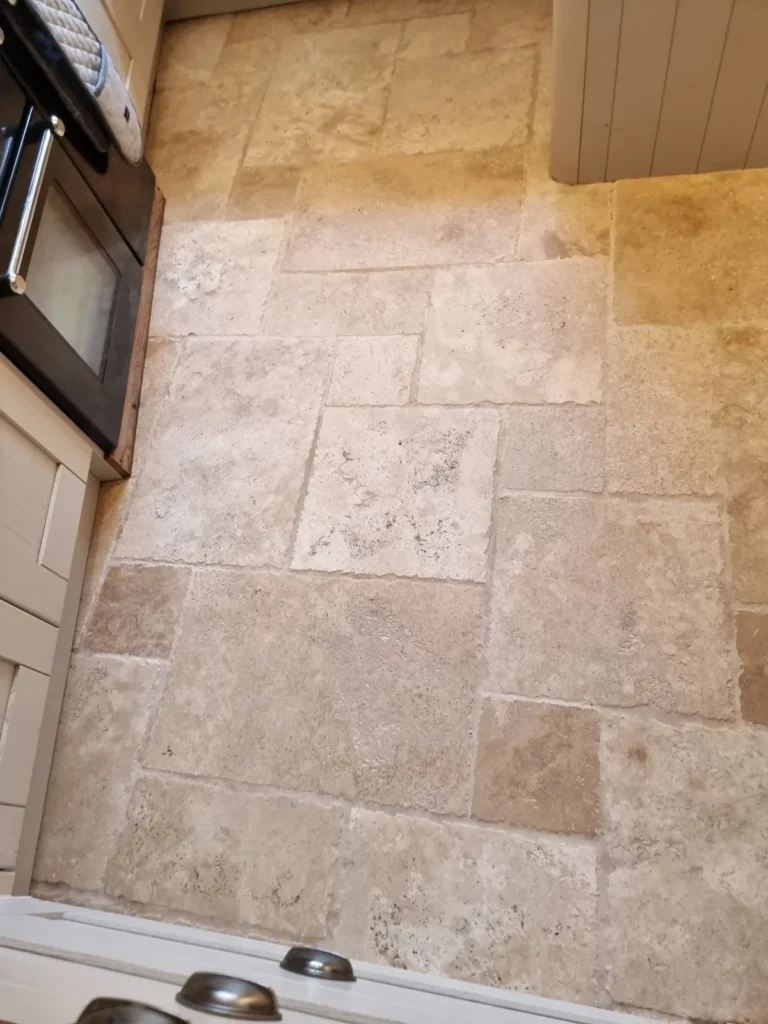
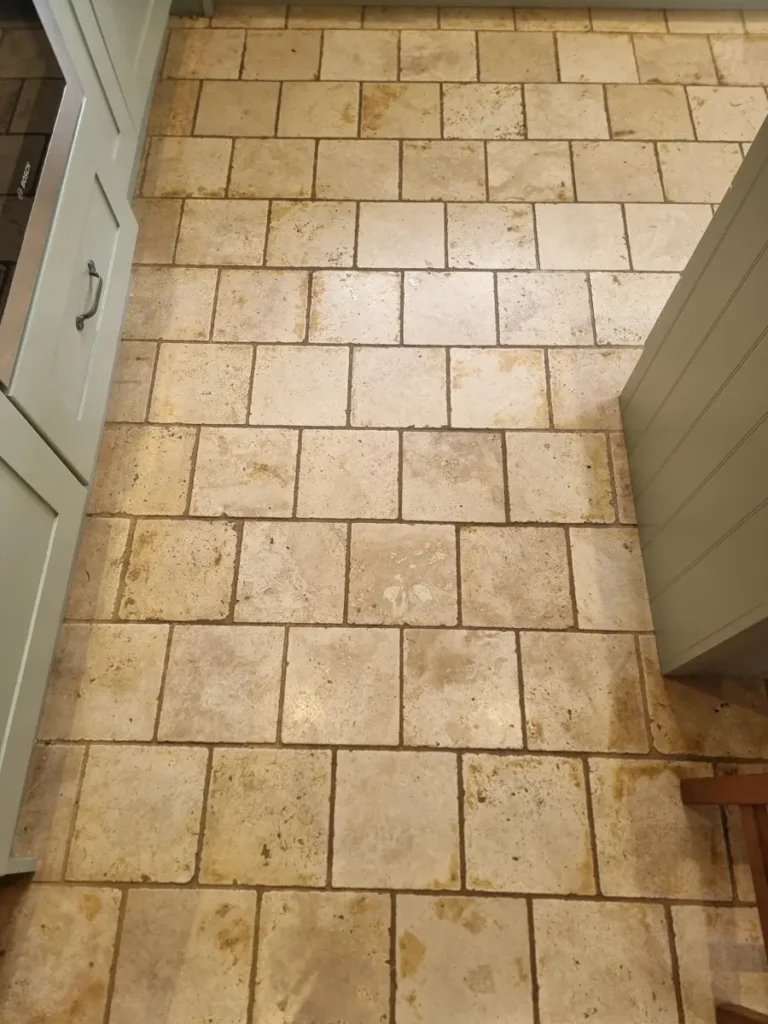
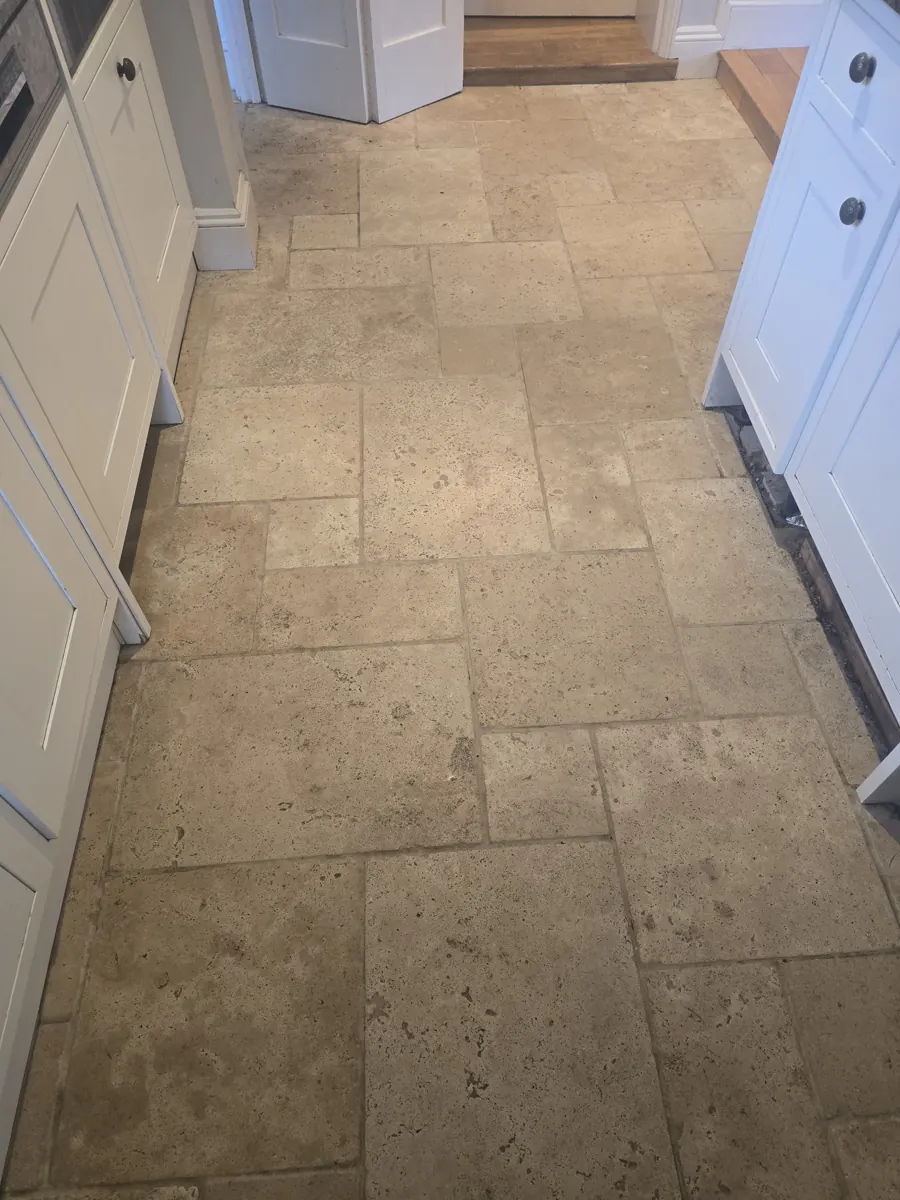
A limestone floor honed and polished, and a tumbled travertine kitchen deep cleaned and sealed – before and after.


How we restore a stone floor
Survey and test area
We look at the stone, the old sealer and the wear, then try the method on a small test area so you can see the result first.
Protect and deep clean
Units, skirting and walls are covered. The stone is machine scrubbed, the grout lines cleaned and old patchy coatings stripped where needed.
Diamond honing
On travertine, marble and limestone we work through diamond pads from coarse to fine, with water – so there is no dust in your home.
Polish to your finish
The final pads bring the floor up to the finish you choose: matt, satin or a natural shine.
Seal and aftercare
A sealer chosen for the stone and the room protects against stains. You get simple advice on how to keep it looking that way.
Always a test area first
Every stone behaves a little differently, so we never guess. We try the method on a small patch, show you the difference, and only then do the whole floor. Below: a test tile with the grout back to its original colour, and a test clean showing before and after side by side.



Why natural stone loses its shine
Travertine, marble and limestone are soft, porous stones. Grit carried in on shoes acts like sandpaper, so the busiest paths – by the back door, in front of the sink, through the hallway – turn dull first. Acidic cleaners, wine and fruit juice etch the surface, and old sealers wear unevenly and trap dirt. Mopping alone cannot fix that, because the damage is in the surface itself.
Diamond honing removes a very thin layer of the worn surface and makes it even again; polishing then closes it up and brings back the reflection. Harder or textured stones like slate, flagstone and granite are different: they are not polished, but a proper deep clean and the right sealer bring back their colour and make them much easier to keep clean.
Read a full example in our travertine floor case study from Charlton Kings.
Why choose us for stone
More of our stone floor work
Limestone and travertine floors honed and polished in Cheltenham, a slate kitchen floor deep cleaned and sealed in Winchcombe, and a tumbled travertine kitchen cleaned and sealed. Tap a photo to see it bigger.




What our customers say


Lovely guy, thoroughly recommend. Arek, worked really hard on my very dirty, deep pile, wool rug. Thank you!

I recently hired AG Carpet Specialist to breathe new life into my dull and heavily soiled carpets, and I couldn't be happier with the results. From start to finish, this company surpassed all my expectations and provided exceptional service. Highly recommended.


This is now my go to guy for carpet and upholstery cleaning. From the first enquiry I made over the phone, he was honest, warm and polite, and gave me great confidence that I would get a fantastic service, which I did. I was so pleased with the results and will recommend this company to everyone.

Very professional and obliging. Knows what he is doing and works hard to get the job done at the right price.

Arek "Scotchgarded " our newly renovated sofa and armchairs - so there was no cleaning required. Nevertheless, he agreed to do this minor job and charged a reasonable fee for it. Arek worked carefully and was polite and considerate. I would highly recommend his firm. (I will endeavour to send a PS once the first spilling accident has inevitably occurred. )

From the outset, Arek was responsive and professional in all communication. I approached 3 separate companies for quotes and Arek by far was the most engaging and informative. Arek gave a quote that was great value in comparison to other comparable companies. He arrived on time and did a fantastic job on our carpets whilst having a very friendly and trust worthy persona. We are very happy with the results and would definitely recommend and use his services again.

Great service, great value, perfect job, would definitely recommend and will use again in the future! AG Carpet Specialist was also friendly and super quick and was very thorough and passionate about his job.

Perfect from 1st call to a completed job. On time polite and 100% professional. Couldn't recommend him enough.Coming back soon to do some more work. Carl

Needed a quick clean on a very grubby carpet- everything from initial contact to visit was professional, responsive and great value. Carpet came up beautifully and I was very impressed with the removal of the footfall muck at the door. Well done, good value and excellent results

Had my sofa cleaned that had been smoke damaged, came out lovely ☺️ Also all carpets in my new house, all looks great, great job 👍 very relatable defo recommend.

Great job for a great price, very professional and friendly. Would recommend to everyone. Cleaned the carpets perfectly.
Questions about stone floors
Which stones can you polish?
Travertine, marble and limestone can be honed and polished. Slate, flagstone and granite are deep cleaned and sealed to bring back their colour – they are not polished.
Can you remove scratches and dull patches?
Light scratches, dull traffic paths and etching can usually be honed out. Very deep scratches or chips can be improved, but not always removed completely. We tell you honestly before we start.
Is it messy or dusty?
No. We hone with water, so there is no dust, and everything around the work area is protected.
How long does it take?
Usually a few hours, up to a full day or more for large areas.
When can we walk on the floor?
It depends on the finish. After polishing or an impregnating sealer you can often walk on it straight away. If a topical sealer is applied, allow about 3–4 hours. We will tell you on the day.
How should I clean the floor afterwards?
Use a pH-neutral cleaner made for natural stone. Avoid vinegar, bleach and acidic or limescale cleaners – they can etch marble, limestone and travertine and wear the sealer away.
How much does it cost?
It depends on the stone, its condition, the size of the area and what it needs. Send a few photos or a short video on WhatsApp and we will give you a free quote. We can also come and have a look.
Where we work
Stone floor polishing and restoration across Cheltenham, Charlton Kings, Winchcombe, Bourton-on-the-Water, Broadway, Cirencester, Stroud and the rest of the Cotswolds. See also stone floor cleaning and tile and grout cleaning.
Get a free stone floor quote
Send a few photos or a short video of your floor on WhatsApp to 07377 693355, email info@agcarpetspecialist.co.uk, or use the form below. We can also come and have a look.