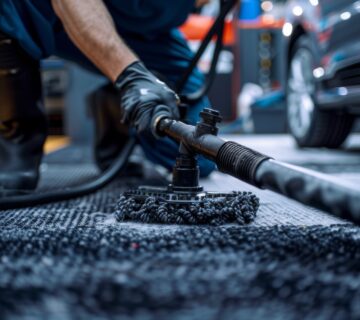
Your Guide to Flawless Carpets: More Than Just a Weekly Vacuum
For homeowners across Cheltenham, Gloucester, and Stroud, maintaining the beauty and longevity of carpets is a constant priority. Between daily foot traffic, accidental spills, and the beloved chaos brought by pets and children, carpets endure a great deal. While regular vacuuming is a fundamental first step, true carpet care involves a deeper understanding of maintenance, stain treatment, and knowing when to call in professionals. These are not just superficial suggestions; they are proven strategies that protect your investment, improve your home's air quality, and keep your floors looking immaculate for years to come.
This comprehensive guide delivers essential carpet cleaning tips, blending eco-friendly home remedies with expert-backed advice specifically for local households and businesses. We will explore everything from immediate spill response tactics using household staples to the long-term benefits of scheduled professional deep cleaning. You will learn the science behind effective stain removal, the importance of proper drying, and simple methods for eliminating persistent odours. Let's delve into the practical techniques that will transform your carpet care routine, giving you the confidence and knowledge to tackle any challenge effectively.
1. Mastering the Basics: How to Vacuum Properly for Deep-Down Cleanliness
The absolute foundation of effective carpet maintenance is regular and correct vacuuming. It's the first line of defence against the daily onslaught of dirt, dust, pet dander, and other allergens that settle in your Cheltenham home. Simply running the machine quickly over the surface is not enough; proper technique is crucial for extracting abrasive grit before it grinds down and becomes permanently embedded within the carpet fibres. A methodical approach not only preserves the colour and feel of your carpet but also significantly extends its lifespan and improves your home's indoor air quality.
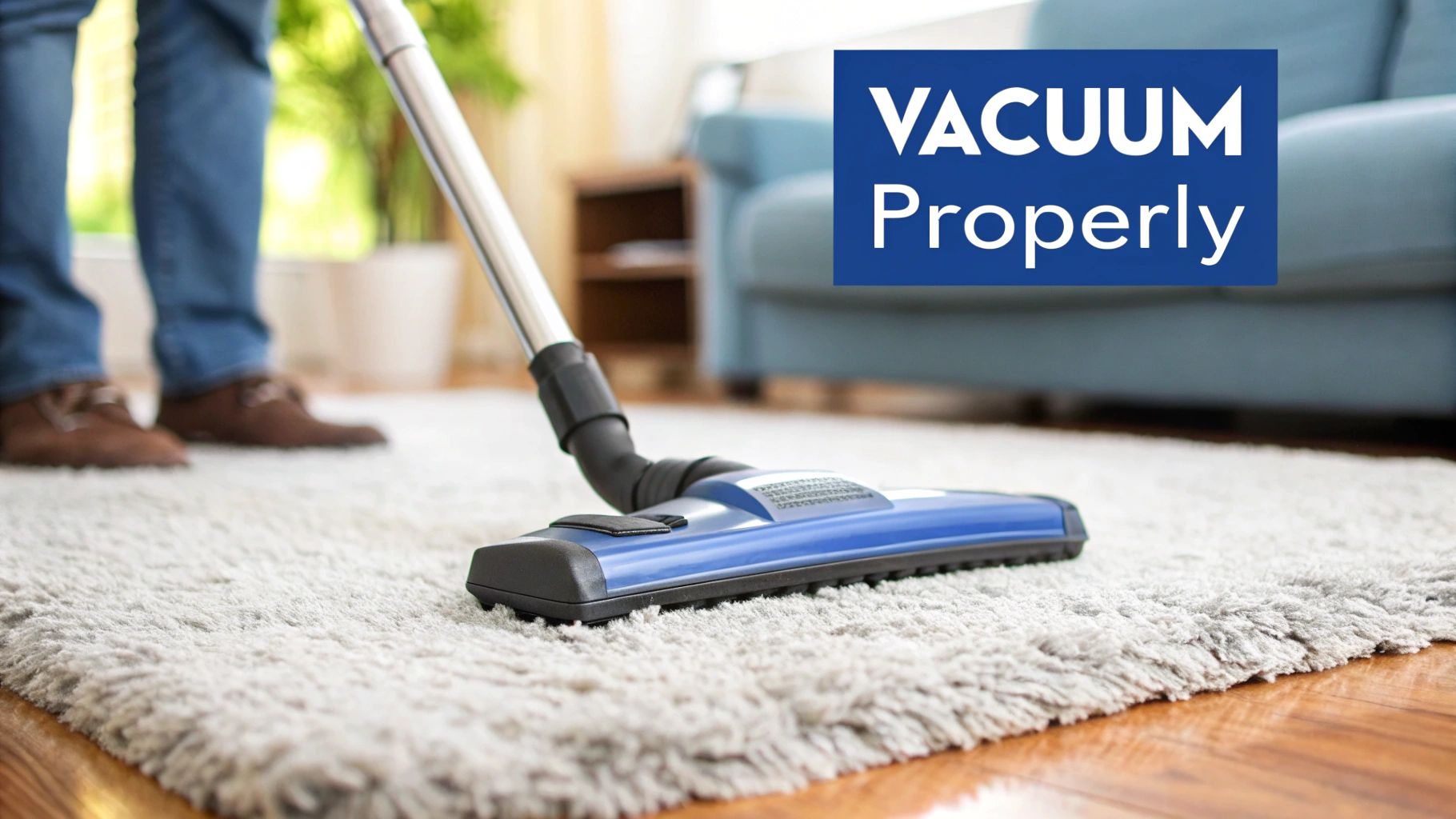
This fundamental task, when performed correctly, can drastically reduce the need for more intensive cleaning down the line. To achieve results that are visibly and hygienically superior, you must move beyond a quick once-over. The difference between a surface-level clean and a deep, restorative one lies entirely in the details of your technique.
Why Your Vacuuming Technique Matters
A slow, deliberate pace is one of the most vital yet overlooked carpet cleaning tips. Rushing the process prevents the vacuum's brush (beater bar) and suction from having enough time to agitate the carpet pile and lift out deep-seated dirt. Over time, this trapped soil acts like sandpaper, wearing down fibres and causing dull, high-traffic patterns. By adopting a professional's mindset, you protect your investment and maintain a healthier environment, especially for households with pets or allergy sufferers in Gloucester or Stroud.
Actionable Tips for a Professional-Level Clean
To truly master your vacuuming routine, integrate these expert-endorsed practices:
- Pace Yourself: Move the vacuum at a slow, steady speed of roughly one foot per second. This gives the machine time to work effectively on both the forward and backward passes.
- Change Directions: After covering the entire room, repeat the process in a perpendicular direction (e.g., north-to-south, then east-to-west). This helps lift the carpet pile from all angles and dislodges stubborn, trapped particles.
- Maintain Your Machine: For optimal suction power, empty your vacuum's bag or canister when it is no more than two-thirds full. Additionally, clean or replace your vacuum’s filters according to the manufacturer's instructions to ensure it’s capturing allergens effectively.
- Adjust the Height: Use the correct height setting for your carpet's pile. If it's set too high, it won't pick up dirt. If it's too low, it can damage the carpet fibres and the vacuum's roller brush.
By consistently applying these methods, you elevate a simple chore into a powerful maintenance strategy. You can discover more professional techniques and get advice from an expert in carpet care to keep your floors in pristine condition.
2. Act Immediately on Spills
The single most critical 'golden rule' of carpet care is to address spills the moment they happen. This immediate response is the difference between a minor cleanup and a permanent, unsightly stain. When liquids like red wine, coffee, or pet urine are allowed to sit, they penetrate deep into the carpet fibres and backing, making removal exponentially more difficult. Quick action dramatically increases the chances of complete removal, preserving your carpet’s appearance and preventing lingering odours from taking hold in your home.
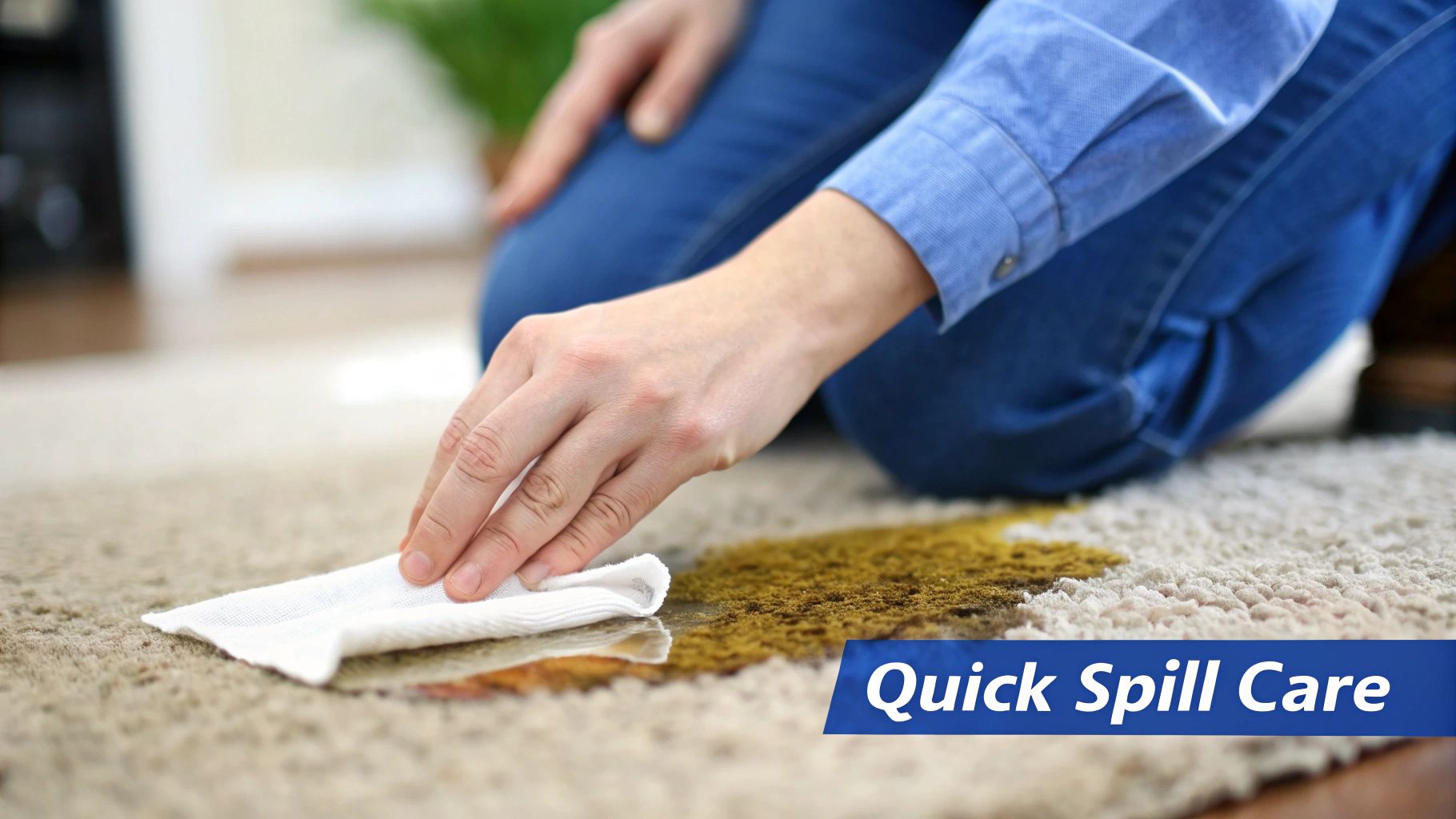
This principle is universally endorsed by carpet manufacturers and professional cleaners alike because it is so effective. For instance, a red wine spill blotted and treated within the first few minutes has a significantly higher chance of being fully removed compared to one left for an hour. Acting fast is the most impactful of all carpet cleaning tips for stain prevention.
Why Immediate Action is Crucial
Spills begin to chemically bond with carpet fibres almost instantly, a process that sets the stain. Furthermore, liquids quickly seep below the surface into the carpet padding, where they can foster mould, mildew, and persistent odours that are impossible to remove with surface cleaning alone. For households in areas like Cheltenham or Gloucester, especially those with children or pets, reacting swiftly to accidents is a non-negotiable part of maintaining a clean and hygienic environment. This proactive approach stops a small mishap from becoming a costly problem.
Actionable Tips for Emergency Spill Response
To tackle spills like a professional, adopt this methodical emergency procedure:
- Blot, Don't Rub: Immediately grab a clean, white, absorbent cloth and gently blot the spill. Rubbing or scrubbing will only spread the liquid and push it deeper into the pile, causing irreversible damage to the carpet fibres.
- Work from the Outside In: Always start blotting at the outer edge of the spill and work your way toward the centre. This contains the spill and prevents it from spreading further.
- Use the Right Tools: Apply a small amount of an appropriate cleaning solution to a fresh cloth, not directly onto the carpet. This gives you control over the moisture and prevents over-saturating the area.
- Rinse and Dry: After treating, lightly dampen a clean cloth with water to blot the area and rinse out any cleaning solution residue. Finish by placing a dry towel over the spot, weighed down by a heavy object, to absorb remaining moisture.
Mastering this technique is fundamental to effective home carpet care. You can find more in-depth guidance on how to manage unexpected accidents with professional spot treatment strategies to keep your carpets looking their best.
3. Use the Correct Cleaning Solutions for Stain Types
Applying a generic, one-size-fits-all cleaner to every carpet stain is a common mistake that can lead to permanent setting, discolouration, or damage to the fibres. The secret to successful stain removal lies in understanding the chemical nature of the spill. Different stains, whether from a glass of red wine, a muddy footprint, or a greasy food mishap in your Tewkesbury kitchen, require specific cleaning agents designed to break down their unique composition. Using the wrong solution can be ineffective at best and disastrous at worst.
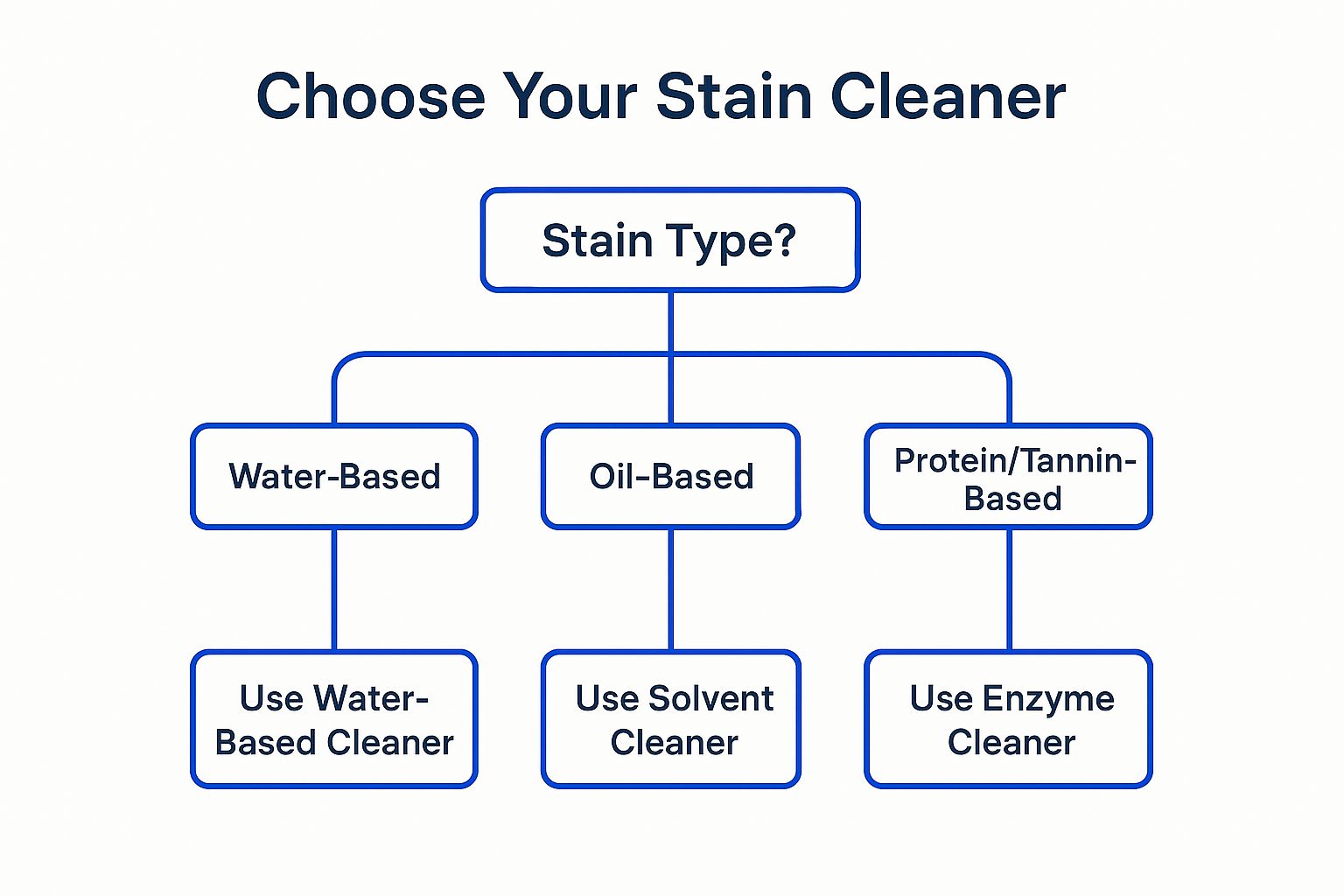
Matching the cleaner to the stain is one of the most crucial carpet cleaning tips for homeowners. This targeted approach ensures you are dissolving the stain's components rather than just spreading them around or pushing them deeper into the carpet pile. By identifying the stain type first, you can select a product that works with precision, protecting your carpet's integrity and appearance.
Why Matching Cleaners to Stains is Crucial
Stains fall into distinct categories: water-based (e.g., mud, juice), oil-based (e.g., grease, ink, makeup), protein-based (e.g., blood, pet urine, milk), and tannin-based (e.g., coffee, tea, wine). An enzyme cleaner, for instance, is brilliant for breaking down the organic proteins in a pet accident but will do very little for an oil-based stain. Conversely, a solvent-based cleaner that tackles grease can damage certain carpet fibres if used improperly. This knowledge transforms you from a frantic cleaner into a strategic stain-fighting expert. For other challenging scenarios, like dealing with specific types of spills on carpets, you might find useful tips on how to clean up specific spills like melted candle wax.
Actionable Tips for Effective Stain Removal
To tackle spots and spills like a professional, adopt this methodical approach:
- Identify First: Determine the likely source of the stain. Is it from a drink, food, oil, or a pet? This is your most important first step.
- Choose Wisely: Use the right tool for the job. Keep a small arsenal of different cleaners: a water-based solution (like diluted dish soap), a solvent-based spotter for grease, and an enzyme cleaner for organic or pet-related accidents.
- Always Test: Before applying any solution to a visible area, test it on an inconspicuous spot, such as inside a cupboard or under a large piece of furniture, to check for colourfastness.
- Rinse Thoroughly: After treating a stain, it is vital to rinse the area with a small amount of clean water and blot it dry. Leftover cleaning residue can attract dirt, leading to a new, darkened spot over time.
By following these guidelines, you can manage most household spills effectively. For persistent or complex issues, you can learn more about professional stain removal techniques to restore your carpet's beauty.
4. Professional Deep Cleaning Every 12-18 Months
While diligent vacuuming and prompt spot treatment are essential, they cannot replace the restorative power of professional deep cleaning. Even the best domestic vacuums can't extract the deeply embedded soil, oils, bacteria, and stubborn allergens that accumulate over time. Scheduling a professional service using methods like hot water extraction (often called steam cleaning) is one of the most crucial carpet cleaning tips for preserving the health, appearance, and longevity of your investment. This process goes far beyond a surface clean, revitalising fibres from the base up and removing contaminants that regular maintenance leaves behind.
This periodic deep clean is recommended by nearly all carpet manufacturers as a condition of their warranties. For homeowners in Cheltenham, Gloucester, or Stroud, it is the single most effective way to reset the clock on your carpets, restoring their colour and texture while sanitising the living environment. It removes the abrasive, deep-down grit that wears away at fibres, causing premature ageing and dulling.
Why Professional Expertise Matters
The effectiveness of a deep clean hinges on powerful, commercial-grade equipment and the technician's expertise. Professionals use machinery that heats water to a much higher temperature and generates significantly more suction than any rental or domestic unit. This combination allows the cleaning solution to penetrate deep into the carpet pile, dissolve grime and oils, and then be almost completely extracted, taking dirt and excess moisture with it. This process is vital for households with pets or allergy sufferers, as it removes dander, dust mites, and other irritants.
Actionable Tips for a Successful Professional Clean
To maximise the benefits of your investment in a professional service, proper preparation and selection are key:
- Research and Vet: Don't just choose the cheapest option. Look for companies with technicians certified by the National Carpet Cleaners Association (NCCA) or a similar recognised body. Check recent reviews and ask for references.
- Get a Written Estimate: Request a detailed, in-person quote from at least two reputable providers. This prevents surprise charges and ensures the price reflects the specific needs of your carpets.
- Prepare the Area: Vacuum your carpets thoroughly right before the technicians arrive. This removes loose surface debris, allowing their equipment to focus on the deep-seated soil. Also, move any small furniture, breakables, and floor-length curtains out of the way.
- Plan for Drying: After the service, ensure the room has good ventilation to speed up drying time. Open windows, use fans, or turn on your heating system, depending on the season, to promote air circulation.
By entrusting your floors to a certified expert every 12-18 months, you ensure they remain a beautiful and healthy feature of your home for years to come. For those interested in understanding the methods used, you can explore more about how professionals deep clean carpets.
5. Proper Drying Techniques: Preventing Mould and Protecting Your Carpet's Health
Perhaps the most critical yet frequently neglected phase of any wet carpet cleaning process is the drying stage. After you’ve successfully removed stains and grime, leaving your carpet damp for too long can create a new set of problems, including musty odours, mould, mildew, and bacterial growth. Proper drying is not a passive step; it requires active measures to ensure moisture is completely removed from the carpet pile and underlay, preserving both your home's air quality and the integrity of your flooring.
Effectively managing the drying process is a cornerstone of professional carpet cleaning tips. Failing to do so can trap moisture deep within the fibres, leading to potential delamination where the carpet backing separates from the pile. For homeowners in humid areas like Gloucester, this step is non-negotiable for preventing a fresh-smelling clean from turning into a damp, unhealthy problem within a day or two.
Why Correct Drying is Crucial
Rapid and thorough drying prevents the ideal conditions for mould and mildew spores to thrive. These fungi can begin to colonise in as little as 24 to 48 hours in a damp environment. Beyond the unpleasant smell, this can trigger allergic reactions and respiratory issues, undermining the health benefits of having your carpets cleaned in the first place. A professionally managed drying process aims to have your carpets touch-dry within 6 to 12 hours, a standard set by industry bodies to ensure a safe and successful clean.
Actionable Tips for Rapid and Safe Drying
To ensure your carpet dries quickly and completely after a spot treatment or deep clean, implement these professional techniques:
- Create Powerful Airflow: Position several fans to blow air across the surface of the damp carpet, not directly down onto it. This sweeping motion helps evaporate moisture more efficiently. Using multiple fans can reduce drying time by up to 50%.
- Control the Humidity: On dry, low-humidity days, open windows to create a natural cross-breeze. In damp or cold weather, close the windows and use a dehumidifier in the room to pull moisture directly from the air and the carpet.
- Blot, Don't Rub: Before you even begin the drying process, use clean, white, dry towels to blot as much excess moisture as possible from the cleaned area. Stand on the towels to apply pressure and absorb water from deep within the pile.
- Avoid Foot Traffic: Keep pets and family members off the damp carpet. Walking on it can flatten the fibres, making them harder to dry and potentially re-soiling the clean area.
- Check the Underlay: After a significant spill or cleaning, gently lift a corner of the carpet (if possible) to ensure the underlay beneath is also dry. If the underlay remains wet, it will become a breeding ground for mould.
6. Regular Rotation and Protection of High-Traffic Areas
Beyond cleaning, a proactive strategy involving furniture placement and protective coverings is vital for long-term carpet preservation. High-traffic lanes, such as hallways or the path from the sofa to the kitchen, inevitably receive more footfall, leading to concentrated wear and tear. This constant pressure grinds dirt deep into the fibres and flattens the pile, creating unsightly, discoloured paths that even professional cleaning can struggle to reverse fully. By strategically managing these areas, you can distribute wear more evenly, significantly extending your carpet's life and maintaining its uniform appearance.
This preventative approach is one of the most effective carpet cleaning tips for preserving your investment, ensuring your floors look newer for longer. It shifts the focus from purely reactive cleaning to smart, ongoing maintenance that prevents damage before it becomes permanent. Just as hotels use runners to protect main walkways, homeowners in Cheltenham and Gloucester can adopt similar principles to safeguard their own carpets from premature ageing.
Why Rotation and Protection are Crucial
Over time, unchanging furniture layouts and unprotected walkways create distinct patterns of wear. The areas under heavy furniture become crushed and indented, while the paths around them become worn and faded. This uneven degradation is often more noticeable than general soiling. By rotating your furniture and protecting key zones, you allow compressed fibres to recover and ensure that no single area bears the brunt of daily activity, preserving the carpet's overall texture and colour integrity.
Actionable Tips for Even Wear and Tear
Integrate these interior design-inspired practices into your home maintenance routine:
- Rearrange Your Layout: Every three to six months, slightly shift the position of heavy furniture like sofas, coffee tables, and cabinets. Even a change of a few inches can prevent permanent indentations and distribute wear.
- Use Protective Runners and Rugs: Place stylish area rugs or runners over the carpet in high-traffic zones, such as entrance halls and main living room pathways. This adds a decorative touch while absorbing the majority of the impact.
- Install Furniture Pads: Place high-quality furniture pads or coasters under the legs of all heavy items. This simple step helps to distribute the weight more evenly and drastically reduces the risk of crushing and denting the carpet pile.
- Consider a Carpet Protector: After a professional clean, ask about applying a carpet protector spray. This creates an invisible shield that helps repel spills and reduces friction from foot traffic, making routine vacuuming more effective.
7. Baking Soda for Odor Elimination
Lingering odours trapped deep within carpet fibres can make even the cleanest room feel stuffy and unwelcoming. Before reaching for harsh chemical sprays, consider one of the most effective and safe carpet cleaning tips: using baking soda. This common household staple, also known as sodium bicarbonate, is a powerful, all-natural deodoriser that works by absorbing moisture and neutralising the acidic and alkaline molecules that cause unpleasant smells, rather than simply masking them. It's an economical and non-toxic solution for tackling everything from pet smells to stale cooking odours.
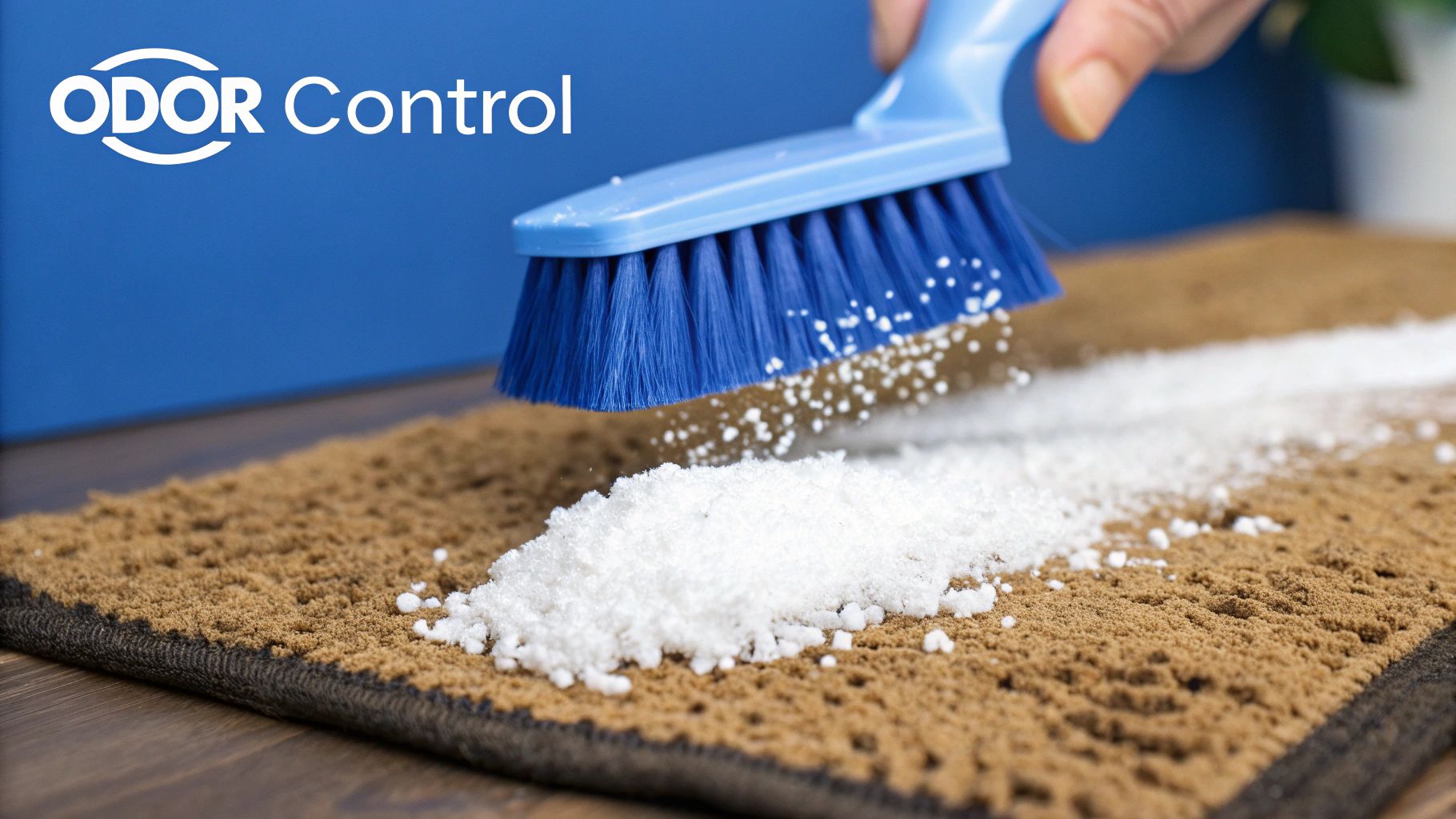
The science behind its effectiveness lies in its ability to bring both acidic and basic odours to a more neutral state, effectively eliminating them. This makes it a go-to method for homeowners in Cheltenham and Gloucester, particularly those with pets or young children, who are looking for a powerful yet completely safe cleaning alternative. Its gentle nature makes it suitable for regular use without damaging carpet fibres.
Why Baking Soda is a Superior Deodoriser
Unlike air fresheners that add a temporary fragrance to the air, baking soda directly targets the source of the smell embedded in the carpet pile. It's incredibly versatile, proving its worth in various scenarios. For instance, pet owners often use it weekly to manage persistent pet dander smells, while landlords rely on it for a deep refresh between tenants. Even commercial spaces like daycare centres favour it as a safe and effective deodorising method around children. Its power to absorb and neutralise is what makes it a cornerstone of the green cleaning movement.
Actionable Tips for a Fresh, Odour-Free Carpet
To use baking soda effectively and achieve professional-level deodorising, follow these straightforward steps:
- Apply Generously: Sprinkle a liberal and even layer of baking soda across the entire surface of the dry carpet. Don't be shy; a thin coating won't be as effective. For thicker carpets, use a soft brush to gently work the powder deeper into the fibres.
- Allow it to Dwell: Patience is key. Leave the baking soda to sit for at least a few hours. For stubborn or deeply ingrained odours, letting it sit overnight yields the best results.
- Vacuum Thoroughly: Use your vacuum cleaner to meticulously remove all the baking soda. Make multiple slow passes over the area, changing directions (north-south, then east-west) to ensure all the powder and the absorbed odours are lifted from the pile.
- Add a Pleasant Scent (Optional): For a customised fragrance, mix a few drops of your favourite essential oil, like lavender or lemon, into the baking soda before sprinkling it. Always test a small, inconspicuous area first, especially on delicate or light-coloured carpets.
By integrating this simple, powerful tip into your cleaning routine, you can maintain a truly fresh and clean home environment naturally.
7 Essential Carpet Cleaning Tips Comparison
| Method | Implementation Complexity ? | Resource Requirements ⚡ | Expected Outcomes ? | Ideal Use Cases ? | Key Advantages ⭐ |
|---|---|---|---|---|---|
| Vacuum Regularly and Properly | Low – routine task with correct technique | Minimal – vacuum cleaner and time | Maintains carpet appearance; reduces dirt embedment; improves air quality | Regular maintenance in homes, offices, hotels | Cost-effective; prevents stains; removes allergens |
| Act Immediately on Spills | Medium – requires quick, correct action | Low – cloths, blotting materials | Prevents permanent stains and odors; saves cleaning costs | Accidental spills in any carpeted environment | High success in stain removal; preserves warranty |
| Use Correct Cleaning Solutions | Medium to High – stain ID and proper use | Moderate – multiple specialized products | Effective stain removal; prevents fiber damage | Targeted stain treatment for various stain types | Higher stain removal rates; protects carpet fibers |
| Professional Deep Cleaning | High – requires scheduling and access | High – professional service fees and time | Deep dirt and allergen removal; extends carpet life; restores appearance | Periodic deep cleaning in homes, commercial spaces | Removes embedded dirt; improves indoor air quality |
| Proper Drying Techniques | Medium – requires equipment and monitoring | Moderate – fans, dehumidifiers, time | Prevents mold/mildew; maintains carpet structure; eliminates odors | After wet cleaning or spills | Prevents health hazards; maintains carpet integrity |
| Regular Rotation & Protection | Low to Medium – planning and routine effort | Low – furniture pads, rugs, and repositioning | Even wear distribution; extends carpet lifespan | High-traffic areas needing wear prevention | Cost-effective; reduces premature wear |
| Baking Soda for Odor Elimination | Low – simple application process | Minimal – baking soda and vacuuming | Neutralizes odors; safe and non-toxic | Odor control in homes, rentals, pet-friendly spaces | Safe, economical, natural deodorizer |
Bringing It All Together for Healthier, Cleaner Carpets
Maintaining the beauty, longevity, and hygiene of your home's flooring is an ongoing commitment, not a singular task. Throughout this guide, we have explored a comprehensive framework of powerful carpet cleaning tips, moving from daily habits to long-term professional care. By weaving these strategies into your regular home maintenance routine, you create a powerful defence against dirt, allergens, and the inevitable signs of wear and tear that threaten your investment.
A Recap of Your Carpet Care Toolkit
Let's quickly revisit the cornerstones of effective carpet maintenance we've covered. The consistent, methodical practice of regular and proper vacuuming is your first line of defence, capturing surface-level dust and grit before it can become embedded. This is complemented by the critical importance of acting immediately on spills, a habit that prevents minor mishaps from becoming permanent stains.
We also delved into the science of stain removal, emphasising the need to use correct cleaning solutions for specific stain types. This targeted approach is far more effective than a generic, one-size-fits-all cleaner. Furthermore, simple yet potent tools like baking soda for odour elimination and strategic furniture placement to protect high-traffic areas offer practical, low-cost ways to preserve your carpet's freshness and appearance day in and day out.
The Synergy of DIY and Professional Care
While these DIY carpet cleaning tips are indispensable for daily and weekly upkeep, it is vital to recognise their limitations. Think of your efforts as the essential daily maintenance of a classic car; you keep it polished, topped up with fluids, and running smoothly. However, for a deep engine tune-up and to address underlying issues, you need a specialist. Professional deep cleaning is that specialist service for your carpets.
The deep-seated dirt, grime, dust mites, and allergens that accumulate deep within the carpet fibres are beyond the reach of domestic vacuums and off-the-shelf cleaning products. This is where the value of a professional service, scheduled every 12 to 18 months, becomes undeniable. Professional hot water extraction, often referred to as steam cleaning, doesn't just clean the surface; it sanitises the entire pile, extracting contaminants and rejuvenating the fibres from the base up. This process is especially crucial for households in Cheltenham, Gloucester, and Stroud with pets, young children, or allergy sufferers, as it significantly improves indoor air quality and creates a healthier living environment for everyone.
Embracing this dual approach, where your diligent care is periodically bolstered by expert intervention, is the ultimate strategy for extending the life of your carpets and ensuring they remain a source of comfort and pride in your home.
Ready to schedule that essential deep clean and truly revitalise your home's flooring? As the trusted local experts in Cheltenham, Gloucester, and Stroud, we use advanced, eco-friendly techniques to restore your carpets to their former glory. Contact AG Carpet Specialists today for a free, no-obligation quotation and experience the difference professional care can make.
Article created using Outrank