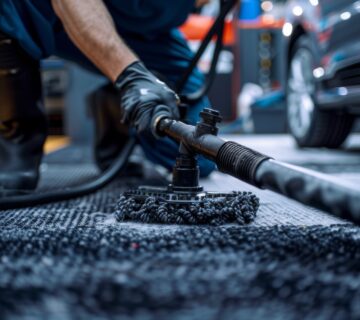
Getting dust mites out of your carpet for good takes more than a quick once-over with the hoover. It's a two-pronged attack: you need steam cleaning to actually kill the mites and then powerful extraction to pull their allergenic waste right out of the fibres. For families across the UK struggling with constant sniffles, itchy skin, or other unexplained irritations, getting to the root of the problem in your carpets can be a game-changer.
Why Your Carpet Is a Dust Mite Haven
It’s often what you can’t see that causes the most trouble. Your carpet, especially if it has a nice deep pile, is the perfect breeding ground for dust mites—it's warm, humid, and dark. These microscopic critters don't bite, but their waste particles are a major allergen, and every footstep sends them floating into the air you breathe.
This creates an invisible threat right under your feet. For many, this leads to a frustrating cycle of symptoms that seem to come from nowhere:
- Constant sneezing, particularly first thing in the morning.
- Itchy, watery eyes and a runny nose.
- Worsened asthma or general breathing difficulties.
- Eczema flare-ups and other skin irritations.
A carpet that looks perfectly clean on the surface can be hiding a huge build-up of these allergens, which are constantly being released into your home's air. To get a clearer picture of all the invisible pollutants in your home, not just in the carpets, you might want to look into professional air quality testing services.
The Scale of the Allergen Problem
Here in the UK, dust mite allergies are incredibly common. With almost half the population dealing with some form of allergy, the allergens trapped in our carpets are a significant contributor to widespread health issues. This is where professional cleaning methods really prove their worth. One study found that domestic steam cleaning didn't just kill live dust mites but also slashed their primary allergen, Der p 1, by a massive 86.7%. Clearly, regular, effective carpet cleaning is a crucial step toward better indoor air quality.
This infographic gives a great visual of how dust mites and their allergens pile up deep within carpet fibres, creating a hidden source of irritation.
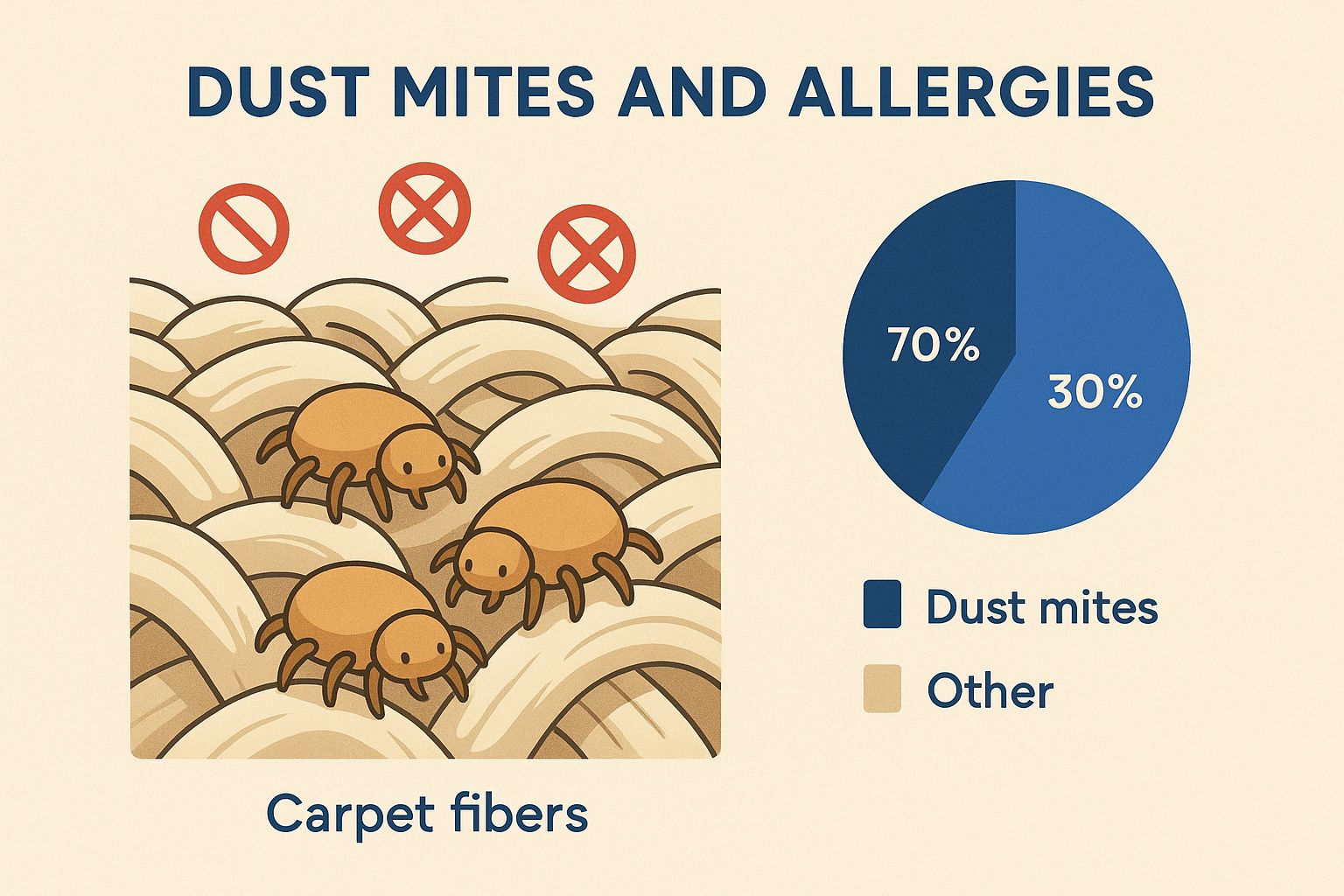
As you can see, your standard vacuum cleaner often just skims the surface, leaving the deeply embedded allergens behind. That's why specialised cleaning is so essential.
The real problem isn't the mites themselves, but their waste. These tiny particles are what actually trigger allergic reactions, and you need more than surface-level cleaning to get rid of them.
Once you understand this connection, you're on the right track to creating a healthier home. For more preventative tips, feel free to check out our guide on how to reduce dust mites. By getting into a proper dust mite carpet cleaning routine, you're tackling the source of the problem head-on, which sets us up nicely for the practical solutions we'll cover next.
Choosing the Right Cleaning Method for Your Home
When you're serious about getting rid of dust mites, you quickly realise that not all cleaning methods are created equal. Just running a standard hoover over the carpet won’t make a dent in a thriving dust mite population. You need something more powerful—a technique that not only kills the mites but also physically removes them and their allergenic waste from deep within the carpet fibres.
The two heavy hitters in this fight are steam cleaning and hot water extraction. People often use these terms interchangeably, but they are quite different. Getting to grips with how each one works is the key to choosing the right approach for your home. We break this down in more detail in our article on carpet cleaning vs steam cleaning, but both rely on one crucial element: heat.
High Temperatures: The Ultimate Weapon
If dust mites have a weakness, it's extreme heat. It’s their biological Achilles' heel, and it’s our biggest advantage in getting them out of our homes for good. For any heat-based treatment to be truly effective, the temperature has to be consistently high enough to kill them on contact.
This is where professional-grade equipment really proves its worth. A rental machine from the local DIY shop might get warm, but our professional systems generate sustained steam or hot water well above the lethal threshold for mites. This ensures a thorough kill-off with every single pass, which is absolutely fundamental to a successful deep clean.
Steam Cleaning Explained
True steam cleaning works by using water vapour heated to a blistering temperature, often over 120°C. This superheated dry steam blasts deep into the carpet fibres, killing dust mites, bacteria, and even mould spores instantly, all without soaking your carpet.
Because it uses very little water, the drying times are much quicker. It’s a fantastic method for sanitising surfaces without harsh chemicals. Research has shown that steam cleaning effectively eliminates live dust mites and significantly cuts down on the allergens they leave behind. Other studies have also found that similar methods, like hot water extraction, can lead to a 52% reduction in airborne dust after a clean.
The real power of steam cleaning lies in its ability to sanitise. It's not just cleaning the visible dirt; it's thermally disinfecting your carpet on a microscopic level, neutralising the biological threats you can't see.
Hot Water Extraction in Detail
This is the method most people mistakenly call "steam cleaning." Hot water extraction involves injecting a mixture of hot water and a specialised cleaning solution deep into the carpet pile under high pressure. This process immediately dislodges dirt, grime, and allergens that have been ground in over time.
A powerful, high-grade vacuum then extracts the water almost instantly, pulling out all the dissolved contaminants and mite debris along with it. Think of it as a deep "rinse and repeat" for your carpet, flushing out years of built-up gunk.
The key to its success is the sheer power of the extraction. A top-tier machine has incredible suction, leaving very little moisture behind. This ensures allergens are pulled completely out of your home, not just shifted around. It makes hot water extraction the superior choice for heavily soiled carpets or for households where allergy symptoms are a serious concern, as it physically removes the maximum amount of irritants from your living space.
Comparing Dust Mite Carpet Cleaning Methods
To help you decide, let's look at the most common methods side-by-side. Each has its strengths when it comes to tackling dust mites and the allergens they produce.
| Cleaning Method | Dust Mite Kill Rate | Allergen Removal | Best For |
|---|---|---|---|
| Steam Cleaning | Excellent | Very Good | Sanitising, quick drying, and killing mites in low-traffic areas. |
| Hot Water Extraction | Excellent | Excellent | Deep cleaning, removing heavy soiling, and maximum allergen extraction. |
| Dry Carpet Cleaning | Poor | Fair | A quick surface clean, but not effective for deep-seated mites or allergens. |
| Standard Vacuuming | Very Poor | Poor to Fair | Regular maintenance, but won't kill mites or remove deep-down allergens. |
Ultimately, both steam cleaning and hot water extraction are fantastic at eliminating dust mites thanks to their use of high temperatures. However, for a comprehensive clean that pulls out the maximum amount of physical debris and allergens, hot water extraction often has the edge.
Your DIY Guide to Deep Cleaning Carpets
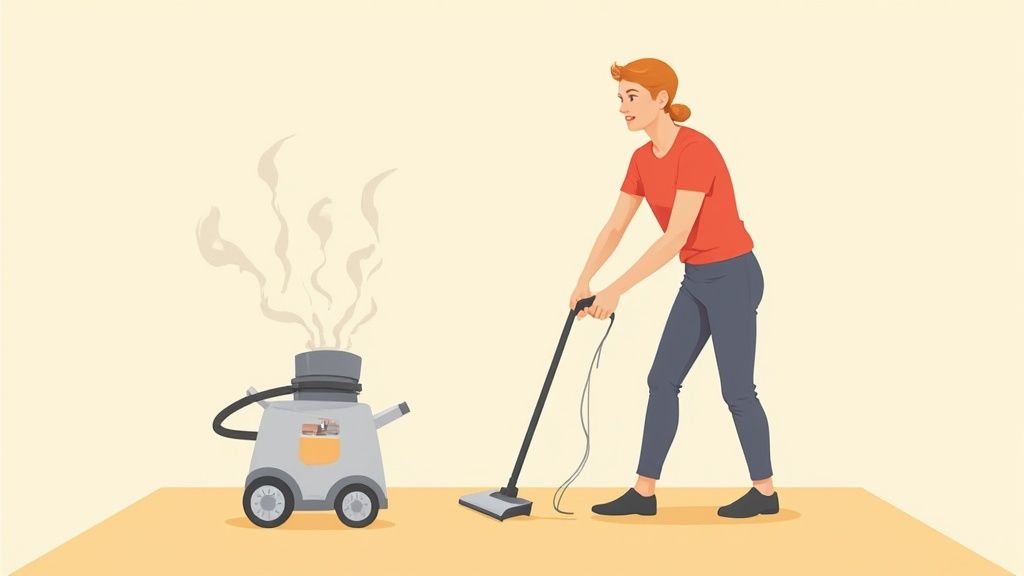
If you're ready to tackle the job yourself, a thorough DIY dust mite carpet cleaning can make a world of difference. While it might not have the raw power of professional-grade equipment, a careful, methodical approach can genuinely slash the allergen count and improve your home's air quality. The real secret is in the preparation and execution.
Think of it as a two-stage mission. First, you've got to get rid of as much dry soil and debris as you can. Only then can you bring in the hot water treatment to sanitise the fibres and pull out those microscopic pests. I’ve seen it time and again – people skipping the prep work, which just leads to a muddy mess instead of a proper deep clean.
Pre-Cleaning Preparation is Essential
Before you even think about hiring a machine, your carpet needs a meticulous vacuum. This isn't just a quick whizz around; you need to be really thorough to lift all the loose particles, pet hair, and surface-level dust.
For the best results, use a vacuum cleaner with a HEPA (High-Efficiency Particulate Air) filter. Honestly, this is a non-negotiable step for anyone with allergies. A standard vacuum can simply churn up the tiniest allergen particles and blast them right back into the air.
Here’s your pre-cleaning checklist:
- Move all furniture completely off the carpet. You need a clear run at the entire area, no obstructions.
- Vacuum slowly and methodically. Work in overlapping rows, going north-to-south first, then repeating the whole area east-to-west.
- Use the crevice tool along all the skirting boards and in the corners where dust and allergens love to hide.
- Pre-treat any obvious stains with a good spot cleaner, making sure you follow the product's instructions to the letter.
Getting this initial step right means your steam cleaner can focus its power on the deeply embedded grime and dust mites, not just the dirt sitting on top.
The most effective deep clean starts before a drop of water touches the carpet. A thorough HEPA vacuuming removes up to 80% of the dry soil, making the wet extraction phase far more effective at targeting microscopic allergens.
Using a Rental Steam Cleaner Correctly
Once your carpet is prepped, it's time for the main event. Hiring a hot water extraction machine is a great option for a DIY clean. The trick is using it correctly to avoid common mistakes, like soaking the carpet or leaving a sticky residue behind.
Start by mixing the cleaning solution exactly as the manufacturer tells you. The temptation to add "a little bit extra" is a recipe for disaster – it just leaves a soapy film that will attract more dirt later on. Fill the machine with the hottest tap water it can safely handle; that heat is your best weapon against dust mites.
Work methodically, starting in the corner furthest from the door so you don't walk over your clean carpet. Pull the machine backwards towards you in slow, straight lines, holding the trigger down to release the hot water and cleaning solution. Make sure you overlap each pass by about 30% for even coverage.
Now for the most important part. After each cleaning pass, go back over the exact same strip without pressing the trigger. This is your "drying pass," and it's absolutely vital. This lets the machine's powerful suction pull out all the dirty water and allergens. For every single cleaning pass, you should be doing two or three drying passes.
The Critical Importance of Drying
Perhaps the most overlooked part of DIY carpet cleaning is the drying process. A damp carpet is the perfect breeding ground for mould and mildew, which will just introduce a whole new set of respiratory issues. You have to get that carpet completely dry, as fast as you can.
To speed things up:
- Open windows and doors to get some cross-ventilation going.
- Use fans or a dehumidifier and point them directly at the carpet.
- Turn the central heating on for an hour or two, even if it’s not cold, to help the moisture evaporate.
Try to avoid walking on the carpet until it’s completely dry to the touch, which can take anywhere from six to twelve hours. Proper drying is what locks in all your hard work, leaving you with a fresh, clean, and much healthier living space. If you're after some more tips, you can learn how to deep clean carpets at home in our more detailed guide.
Maintaining a Healthier Home Environment
A proper deep clean is a brilliant way to hit the reset button, but winning the war against dust mites is all about long-term prevention. Keeping those pesky populations down isn’t a one-off job; it requires a consistent routine to stop them from coming back.
The aim is to make your home an environment where dust mites simply can't thrive. By weaving a few simple habits into your weekly schedule, you disrupt their life cycle and stop allergens from building up. This is the real secret to effective dust mite carpet cleaning maintenance.
Building Your Weekly Allergen Control Routine
Getting a sustainable plan in place doesn't need to be overwhelming. What truly matters is consistency, not intensity. If you focus on a few key tasks each week, you’ll keep enjoying the benefits of your deep clean and prevent allergens from becoming a problem again.
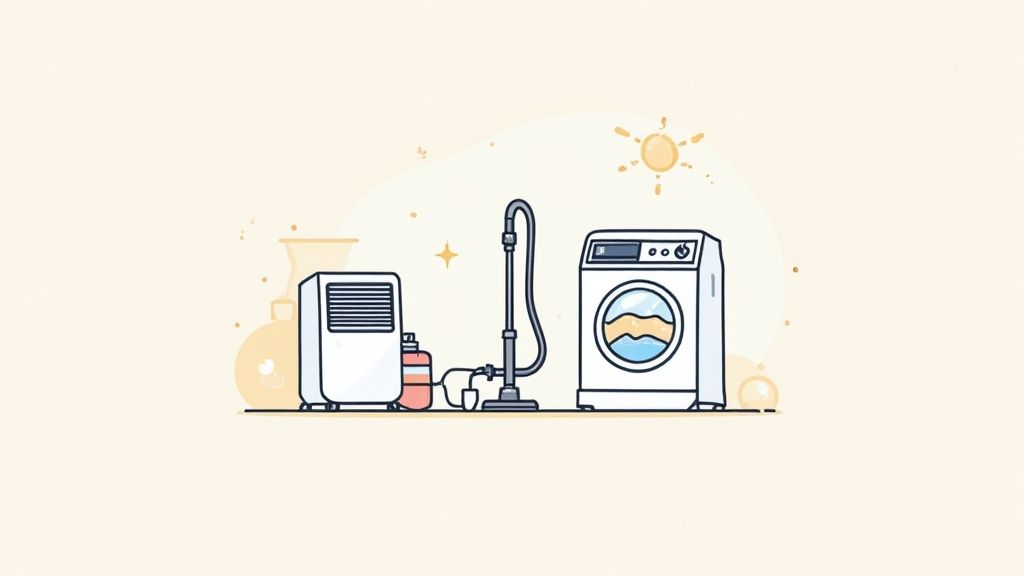
Here’s a simple but powerful weekly schedule to keep dust mites firmly in check:
- Thorough Vacuuming: At least twice a week, get the vacuum out. Make sure it's one with a HEPA filter – this is vital for trapping microscopic allergens that a standard vac would just blow back into the room.
- Hot Wash Bedding: Every week, wash all your bedding (sheets, pillowcases, duvet covers) on a hot cycle. You need a temperature of at least 60°C to effectively kill off any dust mites lurking in the fabric.
- Manage Humidity: Dust mites love damp conditions, so keep the humidity in your home below 50%. A good dehumidifier is your best friend here.
This simple trio is your first line of defence against allergens. For a more in-depth look at these tactics and other great strategies, check out our full guide on how to reduce allergens in your home.
Long-term allergen control isn’t about one heroic cleaning session. It's about small, consistent actions that collectively create an environment where dust mites simply can't flourish.
Smart Choices for a Low-Allergen Future
Beyond your weekly to-do list, there are bigger-picture choices you can make to seriously reduce dust mites over time. When it’s time to redecorate or think about new flooring, your decisions can make a huge difference to your home's air quality.
For a start, consider swapping deep, shaggy carpets for low-pile styles. The shorter fibres give dust mites fewer places to hide and are far easier to clean thoroughly.
Even better, think about replacing carpets with hard flooring like wood, laminate, or vinyl, especially in bedrooms. Hard surfaces don’t hold onto allergens the way carpets do, making them incredibly easy to keep dust-free. These long-term changes, paired with a solid cleaning routine, are the ultimate way to maintain a truly healthy home.
When It's Time to Call in the Professionals
While putting in some good old-fashioned elbow grease can definitely make a difference, there are times when a DIY approach just won’t cut it. Tackling a serious dust mite problem often requires more firepower than a rental machine can offer, and knowing when to call for backup is the key to truly sorting out those persistent allergy issues for good.
Sometimes, your carpets are sending out a clear signal for help. If they’re heavily soiled, riddled with stubborn stains, or you’ve deep-cleaned them yourself but are still suffering from sneezing, itchy eyes, and other allergy symptoms, it's a sure sign the problem runs deeper than you can reach. The equipment professionals use has far more powerful heat and suction, allowing it to pull out the deeply embedded allergens that DIY machines simply leave behind.
The biggest game-changer between a DIY clean and a professional one is the extraction power. A pro can pull several more gallons of contaminated water out of your carpet, which means far fewer allergens are left to dry and get kicked back into the air you breathe.
This is particularly relevant for homes across the UK, where carpets are still a much-loved feature. The carpet and upholstery cleaning industry is huge, making up over 72% of the services category back in 2022. It just goes to show how many of us rely on expert help to keep our homes healthy. You can find more insights on the growth of the UK carpet cleaning market on Grandviewresearch.com.
Clear-Cut Cases for Calling a Pro
Some situations just aren’t suited for a DIY attempt. Trying to handle these without the right know-how or tools can easily go wrong and end up making things worse.
You should seriously consider getting an expert in if you're dealing with any of the following:
- Delicate or Speciality Carpets: Materials like wool, silk, or even some tricky synthetic blends can be ruined by the wrong cleaning solution or water temperature. A professional will know exactly how to treat these delicate fibres without causing damage.
- Severe Allergies or Asthma: When someone in your home has a high sensitivity to allergens, a professional-grade clean isn't just a nice-to-have—it's essential for their health and day-to-day comfort.
- A Widespread or Stubborn Problem: If you think you've got a heavy dust mite infestation across several rooms, or if the problem just keeps coming back after you’ve cleaned, it’s time for a more powerful, systematic approach from a specialist.
When you do decide to hire someone, choosing the right company makes all the difference. Don't be shy about asking them about their experience with dust mite and allergen removal specifically. Find out what methods they use, how hot their equipment gets, and whether their cleaning solutions are safe for your kids and pets. A reputable company will be happy to answer all your questions, giving you the confidence that you’re getting the job done right.
Your Dust Mite Cleaning Questions Answered
Even with a solid plan, a few questions always seem to pop up when tackling dust mites in carpets. Let's run through some of the most common queries I hear from clients to help you get your strategy sorted.
How Often Should I Really Be Deep Cleaning?
This is probably the number one question. You know weekly vacuuming is a must, but what about a proper deep clean? As a rule of thumb, a hot water extraction clean should be on your to-do list every 6 to 12 months.
However, if your household includes anyone with serious allergies, or you have pets or young children, you’ll want to be more proactive. In those cases, I’d recommend shortening the cycle to every 3 to 6 months to keep those allergen levels down. For a more detailed breakdown, have a look at our guide on how often to clean your carpets.
Will Baking Soda Work as a DIY Solution?
I get this one a lot, too. People love the idea of using natural products, and they often ask if baking soda can kill dust mites.
While baking soda is a fantastic natural deodoriser and can help lift a bit of grime, it does not kill dust mites. Its real strength is absorbing odours and moisture, but it simply doesn't have the properties to eliminate the mites themselves.
To properly kill dust mites, you need to bring the heat. That’s why steam cleaning or professional hot water extraction remains the most effective method by a long shot.
Will These Cleaning Methods Damage My Delicate Carpets?
This is a perfectly valid concern, especially if you've invested in something like a wool carpet. Will a powerful steam clean cause damage? The short answer is: it all comes down to the technique and the person doing it.
True, high-temperature steam cleaning can be too aggressive for natural fibres like wool, and you could risk shrinkage. But professional hot water extraction is a different beast entirely. An experienced technician knows to use a lower, wool-safe temperature and a pH-neutral cleaning solution. This cleans the fibres thoroughly but gently.
This is precisely where professional expertise makes all the difference. A pro can identify your carpet’s material on sight and select the exact temperature and cleaning agents needed for a deep, safe clean. It’s the best way to protect your investment while still getting rid of those allergens for good.
Ready to tackle dust mites with professional-grade power? The team at AG Carpet Specialists uses state-of-the-art equipment and eco-friendly solutions to provide a deep, healthy clean for your home. Get your free quote today at AG Carpet Specialists and breathe easier.