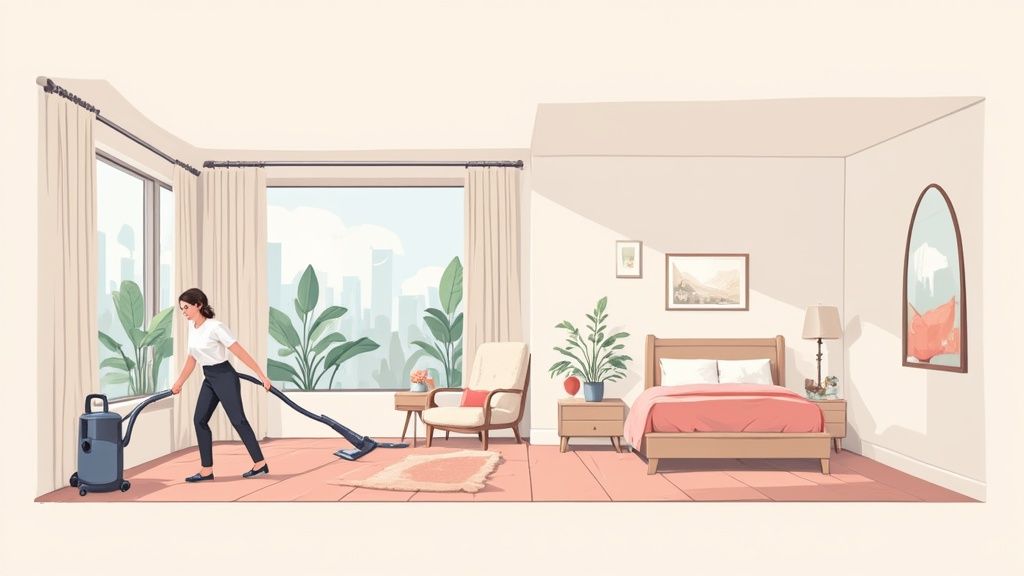
Tackling allergens in your home isn't about creating a sterile, hospital-like environment. Let's be realistic—it’s about making smart, targeted changes that genuinely improve your daily comfort and health. For too many people, the very place that should be a sanctuary is actually the main source of sneezing, itchy eyes, and breathing troubles.
The Reality of Rising Allergies in UK Homes
The need to get on top of home allergens is more urgent than ever. The statistics are quite startling, showing a huge jump in allergies across the UK in recent decades. It's reported that nearly 44% of British adults now live with at least one allergy. Even more concerning, hospital admissions for severe anaphylaxis shot up by a staggering 615% in the twenty years leading up to 2012. You can read more about these worrying allergy trends and their impact.
So, where do we start?
Focusing on the Main Offenders
To really make a dent in your home's allergen load, you need to know exactly what you're up against. While pollen gets a lot of attention as an outdoor trigger, it's often the indoor allergens that cause persistent, year-round problems. This infographic breaks down the most common culprits lurking inside our homes.
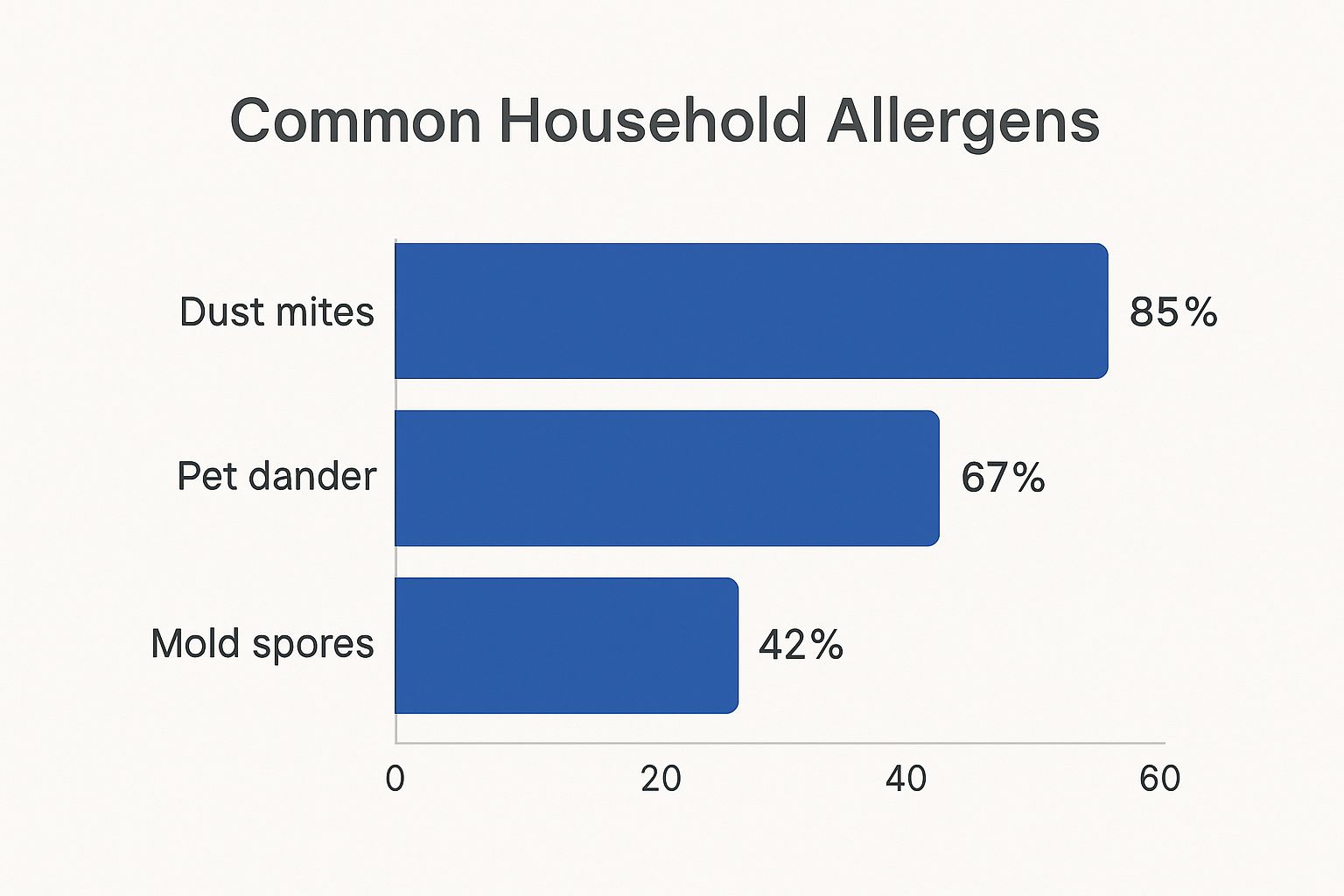
The data speaks for itself: microscopic dust mites are, by far, the biggest issue in UK homes. Knowing this is a game-changer. It tells us that by focusing our efforts on the places they love to live—like bedrooms, carpets, and soft furnishings—we'll get the best results for our efforts.
Quick Wins for Reducing Home Allergens
If you're wondering where to begin, these simple, high-impact strategies can make an immediate difference. Here are some quick wins for cutting down on common allergens.
| Allergen Source | Top Strategy | Frequency |
|---|---|---|
| Bedding | Wash sheets, duvets, and pillowcases at 60°C or higher. | Weekly |
| Carpets & Rugs | Vacuum thoroughly with a HEPA filter vacuum cleaner. | 1-2 times per week |
| Upholstery | Vacuum sofas and chairs, including under cushions. | Weekly |
| Air Quality | Use a HEPA air purifier in the bedroom. | Daily (especially at night) |
| Humidity | Use extractor fans in kitchens/bathrooms; consider a dehumidifier. | As needed (aim for 30-50% humidity) |
These small but consistent actions are the foundation of a healthier home environment.
Creating a healthier indoor space is a marathon, not a sprint. Small, consistent actions like weekly hot-water washes for bedding and regular vacuuming with a HEPA filter can significantly lower the allergen load over time.
This guide is designed to cut through the noise and give you practical, achievable strategies. We'll dive into how simple tweaks to your cleaning routine and home environment can lead to big improvements in your health. By understanding the sources and putting targeted solutions in place, you can reclaim your home as the true haven it should be.
Transform Your Bedroom into an Allergen-Free Zone
When you realise we spend roughly a third of our lives in bed, it’s clear the bedroom is the most important place to start your fight against home allergens. It should be a sanctuary for rest, but for many, it’s a hotspot for dust mites, which absolutely love the warmth and humidity our bedding and mattresses provide.
Your bed is the main battleground. These microscopic creatures thrive on the dead skin cells we shed, making pillows, duvets, and mattresses their ideal home. The best weapon you have against them? Heat. A weekly hot wash for all your bedding at 60°C or higher is non-negotiable. That temperature is what it takes to actually kill the mites, not just rinse them away.
Here in the UK, getting a grip on indoor allergens is a massive part of managing conditions like asthma and eczema. Because dust mites adore soft furnishings, combining that hot wash routine with allergen-proof covers for your mattress and pillows can slash their populations by as much as 50%. You can even explore more about these NHS-backed allergy care improvements to see how significant these small changes are.
Fortify Your Bed and Beyond
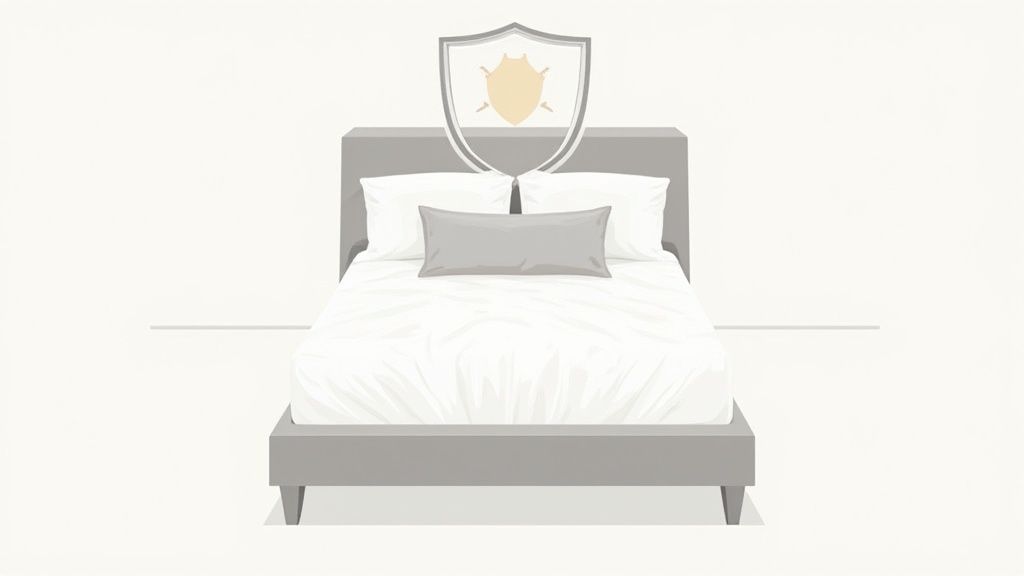
Just washing your sheets isn’t quite enough; you need to build a fortress. This is where allergen-proof protectors for your mattress and pillows come in. They are designed with a fabric pore size so tiny that dust mites and their waste simply can't get through.
When you're shopping for protectors, keep an eye out for these features:
- Tightly woven microfibre: This material is brilliant because it's breathable but still forms an effective barrier.
- Zip fastenings: You want a cover that fully encases the pillow or mattress for complete protection.
- Breathability: Steer clear of plastic-lined covers. They might block mites, but they also trap heat and make for a sweaty, uncomfortable night.
Don't stop at the bed, though. Your bedroom décor plays a bigger role than you might think. Those heavy, dry-clean-only curtains? They're basically dust magnets. A much smarter choice is washable blinds or lightweight, machine-washable curtains you can pop in the wash regularly.
A common mistake I see is people focusing only on the bed itself. Every single surface, from the top of the wardrobe to the bedside table, collects dust. Taking a more minimalist approach really helps; less clutter means fewer hiding spots for allergens.
Rethink Your Bedroom Environment
The overall environment in your room can either help your efforts or completely undermine them. For example, while pets are a cherished part of the family, their dander is a powerful allergen that can stick around for months. Making the bedroom a strict no-pet zone is honestly one of the most impactful changes you can make if you're serious about reducing allergens.
Have a think about your flooring, too. Hard flooring like wood or laminate is the gold standard for an allergy-friendly room, but I know it's not always practical to rip up your carpets. If you have carpet, a vacuum with a HEPA filter is your best friend. It's also worth learning about how often carpets need professional cleaning, as a deep clean can make a world of difference. By putting these strategies into practice, you can turn your bedroom from an allergen hotspot into a true sanctuary for rest and recovery.
A Deep Cleaning Playbook for Floors and Furniture
Right, after sorting the bedroom, we need to turn our attention to the next biggest allergen hotspots: your floors and furniture. Think of your sofas, chairs, and especially your carpets as giant sponges, just soaking up dust mites, pet dander, and pollen day after day. A quick once-over with the hoover just won't cut it. To really make a dent in the allergen load, you need a proper strategy.
This all starts with your vacuum cleaner. I’ve seen it time and time again—a standard vacuum can actually make things worse. It sucks up all those tiny, irritating particles and simply blasts them back into the air for you to breathe in. This is exactly why a vacuum with a HEPA (High-Efficiency Particulate Air) filter isn't a luxury; it's an absolute must-have for an allergy-friendly home.
These filters are specifically designed to trap microscopic nasties, capturing particles as small as 0.3 microns. Studies have shown that using a HEPA-filter model can slash airborne allergens by up to 90%, which is a game-changer if you or your family suffer from respiratory issues.
Rethinking Your Floor Strategy
The age-old debate in allergy circles is always carpet versus hard flooring. Of course, hard surfaces like wood or vinyl are a breeze to keep clean, but let's be realistic—many of us love the warmth and comfort you only get from a carpet. Tearing it all out is rarely a practical solution.
If you have carpets, you can absolutely win the war on allergens. The secret is consistent and, more importantly, thorough cleaning. For anyone wanting to get their technique just right, our guide on how to deep clean carpets at home is packed with detailed steps. A fantastic compromise I often recommend is using large, washable area rugs over hard floors. You get the best of both worlds—comfort underfoot without the deep-seated allergen problem.
Your vacuuming technique really does matter. Don't rush it. Move slowly in overlapping rows to give the brush and suction enough time to pull particles up from deep within the pile. A quick pass is simply not effective for proper allergen removal.
Upholstery and Furniture Choices
Your soft furnishings—sofas, armchairs, cushions—are just as guilty of harbouring allergens as your carpets. They need the same level of attention as your bedding. A weekly vacuum with an upholstery attachment is a brilliant start. Make sure to get right into all the nooks and crannies where dust and crumbs love to hide.
For a really deep clean, I often suggest steam cleaning. The high temperature kills dust mites on contact and helps break down other allergens, all without resorting to harsh chemicals. The material of your furniture also plays a big part:
- Fabric Sofas: They're cosy, but they can be major allergen traps. If you have fabric, look for tightly woven materials and think about getting them professionally cleaned once a year.
- Leather Sofas: From an allergy perspective, leather is a much better choice. It's a non-porous surface that allergens can't penetrate, so you can simply wipe them away.
For the furniture you already own, it's worth exploring non-toxic upholstery cleaning methods. This approach ensures you're getting rid of allergens without introducing other potential chemical irritants into your home, keeping it a safe and healthy space for everyone.
Winning the War on Airborne Allergens
Once you’ve dealt with the allergens on your floors and furniture, it’s time to look at the invisible enemy: the air itself. Contaminants like dust, pollen, and mould spores can hang around long after you’ve put the vacuum away, triggering symptoms around the clock. To really win this fight, you need a two-pronged attack: active filtration and smart ventilation.
Your best piece of kit here is a high-efficiency particulate air (HEPA) purifier. These aren't just fans with a bit of mesh inside; they are properly engineered to capture incredibly small particles. A genuine HEPA filter will trap 99.97% of airborne nasties as small as 0.3 microns. That means dust mites, pet dander, and pollen simply don't stand a chance.
The evidence for these devices is solid. Research from sources like the UK Parliament library shows that using HEPA purifiers can slash airborne allergens by a massive 80%, which makes a real difference to your daily comfort.
Choosing and Using Your Air Purifier
When you’re buying an air purifier, the number to look for is the CADR (Clean Air Delivery Rate). This tells you how fast the machine can clean the air in a room of a certain size. Put simply, the higher the CADR, the better it is for bigger spaces.
For the best results, pop the purifier in the room you use most—usually the bedroom—and just leave it running, especially while you sleep.
Beyond the tech, you can't beat a bit of simple, natural ventilation. Fresh air helps dilute and shift indoor pollutants. But you have to be clever about it, particularly when pollen counts are high.
- Open Windows Strategically: The best time to air out the house is usually late afternoon or just after it’s rained, as this is when pollen levels tend to drop.
- Create Cross-Ventilation: Just opening windows on opposite sides of your home for 15-20 minutes is enough. It creates a great through-draught that flushes out all that stale, allergen-heavy air.
I always advise clients to check the daily pollen forecast. On high-pollen days, it's better to keep windows shut and rely on your air purifier to do the heavy lifting. Don't invite the enemy inside.
Manage Humidity to Control Airborne Spores
Finally, keeping an eye on your home’s humidity is a huge part of controlling airborne allergens like mould spores and dust mites. Both absolutely love damp conditions.
Always use the extractor fan in your kitchen and bathroom when you’re cooking or showering to get that moisture straight outside. If you live in an older UK home that struggles with damp, a dehumidifier is a brilliant investment. You're aiming to keep the humidity below the 50% mark.
Remember, what goes up must come down. Airborne allergens will eventually settle back onto surfaces. To finish the job properly, you need to regularly clean those often-forgotten dust traps. This includes learning some easy methods to clean window blinds, as they can hold a shocking amount of dust. For more advice on keeping your whole home clean, have a look at our essential carpet cleaning tips.
Controlling Mould and Humidity in Your Home
Beyond dust and pet dander, there’s another allergen that thrives in the UK’s often-damp climate: mould. It’s a stubborn problem. Those dark, unsightly patches you find on window frames, in bathroom corners, or hiding behind wardrobes are more than just an eyesore. They release microscopic spores into the air, triggering allergy symptoms that just won’t quit.
To properly get rid of mould, you have to tackle both the visible growth and the root cause—which is almost always excess moisture. The first job is to play detective. Look for leaky pipes under the sink, check for heavy condensation on windows, and feel for damp patches on walls. These are prime breeding grounds for mould growth.
Practical Steps for a Drier Home
Keeping your home’s humidity under control is the single most effective way to stop mould before it even starts. Your goal should be to keep the indoor humidity level below 50%. This isn't just a random number; it's a key threshold that makes it incredibly difficult for mould to thrive.
How do you achieve this? It's all about consistent ventilation, using dehumidifiers in problem areas, and making sure your kitchen and bathroom extractor fans are actually doing their job. A little effort here goes a long way.
To help you stay on top of things, I've put together a simple checklist for managing moisture levels at home. Following these steps consistently will make a huge difference.
Humidity Control Checklist
| Action Item | Recommended Frequency | Key Benefit |
|---|---|---|
| Fix Leaks Promptly | Immediately upon discovery | Prevents a constant source of moisture that mould loves. |
| Daily Ventilation | 15-20 minutes daily | Flushes out moist, stale air and brings in fresh, drier air. |
| Use Extractor Fans | Every time you cook or shower | Vents steam and moisture directly outside before it can settle. |
| Avoid Indoor Laundry Drying | As much as possible | Stops large amounts of water from evaporating into your home's air. |
This small routine can be the difference between a dry, healthy home and a constant battle with damp.
Dealing With Existing Mould Safely
If you’ve only got a small patch of mould to deal with, a DIY approach can work well. A simple solution of one part bleach to ten parts water or a good quality, specialised mould and mildew remover will do the trick. Just be sure to wear gloves and a mask to protect yourself from inhaling any spores you disturb.
CRITICAL TIP: Never, ever dry-brush mould. This is a common mistake that sends a cloud of spores airborne, making the problem much worse. Always use a wet cleaning method to contain and remove the particles safely.
For mould covering an area larger than one square metre, or if you think it might be lurking inside your walls, it’s time to call in the professionals. Widespread mould often points to a serious damp issue that needs an expert eye. For a deeper dive into the risks, this is a great resource on the truth about mold contamination, health risks, and prevention.
Finally, remember that even after you’ve cleaned the walls, mould spores can settle deep into your soft furnishings. If you've been dealing with a mould issue, it’s a good idea to consider using a natural carpet cleaner to ensure any lingering spores are removed from your floors for good.
Your Questions on Reducing Home Allergens Answered
As you start your journey to an allergen-free home, it’s completely normal for questions to come up. Knowing the theory is one thing, but dealing with the day-to-day realities can feel different. Let's walk through some of the most common queries I hear from clients to give you some clear, practical answers.
How Long Does It Take to Notice a Difference?
This is usually the first thing everyone asks, and the honest answer is: it depends on what you’re doing.
Some changes bring near-instant relief. Firing up a quality HEPA air purifier for the first time, for example, can start scrubbing allergens from the air immediately. Many people tell me they feel a difference and breathe more easily within just a few hours.
Other strategies are more of a long game. Think of tackling dust mites. A single hot wash of your bedding certainly helps, but the real magic happens over weeks of consistent effort. It's this regular cleaning routine that gradually reduces the overall dust mite population, leading to a much more significant and lasting improvement in your symptoms.
Are Hypoallergenic Pets Really Safe for Allergy Sufferers?
The idea of a completely "hypoallergenic" pet is, unfortunately, a bit of a myth. As lovely as it sounds, no breed of cat or dog is 100% allergen-free. The real issue isn't the fur itself, but the specific proteins found in their dander (tiny skin flakes), saliva, and urine.
While some breeds shed less, which can reduce the spread of these allergens, they all produce the proteins that can trigger a reaction. If you have allergies but can't imagine life without a furry friend, your best bet is to be proactive.
- Create a pet-free sanctuary. Your bedroom should be a strict no-go zone. This gives your body a clean space to rest and recover each night.
- Run a powerful HEPA air purifier. Keep it going in the rooms where your pet spends the most time.
- Be diligent with your cleaning. Regular vacuuming and wiping down surfaces are non-negotiable to keep dander levels under control.
Do I Need an Expensive Air Purifier to See Results?
Not at all. A high price tag doesn't automatically mean better performance for allergy relief. The single most important feature to look for is a true HEPA filter. This is the industry standard, certified to capture an incredible 99.97% of microscopic particles—including pollen, pet dander, and dust mite debris.
Instead of getting hung up on price, pay close attention to the CADR (Clean Air Delivery Rate). This number tells you exactly how much clean air the unit produces and for what size room it’s effective. Matching the CADR to your room's dimensions is far more important than the brand name.
For those truly committed to creating a healthier home, it’s vital to think about your floors. If you're looking for safe yet powerful deep-cleaning solutions, it’s worth exploring the benefits of non-toxic carpet cleaning. This approach is a fantastic way to remove deep-seated allergens without introducing harsh chemicals, perfectly complementing your air purification efforts for a cleaner home from the ground up.
A truly low-allergen home is achieved through a multi-faceted approach, from improving air quality to deep cleaning surfaces. If your carpets and upholstery are trapping dust, dander, and other irritants, a professional clean can make a world of difference. At AG Carpet Specialists, we use advanced, eco-friendly techniques to deeply cleanse your floors and furniture, creating a healthier environment for you and your family. Get your free quote from AG Carpet Specialists today and breathe easier in your own home.