To really get that dog smell out of your carpet, you have to go deeper than a quick spray. The secret isn't masking the odour, but completely neutralising it at the source. This means using simple but powerful solutions like baking soda to absorb the smells and white vinegar to tackle the bacteria causing them, all finished with a really good vacuum. It’s a strategy that works for everything from that general "doggy" scent to more specific little accidents.
Why Your Carpet Still Smells Like Dog
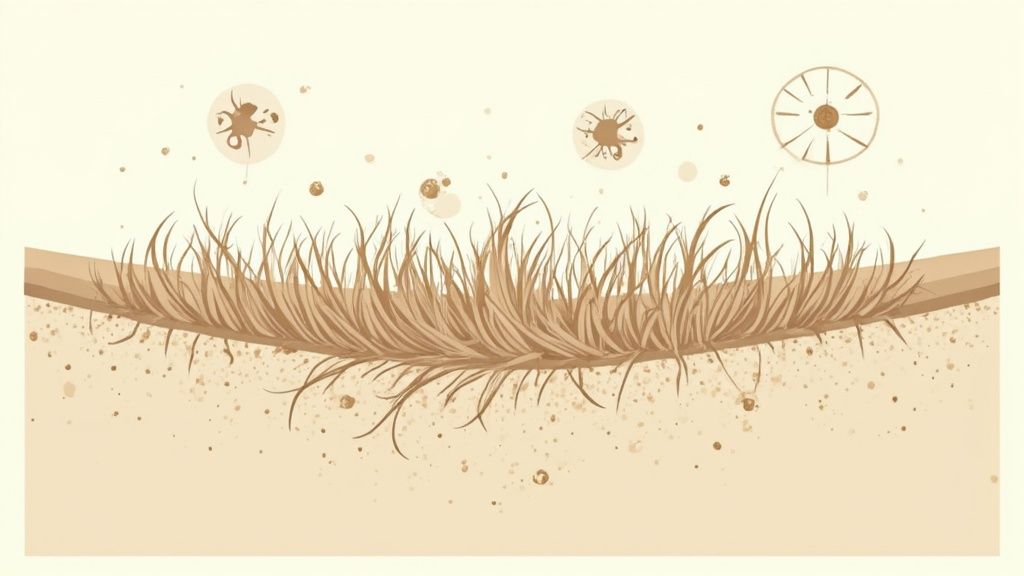
This close-up look at carpet fibres shows just how easy it is for oils, dander, and moisture to get trapped deep inside. It's this dense, complex weave that makes getting rid of lingering dog smells a real challenge for so many of us.
Have you ever cleaned a spot on your carpet, thinking you've sorted it, only for that familiar doggy odour to creep back? It's a common frustration. The problem is that the smell isn't just on the surface. It’s a mix of microscopic particles that have worked their way deep into the carpet fibres and, sometimes, even into the underlay itself.
That stubborn scent is usually down to a few main culprits:
- Dander and Hair: Tiny skin flakes and fur carry your dog's unique scent, and they get tangled and trapped right in the carpet pile.
- Natural Oils: Dogs have natural oils on their skin which transfer onto any surface they lie on, leaving behind a greasy, smelly residue over time.
- Bacteria: When moisture from saliva, wet paws, or accidents gets into the carpet, it becomes the perfect breeding ground for odour-causing bacteria.
The Science Behind the Smell
The infamous "wet dog" smell is the perfect example of this in action. As water evaporates from your dog's coat, it carries a cloud of compounds produced by yeast and bacteria living on their skin. These compounds are what you're smelling, and they settle right into your carpet fibres.
This is a massive issue across the UK, where our dogs are truly part of the family. With roughly 36% of UK households owning a dog, that's a staggering 13.5 million pet dogs in the country. It’s no wonder so many of us are looking for real solutions to keep our homes smelling fresh.
The real problem isn't the dog—it's what they leave behind. Simply spraying an air freshener is like putting a plaster on a broken leg; it hides the problem without fixing the root cause deep within the carpet fibres.
Understanding this makes it clear why some cleaning methods just don't work. Properly removing pet odors from carpet needs techniques that do more than just clean the surface. You have to break down the oils and kill the bacteria to get a genuinely fresh, clean result.
Your Toolkit for Natural Odour Removal
Before you even think about tackling that lingering dog smell, you need to gather your gear. But don't worry, you can forget about harsh chemicals and pricey gadgets. More often than not, the most powerful solutions are already tucked away in your kitchen cupboard. These natural heroes work by getting to the root of the problem and neutralising odours, not just temporarily hiding them behind a synthetic floral scent.
The heart of any effective, natural cleaning kit rests on two absolute powerhouses: baking soda and white vinegar. They're safe, ridiculously cheap, and incredibly good at getting dog smells out of carpet for good.
The Essential DIY Deodorisers
First up is baking soda, a true champion of odour absorption. Its alkaline properties are perfect for neutralising the acidic compounds that cause most pet smells. You can think of it as a magnet for bad scents, literally drawing them out from deep within your carpet fibres.
Then you have white vinegar, a mild acid that’s brilliant at dealing with bacteria. When you dilute it with a bit of water, it transforms into a potent cleaning solution that breaks down the source of the smell without being harsh on your carpet. For a closer look at mixing your own powerful solutions, our guide to making a natural carpet cleaner has some fantastic, easy-to-follow recipes.
Must-Have Cleaning Tools
Having the right ingredients is one thing, but you also need a few basic tools to apply them properly and get the best possible results. A quality vacuum cleaner is absolutely non-negotiable. If you have one with a HEPA filter, even better – it’ll trap those microscopic dander and allergen particles instead of just blowing them back into the room.
You'll also want to grab these:
- A clean, empty spray bottle for an even mist of your vinegar solution.
- A few clean, dry microfibre cloths to blot up moisture effectively without leaving any lint behind.
- A soft-bristled brush to gently work the baking soda right down into the carpet pile.
As you get your kit together, remember that choosing safe cleaning products for pets should always be your top priority. These simple household items are a great starting point, as they're completely non-toxic when used correctly.
Remember, the goal is to neutralise, not just cover up. An effective toolkit gives you the power to break down the odour-causing bacteria at its source, ensuring the smell is gone for good, not just hidden for a few hours.
DIY vs. Commercial Cleaners
So, how do these simple household staples actually stack up against the specialised cleaners you see on shop shelves? While commercial enzymatic cleaners are fantastic for breaking down the organic matter in really tough stains (think urine or vomit), a natural approach is often just as effective—and much kinder to your wallet—for tackling those general, lingering dog odours.
To help you decide what’s right for your situation, here's a quick comparison.
Comparing DIY and Commercial Odour Removers
Here's a head-to-head look at how household items and store-bought enzymatic cleaners compare when it comes to tackling dog odours, covering everything from how they work to their cost and safety.
| Solution Type | How It Works | Best For | Average Cost (UK) | Pet & Family Safety |
|---|---|---|---|---|
| DIY (Baking Soda & Vinegar) | Absorbs and neutralises acidic odours; disinfects | General dog smells, light stains, refreshing entire rooms | Under £5 | High (non-toxic) |
| Commercial Enzymatic Cleaner | Uses "good" bacteria to break down organic waste | Specific urine stains, vomit, and other stubborn spots | £10 – £20 per bottle | Generally high, but check labels |
Ultimately, both have their place. For everyday freshness and widespread odours, the DIY route is effective and economical. For specific, stubborn biological stains, a targeted enzymatic cleaner might be the better tool for the job.
The Three-Part Method for a Fresher Carpet
Alright, with your toolkit assembled, it's time to get down to business. This isn't some complex scientific procedure; it's a straightforward, highly effective three-part process that gets right to the source of the odour. We’re going to lift out the loose debris, absorb the lingering smells, and then neutralise anything left behind. It’s a method I've relied on for years to completely refresh a room.
Before you reach for any cleaning solutions, the most crucial first step is a really thorough vacuuming. I don’t mean a quick whiz around the room. You need to be methodical, removing as much loose hair, dander, and dirt as you possibly can. Go slowly, passing over each section multiple times and from different angles. This really helps to agitate the pile and pull up all the gunk hiding deep within the fibres.
This infographic breaks down the simple but powerful sequence of tools you'll be using.
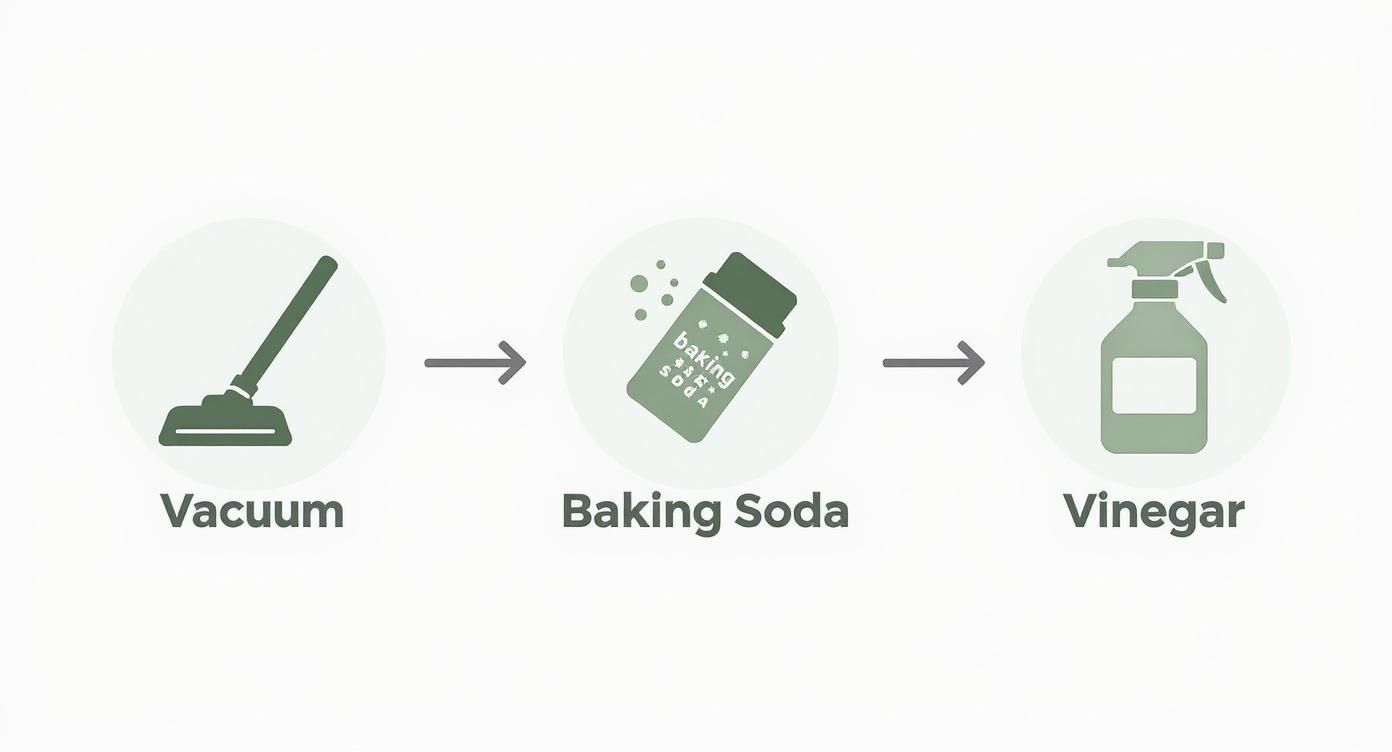
As you can see, the process moves logically from mechanical removal to absorption, and finally to neutralisation. This ensures every aspect of the odour problem is tackled head-on.
The Baking Soda Blitz
Once the carpet is free of debris, you can move on to the absorption stage. Take your box of baking soda and sprinkle it generously over the entire carpet. Don't be stingy here—you're looking for a fine, even layer covering every fibre, paying special attention to the spots your dog loves to hang out.
Next, take a soft-bristled brush and gently work the powder down into the pile. This simple action makes a huge difference, as it ensures the baking soda makes maximum contact with the trapped oils and odour-causing nasties.
Now comes the easiest—and hardest—part: waiting. You need to let the baking soda sit for at least a few hours. Honestly, if you can leave it overnight, that's even better. This ‘dwell time’ is when the magic really happens, as the alkaline powder slowly absorbs the acidic compounds that create that stubborn dog smell.
The Vinegar Rinse and Neutralisation
After the baking soda has done its job, it's time for the final neutralising phase. Fill your spray bottle with a solution of 50% white vinegar and 50% cool water. It’s a simple mix, but it’s incredibly effective. Before you go spraying it everywhere, though, a quick word of warning.
Pro Tip: Always patch test your vinegar solution first. Find a hidden spot, like under the sofa or inside a cupboard, spray a small amount, and blot it with a clean white cloth. Let it dry completely to make absolutely sure it doesn’t cause any discolouration.
Once you’ve confirmed it’s safe for your carpet, lightly mist the vinegar solution over the baking soda. You’re not trying to soak the carpet, just dampen it enough for the reaction to start. You might hear a faint fizzing sound, which is a great sign! It means the acidic vinegar is busy neutralising the alkaline baking soda, along with any odour-causing bacteria left behind.
Let the solution sit for about five to ten minutes. Then, grab your clean microfibre cloths and start blotting the area dry. Always work from the outside of a damp patch inwards to prevent spreading the moisture.
Finally, give the entire carpet one last, thorough vacuum to lift all the remaining baking soda residue and dampness. If you're keen to take your cleaning to the next level, our guide on how to deep clean carpets at home is packed with useful tips. Following this three-part method correctly is a surefire way to get that dog smell out of your carpet for good.
How to Handle Tough Stains and Set-In Smells
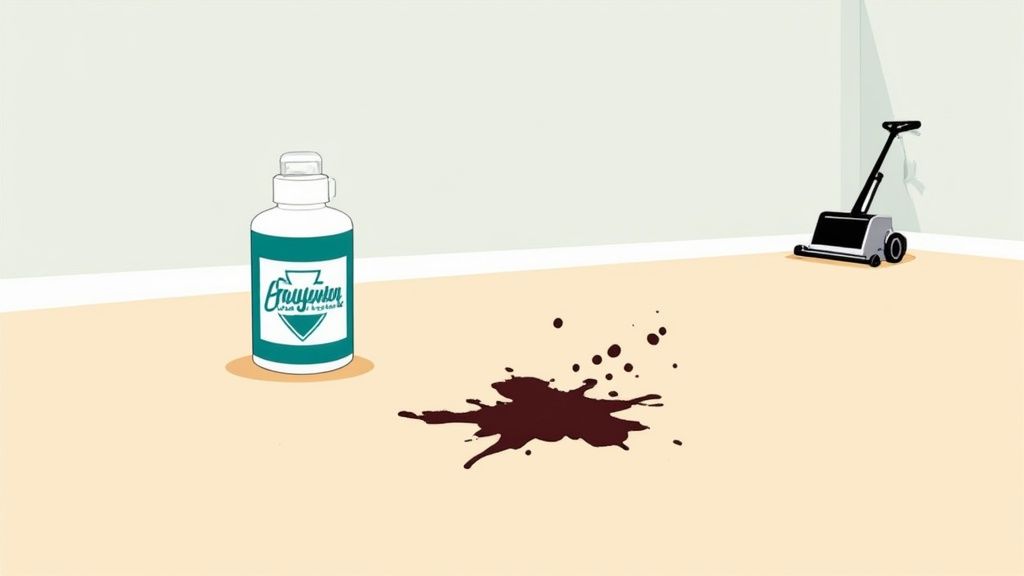
Sometimes, that stubborn urine scent just won't budge with a simple spray and blot. For those really set-in smells, especially the ones that seem to have become part of the furniture, you need to bring in the heavy hitters: enzyme-based cleaners.
Unlike standard cleaners that just mask odours, enzyme-based products get to the root of the problem. They use good bacteria to literally consume the organic matter causing the lingering smell.
For a fresh accident, a quick rinse and blot might be enough. But for an older, more established spot, you’ll need a targeted enzymatic formula and a bit more patience.
- Fresh accident: Start by rinsing with water and blotting gently. Then, apply your enzymatic cleaner and let it sit for about 10 minutes.
- Stubborn spot: Don’t be shy with the cleaner. Properly saturate the area and give the formula at least 30 minutes to work its magic before lifting the residue with a damp cloth.
This method is so effective because it breaks down the uric acid crystals at a molecular level, completely neutralising the odour for good without damaging your delicate carpet fibres.
Choosing the Right Enzymatic Option
Not all enzyme cleaners are created equal. When you’re shopping around, look for a product that specifically lists active bio-enzymes on the label. These are the live cultures proven to digest the specific proteins found in pet waste like urine and vomit.
A few things to keep an eye out for:
- A pH-neutral formula is essential to protect your carpet’s colour and dyes.
- Opt for something with minimal fragrance. You want to eliminate the pet odour, not just cover it with a strong artificial scent.
- Check for clear instructions on dwell time and rinsing to avoid accidentally damaging the fibres.
It's also a good idea to look for UK-friendly labels that show a non-toxic certification, giving you peace of mind if you have children or other pets in the house.
Renting Vs Professional Deep Cleaning
For a really deep clean, you might consider a carpet cleaning machine. Renting one can revive those deep fibres for around £30–£50 a day. The downside? You have to do all the heavy lifting yourself, from hauling the equipment to following the strict rinsing instructions.
On the other hand, professional services cost more upfront—typically between £70–£120 per room—but they come with expert handling, powerful equipment, rapid drying times, and professional-grade, eco-friendly cleaning agents.
| Option | Approx Cost Per Day/Room | Effort Level |
|---|---|---|
| Rental Machine | £30–£50 per day | High effort for assembly and rinse |
| Professional Service | £70–£120 per room | Low effort with just room prep |
Maximising Cleaning Effectiveness
To get the most out of your enzymatic cleaner, give it the best possible environment to work in. These products work a bit better when they have more time, especially in cooler temperatures.
- In cooler rooms, try extending the dwell time up to an hour.
- Gently agitate the carpet fibres with a soft brush to help the enzymes penetrate deeper.
- Keep the treated area slightly damp, as this helps sustain the bacterial activity.
Good ventilation is also key. It helps the carpet dry faster and prevents any musty smells or mould from developing.
Given that the annual cost of owning a dog in the UK can easily run into hundreds of pounds, it's understandable why many pet owners prefer cost-effective DIY solutions.
If you’re struggling with particularly nasty smells after an accident, our other guides might have the answer. Take a look at our detailed post on how to remove stubborn carpet stains for some extra tactics.
For particularly challenging organic stains that leave behind strong odours, gaining insight into understanding the causes of dog diarrhea and vomiting can be crucial for preventing future messes.
By combining a targeted enzymatic cleaner with either a DIY rental or a professional service, you’ll finally get rid of those set-in smells and bring your carpet back to life.
Quick Tips
- Always pre-test any new product on a small, hidden patch of carpet to check for discolouration.
- For the best results, keep pets and people off the treated area until it's completely dry.
These small steps make a big difference in keeping your carpets fresh and odour-free, even in the busiest of homes.
Simple Habits to Keep Your Carpet Fresh
Once you’ve done the hard work of getting those stubborn odours out, the real secret is keeping them from coming back. The best way to get dog smell out of carpet for good is to stop it from building up in the first place. This isn't about massive cleaning sessions, but rather a few small, consistent habits that make a world of difference over time.
Think of it as a simple maintenance plan for your home. By slotting a few quick tasks into your weekly routine, you can keep that fresh, clean feeling long after a deep clean. This is especially important for the huge number of new pet parents we're seeing across the UK.
Lifestyle changes in recent years have led to a massive surge in pet ownership. In fact, around 25% of all dogs currently in the UK found their homes since the pandemic began, creating a whole new generation of owners learning the ropes. You can see more on these trends in this report on UK dog ownership.
Build a Proactive Weekly Routine
The key to preventing odours is to create a simple, repeatable routine. It's all about consistency, not intensity.
- Frequent Vacuuming: Get the hoover out at least twice a week for high-traffic areas. This lifts fresh dander, hair, and dirt before it has a chance to get ground deep into the carpet fibres.
- Air Out Rooms Daily: It sounds simple, but just opening the windows for 10-15 minutes a day makes a huge difference. It improves air circulation, helping to shift mild odours and reduce any dampness.
- Washable Throws: Place a washable blanket or throw on your dog’s favourite spot—whether that's the sofa, their bed, or a particular corner of the rug. It’s far easier to pop these in the wash each week than to deep clean the entire carpet.
Don't Underestimate Good Grooming
A huge amount of the odour trapped in your carpet comes directly from your dog. A few basic grooming habits can dramatically cut down on the dander, oils, and dirt they track inside.
Brushing your dog regularly, especially if they have a thick coat or shed a lot, removes loose fur that would otherwise end up woven into your carpet. A quick wipe of their paws after a muddy walk also stops dirt from being trailed all over your floors, which is often the source of those musty smells.
A clean pet means a cleaner home. Ten minutes spent grooming each week can save you hours of deep cleaning down the line. It's the ultimate preventative measure against lingering dog smells.
By combining these small habits, you create a powerful defence against future odours. It also gives you a better idea of how often to clean carpets to keep them in top condition. Maintaining that freshness becomes less of a chore and more of a natural part of your home life, ensuring your space always feels welcoming for you and your furry friend.
Your Top Questions Answered
Even when you've got the perfect plan, it's natural for a few questions to pop up, especially when you're tackling something as stubborn as dog smells in your carpet. We get it. You want to be sure you're doing it right.
So, let's go over some of the most common queries we hear from pet owners. Getting these sorted will help you sidestep any potential hiccups and get that truly fresh result you're after.
Will Vinegar Damage My Carpet's Colour?
This is a really smart question to ask. The good news is that standard distilled white vinegar is a mild acid and is generally perfectly safe on most common carpet materials, including synthetics and wool.
That said, you should always, always test it on an inconspicuous area first. Find a spot inside a wardrobe, under the sofa, or somewhere else out of sight. Just apply a little of your diluted solution, let it sit for a few minutes, and then blot it up with a clean, white cloth. If there’s no colour transfer, you’re good to go. Never use darker vinegars like apple cider or balsamic, as their natural tannins can easily leave a stain.
How Often Should I Be Deep Cleaning?
The perfect schedule really depends on your furry family. For a home with one or two dogs who are generally well-behaved, giving your carpets a deep clean with the baking soda and vinegar method every three to six months is a great way to stay on top of things. This, of course, is on top of your regular weekly vacuum.
But if you've got a multi-pet household, a heavy shedder, or a pup who's still getting the hang of potty training, you'll probably want to do a deep clean every two to three months. When it comes to odours, consistency is your best friend.
Are Essential Oils Safe for My Dog?
You need to be extremely cautious here. It's tempting to add a few drops of your favourite essential oil to a cleaning mix for a lovely scent, but many of them are actually toxic to dogs if ingested or even inhaled.
Some of the biggest culprits to avoid include:
- Tea tree oil
- Pine oil
- Wintergreen
- Cinnamon
- Citrus oils (in large amounts)
If you're looking for a fresh fragrance after you've cleaned, your safest bet is to use a room spray or freshener that is specifically made and certified as pet-safe. An even better, all-natural alternative is to gently simmer some pet-friendly ingredients like a few sprigs of rosemary or some orange peel in a pot of water on the stove. It makes the whole house smell wonderful without putting any potentially harmful substances where your dog can reach them.
For those deep-set odours that just won't shift, sometimes a professional touch is what's needed. The team at AG Carpet Specialists uses advanced, eco-friendly techniques to safely eliminate pet smells from deep within your carpet fibres, leaving your home healthier and fresher. Get your free, no-obligation quote today!