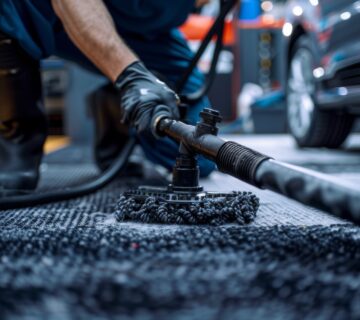
We’ve all had that heart-stopping moment.A glass of red wine tumbles in slow motion, a muddy footprint appears out of nowhere on the cream carpet, or a cup of tea goes flying. Your first instinct might be to panic, but what you do in those first few minutes is absolutely crucial.
Honestly, the difference between a minor clean-up and a permanent, ugly stain often comes down to how you react straight away.
Your First Move Against Fresh Carpet Spills
The golden rule I always tell my clients is simple: blot, don't rub. It’s so tempting to grab a cloth and start scrubbing furiously, but that’s the worst thing you can do. Rubbing just grinds the spillage deeper into the carpet fibres and often spreads the stain, turning a small spot into a much bigger problem.
Instead, grab a clean, white microfibre cloth or a few paper towels. Gently press down on the spill, working from the outside of the stain towards the centre. This helps contain it. Keep dabbing and switching to a clean part of the cloth to lift as much of the liquid as possible. Continue until your cloth comes up dry.
Immediate Action is Everything
Timing is your best friend here. Procrastination is the enemy of a clean carpet. In fact, industry data shows that up to 90% of all carpet stains can be removed if they're treated within the first 72 hours. If you're interested in the numbers, TopCleaners.co.uk has some insightful home cleaning statistics.
This simple workflow shows the best way to approach any fresh spill.
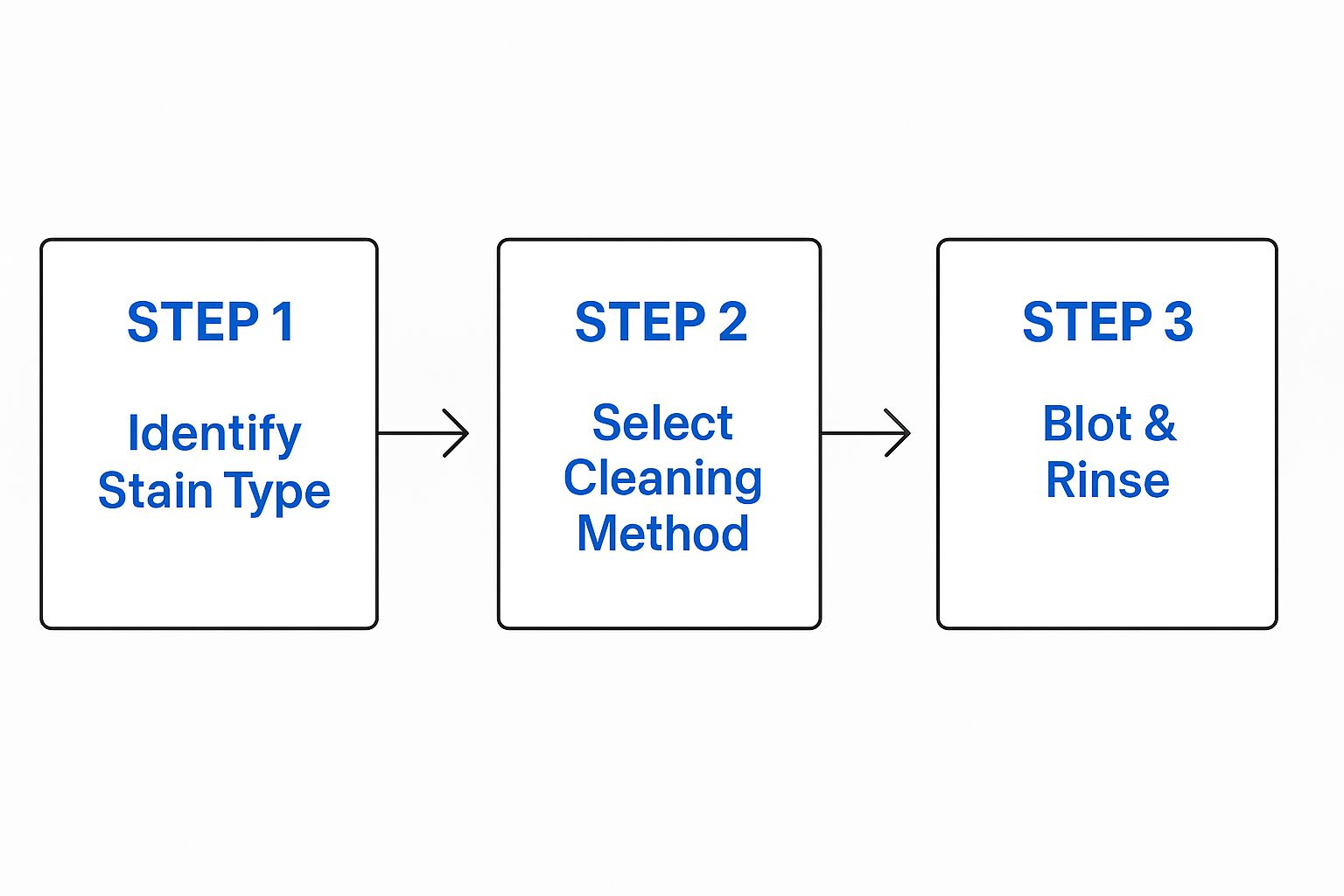
As you can see, it’s a logical process: figure out what the stain is, choose the right method, and then carefully blot and rinse.
To make things even easier, here’s a quick reference table for some of the most common spills we see. Think of it as your emergency action plan.
Immediate Action Plan for Common Spills
| Stain Type | Immediate First Step | What to Avoid |
|---|---|---|
| Red Wine | Blot thoroughly, then lightly spritz with a mix of 1 part white vinegar and 2 parts water. | Using hot water, which can set the stain. |
| Coffee or Tea | Blot with a dry cloth. If milk was added, use a cold, damp cloth. | Rubbing aggressively; this will damage the fibres. |
| Mud | Let it dry completely. Then, vacuum up the loose dirt before treating any remaining stain. | Wiping it while wet, as this will just smear it. |
| Pet Urine | Blot as much as possible, then use an enzymatic cleaner to break down the acid. | Using ammonia-based cleaners, which can attract pets back. |
| Oily or Greasy Food | Scrape off any solids. Sprinkle baking soda or cornflour on the stain to absorb the grease. | Applying water first, which can spread the oil. |
This table should give you the confidence to act quickly and correctly, no matter what life (or a clumsy guest) throws at your carpet.
Remember, the goal of your initial response isn't always to make the stain vanish instantly. It’s about damage control. By blotting the excess and preventing the spill from setting, you’ve already won half the battle and set the stage for a more targeted treatment.
Matching the Stain Solution to Your Carpet
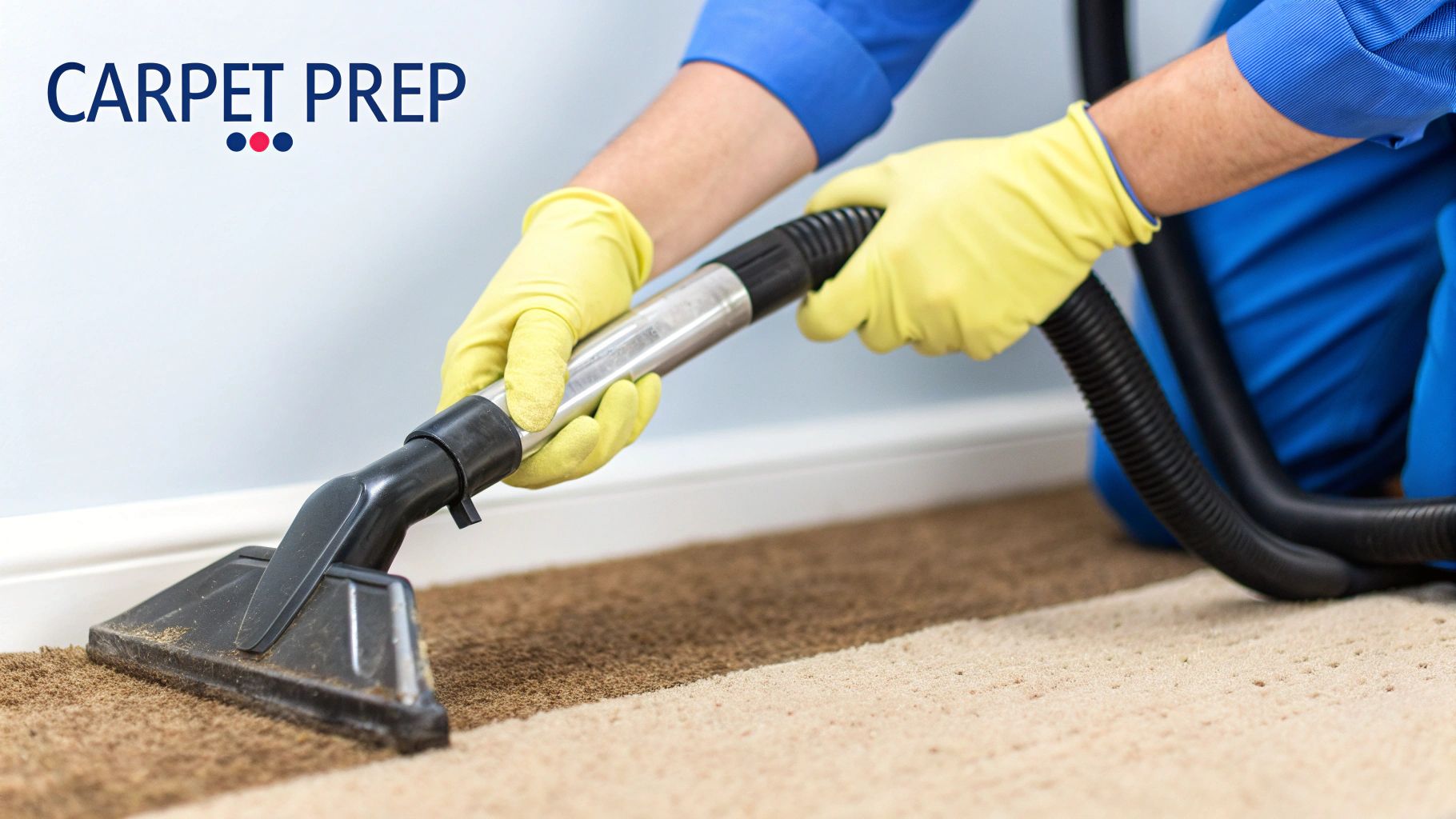
Before you reach for the nearest cleaning spray, hold on. Using the wrong product on the wrong kind of stain or carpet is a recipe for disaster. I’ve seen it happen too many times – a simple spill can become a permanent mark, or worse, you could damage the carpet fibres themselves. The first step in learning how to remove stubborn carpet stains is playing detective and getting the identification right.
Believe it or not, most household stains fall into one of three main categories. Figuring out which one you’re dealing with will make your cleaning efforts far more successful.
- Water-Based Stains: These are the most common spills we see, from juice and mud to washable ink. The good news is they are generally the easiest to tackle.
- Oil-Based Stains: Think of messes like salad dressing, cooking oil, makeup, or grease. These are hydrophobic (they repel water), so a standard water-based cleaner just won't cut it here.
- Tannin Stains: This group includes some of the most feared culprits: red wine, coffee, and tea. They’re essentially natural dyes and can be a real headache to lift once they’ve had a chance to set.
Know Your Carpet Material
What your carpet is made of is just as important as the stain itself. A cleaning solution that’s perfectly safe for a tough synthetic carpet could completely ruin a natural wool one. Most homes in the UK will have carpets made from one of a few common materials.
- Synthetic (Nylon, Polyester, Polypropylene): These are fantastic for busy homes. They're hard-wearing and often come with built-in stain resistance, which gives you more leeway with cleaning methods.
- Wool: A beautiful and durable natural fibre, but it needs a delicate touch. Harsh chemicals or scrubbing too hard can cause it to shrink or lose its colour. You'll need a gentle, pH-neutral cleaner for wool.
If you’re not sure what you have, try to find a label on the underside of a loose corner or on a spare offcut from when it was fitted. For a deeper dive into this, you might find our general carpet cleaning tips a helpful read.
Crucial Tip: Always Patch Test
I can't stress this enough: never apply a new cleaning solution directly onto a visible stain. Find a hidden spot—in a corner, under the sofa, or inside a wardrobe—and test a tiny amount of your cleaner. Let it dry completely and then check for any colour run or damage to the fibres. This simple action can save you from a very expensive mistake.
Choosing the Right Stain Removal Arsenal
Walking down the cleaning aisle can be a bit much, can’t it? With so many products promising to magic away every spill imaginable, it’s tough to know what actually works. The truth is, the right choice really comes down to the stain you’re dealing with and whether you prefer a ready-made solution or something you can whip up yourself.
For a lot of people, a good quality, shop-bought product offers a quick and powerful fix. Time and again, consumer tests show that the best stain removers are those that combine a potent cleaning formula with a smart applicator. You’ll see UK favourites like Dr. Beckmann, Vanish, and Astonish often come with built-in brushes. From my experience, that simple feature makes a huge difference in working the product deep into the carpet fibres. For an independent look at what’s out there, you can see some great product comparisons over at Which.co.uk.
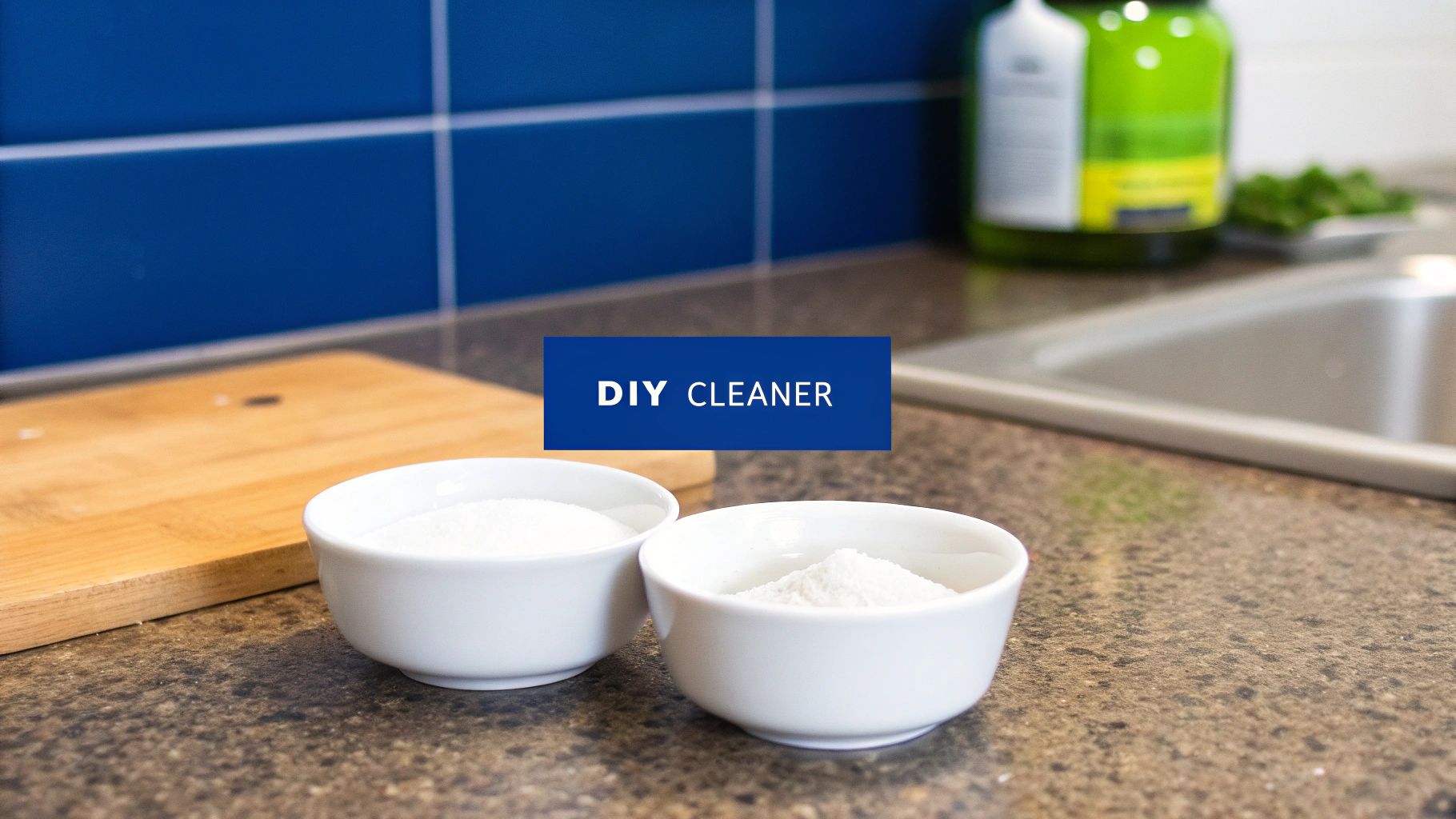
But you don't always need to spend money. Believe it or not, some of the most effective stain fighters might already be sitting in your kitchen cupboards, offering a cheaper and more natural alternative.
Powerful DIY Stain Removal Recipes
You can create your own effective cleaning solutions with just a few household staples. These are my go-to recipes that I often recommend to clients looking for a gentler, more eco-friendly approach to stain removal.
- The All-Purpose Vinegar Solution: For common water-based spills like fruit juice or mud, simply mix equal parts white vinegar and cool water in a spray bottle. Vinegar is a fantastic mild acid that breaks down stains beautifully without harming most synthetic carpets.
- The Bicarbonate of Soda Paste: When you’re faced with a greasy or oily stain, make a thick paste using bicarbonate of soda and a little water. Spread it over the stain, let it dry completely, and then just vacuum it up. The bicarb does an amazing job of absorbing grease and oil.
- The Gentle Detergent Mix: If you’re nervous about a delicate carpet or you’re not sure what the stain is, a few drops of a clear, gentle washing-up liquid in a cup of warm water is a safe bet. Just be sure to use a brand that doesn’t contain any bleach or moisturisers like lanolin.
Expert Tip: No matter what liquid cleaner you use—commercial or homemade—always apply it to a clean cloth first, not directly onto the carpet pile. Dabbing the stain prevents you from over-saturating the area, which can damage the carpet’s backing and make it take forever to dry.
Choosing Your Stain Removal Solution
Deciding between a commercial cleaner and a DIY recipe really depends on the stain itself. Picking the right tool for the job is half the battle. This table should help you quickly see the pros and cons of each approach for common household stains.
| Solution Type | Best For Stains Like… | Pros | Cons / Cautions |
|---|---|---|---|
| Commercial Cleaners | Ink, heavy grease, old set-in stains | Specially formulated for tough stains, often with helpful applicators. | Can contain harsh chemicals; always patch test first. |
| White Vinegar Solution | Coffee, tea, light mud, tannin stains | Eco-friendly, affordable, and effective at neutralising odours. | Not suitable for all natural fibres; can have a strong initial smell. |
| Bicarbonate of Soda | Oily food, pet urine (odour), fresh spills | Excellent at absorbing liquids and odours, very gentle on fibres. | Can be messy; primarily for absorption rather than deep cleaning. |
At the end of the day, it’s wise to have both a trusted commercial cleaner and the ingredients for a DIY solution on hand. Being prepared means you can tackle almost any spill life throws at you.
Keep in mind that these spot treatments are for isolated stains. They are an essential part of carpet care, but they aren't a substitute for a proper deep clean. If you're looking to refresh an entire room, you’ll need a more thorough method. For a full walkthrough, take a look at our complete guide on how to deep clean carpets at home.
Advanced Techniques for Set-In Stains
We’ve all been there—discovering a stain long after the spill happened. These are the marks that have had plenty of time to dry, bond with the carpet fibres, and become genuinely stubborn. It's frustrating, but it doesn't mean your carpet is ruined. Tackling these set-in stains simply calls for a more specialised approach and a bit of patience.
Forget the all-purpose sprays for these older, more challenging marks. This isn't about frantic scrubbing; it's about using the right method to break down a specific type of stain at a molecular level.
Tackling Dried Red Wine and Coffee
Stains from things like red wine, tea, and coffee are notorious for being difficult once they've set. They essentially act like a dye on your carpet fibres. Your goal is to carefully reverse that process without accidentally bleaching the carpet itself.
- A surprisingly effective method uses a simple solution of two parts hydrogen peroxide to one part clear washing-up liquid.
- But first, and this is crucial, you must always patch test this mix in a hidden spot, like inside a cupboard or under a sofa. Peroxide can have a mild bleaching effect, especially on some natural fibres.
- Once you know it's safe, apply the solution to a clean, white cloth and gently dab the old stain. Don’t pour it directly onto the carpet. Let it sit for about 5-10 minutes, then use a separate damp cloth with cold water to blot the area, lifting the solution and the loosened stain.
Dealing with Old Grease and Oil Marks
Grease stains are a completely different beast. Because they are oil-based, plain old water and soap won't cut it. For an old, set-in grease mark, you first need something to draw the oil out.
Start by generously sprinkling bicarbonate of soda or cornflour over the entire stain. Using a soft-bristled brush, gently work the powder right into the carpet fibres. Now, you need to let it sit for at least an hour—or even overnight if you can. The powder will slowly absorb the hardened grease out of the carpet.
After waiting, vacuum the area thoroughly. If any residue remains, a small amount of rubbing alcohol on a cloth can help break down the last of the grease. Just dab lightly and never saturate the carpet.
Pro Tip: Rinsing after treating any set-in stain is non-negotiable. Any leftover cleaning solution, even a homemade one, will leave a sticky residue that attracts dirt like a magnet. This is exactly how you end up with a clean spot that looks dirty again in just a few weeks. Blot with a cold, damp cloth until you're certain all the residue is gone.
When Pet Stains Have Set In
Older pet urine stains are particularly challenging because you're fighting both a visible stain and an invisible, odour-causing bacteria. Your standard carpet cleaner won't work here. You must use an enzymatic cleaner. These products contain active enzymes that physically break down and consume the uric acid crystals responsible for the stain and the lingering smell.
For persistent issues, it's worth understanding the science behind the smell. For a comprehensive overview, our guide on how to remove dog urine smell from your carpet offers more detailed solutions.
After any of these treatments, resist the urge to use high heat from a hairdryer, as this can permanently set any remaining stain particles. Instead, use the cool setting or simply aim a fan at the damp patch to improve air circulation and speed up drying.
How to Prevent Future Carpet Stains
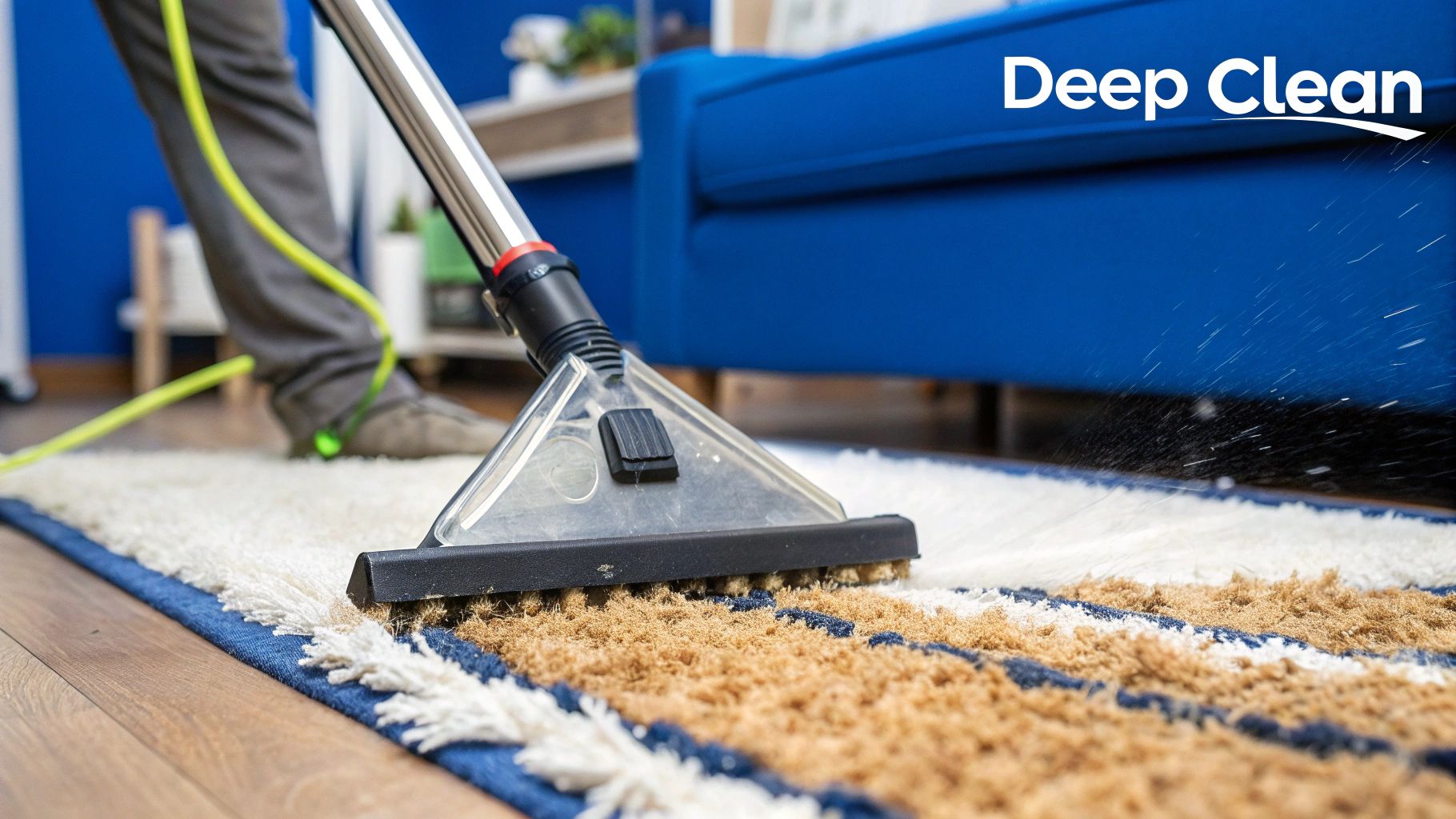
After you've put in the hard work to lift a stubborn stain, the last thing you want is another one appearing. The old saying is true: prevention is always better than cure. By taking a few proactive steps, you can save yourself a lot of future stress and scrubbing. A simple, consistent care routine is your best line of defence.
It all starts with looking at your vacuum cleaner differently. It isn't just for a quick tidy-up before guests arrive; it's your number one tool for preventing stains. Regular vacuuming, especially in hallways and living areas, pulls up the sharp, gritty dirt particles before they get trodden deep into the carpet pile. That grit acts like sandpaper, weakening the fibres and making them far more likely to absorb spills.
Establish Simple Household Rules
You don’t need to run your home like a military barracks, but a few easy-to-follow rules can make a massive difference in cutting down on spills and dirt.
- Create a Shoe-Free Zone: This is probably the single most effective rule you can introduce. So much dirt, grime, and potential staining substances are carried in on the soles of our shoes. A simple shoe rack by the front door is a great visual reminder for family and visitors alike.
- Use High-Quality Doormats: Think of it as a two-stage system. Place a tough, bristly mat outside to scrape off mud and heavy grit. Then, have a softer, more absorbent mat just inside the door to catch the finer dust and any lingering moisture.
- Designate "Safe" Zones: If you've got young children or you're planning a party, it's wise to limit certain drinks and snacks to areas with hard flooring. Things like blackcurrant squash or sticky cakes are best kept in the kitchen or dining room, away from your lovely carpets.
The best preventative measures are the ones you can actually stick to. It’s far better to have a simple, consistently followed “no shoes” rule than a complicated cleaning rota that everyone gives up on after a week.
The Power of Protective Treatments
For an added layer of security, think about using a carpet protector spray. Professional-grade treatments create an invisible shield around each carpet fibre. While this doesn't make your carpet stain-proof, it causes liquids to bead up on the surface. This gives you precious extra moments to grab a cloth and blot the spill before it has a chance to sink in and cause a permanent mark.
Of course, even with the best daily habits, nothing replaces a deep, professional clean for maintaining your carpet's health and appearance. It's generally recommended that UK homes with light footfall have carpets professionally cleaned every 12 to 18 months. For busy households with pets, children, or heavy traffic, you should shorten this to every 3 to 6 months.
Pet-related accidents, in particular, need specialist treatment to deal with both the stain and the odour. If that's a familiar problem, our dedicated guide on carpet cleaning for pet urine has the specific advice you need.
Common Carpet Stain Questions Answered
Even when you think you’ve got a handle on how to tackle stubborn carpet stains, it’s only natural for questions to pop up. We get it. Facing down a particularly nasty mark or working with a delicate carpet can make anyone feel a bit unsure. Let’s clear up some of the most common queries we hear from homeowners around the UK.
"Can I Really Use Bicarbonate of Soda?"
This is one of the first questions people ask, and the answer is a qualified yes.
Bicarbonate of soda is a brilliant, eco-friendly tool for absorbing fresh spills and neutralising odours, especially on synthetic carpets like nylon or polyester. But—and this is important—if you have a wool or natural fibre carpet, you absolutely must perform a spot test in a hidden area first. On rare occasions, its alkaline nature can cause slight discolouration on these delicate materials.
"Will Heat Get Rid of an Old, Set-In Stain?"
Another frequent question is about bringing out the big guns, like a steam cleaner. People often wonder if it can finally shift that old, mysterious stain they’ve been ignoring. This one is a bit tricky because heat can be a double-edged sword.
A steam cleaner is a powerful ally, but its high heat can be your worst enemy with certain stains. If you’re dealing with a protein-based mark—think blood, egg, or milk—the intense heat can essentially "cook" the protein. This will permanently set the stain right into the carpet fibres, making it impossible to remove.
Expert Insight: For old, mystery stains, always pre-treat the area with a specialised, cold-water-based stain remover before you even think about steam cleaning. This gives you the best chance of breaking down the mark without accidentally welding it to your carpet for good.
"How Do I Get Rid of the Cleaning Smell?"
Finally, a common follow-up issue is the lingering scent of the cleaning solution itself, whether it’s a chemical product or just vinegar.
The solution here is simple: make sure the area is completely dry. Good air circulation is your best friend. Open a window or point a fan at the damp patch to speed things along. If a scent still hangs around after the carpet is dry, a light sprinkle of dry bicarbonate of soda is your go-to. Let it sit for a few hours to absorb any remaining odour molecules, then give it a thorough vacuum.
Of course, some stains just won't budge with DIY methods. When you've tried everything or just want to give your entire carpet a new lease of life, professional help is the most effective and stress-free route. You can explore the benefits of professional carpet cleaning services to see if it's the right choice for your home.
When stains become too much for DIY methods, trust the professionals. AG Carpet Specialists provides expert, eco-friendly cleaning solutions in Cheltenham, Gloucester, and Stroud. Contact us today for a free, no-obligation quotation.