If you've ever dealt with a cat accident on the carpet, you know that simply cleaning the visible stain often isn't enough. The real challenge is that lingering smell that seems to reappear days or even weeks later. This isn't your imagination; it's down to the unique chemistry of cat urine.
Why Cat Urine Is So Hard to Remove
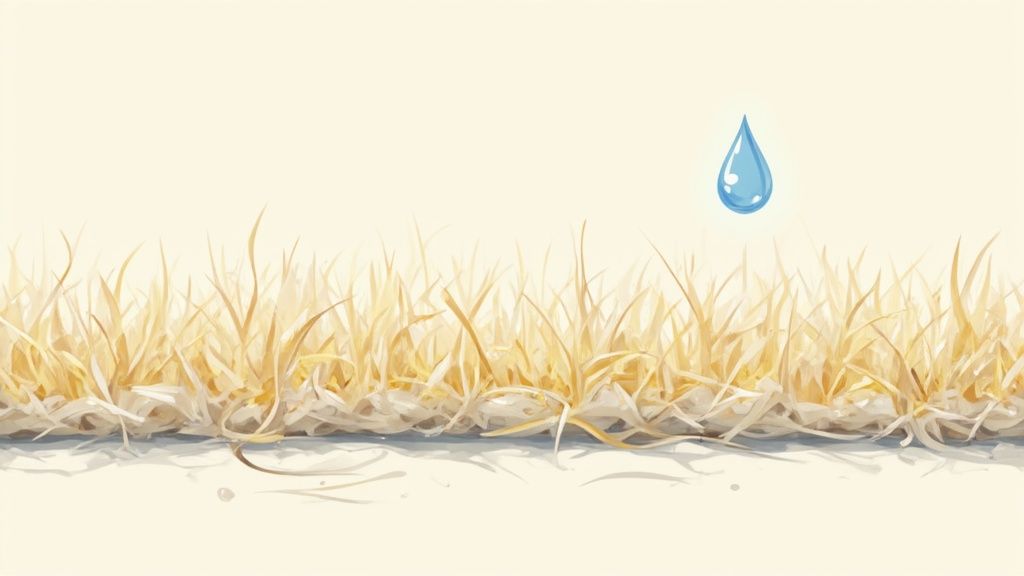
That stubborn odour comes from uric acid crystals, which form as the urine dries. Unlike other components, these crystals don't dissolve in water. This is the crucial reason why standard carpet shampoos and household cleaners just can't get the job done.
When you try to clean the spot with regular soap and water, you might remove the surface stain, but the uric acid crystals are left behind, clinging tightly to the carpet fibres.
Any time these crystals are exposed to humidity—whether it's a damp day, steam from the shower, or even a fresh attempt at cleaning—they reactivate and release that all-too-familiar ammonia smell. This is why the odour seems to come and go.
The Damage Beneath the Surface
The problem often runs much deeper than what you can see. A small, palm-sized spot on top of the carpet can spread significantly once it soaks through to the underlay and even the subfloor beneath.
This hidden saturation is where the real long-term issues begin:
- Permanent Stains: The potent chemical compounds in cat urine can bleach or permanently alter the dyes in your carpet. Over time, you might notice a patch on your beige carpet turning a nasty yellow or orange colour that no amount of scrubbing will shift.
- Odour Reservoir: Even if you manage to perfectly clean the surface fibres, the contaminated underlay will act as a constant source of odour, seeping back up into the room.
- Structural Damage: In the UK, many homes have carpets where moisture can seriously compromise the glues holding the backing together. The Carpet and Rug Institute notes that repeated accidents can cause the layers to separate, effectively ruining that section of carpet.
To truly eliminate the problem, you have to treat the issue as deep as the urine originally penetrated. For a more detailed guide, see our post on how to get rid of cat pee smell permanently.
How to Find Every Hidden Urine Stain
When you’re dealing with cat urine in the carpet, the spot you can see is often just the tip of the iceberg. What might look like a small patch on the surface can actually be a much larger problem underneath, having soaked deep into the underlay. To get rid of the odour for good, you absolutely must find every single affected area.
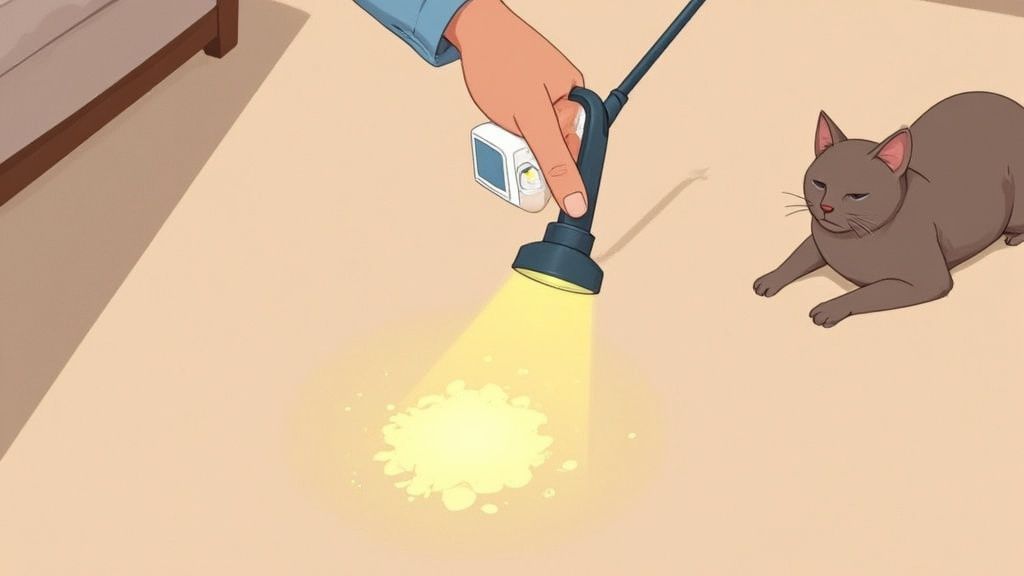
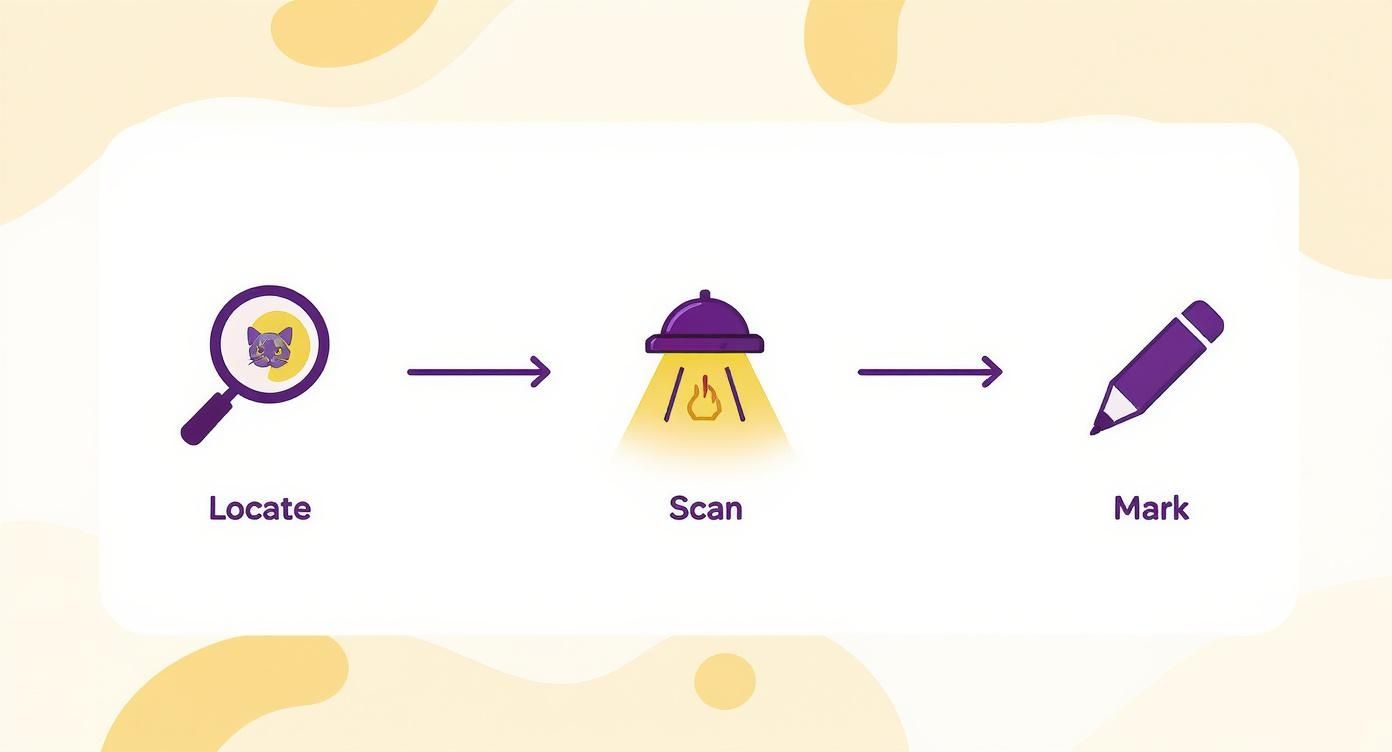
Your best tool for this job is an ultraviolet (UV) or black light. Turn off the lights to darken the room, then methodically scan the carpet with the UV light held about a foot above the fibres. Dried urine contains phosphorus, which glows a distinctive yellowish-green under the light, revealing old stains you never knew were there.
Marking the Contaminated Zones
Once you’ve found a glowing spot, don’t make the mistake of only treating the visible centre. Use something simple like chalk or even small sticky notes to mark the entire perimeter of the glowing area.
You’ll almost certainly find that the glowing patch is significantly larger than any visible surface stain. This happens because urine spreads outwards as it soaks downwards, creating a hidden reservoir of uric acid crystals in the underlay.
This step is critical because only treating the part you can see guarantees the smell will return. You have to apply your cleaning solution to the entire affected zone. In many cases, professional pet urine carpet cleaning is the only way to properly address contamination that has spread deep into the carpet's foundation.
The financial impact of this hidden damage can be significant. According to one survey, pet-related carpet damage is a major issue in UK households and rental properties, with remediation costs sometimes climbing over £500. The real challenge comes from the unseen contamination, which can be triple the size of the visible stain, making a complete DIY clean incredibly difficult. You can discover more about the challenges of hidden pet damage from property management experts.
Your Cleaning Process for Fresh and Old Stains
When you're faced with a cat urine stain, the game plan changes depending on one crucial factor: how long it’s been there. A fresh accident requires a totally different approach to one that’s had time to dry and set into the carpet fibres.
Responding to a Fresh Accident
If you catch the accident right after it happens, speed is everything. Your main goal is to get as much of the liquid out of the carpet as you can before it has a chance to soak through to the underlay.
Grab a thick handful of paper towels or a clean, white cloth and start blotting. Press down firmly to soak up the urine. Whatever you do, never rub the area. All that does is push the urine deeper into the carpet and make the stain bigger. Keep blotting with fresh towels until you can't pull any more moisture out. Honestly, this one step is the most critical part of tackling a fresh stain.
Once it's as dry as you can get it, it's time to clean. While you might be tempted by home remedies, an enzymatic cleaner is your best bet. It’s specifically formulated to break down the uric acid that causes that awful, lingering smell. For advice on dealing with other tricky marks, our guide on how to remove stubborn carpet stains has some great tips.
Dealing with Old, Set-In Stains
Old stains are a different beast altogether. By the time you find them, the uric acid has already crystallised deep down in the carpet. These crystals lie dormant until they get wet again – which is why that cat pee smell mysteriously reappears on humid days or after a quick clean. You have to reactivate those crystals to get rid of them for good.
Before you even start cleaning, it's vital to find every single spot. This is where a methodical approach comes in.
Making sure you treat every affected area is the only way to prevent that odour from coming back to haunt you later.
Start by lightly spraying the old stain with plain water. This rehydrates the uric acid, waking it up and making it vulnerable. Next, reach for that enzymatic cleaner again – for old stains, it's absolutely non-negotiable. These clever cleaners use active enzymes and beneficial bacteria that literally eat the uric acid, permanently destroying the source of the smell.
The real secret to making an enzymatic cleaner work is giving it enough product and enough time. You have to completely saturate the carpet, getting the cleaner as deep as the urine went. This usually means treating an area slightly larger than the stain you can see.
Once the area is saturated, cover it with a damp towel. This keeps it from drying out and gives the enzymes the time they need to work their magic – we're talking a minimum of 24 to 48 hours. They need that time to properly break everything down. After the waiting period, just blot the area dry. For really stubborn smells, you might need to repeat the process.
Keeping on top of pet-specific messes is one thing, but maintaining overall cleanliness is just as important. For a more comprehensive look at cleaning routines, you might find an ultimate vacation rental cleaning checklist helpful for broader strategies.
Choosing The Right Cleaning Solution
Not all cleaning products are created equal, especially when you’re up against something as stubborn as cat urine. The wrong choice can sometimes make the problem worse. Here’s a quick rundown of your options.
| Cleaning Agent Type | How It Works | Best For | Potential Risks |
|---|---|---|---|
| Enzymatic Cleaner | Uses active enzymes and bacteria to break down and consume uric acid and other organic matter, eliminating the source of the odour. | Old and new stains; completely removing odours. | Requires a long "dwell time" (24+ hours) to be fully effective. Can be more expensive. |
| Vinegar & Water | The acidity helps to neutralise the alkaline salts in urine. It can help with the smell initially. | Fresh stains, as a first-response neutraliser before using an enzymatic cleaner. | Does not break down uric acid crystals, so the odour may return. The vinegar smell can be strong. |
| Baking Soda | An alkaline powder that absorbs moisture and neutralises odours on the surface. | Surface odours and drawing out moisture from fresh stains. | Can leave a white residue that is difficult to vacuum up completely. Ineffective on deep-set odours. |
| Ammonia-Based Cleaners | These are strong chemical cleaners. AVOID THESE. | Nothing, when it comes to pet urine. | Cats are attracted to the smell of ammonia and may be encouraged to urinate in the same spot again. Fumes are harsh. |
Ultimately, while household staples like vinegar and baking soda have their place, nothing beats a high-quality enzymatic cleaner for permanently solving a cat urine problem. It’s the only method that truly breaks down the uric acid crystals at a molecular level.
Common Cleaning Mistakes to Avoid
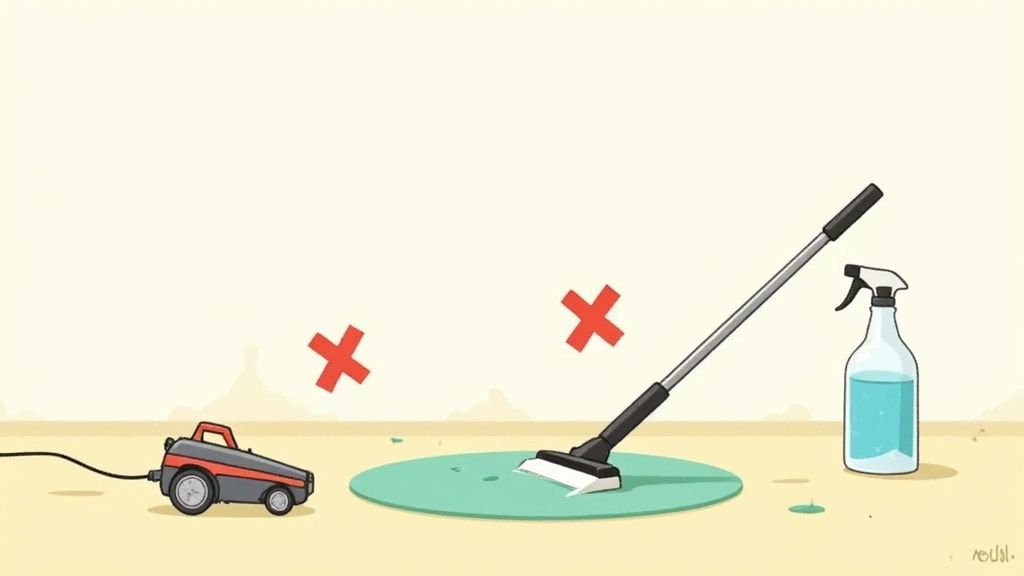
When you discover a cat urine stain, the first instinct is often to scrub it as hard as possible. But believe me, some of the most common cleaning methods can actually make the problem a whole lot worse. Many well-intentioned attempts end up setting the stain and odour for good, so it pays to know what not to do.
The single biggest mistake I see people make is using heat. Reaching for a steam cleaner might seem like the perfect way to get a deep clean, but the high temperatures will permanently bond the urine's proteins to your carpet fibres. It essentially "cooks" the stain right in, making it impossible to remove later.
Choosing the Wrong Cleaners
Using the wrong products is just as bad. Many standard household cleaners contain ammonia, which is a key component of urine itself. When you use an ammonia-based cleaner, you're basically putting up a bright, flashing sign for your cat that says, "This is the toilet!" This actively encourages them to use the same spot again.
Likewise, while vinegar and bicarbonate of soda can help with surface odours, they simply don't have the muscle to break down the uric acid crystals that are the real source of the smell. If you rely on these home remedies alone, the smell will almost certainly come back, especially on a damp day.
The most effective approach is to avoid harsh chemicals and heat entirely. Instead, you need to focus on products and methods that break down the stain at a molecular level, rather than just masking it or locking it in.
Getting it right from the start is crucial for lasting success. If a stain has already been treated incorrectly, understanding how to deep clean carpets at home properly becomes even more important. An enzymatic cleaner is the only solution that truly digests the uric acid, completely eliminating the source of the odour for good.
Getting to the Root of the Behaviour
Getting that cat urine smell out of the carpet is a massive win, but it’s really only half the battle. If you don't figure out why your cat is avoiding the litter tray, you'll likely find yourself scrubbing the same spot again in a few weeks.
The cause usually boils down to one of two things: a medical problem or something in their environment that’s causing them stress.
Before you start playing detective at home, your very first port of call should be the vet. Inappropriate urination is often the first red flag for an underlying health condition. Proper cat health care and a full check-up are crucial to rule out anything serious.
Things like urinary tract infections (UTIs), painful bladder stones, or even kidney disease can make using the litter tray an agonising experience. It doesn't take long for a cat to start associating that pain with the tray itself and look for a softer, less intimidating place to go.
Common Behavioural Triggers
Once the vet has given your cat a clean bill of health, it’s time to look at what’s going on in their world. Cats thrive on routine, and even a minor change can throw them completely off balance and lead to them peeing where they shouldn't.
Some of the most common stressors we see include:
- A Shift in the Household: Bringing home a new baby, introducing another pet, or even just rearranging the living room furniture can make a cat feel insecure.
- Litter Tray Problems: The issue might be with the litter tray itself. Is it clean enough? Is it in a high-traffic, noisy area? Maybe it's too small, or they've decided they don't like the new brand of litter you bought.
- Territorial Marking: This is especially common in unneutered male cats who spray to mark their patch, but any cat—male or female—might do it if they feel their territory is being threatened by a new cat in the neighbourhood.
Try to see it from your cat's point of view. If their designated toilet (the litter tray) suddenly feels dirty, unsafe, or uncomfortable, they're going to find an alternative. That quiet corner with the soft, absorbent carpet starts looking like a pretty good option.
The only way to truly break the cycle for good is to get to the bottom of these issues. Making their litter tray setup absolutely perfect and creating a calm, stable environment are the best things you can do to keep your carpets clean and your cat happy.
Your Questions About Cat Urine Removal Answered
Even with the best techniques, tackling stubborn cat urine in your carpet can leave you with a few lingering questions. Getting the right answers can save you a world of time, money, and frustration.
Can I Use a Regular Carpet Cleaner on Cat Urine?
While your standard carpet shampoo might seem to lift the visible yellow stain, it's not equipped to deal with the real problem: the odour. These cleaners simply don't have the specific agents needed to break down the uric acid crystals that have bonded deep within your carpet fibres.
This means that although the carpet looks clean on the surface, the smell will almost certainly make a comeback, especially on humid days. For a permanent fix, you really need a dedicated enzymatic cleaner designed to digest these crystals. To help you make the best choice, we've put together a breakdown of the most effective carpet cleaners for cat urine in our detailed guide.
How Long Does the Cat Urine Smell Take to Go Away?
When you use a quality enzymatic cleaner correctly, you should notice the odour starting to fade as the enzymes get to work and the treated area dries. This process usually takes between 24 to 48 hours.
If you can still detect a faint smell after this period, it's a sure sign the cleaning solution didn't penetrate deeply enough to reach all of the urine. Don't be discouraged; a second, more thorough application is often all it takes for complete odour elimination.
Will Replacing the Carpet Get Rid of the Smell?
Surprisingly, not always. If the urine has soaked right through the carpet and its underlay, it has likely contaminated the subfloor below, whether it's wood or concrete.
This is a common and very costly mistake people make. The uric acid crystals can linger in the subfloor, and that foul smell will eventually seep right back up through your brand-new carpet. Before you even think about installing a replacement, it's absolutely essential to inspect, clean, and seal the subfloor with a suitable primer to lock away any residual odour for good.
For stubborn stains that have penetrated deep into your carpet and subfloor, a professional touch is often the only way to guarantee complete removal. AG Carpet Specialists offers expert pet odour and stain removal services to restore your carpets and create a healthier home environment. Contact us today for a free quotation!