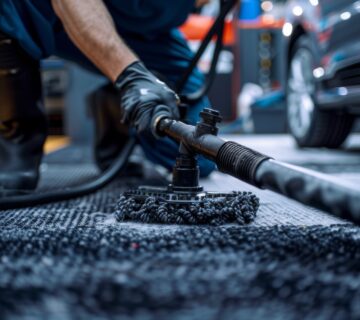
So, what’s the secret to keeping your carpets genuinely clean at home? It really boils down to a two-pronged attack: consistent, thorough vacuuming paired with a proper deep clean every now and then using hot water extraction. This combination is the only way to tackle both the surface-level muck and the deep-down grime, leaving your carpets looking and feeling hygienically fresh.
Your Guide to a Truly Clean Carpet at Home
Let's cut through the noise and get straight to what actually works for bringing your carpets back to life. Having a properly clean carpet isn't just about appearances; it's a massive factor in your home's air quality. Think of your carpet as a giant filter, trapping dust, pollen, and all sorts of other airborne bits and bobs.
Here in the UK, we deal with our own set of challenges, don't we? From the classic tea spill and muddy footprints to a damp climate that makes drying a nightmare, potentially leaving behind that dreaded musty smell. Knowing the right way to approach cleaning makes all the difference. Regular upkeep is one thing, but sometimes you just need to go deeper to restore your carpet's original vitality. For those everyday mishaps, our guide on everyday carpet cleaning tips can give you some quick wins.
Lately, there's been a real shift in how we think about home hygiene. It's no longer just about making things look tidy; it's about creating a genuinely healthy space to live in.
A clean carpet can drastically improve your indoor air quality. It traps allergens and pollutants, and a good deep clean flushes them all out. This is a game-changer for homes with kids, pets, or anyone who suffers from allergies.
This isn't just a feeling; the numbers back it up. In 2022, professional services made up a staggering 72.71% of the UK's carpet and upholstery cleaning market revenue. It shows a clear move towards deep, effective cleaning methods that do more than just skim the surface.
Deciding on the best way to clean your carpet at home depends on your specific situation—what type of carpet you have, your lifestyle (hello, pets and kids!), and how much time you can spare. Before we get into the step-by-step details, let’s look at a quick comparison of the most common DIY methods.
At-Home Carpet Cleaning Methods Compared
This table gives you a quick overview of the most popular DIY carpet cleaning methods, weighing up their effectiveness, cost, and what situations they're best suited for in a typical UK home. It should help you figure out which approach is the right fit for you.
| Method | Effectiveness | Average Cost (DIY) | Best For |
|---|---|---|---|
| Hot Water Extraction | High | £25-£40 machine hire | Deep cleaning, removing allergens, tough stains |
| Dry Powder Cleaning | Moderate | £10-£20 per container | Delicate carpets, quick freshen-ups, no dry time |
| Foam Shampooing | Moderate | £15-£25 per can | Lightly soiled carpets, high-traffic areas |
| Vinegar & Bicarb | Low-Moderate | Under £5 | Natural deodorising, minor spills, eco-friendly |
As you can see, each method has its place. While a natural vinegar and bicarb solution is great for a quick, eco-friendly freshen-up, for a true, deep-down clean that pulls out embedded dirt and allergens, nothing quite beats hot water extraction.
Prepping Your Carpet for a Deep Clean
Before you even think about hiring a machine or mixing up a cleaning solution, let's talk about the golden rule of carpet care: preparation is everything. Jumping straight into a deep clean without prepping is like painting a dusty wall—you’re just sealing the grime in. The best way to clean a carpet at home always starts with what you do before the deep clean even begins.
The first, non-negotiable step is giving it a really thorough vacuum. I don't mean a quick once-over. For homes with furry family members, this is even more critical. If you're struggling with pet hair, it's worth checking out some of the best vacuum cleaners for houses with pets to make sure you're getting everything up.
This initial vacuuming is a game-changer. It can lift an incredible amount of dry soil—sometimes up to 80% of the total dirt—that would otherwise turn to mud the second you add water. Skip this, and you're just making a bigger, sludgier mess for your cleaning machine to tackle.
The infographic below shows the kind of systematic, overlapping pattern we use to guarantee we get everything.
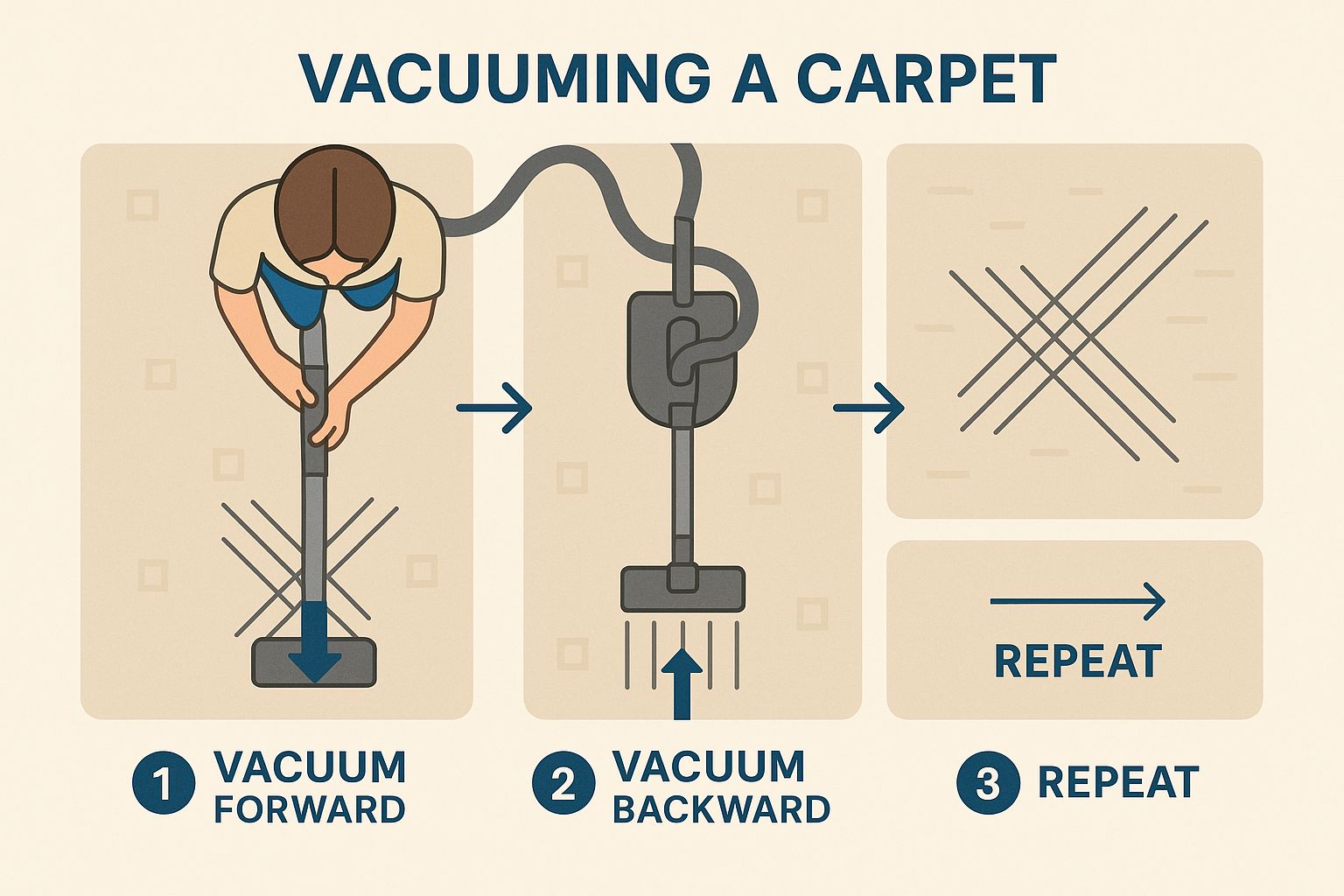
This method ensures you cover every single inch from multiple directions. It really helps to lift the carpet pile and dislodge that stubborn, trodden-in dirt far more effectively than random passes ever could.
Dealing with Stains Before You Start
With all the loose dirt gone, it's time to turn your attention to specific stains. Tackling these now is crucial because the heat from a carpet cleaner can actually set them permanently into the fibres. Different spills need different approaches, of course.
- For greasy or oily spots: A simple solution of warm water with a few drops of washing-up liquid can work wonders. Just be sure to blot it gently with a clean, white cloth.
- For organic stains like coffee, tea, or wine: A mix of equal parts white vinegar and water is often an excellent first line of defence.
- For mud: This one’s easy. Let it dry completely first! Once it's hard, you can break it up and vacuum away the solids before treating any leftover discolouration.
Crucial Tip: Always, always test your pre-treatment solution on a hidden spot first—think inside a wardrobe or under the sofa. This simple check can save you from potential colour bleeding or fibre damage on the main part of your carpet.
This meticulous prep work, which is exactly what we do before a professional job, guarantees your deep cleaning efforts will be as effective as possible. For more tips on this, you can read our guide on how to prepare for professional carpet cleaning. Taking these few extra minutes at the start will give you a far superior result in the end.
Mastering Hot Water Extraction Cleaning
If you're after a truly deep, restorative clean for your carpets at home, hot water extraction is the gold standard. It’s often mistakenly called 'steam cleaning', but this method is what the professionals use to flush out grime, dirt, and allergens from the very base of the carpet fibres. It’s the closest you’ll get to a pro-level clean with your own hands.
Whether you're hiring a machine for a weekend job or you've bought your own, the fundamental process is the same. The secret to a brilliant result isn't about speed; it's about being methodical and patient.
Setting Up for Success
Before you even think about switching it on, take a moment to read the machine’s instructions. Your first real step is mixing the cleaning solution, and this is where many people go wrong. It's easy to assume that more detergent means a cleaner carpet, but it’s actually the opposite. Too much soap leaves a sticky residue that becomes a magnet for new dirt, meaning your carpets get grubby again in no time.
Always stick to the recommended amount of solution and mix it with hot water, but never boiling. Boiling water can damage the machine's internal pump and, more critically, can cause natural fibres like wool to shrink or warp.
The Correct Cleaning Technique
The key to effective hot water extraction is all about control. You're aiming to deep clean the fibres without flooding your carpet. To do this, you need to master a slow, deliberate two-pass system.
- The Wet Pass: Begin in the corner furthest from the doorway to avoid walking over your clean work. Squeeze the trigger to release the solution and slowly pull the machine backwards in a straight line.
- The Dry Pass: Now, release the trigger and go back over that same line at the same slow pace. This is the crucial suction-only pass, designed to pull as much of the dirty water out as possible. You’ll see it being sucked up into the collection tank.
Repeat this wet-then-dry process, making sure to overlap each new line by about 30%. This simple step prevents you from getting those tell-tale clean stripes with dirty bits in between. For really mucky areas, like a high-traffic hallway, you might need to do two wet passes followed by two dry passes to lift all that ingrained dirt.
The goal is a carpet that feels damp, not soaking wet. If you press a clean, dry towel onto a just-cleaned patch and it comes away dripping, you’re either moving too fast or not doing enough dry passes.
While DIY cleaning is fantastic for maintenance, it's worth knowing how it compares to a professional service. UK consumer tests have shown that home machines can remove 50-70% of surface dirt, but often leave some residue behind. In contrast, professional-grade equipment can remove up to 98% of dirt and allergens, which is why it remains the industry's top choice.
Common Hot Water Extraction Mistakes and Fixes
Even with the best intentions, it's easy to make a few common errors when you're starting out. This little troubleshooting guide should help you get a flawless finish every time.
| Mistake | Why It's a Problem | How to Fix It |
|---|---|---|
| Using Too Much Detergent | Leaves a sticky residue that attracts more dirt, making carpets get dirty faster. | Always follow the manufacturer's recommended measurements. A little goes a long way. |
| Over-Wetting the Carpet | Can lead to long drying times, musty smells, mould growth, and even damage the carpet backing. | Move slowly on your suction (dry) passes. Perform extra dry passes in high-traffic or heavily soiled areas. |
| Scrubbing Too Hard | Can damage and fray delicate carpet fibres, causing a fuzzy, worn appearance. | Let the machine and the cleaning solution do the work. Use a gentle, gliding motion. |
| Forgetting to Overlap Passes | Results in uneven cleaning, leaving visible lines of clean and dirty carpet. | Overlap each new cleaning pass by about 30% of the machine's head width. |
Getting the technique right just takes a little practice. By avoiding these simple slip-ups, you'll be well on your way to achieving professional-looking results.
Adjusting for Different Carpet Types
Not all carpets are the same, and your approach should reflect that.
- Synthetic Carpets (Nylon, Polyester): These are the tough ones. They’re highly durable and can generally handle standard hot water and cleaning solutions without any trouble.
- Wool-Blend Carpets: These need a gentler touch. Use a specifically designed wool-safe, pH-neutral cleaning solution and only lukewarm water. Wool is incredibly absorbent, so extra dry passes are non-negotiable to prevent oversaturation.
It’s also helpful to understand the terminology. People often use 'steam cleaning' and 'hot water extraction' to mean the same thing, but there are subtle differences. We explain everything in our guide to carpet cleaning vs steam cleaning.
Ultimately, patience is your most valuable tool. Take your time, work methodically, and you’ll be rewarded with a carpet that looks and feels completely revitalised.
Exploring Dry and Eco-Friendly Cleaning Alternatives
Not every carpet can handle a deep, wet clean. For those with delicate natural fibres like sisal or jute, or for homes where keeping chemicals to a minimum is a top priority for children and pets, dry and eco-friendly methods are definitely the way to go. These alternatives offer an effective clean without the long drying times or harsh ingredients.
The shift towards greener cleaning isn't just a fleeting trend; it’s a real change in how people think about cleaning their homes. Here in the UK, environmental concerns now play a huge part in our choices, with roughly 30% of homeowners actively opting for "green" products. This has naturally led to a rise in low-moisture systems that are kinder to the planet and, let's be honest, much more practical for our often-damp climate.
Harnessing the Power of Dry Carpet Powder
Dry carpet cleaning is a brilliant solution when you just need a quick, no-fuss freshen-up with absolutely zero drying time. It works by using an absorbent powder compound that you work into the carpet fibres, where it cleverly attracts and traps dirt.
The process itself is quite straightforward, though it does need a bit of patience to get it right:
- Sprinkle Generously: Start by lightly but evenly sprinkling the dry cleaning powder over the section of carpet you're working on. Don't be shy with it, especially in those high-traffic areas.
- Work It In: Grab a soft-bristled brush and gently work the powder deep into the carpet pile. It’s this gentle agitation that really helps the powder bond with all the dirt and grime.
- Let It Dwell: This is probably the most important part. You have to leave the powder to sit for the manufacturer's recommended 'dwell time'—this is usually between 15 and 30 minutes. This gives it enough time to properly absorb all the oils and soil.
- Vacuum Thoroughly: Once the time is up, vacuum the area meticulously. Make sure you go over the spot from multiple directions to ensure every last granule of powder (and all the dirt it has trapped) is lifted out.
DIY Eco-Friendly Cleaning Solutions
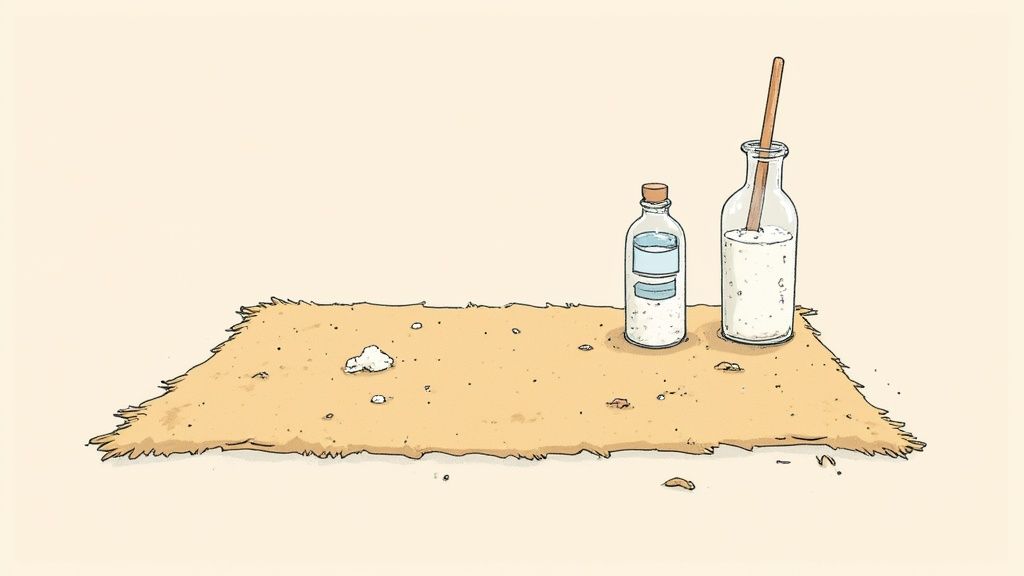
For anyone who prefers a completely natural approach, you’ll be pleased to know your kitchen cupboard probably holds some powerful, non-toxic cleaning agents. Bicarbonate of soda and white vinegar are your two best friends for deodorising and tackling light surface stains.
A simple sprinkle of bicarbonate of soda left on a dry carpet for an hour before vacuuming is one of the most effective ways to neutralise lingering odours, from pets or stale air, without a single chemical.
For minor spills, a solution of equal parts white vinegar and water in a spray bottle can work wonders. Just lightly mist the stained area—it’s crucial not to soak it—and then gently blot with a clean, white cloth. The vinegar helps to break down the stain, and don't worry, the vinegar smell will completely disappear as it dries.
These natural methods are particularly safe for households with curious pets and crawling babies. For a more detailed look into these techniques, check out our complete guide to eco-friendly carpet cleaning. While they might not replace a professional deep clean for heavy soiling, they are absolutely excellent for regular maintenance, keeping your carpets fresh and your home environment healthy between more intensive treatments.
Post-Cleaning Care and Long-Term Carpet Maintenance
Right, you’ve switched off the machine and are admiring your work. But hold on, the job isn’t quite finished yet. What you do next is just as crucial as the cleaning itself, turning a good result into a great one and making sure all that effort pays off for the long haul.
The absolute priority now is getting that carpet dry, and quickly. A damp carpet can easily become a breeding ground for mould and mildew, leading to musty smells – a real risk in our often-damp UK climate. The secret to fast, effective drying is simple: airflow.
Get the windows open on opposite sides of the room to create a good cross-breeze. If you’ve got any fans, pop them on the floor and angle them so they blow air directly across the carpet’s surface. For a serious helping hand, a dehumidifier is your best mate here; it’ll pull moisture straight out of the air and cut down the drying time dramatically. We’ve put together more professional tips in our guide on the best way to dry a carpet after cleaning to make sure you avoid any problems.
Protecting the Pile and Future Maintenance
While the carpet is still a little damp, it’s the perfect time to give it a quick "grooming." All you need is a soft-bristled brush or a proper carpet rake. Gently brush the pile all in one direction. It’s a simple trick, but it works wonders to stop the fibres from matting together as they dry, helping to lift the pile and give it that fluffy, uniform look again.
Once your carpet is beautifully clean and dry, the game shifts to keeping it that way. A simple, consistent maintenance routine is the best defence against future dirt build-up.
This doesn't need to be a chore. A few small habits will make a massive difference:
- Vacuum Regularly: Try to run the hoover over it at least once a week, maybe more in hallways or the lounge. This gets rid of the gritty surface dirt that acts like sandpaper on your carpet fibres.
- Use Doormats: A good quality mat at every entrance is a must. You'd be amazed how much dirt gets tracked in on shoes, and a mat will catch most of it before it even gets near your carpet.
- Act on Spills Immediately: The golden rule for spills is blot, don't scrub! Grab a clean, dry cloth and gently dab the spill, working from the outside edge inwards to stop it spreading.
Long-term carpet care isn’t about heavy-duty cleaning sessions every month. It’s about the small, consistent things you do every day that protect your investment and keep your home feeling fresh.
Combining proper drying, a quick groom after cleaning, and a straightforward maintenance plan ensures your carpets don't just look amazing today, but stay that way for many months to come.
Your Top Home Carpet Cleaning Questions Answered
Even with a solid plan, it's natural to have a few last-minute questions before you start a deep clean. Getting these common queries sorted is often the final step before you can get stuck in, feeling confident you’re using the best approach for your home.
We get asked these all the time, so we've put together the answers to help you with those final "what if" moments.
How Often Should I Deep Clean My Carpets?
This is probably the number one question we hear, and honestly, it all comes down to your household. For most homes, a really good deep clean every 12 to 18 months is a great rule of thumb. It’s enough to manage general wear and tear without putting too much stress on the carpet fibres.
Of course, life can change that timeline:
- Homes with Pets or Young Children: If you're dealing with muddy paws and the occasional spill, you'll want to ramp that up. Aiming for a deep clean every 6 to 9 months will help you stay on top of dirt and bacteria.
- Allergy Sufferers: For anyone in your home with allergies, cleaning more frequently (every 6 months or so) can make a real difference by removing the dust mites and pollen that get trapped deep in the pile.
Remember, over-cleaning can cause premature wear. The goal is to find a rhythm that suits your home’s needs.
Can I Use a Homemade Solution in a Rental Machine?
It’s definitely tempting to mix up your own solution to save a few quid, but this is one corner you really shouldn't cut. Rental machines are built to work with specific, low-foam commercial cleaning solutions.
Using things like vinegar or washing-up liquid can create a foam explosion inside the machine. This kills its suction power and can seriously damage the motor. Worse still, these DIY mixes often leave a sticky residue behind that actually attracts more dirt, meaning your carpet gets grubby again much faster. Always stick to the manufacturer's recommended products—it’ll save you potential damage fees and get you a much better result.
What Is the Fastest Way to Dry a Carpet?
Speeding up drying time is all about one thing: airflow. Once you’ve finished that final water-extraction pass with the machine, your mission is to get as much air as possible moving over the carpet’s surface.
Open windows on opposite sides of the room to get a decent cross-breeze going. If you have any floor fans, point them directly at the damp areas. On a cool, damp day (which we get a lot of in the UK!), turning the heating on low and running a dehumidifier in the room is a game-changer. It actively pulls moisture out of the air and the carpet. Most importantly, try to keep everyone off it until it’s completely dry.
Is It Better to Rent a Machine or Hire a Professional?
This really depends on your budget, your free time, and the state of your carpet. Renting a machine is a perfectly good, cost-effective option for regular upkeep and dealing with light soiling.
However, a professional service brings in commercial-grade equipment that's in a different league. These machines have far more powerful water injection and suction, so they pull out significantly more dirt and water. This means you get a deeper clean and your carpets dry much faster. For heavily soiled carpets, delicate materials like wool, or really stubborn stains, calling in a professional is often the safest and most effective choice.
For a guaranteed deep clean that revitalises your carpets without the hassle, trust the experts. Contact AG Carpet Specialists today for a free, no-obligation quote and see the professional difference for yourself at https://www.agcarpetspecialist.co.uk.