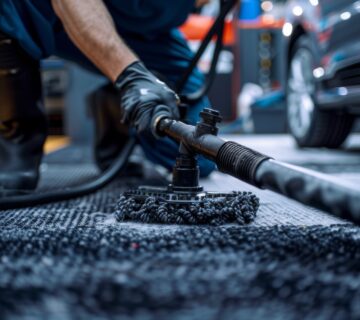
There's nothing quite like the feeling of a freshly cleaned carpet, but the job isn't truly done until it's bone dry. If you skip this final, crucial step, you risk turning that clean, fresh feeling into a damp, musty problem. The secret to properly drying a carpet is a two-pronged attack: combining immediate, powerful airflow with effective moisture removal. This is your best defence against mould, mildew, and permanent fibre damage.
Why Proper Carpet Drying Is Non-Negotiable
Let's be blunt: a damp carpet is far more than just a minor inconvenience. It's a real threat to your home and your family's health. That slightly stale, musty smell you might notice after just 24 hours? That's your first red flag. It’s a tell-tale sign that mildew is starting to grow deep within the carpet fibres and, more worryingly, in the backing itself.
When moisture hangs around for too long, it creates the perfect breeding ground for mould. These microorganisms can release spores into your home, compromising your indoor air quality and triggering allergies or even respiratory problems.
But the problems don't stop there. Prolonged dampness can also cause a catastrophic structural failure called delamination. This is where the carpet’s secondary backing peels away from its primary backing, causing irreversible ripples and bubbles that simply can't be fixed.
A carpet that remains wet for more than 48 hours is a prime candidate for significant mould growth. Drying your carpet quickly isn't just for convenience—it's about protecting your property and your health.
After you’ve put in the hard work to deep clean your carpets at home, focusing on a rapid drying strategy is the final, essential piece of the puzzle. It ensures your efforts result in a truly clean, healthy, and long-lasting floor. Rushing to put furniture back or walking on a damp surface can introduce new dirt or even cause permanent stains from wood varnish or rusty metal feet. This is exactly why mastering the drying process is non-negotiable.
Right, the cleaning machine’s off. Now the real work begins. That first hour is your golden window for getting your carpet dry, fast. If you act quickly, you can stop those musty smells from ever even starting. It’s genuinely the most important step in the whole process.
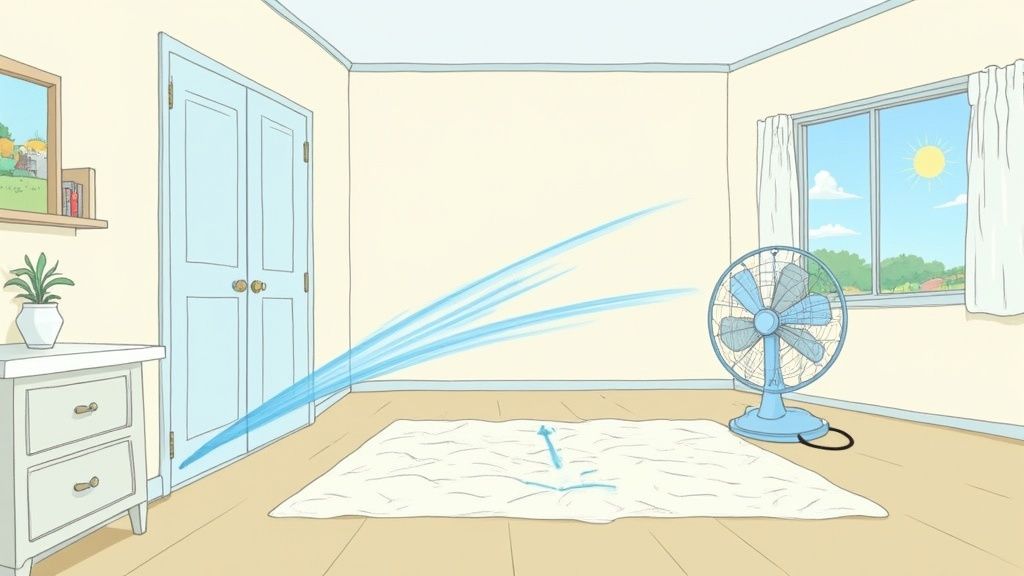
Your main goal here is to get a powerful, steady flow of air moving across every part of the carpet. Think of it like creating a mini wind tunnel right in your living room. The easiest way to start is by opening windows on opposite sides of the room to create a cross-breeze. This simple trick pushes all that damp, humid air out and pulls fresh, drier air in.
Next, you'll want to get your fans involved. Any old household fan will do the trick; it's how you use it that counts. Don't just point them straight down. Instead, set them at a low angle so the air skims right across the carpet's surface. This technique is fantastic because it lifts the moisture up and whisks it away, which really speeds up evaporation.
Using Your Home's Systems to Help
Don't forget about the systems already built into your home. If it's a cooler day, popping the central heating on will warm the air, helping it to hold more moisture and dry the carpet faster. In the warmer, more humid months, your air conditioning is your best friend—it acts like a powerful dehumidifier, pulling all that excess moisture straight out of the air.
The image below shows the basic workflow we professionals follow to make sure a carpet dries efficiently.
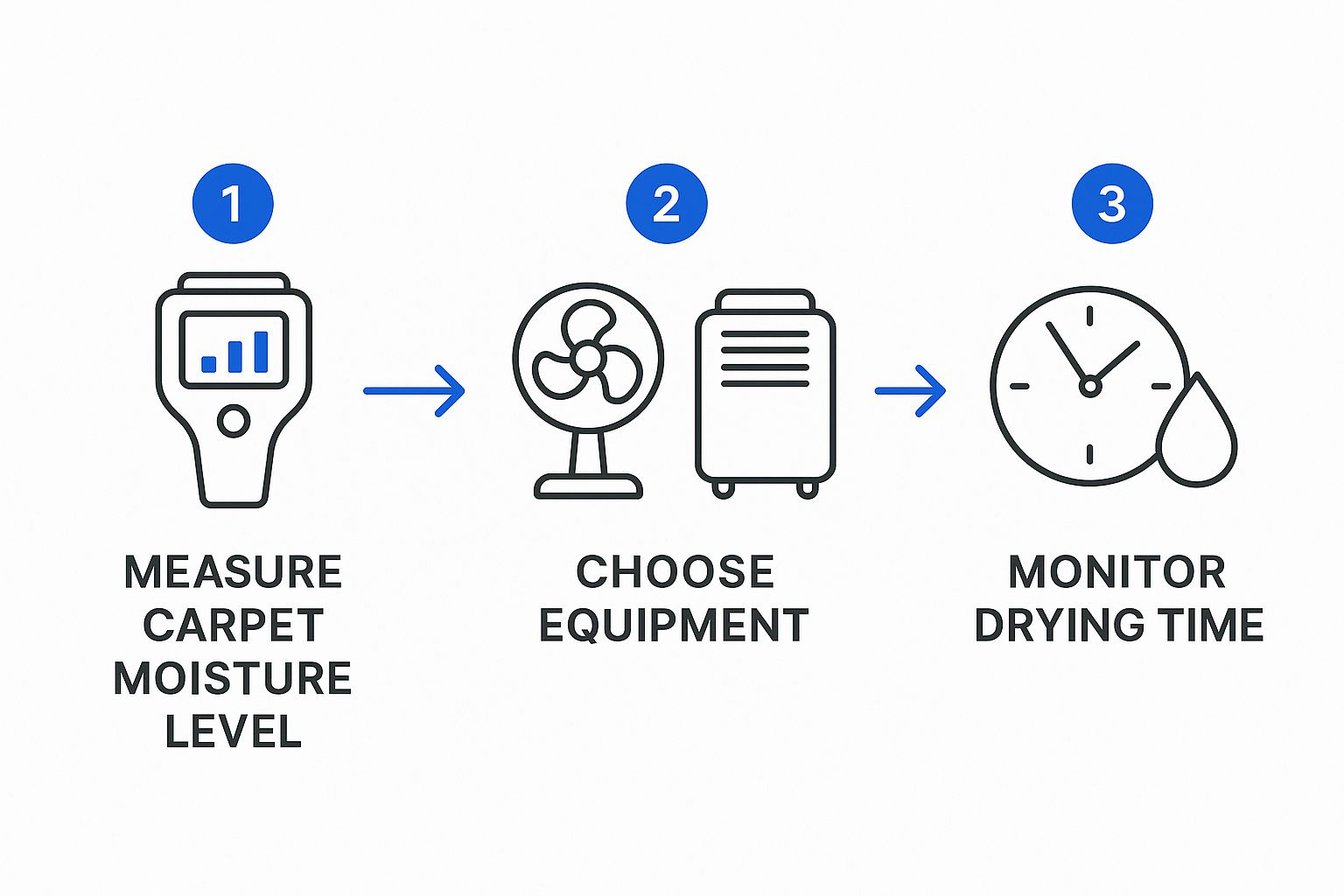
As you can see, proper drying isn't just about waiting around; it's a monitored and measured activity. Here in the UK, we've got it down to a fine art. Generally, a professionally cleaned carpet should be completely dry within 6 to 8 hours, though this can change depending on things like ventilation and the humidity in your home.
When you're trying to get a carpet dry, there are a few different paths you can take. Each has its own pros and cons, especially depending on the British weather!
Comparing Popular Carpet Drying Methods
| Drying Method | Effectiveness | Best For | Potential Drawback |
|---|---|---|---|
| Natural Ventilation | Good | Mild, dry days. Creating a basic cross-breeze. | Slow and weather-dependent; not great on humid days. |
| Household Fans | Very Good | Actively speeding up evaporation across the surface. | Needs strategic placement to be effective. |
| Dehumidifier | Excellent | Humid conditions or poorly ventilated rooms. | Can be slow on its own; works best with fans. |
| Central Heating/AC | Good | Aiding the overall process by warming or drying the air. | Can increase energy costs. |
Ultimately, the best approach is often a combination of these methods. For more in-depth advice on keeping your carpets looking their best, you might find our essential carpet cleaning tips useful.
How to Use Dehumidifiers and Fans Like a Pro
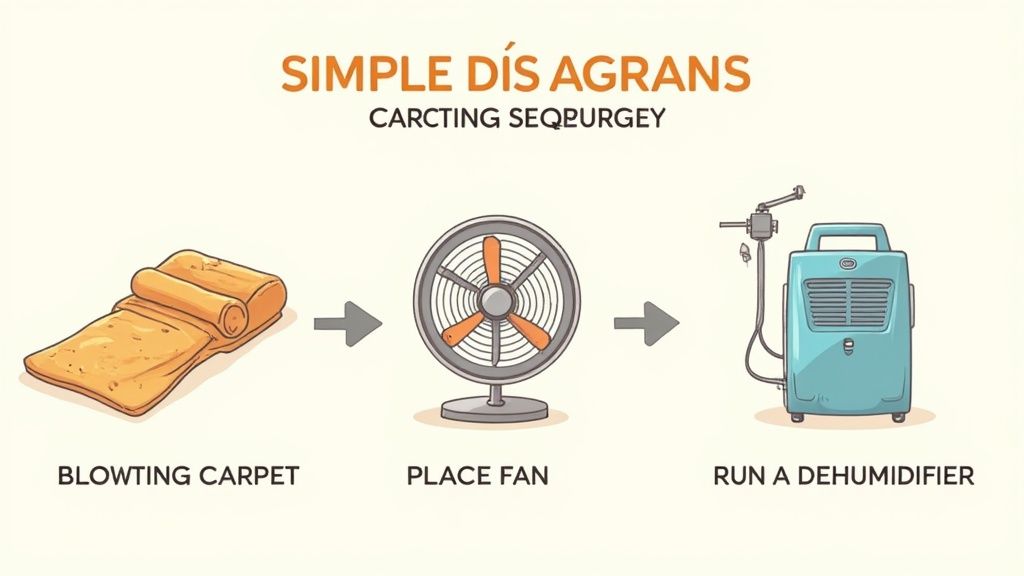
Simply switching on a fan or dehumidifier and hoping for the best won't cut it. To really get your carpet dry quickly and properly after a clean, you need to use them strategically. It's all about placement and settings; get these right, and you'll actively pull moisture from the fibres and the air like a seasoned professional.
For fans, the trick is to avoid pointing them straight down at the wet patch. What you want to do is place a few fans around the edges of the room, angling them so they blow air across the surface of the carpet. This creates a clever vortex effect, lifting the damp air up and pushing it toward the middle of the room. It's much more effective than just shifting wet air from one spot to another.
Once you’ve got that airflow going, your dehumidifier takes centre stage. Place it right in the middle of the room, exactly where all that moisture-laden air is being directed. This lets it do its job properly, grabbing the maximum amount of water from the atmosphere.
Mastering Your Equipment Settings
The right settings on your equipment can make a world of difference. You don't want the air so dry that it makes natural fibres like wool go brittle, but you need it dry enough to encourage fast evaporation.
Your goal is a consistent environment that helps moisture escape.
- Dehumidifier Humidity Level: Set your dehumidifier to maintain a relative humidity of around 45% to 50%. This is the sweet spot – it’s dry enough to pull moisture from the carpet efficiently without being overly harsh.
- Empty the Reservoir Frequently: A dehumidifier stops working the moment its tank is full. I've seen it happen time and again. Make a point to check it every few hours and empty it so it can keep running without interruption.
- Combine with Airflow: Always remember this: a dehumidifier tackles moisture in the air, but it's the fans that do the heavy lifting of getting that moisture out of the carpet in the first place. They are a team and should always be used together.
For the fastest drying time, think like a pro and create an air-circulation loop. Use your fans to push air across the carpet towards your centrally-located dehumidifier. The dehumidifier will then process that damp air, releasing drier air back out to continue the cycle.
This professional-grade setup drastically cuts down the drying time. Not only does this get your room back to normal much faster, but it also ensures you get the best possible value from the cleaning itself. If you're interested in what professional services include, our guide on how much carpet cleaning costs offers some great insights.
The Secret to Faster Drying: Low-Moisture Cleaning
So far, we've talked about how to dry a carpet after a traditional wet clean. But what if the best way to get a carpet dry quickly is simply to use less water in the first place? It's a proactive strategy that completely changes the game.
Modern, low-moisture cleaning methods are becoming incredibly popular across the UK for this very reason. Instead of saturating your carpet with gallons of hot water, these techniques use a fraction of the liquid.
Think of it this way: traditional hot water extraction is like giving your carpet a full bath. Low-moisture cleaning, on the other hand, is more like a highly effective sponge clean. The result? A carpet that’s just as clean but dries in a fraction of the time.
Why Less Water Is More Effective
Two of the most prominent low-moisture methods are encapsulation and dry-compound cleaning.
- Encapsulation: This uses a special polymer that crystallises around dirt particles. Once it's dry, the crystals are simply vacuumed away, taking the grime with them.
- Dry-Compound Systems: A great example is the well-known Host system. It uses absorbent, sponge-like particles to scrub and soak up dirt without needing lots of liquid.
Choosing a low-moisture clean means your carpet could be dry and ready for use in as little as 1-2 hours. That’s a massive improvement on the 6-8 hours (or even longer) required for hot water extraction.
This approach is a real lifesaver for busy households or commercial settings where you can't afford long downtimes.
Here in the UK, the environmental aspect is also a huge consideration. Many dry cleaning methods use biodegradable compounds, avoiding the excessive water usage tied to steam cleaning. By minimising water, you not only slash the drying time but also eliminate the risk of over-wetting—which is crucial for protecting your carpet's fibres and backing.
You can learn more about the benefits in our dedicated guide to eco-friendly carpet cleaning.
Common Carpet Drying Mistakes and How to Avoid Them
You’ve put in all the effort to get your carpets looking fresh and clean. The last thing you want is for a simple oversight to undo all that good work. A freshly cleaned, damp carpet is surprisingly vulnerable, and a few common errors can quickly lead to new stains, trapped dirt, or even permanent damage.
Knowing what not to do is just as important as the drying process itself.
One of the biggest culprits we see is furniture being moved back into place too soon. It’s completely understandable to want your room back to normal, but placing heavy items on a damp carpet is a recipe for disaster. It traps moisture underneath, stopping any air from getting to that patch and slowing the drying time right down.
Even worse, the trapped dampness can cause wood stains from furniture legs to bleed into the carpet fibres. Metal feet can leave behind stubborn rust marks. Believe me, these kinds of stains are incredibly difficult—and sometimes impossible—to get out.
Don't Unintentionally Ruin Your Clean Carpet
Another classic mistake is walking on the carpet while it's still damp, especially with outdoor shoes on. Damp fibres are like a magnet for dirt. Every step grinds that fresh soil deep into the pile, reversing the clean you just paid for. Even walking in bare feet isn't ideal, as the natural oils from your skin can transfer to the fibres.
You might also be tempted to point a portable heater at a particularly stubborn wet patch, thinking it will speed things up. Please don't do this. Concentrated, direct heat can be catastrophic for most modern carpets.
- Melting Synthetic Fibres: Carpets made from materials like nylon or polyester can literally melt under intense heat. This leaves you with a hard, crusty patch that is permanently damaged.
- Shrinking Natural Fibres: Wool carpets are especially at risk. Direct heat can cause the natural wool fibres to shrink and warp, which ruins the texture and can even pull the carpet away from the walls.
What to do instead: Always wait until your carpet is 100% dry before putting furniture back—this usually takes a full 24 hours. If you absolutely must walk on it, use clean, white socks or the disposable shoe covers that professional cleaners (like us!) provide. And never, ever use direct heat.
Avoiding these simple mistakes is a crucial part of the process. For households with pets, ensuring a safe and quick dry is even more important. You can find more targeted advice in our guide to pet-friendly carpet cleaning.
Frequently Asked Carpet Drying Questions
Even when you've followed all the steps, you're bound to have a few questions. It’s completely normal. Getting these details right is what separates a good result from a great one, giving you the confidence to handle any little hiccup along the way. Think of this as your go-to guide for those "what if?" moments.
One of the first things people always ask is, "When can I walk on my carpet again?" It's a great question. Ideally, you want to wait until it's completely dry, which usually takes around 6-8 hours. If you absolutely must cross the room, pop on some clean, white socks or the little plastic shoe covers that professional cleaners often leave behind. This stops you from tracking dirt or foot oils onto the damp fibres, which are extra vulnerable when wet.
Another common worry is whether you can leave the house while the carpet dries. Yes, you can! The key is to make sure your drying setup is working efficiently before you go. Double-check that your fans are positioned for good airflow, the dehumidifier is humming away, and you've got windows cracked open for ventilation (as long as it's safe and secure to do so). Stagnant, humid air is the number one enemy of quick drying.
Handling Specific Drying Scenarios
What do you do about those annoying damp patches that just won't dry? It’s tempting to point a hairdryer at them, but please resist the urge. That kind of intense, direct heat can easily melt synthetic fibres or cause natural ones like wool to shrink and warp. The best way to dry a carpet after cleaning, even for small stubborn spots, is simply with patient, cool airflow from a fan.
The UK carpet cleaning market is seeing a big shift towards low-moisture cleaning methods, largely because we all want faster drying times. It’s part of a huge global market trend, expected to top $1.49 billion by 2029, as people look for more efficient and eco-friendly solutions. You can learn more about the trends shaping the carpet cleaner market.
Finally, how long should you wait before moving heavy furniture back into place? The surface of the carpet might feel dry in just a few hours, but moisture can lurk deep down in the backing. We always recommend waiting a full 24 hours. This gives everything a chance to dry completely and prevents furniture legs from leaving behind permanent rust marks or wood stain dyes.
Feeling like it's all a bit much? You don't have to go it alone. For a flawless finish without the stress, let the professionals at AG Carpet Specialists take care of it. We provide expert carpet cleaning in Cheltenham and the surrounding areas, ensuring your carpets are perfectly clean, fresh, and dry every single time. Get your free quotation today.