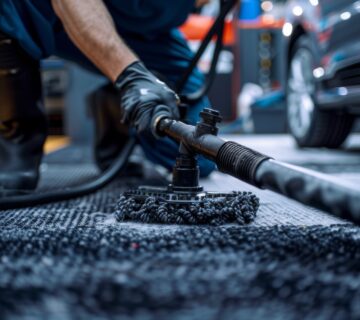
When people think about professional carpet cleaning, they often picture someone just running a machine over the floor. But in reality, it's a far more detailed process. A true professional doesn't just clean; they follow a systematic approach that includes careful inspection, pre-treatment, agitation, and powerful extraction. This is how you get a carpet that isn't just visibly clean, but is also free from deep-seated dirt, allergens, and bacteria.
Why the Right Carpet Cleaning Process Matters
Deciding to hire a professional instead of renting a machine and doing it yourself is a big one. It's a choice that directly affects your home's health, its appearance, and even its long-term value. A proper, multi-step process goes way beyond what a DIY job can achieve, fundamentally restoring your carpets and making your home a cleaner, safer place to be.
For most homeowners and businesses I work with, the difference is night and day. Professionally cleaned carpets don't just look brighter and feel softer. They genuinely improve the air you breathe by removing trapped pollutants like dust mites, pet dander, and pollen that even the best household vacuums inevitably leave behind.
More Than Just a Clean Look
Thinking of a deep clean as just a cosmetic fix is a common mistake. It's really an investment in your property. A meticulous cleaning process prevents premature wear and tear in high-traffic areas, which can add years to the life of your carpets. It’s about protecting one of your home’s biggest assets. That’s why understanding the benefits of professional carpet cleaning services is so crucial—it's about long-term care, not a quick fix.
It's no surprise that the demand for this kind of expertise is growing. The UK cleaning industry has seen massive growth, which shows that people are focusing more on health and hygiene than ever before. In fact, this sector contributed around £59.8 billion to the UK economy in 2021. By 2023, the number of cleaning businesses had shot up to about 75,565, according to this UK cleaning industry overview on policybee.co.uk. This trend makes it clear: people value specialised services that deliver results they can trust.
A professional carpet cleaner doesn’t just clean what you can see. They use specialised equipment and tailored solutions to remove the embedded soil and allergens that degrade carpet fibres and pollute the air you breathe.
At the end of the day, a structured, professional carpet cleaning process delivers a few key advantages you just can't get otherwise:
- Healthier Living Space: It pulls out the allergens and bacteria that can cause issues, which is a massive plus for households with children, pets, or anyone with allergies.
- Enhanced Property Value: Clean, well-maintained carpets make a huge difference to the overall look and feel of your home, a major factor if you ever decide to sell.
- Longer Carpet Lifespan: By getting rid of the sharp, abrasive dirt particles that grind away at the fibres, a professional clean helps your carpet last for years longer.
The Pre-Cleaning Inspection: Where the Real Work Begins
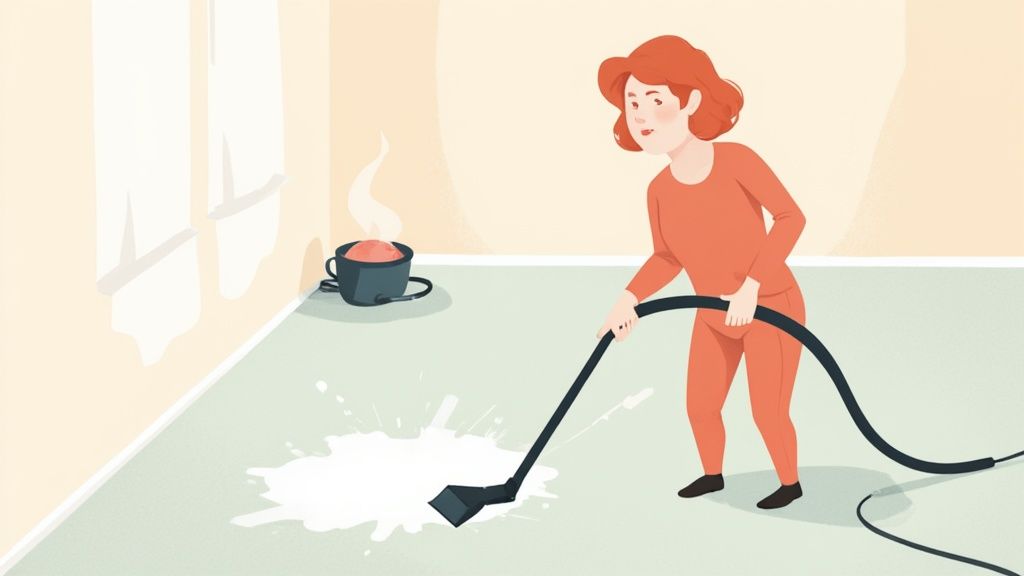
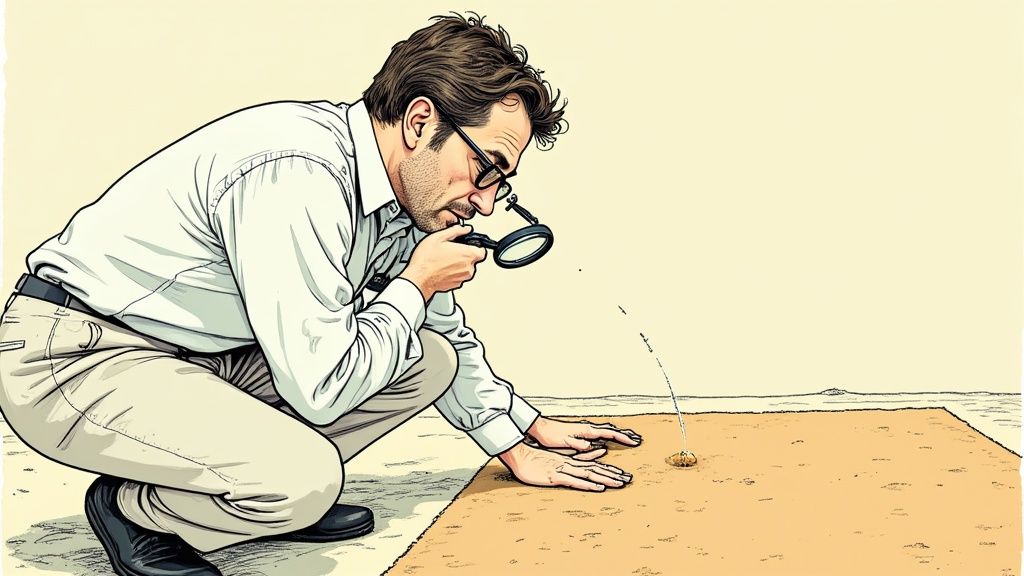
A proper, professional carpet clean doesn't start with water and a machine. Far from it. The whole process hinges on a detailed, diagnostic assessment that happens before a single drop of cleaning solution touches your floor. It’s a bit like a doctor’s consultation; we need to understand the patient before we can prescribe the right treatment.
This first step is far more than a quick look around. A true professional will carry out a thorough walk-through to identify the exact type of carpet fibres they’re working with. Is it a hardy synthetic like polyester, or is it a delicate natural material like wool that demands a lower pH solution and very careful temperature control? Using the wrong approach on a wool carpet, for example, can cause irreversible damage.
Pinpointing Problems and Preparing the Area
During this initial survey, we also start mapping out any problem areas. We’ll take note of the high-traffic lanes that look flattened and grubby, identify specific stains, and most importantly, ask you questions. That dark spot by the sofa might look like a simple coffee spill, but it could easily be an oil-based mark that requires a specialised solvent to break it down.
Once we’ve got a clear picture, the physical preparation starts. This is more than just sliding a coffee table to one side. It means carefully moving furniture onto protective pads and placing guards around delicate skirting boards and corners to prevent any scuffs or moisture damage during the clean.
The pre-vacuuming stage is, without a doubt, one of the most crucial parts of the entire job. A high-filtration, commercial-grade vacuum can pull out up to 80% of the dry, abrasive soil before we even introduce any moisture.
Skipping this intensive vacuuming is a classic mistake and one that seriously limits the final results. Your standard home vacuum is fine for day-to-day upkeep, but it just doesn't have the power to lift the deep, gritty soil that slowly grinds away at your carpet's fibres. By getting this dry soil out first, we ensure the pre-treatment solutions and hot water extraction can get to work on the oily, sticky residues that are actually holding dirt to the carpet.
To give you an idea of how seriously we take this stage, here's a look at what a professional is checking for before the main clean even starts.
Initial Carpet Assessment Checklist
Before we begin the deep clean, a methodical check ensures we tailor our approach perfectly to your carpet's needs, guaranteeing a safe and effective result.
| Assessment Area | What to Look For | Why It Matters |
|---|---|---|
| Fibre Type | Wool, nylon, polyester, polypropylene | Determines the correct cleaning solutions and methods to use. |
| Stain Identification | Organic, oil-based, tannin, synthetic dye | Dictates which specialised spotters will be effective. |
| Wear Patterns | High-traffic lanes, furniture indentations | Helps manage client expectations about restorative results. |
| Pre-existing Issues | Burns, seam splits, fading, rippling | Identifies damage not caused by soiling to avoid liability. |
| Installation Quality | Proper fitting, secure seams | Ensures the carpet can withstand the cleaning process without issues. |
This meticulous, step-by-step approach is what ensures every carpet gets a safe, effective, and genuinely restorative clean. It's the real difference between just washing a carpet and professionally cleaning it.
Right, now that the initial prep work is done, we get to the heart of the matter. This is where we go beyond just lifting surface dirt and start tackling the really stubborn stuff—the oily, deeply embedded grime and those colourful spots that seem to have become one with your carpet fibres.
Every stain has a story, and a seasoned professional knows exactly how to read it.
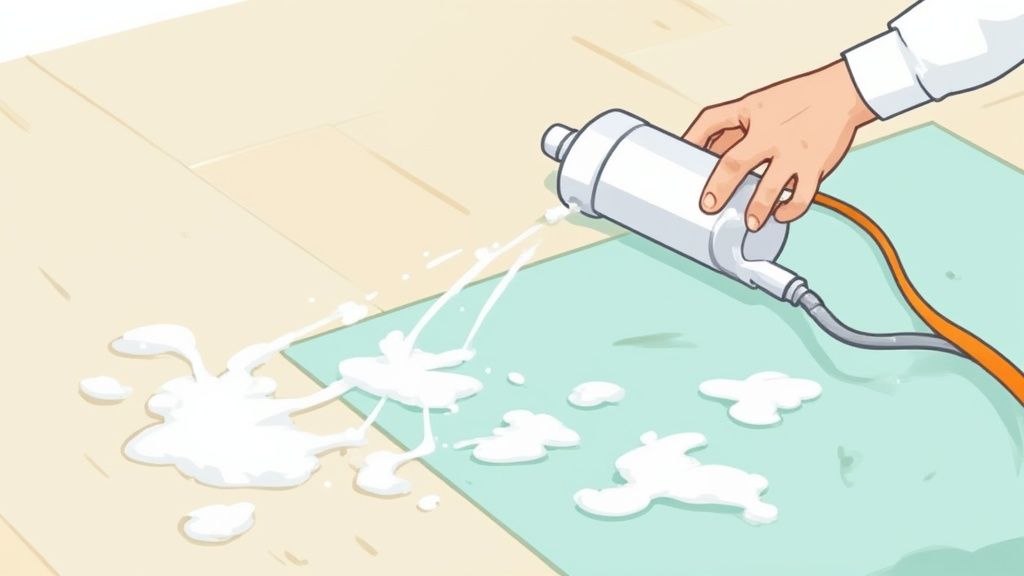
You simply can't treat all stains the same way. A red wine spill, for instance, is a tannin-based stain and needs a completely different treatment plan than a greasy food mark. Slapping the wrong chemical on a stain can actually set it permanently. It's a rookie mistake we see all too often. That’s why we bring an arsenal of specialised spotting agents, each formulated for a specific type of stain.
It's just common sense, really. You wouldn't clean a wooden table with window cleaner, would you? We apply the same logic, using specific solutions for specific problems:
- Protein-based spotters are for anything organic, like food spills or pet accidents.
- Solvent-based spotters work wonders on dissolving oil, grease, ink, and tar.
- Tannin removers are our go-to for stains from coffee, tea, and, of course, red wine.
- Rust removers use a chemical reaction to neutralise oxidised metal spots.
Once we’ve dealt with the most obvious individual spots, we turn our attention to the overall grime. If you're keen to try your hand at tackling some marks yourself, our guide on how to remove stubborn carpet stains is a great place to start: https://www.agcarpetspecialist.co.uk/2025/06/29/how-to-remove-stubborn-carpet-stains/.
Now, let's move on to the next crucial phase for achieving that uniform, deep-down clean.
Applying a Pre-Spray for a Deeper Clean
With the spot-treatment done, we apply a pre-spray conditioner, sometimes called a traffic lane cleaner, across the entire carpet. This is especially vital in those high-traffic zones—think hallways, doorways, and the paths worn between sofas and the TV. These areas collect a unique kind of greasy, sticky soil that a normal clean just won't shift.
This solution isn't soap; it's a powerful agent designed to emulsify the oily residues that glue dirt particles to the carpet fibres. It essentially breaks their bond, preparing them for extraction.
This step really highlights the progress in our industry. The global market for our line of work was valued at a huge USD 67.4 billion in 2025, and it’s set to grow even more. This is largely thanks to the development of more effective and eco-friendly cleaning agents that give us the fantastic results we can achieve today.
The secret to a truly transformative clean at this stage isn't a chemical or a machine—it's patience. Once the pre-spray is on, it needs time to do its job. We call this ‘dwell time,’ and skipping it is simply not an option if you want professional results.
Rushing this part is one of the most common mistakes people make. Letting that pre-treatment sit for a good 10-15 minutes allows it to penetrate deep into the pile and really get to work on loosening the soil's grip. This makes the next stage—the hot water extraction—incredibly effective, allowing us to flush away years of built-up dirt with ease.
Getting Down to the Nitty-Gritty: Agitation and Extraction
Right, with the pre-treatment solution working its magic and breaking down all that surface-level grime, it's time to get to the heart of the matter. This next stage is where we physically dislodge the stubborn, embedded dirt from deep within your carpet's fibres. It’s all about agitation.
We’re not talking about harsh, aggressive scrubbing that can damage your carpet. Instead, we use a machine with a contra-rotating brush (CRB). Think of it as a gentle but incredibly effective massage for your carpet. These specialised brushes lift the pile and work the pre-spray into every last fibre, loosening the grit and soil that even the most powerful vacuum couldn't hope to reach. This step is absolutely fundamental to achieving that 'like new' finish.
The Power of Hot Water Extraction
Once the dirt has been thoroughly loosened, we bring out the big guns: Hot Water Extraction (HWE). You might know this process as 'steam cleaning', but that’s not quite right. It’s actually super-heated water, not steam, that does the heavy lifting. For most residential carpets, HWE is hands-down the most effective method for a deep, restorative clean.
The process involves spraying a high-pressure jet of hot water, mixed with a specialised rinsing agent, directly into the carpet. This powerful flush dislodges and washes away everything—the pre-spray, the loosened dirt, and any lingering particles. At almost the exact same moment, an incredibly powerful vacuum sucks all the dirty water and grime back out, leaving your carpet truly clean from the base of the fibres up.
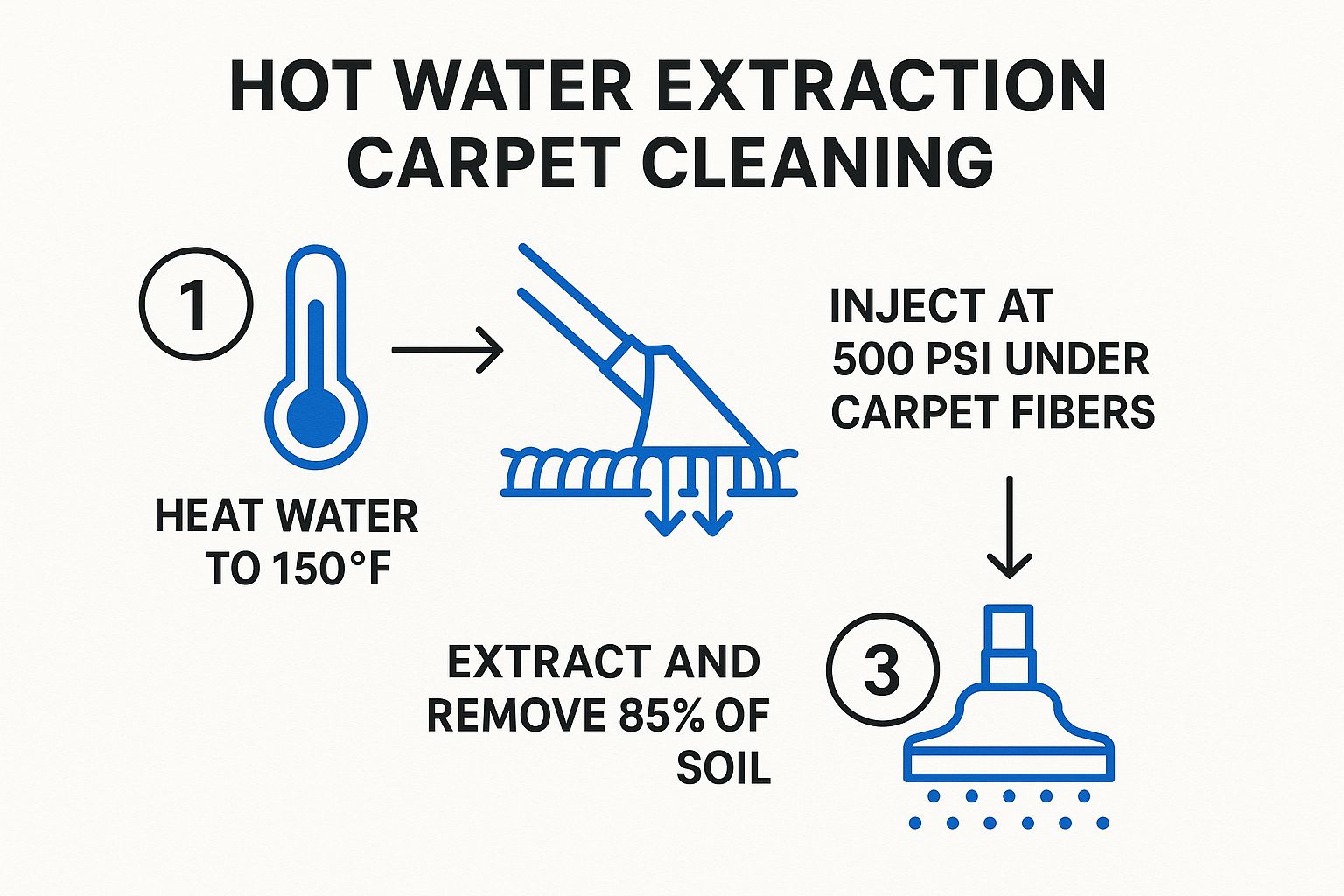
This method is the gold standard for good reason. While you can rent DIY machines, they simply can't compete. Professional equipment runs at much higher temperatures and pressures, delivering a far superior clean. More importantly, our vacuums have significantly more suction power, which drastically cuts down on drying time.
Of course, HWE isn't the only way. For certain situations, especially in commercial spaces where quick drying is critical, we might recommend low moisture carpet cleaning techniques.
The real secret to a professional clean is the rinse. Our goal isn't just to wash the dirt out but to completely flush the carpet, removing every trace of cleaning solution. Leaving soapy residue behind is a rookie mistake that actually attracts more dirt, causing your carpet to get grubby again in no time.
It’s this commitment to a proper, thorough process that sets professional services apart. Carpet cleaning is the biggest slice of the UK’s general building cleaning market for a reason—a market projected to be worth around £9.4 billion in 2024. Homes and businesses alike rely on high-quality maintenance.
If you're thinking about tackling a deep clean yourself, it's good to know the steps involved. You can get more perspective from our guide on how to deep clean carpets at home.
Post-Cleaning Care And Final Grooming
Once the hot water extraction is finished, you might think the job is done. But from a professional’s point of view, the work that happens after the machine is switched off is what really defines a quality result. These finishing touches are absolutely crucial for making the clean last and keeping your carpet healthy.
The first and most important priority is drying. A carpet that stays damp for too long is a recipe for disaster, attracting everything from musty smells to the frustrating return of old stains. This happens through a process called wicking, where dirt hidden deep in the carpet base travels up the wet fibres to the surface as it dries.
To stop this from happening, we immediately bring in powerful, industrial air movers. These aren't your average household fans; they're designed to blast high-velocity air across the carpet, speeding up evaporation significantly. This rapid drying not only locks in the clean but also drastically reduces the risk of mould or mildew. If you're interested in the specifics, our guide on the best way to dry carpet after cleaning has some great tips.
Protecting Your Investment
With the carpet now clean and drying properly, it’s the perfect moment to think about future-proofing it. Applying a professional-grade carpet protector is an optional step, but one we always highly recommend.
You can think of it as an invisible shield for your carpet’s fibres. It forms a protective barrier that repels spills and prevents dirt from clinging to the material.
This protective treatment won't make your carpet bulletproof, but it buys you precious time. When a spill happens, the liquid will bead on the surface rather than soaking straight in, giving you a chance to blot it up before it can set into a permanent stain.
It's a simple step that makes future clean-ups far easier and keeps that 'just cleaned' look for much longer.
The Final Flourish: Grooming The Pile
The very last thing we do is groom the carpet. Using a special carpet rake, we carefully brush the pile so all the fibres stand in a uniform direction. This might look like it's just for show, but it actually has several key benefits:
- Resets the Pile: It lifts and separates the fibres, getting rid of any marks from the cleaning equipment and giving the carpet a plush, like-new appearance.
- Aids Drying: By separating the fibres, it improves airflow, helping the carpet dry faster and more evenly across the entire room.
- Restores Texture: It brings back the carpet’s original soft and luxurious texture underfoot.
This meticulous attention to detail after the main clean is what separates a quick job from a truly professional one. It’s our final guarantee that your carpet is not just deeply cleaned, but also perfectly finished and protected for the future.
Your Carpet Cleaning Questions Answered
Even after laying out the full process, we find clients still have a few practical questions. It’s completely natural. Knowing what to expect regarding timings, methods, and results helps you feel confident you're making the right call for your home or business. We’ve pulled together the most common queries we get, answering them directly from our years of hands-on experience.
How Long Does the Entire Carpet Cleaning Process Take?
This is usually the first question people ask, and it really has two parts. The actual on-site cleaning is quicker than most people think. For a standard three-bedroom house, we're typically on-site for 2 to 4 hours. This can vary a bit based on the layout, how much furniture needs moving, and how heavily soiled the carpets are.
The second, and more crucial, part is the drying time. We use powerful air movers to speed things along, but your carpet still needs time to dry properly. You can usually walk on it (with clean socks or shoe covers!) within 4 to 6 hours. For the carpet to be 100% dry deep down to the backing, we always recommend allowing up to 24 hours. A good technician will always give you a realistic estimate for both the cleaning and drying phase before they even start.
It's a common myth that you have to completely abandon the room for days. With modern equipment, your space is usually back to normal the very same day. The trick is to get good airflow going and just avoid heavy, dirty-shoed traffic until it's fully dry.
Is Hot Water Extraction Always the Best Method?
For the vast majority of residential carpets—especially synthetics like nylon and polyester—yes, Hot Water Extraction (HWE) is the gold standard. It's the method most carpet manufacturers themselves recommend because it gives an unparalleled deep, restorative clean that properly flushes out grit, grime, and allergens.
However, it's not a one-size-fits-all solution. In certain situations, other methods are far more suitable.
- Delicate Natural Fibres: Think wool or silk. These carpets can be quite sensitive to high temperatures and excessive moisture. For these, a carefully controlled, lower-moisture approach is often the safer, more effective choice.
- Commercial Environments: In a busy office, shop, or hotel lobby with constant foot traffic, a low-moisture method like encapsulation cleaning is often a better fit. Its primary benefit is a much, much faster drying time, minimising disruption.
A true professional will always assess your specific carpet and its environment before deciding on the best carpet cleaning process for the job.
Will Cleaning My Carpet Make It Get Dirty Faster?
This is a really persistent myth, but it’s one rooted in old, outdated cleaning methods or a poorly executed DIY job. This problem happens when a sticky soap or detergent residue gets left behind in the carpet fibres. That residue acts like a dirt magnet, attracting fresh soil and making the carpet look grimy again in no time.
A professional carpet cleaning process avoids this entirely. We use specially formulated, pH-balanced rinsing agents and incredibly powerful extraction machines to make sure every last bit of the cleaning solution—and the dirt it has captured—is flushed out. When it's done right, a professional clean doesn't just get your carpet clean; it helps it stay cleaner for longer.
Can You Get All Stains Out?
While today's stain removal chemistry and techniques are amazing, no honest professional can ever guarantee 100% removal of every single stain. Some substances, like certain inks, dyes, or even pet urine, can cause a permanent chemical reaction that bleaches or re-dyes the carpet fibres.
The chances of success really depend on a few things:
- The type of stain (e.g., red wine is very different from mud).
- How long the stain has been there.
- The type of carpet fibre.
- Any DIY removal attempts made before we arrive (some shop-bought products can set stains permanently!).
A reputable technician will always perform a pre-inspection, point out any high-risk stains, and give you a realistic assessment of what to expect before any work begins. For your own peace of mind, knowing some basic carpet cleaning tips can make a huge difference when those inevitable spills happen.
Ready to see the difference a truly professional carpet cleaning process can make in your home or business? The team at AG Carpet Specialists uses advanced techniques and eco-friendly solutions to deliver a deep, lasting clean. Contact us today for a free, no-obligation quotation and let us restore the beauty and health of your carpets.