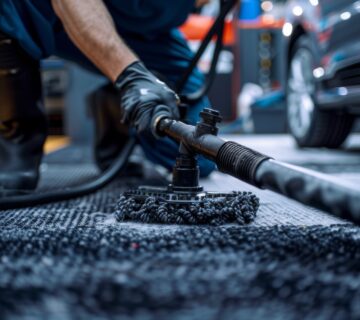
When you're dealing with cat urine, you need more than just a standard cleaner. The absolute best choice is an enzymatic cleaner. These formulas contain special bio-enzymes designed to break down the uric acid crystals that cause those lingering smells. Unlike regular household products that just mask the odour, enzymatic cleaners dismantle the source of the problem for good.
The Science Behind Stubborn Cat Urine Odours
Have you ever noticed that faint, unpleasant cat pee smell returning on a damp day, even after you thought you’d cleaned the spot thoroughly? It’s a common frustration, and the answer is all in the chemistry. To really beat the smell, you first need to understand what you're up against.
Cat urine is a complex cocktail of chemicals that changes over time. When it's fresh, it contains urea and urochrome (which gives it the yellow colour). Bacteria quickly get to work breaking down the urea, releasing ammonia and creating that initial sharp, pungent smell.
But the real villain here is uric acid.
The Unseen Enemy Uric Acid Crystals
Urea and urochrome are fairly easy to wash away, but uric acid is a different beast entirely. It’s not water-soluble. Instead, it forms tough, salt-like crystals that bind tightly to carpet fibres. These crystals work their way deep into the carpet, the underlay, and sometimes even the subfloor beneath.
These crystals are incredibly durable. When you try to clean the area with normal soap or a standard carpet shampoo, you might get rid of the surface-level stuff, but the uric acid crystals are left behind. They simply lie dormant, waiting for moisture—humidity in the air, a steam cleaner, or another spill. As soon as they get damp, they reactivate and release that awful odour all over again.
This is exactly why a stain you thought was long gone can suddenly reappear, making you feel like you're fighting a losing battle. It’s not your cleaning technique failing; it's the product you’re using.
To really tackle cat urine, you need to understand what you're trying to break down.
Cat Urine Components and Their Cleaning Challenges
| Component | Description | Cleaning Challenge |
|---|---|---|
| Urea | The primary waste product in urine; sticky and water-soluble. | Can be removed with water, but leaves a sticky residue if not fully extracted. |
| Urochrome | The pigment that gives urine its yellow colour. | Responsible for the visible stain; can dye light-coloured fibres if not treated promptly. |
| Ammonia | Released as bacteria break down urea. | Creates the initial strong, pungent odour. Can attract the cat back to the same spot. |
| Uric Acid | A non-water-soluble component that forms salt-like crystals. | These crystals bind tightly to fibres and are reactivated by moisture, causing odours to return. |
Understanding these components makes it clear why a simple scrub isn't enough. The uric acid is the real long-term problem.
Why Everyday Cleaners Fail
Most standard household cleaners, including those with bleach or ammonia, just aren't built to tackle uric acid. Using them can actually make things worse.
- Ammonia-based cleaners are a big no-no. Since urine already contains ammonia, using a cleaner with it can attract your cat right back to the same spot, encouraging them to re-mark their territory.
- Soap and water often just dilute the urine, spreading the components around under the surface and making the affected area even larger.
- Steam cleaners, if used on an untreated stain, are a disaster. The heat can permanently fuse the urine proteins to the carpet fibres, setting the stain and the smell forever.
Knowing the science is the first step. You need a cleaner that actively seeks out and destroys those uric acid crystals at a molecular level. Our detailed guide explains exactly how to get rid of that persistent cat pee smell for good, ensuring you use a method that truly works.
This is where specialised enzymatic formulas become essential. With over 12 million pet cats in UK households, it's no surprise that the demand for effective solutions is massive.
Choosing Your Weapon: Enzymatic vs. Oxidising Cleaners
When you're facing down a stubborn cat urine stain, the cleaning aisle can feel like a minefield. It's easy to get overwhelmed. But not all carpet cleaners for cat urine are created equal, and grabbing the wrong one won't just fail to fix the problem—it could actually make it worse.
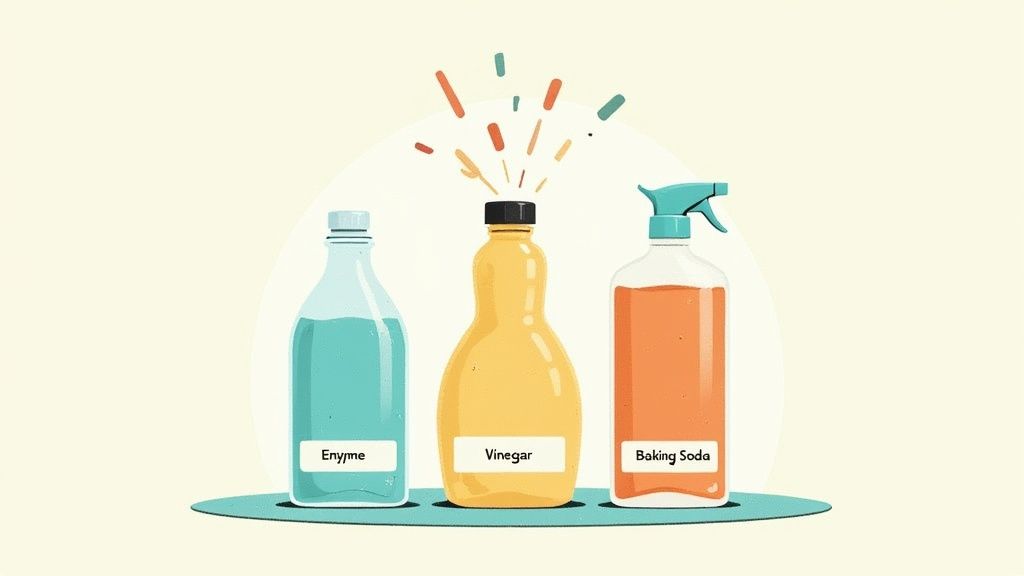
The key is to understand what you're up against. There are two main contenders in this fight: enzymatic cleaners and oxidising cleaners. Each one uses a completely different method to dismantle the components in cat wee, and knowing how they work is your best bet for picking the right tool for the job.
The Power of Enzymatic Cleaners
For years, enzymatic cleaners have been the gold standard for getting rid of pet urine odours for good. These aren't just fancy soaps; they are sophisticated biological formulas loaded with beneficial bacteria and specific enzymes.
When you apply it to a stain, this microscopic clean-up crew gets to work. The bacteria produce enzymes that act as catalysts, rapidly breaking down the organic matter. They are specifically designed to go after the molecules in urine, faeces, and vomit, literally consuming the source of the stain and the lingering smell.
- How They Work: The enzymes—like protease, lipase, and amylase—digest the proteins and fats in the urine. Most importantly, they target and break down the non-soluble uric acid crystals, which are the true culprits behind that nasty, recurring smell.
- Best For: Permanently killing off deep-set odours, not just covering them up. They're perfect for both fresh and old stains on carpets, upholstery, and even porous surfaces.
- Key Consideration: Patience is a virtue here. Enzymatic cleaners need time to do their job properly. You can’t just spray and wipe. The area needs to stay damp for several hours, sometimes even up to 24 hours, to give the enzymes enough time to fully digest every last bit of uric acid.
The real magic of an enzymatic cleaner is its thoroughness. It doesn't just clean what you can see; it neutralises the odour at its molecular source. This is crucial for stopping your cat from being drawn back to the same spot to re-mark its territory.
Understanding Oxidising Cleaners
Your other powerful option is an oxidising cleaner. Unlike their biological cousins, these products work through a chemical reaction. The active ingredients are usually things like hydrogen peroxide or sodium percarbonate.
When an oxidising cleaner hits a urine stain, it triggers a reaction that breaks the chemical bonds of the odour-causing molecules. This process changes their structure, rendering them colourless and, thankfully, odourless.
- How They Work: The oxidation process releases oxygen, which dismantles the stain and smell molecules. It's a fast-acting chemical blitz that can lift stains and neutralise smells very quickly.
- Best For: Tackling the visible, yellow stains and surface-level smells. They are often brilliant at removing discolouration.
- Key Consideration: Be careful. Strong oxidising agents can sometimes lighten the colour of certain fabrics or carpets. It is absolutely essential to spot-test the product on a hidden area first—think inside a cupboard or under the sofa—to make sure it doesn’t cause any damage.
Why Your Go-To Methods Often Backfire
It’s tempting to grab a standard carpet shampoo or fire up the steam cleaner, but for cat urine, these are often the worst things you can do. Standard shampoos simply don't have the chemical makeup to break down uric acid. They might get rid of the initial stain, but they leave the odour-causing crystals lurking deep in the carpet fibres.
Using a steam cleaner is even worse. The intense heat can permanently bond the urine's proteins to your carpet fibres. You're essentially "cooking" the stain right into the material, making the smell almost impossible for anyone—even a professional—to remove later.
It's clear that pet owners are getting wise to these specialised cleaning needs. The UK pet odour control market was valued at around £515.2 million in 2024, a figure driven by the rising pet population and a greater focus on home hygiene. This demand shows that more of us are hunting for effective, targeted solutions. Many are also opting for non-toxic and eco-friendly formulas; you can find out more about picking an environmentally safe carpet cleaner in our dedicated guide.
A Practical Guide to Treating Fresh Urine Stains
That heart-sinking moment when you find a fresh cat urine stain is something most pet owners know all too well. But don't panic. If you act quickly and correctly, you can stop a little accident from turning into a lingering problem. The immediate goal is simple: get as much of the liquid out as you can before it has a chance to soak deep into the carpet fibres and underlay.
The first and most important step is to blot, not rub. Grab a thick wad of paper towels or a clean, absorbent cloth and press down firmly on the wet area. You need to apply some real pressure here to draw the urine up and out of the carpet. Keep swapping out the towels for fresh, dry ones until they come away clean.
Whatever you do, resist the urge to scrub. Rubbing is your worst enemy because it doesn’t lift the urine out; it just grinds it deeper into the carpet pile and spreads it around. You risk turning a small spot into a much larger problem that reaches the carpet backing and potentially even the subfloor.
Applying Your Enzymatic Cleaner Correctly
Once you’ve blotted up as much as possible, it’s time for the enzymatic cleaner. This is where a lot of people make a mistake by being too stingy with the product. You have to remember that the urine has already started seeping downwards, so your cleaner needs to follow the same path to be effective.
Apply the cleaner generously, making sure you completely saturate the stain and a small border around it. As a rule of thumb, treat an area that’s roughly twice the size of the visible stain on the surface. This gives the enzymes the best chance of reaching and neutralising all the uric acid crystals, wherever they may have spread.
Now comes the hard part: you have to wait.
Don’t be tempted to start scrubbing or try to dry the area straight away. Enzymatic cleaners need time and moisture to do their job. The beneficial bacteria need that damp environment to effectively break down and consume the components in the urine that cause that awful smell.
The Waiting Game and Final Touches
For the enzymes to work their magic and fully break down the uric acid, you need to let the cleaner sit. For a fresh stain, a dwell time of at least 15-30 minutes is a good starting point. But for the best results, I always recommend covering the damp spot with a clean, damp cloth and leaving it for several hours, or even overnight if you can.
This extended contact time allows the enzymes to really penetrate deep into the carpet and underlay, ensuring no trace of those odour-causing crystals is left behind. It’s a test of patience, but it’s the most critical part of the whole process.
After the waiting period is over, take another clean, dry cloth and blot the area to soak up any excess moisture. Then, just let the carpet air dry completely. Don’t use a hairdryer, as the heat can interfere with the enzyme's work. Once it's dry, a quick vacuum over the spot will help lift the pile and restore the carpet's natural texture.
Following these steps for fresh accidents can make all the difference. For more stubborn issues or just for a good refresh after dealing with stains, learning how to deep clean carpets at home is a brilliant next step in your carpet care routine.
Fresh accidents are one thing, but what about the stains that dried long before you even knew they were there? These are a completely different beast. When urine has had time to dry, it seeps deep into the carpet backing, the underlay, and sometimes even the subfloor. The uric acid crystals bond firmly to the fibres, making them much harder to shift.
The good news? Even old, set-in stains can be defeated. It just requires the right tools and a more intensive strategy. Your first job is to play detective, because you can't clean what you can't find. An old, dried stain might be completely invisible, leaving only a faint, lingering smell you can’t quite place.
Your Secret Weapon: The UV Blacklight
This is where a UV blacklight becomes your most valuable tool. These simple, inexpensive lights are an absolute must-have for any cat owner. The phosphorus and proteins in cat urine cause it to fluoresce—or glow a greenish-yellow colour—under ultraviolet light.
To use one properly, wait until it's dark and turn off all the lights in the room. Slowly sweep the blacklight over your carpet, holding it about a foot above the fibres. Any old urine spots will immediately reveal themselves with an unmistakable glow, letting you map out every single problem area.
Don't be shocked if you find more spots than you expected. This is a very common experience and just goes to show how sneaky old stains can be. I always recommend using small bits of masking tape to mark the centre of each glowing spot so you can find them again once the lights are back on.
A More Aggressive Treatment Plan
Once you've identified all the culprits, it’s time to get a bit more aggressive. A single light spray just won't cut it for stains that have been sitting for weeks or even months. You need to rehydrate those uric acid crystals to wake them up, then ensure your cleaner penetrates just as deeply as the original urine did.
Here’s a breakdown of the best approach for these stubborn, dried-in stains:
- Rehydrate First: Lightly mist the marked areas with warm water from a spray bottle. This is a crucial first step, as it starts to reactivate the dormant uric acid crystals and makes them vulnerable to the enzymatic cleaner.
- Saturate Thoroughly: Now, apply your chosen enzymatic cleaner much more generously than you would for a fresh stain. You need to completely saturate the spot and a small ring around it, making sure the solution soaks deep into the carpet and underlay. Remember, the urine likely spread outwards underneath the surface.
- Extend the Dwell Time: For old stains, patience is everything. After saturating the area, cover it with a damp towel to keep it from drying out. You have to let the cleaner sit for a minimum of 12 to 24 hours. This extended time is non-negotiable; it gives the enzymes the time they need to fully break down the deeply embedded uric acid.
For a clearer picture, this infographic shows the recommended process for tough stains versus the common mistakes that just don't work.
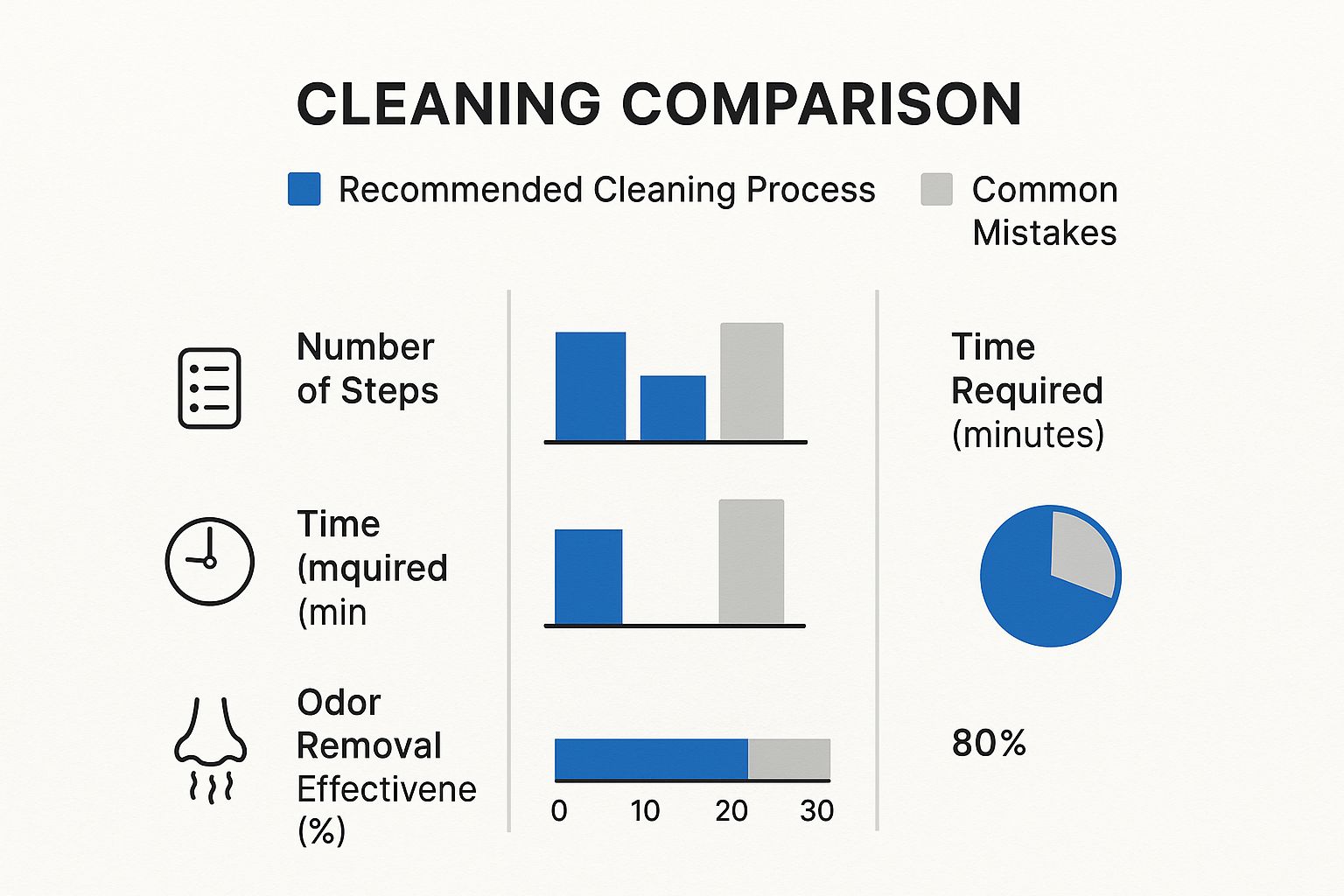
As you can see, the proper method takes longer, but its effectiveness in completely getting rid of the odour is miles ahead.
When it comes to your choice of cleaner, you'll often be deciding between a homemade remedy and a commercial product. Here's a quick comparison to help you choose.
DIY vs Professional Cat Urine Carpet Cleaners
| Feature | DIY Solutions (Vinegar, Bicarb) | Professional Enzymatic Cleaners |
|---|---|---|
| Primary Action | Neutralises odour temporarily, cleans surface | Chemically breaks down and destroys uric acid |
| Effectiveness on Old Stains | Low – struggles to penetrate deep crystals | High – designed for deep penetration and breakdown |
| Odour Removal | Can mask odours, but they often return | Permanently eliminates odour at the source |
| Cost | Very low | Moderate |
| Risk of Damage | Low, but vinegar can affect some dyes | Very low when used as directed |
| Best For | Very fresh, minor surface-level accidents | Set-in stains, repeat offenders, and deep odours |
While DIY methods have their place, for old, dried-in stains, a high-quality professional enzymatic cleaner is really the only way to guarantee you solve the problem for good.
Repeat and Finalise the Process
After the long waiting period, blot the area with clean, dry towels to soak up as much of the liquid as you can. Then, just let the carpet air dry completely, which could take a day or two.
It is very common for old stains to require two or three full treatment cycles. Once the area is dry, get the blacklight out again. If you still see a glow, the uric acid hasn't been fully eliminated, and you'll need to repeat the entire process from the start.
While this intensive method is brilliant for carpets, dealing with delicate floor coverings requires a different touch. For those situations, you can learn more from our guide on how to handle cat urine on rugs, which often need more specialised care. Being persistent and methodical is the only way to ensure you permanently destroy old stains and their lingering smells.
How to Prevent Future Carpet Accidents
Successfully getting a cat urine stain out of your carpet is a huge relief, but the real victory? Making sure it never happens again. While you might be focused on finding the best carpet cleaners for cat urine, prevention means digging into why the accident happened in the first place. It's almost never about a cat being naughty; it's a sign that something isn't right.
To win this battle, you need to switch from a cleaning mindset to a detective mindset. A cat urinating outside its litter tray is often a cry for help. The cause usually boils down to one of two things: a medical problem, or a behavioural issue sparked by stress or their environment.
First Rule Out Medical Issues
Before you jump to any conclusions about your cat's behaviour, a trip to the vet is non-negotiable. This should always be your first port of call.
Things like urinary tract infections (UTIs), bladder stones, or kidney disease can make urination painful. Your cat might start to associate the litter tray with that pain, leading them to seek out softer, more comfortable places to go—like your plush carpet.
Getting on top of your cat's health is the most important step. A vet is the only one who can give a proper diagnosis and treat any underlying health conditions causing the problem. In some cases, simple dietary changes like adding special cat treats for urinary health can be a proactive way to support their bladder function, but this should be done with your vet's guidance.
Creating a Cat-Friendly Litter Tray Setup
If your cat gets a clean bill of health from the vet, the next suspect is the litter tray situation. Cats can be incredibly particular about their toilet habits, and what seems perfectly fine to us might be completely unacceptable to them.
Try to see it from their perspective. A dirty, small, or badly placed litter tray is the equivalent of us being forced to use a filthy, cramped public loo.
Here are the golden rules for litter tray management:
- The "N+1" Rule: You should have one litter tray per cat, plus one extra. If you have one cat, you need two trays. Two cats? You need three.
- Location, Location, Location: Place the trays in quiet, low-traffic areas where your cat feels safe and won't be disturbed. Steer clear of noisy appliances or putting them right next to their food and water bowls.
- Size Matters: The tray should be at least one and a half times the length of your cat, from their nose to the base of their tail. Most standard trays sold in shops are simply too small.
- Keep it Spotless: Scoop waste at least once a day. Do a full litter change and wash the tray with mild, unscented soap and water every week. A cat's sense of smell is powerful, and they detest a dirty toilet.
A common mistake is using scented litter or harsh chemical cleaners. A cat’s nose is far more sensitive than ours, and strong perfumes can be overwhelming, driving them away from the tray entirely.
Reducing Stress and Enriching Their Environment
Beyond the litter tray, your cat’s general environment plays a massive part in their behaviour. Stress is a major trigger for urinating in the wrong place. Big changes at home—a new baby, another pet, or even just moving the furniture around—can make a cat feel insecure and lead them to mark their territory to feel safer.
An enriched environment helps build your cat’s confidence. This could mean adding vertical spaces like cat trees, setting aside time for interactive play with toys, and making sure they have safe, quiet spots where they can retreat. Keeping our pets happy is a big deal for UK owners; as of 2022, 85% of cat owners reported daily physical contact with their pets, which shows just how much we value that harmonious home life.
As an extra layer of defence for your floors, think about a professional spray-on treatment. Learning about the benefits of a stain protector for your carpet can be a real game-changer. It makes any future accidents far easier to clean up and much less likely to cause lasting damage.
Common Questions About Cleaning Cat Urine
Even with a clear plan, tackling cat urine can feel like a real challenge. It's totally normal to have questions, and getting the little details right is often the difference between success and a lingering smell that just won't quit. Here are the answers to the most common queries we hear from cat owners.
Can I Use a Steam Cleaner on Cat Urine Stains?
This is a question we get all the time, and the answer is a very firm no. It’s incredibly important that you don't use a steam cleaner or any other heat-based method on cat urine stains.
The intense heat from a steam cleaner will literally "cook" the uric acid crystals into the carpet fibres. It causes a chemical reaction that bonds them permanently, setting the stain and the smell in for good. Once that happens, the odour becomes virtually impossible to remove.
Always, always reach for an enzymatic cleaner first. After you're completely certain the stain and odour have been eliminated, you can then use a steam cleaner for a general carpet refresh, but never as your first line of attack on a urine spot.
Are Homemade Carpet Cleaners Really Effective?
Lots of people reach for pantry staples like vinegar and bicarbonate of soda. While they can offer some temporary relief, their effect is limited. Vinegar’s acidity can help neutralise the ammonia in fresh urine, and bicarb is a decent odour absorber, which might make you think you've solved the problem.
The issue is that these DIY remedies don't touch the root cause. They lack the specific enzymes needed to break down the tough uric acid crystals, which are the real source of that recurring cat pee smell.
While a DIY solution might seem to work at first, the odour will almost certainly come back, especially on humid days when moisture in the air reactivates the uric acid. For a permanent fix, only a proper enzymatic cleaner will do the job.
How Do I Know if the Cleaner Has Worked?
Making sure the job is truly done is a crucial final step. There are a couple of ways to check your work and be confident the problem is gone for good.
The first is the simple "sniff test." Once the area you treated is completely dry, get right down on the floor and have a good smell. If you can still detect even a faint whiff of ammonia, it means some uric acid is left behind and you'll need to treat the area again.
For a more foolproof method, you'll need a UV blacklight.
- Wait until it's dark: The test is most effective in a pitch-black room.
- Shine the light: Hold the UV torch about a foot above the spot you cleaned.
- Look for the glow: A bright yellow-green glow means uric acid crystals are still present. If the stain has been neutralised, it shouldn't glow at all, or will be much, much fainter.
If you still see a glow, it's time for another round of cleaning with your enzymatic cleaner. Don't be discouraged; older, more stubborn stains can sometimes take two or three applications to fully remove.
Are These Carpet Cleaners Safe for My Cat and Family?
This is a very important and sensible question for any pet owner. The good news is that most reputable carpet cleaners for cat urine are formulated to be non-toxic and perfectly safe for pets and children once they have completely dried.
It is absolutely vital, however, to read the product label and follow the manufacturer's instructions precisely. As a best practice, keep your pets and children away from the wet, treated area to stop them from walking in it or licking the product.
Many brands you'll find in pet shops are specifically marketed as pet-safe and eco-friendly. If you're particularly concerned, look for products with bio-degradable, plant-based ingredients. Always make sure to ventilate the room well during and after application to help it dry and clear out any initial product smell.
At AG Carpet Specialists, we understand the challenges of keeping a home fresh and clean with pets. If you're facing a stubborn stain or just want a professional deep clean, our expert technicians use state-of-the-art, eco-friendly solutions to restore your carpets safely and effectively. Contact us today for a free quotation and let us bring your carpets back to life.