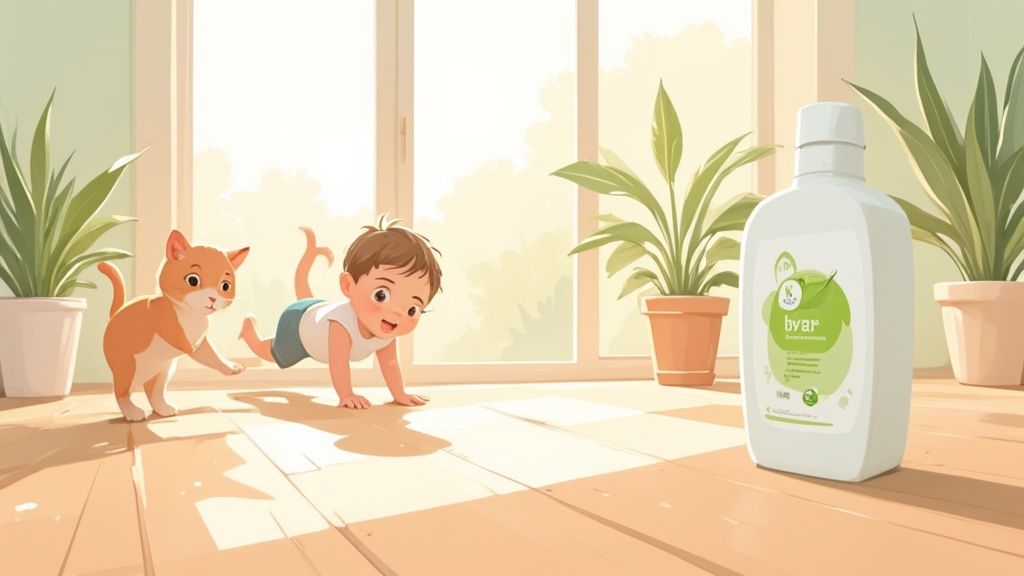
So, what exactly is a non toxic floor cleaner? Think of it as choosing whole foods for your home's surfaces instead of harsh, processed chemicals. It's a cleaning solution made from plant-derived, biodegradable ingredients that are safe for your family, pets, and the wider environment. These cleaners get the job done without relying on a cocktail of hazardous ingredients.
What Makes a Floor Cleaner Genuinely Non Toxic?
When you see "non-toxic" on a label, it should be more than just a clever marketing buzzword. It signals a fundamental shift in how we approach keeping our homes clean. A truly non-toxic floor cleaner is built on the idea of using ingredients that work with nature, not against it. Instead of aggressive solvents and synthetic fragrances, these formulas are packed with plant-based powerhouses that effectively break down everyday dirt and grime.
This isn't just a niche trend, either. The UK's natural household cleaners market was valued at around USD 678.72 million in 2024 and is set to keep growing. This shows a massive shift in what we, as consumers, demand for our homes. We want healthier spaces, and we're voting with our wallets.
The Core Principles of Safe Cleaning
The philosophy behind non-toxic cleaning is brilliantly simple: get a spotless home without putting your health or the environment on the line. This means putting a priority on ingredients that are biodegradable, so they break down naturally without polluting our waterways and ecosystems. It also means ditching volatile organic compounds (VOCs), those nasty chemicals that can pollute our indoor air and trigger respiratory issues.
To really get what makes a cleaner non-toxic, it helps to look at the broader principles of eco-friendly cleaning. The focus is always on getting brilliant results, just without the toxicity.
The old myth that 'natural' means 'less effective' is completely outdated. Modern non-toxic floor cleaners use sophisticated plant-based surfactants and enzymes to lift dirt just as powerfully as their chemical counterparts, but without any of the hazardous side effects.
A Clear Difference in Performance and Safety
Once you understand the stark contrast between traditional and non-toxic cleaners, the choice becomes pretty clear. While both aim to clean, their impact on your home and the planet couldn't be more different. This same thinking applies to other surfaces too, which you can read about in our guide to finding an environmentally safe carpet cleaner.
This infographic breaks down the key safety and environmental differences between plant-based and chemical floor cleaners.
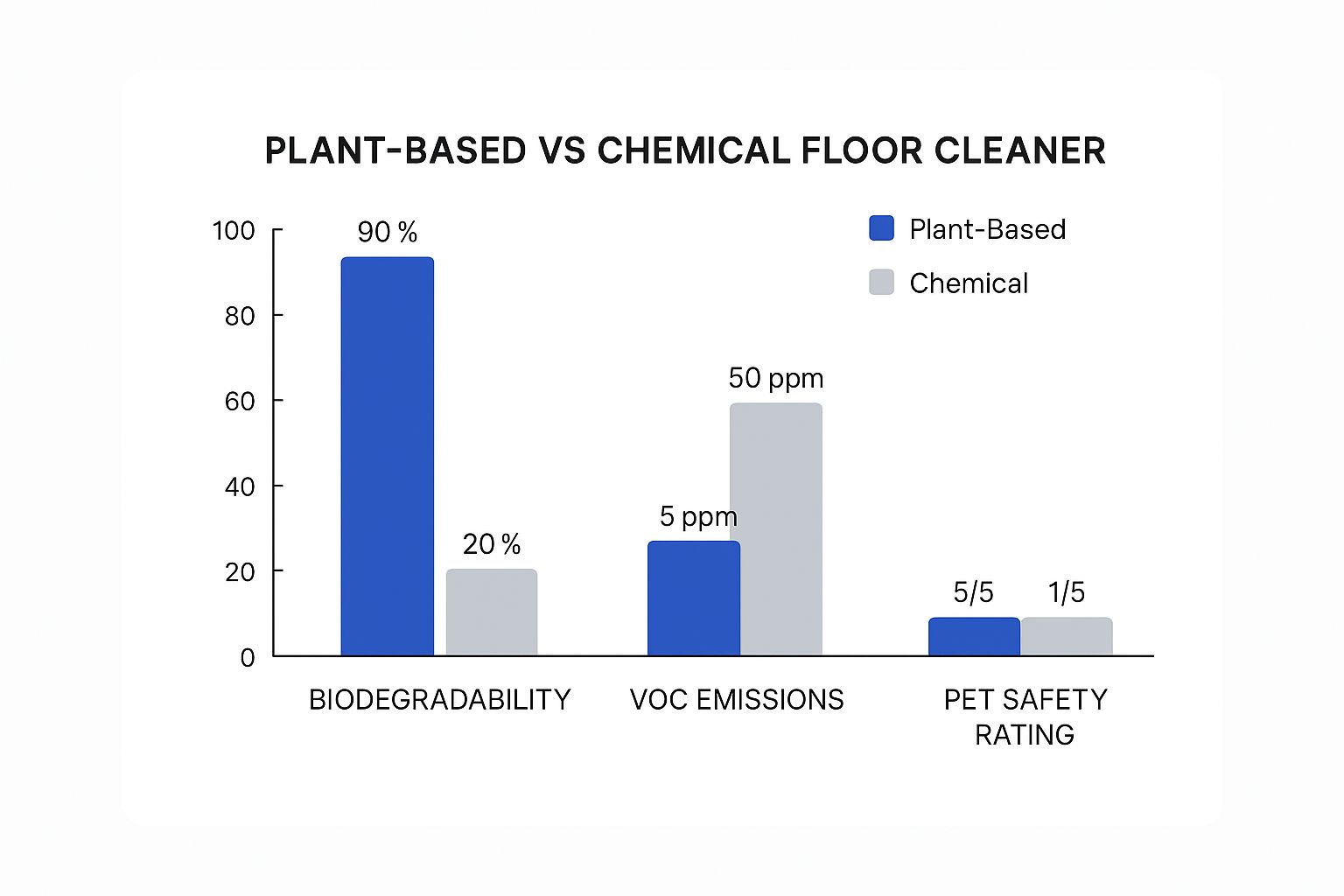
The data speaks for itself. Plant-based cleaners are far more biodegradable, release significantly fewer VOCs, and are rated much safer for our furry friends. It's clear that a non-toxic approach isn't just a preference—it's the superior choice for a healthier living space.
Decoding Cleaner Labels: What to Look For and Avoid
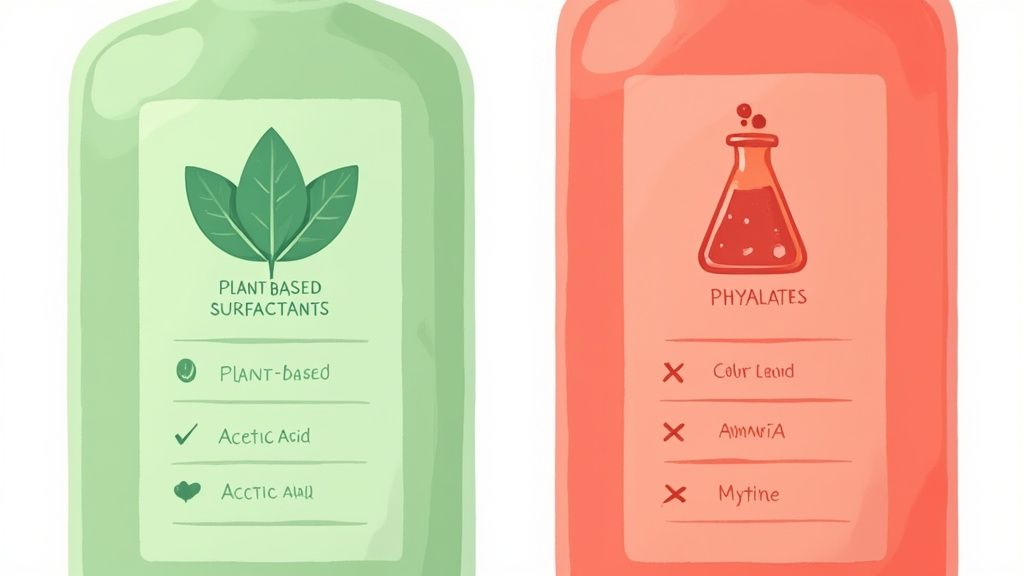
Stepping into the cleaning aisle can feel a bit overwhelming, with endless bottles all promising a perfect shine. The secret to cutting through the noise and making a smart choice is learning how to read the ingredients list. Think of it as a nutritional label for your home; once you know what’s inside, you can pick a non-toxic floor cleaner that is both effective and genuinely safe for your family.
This isn’t about memorising complicated chemical formulas. It's simply about learning to spot the heroes (the 'Green List') and sidestep the villains (the 'Red List'). By getting to know just a few key ingredients, you can confidently filter out products packed with harsh chemicals and choose one that truly supports a healthier home.
The Green List: Ingredients to Look For
When you scan a label, certain names should jump out as good signs. These are the building blocks of a powerful yet safe clean, working with nature to break down dirt and grime without flooding your home with harmful substances.
Keep an eye out for these powerhouse ingredients:
- Plant-Based Surfactants: These are the real workhorses in any good cleaner. Derived from things like coconuts or corn (look for names like Decyl Glucoside or Coco Glucoside), they essentially act like magnets, lifting dirt and grease right off the floor so you can easily wipe it away.
- Acetic Acid (Vinegar): A classic for a reason. As a natural disinfectant and deodoriser, vinegar is fantastic at cutting through grime and tackling certain types of bacteria. It's a simple but incredibly effective part of many eco-friendly formulas.
- Essential Oils: More than just a pretty scent, oils like lemon, tea tree, and lavender have their own antibacterial and antiseptic properties, adding another layer of natural cleaning power.
- Enzymes: These are clever proteins that target and break down very specific types of stains, like food spills or pet messes, making them highly efficient cleaners.
This philosophy of choosing safe, effective ingredients isn't just for hard floors. It’s just as crucial for carpets and rugs. You can dive deeper into this in our guide to eco-friendly carpet cleaners, which follows many of the same principles.
The Red List: Ingredients to Avoid
Just as you look for the good stuff, it's vital to know which ingredients to avoid. Many conventional cleaners rely on chemicals linked to a whole host of health issues, from skin irritation and asthma to more serious long-term toxic effects. Seeing them on a label is a definite red flag.
A key takeaway is that an ingredient's ability to clean shouldn't come at the cost of your family's well-being. If an ingredient list includes warnings about ventilation or skin contact, it's a strong sign the product doesn't belong in a health-conscious home.
Here are some of the common culprits you should always put back on the shelf:
- Phthalates: Often hidden behind the vague term "fragrance," these chemicals are used to make scents last longer but are linked to endocrine disruption.
- Ammonia: While it does a great job on grease, ammonia is a powerful respiratory irritant that can trigger asthma attacks and other breathing problems.
- Chlorine (Bleach): A harsh disinfectant that can create toxic fumes, especially if mixed with other chemicals (like ammonia). It's also highly irritating to the skin, eyes, and lungs.
- Formaldehyde: A known carcinogen, this is sometimes used as a preservative in cleaning products. It can be released into the air as you clean, contributing to poor indoor air quality.
To make things even clearer, let's break down the good vs. the bad side-by-side.
Common Floor Cleaner Ingredients: Green List vs. Red List
| Ingredient | What It Is | Why It's On The 'Green List' | Ingredient to Avoid | Why It's On The 'Red List' |
|---|---|---|---|---|
| Plant-Based Surfactants | Cleaning agents from plants (coconut, corn). | Lifts dirt effectively without harsh chemicals. Biodegradable and gentle on surfaces. | Ammonia | A harsh, inorganic chemical compound. |
| Acetic Acid (Vinegar) | A natural acid produced through fermentation. | Cuts through grease and acts as a mild, natural disinfectant. Deodorises surfaces. | Chlorine (Bleach) | A powerful chemical disinfectant. |
| Essential Oils | Natural oils extracted from plants. | Provide natural fragrance and have inherent antibacterial and antiseptic properties. | Phthalates ("Fragrance") | Synthetic chemicals used to prolong scents. |
| Enzymes | Naturally occurring proteins. | Target and break down specific organic stains (food, pet messes) efficiently. | Formaldehyde | A chemical used as a preservative. |
By keeping this simple 'Green vs. Red' list in mind, you'll find it much easier to navigate the cleaning aisle and make choices that protect both your home and your health.
The Real Benefits of Switching to a Non Toxic Cleaner
Making the move to a non toxic floor cleaner creates a positive ripple effect you can feel almost instantly. It’s not just about what you’re scrubbing off your floors; it’s about what you’re removing from your home’s atmosphere. The most noticeable change is often a huge improvement in your indoor air quality, as you’ll no longer be releasing harsh chemical fumes into the space where your family lives and breathes.
This simple switch creates a much safer surface for everyone, especially for the most vulnerable members of your household. For parents with crawling babies or homes with curious pets who spend their days close to the ground, this provides invaluable peace of mind. Many conventional cleaners leave behind sticky residues that can cause skin irritation or be accidentally ingested, posing unnecessary risks that non-toxic alternatives simply eliminate.
A Safer Home for Your Family
The link between harsh cleaning chemicals and common health issues is well-documented. Ingredients like ammonia and chlorine are notorious for triggering respiratory problems or making conditions like asthma much worse. By choosing a plant-based cleaner, you are actively reducing your family’s daily exposure to these potential irritants and building a healthier living space from the ground up.
This growing awareness is clearly reflected in consumer habits. Recent analysis shows that around 60% of UK consumers are now willing to pay more for environmentally friendly cleaning products. More specifically, 55% prioritise products that are safe for children and pets—a hallmark of non-toxic floor cleaners. You can see more on this trend and learn more about the UK professional cleaning products market.
Think of the journey a cleaner takes. Once you’re finished mopping, the water goes down the drain. A conventional chemical cleaner carries its harsh compounds straight into our water systems, where they can persist and harm aquatic life. A non-toxic cleaner, made with biodegradable ingredients, simply breaks down into harmless components, returning to nature without causing damage.
Protecting Our Planet One Mop at a Time
Your choice in the cleaning aisle has a direct impact on the wider environment. Biodegradable ingredients, often derived from plants, are designed to break down safely and completely, preventing the pollution of our precious rivers and oceans. This is a stark contrast to synthetic chemicals that can accumulate in ecosystems, causing long-term harm to wildlife and disrupting delicate natural balances.
By opting for a non-toxic floor cleaner, you’re making a powerful statement. You’re choosing products that not only keep your home safe but also protect the world outside your door. The same principles of environmental care apply to soft furnishings as well; if you're interested, take a look at our guide on eco carpet cleaning. Each cleaning session becomes a small but meaningful vote for a healthier planet.
How to Match a Cleaner to Your Specific Floor Type
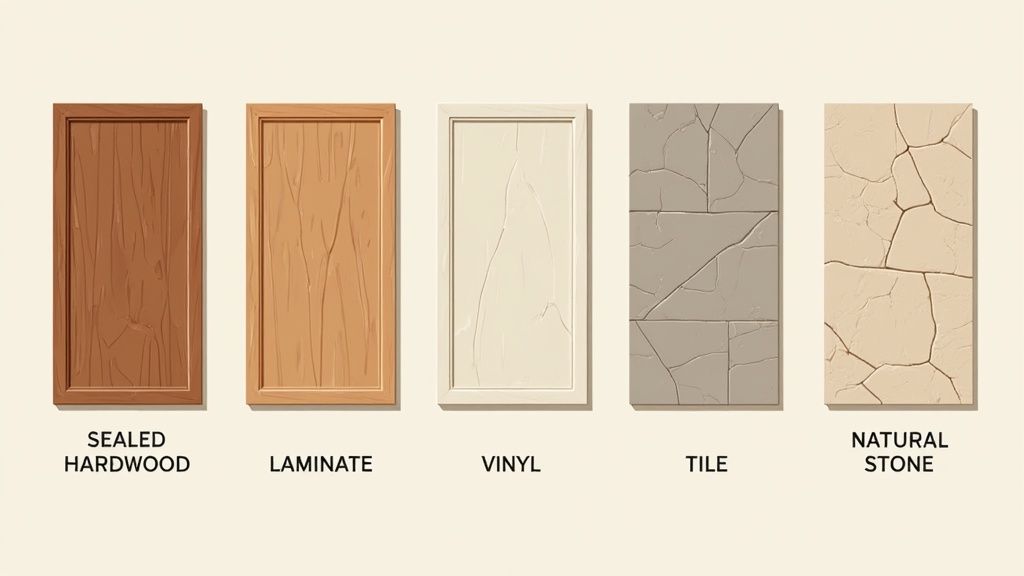
Choosing a non toxic floor cleaner is a brilliant first step, but the work doesn't stop there. The truth is, not all floors are created equal, and using the wrong formula—even a natural one—can lead to dull finishes, streaky surfaces, or even permanent damage. Think of it like skincare: you wouldn't use a harsh scrub on delicate skin, and the same principle applies right under your feet.
To get that spotless, gleaming finish while preserving the life of your flooring, you have to match the cleaner to the surface. Different materials have completely different needs, from how they react to acidity to their tolerance for a bit of moisture.
Sealed Hardwood and Laminate Floors
With sealed hardwood and laminate, moisture is the number one enemy. Too much water or a cleaner that isn't pH-balanced can cause the material to swell, warp, or delaminate over time. The key here is a "less is more" approach.
Your best bet is a pH-neutral, plant-based cleaner that you can use with minimal water. Always opt for a lightly damp mop, never one that's soaking wet. For a more detailed look at caring for these beautiful floors, check out our specialist guide on how to clean wood floors for more expert tips.
Vinyl and Linoleum Flooring
Vinyl and linoleum are known for being incredibly resilient, which is why they’re such a popular choice in UK homes. They can handle more moisture than wood, but they aren't invincible. Harsh, abrasive cleaners or very acidic solutions (like undiluted vinegar) can easily strip away their protective top layer, leaving them looking dull and vulnerable to scratches.
- Best Practice: Stick with a gentle, pH-neutral non toxic floor cleaner.
- Application: A damp mop is perfect. You can be a little more generous with the water here than you would on wood.
- What to Avoid: Stay well away from any ammonia-based products or abrasive powders that can wear down the finish.
Ceramic and Porcelain Tile
Tile floors are tough, but the grout lines holding them together are porous and can suck up dirt and stains like a sponge. While the tiles themselves can handle stronger cleaners, a harsh chemical formula will erode and discolour the grout over time. A non-toxic cleaner is perfect for lifting grime without damaging these vulnerable lines.
When cleaning tile, the aim is to lift dirt from both the tile and the grout without relying on corrosive chemicals. A plant-based cleaner with natural degreasing ingredients, like citrus oil, works wonders here without weakening the grout.
If you're dealing with stubborn grout stains, you can make a simple paste from bicarbonate of soda and water. Apply it with a brush, give it a scrub, and then clean the whole floor with your diluted non-toxic solution. It’s a great two-step process that tackles tough spots while keeping the overall clean gentle and safe.
Natural Stone Floors Marble Granite and Slate
Natural stone floors—like marble, granite, and slate—are the most sensitive of all. They are porous and extremely reactive to acids. Using an acidic cleaner, even a natural one like vinegar or lemon juice, can physically etch the surface, creating dull spots that are impossible to remove.
For these floors, a pH-neutral cleaner isn't just a recommendation—it's absolutely essential. Always double-check the label to ensure the product is specifically made for use on natural stone. A mistake here can be a very costly one, so it pays to be cautious and choose a cleaner designed to protect these beautiful, delicate surfaces.
Simple and Effective DIY Non Toxic Floor Cleaners
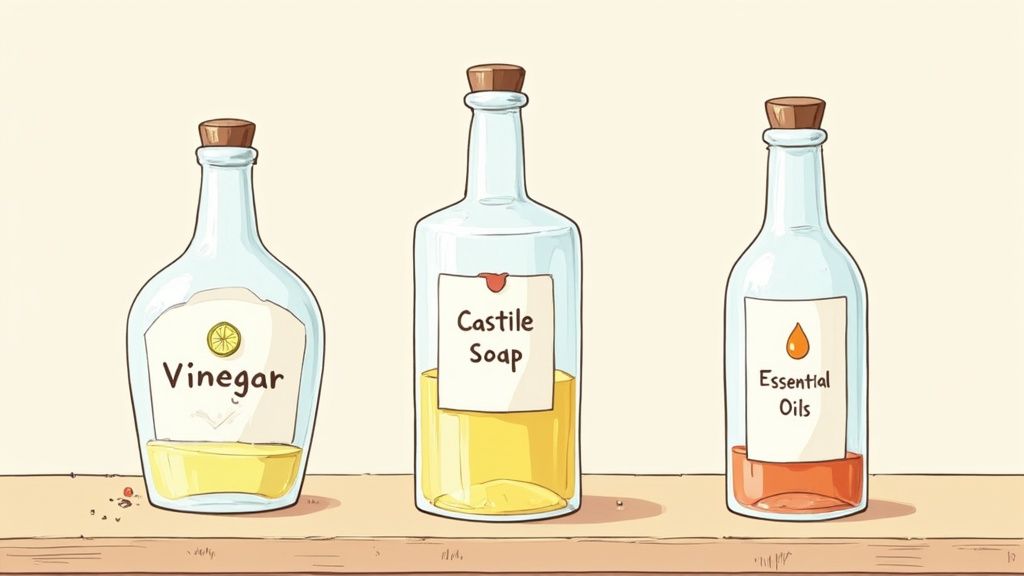
Whipping up your own non toxic floor cleaner is not just ridiculously easy, it's also incredibly kind to your wallet. With just a few basic ingredients you likely already have in your cupboards, you can mix a potent, effective cleaning solution in minutes. This gives you total control over what touches your floors and gets released into your home's air.
These homemade recipes let you sidestep synthetic fragrances and harsh chemicals altogether. Even better, you can tailor the scent with your favourite essential oils, transforming a mundane chore into a genuinely pleasant, aromatic experience.
All-Purpose Vinegar and Water Solution
This is the classic, go-to recipe for good reason—it’s simple, cheap, and brilliantly effective at cutting through everyday dirt and grime on a wide range of surfaces. The natural acidity of white vinegar makes it a fantastic disinfectant and deodoriser.
Best for: Sealed hardwood, laminate, vinyl, and ceramic tiles.
- Combine Ingredients: Mix equal parts warm water and white distilled vinegar in a bucket or a spray bottle. A good starting point is about 250ml of each.
- Add Scent (Optional): For a fresh scent and an extra antibacterial boost, add 10-15 drops of an essential oil like lemon or tea tree.
- Clean: Mop the floor as usual, but take care not to leave wood or laminate surfaces soaking wet. The best part? No rinsing is needed.
Crucial Safety Tip: Never, ever use vinegar-based cleaners on natural stone floors like marble, granite, or slate. The acid can etch and permanently dull the stone's beautiful surface, causing irreversible damage.
Gentle Castile Soap Cleaner
If your floors need a gentler approach, or if you just can't stand the smell of vinegar, a castile soap solution is the perfect alternative. It cleans beautifully without the high acidity, making it a safe bet for more delicate surfaces.
Best for: Linoleum, vinyl, and sealed hardwood floors.
- Recipe: Simply add about one tablespoon of liquid castile soap to a bucket containing roughly 4 litres of warm water.
- Mix Well: Stir it gently to combine everything without creating a mountain of suds.
- Customise: A few drops of lavender or orange essential oil can be added for a lovely, calming aroma.
This simple mix lifts dirt away without leaving any sticky residue behind. While this is fantastic for hard floors, you'll need a different method for soft furnishings. You can find more tips in our guide to creating a natural carpet cleaner.
Heavy-Duty Degreasing Floor Cleaner
When you’re up against tougher, greasier messes, especially in the kitchen, this recipe has the extra muscle you need. The combination of ingredients works together to dissolve stubborn grime that water and vinegar alone might struggle with.
Best for: Ceramic tile, vinyl, and linoleum floors.
- Create the Base: In a bucket, mix 4 litres of warm water with two tablespoons of castile soap and one tablespoon of washing soda.
- Enhance with Oils: Add 10 drops of tea tree oil and 10 drops of sweet orange oil for their impressive degreasing and antibacterial properties.
- Mop and Rinse: Mop the floor thoroughly. Because this is a stronger solution, it’s a good idea to go over the floor a second time with a mop dampened with plain water. This ensures any potential residue is completely removed.
Top Non-Toxic Floor Cleaner Brands You Can Trust
If you love the idea of a sparkling clean home but prefer the convenience of a ready-made product over a DIY mix, you're in luck. The market for effective, non toxic floor cleaner brands has grown significantly, offering fantastic options that are both powerful and safe for your family.
Navigating the choices can feel a bit tricky, but a few trusted names consistently deliver on their promises. These brands have built solid reputations on transparency, ethical sourcing, and creating formulas that work without any harsh chemicals. This makes it easier than ever to find a product that aligns perfectly with your cleaning needs and your personal values.
Leading Brands in the UK Market
When you're browsing the cleaning aisle, there are several standout brands that have become go-to choices for health-conscious shoppers here in the UK.
- Ecover: A true pioneer in the eco-friendly cleaning space, Ecover uses plant-based and mineral ingredients. Their floor cleaners are well-regarded for being tough on dirt while remaining fully biodegradable and safe for aquatic life.
- Method: Known for its stylish packaging and delightful, naturally derived scents, Method offers a range of floor cleaners designed for specific surfaces. Their formulas are effective, cruelty-free, and focus on leaving floors gleaming without any toxic residue.
- Bio-D: This independent, UK-based company is committed to creating hypoallergenic, environmentally responsible products. Their cleaners are vegan, cruelty-free, and made from ethically sourced ingredients, making them a superb choice for sensitive households.
Making an Informed Choice
Choosing the right brand often comes down to your specific needs. For instance, some of the most effective options are those that use natural degreasing agents to cut through grime, like a non-soapy citrus cleaning solution.
The growing availability of these products in major retail outlets is a game-changer. It signals a shift from niche eco-shops to mainstream accessibility, making it simpler for everyone to adopt healthier cleaning habits without going out of their way.
This widespread availability is key. In fact, supermarkets and hypermarkets are the main places people buy these cleaners, accounting for 39.27% of market revenue in 2024. These big retailers are crucial for driving the widespread adoption of eco-friendly floor cleaners. You can discover more insights about the floor cleaner market on futuremarketinsights.com.
By understanding which brands lead the way, you can confidently select a high-quality, pre-made non toxic floor cleaner that delivers a powerful, safe clean every single time.
Got Questions About Non-Toxic Floor Cleaners?
Making the move to a non-toxic floor cleaner is a fantastic choice for a healthier home, but it's completely normal to have a few questions before you start. Let's clear up some of the most common ones so you can feel totally confident in your new cleaning routine.
Are Non-Toxic Cleaners Really as Effective?
Yes, they absolutely are. That old idea that you need harsh, aggressive chemicals for a proper deep clean is well and truly outdated.
Modern non-toxic cleaners are cleverly formulated with powerful, plant-based surfactants and enzymes. These ingredients are specifically designed to break down dirt, grease, and everyday grime just as effectively as traditional cleaners, but without leaving any nasty chemical residues behind.
How Long Do DIY Cleaners Last?
This is one of the biggest differences compared to store-bought products. Since your homemade cleaners don't contain any chemical preservatives, their shelf life is much shorter.
A simple vinegar and water solution, for example, is best used within two to four weeks. The best approach is to mix smaller batches more often. This guarantees you’re always using a fresh, potent cleaner for the best possible results.
Think of it like fresh-squeezed orange juice versus the long-life carton. The fresh version is potent but best enjoyed quickly, while the other is designed for the shelf. Your DIY cleaner is the fresh, powerful option for your floors.
Can I Use the Same Cleaner on All My Floors?
Not always. While many non-toxic cleaners are great all-rounders, some floor types have very specific needs that you can't ignore.
As we've mentioned, natural stone like marble or granite must have a strictly pH-neutral cleaner. Any acidic ingredients (like vinegar or lemon) are a no-go and can cause permanent damage. For most sealed floors like vinyl, tile, and laminate, a general-purpose non-toxic floor cleaner is perfectly safe. It’s all about matching the product to the surface, so always double-check the label.
At AG Carpet Specialists, we believe a truly clean home is a healthy home. If you want to restore the beauty of your floors and carpets with professional, eco-friendly solutions, we're here to help. Discover the difference our expert care can make by visiting us at https://www.agcarpetspecialist.co.uk.