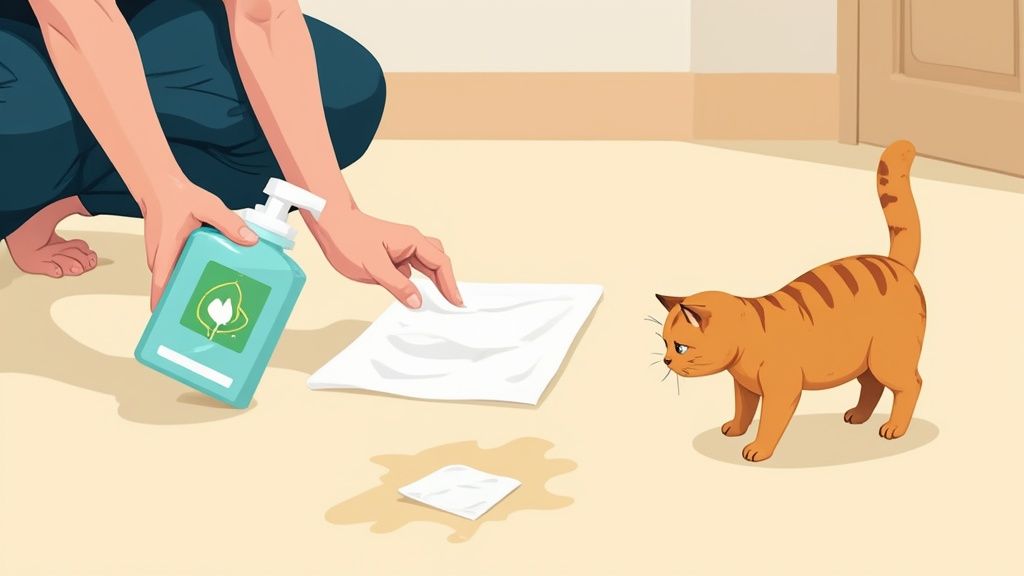
Tackling cat urine on your carpet isn't just about a quick surface clean; it’s about getting deep into the fibres to break down the problem at its source. For a permanent fix, you really need a two-pronged attack: a specialised enzymatic cleaner to dismantle the odour-causing compounds, followed by a proper, thorough extraction. Anything less is just a temporary patch-up.
Why Cat Urine Is So Hard to Remove
If you’ve ever tried to clean up after your cat, you already know how frustrating it can be. It’s a uniquely stubborn problem. You think you’ve sorted it, but the smell comes back days or even weeks later, especially when the air gets a bit humid.
The reason it's so persistent comes down to the unique chemistry of cat urine.
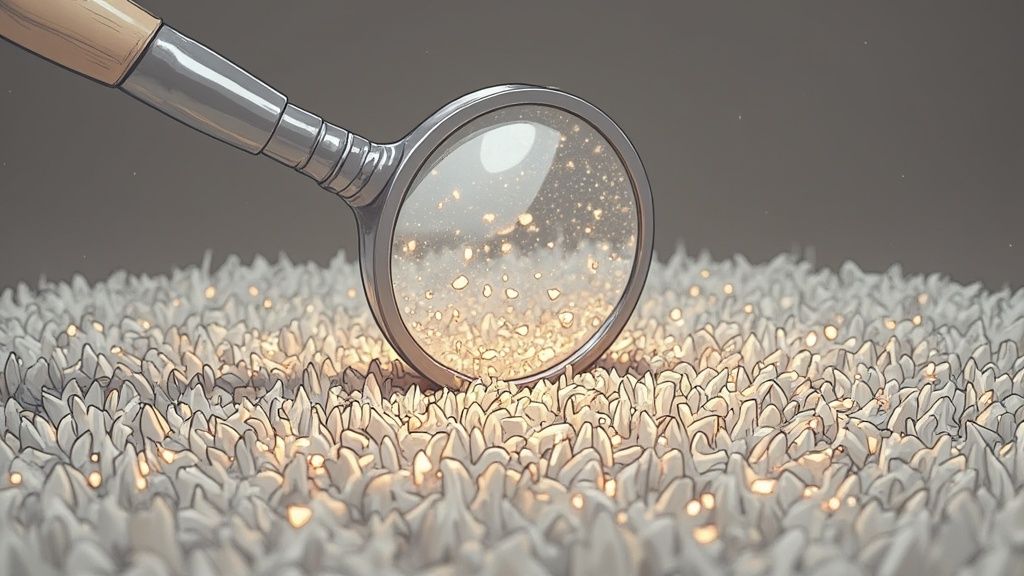
Unlike a simple spill, cat urine contains uric acid. As it dries, this acid forms sharp, non-soluble crystals that grip onto carpet fibres, the backing, and can even seep into the subfloor. Your everyday soaps and detergents just can't deal with these crystals. They might lift the surface stain, but they leave the real problem behind.
The visible stain is just the tip of the iceberg. The real challenge is the invisible uric acid crystals. They’re the source of that lingering odour and will reactivate with any moisture, bringing that pungent ammonia smell right back.
This is why a specialised approach is non-negotiable. Your goal isn't just to clean the spot but to completely destroy the urine at a molecular level.
The Science Behind The Smell
That unmistakable smell actually develops in stages. First, bacteria get to work on the urea, which releases that familiar ammonia-like odour. The second stage is where it gets really unpleasant. The urine breaks down further into mercaptans—the same compounds that give skunk spray its infamous stench. It's this combination that makes the smell so offensive and difficult to just cover up.
To properly fix this, you have to use products designed to break that chemical chain reaction. Here's a quick rundown of what you’re up against:
- Uric Acid Crystals: These are the main culprits. They don’t dissolve in water and cling tenaciously to fibres.
- Deep Penetration: Urine doesn’t stay on the surface. It soaks deep into the carpet padding and subfloor, far beyond what you can see.
- Reactivation: Any humidity or future spills can rehydrate the crystals, making the smell return with a vengeance.
To better understand the immediate steps versus the long-term solution, let's compare the two approaches.
Immediate Actions vs Permanent Solutions
Here's a quick comparison of what you should do right away versus the deeper cleaning required to permanently eliminate cat urine.
| Action Type | Method | Primary Goal | Overall Effectiveness |
|---|---|---|---|
| Immediate Action | Blotting with paper towels, using a DIY vinegar solution. | Absorb excess liquid, neutralise initial odour. | Temporary. Reduces immediate impact but won't remove crystals. |
| Permanent Solution | Professional hot water extraction with an enzyme cleaner. | Destroy uric acid crystals at a molecular level. | High. Permanently eliminates the stain and the source of the odour. |
Blotting is a crucial first step, but it will never be the final one. True removal requires breaking down the chemical source of the problem.
Here in the UK, this is a huge issue for pet owners. In our professional experience, the most successful strategy by far is combining hot water extraction with powerful enzymatic cleaners. Our data shows that when we treat carpets within 24 hours using this method, the odour removal success rate is over 90%. If treatment is delayed, that figure plummets to below 50%.
For more tips on dealing with stubborn smells, check out our complete guide on how to eliminate pet odors.
Your Essential Cat Urine Cleaning Toolkit
Before you even think about tackling a cat urine stain, getting your supplies in order will be the difference between a job well done and a lingering smell. Think of it as preparing for a very specific, very important mission. It’s not just about grabbing the first bottle you see under the sink; it’s about having the right tools to break the stain down completely.
Getting your toolkit ready from the start means you can act fast. There's nothing worse than that mid-clean panic when you realise you're missing something vital. Being prepared is half the battle won when it comes to cleaning cat urine from your carpet.
Core Cleaning Agents
The absolute cornerstone of any successful cat urine removal is a good enzymatic cleaner. This isn't just a fancy name; these cleaners contain specific, beneficial bacteria that produce enzymes. These enzymes, like protease and urease, are designed to literally break down the uric acid crystals in urine into simple, odourless things like carbon dioxide and water.
Think of enzymes as a highly specialised demolition crew for urine. A standard soap might clean the surface, but enzymes get deep into the fibres to dismantle the very source of the stain and smell, making sure it doesn’t come back to haunt you.
Working alongside your main cleaner, white vinegar is a fantastic first responder. A simple solution of one part vinegar to one part water is great for neutralising that strong ammonia smell on a fresh stain. It’s an excellent first step, but remember it won't break down the uric acid, so you can't rely on it alone.
This visual gives you a clear idea of the basic process for dealing with cat urine stains, from breaking down the problem to the final removal.
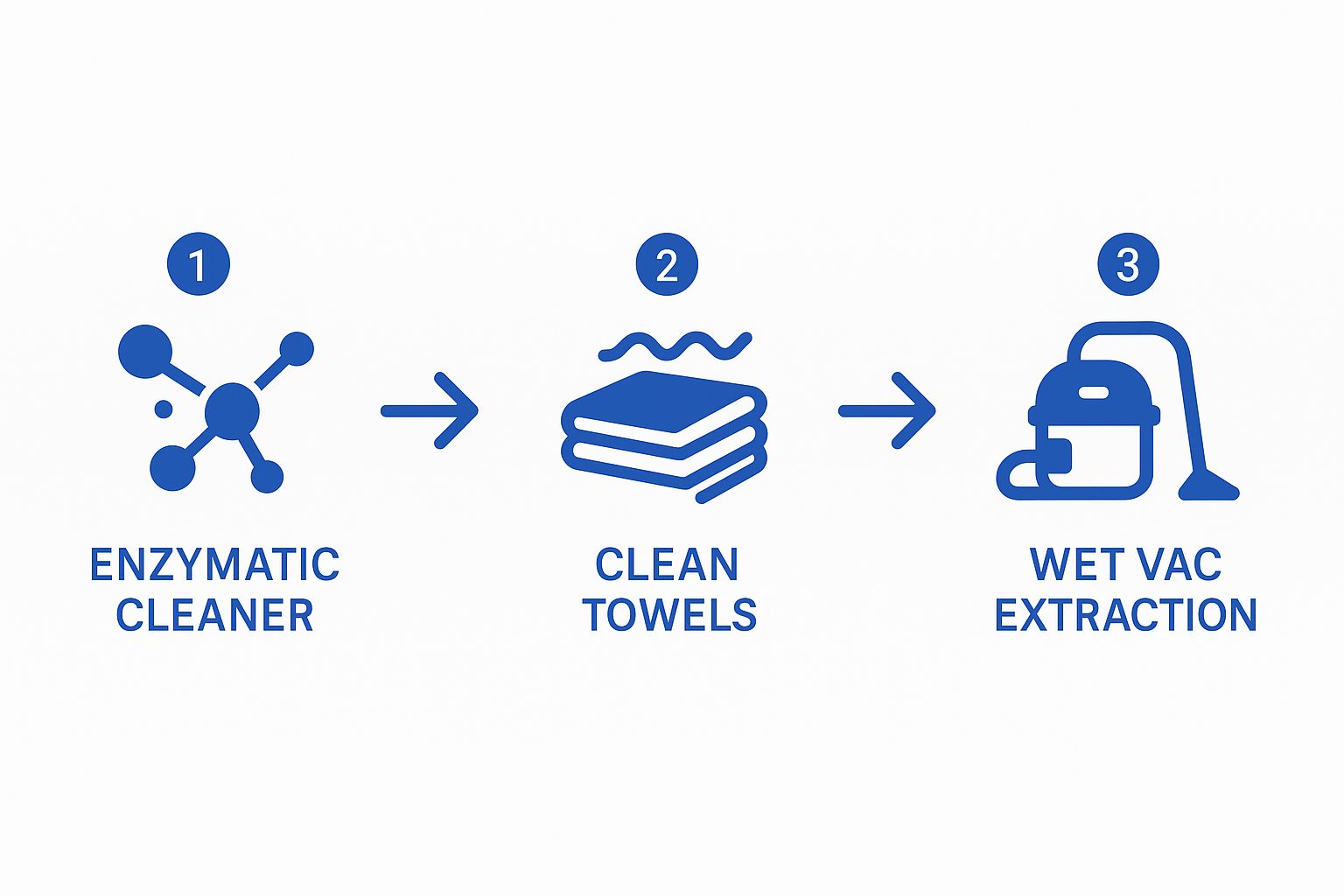
The infographic shows the crucial steps: the enzymatic cleaner is your chemical attack, followed by the physical removal of the mess through blotting and powerful extraction.
Essential Supporting Tools
Once you've got your cleaning agents sorted, you'll need the right equipment to apply them and, more importantly, get everything back out of the carpet. Having these items ready to go is non-negotiable if you want to do a thorough job.
Your must-have list should include:
- Clean, White Towels or Paper Towels: These are essential for blotting up as much of the mess as possible. Always use white cloths to avoid any dye from the towel transferring onto your carpet.
- A Wet Vacuum: Honestly, this is a complete game-changer. It has the power to pull the cleaning solution and the dissolved urine right out from the base of the carpet and even the underlay. Blotting alone simply can't compete.
- A UV Blacklight: This is your secret weapon for finding old, dried stains that are invisible to the naked eye. In a dark room, the leftover urine crystals will glow under the UV light, showing you every single spot you need to treat.
Gathering these items means you’re equipped to handle both fresh accidents and those mysterious old stains. For a deeper dive into choosing the right products and techniques, have a look at our guide on safe carpet cleaning for pets. A well-prepared toolkit gives you the confidence to tackle any situation.
How to Tackle Fresh Cat Urine Stains
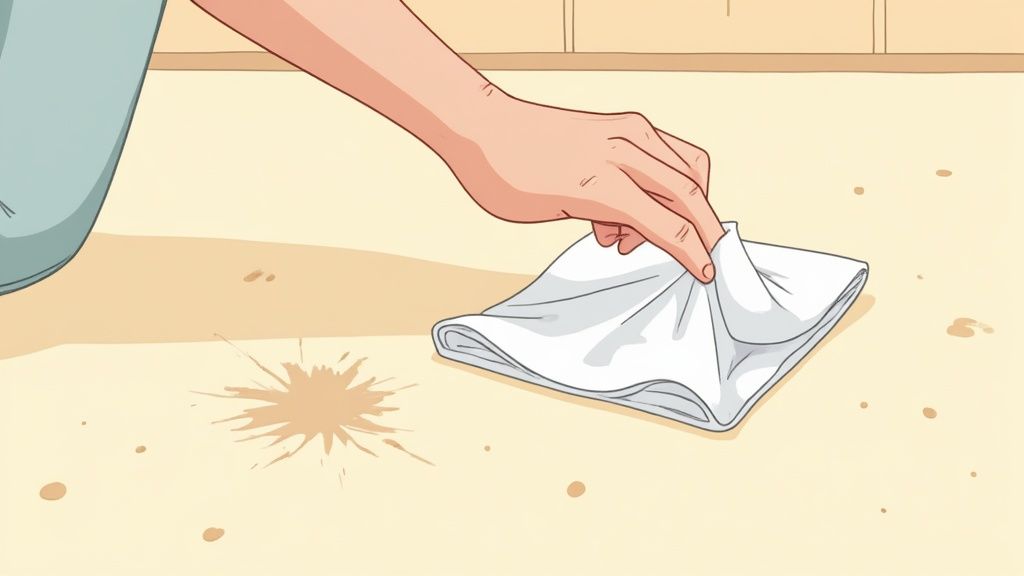
When you spot a fresh accident, speed is everything. Getting to it immediately is often the difference between a quick clean-up and a lingering odour that just won't quit. This isn’t about scrubbing like mad; it’s about using the right technique to lift the problem out of the carpet, not push it further in.
Your first move should always be to blot. Grab a thick pile of paper towels or a clean, white cloth and press down firmly on the wet area. The goal is to soak up as much of the liquid as you possibly can.
It’s absolutely critical to blot, not rub. Rubbing only grinds the urine deeper into the carpet fibres and can even damage them, setting the stain permanently.
Once you’ve blotted until the spot is only slightly damp, it's time to deal with that initial, sharp smell. A simple mix of one part white vinegar to one part cool water in a spray bottle works a treat. Lightly mist the area—don't drench it—to start neutralising the ammonia. Think of this as first aid; it's a great start, but it won't solve the whole problem.
Mastering the Enzymatic Cleaner Application
Now for the real work. This is where an enzymatic cleaner comes in, and it's also where many home attempts go wrong. The trick isn't just spraying the stain you can see. You need to think like the urine.
Urine spreads out once it hits the carpet backing, often creating a puddle in the underlay that’s double the size of the visible spot on top. To be effective, you must saturate the area well beyond the stain's edges. This is the only way to ensure the enzymes reach every last drop.
Don't be shy with the product. You need to apply enough cleaner to sink just as deep as the urine did. If it reached the underlay, your cleaner has to get there too.
After applying it, the next step is the most important and the most often ignored: patience. The enzymes need time to break down the uric acid crystals causing the smell. We call this dwell time. Check the instructions on the bottle, but most of these cleaners need to stay damp for several hours—sometimes up to 24 hours—to work properly. Covering the spot loosely with a damp towel can stop it from drying out too quickly.
Adapting Your Technique for Different Carpets
Not all carpets are the same, and your cleaning method needs to reflect that. The way you treat a low-pile Berber is quite different from how you'd handle a deep-pile shag carpet.
- For Low-Pile Carpets (e.g., Berber): These carpets have very tight loops. You'll need to gently work the enzymatic cleaner into the fibres with your fingers (wear gloves!) to make sure it gets past that dense surface. The good news is that extracting the liquid afterwards is usually a bit easier.
- For Deep-Pile Carpets (e.g., Shag, Saxony): The long, loose fibres in these carpets mean urine can sink very deep, very fast. Be extra generous with your cleaner here, making sure to saturate it thoroughly. When it's time to blot and extract, you'll need to put in more effort to pull all that moisture from the base of the carpet.
Once the enzymatic cleaner has had enough time to work, you need to rinse and remove it. Lightly mist the area with clean water, then blot it all up with fresh, dry towels. Even better, use a wet vacuum to pull everything out of the carpet and the underlay beneath. This final step is vital for getting rid of the broken-down urine and any cleaning residue that could attract dirt later. For more general advice, you can find our expert tips on how to clean carpet stains in our dedicated guide.
Eliminating Old and Dried Cat Urine Odours
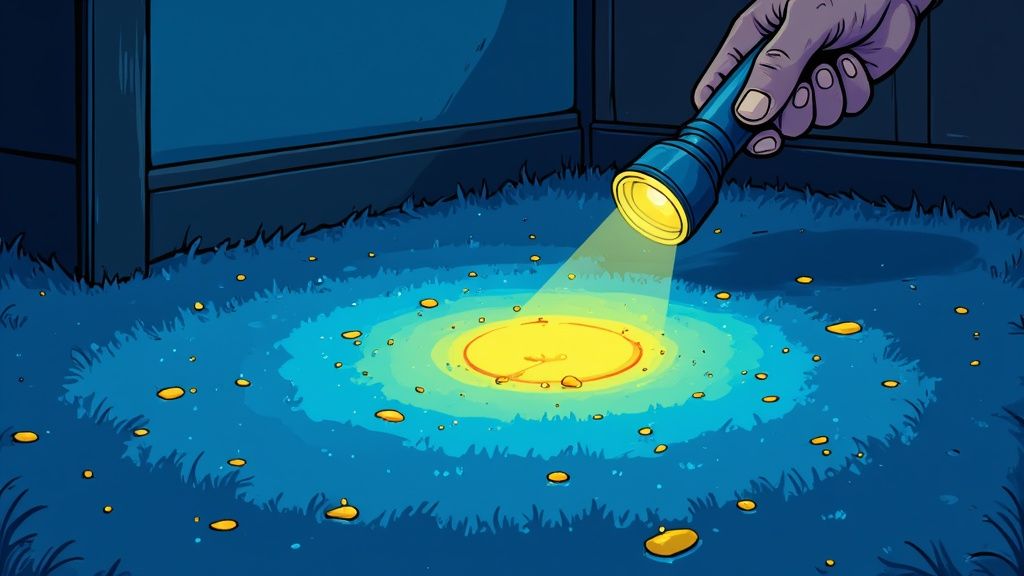
Finding an old, dried cat urine stain is a completely different ball game to dealing with a fresh one. By this point, the uric acid has had time to crystallise, bonding tightly to the carpet fibres and seeping deep into the underlay. This is exactly what creates that stubborn, lingering odour that seems to make a reappearance on damp days.
Tackling these tough cases requires a much more aggressive strategy. You're no longer just cleaning; you're performing a targeted restoration.
The real problem with old stains is that they're often invisible to the naked eye. Data shows that pet-induced carpet damage from cat urine affects around 15-20% of UK households with indoor pets. The urine's acidic components can cause permanent damage to carpet fibres and dyes, with discolouration appearing days or even weeks later. You can learn more about how pet urine affects carpet integrity in this detailed bulletin.
Locating Hidden Stains With a UV Blacklight
Your most valuable tool for fighting old stains is a UV blacklight. In a darkened room, the salts in dried urine will glow a yellowish-green under the UV light, revealing every single spot you need to treat. Believe me, this is a non-negotiable step because you simply cannot clean what you cannot find.
To use it effectively:
- Wait for darkness: The room needs to be as dark as possible for the best results.
- Scan slowly: Hold the light about a foot above the carpet and move across the entire room. Pay close attention to corners and along furniture edges.
- Mark the spots: Use chalk or sticky notes to circle every glowing area so you can find them again once the lights are on.
Rehydrating and Treating Stubborn Odours
Once you've mapped out your targets, the real work begins. Unlike a fresh stain, a dried one needs to be rehydrated to allow the enzymatic cleaner to work its magic. Lightly mist the marked areas with warm water—just enough to make them damp, but not soaking wet.
Now, apply your enzymatic cleaner generously, ensuring you cover an area slightly larger than the stain itself. The key here is patience. Old, crystallised uric acid is tough, and it may take multiple applications over several days to fully break it down.
Expert Tip: For dried stains, the dwell time for your enzymatic cleaner is even more critical. Cover the treated area with a damp towel to keep it from evaporating, allowing the enzymes to work for a full 24 hours before you try to extract the liquid.
Dealing With Deep Underlay Saturation
Sometimes, the urine has soaked so deep that it has contaminated the carpet underlay and even the subfloor. When this happens, surface treatments alone just won't cut it. In these severe cases, a carpet injector or a large syringe can be a lifesaver.
This tool allows you to inject the enzymatic solution directly into the underlay, getting right to the source of the problem. After injecting the solution, gently press on the area with your foot to help it distribute. This advanced technique is often the final step needed to completely destroy the odour for good. For more comprehensive guidance on these methods, our article on how to deep clean carpets at home provides even more detailed steps.
Choosing the Right Cleaning Products in the UK
Walking down the cleaning aisle can feel a bit overwhelming, can't it? With so many bottles promising to eliminate pet odours for good, it’s tough to know which ones actually work on something as stubborn as cat urine.
Making the right choice is crucial. It's the difference between solving the problem for good and just masking the smell for a few days before it comes creeping back. Your goal is to find a product that completely destroys the uric acid crystals, not just the visible yellow stain. This is where understanding what's inside the bottle really matters.
Enzymatic vs Oxygen-Based Cleaners
The two main contenders you’ll find on UK shelves are enzymatic cleaners and oxygen-based (or "oxy") cleaners. While both are powerful, they work in completely different ways, and one is far better suited for this specific job.
An enzymatic cleaner is the specialist you need for cat urine. These clever products contain beneficial bacteria that produce enzymes specifically designed to break down the proteins and uric acid. Think of it as a targeted biological attack right at the source of the odour.
An oxygen-based cleaner, on the other hand, uses a chemical reaction to lift away stains. It releases tiny oxygen bubbles that break down colour molecules and organic matter. This makes them great for general-purpose spills, like food or mud, but they don't always fully break down the invisible uric acid crystals.
For cat urine, an enzymatic cleaner should always be your first choice. While an oxy cleaner might remove the yellow stain, only enzymes will reliably destroy the odour-causing crystals and stop that smell from returning on a damp day.
What to Look For and What to Avoid
When you’re picking a product, always read the label carefully. You'll want to avoid anything that relies heavily on perfumes or fragrances to "eliminate" odours. These just cover up the smell temporarily. A true urine remover shouldn't need a strong, overpowering scent to prove it's working.
Here’s a quick checklist of what to look for:
- A "Bio-enzymatic" Formula: This is the key phrase. It confirms the product uses enzymes to break down the organic waste.
- Urine-Specific Language: Look for products explicitly designed for pet urine, not just general "pet stains".
- Good User Reviews: See what other UK pet owners are saying. Does it work on cat urine specifically?
The UK pet care market has grown massively, and enzymatic cleaners now make up about 10% of all carpet cleaning product sales for pets. A typical 650 ml bottle will set you back between £8 and £15. While most feedback is positive, some products can cause carpet discolouration, so it's vital you test it on a small, hidden area first. You can find more insights by reading about UK pet urine removers and their effectiveness.
To help you sift through the options, we’ve put together a quick comparison of the main types of cleaners you'll find on the market.
Comparing UK Cat Urine Carpet Cleaners
| Cleaner Type | How It Works | Best For | Average Cost (£) |
|---|---|---|---|
| Enzymatic Cleaners | Uses bacteria and enzymes to break down uric acid and proteins. | Specifically targeting and eliminating cat urine odours at the source. | £8 – £15 |
| Oxygen-Based Cleaners | Releases oxygen bubbles to lift and break down visible stains. | General stains like coffee, mud, or food. Less effective on odours. | £5 – £12 |
| DIY Vinegar Solutions | Uses acetic acid to neutralise the alkaline salts in fresh urine. | Fresh, surface-level accidents. Not effective on set-in odours. | £1 – £2 |
| Scented Sprays/Deodorisers | Masks odours with strong fragrances. | A very temporary cover-up. Does not clean or remove the source. | £3 – £7 |
Ultimately, investing in a proper enzymatic cleaner from the start will save you a lot of time, money, and frustration down the line.
To help you even more, our guide compares some of the best carpet cleaners for cat urine available right here in the UK, weighing up their pros and cons.
Common Questions About Cleaning Cat Urine From Carpet
Even when you think you have the process down, a few questions always seem to come up when you’re on your hands and knees tackling a cat urine stain. Getting a straight answer can be the difference between a successful clean-up and a permanent problem.
Let's clear up some of the most common queries and give you the confidence to get the job done right.
Can I Use a Steam Cleaner on Cat Urine?
This is probably the most frequent question we get, and it’s a crucial one. Using a standard household steam cleaner is a definite no-go. The intense heat it generates can have the opposite effect you want.
Instead of cleaning the stain, the high temperature will bond the uric acid proteins to your carpet fibres. It essentially "cooks" the stain and the odour into the carpet, making them permanent.
Never apply direct heat to an untreated urine stain. Always use a proper enzymatic cleaner to break down the uric acid crystals before attempting any form of deep cleaning.
Professional cleaners use a method called hot water extraction, which is very different. This process flushes the area with water and immediately extracts it, all without the damaging high heat of a steam cleaner.
How Do I Stop My Cat from Peeing on the Carpet?
Stopping the behaviour requires a two-pronged approach: you need to address both the environment and your cat’s well-being. It’s not just about cleaning up the mess; it's about figuring out why it happened in the first place.
First, you have to completely get rid of the odour from any previous accidents. Even if you can't smell it anymore, your cat's powerful nose can. That lingering scent acts like a magnet, drawing them back to the same spot. A high-quality enzymatic cleaner is non-negotiable for this part.
Second, play detective and find out why your cat is avoiding their litter tray. Here are the usual suspects:
- Rule out medical problems: The first stop should always be the vet. A urinary tract infection (UTI) is a very common reason for a cat to start urinating in unusual places.
- Assess the litter tray situation: Is it spotlessly clean? Is it in a quiet, low-traffic area where your cat feels safe? Some cats are also incredibly fussy about the type of litter used.
- Reduce stress in their environment: Cats are creatures of habit. A new pet, a change in your routine, or even moving furniture around can cause anxiety. Identifying and minimising these stressors can often resolve the problem.
Are Vinegar and Baking Soda Enough to Work?
While you'll see vinegar and baking soda recommended all over the internet, it’s best to think of them as first aid, not a cure. They have a role to play, but they can't solve the underlying problem on their own.
White vinegar is great for neutralising that immediate, sharp ammonia smell from a fresh patch. Baking soda is also pretty handy for absorbing excess moisture and some of the surface-level odours.
The problem is that neither of these household items can break down the stubborn uric acid crystals that have soaked deep into your carpet fibres. These crystals are the real source of that lingering smell that comes back on humid days. For a permanent fix, you must follow up any initial blotting with a proper enzymatic cleaner.
If you're dealing with a stubborn pet stain and need a guaranteed solution, the professional team at AG Carpet Specialists is here to help. Our advanced hot water extraction and specialised treatments eliminate odours at the source, restoring your carpets to their best. Contact us today for a free, no-obligation quote!