

That lovely ‘fresh clean scent’ you get from standard carpet cleaners? It’s often just masking a cocktail of chemicals that could be bad news for your pets. When we talk about safe carpet cleaning for pets, it’s about looking past the nice smell and understanding what’s really being left behind in your carpet fibres.
The Hidden Risks in Common Carpet Cleaners
It's a common mistake to assume that once a carpet cleaner is dry, any danger has disappeared. But our pets live on a different level. They sniff the floors, lick their paws after walking on them, and spend hours snoozing on those very carpets. This means they get direct, prolonged exposure to any chemical residues left behind.
This constant contact with harsh substances can lead to all sorts of health problems. A chemical that might not bother an adult human could easily cause skin irritation, an upset stomach, or even respiratory issues in a smaller, more sensitive animal like a cat or dog.
Everyday Exposure Scenarios
These risks aren't just theoretical; they're happening in homes like yours every day. A dog might lick a paw that’s picked up residue from a freshly cleaned rug, ingesting harmful ingredients without you even realising. A cat napping in a sunny spot on the carpet could be breathing in volatile organic compounds (VOCs) released by the cleaner long after it has dried. These are the subtle dangers that many pet owners can easily overlook.
The biggest risk often comes from the chemical residue left behind. Even a tiny amount can build up over time, creating a low-level toxic environment right where your most vulnerable family members spend most of their time.
Identifying Problem Ingredients
Knowing what to avoid is your first line of defence. Certain chemicals, which are unfortunately quite common in standard carpet cleaning solutions, pose a particular threat to pets.
A quick comparison can make it clear what to steer clear of.
Common Carpet Cleaning Chemicals vs Pet-Safe Alternatives
| Harmful Chemical | Potential Risk to Pets | Safer Alternative |
|---|---|---|
| Ammonia | Severe irritation to the respiratory tract and eyes. | Baking Soda or Vinegar (diluted) |
| Chlorine | Breathing difficulties, stomach upset if ingested. | Hydrogen Peroxide (3% solution, diluted) |
| Phenols | Highly toxic to cats, can cause liver and kidney damage. | Enzyme-Based Cleaners |
| Perchloroethylene | Known carcinogen, can cause dizziness and nerve damage. | Plant-Based Surfactants |
| Phthalates | Endocrine disruptors linked to reproductive issues. | Essential Oils (used cautiously, pet-safe varieties only) |
Making the switch to non-toxic products is a simple but powerful way to protect your pets from these hidden dangers.
The impact of these chemicals is very real. Research has shown that traditional cleaning agents can leave behind residue that causes allergic reactions in up to 18% of UK households with pets. This growing concern has pushed manufacturers to innovate, leading to safer, enzyme-based cleaners that effectively break down organic stains without the nasty side effects. You can find more details on these newer products in this review of top carpet cleaners.
How To Choose Genuinely Pet-Friendly Products
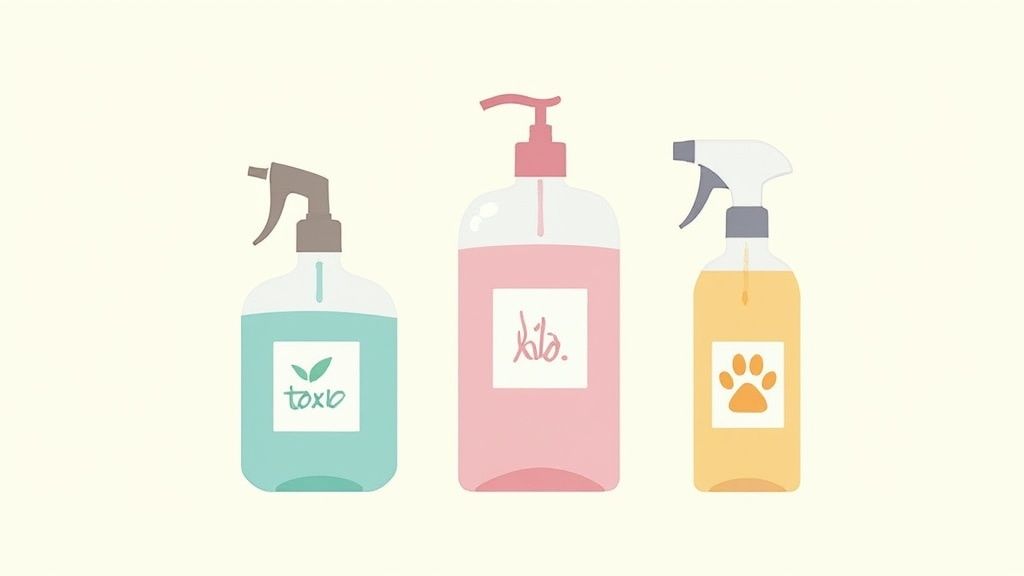
Walking down the cleaning aisle can feel overwhelming. You're hit with a wall of bottles shouting ‘green’, ‘natural’, and ‘eco-friendly’, but these labels often mean very little without a closer look. True safe carpet cleaning for pets means becoming a savvy label-reader and understanding what ingredients are genuinely suitable for your furry family members.
Forget the flashy marketing on the front of the bottle. The real story is always in the small print on the back. A genuinely pet-friendly product will list its ingredients clearly, favouring transparency over vague promises.
Decoding The Ingredients List
When you turn that bottle around, you’re looking for ingredients that get the job done without leaving nasty residues behind. Plant-derived surfactants, for instance, are a great sign. These are cleaning agents sourced from things like coconuts or corn, which break down dirt without the harshness of their chemical counterparts.
Knowing what to avoid is just as crucial. Keep an eye out for these key chemicals:
- Phthalates: Often hidden under vague terms like "fragrance" or "parfum," these can disrupt your pet’s endocrine system.
- Ammonia: This is a powerful irritant to your pet's sensitive respiratory system. Even a faint smell can be overwhelming for them.
- Glycol Ethers: These can be absorbed through the skin and have been linked to a number of health issues in pets.
The most reliable pet-safe products often have simple, recognisable ingredient lists. If you can’t pronounce half of what’s in it, it’s probably wise to put it back on the shelf and look for a simpler, more natural alternative.
The Power Of Enzyme Cleaners
For any pet owner, enzyme-based cleaners are a total game-changer. These incredible products use natural enzymes to break down organic matter—like urine, vomit, or faeces—at a molecular level. Instead of just masking a smell with a strong fragrance, they completely dismantle the source of the odour.
This process is remarkably effective and gets rid of the need for harsh, corrosive chemicals. It’s the perfect solution for tackling those inevitable pet accidents without putting your home's air quality or your pet’s health at risk. When you're searching for genuinely pet-friendly products, options like this safe disinfectant for small animals can be a great choice for various cleaning needs around the house.
Thankfully, finding these products in UK supermarkets and online is getting easier as more brands tune into what pet owners really want. Major chains now often have dedicated 'eco-friendly' sections, which are a great place to start your search. For a deeper dive into the best options available, our guide to pet friendly carpet cleaning offers more specific recommendations. By arming yourself with this knowledge, you can shop with confidence, knowing your home is both clean and genuinely safe for every member of your family, two-legged or four.
A Practical Guide to Removing Pet Stains and Odours
When a pet accident happens, your immediate response can make all the difference between a simple clean-up and a lasting stain. Forget the old advice about vigorous scrubbing; that’s the fastest way to push the mess deeper into your carpet fibres and even cause damage. This is your playbook for tackling pet-related carpet mishaps the right way.
The key is to act quickly. Before you even think about cleaning solutions, your first job is to absorb as much of the liquid as possible. Gently blot the area with a clean, white cloth or a stack of paper towels. You want to press down firmly to draw the moisture up and out of the carpet. Keep using fresh towels until the area feels as dry as you can get it.
Only once you’ve blotted the area dry should you move on to the cleaning phase. This preparation is vital for safe carpet cleaning for pets that actually works.
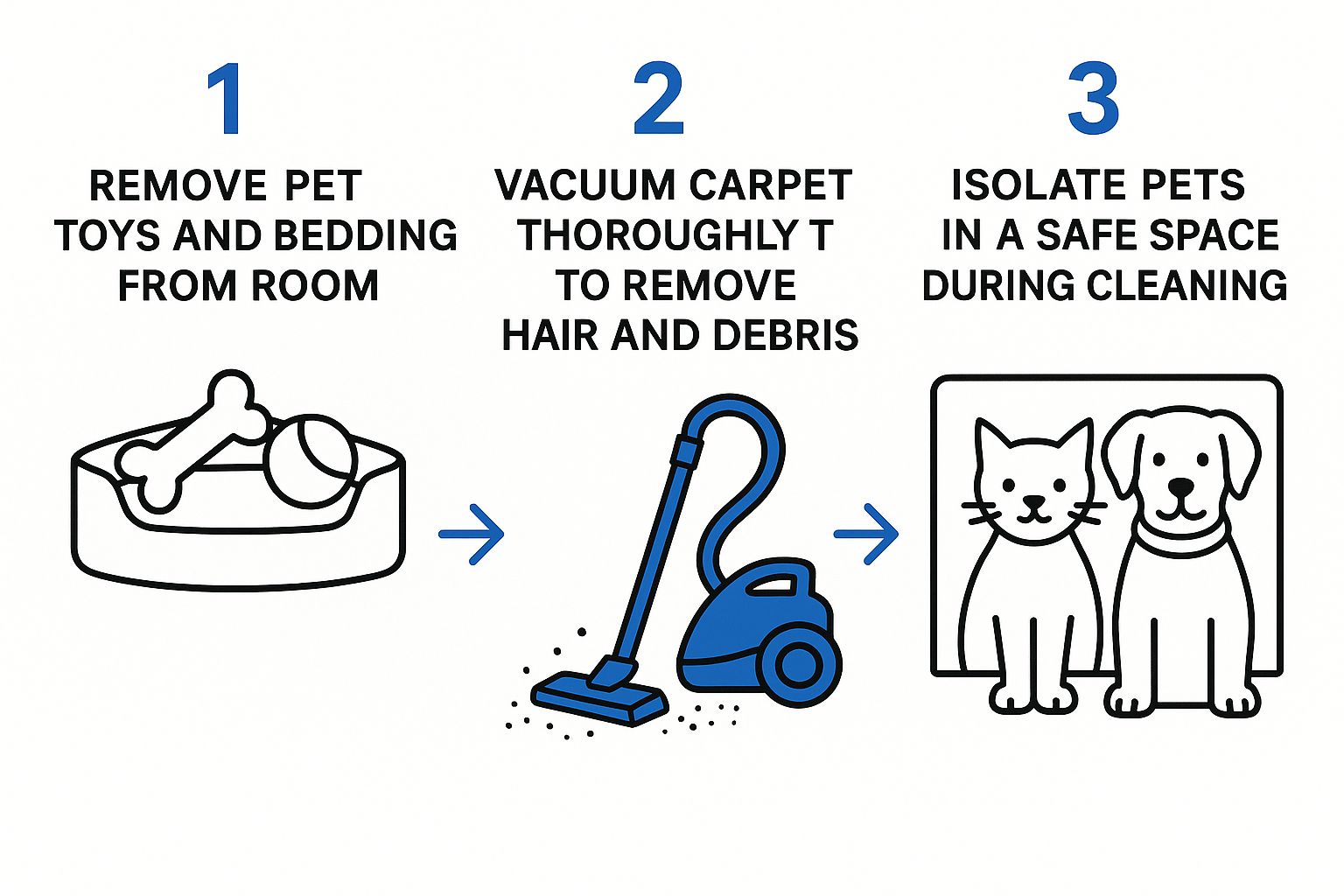
As you can see, preparing the area by removing any obstacles and loose debris is just as important as the cleaning itself. It sets you up for a safe and thorough result.
Tackling Fresh Stains With DIY Solutions
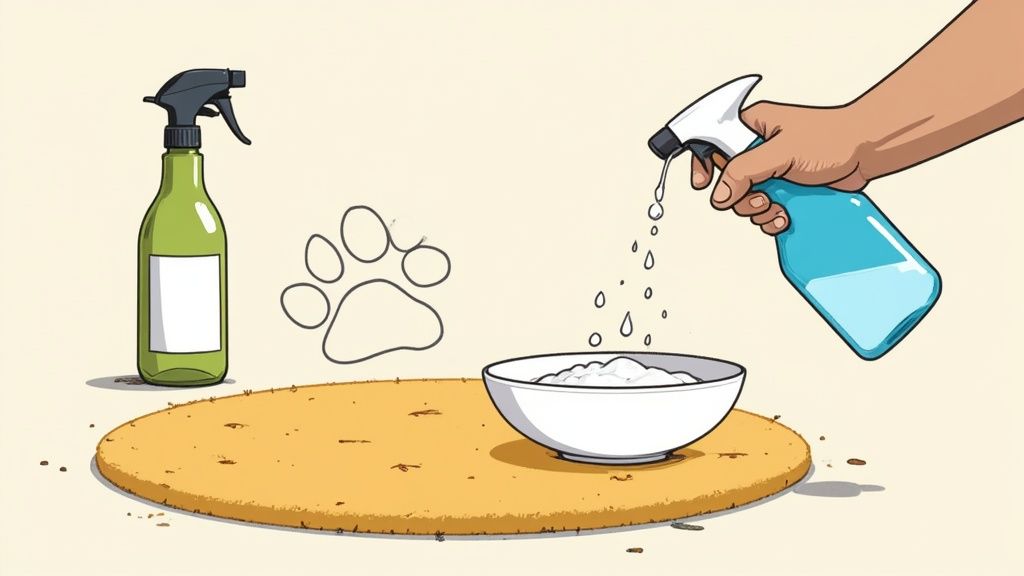
For fresh accidents, some of the best tools might already be in your kitchen cupboards. A simple mixture of equal parts white vinegar and water is fantastic for neutralising the ammonia in urine, which is the secret to eliminating that tell-tale odour.
Here’s a practical approach:
- After blotting, lightly spray the vinegar and water solution onto the stain. Don't oversaturate the carpet.
- Let it sit for about five to ten minutes. This gives the vinegar time to break down the stain and the smell.
- Gently blot the area again with a new, clean cloth to lift the solution and the remnants of the stain.
For an extra deodorising boost, sprinkle a generous amount of bicarbonate of soda over the damp area after the vinegar treatment. You’ll need to let it sit until it's completely dry—this could take a few hours or even overnight. Once it's dry, just vacuum it all up. The bicarb is brilliant for absorbing any lingering moisture and odours.
Using Commercial Enzymatic Cleaners Correctly
While DIY solutions are great, some messes need the heavy-lifting power of a commercial enzymatic cleaner. These products are specifically formulated to break down the proteins in organic waste, completely getting rid of the source of both the stain and the smell.
The biggest mistake people make with enzymatic cleaners is not giving them enough time to work. These formulas contain live enzymes that literally need time to 'digest' the organic matter. Spraying and immediately wiping it away will do very little.
Always follow the instructions on the bottle carefully. This usually means saturating the stain and the padding underneath it, then covering the area with a damp cloth and letting it sit for anywhere from 12 to 24 hours. This creates the perfect environment for the enzymes to get the job done properly.
This desire for effective, non-toxic methods is now widespread. A 2025 survey by UK pet health organisations found that 68% of pet owners now prefer eco-friendly solutions labelled as 'pet-safe' because of worries about chemical exposure.
The Final Rinse and Prevention
Whichever method you choose, a final rinse is crucial. Any cleaning residue left behind, whether it's from vinegar or a commercial product, can attract dirt and become sticky over time. A light spritz of clean water, blotted dry with a fresh towel, is all it takes.
This last step also helps prevent your pet from returning to the same spot. Lingering odours we can't detect can act as a beacon for them. This is especially true for our feline friends; if you're struggling with this, our detailed guide on how to get rid of cat pee smell offers more specialised advice. By making sure the area is truly clean and odour-free, you break that cycle of re-marking.
Finding a Professional Pet-Safe Carpet Cleaner
While your DIY efforts are fantastic for tackling daily mishaps, there comes a time when carpets need a truly deep, restorative clean. This is where the professionals come in. But it's vital to make sure their methods are as pet-friendly as yours. Not all cleaning services are created equal when it comes to providing safe carpet cleaning for pets.
The good news? You’re not alone. The demand for pet-conscious cleaning has really taken off in the UK's professional carpet care industry. In fact, the market is projected to be worth around £55 billion in 2025, with a huge part of that growth coming from pet owners just like you who want a deep clean without compromising their animal’s safety. You can see the numbers behind this market trend on futuremarketinsights.com.
This trend means you have more choice than ever before, with more companies offering the exact pet-safe services you need.
Vetting Your Carpet Cleaning Professional
Before you book anyone, you need to do a little homework. Think of it as an interview for the job of keeping your home and your pets safe. A reputable company will be more than happy to walk you through their process and answer all your questions.
To help you get started, we've put together a table of essential questions to ask any potential carpet cleaner. These will help you gauge their expertise and commitment to pet safety.
| Vetting Your Professional Carpet Cleaner | ||
|---|---|---|
| Question Category | Specific Questions to Ask | What a Good Answer Looks Like |
| Cleaning Solutions | "Can you tell me the specific cleaning products you use? Are they non-toxic?" | Transparency is key. They should confidently name plant-based, enzymatic, or pH-neutral formulas and confirm they are pet-safe. |
| Cleaning Method | "What is your main cleaning technique?" | Look for methods like hot water extraction (steam cleaning), as it rinses deeply and removes residues effectively. |
| Drying Time | "How long will my carpets take to dry completely?" | An answer of 2-6 hours is ideal. Quicker drying prevents the risk of mould and mildew, which is bad for pets and people. |
| Pet-Specific Expertise | "Are your technicians trained to handle pet stains and odours specifically?" | A firm "yes," followed by an explanation of their specialised techniques, like using enzymatic treatments for urine. |
A confident, knowledgeable response is a great sign. If a company is vague, dismisses your concerns, or can't tell you what's in their solutions, it’s a major red flag. Your pet’s safety is non-negotiable.
Don't be afraid to ask about their experience with pet-related issues. Tackling these problems requires specialised knowledge. As our guide on professional pet urine carpet cleaning explains, it's a far more complex job than just a standard clean.
Post-Cleaning Safety Protocols
Once the professionals have worked their magic, there are just a few final steps to take. The single most important rule is to keep your furry friends out of the room until the carpets are 100% dry.
Even with the safest solutions, it’s best to prevent your pets from walking on damp carpets. This stops them from licking any lingering moisture from their paws or fur.
To speed things along, make sure the room is well-ventilated. Open up the windows or use a few fans to get the air circulating. A little patience at this final stage is all it takes to guarantee a fresh, clean, and truly safe space for your beloved companion to enjoy.
Everyday Habits for a Cleaner, Healthier Carpet
Keeping your carpets looking their best is less about frantically cleaning up after muddy paws and accidents, and more about building good habits. By weaving a few simple strategies into your weekly routine, you can keep your home fresher for longer and cut down on how often you need a deep, professional clean. This turns safe carpet cleaning for pets into an ongoing practice rather than a one-off chore.
One of the best things you can do is stick to a regular vacuuming schedule. In a house with pets, running the vacuum over your carpets two or three times a week is a game-changer. It gets rid of all that hair, dander, and general muck before it has a chance to get trampled deep into the fibres.
Boost Your Vacuuming Power
When you've got pets, not all vacuums are up to the job. I always recommend looking for a model with a powerful, motorised brush roll. This is what really agitates the carpet pile and lifts out that stubborn, embedded fur. Vacuums with HEPA filters are also a fantastic investment, as they trap tiny allergens like dander and pollen, which really helps to improve the air quality inside your home.
Another simple but incredibly effective habit is stopping dirt at the door. Placing some tough, pet-friendly doormats at every entrance can catch a surprising amount of mud, grit, and leaves before they even touch your carpets. Get the whole family into the habit of wiping their feet—and if you can, teach your dog to do the same!
Remember, the goal of these daily habits isn't perfection. It's about reducing the overall build-up of dirt and allergens, creating a healthier baseline for your home environment and making deep cleans less frequent and more effective.
Keeping Your Home Smelling Fresh Naturally
Between cleans, you’ll naturally want to freshen things up. But instead of grabbing chemical-based air fresheners, which can irritate your pets, think about using a pet-safe fabric refresher. You can easily make your own by mixing a little white vinegar with water and a few drops of a pet-safe essential oil, like lavender, in a spray bottle.
- Spot-Treat Spills Immediately: Always have a pet-safe spot cleaner ready. The faster you can get to a spill, the lower the chance it has of becoming a permanent stain.
- Regularly Wash Pet Bedding: Your pet’s bed is a major source of hair and smells that easily transfer to the carpet. A weekly wash makes a massive difference.
Adopting these small habits adds up to a big impact. For anyone wanting to take their routine to the next level, our guide to eco-friendly carpet cleaning has even more ideas for maintaining a home that’s both safe and spotless.
Common Questions on Pet-Safe Carpet Care
Even with the best plan in place, it's natural to have a few lingering questions when it comes to keeping your carpets clean and your pets safe. We get it. When your furry friend's health is the top priority, you want to be absolutely sure you’re doing things right.
We've gathered some of the most common queries we hear from pet owners. Think of this as your go-to guide for those tricky "what if" moments, designed to give you clear, straightforward answers and boost your confidence.
How Long Until My Pet Can Go On The Carpet?
This is probably the most crucial question we get asked after a deep clean. The non-negotiable rule is to keep your pets off the carpet until it is 100% dry to the touch. This applies even if you've used the safest, most non-toxic products on the market.
Damp carpets are a magnet for fresh dirt, but more importantly, they can become a breeding ground for mould and mildew if they don't dry out properly. Plus, even with gentle cleaners, you don't want your pet licking any residual moisture from their paws or fur. A professional clean should have your carpets dry within 2-6 hours, but you can help speed things up by opening windows or using a fan to get the air circulating.
Expert Tip: To be completely certain, test a small, out-of-the-way spot with your hand. If it feels even slightly cool or damp, it’s best to give it more time. A little patience at this final stage is key for a truly safe finish for your companion.
Are ‘Natural’ or ‘Green’ Cleaners Always Safe?
This is a common misconception. While many products marketed as 'natural' or 'green' are a big step up from harsh chemicals, the labels can sometimes be misleading. Not everything natural is automatically pet-friendly.
For instance, certain essential oils like tea tree, citrus, and pine are perfectly natural but can be toxic to both cats and dogs if they ingest them or get them on their skin. The best approach is to ignore the marketing buzzwords on the front of the bottle and always flip it over to read the full ingredient list. Genuinely pet-safe products are transparent about what's inside and will often state they are free from toxins like ammonia, chlorine, and phthalates.
How Often Should I Professionally Clean My Carpets?
For a home with pets, you’ll want to book a professional deep clean more often than a household without them. Your daily vacuuming and quick spot-cleans make a massive difference, but only professional equipment has the power to pull out the deep-seated dirt, pet dander, and allergens that your home hoover just can't reach.
As a general guideline, we recommend pet owners schedule a professional clean every 6 to 12 months. Of course, this can shift based on your specific situation:
- Number of pets: More furry family members mean more hair and dander.
- Pet's habits: Is your dog a champion of muddy paw prints? Do you have a pet prone to accidents?
- Carpet colour: Lighter-coloured carpets will show soiling much more quickly.
While the exact timing is up to you, regular professional cleaning is the cornerstone of maintaining your carpet’s health and appearance long-term. For a more detailed look at creating the perfect schedule, you can learn about how often to clean carpets in our dedicated article. Staying proactive is the best way to ensure a clean, healthy space for everyone—furry or not.
Ready to give your carpets the deep, pet-safe clean they deserve? The team at AG Carpet Specialists uses state-of-the-art equipment and non-toxic solutions to restore your floors while prioritising your pet’s health. Contact us today for a free, no-obligation quotation.


