Cleaning a sisal carpet isn't like tackling a standard synthetic one. You have to use a dry method because its natural plant fibres are incredibly absorbent and can be permanently damaged by water. Getting it wrong with steam cleaners or wet shampoos will almost certainly cause browning, shrinkage, and ugly water stains. The only safe way forward is to use a dedicated dry-cleaning powder and a soft brush to lift dirt without any moisture.
Why Sisal Carpet Requires a Different Cleaning Approach
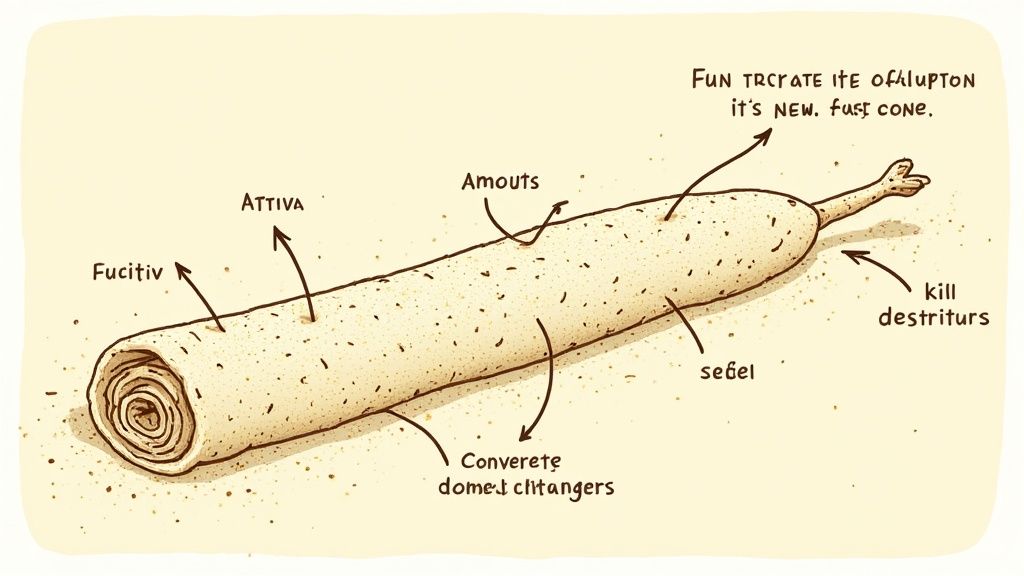
Before you even think about cleaning a sisal carpet, it’s vital to understand what makes it so different. Unlike nylon or polyester, sisal comes from the agave plant (Agave sisalana), a succulent known for its incredibly tough fibres. This natural origin is what gives sisal its unique beauty, but it's also its biggest weakness when it comes to cleaning.
The fibres in your carpet are extremely porous, meaning they'll soak up moisture like a sponge. When you add water, the fibres swell up fast. As they dry, they shrink back, which can cause the whole carpet to warp, buckle, or even pull away from the walls. This isn't a simple fix; once that shrinkage happens, the damage is usually permanent.
The Problem with Water and Natural Fibres
Another disaster waiting to happen is cellulose browning. This occurs when water draws the natural tannins—compounds found in plants—from deep within the sisal fibres up to the surface. As the carpet dries, these tannins are left behind on the tips of the fibres, creating unsightly brown or yellowish patches that look just like a giant water stain.
Think of it like the ring a wet glass leaves on a wooden table. The water pulls out the wood's natural compounds and creates a permanent mark. Sisal reacts in much the same way, but across your entire floor. It’s why a simple spill, if handled incorrectly, can completely ruin the look of your carpet.
Why Professional Methods Avoid Moisture
Expert carpet cleaners have known about these risks for years. It's estimated that over 80% of all stains and damage to sisal carpets come from improper cleaning attempts using moisture. Professionals use specialised dry-cleaning methods that involve micro-sponges lightly dampened with a solvent-based solution. This technique lifts the dirt with minimal moisture, keeping the carpet’s structure intact.
The golden rule for sisal is simple: treat it less like a carpet and more like a natural wood floor. Both are beautiful, durable, and completely intolerant of excessive moisture.
Understanding this core principle is the first step. It shifts the focus away from traditional wet shampooing to much safer, dry alternatives. For those interested in green cleaning, many of these dry methods align perfectly with our guide on environmentally friendly carpet cleaning. By avoiding water, you not only protect your investment but also prevent the most common cleaning catastrophes.
Assembling Your Sisal Carpet Cleaning Toolkit

When it comes to looking after a sisal carpet, having the right gear on hand is genuinely half the battle. You can’t just reach for any old cleaning spray from under the sink – sisal’s intense dislike for moisture means you need a specialised approach.
Being prepared with a dedicated toolkit lets you act fast when spills happen, stopping a minor accident from becoming a permanent stain.
The most critical tool in your arsenal is your vacuum cleaner, but how you use it is key. You absolutely must use a suction-only setting. Firing up the beater bar or rotating brush is a disaster for sisal; it will snag, fray, and pull at the tough plant fibres, slowly destroying the carpet's beautiful tight weave. Simply switch the brush off or pop on an upholstery attachment for your regular cleans.
Creating a Sisal Rescue Kit
For dealing with spills or a more thorough clean, you'll need a few more specific items. I always advise clients to think of it as a "sisal rescue kit," kept together and ready to go at a moment's notice. When accidents happen, those first few seconds are precious.
To get started, here's a breakdown of the essential tools I recommend for every sisal owner.
Essential Toolkit for Sisal Carpet Care
| Tool or Product | Primary Use | Expert Tip |
|---|---|---|
| Clean, White Microfibre Cloths | Blotting up liquid spills. | A generous stack is non-negotiable. Always use white cloths to avoid any risk of dye transfer onto your pale-coloured carpet. Paper towels disintegrate. |
| Soft-Bristle Brush | Gently working in dry cleaner or agitating stains. | Choose something like a clothes brush. A stiff-bristled brush is far too aggressive and will easily snag the weave, causing visible damage. |
| High-Quality Dry Cleaning Powder | Lifting dirt and absorbing spills without water. | This is the heart of your kit. Look for a product specifically recommended for natural fibres like sisal, jute, or coir. It’s a game-changer. |
| Dull Knife or Spoon | Scraping up solid or semi-solid spills. | Perfect for lifting away things like mud or dropped food before it gets trodden into the carpet's texture. You want to lift, not smear. |
Having these items ready to go is the single most effective strategy for long-term sisal care. When a glass of wine inevitably tips over, you won’t waste valuable time hunting for supplies. You can just grab your kit and tackle the problem immediately.
Trust me, that immediate response dramatically improves your chances of completely removing the stain and keeping your sisal looking pristine for years to come.
The Right Way to Dry Clean Your Sisal Carpet
When it comes to giving your sisal carpet a really deep clean, the dry compound method is hands-down your safest and most effective option. This clever, moisture-free technique uses a specialised powder that absorbs and lifts away all the built-up dirt, dust, and grime. Best of all, there’s zero risk of the water damage we talked about earlier. It's a surprisingly straightforward process that brings back the carpet's freshness without compromising its delicate natural fibres.
The very first thing you need to do is give it a thorough vacuum. You have to get rid of all that loose surface debris before you even think about putting a cleaning product down. Make sure you use a suction-only setting or an upholstery attachment to go over the entire area meticulously. Pay extra attention to those high-traffic zones where dirt really gets ground in. A clean slate is absolutely essential for the dry compound to work its magic.
Applying and Activating the Cleaning Compound
Once you've vacuumed, it's time to apply the dry cleaning powder. The aim here is to sprinkle an even, consistent layer across the whole carpet. Don't be tempted to dump it in piles; a light but complete covering is exactly what you’re after. Think of it like dusting a cake with icing sugar – you want a fine, uniform layer.
Next, you'll need to gently work that powder right into the sisal's weave. Grab a soft-bristled brush and move it in different directions—up and down, side to side, and even diagonally. This careful agitation helps the microscopic compound particles get right in there and make contact with the embedded dirt and oils clinging to the fibres. This step is crucial; it’s what activates the cleaning process, allowing the powder to start absorbing all that grime.
Allowing Dwell Time and Final Removal
Now for the part that requires a bit of patience. You must let the compound sit on the carpet for the manufacturer's recommended 'dwell time'. This period, which often ranges from 30 minutes to a couple of hours, is when the powder does all the heavy lifting. The tiny particles are working like little sponges, pulling dirt, allergens, and oily residues out from deep within the fibres and trapping them.
After the recommended time has passed, it’s time for the final step. Vacuum the entire carpet again, just as thoroughly as you did at the beginning. As you vacuum, you’ll be lifting away not just the powder, but all the dirt it has managed to encapsulate. You might need to go over the area a few times to make sure every last bit of the compound is gone.
The result? A visibly cleaner, fresher, and completely dry sisal carpet, restored without a single drop of water. For a more detailed look into different techniques, you can explore our professional insights on how to clean sisal carpets.
An Emergency Action Plan For Spills And Stains
When a spill happens on your sisal carpet, time is of the essence. A quick, calm reaction is your best defence against a minor accident turning into a major, permanent stain. It's important to remember that cleaning sisal is a world away from cleaning standard carpets—you need a completely different approach.
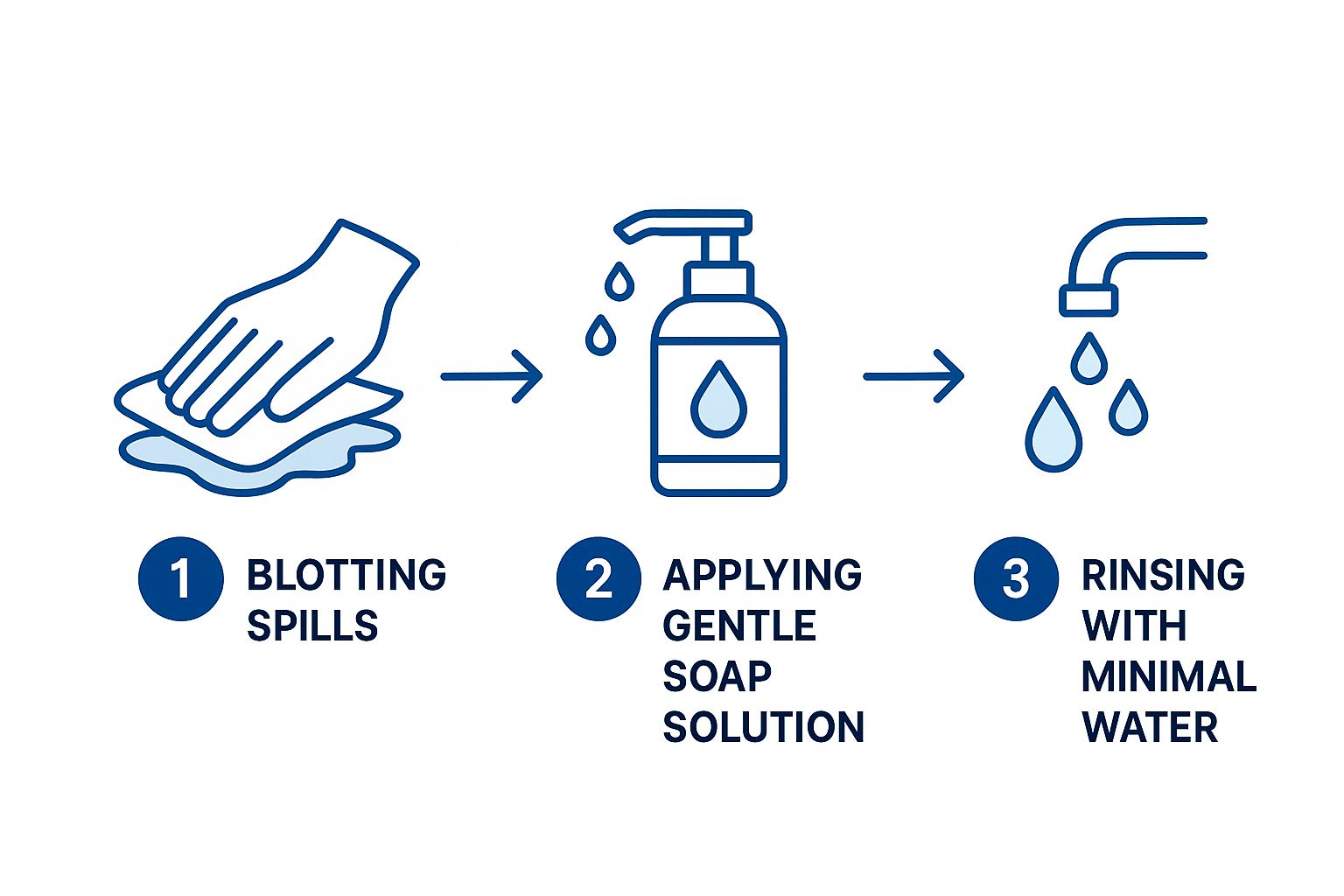
The number one rule for any liquid spill, whether it’s coffee, juice, or the dreaded glass of red wine, is to blot, never rub. Scrubbing a spill will only force the liquid deeper into the sisal's natural plant fibres, making it almost impossible to get out. Even worse, the friction from rubbing will fray and damage the carpet’s tight weave for good.
Handling Liquid Spills Immediately
The first thing to do is grab a few clean, white microfibre cloths. Place one over the spill and press down firmly to soak up as much of the liquid as you can. As the cloth becomes saturated, swap it for a fresh one and keep blotting until you can't lift any more moisture.
To stop the stain from getting bigger, always work from the outside edge of the spill towards the centre. This simple technique contains the spill and prevents you from accidentally spreading it further. A little patience here really does go a long way.
Remember, the goal is absorption, not aggressive cleaning. You are lifting the liquid out of the fibres, not trying to scrub it away. Speed and a gentle touch are your greatest allies in this situation.
Dealing With Solid Or Muddy Spills
If you're dealing with something more solid, like dropped food or mud tracked in from the garden, the strategy shifts. The priority is to get the substance off the carpet before it gets trodden in or smeared.
If it's wet mud, let it dry completely. It might feel wrong, but trying to clean wet mud will just create a messy, brown smudge that's much harder to tackle. Once it's dry and flaky, you can gently break up the larger bits with your fingers and vacuum them away using a suction-only setting.
For other solid spills, use a dull knife or the edge of a spoon to carefully scrape and lift the debris from the surface. Be gentle and work slowly to avoid catching or snagging the carpet’s weave.
After removing the bulk of the spill, you might be left with a small, residual mark. This is where a specialist spot cleaner designed for natural fibres comes into play. Lightly dampen a clean, white cloth with the cleaning solution—never pour it directly onto the carpet. Gently dab the area, again working from the outside in. For more advice on those really tough marks, our detailed guide explains how to remove stubborn carpet stains on all kinds of materials. Taking these immediate steps is the key to managing spills and keeping your sisal looking fantastic.
Keeping Your Sisal Carpet in Top Shape for the Long Haul
The secret to a beautiful sisal carpet isn't a single, intense cleaning session. It's all about consistent, preventative care. Think of it like this: a little bit of effort on a regular basis goes a heck of a long way in preserving that natural look and feel you love, and it'll seriously extend the life of your flooring. Small, proactive habits make a massive difference, stopping dirt from getting ground in and turning minor spills into major disasters.
The most important habit you can get into is frequent vacuuming. I really mean it. You should be aiming for at least two to three times a week, especially for high-traffic spots like hallways or the living room. Unlike synthetic carpets where dirt just sits on the surface, the unique weave of sisal is a magnet for grit, trapping it deep down. If you let it sit, that grit acts like sandpaper, slowly grinding away at the fibres every time someone walks over it. Always use a suction-only setting or a hard floor head—a beater bar will just fuzz up and damage the weave.
Setting Up a Protective Barrier
Let's be honest, most of the dirt and moisture that gets onto your sisal comes right through the front door. A simple but incredibly effective trick is to place good quality doormats at every single entrance. Get the family and any guests into the habit of giving their shoes a proper wipe. It’s a tiny action that can stop a huge amount of grime from ever reaching your carpet.
Another great proactive move is getting a professionally applied fibre protector. This stuff is brilliant—it creates an invisible shield around each fibre, making liquids bead up on the surface instead of soaking straight in. While it won't make your carpet completely stain-proof, it buys you precious seconds to grab a cloth and blot up a spill before it has a chance to set.
Knowing When to Call in the Pros
Even with the best daily care, there comes a time when your sisal carpet needs a bit more. Over time, fine dust, pollen, and other allergens settle deep into the weave, far beyond the reach of a standard household vacuum.
Our expert advice is pretty clear: scheduling a professional dry clean every 12 to 18 months is a smart investment. It completely revitalises the carpet's appearance, gets rid of all those deep-seated allergens, and makes sure it stays structurally sound for years to come.
Here in the UK, professional carpet cleaners often find that this regular expert attention is the key to a sisal carpet's longevity, particularly in busy homes. That coarse texture, while durable, is just so good at trapping dust. For homes with lots of foot traffic or for commercial spaces, we often recommend a professional clean every 6 to 12 months. This schedule is great for keeping allergens at bay, which is a real issue when you consider that around 20% of UK households report allergy problems linked to dusty carpets. For more insights on this, you can learn why professional sisal cleaning is so important on kleendri.co.uk.
Figuring out the perfect cleaning schedule can be tricky, as it really depends on your family, pets, and lifestyle. To help you nail down a routine that works for you, have a look at our guide on how often to clean carpets. It’s packed with practical advice for all types of flooring. When you combine these daily habits with periodic professional care, you'll ensure your sisal carpet remains a stunning feature in your home for years.
Your Sisal Carpet Cleaning Questions Answered
Even with the best instructions, you're bound to have a few questions about looking after your sisal carpet. It’s completely normal to be a bit hesitant, especially when you know just how delicate these natural fibres can be. Let's tackle some of the most common worries we hear from clients, so you can feel confident handling whatever comes your way.
The first question is always about steam cleaners. The answer is a hard no. A steam cleaner is a sisal carpet's worst enemy, combining intense heat with moisture—two things guaranteed to cause permanent damage. You'll end up with nasty water stains, shrinkage, and even mould. Always, always stick to dry cleaning methods only.
Handling Common Sisal Cleaning Dilemmas
Pet accidents are another huge concern for anyone with sisal flooring. The acidity in pet urine is especially harsh and can permanently discolour the fibres if you're not quick to act. As soon as you spot an accident, your first job is to blot up as much moisture as you can with clean, white cloths.
Once you’ve blotted, you’ll need a good enzymatic cleaner made specifically for natural fibres. The key is to apply a small amount to your cloth—never directly onto the carpet—and gently dab the stained area. If you need more advice on this, our guide on safe carpet cleaning for pets is a great resource.
One of the most common problems we see is 'cellulose browning'. This is when moisture pulls the natural tannins (the stuff that gives the plant its colour) to the surface as it dries, leaving behind a brown or yellowish stain. It’s a direct result of the carpet getting too wet and, honestly, it’s almost impossible to fix without professional help.
The Value of Professional Care
With all these challenges, it’s no surprise people ask if it's better to just call in a professional. In the UK, cleaning sisal is a highly specialised job, and most general carpet cleaners won't touch it. It can be tough finding someone who is properly trained to handle delicate cellulosic fibres.
In fact, one UK specialist we know reports that general cleaners turn down about 65% of sisal cleaning jobs because the risk of damage is just too high. However, when the right techniques are used, professionals get great results in over 75% of cases. You can see more on this from the experts at specialist sisal cleaning services from scimitarcarpets.co.uk. It really shows how investing in proper expertise pays off.
Finally, think about a stain protector. A professionally applied protector designed for natural fibres creates a barrier that makes liquids bead up on the surface. While it won't make your carpet completely stain-proof, it buys you precious time to blot up spills before they soak in and cause a permanent mark.
At AG Carpet Specialists, we have the expertise and equipment to safely and effectively clean your delicate natural fibre carpets. Contact us today for a free quotation and see how our professional care can restore the beauty of your sisal flooring.