
Before you do anything, you need to grasp sisal's two most important rules: avoid water at all costs and tackle spills the second they happen. The natural plant fibres are incredibly absorbent, meaning any moisture will leave behind ugly, permanent watermarks and browning. This makes dry cleaning methods your only real, safe option.
The Most Important Rules for Sisal Carpet Care
Learning how to clean a sisal carpet properly starts with understanding what not to do. It’s nothing like a synthetic carpet that can take a good wet clean. Sisal comes from the Agave sisalana plant, and its natural fibres act just like a sponge.
They will immediately soak up any liquid they touch, which leads to those dreaded water stains, potential mould, and can even cause the weave to shrink or warp. If you remember one thing, let it be this.
Your best defence is always speed. The moment something spills, the clock starts ticking. You have a very small window to prevent a permanent stain, and acting fast to blot and lift the spill can be the difference between a minor cleanup and a lasting eyesore. This proactive approach is far more crucial than any fancy cleaning product.
Key Principles for Success
To keep your sisal looking fantastic, you need to burn these principles into your brain. Think of them less as suggestions and more as essential laws for preventing damage.
- Always Blot, Never Rub: When you rub a spill, you’re just grinding the liquid deeper into the fibres. This can also make them fray, leaving a fuzzy, damaged patch that stands out for all the wrong reasons. The right way is to gently blot with a clean, dry, and highly absorbent cloth.
- Stick to Dry Cleaning Methods: For any general or deeper cleaning, only ever reach for a high-quality dry cleaning powder made specifically for natural fibres. These powders are designed to absorb oils and dirt, which you can then simply vacuum away without any risk.
- Act with Urgency: Don't let a spill sit. Even just a few minutes is often long enough for something like coffee or red wine to set for good.
The most critical takeaway here is that moisture is the absolute enemy of sisal. Adopting a 'dry-first' mindset for all your cleaning and maintenance will protect your carpet's colour, texture, and structure for years to come.
Many people who choose natural flooring are also keen on green cleaning solutions. If sustainability is a priority for you, you can learn more about eco-friendly carpet cleaning and see how these ideas apply to other types of carpet in your home.
To make these rules crystal clear, the table below shows the right way to care for your sisal versus the common mistakes that can ruin it.
Sisal Carpet Care Quick Reference
This quick guide contrasts the recommended techniques with common but damaging practices. Sticking to the "Do This" column is your key to a long-lasting, beautiful sisal carpet.
| Care Action | Correct Method (Do This) | Incorrect Method (Avoid This) |
|---|---|---|
| Spill Response | Immediately blot with a dry, white cloth. | Rubbing the stain or using excess water. |
| Deep Cleaning | Use a specialised dry carpet powder. | Steam cleaning or wet shampooing. |
| Odour Removal | Lightly sprinkle baking soda, then vacuum. | Spraying with liquid deodorisers. |
| Stain Treatment | Spot treat with minimal approved solvent. | Soaking the area with any cleaner. |
Following these simple do's and don'ts will make all the difference in preserving the natural beauty and integrity of your flooring.
Your Daily and Weekly Maintenance Routine
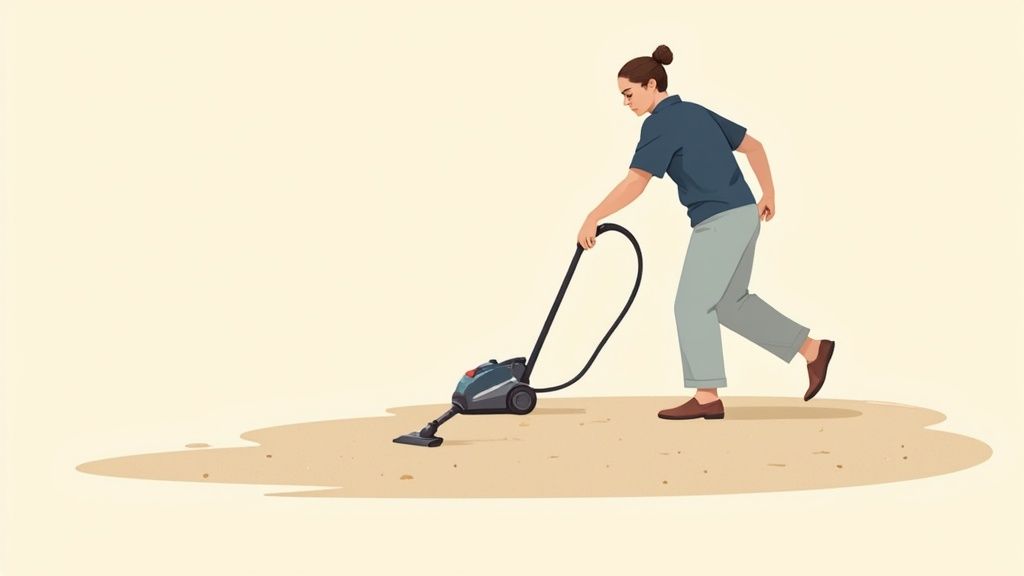
The real secret to keeping a sisal carpet looking its best isn't some intensive, once-in-a-blue-moon deep clean. It's all about simple, consistent care. A proactive routine is your strongest defence against the dirt and grit that loves to work its way deep into those beautiful natural fibres.
This doesn't mean you'll be spending ages cleaning. It’s about smart, regular actions that protect the carpet’s integrity. Think of it like dusting your wooden furniture—a little bit, often, prevents a much bigger, more difficult job down the line. Your most important tool here is your vacuum cleaner, but it’s crucial to use the right kind.
Choosing the Right Vacuum
Using the wrong vacuum is probably the fastest way I've seen people damage a perfectly good sisal carpet. Those powerful rotating bristles and beater bars on many upright models are just far too aggressive for natural fibres. They can easily pull, snag, and fray the weave, leaving behind fuzzy patches that you can't fix and weakening the carpet's structure over time.
Your best bet is a vacuum with a suction-only setting. I always recommend canister vacuums or models where you can retract the brush head. The aim is to lift the dirt out from between the fibres, not scrub the surface raw. In my experience, and data from UK interior care experts backs this up, using a suction-only canister model drastically cuts down on fibre damage compared to vacuums with beater bars.
Key Takeaway: Always use a vacuum on a suction-only setting. If your vacuum has a beater bar, make sure you can either turn it off completely or raise it high enough that it doesn't actually touch the carpet fibres.
Establishing a Vacuuming Schedule
How often you need to pull the vacuum out really just depends on foot traffic. Not every part of your home gets the same level of use, so your routine should reflect that.
- High-Traffic Areas: Think hallways, entranceways, and the main living room. These spots need a good vacuum at least twice a week to stop dirt from getting trodden in.
- Low-Traffic Areas: A bedroom or a formal dining room that doesn't see much action will likely be fine with a weekly vacuuming.
Adjusting your schedule based on use is such a simple but effective way to stay on top of things. For a bit more context, you might find these general tips for maintaining floor coverings helpful for your whole home.
Preventative Measures for Long-Term Care
Beyond just vacuuming, there are a few other tricks that will really extend the life and beauty of your sisal carpet. These are simple habits that cut down on the amount of cleaning you’ll have to do in the first place.
First, put good quality doormats at every single entrance to your home. It’s amazing how much dirt, dust, and moisture a good mat can trap before it even has a chance to reach your sisal. This is your first line of defence, and it's a powerful one.
Second, if you have a sisal rug rather than fitted carpet, make sure you rotate it every six months. This simple act ensures that wear from foot traffic and any fading from sunlight is spread out evenly. It prevents one area from looking worn out while the rest looks new. These small, consistent actions are what effective sisal care is all about, and if you're keen to learn more, have a look at our comprehensive https://www.agcarpetspecialist.co.uk/2025/06/24/carpet-cleaning-tips/.
How to Tackle Spills and Stains Immediately
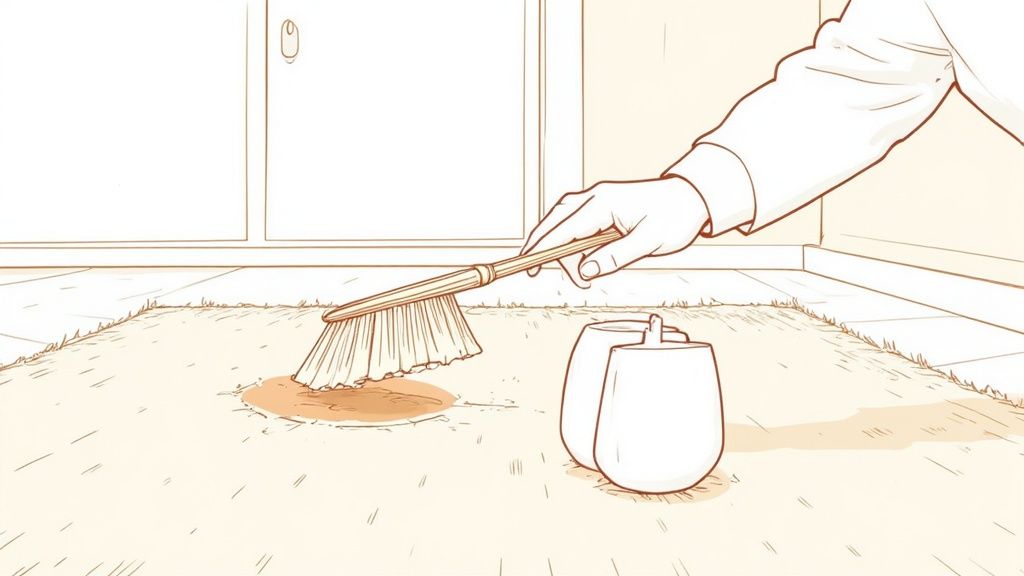
When a spill happens on a sisal carpet, your immediate reaction is everything. The unique, absorbent nature of the fibres means there’s absolutely no time to waste. Your goal is to get to the mess before it has a chance to soak deep into the weave and become a permanent, unwelcome feature.
I can't stress this enough: the golden rule is to blot, never rub. Rubbing just grinds the spill deeper into the carpet and can permanently fray the delicate fibres. This creates a fuzzy, damaged patch that often looks much worse than the original stain ever did. Honestly, how you react in those first few moments determines whether you’re dealing with a minor clean-up or lasting damage.
Your Emergency Cleaning Kit
Being prepared makes all the difference. I always tell my clients to keep a small, dedicated sisal cleaning kit nearby so they can grab it in an instant. You don’t need anything fancy, just the right tools for a swift, effective response.
- Clean, White, Absorbent Cloths: It's crucial they are white so no dye transfers onto your carpet. Old cotton t-shirts or microfibre towels are perfect.
- A Dull Knife or Spoon: This is essential for gently scraping up any solid or semi-solid spills without snagging the carpet’s weave.
- A Soft-Bristled Brush: A simple nail brush or even an old, soft toothbrush works wonders for gently working in cleaning powders later on.
- Sisal-Safe Dry Cleaning Powder: This is your best friend for tackling any residue after you’ve blotted. Make sure you have a reputable brand on hand.
Having these items stashed together in a little caddy or box means you can act fast without scrambling to find everything.
Responding to Liquid Spills
Picture this: a cup of coffee topples over onto your beautiful sisal rug. The very first thing to do is grab your white cloths and start blotting from the outside edge of the spill inwards. Working this way stops the stain from spreading out even further. Press down firmly with a dry section of the cloth each time, lifting as much liquid as you possibly can.
Keep going with fresh, dry cloths until you can’t draw any more moisture out. Think of it as a game of absorption—you want the cloth, not the carpet, to soak up the mess. Once it's as dry as you can get it by blotting, you can move on to a dry cleaning powder to lift what's left.
The biggest mistake people make is reaching for water. Even a tiny amount can create a permanent watermark or a browning stain that is far more noticeable than the original spill. Always stick to dry methods.
Handling Solid and Muddy Messes
But what about muddy paw prints or a dropped piece of food? For these types of messes, you need to do the opposite of what feels natural: let the solid part dry completely. If you try to clean wet mud, you’ll only smear it deep into the fibres and create a much bigger problem.
Once the mud is dry and hard, take your dull knife or the edge of a spoon to gently scrape and break it up. Then, use your vacuum's hose attachment (with the brushes off, suction only!) to lift all the loose, dry debris away. You’ll be genuinely surprised how much comes off with this simple, moisture-free technique.
For particularly strong odours from spills, like pet accidents, the approach needs a more specialist touch. If you're tackling that tricky issue, our guide on how to get rid of cat pee smell offers targeted advice for neutralising odours without damaging your carpet. Your quick and, more importantly, correct action is what will save your sisal from a permanent blemish.
Using a Dry Cleaning Powder for a Deeper Clean
Sometimes, your regular vacuuming routine just won't cut it, especially in those high-traffic areas where grime seems to settle in for good. For a sisal carpet, this is where a high-quality dry cleaning powder proves its worth. It’s hands-down the safest and most effective way to give your carpet a proper refresh without introducing its number one enemy: water.
The concept is quite clever. These powders are made up of millions of tiny, absorbent, sponge-like particles. When you sprinkle them over your carpet, they immediately start to draw in and trap the oily residues, dirt, and allergens that are locked deep inside the natural fibres. After they’ve worked their magic, you simply vacuum them up, and all that trapped dirt comes away with them. Because the process is completely moisture-free, there's zero risk of shrinkage, warping, or browning.
Choosing the Right Product
Let's be clear: not all dry cleaning powders are suitable for sisal. When you're learning how to clean sisal carpets, picking the right product is critical. Many standard carpet powders are far too aggressive and can easily damage or discolour the delicate fibres.
You need to look for formulas that are:
- pH Neutral: This is non-negotiable. It ensures the cleaner won’t cause browning or make the colours bleed.
- Biodegradable and Plant-Based: Eco-friendly options are much gentler on the fibres and, of course, better for your home.
- Pet and Child Safe: If you have a busy household with little ones or furry friends, make sure the product is non-toxic.
The Dry Cleaning Application Process
Once you’ve got the right powder, the application is straightforward, but it does require a bit of care.
To get you started, here is a simple breakdown of the DIY process:
DIY Sisal Dry Cleaning Process
| Step | Action Required | Key Tip |
|---|---|---|
| Preparation | Thoroughly vacuum the entire carpet. | Use a suction-only setting to lift loose dust and debris first. This lets the powder focus on deeper dirt. |
| Application | Sprinkle the powder generously and evenly over the area. | Don’t be stingy! You need good coverage for the powder to work effectively. |
| Agitation | Gently work the powder into the weave with a soft brush. | Always brush with the grain of the sisal to prevent fraying the fibres. A soft shoe brush works well. |
| Dwell Time | Let the powder sit for the manufacturer’s recommended time (30-60 mins). | This is when the powder absorbs the grime. Don't be tempted to cut this short. |
| Removal | Vacuum the powder up meticulously. | Go over the area several times, from different directions, on your vacuum's strongest setting to get it all out. |
This process ensures a deep clean without any of the risks associated with water-based methods.
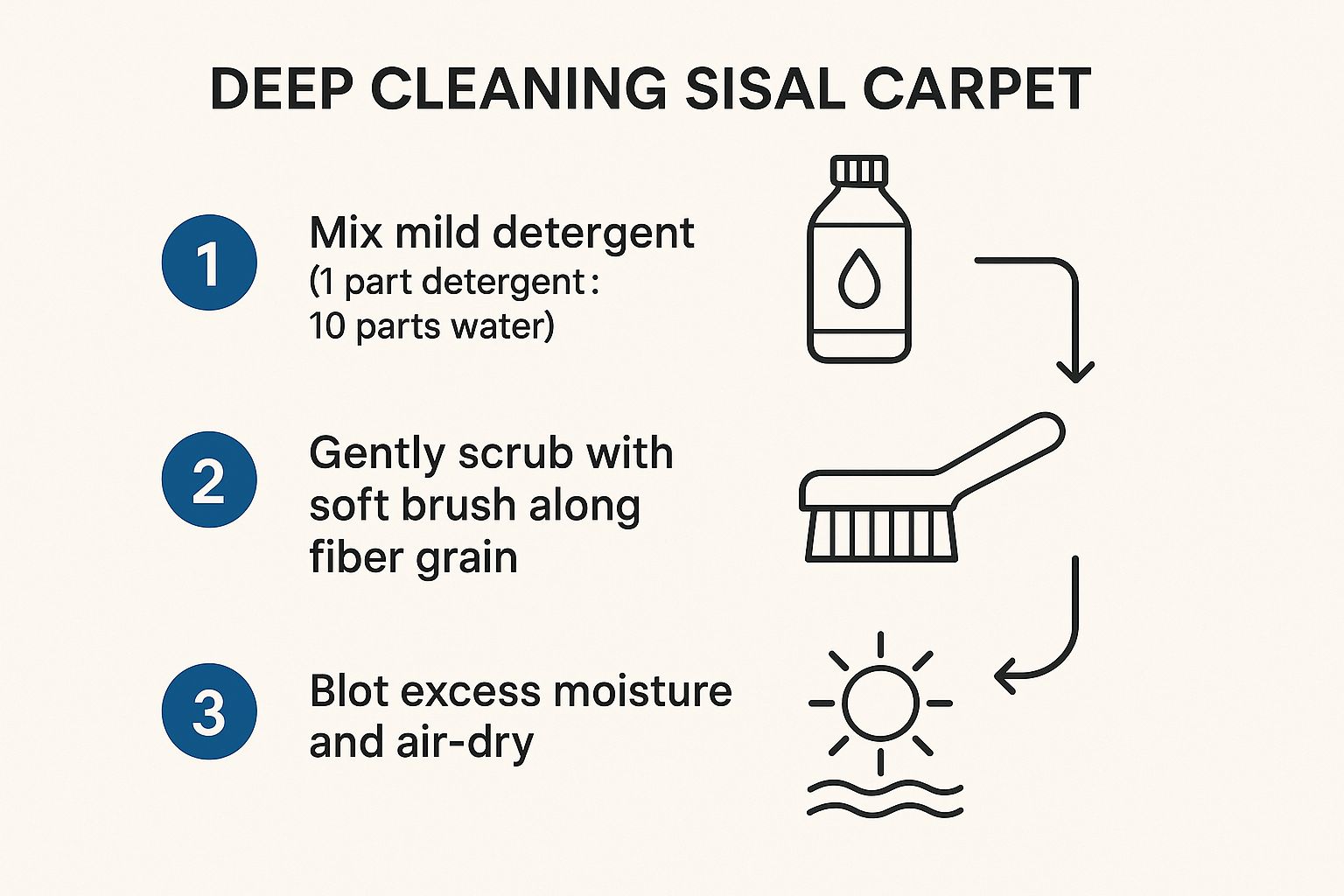
As the visual above suggests, the core principle of sisal care is always about being gentle and avoiding moisture at all costs, whether you're dealing with a small spot or a full deep clean.
Expert Tip: For particularly stubborn, grimy patches, you might need a little extra powder and a slightly longer dwell time. Just be careful not to leave the powder on overnight, as it can settle too deeply and become a real pain to vacuum out completely.
After a final, thorough vacuum, your carpet should look noticeably brighter, feel fresher, and smell clean—all achieved without a single drop of water. For those who want to explore more advanced methods, our guide on how to deep clean carpets at home offers even more professional insights.
Removing Difficult Stains Like Red Wine or Coffee

While quick blotting can handle most fresh spills, some stains are simply in a different league. A splash of red wine, a dropped mug of coffee, or a dreaded ink leak demands a much more targeted approach than your everyday cleaning. These stubborn situations call for specific remedies to lift the stain without causing even more damage.
The real key to success is moving carefully and using the absolute minimum amount of product. Sisal is incredibly absorbent, which means what you don't do is just as important as what you do. Soaking the fibres with any liquid, even a cleaning solution, is the quickest route to a permanent water ring that often looks worse than the stain you started with.
The Importance of Spot-Testing
Before you even think about applying a cleaning agent to a visible stain, you always need to test it on a hidden area first. Find a spot that’s out of sight—maybe under the sofa or inside a cupboard—and apply a tiny amount of your chosen solution.
This simple check ensures the product won't bleach, discolour, or otherwise damage the natural fibres of your carpet. It might feel like an unnecessary delay when you’re staring down a glaring stain, but believe me, this five-minute test can save you from an expensive and irreversible mistake. Never, ever skip this check.
Targeted Treatments for Tough Stains
When you're up against tough, organic stains, you need something that can break them down without relying on water. This is where a product like surgical spirit (rubbing alcohol) becomes your best friend, but it has to be used with extreme care.
For instance, common spills like cola or chocolate can be a real nightmare to remove completely. The best method is to first gently scrape off any solid bits, then apply a tiny amount of surgical spirit to a clean, white cloth. Carefully dab the stained area—do not rub. Rubbing will only spread the stain and push it deeper into the fibres.
Remember the golden rule here: less is more. You aren't trying to wash the carpet. Your goal is simply to lift the pigment out of the fibres and onto your cloth. Make sure you switch to a clean section of the cloth often to avoid just smearing the stain back onto the carpet.
For those particularly deep-set or challenging marks that just won’t budge with these methods, our guide on how to remove stubborn carpet stains offers more advanced strategies. It's also important to be realistic. Due to sisal's porous nature, getting a dark, set-in stain out completely isn't always possible, which is exactly why acting immediately is so crucial.
Common Questions About Sisal Carpet Cleaning
Even with a good guide, it's completely normal to have a few lingering questions when it comes to looking after sisal. It’s a unique natural fibre, and a lot of the standard advice for regular carpets just doesn't apply here. Let's tackle some of the most common queries we hear from our customers to give you clear, straightforward answers.
Getting these finer points right will give you the confidence to maintain your carpet properly and, more importantly, help you sidestep some costly mistakes.
Can I Use a Steam Cleaner on Sisal?
This is probably the most critical question we get, and the answer is a hard and fast absolutely not.
Steam cleaners are a disaster waiting to happen for sisal. They use a combination of intense heat and high-pressure water, which is pretty much guaranteed to ruin the natural fibres. You'll see shrinking, buckling, and warping almost immediately. Worse still, the moisture will cause permanent dark water stains and browning, leaving your carpet looking far worse than when you started. That trapped dampness also creates the perfect environment for mould and mildew to take hold deep within the weave. Always, always stick to the dry cleaning methods we've covered.
What About That 'Hay' Smell from a New Carpet?
If you’ve recently had a sisal carpet installed, you’ve probably noticed a distinct, earthy scent, a bit like fresh hay or dry grass. Don't worry, this is completely normal. It’s simply the natural smell of the sisal plant fibres themselves.
This aroma isn't harmful and will disappear on its own within a few weeks as the carpet settles into its new home. You can help it along by keeping the room well-ventilated—just open the windows when you can. Think of it as a sign that your carpet is genuinely a natural product.
Expert Insight: That initial earthy smell is the hallmark of an authentic, natural floor covering. It’s a temporary quirk and a small price to pay for sisal's incredible texture and durability. Whatever you do, resist the temptation to use air fresheners or scented sprays, as they can interfere with the natural process.
Is Baking Soda a Good Cleaning Option?
While baking soda is a brilliant natural deodoriser for many things around the house, it’s not really a cleaning agent for sisal. When you’re trying to lift actual dirt and grime, a dedicated dry carpet cleaning powder will be much more effective. These products are formulated to cling to and absorb the oily, stubborn soils that baking soda simply can't handle.
That said, if you're just looking to neutralise odours, a light sprinkle of baking soda is generally safe. Leave it on for about an hour and then vacuum it up thoroughly. As with any product, it's always smart to test it on a small, out-of-the-way spot first, just in case.
When Should I Call a Professional?
Knowing when to step back and call in an expert is key. If you’re faced with a large, stubborn stain that has set deep into the fibres, or if the entire carpet is due for a deep clean and you don't feel confident doing it yourself, a professional is your safest bet.
The crucial thing is to hire someone who specifically specialises in cleaning natural fibres like sisal. Make sure you confirm with them beforehand that they will be using a dry cleaning or a very low-moisture method. Any reputable professional will know that water is sisal's number one enemy.
When your DIY efforts aren't quite cutting it, it’s time to trust the experts. For professional, safe, and effective cleaning of your sisal and other fine carpets in Cheltenham, Gloucester, or Stroud, contact AG Carpet Specialists. We have the specialist tools and know-how to restore your carpets beautifully. Get your free quotation today.