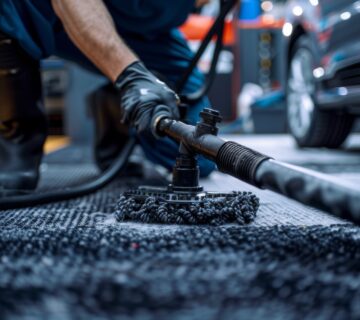
It’s happened.That heart-stopping moment when a glass of red wine takes a tumble, landing right on your pristine carpet. But don't panic – this doesn't have to be a permanent disaster. The absolute key to saving your carpet from a nasty stain is to act immediately.
What to Do the Moment Red Wine Hits Your Carpet
It’s easy to freeze up, but the clock is ticking. Red wine gets its rich colour from tannins, which are basically natural dyes just waiting to grab hold of your carpet fibres. This is precisely why a fresh, wet spill is a hundred times easier to deal with than one that’s had a chance to dry.
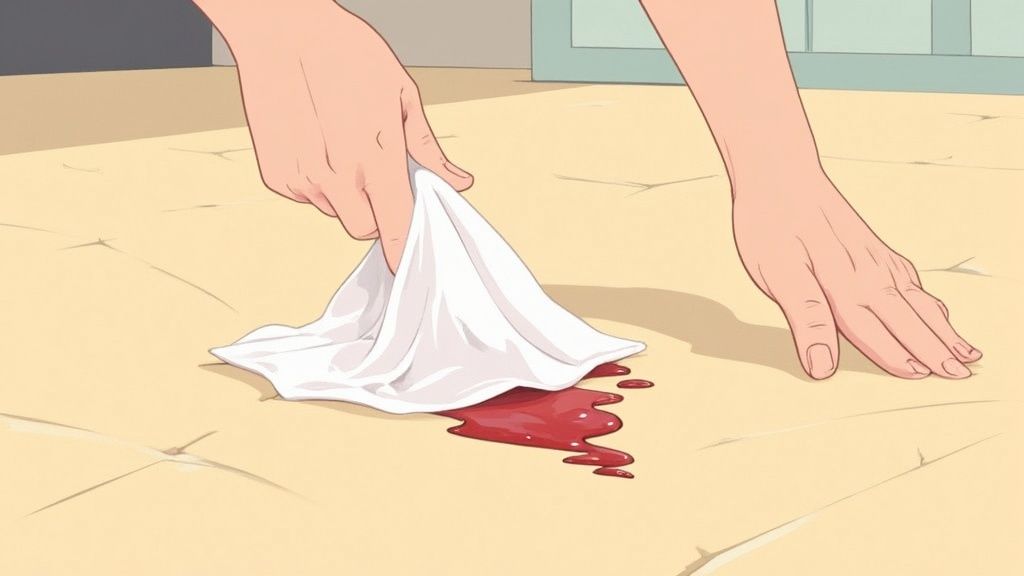
Your first move is all about damage control. Grab a clean, white, absorbent cloth – a microfibre one is great, but even a few paper towels will do the trick – and start blotting gently. Always work from the outside of the spill inwards to stop it from spreading.
The Golden Rule of Stain Removal: Blot, Never Rub.
Seriously, if you remember one thing, make it this. Rubbing just grinds the wine pigments deeper into the carpet, making the stain bigger and locking it in.
Your First Five Minutes Are Critical
Believe it or not, once you've blotted up the excess liquid, you've already won half the battle. This simple first step is so important. In the UK, red wine spills are so common they make up between 15-20% of all our professional call-outs.
From experience, I can tell you that failing to act within the first 20 minutes can slash your chances of getting the stain out completely by up to 50%. It’s a massive difference.
Before you even think about reaching for a cleaning solution, you need the right tools on hand. Having a quick kit ready can make all the difference between a minor cleanup and a major headache.
Your Immediate Red Wine Spill First Aid Kit
Here’s a quick rundown of the essentials you should grab as soon as a spill happens. Having these items ready means you can act fast and effectively.
| Item | Purpose | Why It's Essential |
|---|---|---|
| Clean White Cloths | Blotting up the spill | White cloths prevent any dye transfer, and blotting absorbs the wine without rubbing it in. |
| Cold Water | Rinsing the area | Helps to dilute the remaining wine without setting the stain, which hot water can do. |
| Baking Soda or Salt | Absorbing the stain | These draw the wine up and out of the carpet fibres as they dry, making removal easier. |
| A Bowl or Bucket | For mixing solutions | You’ll need it for applying your cleaning mixture without making a bigger mess. |
By containing the spill and having your kit ready, you've perfectly prepped the area for the next stage of treatment. For a more in-depth look at what to do in those first crucial moments, you might want to check out our detailed guide on what to do after a red wine spill on your carpet.
Gathering Your Stain Removal Toolkit
Before you even touch the stain, taking a moment to gather the right supplies will make all the difference. When that splash of red wine happens, the natural reaction is to panic and grab the first thing you see. Trust me, that’s a recipe for making things worse.
The good news is, you almost certainly have everything you need tucked away in your cupboards already. There's no need for harsh, specialist chemicals; some of the best stain removers are gentle, everyday items you use all the time.
Core Cleaning Essentials
Your main goal here is simple: lift the stain out of the carpet fibres without causing any damage. To do that, you'll need a few non-negotiable items.
- Clean White Cloths: This is crucial. Always use white cloths, towels, or even paper towels. A coloured cloth might look harmless, but its dye can easily transfer to a damp carpet, leaving you with a brand new, even trickier stain to deal with.
- Cold Water: Whatever you do, avoid hot water. Heat can set the tannins in red wine, bonding them to the carpet fibres and making the stain permanent. Cold water, on the other hand, is your best friend for diluting the spill safely.
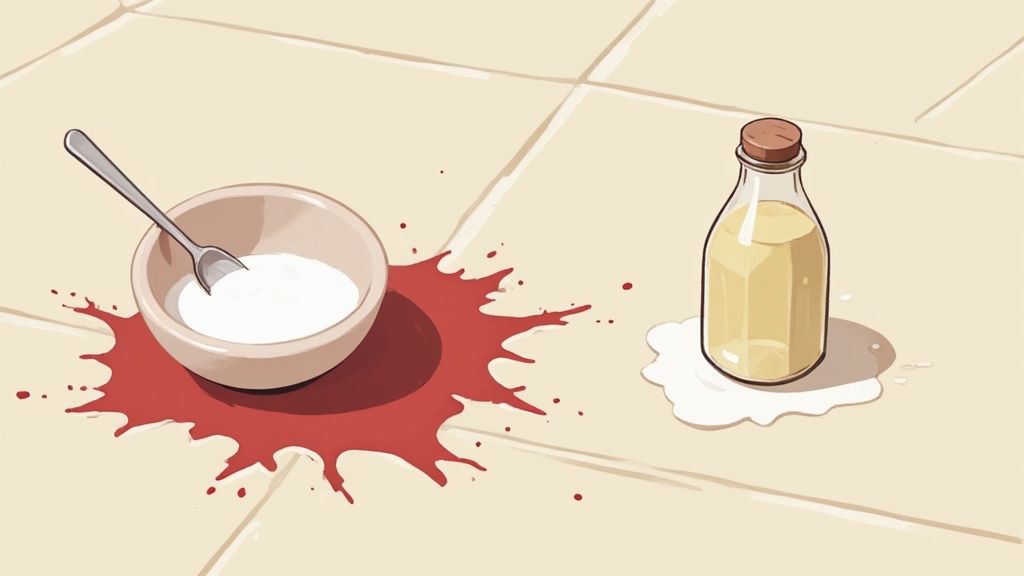
- Bicarbonate of Soda: A real hero of natural cleaning. Bicarb is a fantastic absorbent. Whether you sprinkle it directly or make a paste, it works by drawing the red wine pigments up and out of the carpet.
- White Vinegar: The mild acidity in white vinegar is brilliant for breaking down the pigments in a wine stain. Diluted with a bit of water, it becomes a powerful but gentle cleaning agent that won’t harm your carpet.
Pro Tip for Carpet Safety
Before you apply any cleaning solution—even a natural one—always do a quick patch test. Find a hidden spot, like inside a cupboard or behind the sofa, and apply a small amount. This quick check ensures the solution won’t cause any unexpected discolouration.
Know Your Carpet Type
It's also worth thinking about what kind of carpet you have. Most modern, synthetic carpets (like nylon or polyester) are quite resilient and can handle these DIY solutions without any fuss.
Natural fibres, however, need a bit more care. If you have a wool or silk carpet, you’ll want to be much gentler. Stick to the mildest options, like blotting with cold water, and steer clear of anything too acidic. A little bit of knowledge about your carpet’s material goes a long way towards a successful, damage-free clean.
Proven DIY Methods for Removing Red Wine
Right, you’re prepped and ready to go. Now it’s time to get that stain sorted using some tried-and-tested, eco-friendly methods. Forget about reaching for harsh chemicals; you’ll find some of the best remedies right in your kitchen cupboards. These techniques rely on gentle but surprisingly powerful ingredients that know how to break down wine pigments without being cruel to your carpet fibres.
The real secret here is a bit of patience and using the right approach. If you rush it or scrub too aggressively, you can easily make the situation worse. Let’s start with one of the most reliable methods I’ve come across.
The Bicarbonate of Soda Paste Method
This is a classic for a good reason – it’s incredibly good at drawing the stain up and out of the carpet. You’ll want to mix three parts bicarbonate of soda with one part cold water. Keep stirring until you have a thick, spreadable paste.
Gently apply the paste directly over the damp stain, making sure it’s completely covered. The key is not to rub it in; just layer it on top. The magic happens as the paste starts to dry, literally pulling the red wine out of the carpet. You’ll need to let it sit until it's completely dry and crusty, which might take a few hours or even overnight for a particularly nasty spill. Once it's totally dry, just vacuum up all the residue.
A survey of over 2,000 UK households found that 65% try DIY stain removal first. While success rates for home remedies hover around 40-55%, professional services often see success rates upwards of 80%.
The White Vinegar and Water Solution
If you can still see a faint mark after the bicarb has done its work, a white vinegar solution is your next port of call. The mild acid in vinegar is fantastic for dissolving any stubborn wine pigments that are hanging on.
Mix up a solution of one part white vinegar to two parts cold water. A spray bottle works well for this, but a small bowl is fine too. Lightly spritz or dab the solution onto what’s left of the stain. Let it work its magic for about five to ten minutes, then blot it gently with a fresh, clean white cloth. You should start to see the last of the stain transferring from your carpet to the cloth.
Keep repeating this until the stain has vanished, and then finish by blotting the area with another cloth dampened with just cold water to rinse away the vinegar. For a more detailed walkthrough, have a look at our full guide on how to clean red wine from a carpet.
Comparing DIY Red Wine Stain Removal Methods
While bicarbonate of soda and vinegar are household heroes, there are a few other common DIY methods people turn to. It's helpful to see how they stack up against each other.
| Method | Best For | Key Ingredients | Success Rate (Approx.) |
|---|---|---|---|
| Baking Soda & Water Paste | Fresh, wet spills on most carpet types | Bicarbonate of Soda, Water | 60-70% |
| Vinegar & Water Solution | Lingering stains after initial treatment | White Vinegar, Water | 55-65% |
| Salt | Immediate action on fresh, wet spills | Table Salt | 50-60% |
| Club Soda | Very light, fresh spills on synthetic fibres | Club Soda | 40-50% |
As you can see, different methods have varying levels of success. The key is always to act fast and choose the right tool for the job.
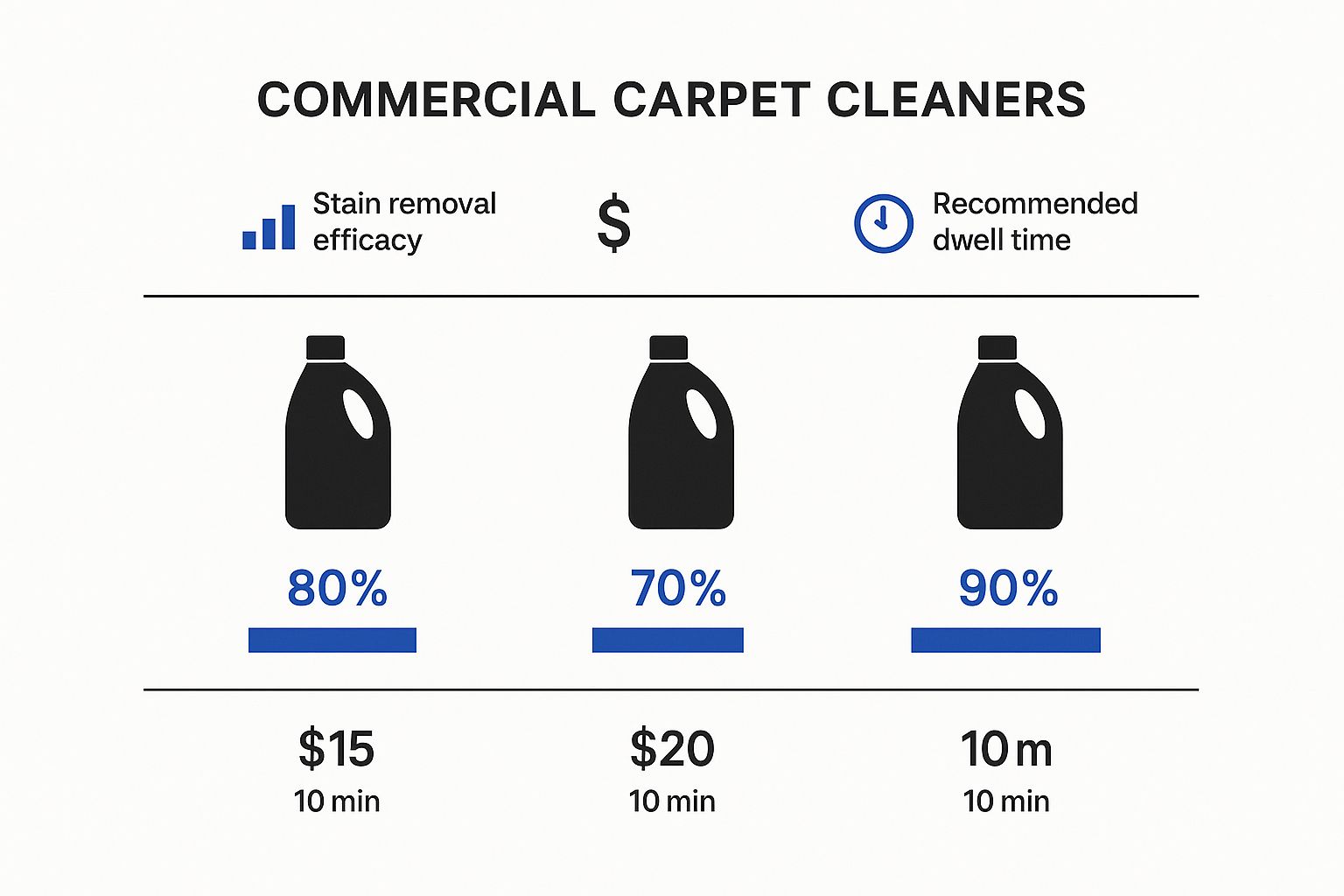
While many homeowners get great results with these approaches, it’s worth remembering that some stains are just too stubborn for DIY solutions alone.
How to Tackle Old or Dried Red Wine Stains
Discovering a red wine stain long after the party has ended can feel like a decorating disaster. While a fresh spill is one thing, a dried, set-in stain needs a more intensive approach. Don't panic, though—it's certainly not a lost cause if you know how to clean red wine from carpet that has already dried.
It’s worth remembering how far we’ve come. Back in the early 2000s, UK households often had to rely on basic blotting with salt and water. Consumer reports from the time show this only had a 30-40% success rate for set-in spills. Thankfully, today’s methods are far more effective.
A Powerful Solution for Set-In Stains
For a stubborn, dried mark, you’ll need something with a bit more muscle than bicarb or vinegar. A combination of washing-up liquid and hydrogen peroxide can often do the trick, but this comes with a critical warning.
Hydrogen peroxide is an oxidising agent. This means it works by breaking down the chemical bonds in the wine's colour pigments—a highly effective process, but one that can also bleach your carpet fibres if you're not careful.
Safety First: Perform a Patch Test
Before you even think about applying this solution to the stain, you must test it on a hidden area of your carpet. Think inside a cupboard or behind a large piece of furniture. Apply a small amount, wait a full 24 hours, and check for any colour loss. If you skip this, you risk swapping a red patch for a permanent white one.
If your patch test goes well, you can move forward.
- Mix one part washing-up liquid with two parts 3% hydrogen peroxide solution.
- Gently dab the mixture onto the stain using a clean, white cloth.
- Let it sit for a few minutes to work its magic.
- Blot carefully with a separate damp cloth to lift the solution and the stain, repeating until the mark fades.
If a stain proves too difficult, our guide on how to remove stubborn carpet stains offers further expert advice.
Carpet Aftercare and When to Call a Professional
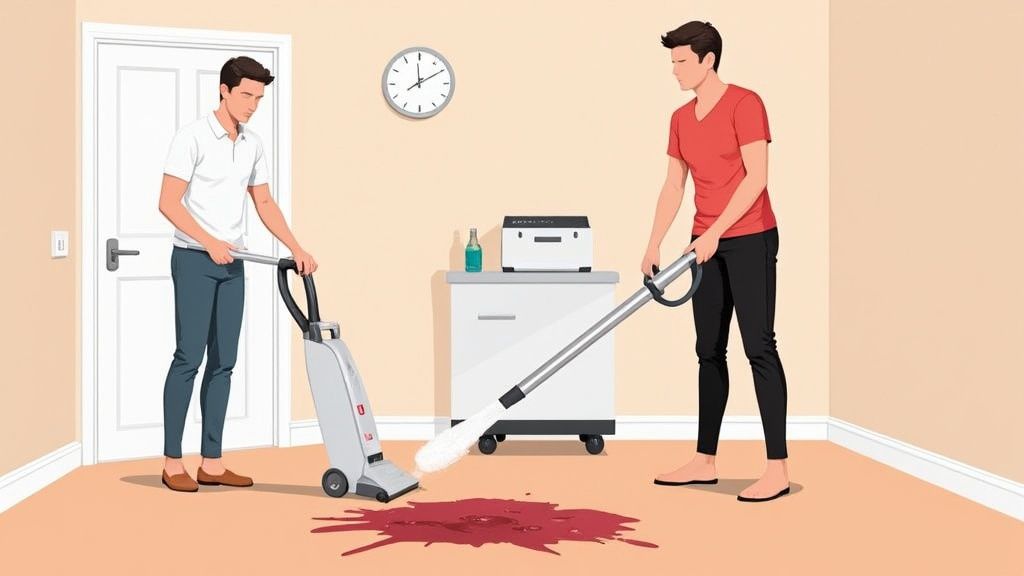
Getting that red wine stain out is a brilliant feeling, but your work isn’t quite over. The final steps are all about proper aftercare to make sure you don't end up with watermarks or, even worse, a musty smell from mildew.
First, you'll want to give the area a gentle rinse to get rid of any leftover cleaning solution. Just dampen a clean, white cloth with a bit of cold water and blot the area again. The idea is to lift away any lingering vinegar or bicarb without soaking the carpet all over again.
Once that's done, grab a thick, dry towel, lay it over the damp spot, and apply some real pressure. You can even stand on it for a minute. This will pull a surprising amount of moisture out of the fibres.
Then, just let it air-dry completely. Opening a window or aiming a fan at the spot will speed things along. Whatever you do, resist the urge to use a hairdryer – the direct heat can actually damage and frizz the carpet fibres.
Knowing When to Call for Help
Look, even with the best at-home methods, some stains just won't budge. The real trick is knowing when to admit defeat before you accidentally make things worse. It’s absolutely key to protecting your carpet from permanent damage.
It’s probably time to ring a professional if you’re seeing any of these signs:
- A Persistent Shadow: After the carpet is fully dry, you can still see a faint, discoloured patch where the stain was.
- A Very Large Spill: Sometimes the sheer volume of wine is just too much for DIY methods to handle effectively.
- Delicate Materials: If you have wool or silk carpets, it's best not to risk it. These materials need specialist care to prevent shrinkage or colour loss.
If you find yourself in one of these situations, your best bet is to call in an expert. Taking a moment to learn how to prepare for professional carpet cleaning will help the pros get the best possible results when they arrive.
Common Questions About Red Wine Stains
Even with the best advice, a few common myths and questions always seem to surface when you’re figuring out how to clean red wine from your carpet. Let's tackle some of the most frequent ones so you can act with total confidence.
One of the biggest questions is whether pouring white wine on a red wine stain actually works. In theory, the acidity and alcohol in white wine can help dilute the red, but honestly, it's an inefficient and expensive method. You're just adding more liquid to the problem, and a simple solution of water and vinegar does the same job far more effectively.
Does Salt Permanently Remove Red Wine?
Using salt is a classic first-aid step, and it’s brilliant for absorbing a fresh spill. However, it's not a complete cleaning solution on its own. Salt is great at drawing the wine out of the carpet fibres, but it won't break down the pigments that cause the actual staining.
Think of it as the first responder, not the final cure. After you vacuum up the salt, you will almost always need to follow up with a proper cleaning solution—like a bicarbonate of soda paste or a vinegar spray—to fully lift any remaining residue. Without this second step, a faint shadow of the stain is likely to remain.
Key Takeaway: Prevention is Better Than Cure
The best way to deal with stains is to prevent them from happening in the first place. Consider using carpet protector sprays, especially in high-traffic or dining areas. These create an invisible barrier that gives you precious extra minutes to blot up a spill before it soaks in.
What Are the Best Ways to Prevent Future Stains?
Beyond applying protectors, a few simple habits can make a huge difference. Using coasters and placemats is an obvious but often overlooked step. If you're hosting a party, consider using stemless wine glasses, which are far less likely to be knocked over.
For more comprehensive ideas on maintaining your floors, exploring general carpet cleaning tips can provide valuable long-term strategies to keep them looking their best.
Sometimes, even the best DIY efforts aren't enough for a stubborn stain. For a guaranteed professional finish, contact AG Carpet Specialists today. Get your free, no-obligation quote at https://www.agcarpetspecialist.co.uk and let us restore your carpet to its former glory.