

Getting rid of pet odours for good isn't just about a quick spray and a prayer. It’s a three-pronged attack: you have to find the source, deep clean it properly with enzymatic cleaners, and then stick to a solid prevention routine. This is the only way to actually break down the organic gunk causing the smell, rather than just covering it up.
Why Do Pet Odours Linger So Long?
It’s a classic frustration for anyone with a furry friend. You clean and clean, but that faint, musty scent just won't budge. Trust me, you're not imagining it. Pet smells are notoriously stubborn because they come from organic compounds that work their way deep into porous materials like carpets, sofas, and even floorboards.
The main offenders are urine, natural body oils, and dander. When a pet has an accident, the urine doesn't just sit on the surface. Its uric acid crystals seep right through the carpet fibres, into the underlay, and sometimes even the subfloor. These crystals can lie dormant for ages, only to be reactivated by a bit of humidity, releasing that sharp ammonia smell all over again.
It's a similar story with the natural oils from your pet's coat. They rub off on everything—the sofa, their favourite rug, the bottom of the curtains. Over time, these oils oxidise and create that unmistakable "doggy" smell that standard cleaners just can't seem to shift.
The real challenge here is that you're not just fighting a smell; you're fighting biology. Your everyday soaps and detergents often can't break down the complex proteins and acids that create these persistent odours.
The Usual Suspects of Household Pet Smells
To win the war on pet smells, you need to know exactly what you’re up against. The most common sources we deal with are:
- Urine and Faeces: The most obvious culprits, packed with ammonia and bacteria that produce powerful, lasting odours.
- Sebum (Skin Oils): This is a waxy substance from your pet’s skin glands. It has its own unique scent and transfers easily onto fabrics.
- Dander: These are the tiny flecks of skin shed by pets. Not only do they trigger allergies, but they also contribute to that general musty smell in a home.
With pets in so many UK homes, this is a problem millions of us face. In 2024, it's estimated that around 60% of British households own at least one pet. That’s a lot of homes battling the same smells. Beyond just cleaning up messes, a big part of the solution is good pet dander and allergy management, which helps reduce the overall odour load in your home.
Your Deep Cleaning Arsenal for Odour Removal
Now that you know what you’re up against, it’s time to gear up. If you want to permanently get rid of pet odours instead of just masking them for a bit, a quick hoover simply won’t cut it. The real secret lies in using specific cleaners and methods that attack the problem right at the source.
Effective odour removal really begins with having the right products on hand. Your standard household cleaners might get rid of surface dirt, but they often leave behind the stubborn, protein-based molecules that cause those lingering smells. This is where a proper deep-cleaning arsenal makes all the difference.
The Power of Enzymatic Cleaners
Honestly, the most powerful weapon you have against pet smells is a good enzymatic cleaner. These aren't like your typical detergents. They contain special enzymes—think of them as biological catalysts—that actively hunt down and break down the organic compounds found in urine, faeces, and vomit. They don't just cover up the smell; they completely dismantle it on a biochemical level.
Controlling pet odours is a huge concern in UK homes, and using enzymatic cleaners is a scientifically-backed method that professionals swear by. They are far more effective than conventional products because they target the specific organic compounds causing the smell. You can learn more about the scale of UK pet ownership challenges at Dogster.com.
Here’s a crucial tip for fresh stains: always blot, never rub. When you rub, you’re just grinding the urine deeper into the carpet fibres and underlay, which makes your job ten times harder. Instead, gently blot the area with a clean cloth or paper towel to soak up as much as you can before you even think about applying a cleaner.
For a deeper dive into professional techniques, check out our guide on essential carpet cleaning tips that every pet owner should know.
Pet-Safe DIY Cleaning Solutions
While enzymatic cleaners are definitely the top choice for tough urine stains, you can also whip up some effective, pet-safe solutions with things you already have in your cupboard. These are brilliant for a general freshen-up or for tackling less severe smells around the house.
- White Vinegar Solution: Just mix equal parts white vinegar and water in a spray bottle. Vinegar is a fantastic natural deodoriser because it neutralises the ammonia in urine. Give a light spray on carpets, upholstery (but do a spot test first!), and hard floors.
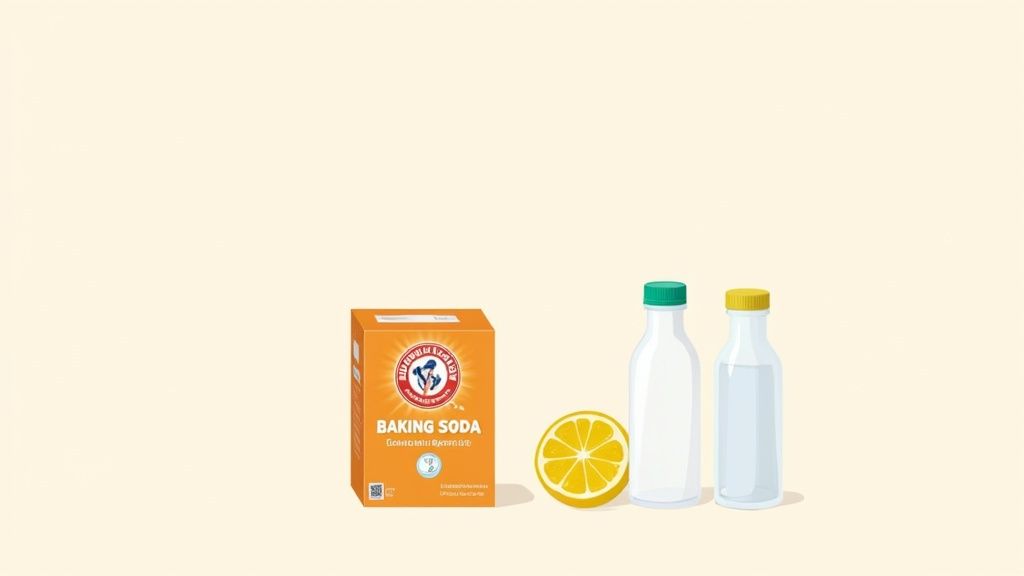
- Bicarbonate of Soda: A classic for a reason! Bicarbonate of soda is absolutely brilliant at absorbing persistent smells. Sprinkle it generously over your carpets, rugs, and even on your dog's bed. Let it sit for a good few hours—or even better, overnight—then vacuum it up thoroughly.
Remember the golden rule of deep cleaning: give it time. Whether you're using an enzymatic cleaner or a DIY solution, letting the product "dwell" is essential. This allows the active ingredients to penetrate the surface and do their work effectively.
This simple routine can help you stay on top of things and keep those smells from building up.
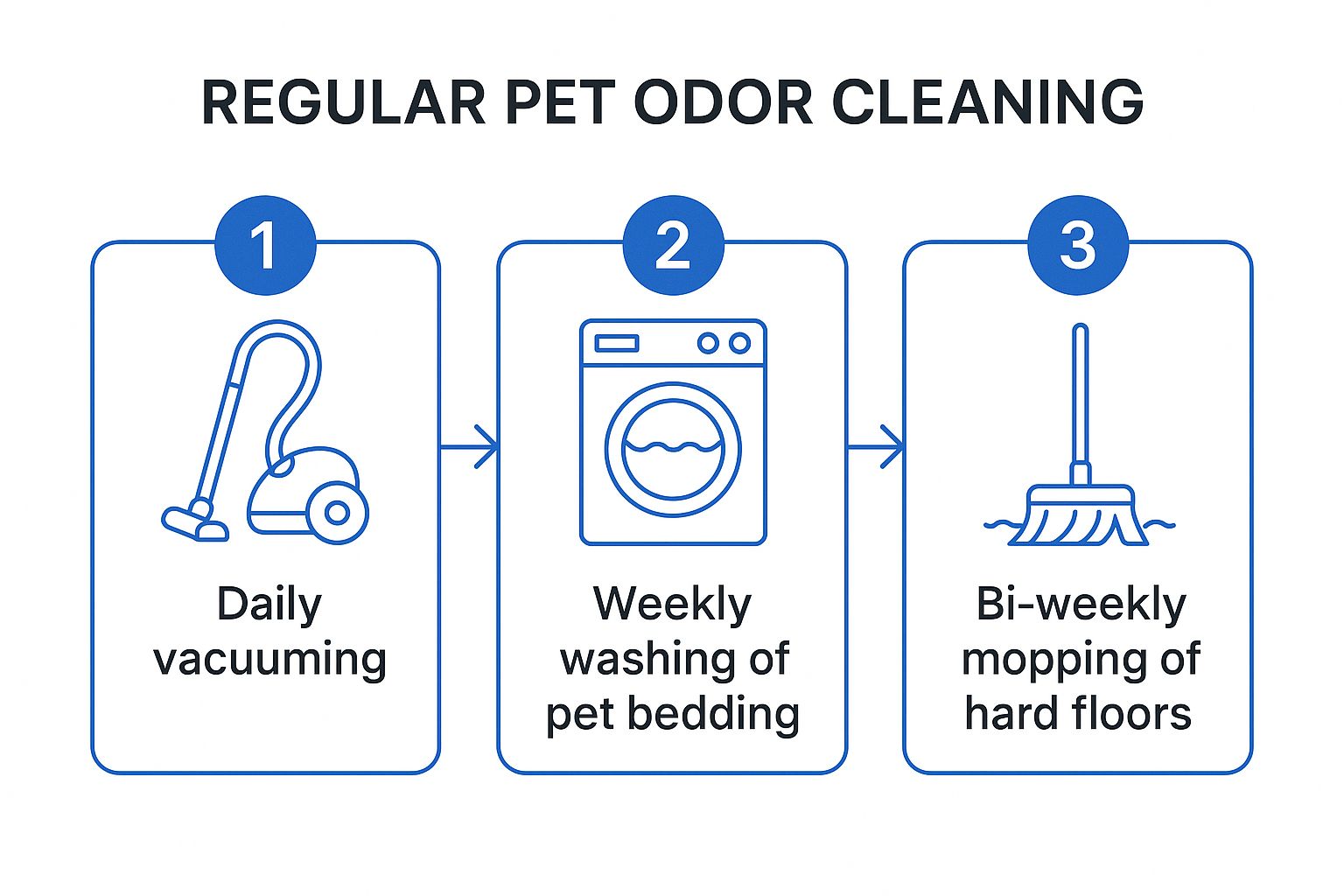
Following a consistent schedule like this is key to preventing the gradual build-up of dander, hair, and dirt that contributes so much to household pet odours.
Tackling Odours in Fabrics and Upholstery
Soft furnishings like sofas, curtains, and especially pet beds are absolute magnets for pet odours. Unlike hard floors, fabrics have a knack for absorbing oils, dander, and moisture, trapping those unwelcome smells deep within their fibres. This makes getting rid of odours in upholstery a unique challenge that needs a specific approach.
Simply spraying a bit of air freshener over your sofa won't get you very far; you're just masking the problem for a little while. To truly get rid of pet odours from fabrics, you have to go deeper and neutralise the source. For most materials, a good starting point is a thorough vacuum using an upholstery attachment to pull up any loose fur and dander.
Washing Pet Bedding the Right Way
Your pet’s bed is often ground zero for smells. Washing it regularly is a must, but how you wash it is what really makes the difference in killing off those odour-causing bacteria.
- Hot Wash: Always check the care label first, but if you can, use the hottest water temperature the fabric can safely handle. A wash at 60°C is ideal for effectively killing germs.
- The Right Detergent: Go for a pet-safe, unscented laundry detergent. Heavily perfumed products can irritate your pet’s skin and often just cover up smells rather than removing them.
- A Deodorising Boost: For an extra bit of odour-fighting power, add a cup of white vinegar to the rinse cycle. It works wonders at breaking down stubborn smells and, don't worry, it won't leave a vinegary smell behind once dry.
After washing, make sure the bedding is 100% dry before your pet curls up in it again. Even a slightly damp bed can quickly develop a musty smell, undoing all your hard work.
Freshening Up Non-Washable Items
But what about the things you can't just throw in the wash, like the sofa or your favourite armchair? This is where bicarbonate of soda becomes your best friend. This simple kitchen staple is a brilliant natural deodoriser.
It works because its chemical structure allows it to neutralise both acidic and alkaline molecules, which are often the root cause of unpleasant pet smells.
Just sprinkle it generously over the entire fabric surface. You can work it in lightly with a soft brush, then just let it sit for at least a few hours—leaving it overnight is even better. The longer it sits, the more odours it can absorb. When you're ready, simply vacuum it all up with a brush attachment.
Pro Tip: For really stubborn, set-in smells or significant accidents on furniture, a surface clean might not be enough. Odours can seep deep into the padding and even the frame. In these cases, professional pet urine carpet cleaning techniques can be adapted for upholstery to guarantee a deep, lasting freshness.
Clearing the Air for a Fresher Home
So you've sorted the stains on your carpets and upholstery, but there's still a bit of a pong hanging in the air. That's no surprise. It's down to the microscopic bits of dander, fur, and odour molecules that are still floating around. Dealing with these invisible culprits is the final piece of the puzzle for a truly fresh-smelling home.
Simply grabbing an air freshener spray won't cut it. That's just a temporary fix, masking the problem with heavy perfumes instead of getting to the root of it. To genuinely get rid of pet odours for good, you need to pull those particles right out of the air.
Choosing the Right Air Purification Method
The best long-term solution is a good quality air purifier, but not just any old model will do when you're battling pet smells. It's crucial to find one with a multi-stage filtration system that can handle both the physical particles and the gassy odours.
For any pet owner, there are two filters you absolutely must have:
- A True HEPA Filter: This is your main defence against allergens. A proper High-Efficiency Particulate Air (HEPA) filter is designed to capture 99.97% of particles as tiny as 0.3 microns. That means it easily traps pet dander, pollen, and dust.
- An Activated Carbon Filter: This is what really nails the smell. Activated carbon is covered in millions of tiny pores that absorb gas-based odour molecules, effectively sucking the smell right out of the atmosphere. A purifier without this won't do much for the smell, even if it clears the dander.
An air purifier with both HEPA and activated carbon filters is a powerful combination. The HEPA filter gets rid of the dander that can make a room feel musty, while the carbon filter neutralises the actual odour molecules causing the unpleasant smell.
To help you decide what's best for your home, here's a quick comparison of the different approaches you can take to clean the air.
Air Purification Methods Compared
| Method | Effectiveness on Odours | Effectiveness on Dander | Ongoing Cost |
|---|---|---|---|
| HEPA & Carbon Purifier | Very High | Very High | Moderate (filter replacement) |
| Opening Windows | High (temporary) | Low | None |
| Bicarbonate of Soda | Low to Moderate | None | Very Low |
| Activated Charcoal | Moderate | None | Low |
While a dedicated air purifier is the most effective tool, combining it with other methods will give you the best, most consistent results for a fresh-smelling home.
Natural and Supportive Air Freshening Techniques
Alongside a good bit of tech, some simple, natural methods can make a massive difference. Your easiest and cheapest tool is good old-fashioned ventilation. Just opening windows on opposite sides of your house for 15-20 minutes a day creates a cross-breeze. This simple act flushes out all that stale, smelly air and brings in fresh air from outside.
You can also use natural odour absorbers. Pop a few bowls of activated charcoal or bicarbonate of soda in rooms where smells tend to build up, like near the dog's bed or the litter tray. These materials are porous and work away in the background, trapping odours over time.
They're not as powerful as an electric purifier, of course, but they're a fantastic, low-cost way to support your main efforts. For really tough smells, like cat urine, you'll need a combination of deep cleaning and proper air purification. We've got more specific advice on that in our guide on how to permanently get rid of cat urine smell from your home.
Building Habits to Prevent Odours from Returning
Once you’ve deep cleaned the house and freshened up the air, the real work begins. The goal is to move from constantly reacting to smells to proactively preventing them. Honestly, the easiest way to keep your home smelling lovely is to stop odours from taking hold in the first place. This is all about creating a simple, sustainable routine that nips potential smells in the bud.
Think of it less as a constant battle and more as smart odour management. A few small, consistent habits woven into your week make a world of difference and save you from another huge deep-cleaning session down the line.
Start with Proactive Pet Grooming
A surprising amount of that lingering pet smell comes directly from your furry friend’s coat. Loose fur, dander, and their natural skin oils easily transfer onto carpets, furniture, and bedding, creating a musty baseline that’s hard to shift. Regular grooming is your absolute first line of defence.
- Consistent Brushing: Just brushing your dog or cat a few times a week, especially if they’re a long-haired breed, gets rid of loose fur and dander before it ever has a chance to settle around your home. It’s a simple act that dramatically cuts down on the amount of odour-carrying material in your living space.
- Strategic Bathing: You don't want to over-bathe your pet as it can dry out their skin, but a regular wash with a quality, pet-safe shampoo is brilliant for controlling the oils that cause that classic "doggy" smell. The right frequency depends on their breed, but it’s a key part of long-term prevention.
Sticking to consistent grooming routines and following useful pet care tips is fundamental to keeping odours from coming back and ensuring your home stays fresh.
Manage Key Odour Hotspots
Certain spots in your home are just natural magnets for pet smells. Giving these areas a little extra, regular attention can stop odours from ever becoming a problem.
Litter boxes are the obvious one. Daily scooping is non-negotiable, but try to do a complete litter change and give the box a thorough scrub with soap and water once a week. Popping a small mat under the box is also a great trick for catching stray litter before it gets tracked through the house.
A key takeaway for preventing odours is to think in layers. Using washable throws on your sofa, placing durable mats at every entrance, and regularly airing out pet beds all work together to create a multi-layered defence against smells.
The lifetime cost of owning a dog in the UK can sit anywhere between £10,000 and £16,000, which covers everything from food to cleaning supplies. With pet ownership on the rise, more of us are balancing these costs with the need for good home hygiene, making preventative habits a sensible choice both financially and practically.
Don’t forget the power of your pet's diet. A high-quality food can do wonders for their skin, coat, and digestive health, which in turn reduces body odour and flatulence. For homes with a lot of carpet, combining these habits with a professional clean is the ultimate way to guarantee a truly fresh environment. Our guide on safe carpet cleaning for pets has more insights on maintaining a healthy, odour-free home for the whole family.
Pet Odour Removal: Your Questions Answered
When you're dealing with stubborn pet smells, it's natural to have a few questions. As specialists, we've heard them all. Here are our honest, straightforward answers to the most common queries we get from pet owners.
Can I Permanently Get Rid of Cat Urine Smell in My Carpet?
Yes, you absolutely can, but it’s a job that needs the right tools and technique. Forget standard carpet shampoos; the secret weapon here is a proper enzymatic cleaner.
These special formulas contain enzymes that literally break down and digest the uric acid crystals in the urine – that's the stuff that causes the smell to linger for years. Regular cleaners just can't touch it.
First, blot up as much fresh urine as you can. Then, properly saturate the area with the enzymatic cleaner, making sure it gets right down into the carpet backing and underlay. Just let it air dry. Crucially, don’t be tempted to use a steam cleaner or heat, as that can bake the proteins into the fibres, setting the stain and smell for good.
How Often Should I Be Washing My Dog’s Bedding?
To keep that lingering ‘doggy’ smell under control, you should aim to wash their bedding at least once a week. It’s a simple routine that makes a huge difference, stopping the build-up of body oils, dander, and bacteria.
For best results, use a pet-safe, unscented detergent on the hottest wash cycle the fabric can handle. This helps to kill off any germs. If the smell is particularly stubborn, add a cup of white vinegar to the rinse cycle. It’s brilliant for neutralising odours and won’t leave the bedding smelling like a chip shop once it's dry.
A crucial step for preventing odours from becoming deeply embedded in your carpets is proactive care. After a professional deep clean, applying a high-quality protective layer can make future accidents much easier to manage. You can learn more about how a stain protector for your carpet works in our detailed guide.
Do Air Purifiers Actually Work for Pet Smells?
They can be incredibly effective, but you have to choose the right one. For tackling pet odours, an air purifier needs a two-part filtration system:
- A True HEPA Filter: This is your first line of defence, capturing the physical particles like dander, fur, and dust that make a room feel stuffy.
- An Activated Carbon Filter: This is the non-negotiable part for odour control. The carbon’s porous surface acts like a sponge, trapping and absorbing the smelly gas molecules from the air.
A unit with just a HEPA filter will clean the air of allergens, but it won’t do much for the smell itself. Always check that it has both, and make sure the model is powerful enough for the size of your room.
What's the Best Home Remedy for Pet Smells?
For a simple, effective, and pet-safe home remedy, you can’t beat a solution of equal parts white vinegar and water. It works wonders for wiping down hard surfaces and can be lightly spritzed on fabrics to neutralise ammonia smells. Just make sure to test it on a hidden spot first.
Bicarbonate of soda is another kitchen cupboard hero. Sprinkle it liberally over your carpets, rugs, and even the sofa. Let it sit for a few hours (or even overnight) to absorb the odours, then just vacuum it up thoroughly. Both are cheap, non-toxic, and surprisingly powerful for a general freshen-up.
At AG Carpet Specialists, we understand that some odours are too deep-set for DIY solutions. If you're struggling with persistent smells in your carpets or upholstery, our expert team uses state-of-the-art equipment and eco-friendly solutions to restore freshness to your home. Contact us today for a free, no-obligation quote.


