Think of carpet stain protection as a special treatment that gives your carpet an invisible barrier. This protective shield is a game-changer because it stops spills from soaking in straight away. It gives you that crucial bit of time to get it cleaned up before it has a chance to become a permanent stain.
How Carpet Stain Protection Really Works

It's a bit like your carpet is wearing a top-quality raincoat. When it rains, you see the water droplets bead up and just roll off, instead of soaking you through. Stain protection for carpets does exactly the same thing, just on a microscopic scale.
The treatment works by coating every single carpet fibre with a polymer that repels liquid. So, when that dreaded spill happens—be it red wine, coffee, or muddy paw prints—the liquid just sits on the surface. This 'beading' effect is what stops the mess from sinking deep into the pile, where it could cause a lasting mark.
The Real-World Benefits for Your Home
The main advantage here is that this invisible shield buys you time. A sudden spill doesn't have to be a mad panic anymore. You have a proper window of opportunity to grab a cloth and blot the liquid away cleanly. What could have been a disaster becomes just a minor clean-up job.
This simple but effective technology brings some great practical benefits for any homeowner:
- Preserves Appearance: It's fantastic at keeping your carpets looking fresh and new for much longer by preventing those ugly spots and marks from everyday accidents.
- Extends Carpet Lifespan: By stopping liquids and gritty particles from wearing down the fibres, the treatment helps your carpet stand up to daily life much more effectively.
- Makes Cleaning Easier: You'll even notice that routine vacuuming is more effective. Dirt and dust lift away easily from the protected fibres instead of getting ground in.
Taking this proactive approach is becoming more and more popular. In fact, the UK market for carpet cleaning products, which includes these kinds of protective treatments, grew significantly in 2023. This really shows how busy lives and a bigger focus on a clean home are pushing people to find smart ways to look after their carpets. You can find out more about this trend over on Grand View Research.
At the end of the day, carpet stain protection isn't about making your carpet bulletproof; it's about making it much more resilient. It gives you peace of mind, knowing your investment is better protected from the inevitable spills of daily life. That saves you stress, and it can save you a lot of money on expensive deep cleaning or even replacement down the line.
Decoding the Types of Carpet Stain Protectors
When you're thinking about stain protection, it helps to realise that not all products are made equal. It's a bit like choosing a winter coat – some are just lightweight showerproof jackets, while others are full-on, heavy-duty parkas designed for a blizzard. The kind of protection your carpet needs really depends on its age, the material it’s made from, and how much foot traffic it has to put up with day-to-day.
Generally speaking, these protectors fall into two main camps: those applied at the factory when the carpet is first made, and aftermarket treatments that are applied later on. Getting your head around the difference is the first step to knowing what level of defence your carpet already has and when it might need a top-up.
Factory-Applied Stain Protection
Most new synthetic carpets, especially those made from nylon, come with a stain protector already built-in. This isn't just sprayed on top; it's applied during the manufacturing process, bonding deeply and evenly with every single fibre. This process creates a seriously durable, invisible shield that becomes an integral part of the carpet itself.
These factory-applied treatments are fantastic at repelling both water-based spills (like coffee or juice) and oil-based messes (like that bit of salad dressing that always seems to escape the fork). Because the protection is so thoroughly bonded to the fibres, it often lasts for many years, sometimes for the entire lifespan of the carpet's stain warranty. This is truly the "heavy-duty parka" of the carpet world.
The image below breaks down the key benefits this kind of powerful stain protection can bring to your home over time.
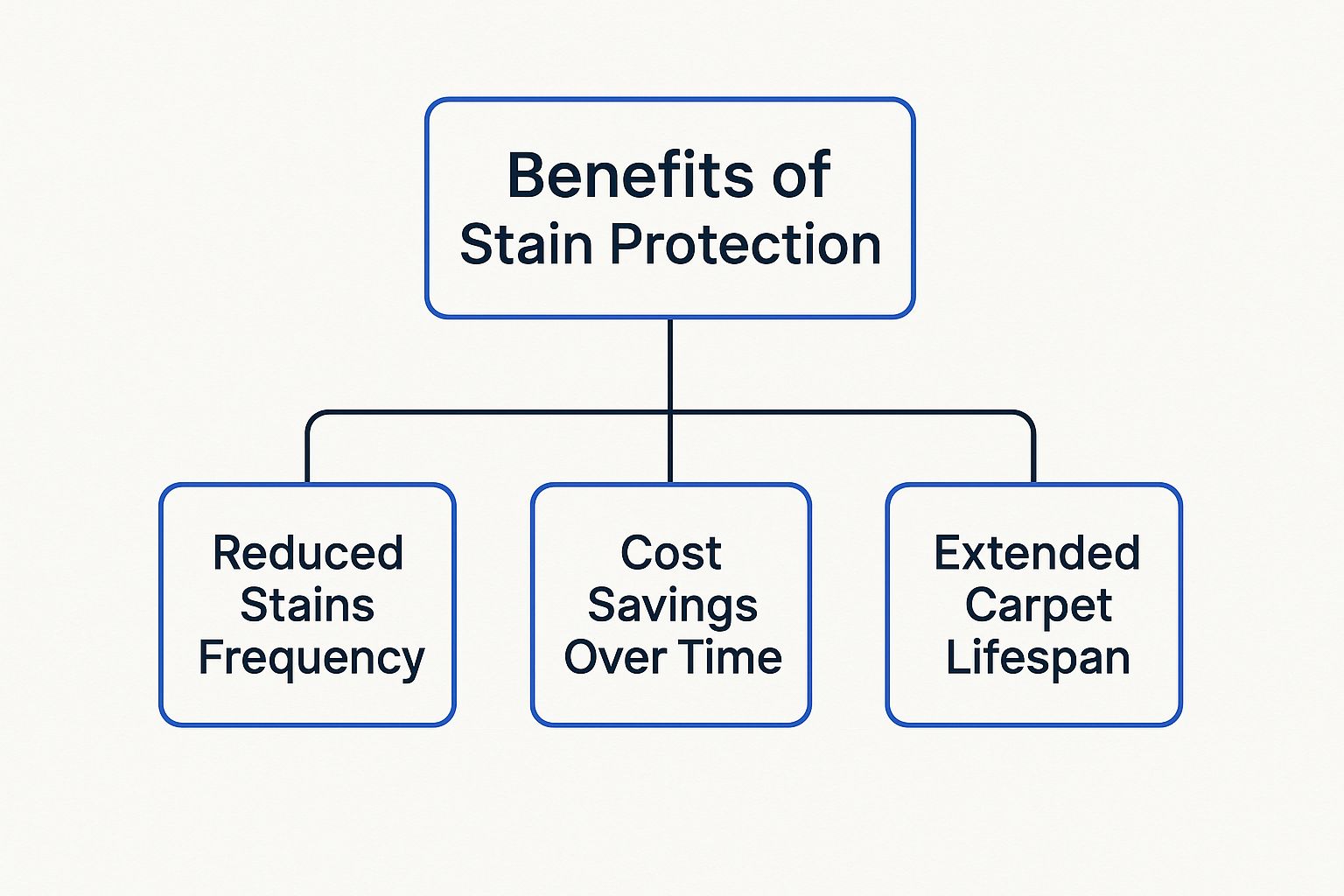
As you can see, solid protection means fewer permanent stains, which directly extends your carpet's life and, of course, saves you money in the long run.
Aftermarket Stain Protectors
Aftermarket solutions are exactly what they sound like: protectors applied after the carpet has been installed in your home. This is what a professional carpet cleaner would use to refresh the protection after a deep clean, or what you might find in a spray can for a DIY job. They’re absolutely vital for older carpets that have lost their original shield or for natural fibre carpets like wool, which don’t usually come with factory protection.
A couple of different technologies are commonly used in these products.
Comparing Carpet Stain Protector Types
To help you understand the options available for aftermarket treatments, we’ve put together a simple table comparing the most common technologies. This should give you a clearer idea of what might be best for your situation.
| Protector Type | Best For | Durability | Key Advantage |
|---|---|---|---|
| Fluoropolymers | Repelling both oil and water-based spills. | Good, but wears down with foot traffic and cleaning. | Creates excellent liquid beading for easy clean-ups. |
| Modern Polymer Blends | A durable, more eco-friendly alternative. | Very high, creates a strong bond with fibres. | Long-lasting protection without using fluorochemicals. |
While DIY options are available, a professional-grade product applied by an expert will almost always give you a better, longer-lasting result.
The market for these solutions is definitely growing. In fact, the global demand for carpet stain repellents is expected to expand at 8.8% annually between 2025 and 2031, mostly because we all need to protect our floors from common household spills. For more on this, you can check out the market analysis on carpet stain repellents from Lucintel.
The most important thing to remember is that even the best factory-applied protection wears down over time, especially in hallways, on stairs, and in other high-traffic areas. Having a professional reapply a high-quality protector after a deep clean is the single best way to bring that essential barrier back to life.
Choosing the right product can feel a bit overwhelming, but our guide on selecting a stain protector for your carpet offers more detailed advice to help you make the best choice. For most homeowners, a professional application is the way to go for even coverage and a high-quality, long-lasting finish.
Professional Treatment vs DIY Application
When it comes to applying stain protection for carpets, you're faced with a classic choice: call in a professional or roll up your sleeves and do it yourself. Each route has its own pros and cons, and the best fit really depends on your budget, the size of your space, and what level of protection you're hoping to achieve.
Think of it like painting a room. You could absolutely do it yourself for a quick refresh, but a professional decorator is almost always going to deliver that flawless, durable finish that lasts.
The professional route is, without a doubt, the gold standard for a deep, long-lasting result. When you hire an expert, you're not just paying for their time. You're investing in their industrial-grade equipment, superior-quality products, and years of hands-on experience. Professionals use commercial-grade protectors that create a powerful bond with carpet fibres, offering a much tougher shield than anything you can buy off the shelf.
They use specialised high-pressure sprayers to make sure every single fibre is coated evenly, right from the base to the very tip. This kind of uniform application is virtually impossible to get right with a handheld spray can, and it’s what prevents patchy, weak spots in the protection. Plus, most reputable companies will offer a service guarantee, which gives you that extra peace of mind.
The DIY Approach
On the flip side, the do-it-yourself (DIY) approach has the clear advantages of being cheaper and more convenient. For a small rug, a known spill zone in the kids' playroom, or just a quick top-up between professional cleans, a store-bought spray can be a perfectly practical and budget-friendly option. It gives you the control to apply protection as and when you need it.
But going it alone isn't without its pitfalls. It’s surprisingly easy to make mistakes that can really compromise the final result.
The biggest risk with a DIY application is getting uneven coverage. If you miss a spot, you’ve created a weak point in the shield. But if you apply too much, you can leave your carpet feeling stiff, sticky, or even make it attract more dirt over time.
How to Apply DIY Carpet Protector Correctly
If you do decide to go the DIY route, taking your time with careful preparation and application is the key to getting the best possible outcome. Don't rush it—a little bit of extra effort here will make a massive difference.
Step-by-Step DIY Application:
- Start with a Clean Slate: You should never apply a protector to a dirty carpet. First, give the area a thorough vacuum to get rid of all loose dirt and grit. If your carpets are a bit older, it's vital to have them professionally deep cleaned first. Our guide on how to prepare for professional carpet cleaning has some great tips.
- Get Some Air Flowing: Open up the windows and doors to make sure the room is well-ventilated. The fumes from some DIY sprays can be quite strong.
- Do a Patch Test: Always, always test the product on a small, hidden spot first. The carpet inside a cupboard or under the sofa is perfect for checking for any discolouration.
- Spray Evenly: Hold the can about 15-30 cm away from the carpet. Use a light, sweeping motion and slightly overlap each pass to get consistent coverage. The goal is to mist, not to soak the carpet.
- Rake It In: Use a carpet rake or a clean, soft-bristled brush to gently work the protector into the fibres. This helps it coat the strands from every angle.
- Let It Cure: Allow the carpet to dry completely, following the manufacturer’s instructions—this usually takes a few hours. Make sure to keep pets and children out of the room until it has fully cured.
While a DIY job can be great for small areas, when you're looking to protect a whole room or a busy high-traffic area, a professional application is still the most reliable way to get a durable, even finish.
Keeping Your Protected Carpet in Top Condition
Getting a stain protector applied to your carpet is a fantastic move, but it's the care you put in afterwards that really makes it last. I like to think of it like a good wax on a car; it provides a brilliant shield, but you still need to wash the car regularly to keep it looking great and doing its job. Without that ongoing maintenance, even the best treatment will wear away far too soon.
The single most important thing you can do to maintain your carpet's shield is to vacuum frequently. It sounds almost too simple, doesn't it? But dry, gritty dirt particles act like tiny pieces of sandpaper. Every time you walk across the carpet, that grit grinds away at the protective coating, creating weak spots where spills can get through. A good, regular vacuum lifts this damaging stuff out before it has a chance to cause any harm.
Your First Response to Spills
When an accident happens—and it always does!—how you react in those first few moments is crucial. The golden rule is to blot, never rub. Rubbing a spill just grinds the liquid deeper into the carpet pile and can do permanent damage to the fibres, leaving you with a fuzzy, worn-out patch.
Instead, stick to this simple process for the best results:
- Act Quickly: The protective barrier gives you a window of time, so make the most of it.
- Blot Gently: Grab a clean, dry, white cloth and press down on the spill. Let the cloth absorb as much of the liquid as possible.
- Work from the Outside In: Start blotting at the edge of the spill and work your way to the centre. This stops it from spreading outwards.
This technique lifts the mess away from the fibres without scrubbing off the protective layer. For more detailed advice, our complete guide to essential carpet cleaning tips will help you tackle any spill with confidence.
Choosing the Right Cleaning Products
Using the wrong cleaner can be a complete disaster for your protected carpet. Harsh chemicals like bleach or ammonia-based products can literally strip the protective treatment right off, leaving your carpet defenceless. Always reach for a pH-neutral or manufacturer-approved spot cleaner that's specifically designed for treated carpets.
Remember, the goal is to clean the spill, not the protector. Aggressive chemicals undo all the hard work, basically washing your investment down the drain. Always test a new product on a hidden spot first, like under a sofa.
To keep your carpet in pristine condition and handle any new spills, it might be worth exploring a new cleaning range designed with gentle fabric care in mind.
Long-Term Protection and Reapplication
Over time, daily life—foot traffic, cleaning, and general wear and tear—will naturally wear down the stain protector. It's just a fact of life. You'll notice that high-traffic areas like hallways, stairs, and the main path through your living room will lose their protection faster than a quiet spare bedroom.
To ensure your carpet has continuous, reliable stain protection for carpets, we recommend booking a professional deep clean and reapplication every 12 to 18 months. This service revitalises that invisible shield across the entire carpet, restoring its power to repel spills and making your own daily cleaning easier and much more effective for the year to come.
Choosing a New Carpet with Built-In Stain Resistance
If you're in the market for a new carpet, the very best time to think about stain protection is right at the beginning, before you buy. Opting for a carpet that already has a high-quality, factory-applied treatment is like giving yourself a massive head start in the battle against spills and stains.
This kind of built-in defence is always going to be more effective than any spray you can apply later. Why? Because the protection is bonded directly to the fibres during manufacturing, creating a durable and perfectly even shield right from day one. It’s a smart investment that will pay off for years in any busy home.
Natural Fibres vs Engineered Synthetics
When you're browsing new carpets, your choice will likely come down to natural materials like wool or modern, engineered synthetics like nylon and polypropylene. Each type brings its own level of stain resistance to the table.
- Wool Carpets: Wool is a bit of a marvel. It has a natural, microscopic membrane on its fibres that helps to repel liquids and dirt. This makes it surprisingly resilient and much easier to clean than many people think, alongside being durable and feeling luxurious underfoot.
- Synthetic Carpets (Nylon/Polypropylene): These materials are truly engineered for high performance. Nylon is incredibly tough and often comes pre-treated with advanced stain-blocking technology. Polypropylene, on the other hand, is naturally stain-resistant and a fantastic choice for areas that might get a bit damp.
You can see these preferences reflected in the UK market. Tufted carpets, which frequently include these protective treatments, were valued at around £468 million in 2023. It’s clear that homeowners value that built-in peace of mind. You can discover more insights about the UK carpet market on gminsights.com.
Identifying Top-Tier Protection
When you're in the showroom, don't just focus on the colour and feel. Be sure to ask the retailer about the specifics of the stain and soil warranties. The top brands often have their own trademarked protection technologies, which is usually a great sign of quality and performance.
A fantastic tip is to look for carpets with "solution-dyed" fibres. Think of it like a carrot versus a radish. With solution-dyeing, the colour goes all the way through the fibre (like a carrot), rather than just sitting on the surface (like a radish's skin). This makes the carpet incredibly resistant to fading and even bleaching from certain cleaning products.
Making the right choice at this stage will simplify your cleaning routine for the entire life of your carpet. Of course, even the best carpets need proper care. If you're keen on sustainable upkeep, our guide to eco-friendly carpet cleaning has some brilliant tips.
Common Questions About Carpet Stain Protection
Even after getting the hang of how stain protection works, it's completely normal to have a few more questions pop up. This is an investment in your home, after all, and you want to be sure you're getting the most out of it. We've put together answers to the most common queries we get from homeowners just like you.
Think of this as dotting the i's and crossing the t's. We'll clear up the practical, day-to-day side of things so you can feel totally confident in your decision.
How Long Does Carpet Stain Protection Last?
The honest answer is that the lifespan of any stain protection for carpets really comes down to your lifestyle. A professionally applied treatment will typically stay effective for about 12 to 18 months. Things like heavy foot traffic, kids, and pets can shorten this window, as the constant friction slowly wears the protective layer away.
Now, the factory-applied protection on a brand-new carpet often lasts much longer, sometimes for the entire length of the manufacturer's stain warranty. But even the best treatments lose their punch over time.
A great rule of thumb is to have the protector professionally reapplied after every deep clean. This simple step gets that invisible shield back to full strength, keeping your carpet safe from spills for the year ahead.
Is Carpet Stain Protector Safe for Pets and Children?
Absolutely. The professional, water-based protectors we use today are rigorously tested and are perfectly safe for homes with both children and pets. Once the product has had a chance to fully dry and cure, it's non-toxic and poses no health risks.
The main thing is to make sure the room is well-ventilated while we're applying it. We also recommend keeping kids and pets off the carpet until it’s completely dry to the touch, which usually only takes a few hours. If you're using a DIY product, always take a moment to read and follow the manufacturer's safety instructions to the letter.
Does Stain Protection Make My Carpet Waterproof?
This is a really common and important misunderstanding. A stain protector makes your carpet stain-resistant, not stain-proof or waterproof. What it does is create a repellent surface that makes liquids bead up instead of soaking straight in.
This "beading" action gives you a crucial window of time to grab a cloth and blot the spill before it has a chance to sink deep into the fibres. But if you leave a big spill sitting there for too long, it will eventually work its way through the barrier. It also won't protect against major water damage from something like a flood or a leaky pipe.
Can I Apply Stain Protection to an Old Carpet?
Yes, and it’s a fantastic way to give an older carpet a new lease on life. Applying a quality protector can bring back some of the resilience it's lost over the years, making it far easier for you to clean and maintain.
There is one crucial catch, though: the carpet must be professionally cleaned before the protector goes on. Trying to apply a treatment over a dirty carpet just seals in all the dirt, grime, and oils, which stops the protector from properly bonding to the fibres. For more advice, you can learn how to remove stubborn carpet stains before a treatment. The best results always come from having a professional deep clean the carpet and then apply the protector right away, while the fibres are perfectly clean and ready to receive it.
Ready to give your carpets the ultimate defence against spills and daily wear? The expert team at AG Carpet Specialists uses professional-grade, eco-friendly protectors to keep your floors looking pristine. Contact us today for a free, no-obligation quote!