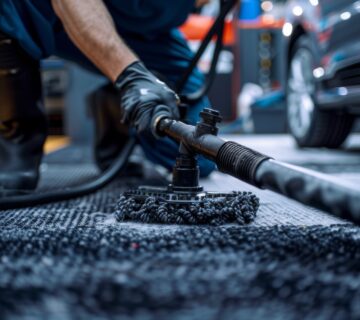
So, how often should you actually get your carpets cleaned? The golden rule you’ll often hear is to book a professional deep clean every 12 to 18 months. But honestly, that’s just a starting point. Your real-world situation—whether you’ve got kids, pets, or both—can change that timeline dramatically.
Establishing Your Carpet Cleaning Baseline
It helps to think of your carpet as a massive fabric filter laid across your floor. It’s brilliant at catching and holding onto dust, dirt, allergens, and just about everything else that gets tracked into your home. While your daily or weekly vacuuming is great for lifting surface-level debris, it can’t reach the deep-down grit that grinds away at your carpet fibres and pollutes your indoor air.
Figuring out a schedule isn't about plucking a number out of thin air; it’s about matching your cleaning efforts to your lifestyle. A quiet, two-person home is going to have completely different needs from a busy family household with a dog and a toddler who loves exploring the floor.
For example, UK statistics show that while a low-traffic home can easily stick to that 12 to 18-month professional cleaning schedule, you need to shorten that gap for busier households. If you have pets or anyone with allergies, you should really aim for a professional clean every 3 to 6 months to keep things healthy and fresh. You can find out more about how foot traffic affects carpet life in this insightful UK-based report.
Key Takeaway: A professional clean isn’t just for looks. It’s essential maintenance that gets rid of what your vacuum leaves behind, protecting your carpet and the quality of the air you breathe.
This image below really drives home how much foot traffic affects dirt build-up and, therefore, how often you need to clean.
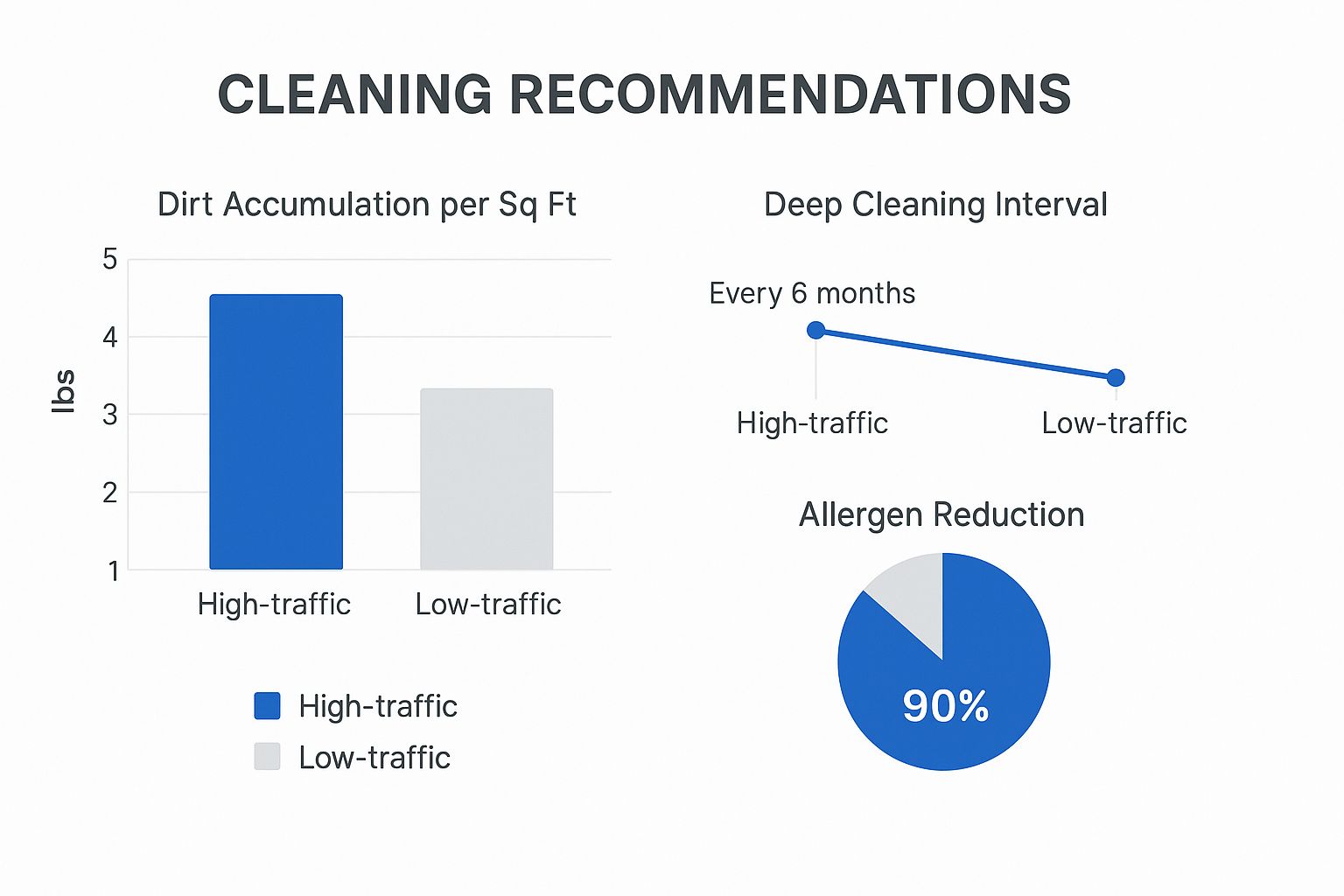
As you can see, carpets in high-traffic areas collect a lot more dirt and need more frequent deep cleaning to keep allergens under control. It’s a perfect visual reminder that a one-size-fits-all approach to carpet care just doesn’t cut it. Once you understand these factors, you can create a cleaning routine that makes sense for your home.
Carpet Cleaning Frequency at a Glance
To make it even simpler, here's a quick reference table to help you pinpoint the right schedule for your home's needs.
| Household Type | Recommended Vacuuming Frequency | Recommended Professional Cleaning |
|---|---|---|
| Low-Traffic Home (e.g., single person, couple, no pets) | 1-2 times per week | Every 12-18 months |
| Average Home (e.g., small family, no pets) | 2-3 times per week | Every 9-12 months |
| Home with Children | 3-5 times per week | Every 6-9 months |
| Home with Pets | Daily in high-use areas | Every 3-6 months |
| Home with Allergies/Asthma | Daily, with a HEPA filter vacuum | Every 2-4 months |
| High-Traffic Commercial Space | Daily | Every 1-3 months |
This table provides a solid foundation, but remember to adjust based on specific circumstances, like recent spills or seasonal changes that bring in more dirt.
What Really Determines Your Cleaning Schedule
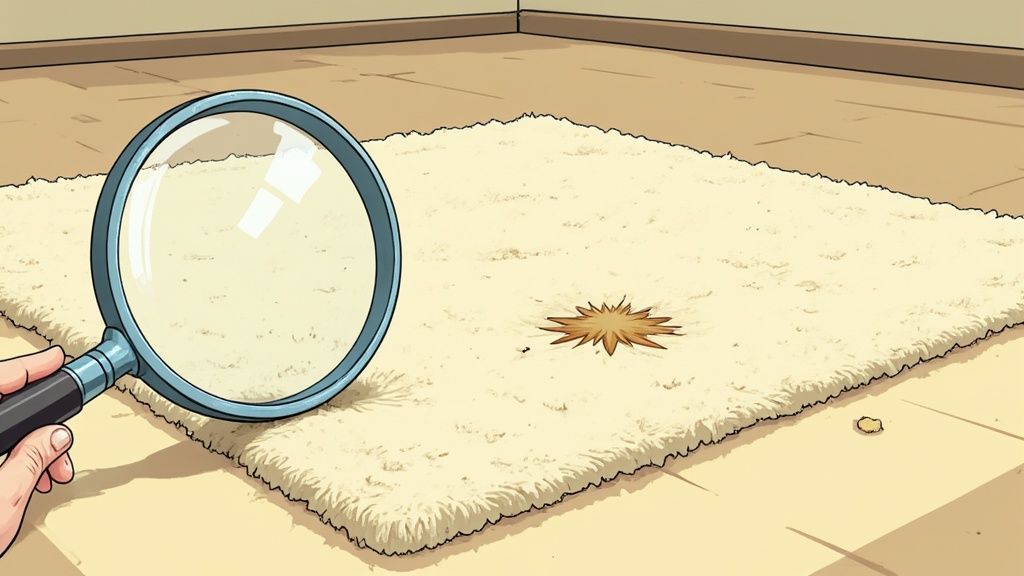
While general guidelines are a great place to start, they are far from the whole story. The truth is, your perfect carpet cleaning frequency is unique to your home and lifestyle. Think of your carpet like a path through a park; a quiet, rarely used path stays green and healthy, but a main walkway quickly shows wear and tear from constant footfall.
The same idea applies directly to your floors. How often you need a professional clean isn't just a date on the calendar; it’s a direct response to what your carpet puts up with every single day. Several key factors can either speed up or slow down the build-up of dirt and allergens deep within the fibres.
The Impact of Foot Traffic
The single biggest factor dictating how often you should clean your carpets is foot traffic. A hallway or living room that sees constant activity will get soiled much, much faster than a spare bedroom where the door stays shut most of the time.
And it’s not just about the dirt you can see. Every step grinds tiny, sharp particles of grit and soil into the carpet fibres. Over time, this acts like sandpaper, physically wearing down the fibres, making them look dull, and ultimately shortening your carpet's lifespan.
A high-traffic area is essentially an active construction site for grime. The more people (and pets) that walk across it, the more rapidly dirt, oils, and outdoor pollutants are ground into the pile, making frequent deep cleaning a necessity, not a luxury.
Material and Colour Considerations
Your carpet’s physical characteristics also play a huge role. The colour and material you choose aren't just for looks; they have a real, practical impact on your cleaning schedule.
- Colour and Pattern: Lighter-coloured carpets will show every speck of dirt and staining far more easily than darker or patterned ones. A single muddy footprint is a disaster on a cream carpet but might go completely unnoticed on a dark grey one.
- Carpet Pile: Low-pile, dense carpets (like Berber) are durable, but dirt can get trapped and become quite visible in their woven loops. On the other hand, plush, high-pile carpets are fantastic at hiding soil at first, but this means dirt can sink much deeper into the fibres, making it a nightmare to remove with just a standard vacuum.
- Fibre Type: Natural fibres like wool are brilliant at hiding dirt but need more specialised care to avoid damage during cleaning. Hardwearing synthetic fibres like nylon can withstand more aggressive and frequent cleaning without a problem.
Understanding these factors helps you move beyond generic advice and create a cleaning plan that actually works for your home. This tailored approach not only keeps your house looking its best but also protects your investment. When you're thinking about professional services, knowing these details can also give you a much better idea of what to expect in terms of cost. For more information, you can explore our guide on how much carpet cleaning costs.
The Pet Owner's Guide to Carpet Care
When you share your home with pets, looking after your carpets becomes a whole new ball game. It’s not just about cleaning up the odd muddy paw print; you’re fighting a constant battle against an invisible army of dander, fur, and oils that bury themselves deep within the carpet fibres. Often, what you can't see is what causes the most trouble.
This is why a standard cleaning schedule just doesn’t cut it. The relentless cycle of shedding and tracking in dirt from outside means you need a more proactive plan to keep your home feeling fresh and hygienic. A pet-friendly home requires a specific strategy to tackle these unique challenges.
The Non-Negotiable Rules of Pet Carpet Care
If you have furry family members, some cleaning tasks are simply non-negotiable for keeping your carpets in good nick. The most critical one? Dealing with any accidents the moment they happen. Urine, vomit, or faeces can set into permanent stains and create lingering odours if left untreated, as their acidic nature can permanently damage carpet dyes.
To stay on top of things, households with pets face higher cleaning demands. A good routine involves vacuuming at least three times a week, using pet-safe deodorisers when needed, and booking in a professional clean much more often—usually every 6 to 12 months. For more details on this, a great resource is the guide at CleanKing.co.uk.
Expert Insight: Think of pet dander and fur like glitter. Once it’s in your home, it gets absolutely everywhere and is surprisingly difficult to get rid of completely. Professional hot water extraction is one of the only methods with enough power to pull those embedded allergens right out from the base of the carpet.
Why Professional Cleaning Is a Pet Owner's Best Friend
While regular vacuuming and spot cleaning are your essential first line of defence, they can only do so much. The oily residue from a pet's coat acts like a magnet for dirt, causing it to stick to carpet fibres and creating that dingy look and "doggy" smell over time. No amount of vacuuming can fix that.
This is where professional cleaning becomes a real investment in your home's health. The deep-set bacteria and stubborn allergens that build up are simply beyond the reach of any domestic machine.
- Odour Removal: Professionals use specialised treatments that neutralise the odour-causing bacteria at its source, rather than just masking the smell.
- Stain Treatment: They have an arsenal of solutions designed to tackle specific biological stains without harming your carpet.
- Health and Hygiene: A proper deep clean removes the dander, pollen, and other allergens your pet brings inside, which can dramatically improve your home’s air quality.
Choosing the right cleaning products is also vital. Always opt for solutions clearly labelled as pet-safe to protect your furry friends from harsh chemicals. For a closer look at this, we have a complete guide on pet-friendly carpet cleaning just for you.
Cleaning for a Healthier Home Environment
It’s all too easy to think of your carpet as just something soft to walk on, but its role in your home is far more significant. Think of it as the largest air filter you own. Day in and day out, it does an incredible job of trapping dust, pollen, pet dander, and other pollutants, pulling them right out of the air you breathe.
But, like any filter, it can only hold so much. Once it’s full, your carpet can’t trap any more irritants. Even worse, simple daily life—walking across the room, kids playing on the floor—can shake these trapped particles loose, releasing them back into your living space. This is why it’s so important to stop seeing carpet cleaning as a chore and start treating it as a vital part of keeping your home healthy.
Your Carpet and Indoor Air Quality
For any household with allergy sufferers, asthma, or young children who spend lots of time close to the floor, a truly clean carpet is non-negotiable. A build-up of unseen allergens can easily trigger symptoms, creating a surprisingly uncomfortable environment for the most sensitive members of your family.
This is where regular, deep cleaning moves beyond just lifting visible stains. The real goal is to extract the microscopic irritants that have settled deep within the pile. A consistent, professional cleaning routine can make a massive difference to your home's air quality.
Your carpet acts like a passive air purifier, trapping airborne particles. Professional cleaning effectively 'empties the filter,' which is vital for maintaining a healthy indoor environment and reducing common allergy triggers like dust mites and pollen.
Here in the UK, how often you should clean is closely tied to whether you have sensitive groups at home. For any house with high foot traffic or allergy sufferers, vacuuming should be done at least twice a week. On top of that, we recommend a professional deep clean every 3 to 6 months to keep things truly hygienic and healthy.
A Health-Focused Cleaning Schedule
Creating a schedule with health as the top priority means being a bit more rigorous and consistent. It’s about tackling what you can't see, not just what you can.
- Frequent Vacuuming with a HEPA Filter: Aim to vacuum at least 3-4 times per week using a machine fitted with a HEPA (High-Efficiency Particulate Air) filter. This is crucial for capturing the tiniest particles instead of just blowing them back into the air.
- Regular Professional Cleaning: If you're dealing with severe allergies or asthma, book a deep clean every 3-4 months. This frequency stops allergens from building up to a point where they affect your health.
- Address Spills Immediately: Don't let spills sit. Damp spots can quickly become breeding grounds for mould and mildew, which are major respiratory irritants for anyone.
By sticking to this kind of approach, you are actively lowering the allergen load in your home. A professional deep clean, using methods like hot water extraction, washes away these hidden irritants far more effectively than any domestic machine. To see exactly how we achieve this, take a look at our guide to the professional carpet cleaning process.
DIY Cleaning vs Professional Services
So, you need to clean your carpets. The big question is, do you hire a machine for a bit of DIY, or do you call in the professionals? It can feel like a tricky choice, but there’s a simple way to look at it: are you looking for maintenance or for restoration?
Each path has its place, but they achieve very different things for your carpet's health and appearance.
DIY methods, like renting a machine from the local supermarket, are absolutely fine for general upkeep. They’re a good choice for freshening up a room before guests arrive, tackling a new spill quickly, or just giving a lightly soiled carpet a lift between professional cleans.
If you fancy giving it a go yourself, our guide on how to deep clean carpets at home has some great tips to help you get the best possible result.
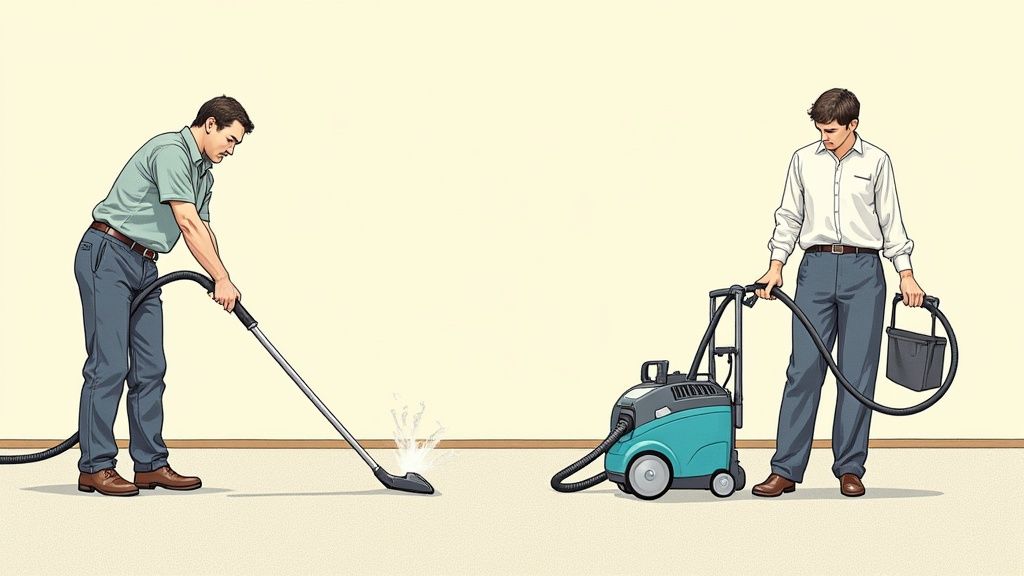
But it’s important to be realistic. These domestic rental machines just don't have the muscle for a genuine, restorative deep clean. Worse, they can sometimes leave behind a sticky soap residue which actually attracts more dirt, or they can soak the carpet so much that you risk damaging the underlay beneath.
When You Really Need Restoration
This is where professional services come in. Think of it not just as cleaning, but as a complete reset for your carpets. We use industrial-grade equipment that you simply cannot rent from a shop.
The difference in raw power is enormous. Professional hot water extraction machines produce far greater heat and suction, which is the key to a true deep clean.
A professional clean is like hitting the factory reset button on your carpet. It doesn’t just skim the surface; it pulls out the deep-seated grit, allergens, and bacteria that DIY methods always leave behind. It’s about restoring your carpet’s health, not just its looks.
This powerful combination flushes out the stubborn, ground-in dirt and eliminates the bacteria and dust mites living deep within the fibres. A professional also brings expertise. We know how to identify your carpet’s material and choose the right specialised solutions to clean it safely and effectively, without any risk of damage.
Ultimately, it’s the only way to achieve a truly hygienic, restorative clean that will genuinely prolong the life of your investment.
DIY vs. Professional Carpet Cleaning: A Comparison
To help you decide which route is right for you, we've put together a simple table comparing the key differences between doing it yourself and calling in an expert.
| Aspect | DIY Carpet Cleaning | Professional Service |
|---|---|---|
| Primary Goal | Good for surface-level maintenance and tackling minor, recent stains. | Best for deep restoration, removing embedded allergens, and tackling set-in stains. |
| Equipment | Lower-power rental machines with limited suction and heat capabilities. | Industrial-grade hot water extraction machines for a much deeper clean. |
| Effectiveness | Can improve appearance but often leaves behind moisture and detergent residue. | Removes deep-down dirt, bacteria, and allergens with powerful suction. |
| Risk Factor | Higher risk of over-wetting the carpet, causing mould or damaging fibres. | Low risk, as trained technicians use correct methods for your specific carpet type. |
| Convenience | Requires you to collect, operate, and return the machine yourself. | A 'done-for-you' service that saves you time and significant physical effort. |
| Cost | Lower initial outlay for machine rental and cleaning solutions. | Higher upfront cost but offers better long-term value and protection for your carpet. |
Looking at the comparison, it’s clear that while DIY has its uses for a quick spruce-up, a professional service offers a completely different level of clean that protects your carpet and your home’s air quality in the long run.
Simple Habits to Keep Carpets Cleaner Longer
Knowing how often to deep clean your carpets is important, but the very best strategy is always prevention. By weaving a few simple habits into your daily life, you can dramatically stretch the time between professional cleans. It’s all about working smarter, not harder, to keep your carpets looking fresh and saving you money in the long run.
The most powerful changes you can make start right at your front door. A staggering 85% of the soil that ends up in your carpets is tracked in from outside on the soles of shoes. This gritty, abrasive dirt is what literally grinds down your carpet fibres over time, making them look dull and tired long before they should.
Build Your First Line of Defence
Putting a couple of straightforward rules in place can make a world of difference. Think of these as your primary defences against premature wear and tear on your investment.
- Embrace a 'No Shoes' Policy: Honestly, this is the single most effective habit you can adopt. It completely stops the main source of damaging, abrasive dirt from ever getting onto your carpets.
- Use Doormats Effectively: Place a good-quality, coarse doormat both outside and inside every entrance to your home. This simple two-mat system is brilliant at capturing the vast majority of dirt before it gets any further.
Think of your doormat as a bouncer for dirt. Its one and only job is to stop unwanted grime from getting past the door, protecting the delicate fibres of your carpet from the daily onslaught of outdoor grit.
Master the Art of Quick Responses
Of course, prevention can’t stop everything, and life means spills are bound to happen. The real key here is to act fast. A spill that’s dealt with immediately is just a minor cleanup, but one that’s left to sit can easily become a permanent stain that needs a professional to sort out.
When a spill happens, always blot it with a clean, white cloth—never rub. Rubbing only forces the liquid deeper into the carpet pile and can fray and damage the fibres themselves. For more detailed instructions, our guide to essential carpet cleaning tips gives you step-by-step advice for handling common household spills like a pro.
Finally, never underestimate the power of your vacuum cleaner. Regular vacuuming isn’t just for surface-level tidiness; it’s about pulling out those tiny, sharp particles of dirt that wear down the fibres. Consistent vacuuming is your most important maintenance tool for preserving your carpet's life and look.
Frequently Asked Questions
Even with a comprehensive guide, it’s natural to have a few more questions rattling around. We’ve pulled together some of the most common queries we hear from our clients to give you clear, practical answers and help you settle on the perfect cleaning routine for your space.
Does My Carpet Material Affect the Cleaning Schedule?
Yes, it makes a huge difference. The type of fibre your carpet is made from is a massive factor in how often—and how—it needs to be cleaned. Natural materials like wool, for instance, are quite delicate. They can be easily damaged by harsh chemicals or overly aggressive cleaning, so they often need a professional touch to keep them in top condition.
On the other hand, synthetic fibres like nylon or polyester are built for durability and usually come with better stain resistance. This toughness means you might be able to go a bit longer between deep cleans, especially in low-traffic areas. The golden rule? Always check the manufacturer's care guide for your specific carpet to make sure you’re not doing more harm than good.
Is It Possible to Damage My Carpet by Over-Cleaning?
Absolutely. It’s surprisingly easy to cause damage by over-cleaning, especially with DIY methods. One of the biggest mistakes we see is using far too much water. This can soak right through to the underlay, creating the ideal damp, dark environment for mould and mildew to thrive. Not only is that a health hazard, but it can completely ruin your carpet from the inside out.
Using harsh or cheap cleaning chemicals too often is another common pitfall. These can strip the protective coatings from synthetic carpets or the natural lanolin oils from wool. Ironically, this leaves the fibres exposed and can actually make them attract dirt even faster.
Sticking to a sensible schedule and bringing in professionals for the heavy-duty deep cleans is always the safest bet. It helps you avoid the gradual damage that comes from cleaning too often or too aggressively, protecting your investment for the long haul.
What Are the Warning Signs My Carpet Needs a Professional Clean?
Sometimes, your carpet will send out its own signals that it’s time for a professional clean, no matter what your schedule says. You just have to know what to look for.
- Lingering Odours: If you can’t shift a persistent smell even with a good vacuum, it's a sure sign that odour-causing bacteria are hiding deep within the pile.
- Allergy Flare-Ups: Noticing a sudden spike in allergies or asthma symptoms? Your carpet is likely overloaded with dust, dander, and other irritants that need to be professionally extracted.
- Dull Traffic Lanes: Take a look at the main walkways in a room. If they look dark, matted, and grubby even right after you've vacuumed, the fibres are clogged with ground-in dirt.
- Reappearing Stains: Have you ever noticed an old stain seeming to come back from the dead? This happens when the original spill wasn't fully removed and has wicked its way back up to the surface.
If you spot any of these tell-tale signs, it's definitely time to call in a professional to get your carpet's health and appearance back on track.
Ready to give your carpets the deep, restorative clean they deserve? The team at AG Carpet Specialists uses state-of-the-art equipment and eco-friendly solutions to safely remove embedded dirt and allergens from your home. Discover the difference professional care can make by visiting us at https://www.agcarpetspecialist.co.uk for a free, no-obligation quote today.