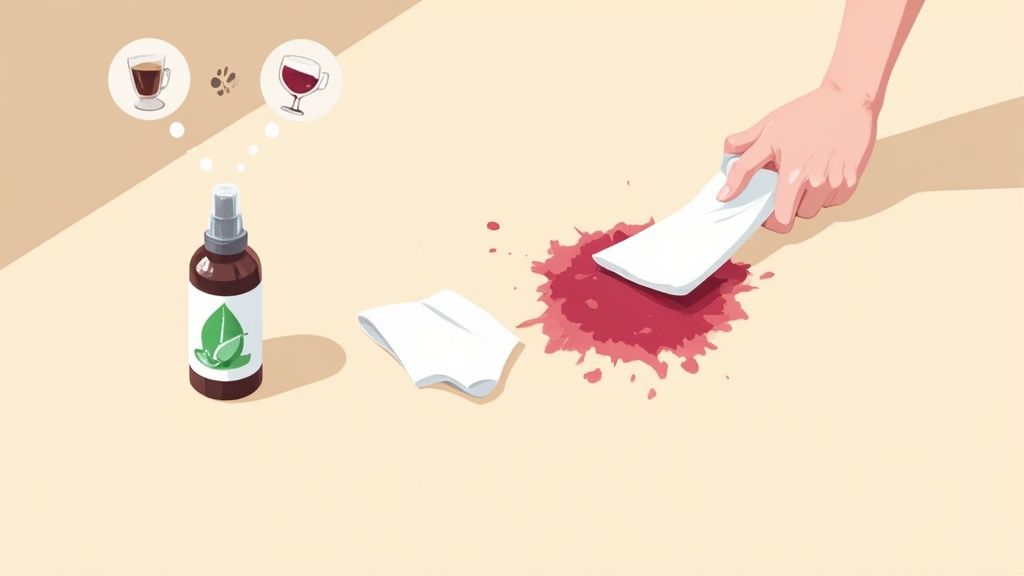
When a spill happens, instinct might tell you to panic and scrub, but that’s the worst thing you can do. The secret to saving your carpet lies in a calm, quick response. Your first move should always be to blot the spill with a clean, white cloth.
Your First Move After a Carpet Spill

We've all had that heart-stopping moment when a glass of wine or a cup of tea goes flying. What you do in those first few seconds makes all the difference between a temporary mishap and a permanent mark on your floor.
The immediate goal is simple: get as much of the liquid out of the carpet fibres as possible before it has a chance to soak through to the backing. Grab a plain white cloth or a thick wad of paper towels and start blotting.
The Golden Rule of Blotting
Here’s a technique we use in the trade that works every time: begin blotting at the outer edge of the spill and work your way in. This method contains the spill, preventing it from spreading and becoming a much bigger headache.
Whatever you do, don't rub. Scrubbing just forces the spill deeper into the pile and can damage the carpet fibres, making the stain look fuzzy and even harder to remove later on.
And stick to a white cloth! I've seen it countless times where someone has grabbed the nearest tea towel, only for the dye from the towel to bleed into the carpet, creating a whole new stain. It’s an easy mistake to avoid.
Professional Tip: A slightly damp cloth can be your best friend. Lightly moisten your white cloth with cold water before you start blotting. This helps dilute the spill a little, making it easier to lift out, particularly with things like fruit juice or red wine.
Quickly Identify the Stain Type
Before reaching for any cleaner, take a second to figure out what you're up against. Knowing the type of stain is half the battle and dictates your entire approach. Most household spills fall into one of three main camps:
- Water-Based Stains: This is your everyday mud, coffee, tea, and most food spills. Generally, these are the most straightforward to tackle, often coming out with just a bit of water and a gentle cleaning solution.
- Oil-Based Stains: Think grease, salad dressing, ink, or makeup. Water won't do much here. You'll need a solvent-based cleaner to effectively break down the oil and lift it from the fibres.
- Tannin-Based Stains: This category includes tricky culprits like red wine, fruit juice, and many fizzy drinks. Tannins are natural dyes that require a specific approach to neutralise their staining power. For one of the most common accidents, our guide on tackling stubborn red wine spills on your carpet offers a detailed, step-by-step solution.
Getting this initial diagnosis right stops you from using the wrong product and accidentally setting the stain permanently. It’s no surprise that in the UK, where we love our carpets, professional cleaning is big business. It accounted for over 72% of the UK's £3.2 billion carpet and upholstery cleaning market in 2022. You can read more about these trends at Grand View Research.
DIY Carpet Cleaning Solutions from Your Cupboard
Before you rush out to buy a specialised cleaner, take a peek in your kitchen cupboard. You might be surprised to find that some of the most effective stain removers are already sitting on your shelves. These everyday staples are not only kind to your wallet and the environment but are also surprisingly powerful against tough stains.
The magic is all down to some basic chemistry. White vinegar, being a mild acid, is fantastic at breaking down alkaline stains like coffee and tea. On the flip side, bicarbonate of soda is a gentle alkali that’s brilliant for soaking up grease and getting rid of nasty odours.
The Go-To Vinegar and Water Spray
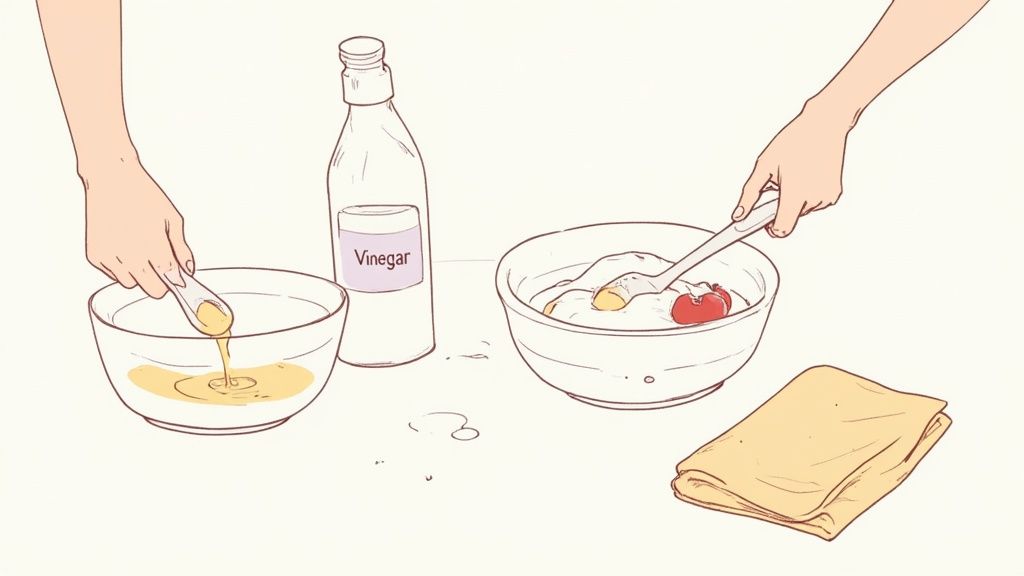
One of the most versatile weapons in any stain-fighting arsenal is a simple mix of equal parts white vinegar and cold water. Pop it in a spray bottle, and you're ready to tackle a whole host of stains, especially those from things like red wine or fruit juice.
Lightly mist the solution over the stained patch – the aim is to dampen it, not soak it. Give it five to ten minutes to get to work, breaking down the stain. After that, grab a clean, white cloth and blot the area gently. Always work from the outside of the stain inwards to stop it from spreading.
The Powerful Bicarbonate of Soda Paste
When you’re faced with a greasy or oily mark—think a stray bit of butter from your toast or a makeup smudge—bicarbonate of soda is your best friend. Its natural absorbency is perfect for pulling that grease right out of the carpet fibres.
Just mix the bicarb with a little water to form a thick paste. Spread this directly over the stain, working it in gently. You’ll need to let it dry completely, which can take a few hours. Once it’s hard and crusty, simply hoover it all up. The stain should lift away with it.
This method does double duty. Bicarbonate of soda is a natural deodoriser, so it not only cleans the stain but also eliminates any lingering smells left behind.
The Gentle Washing-Up Liquid Trick
For many common water-based spills, a mild, clear washing-up liquid solution works wonders. It's crucial to use a liquid without any added colours to avoid accidentally dyeing your carpet!
Add just a couple of drops of washing-up liquid to a bowl of warm water and give it a stir to create some light suds. Dip a clean cloth in, wring it out, and blot the stain. The real secret here is to rinse properly afterwards by dabbing the area with another cloth dampened with plain water. This stops any sticky soap residue from being left behind, which can actually attract more dirt later on.
To help you get started, I’ve put together a quick-reference table for some of the most common household spills.
Your Guide to Homemade Stain Removers
This table is your cheat sheet for mixing and using safe, effective DIY solutions right from your kitchen.
| Stain Type | DIY Solution Recipe | How to Apply It |
|---|---|---|
| Coffee, Tea, or Red Wine | Mix 1 part white vinegar with 1 part cold water in a spray bottle. | Lightly spray the stain, let it sit for 5-10 minutes, then blot with a clean, white cloth from the outside in. |
| Grease or Oil Spills | Create a thick paste using bicarbonate of soda and a small amount of water. | Apply the paste to the stain, allow it to dry completely, then vacuum up the residue. |
| General Grime & Food Stains | Add 2-3 drops of clear washing-up liquid to a small bowl of warm water. | Dip a cloth in the soapy water, blot the stain, then "rinse" by blotting with a separate cloth dampened with plain water. |
These simple recipes can handle a surprising number of everyday accidents, saving you time and money.
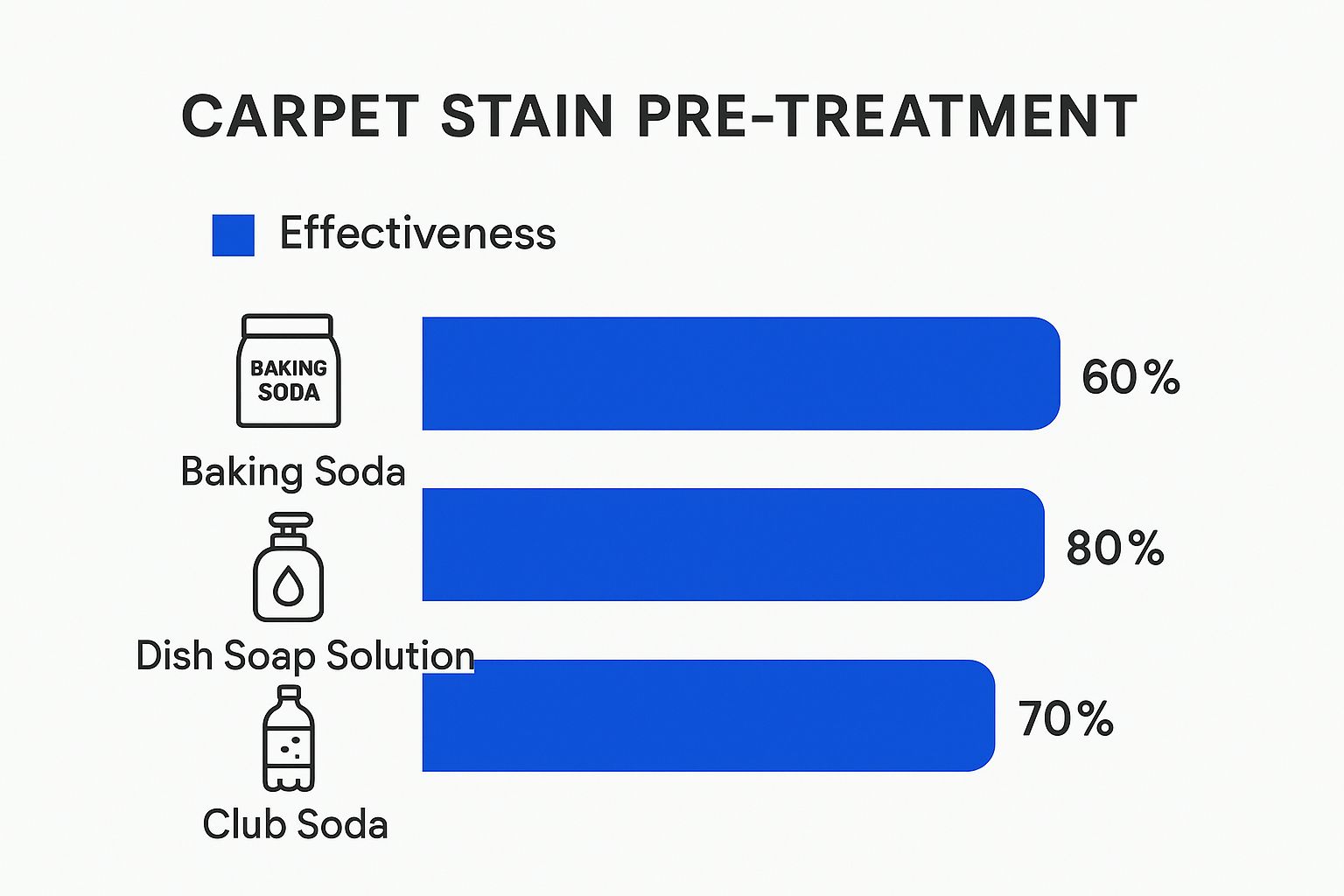
As you can see, you don't always need harsh chemicals. A basic washing-up liquid solution is often the best first port of call for many spills. If you’re keen to learn more, our guide to making your own natural carpet cleaner has even more recipes and professional tips to keep your carpets looking their best.
A Practical Guide to Removing Tough Stains
While the eco-friendly solutions we've covered are brilliant for everyday spills, some stains are in a different league. These are the ones that make your heart sink – a glass of red wine on the cream rug, your morning coffee going flying, or the tell-tale sign of a pet accident.
Don't panic. Even these nightmare scenarios are usually manageable if you know the right approach. Let's get into the specifics for tackling the stains we all dread, because each one has a unique makeup and, therefore, a unique weakness.
Tackling Red Wine Stains Head-On
That splash of red wine feels like a disaster, but quick thinking can completely turn it around. The moment it happens, blot as much of it up as you can with a dry, clean cloth. Immediately after, pour a generous amount of ordinary table salt directly onto the stain, covering it completely.
You’ll see the salt start to draw the wine out of the fibres, turning a satisfying shade of pink. Leave it to work its magic for a few hours, or even overnight if possible. Once it's completely dry, just vacuum it all up. Any faint discolouration left behind can usually be treated with a bit of the vinegar and water solution we discussed earlier.
The Coffee Conundrum
A coffee spill can leave a particularly nasty-looking brown mark. Because coffee contains tannins, the trick is to act fast and, crucially, avoid heat. Hot water will set the stain, almost like a dye, making it nearly impossible to remove.
Always start by blotting with a cloth dampened with cold water. Then, mix a few drops of clear washing-up liquid and a tablespoon of white vinegar into about half a litre of cool water. Dab this solution onto the stain sparingly – don't soak it. Alternate between dabbing with the solution and blotting with a fresh, dry cloth until the stain lifts.
Expert Insight: The single biggest mistake I see people make with dark stains like coffee or wine is flooding the area with cleaner. This just pushes the stain deeper into the carpet backing and makes it spread. A gentle, patient approach is always better.
Neutralising Pet Urine Stains and Odours
With pet urine, you’re fighting two battles: the stain and the smell. If you don't completely eliminate the odour-causing bacteria, your pet will almost certainly treat that spot as their designated toilet.
First, blot up as much of the urine as you can. Clean the area with a vinegar and water mix to help break down the ammonia. But here's the non-negotiable part: once it's dry, you have to use a proper enzymatic cleaner. These products are specifically designed with enzymes that consume the uric acid crystals left behind, which are the source of that lingering smell. Nothing else really works.
Defeating Stubborn Ink Marks
A burst pen looks catastrophic, but it doesn't have to be a permanent feature. The secret weapon here is rubbing alcohol (isopropyl alcohol), which is fantastic at dissolving ink. The key is control – you have to lift the ink, not spread it.
Never pour the alcohol directly onto the carpet. Instead, dampen a clean white cloth with it and carefully dab the ink stain. Don't scrub. You should see the ink transferring to your cloth. As it does, keep moving to a clean section of the cloth so you aren’t just putting the ink back down. It's a methodical process, but it works.
For other tricky substances that don’t respond to these methods, you often need a very specific technique. A great example is wax; you can find detailed advice on how to remove candle wax from carpet. Likewise, for sticky, greasy messes, our own guide explains https://www.agcarpetspecialist.co.uk/2025/08/17/how-to-remove-tar-from-carpet/ using professional tips.
Why Your Carpet Type Dictates Your Cleaning Method
Grabbing the first cleaner you see at the supermarket might seem like a quick fix, but I've seen firsthand how that can go wrong. Using the wrong product on the wrong carpet is a recipe for disaster. What works wonders on a tough synthetic carpet could permanently ruin a delicate natural one.
Honestly, understanding what your carpet is made of is the single most important step in getting a stain out successfully.
Think of it like doing the laundry; you wouldn't bung a wool jumper in on a hot wash with harsh detergents. Your carpet is no different. Every fibre type, from hardy nylon to luxurious wool, has its own unique personality and, crucially, its own weaknesses.
Synthetic vs Natural Fibres: A Tale of Two Carpets
Most modern carpets fall into two main camps, and their reactions to cleaning products are worlds apart. It's a classic case of knowing what you're dealing with.
-
Synthetic Fibres: These are your workhorses – materials like nylon, polyester, and polypropylene. They're built for durability and are pretty good at shrugging off stains. While they can handle a wider range of cleaners, they aren't indestructible. For example, too much heat from a powerful steam cleaner can actually cause some synthetic fibres to melt or lose their shape.
-
Natural Fibres: This is where things get more delicate. Materials like wool, sisal, and cotton look and feel fantastic but they demand a bit more respect. Wool is a prime example; it's highly absorbent, which means it's prone to shrinking or discolouring if you hit it with harsh, alkaline cleaners like ammonia. And bleach-based products? An absolute no-go. They'll strip the colour and destroy the fibres for good.
I can't tell you how many times I've been called out to a job where someone has tried to tackle a stain on a beautiful wool or sisal carpet with an aggressive, off-the-shelf spot cleaner. The result is often a bleached-out patch that’s far more noticeable than the original stain ever was. It turns a simple cleaning task into an expensive replacement job.
The demand for people who know what they're doing has exploded. In the UK, the cleaning industry contributed a massive £59.8 billion to the economy back in 2021, and by 2023, the number of cleaning businesses shot up to over 75,000. It just goes to show how much homeowners value professional care to protect their investments. You can find more on the industry's growth over at Policybee.
How to Identify Your Carpet Type
If you’ve lost the paperwork for your carpet, don't panic. There's a simple trick we use in the trade. Carefully snip a few spare fibres from a hidden spot, like inside a cupboard or under a sofa.
Holding the fibres with tweezers (safety first!), bring them near a small flame. Synthetic fibres tend to melt and form a hard, plastic-like bead. Natural fibres like wool, on the other hand, will char and give off a distinct smell of burning hair.
Knowing your carpet type is half the battle. It lets you pick the safest, most effective cleaning method every single time, saving you from making a costly mistake. For particularly tricky natural materials, it's always best to follow specialist advice, like our dedicated guide on how to clean sisal carpets. This knowledge gives you the confidence to treat stains properly without risking the life of your flooring.
Knowing When a Stain Needs Professional Help
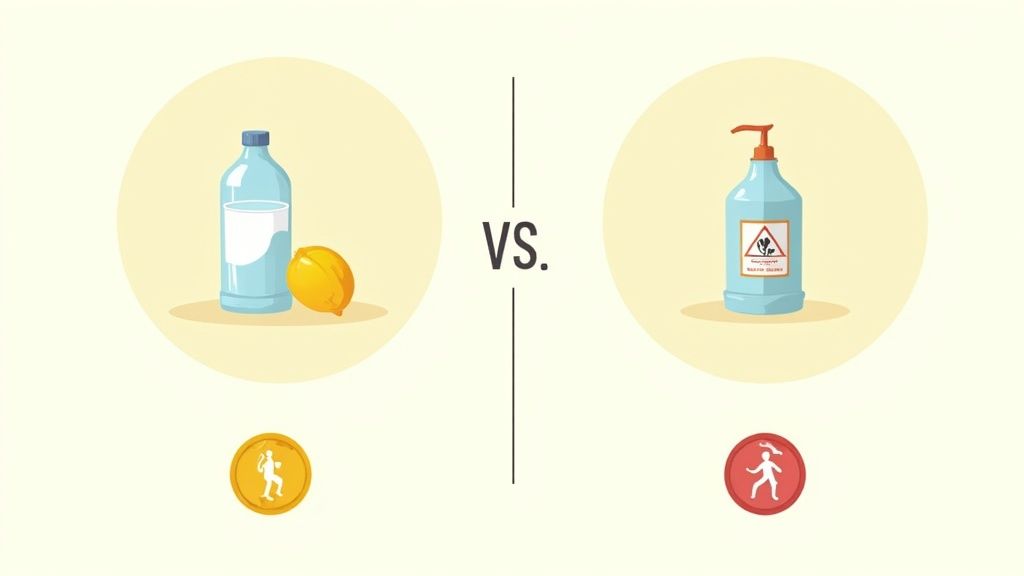
While the DIY methods we've covered can work wonders, there comes a point where even the most determined effort just isn't enough. Knowing when to put down the spray bottle and pick up the phone isn’t admitting defeat; it’s a smart move to save your carpet from permanent damage.
Sometimes, a stain simply won't budge. You've tried gentle cleaning, you've been patient, but the stain is stubbornly clinging to the fibres. This is a clear sign that it has bonded too deeply for household products to tackle. If you keep going, you risk over-wetting the carpet, fraying the fibres, or even stripping the colour right out.
Red Flags That Signal It's Time for a Pro
Certain situations are almost always best left to the experts. Trying to handle these yourself can quickly turn a manageable problem into a costly disaster. Keep an eye out for these warning signs:
- Large-Scale Water Damage: Any significant leak or flood needs immediate professional attention. The risk of mould and mildew growing in the carpet backing is extremely high, and that's a health risk only industrial-grade drying equipment can prevent.
- Stains on Delicate Materials: If your carpet is made from silk, viscose, or even 100% wool, its fibres are incredibly sensitive. Using a cleaner with the wrong pH can cause irreversible damage in minutes.
- Unknown or Set-In Stains: Found a mysterious old stain during a spring clean? These are notoriously difficult because you don’t know what you're dealing with, and the stain has had plenty of time to set deep into the pile.
Expert Takeaway: A professional cleaner doesn't just bring a bigger machine; they bring years of experience. We can identify the likely source of a stain and the carpet's material on sight, allowing us to choose the precise chemical treatment needed to break it down safely and effectively.
The Professional Advantage
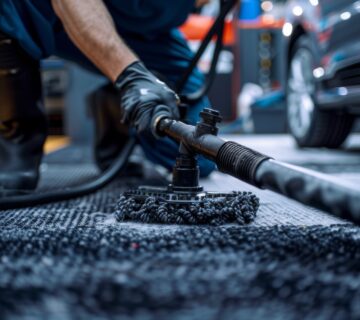
A professional’s primary tool is a hot water extraction machine, which is leagues more powerful than any rental unit you can get your hands on. It injects a cleaning solution deep into the pile and immediately extracts the dirt, chemicals, and water, pulling out deep-down grit and allergens that household vacuums leave behind.
Beyond the machinery, we have access to a whole arsenal of specialised treatments for persistent issues like pet odours or smoke damage. The UK carpet cleaning industry is always evolving, with a strong shift towards eco-friendly and highly specific treatments. In fact, the growth in the carpet cleaning service market is projected to continue, driven by people wanting effective, health-conscious solutions.
Ultimately, calling in a professional is about getting a guaranteed result while protecting your investment. To get a better idea of what we do on a job, you can explore the typical professional carpet cleaning process in our detailed guide.
Your Carpet Stain Questions Answered
Even with the best advice, some spills can leave you stumped. When you're staring down a particularly stubborn mark, it’s natural to have questions. Getting the right answers can be the difference between a successful clean-up and a permanent disaster.
One of the first things people ask about is heat. It feels like hot water should dissolve just about anything, right? But when it comes to carpets, that instinct can backfire spectacularly, literally cooking a stain right into the fibres.
Can I Use a Steam Cleaner on Any Carpet Stain?
This is a big one, and the short answer is a definite no.
Steam cleaners are fantastic tools for a general, sanitising deep clean. However, that intense heat is the absolute enemy of protein-based stains. For spills like milk, egg, blood, or anything else from an animal or person, steam will cook the proteins and bond them permanently to the carpet fibres. You'll never get that out.
Heat also spells trouble for natural fibres. If you've got a wool carpet, a blast of hot steam can easily cause it to shrink or warp. Before you even think about plugging in the steamer, you need to know what you're dealing with—both the stain and the carpet material. For any protein-based mess, cold water is your only safe bet.
Expert Tip: The single worst thing you can do to a fresh spill is scrub it. All that frantic rubbing just damages the carpet fibres, leaving a fuzzy, worn-out patch. Even worse, it forces the stain deeper into the carpet and its backing, turning a small problem into a major one. Always, always blot gently, working from the outside of the stain inwards.
How Can I Prevent Carpet Stains in the First Place?
A bit of prevention goes a very long way. It's so much easier to stop a stain from happening than it is to remove one later. You don’t have to live in a show home, just be a little strategic.
A great place to start is by applying a good quality fabric protector spray after a professional clean. This creates an invisible shield that makes liquids bead up on the surface, giving you vital seconds to grab a cloth and blot it away before it soaks in.
A few other simple habits can make a massive difference:
- Implement a "no shoes" rule: This is the easiest way to drastically reduce the amount of dirt, oil, and grime being tracked onto your carpets.
- Use area rugs strategically: Place them in high-traffic areas like hallways, living room centres, and under the dining table to catch the inevitable spills and wear.
- Act fast: The longer a spill sits, the harder it is to remove. Tackling it the moment it happens is your best defence.
If you're renting, keeping your carpets pristine is even more crucial. Understanding what your landlord can and can't charge you for is key. Knowing about potential landlord deductions from security deposits is a strong motivator for keeping the floors in top condition to ensure you get your full deposit back.
If you're dealing with a stain that refuses to budge, or you just want to give your carpets a professional refresh, we're here to help. AG Carpet Specialists provides expert, eco-friendly cleaning services to bring your carpets back to life. Get in touch today for a free quotation at https://www.agcarpetspecialist.co.uk.