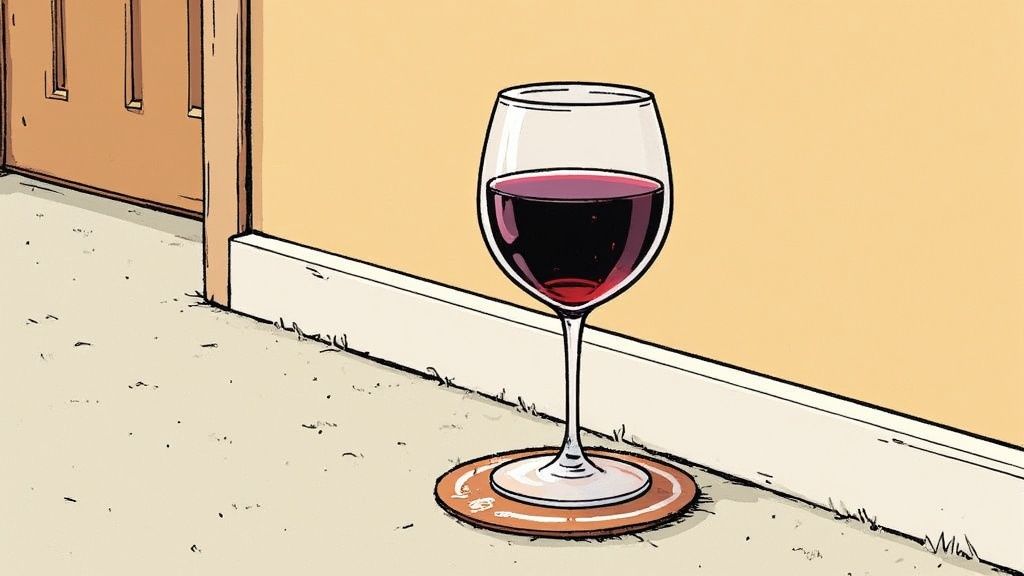
We’ve all been there. That heart-stopping, slow-motion moment when a glass of red wine tumbles, sending a splash of crimson across your beautiful light-coloured carpet. It feels like a disaster, but it doesn’t have to end in a permanent stain.
What you do in the next few minutes is absolutely critical. The proven formula is simple: blot immediately, apply a simple solution like salt or club soda, and then prepare for a proper clean. Following this emergency plan can make all the difference, turning a potential catastrophe into a manageable clean-up job.
Your Emergency Response Plan for Red Wine Spills
When it comes to red wine, speed is everything. That rich colour comes from compounds called tannins, and they act like a natural dye, desperately wanting to bond with your carpet fibres. The longer that wine sits, the deeper it soaks in and the stronger its grip becomes.
Your goal in those first few moments isn’t to fully remove the stain. It’s all about damage control—containing the spill and stopping it from setting.
Professionals across the UK will tell you that red wine is consistently one of the trickiest stains they face. It's all down to those aggressive tannins. Experts agree that your immediate actions are the most important part of the entire process. Quick blotting and using cold or carbonated water can start breaking down the stain before it has a chance to become a permanent feature.
The Golden Rule: Blot, Never Rub
Your first instinct might be to grab a cloth and scrub frantically. Please don't. This is the single worst thing you can do.
Rubbing grinds the wine deeper into the carpet pile and pushes it outwards, making the stain bigger and much harder to remove.
Instead, you need to blot. Grab a clean, dry, white cloth (a coloured one could transfer its dye!) and gently press down on the spill. You'll see the wine being absorbed into the cloth. Lift it, find a clean spot on the cloth, and press down again. Keep doing this until you're no longer lifting any more red wine. This simple step removes all the excess liquid before it can cause real trouble.
First Aid From Your Kitchen Cupboard
Once you’ve blotted up as much of the spill as you can, head to the kitchen. You don't need fancy chemicals at this stage; a few common household items can work wonders in preventing the stain from setting.
- Salt: Don't be shy with this one. Cover the entire stain generously with standard table salt. The salt will immediately start to pull the remaining wine out of the carpet fibres through osmosis. You’ll literally see the salt turn pink as it works its magic. Leave it for a few hours, or even overnight, then vacuum it all up.
- Club Soda: The bubbles in club soda are great for lifting stains. Pour a small amount directly onto the area and continue to blot gently with your clean cloth. That fizzing action helps to break down the wine pigments and bring them to the surface.
Just remember, these initial steps are your first line of defence. They are designed to stop the stain in its tracks, which makes the full cleaning process that follows much, much easier.
This visual guide breaks down what to do in the critical first 20 minutes, showing how quick thinking can prevent a permanent mark.
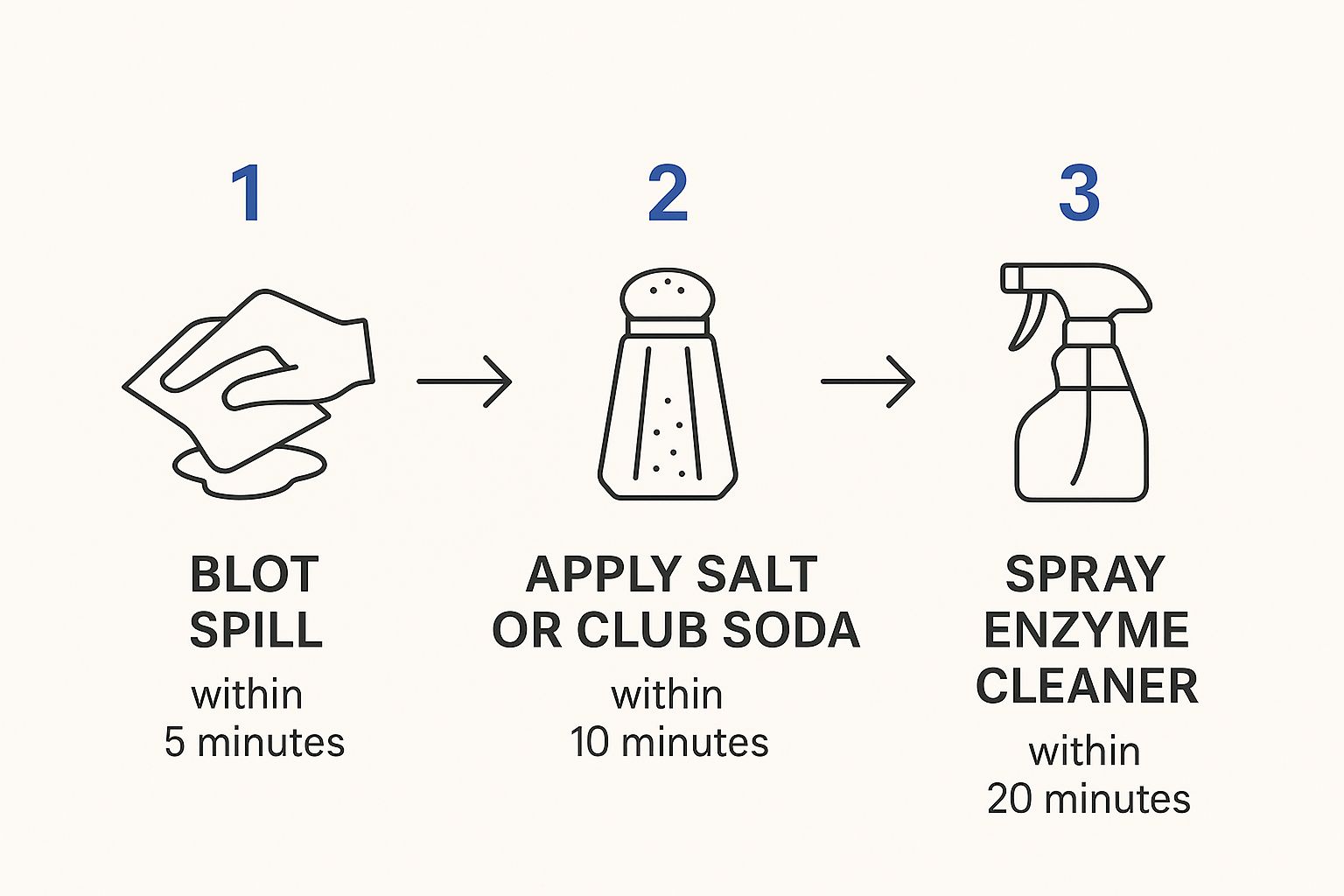
When a spill happens, every second counts. This quick checklist summarises the essential first steps to take within minutes to stop that stain from setting.
Immediate Response Checklist for Red Wine Spills
| Action | Why It Works | What to Avoid |
|---|---|---|
| Blot Gently | Absorbs excess wine without spreading it deeper into the carpet fibres. | Scrubbing or rubbing, which grinds the stain in and makes it larger. |
| Apply Cold Water | Helps to dilute the remaining wine, making it easier to blot away. | Hot water, which can actually set the stain, making it permanent. |
| Use Salt or Soda | Salt draws moisture out, while club soda's carbonation lifts the stain. | Coloured cloths or sponges, as they can transfer dye to your carpet. |
Acting fast with these simple steps significantly increases your chances of complete stain removal.
Once you’ve dealt with the immediate spill and removed as much of the wine as possible, it's crucial to make sure the area dries properly to avoid any mildew issues. For more detailed advice, have a look at our guide on the best way to dry carpet after cleaning.
DIY Cleaning Solutions You Already Own
Once you’ve blotted up the worst of the spill, it’s time to tackle what’s left. The good news is, you probably don’t need to rush out and buy a specialist stain remover. Your kitchen cupboards are likely home to a few simple, but surprisingly effective, ingredients that can lift a red wine stain before it has a chance to set.
These everyday items work by chemically breaking down or absorbing the pigments in the wine. The trick is knowing which one to reach for and how to use it properly, so you don't end up making the problem worse for your poor carpet fibres.
The Old-School Salt Trick
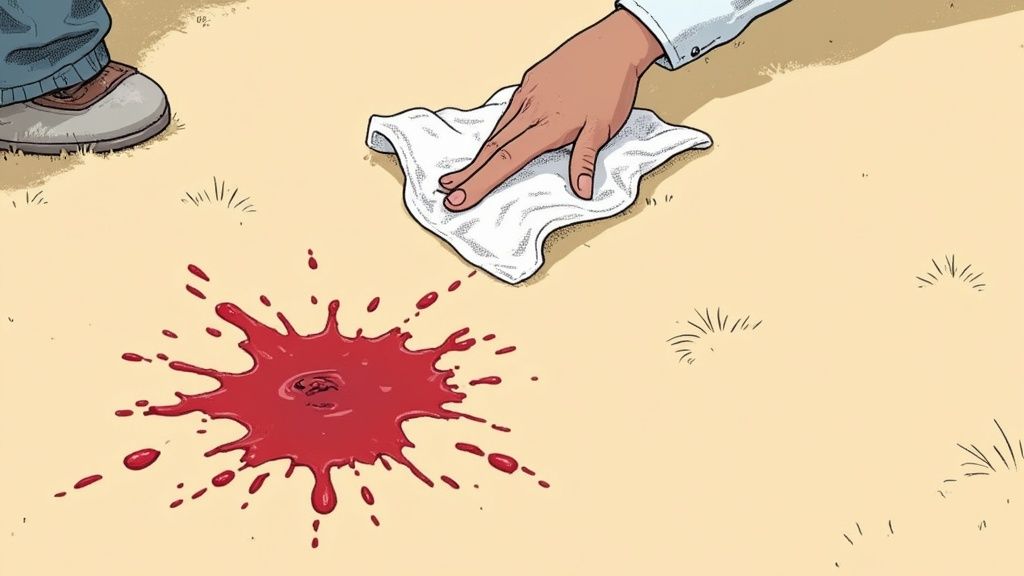
We already mentioned salt as a first-aid measure, but it's more than just a quick fix. After you've blotted a fresh spill as much as possible, covering it with a generous pile of table salt is one of the oldest and most reliable methods out there.
It works through a process called osmosis. The salt crystals are incredibly absorbent, actively drawing the liquid wine out of the carpet fibres. You'll literally see the salt turn pink as it works its magic. The key here is patience – let the salt sit for a few hours, or even overnight for a really bad spill. Once it's had time to work, just vacuum it all up.
This method is particularly safe for most carpet types, including natural fibres like wool, because it's a dry, non-abrasive process that doesn't involve harsh chemicals or excessive moisture.
A Fizzing Stain Lifter: Vinegar and Bicarb
For a more active approach, the classic combination of white vinegar and bicarbonate of soda creates a chemical reaction that can lift a stain right out of the pile. This duo is a staple for a reason; the acidic vinegar helps break down the wine's pigments, while the alkaline bicarb fizzes up to push the stain to the surface.
Here’s how to put this team to work:
- Make a vinegar solution: Mix one part white vinegar with two parts water. Lightly dampen the stain with this mixture, using a clean, white cloth.
- Add the bicarb: Sprinkle a small amount of bicarbonate of soda directly over the damp area. You should see it start to fizz gently.
- Let it dry: Leave the paste to do its thing for at least 30 minutes, or until it has completely dried into a crust.
- Vacuum it up: Once it's dry, vacuum up the residue. You should notice a huge improvement.
This method works best on synthetic carpets like nylon or polypropylene. If you have a wool carpet, be very careful, as the acidity in vinegar can damage the natural fibres. Always test it on a hidden spot first! For more green cleaning ideas, our guide on creating a https://www.agcarpetspecialist.co.uk/2025/06/30/natural-carpet-cleaner/ has some great home-based solutions.
The Gentle Power of Club Soda
If you’re wary of using anything too acidic or abrasive, club soda is a wonderfully gentle but surprisingly effective alternative. Its cleaning power comes from carbonation. The tiny bubbles of carbon dioxide get into the carpet fibres, helping to break apart the wine particles and lift them to the surface.
This makes the stain much easier to blot away. Just pour a small amount of club soda directly onto what's left of the stain and keep blotting with a fresh, clean cloth. Repeat this until your cloth comes away clean. Because it’s essentially just fizzy water, it's one of the safest options for all carpet types, including delicate wool or silk rugs.
When you're choosing or mixing any cleaning solution, it's vital to think about safety, especially if you have pets. There are many great commercial pet-safe cleaning products available that can help you keep your home healthy for everyone, including your furry friends.
How to Tackle Old and Dried Red Wine Stains
Finding a red wine stain that’s had hours, or even days, to set can feel like game over. Fresh spills are one thing, but a dried-in stain has had plenty of time for its tannins to really bond with your carpet fibres. While it's certainly a tougher challenge, don't throw in the towel just yet. With the right strategy and a bit more patience, even an old red wine stain can be beaten.
The main difference with a dried stain is that you can’t just blot it up anymore. The wine has been fully absorbed and dried out, leaving a stiff, discoloured patch. Your first job is to carefully rehydrate the stain to make it workable again. This isn't a step you can skip; trying to treat a completely dry stain is a non-starter.
Reviving the Stain Safely
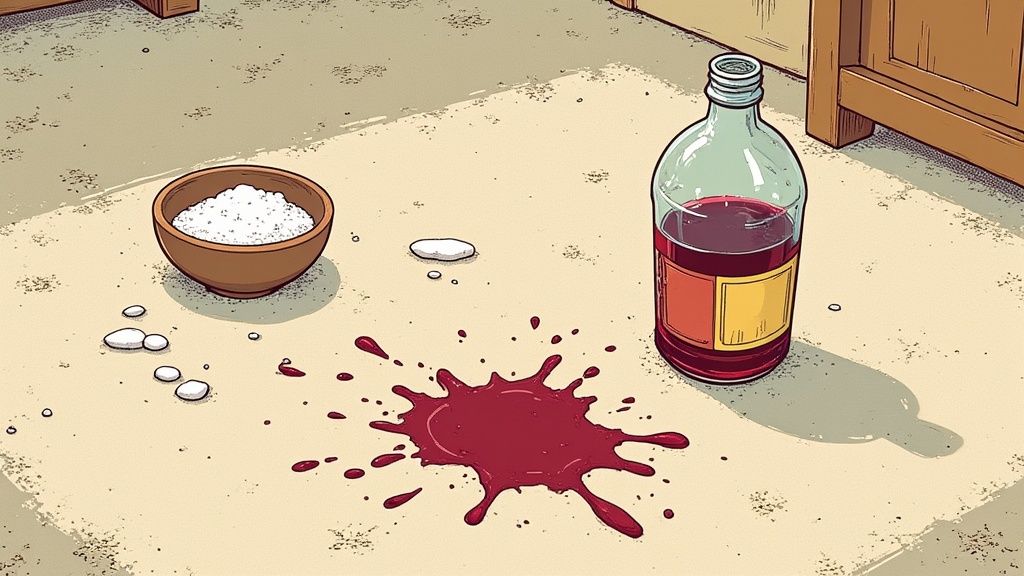
To get started, you need to gently reintroduce some moisture. Whatever you do, don't pour water directly onto the stain. That’s a fast track to spreading the remaining pigment deeper into the carpet backing, which only makes the problem bigger.
Instead, grab a spray bottle filled with cool water and lightly mist the affected area. Let the water sit for around 20-30 minutes to soften the dried wine, then gently blot it with a clean, white cloth. You might be surprised to see some of the colour lifting already. This simple process gets the fibres ready for a more powerful cleaning solution.
A Powerful Combination for Stubborn Stains
Once the stain feels damp again, it's time to bring out a more intensive DIY solution. One of the most effective concoctions for old red wine spills is a mix of hydrogen peroxide and a clear, pH-neutral washing-up liquid. Hydrogen peroxide is an oxidising agent, meaning it chemically breaks down the colour molecules in the wine, effectively making them disappear.
Crucial Safety Note: Hydrogen peroxide can act like a bleach. It is essential to test this solution on a hidden patch of your carpet first—think inside a wardrobe or under the sofa—to make sure it doesn't strip the colour. It's generally safest on light-coloured or white synthetic carpets.
To make the cleaner, mix two parts 3% hydrogen peroxide with one part clear washing-up liquid. Apply it carefully to the stain, working from the outside edge inwards to stop it from spreading. Let it sit for a few minutes, then gently blot with a fresh, damp cloth. Repeat this until the stain fades, then "rinse" by blotting with a cloth dampened with only cold water.
Choosing a Commercial Carpet Stain Remover
Sometimes, a DIY approach just won't cut it for a really stubborn, set-in stain. This is where professional-grade commercial removers come in. Luckily, our love of a good red has driven innovation in cleaning technology here in the UK, so there are some incredibly effective products out there designed for exactly these kinds of accidents.
When you're shopping for a product, look for these key features:
- Enzyme-Based Cleaners: These are fantastic for organic stains like wine because the enzymes literally digest the proteins and pigments.
- Oxygenated Formulas: Often called "Oxy" cleaners, these use oxygen to lift and break down colour without relying on harsh bleach.
- Wool-Safe Approval: If you have a wool or natural fibre carpet, this is a must-have. Make sure the product is certified as safe for it.
Always follow the manufacturer's instructions to the letter and, just like any other cleaning solution, always do a spot test first!
When Steam Cleaning Is the Answer
If you've rehydrated, treated, and blotted, but that faint stain is still clinging on, it might be time to think about steam cleaning. A good quality home steam cleaner or a rented machine can be very effective. The combination of heat and a cleaning solution can often break down the last of the wine pigments bonded deep in the carpet pile.
A word of caution, though. Too much heat can sometimes set a stain for good, so this should really be your last resort before calling in the professionals. Use the machine's upholstery attachment for more control and try not to oversaturate the area. Afterwards, make sure the room is well-ventilated to help the carpet dry completely. For more detailed advice, have a look at our guide on how to remove stubborn carpet stains.
Tackling an old stain takes persistence, but by systematically rehydrating, treating, and cleaning the spot, you can often bring your carpet back from the brink.
Choosing the Right Method for Your Carpet Type
Not all carpets are created equal, and this becomes painfully obvious the moment a glass of red wine takes a tumble. A cleaning method that works wonders on a tough synthetic carpet could be a complete disaster for a natural wool one. Before you do anything else, figuring out what your carpet is made of is the single most important step.
Applying the wrong product isn't just about the stain not coming out. You could cause irreversible damage like distorting the fibres, stripping the colour, or even leaving a chemical burn. So, before you reach for any cleaner—homemade or from a shop—take a moment to identify your carpet’s material. This knowledge is your best defence against turning a small spill into a massive headache.
Identifying Your Carpet Material
Most modern UK homes feature carpets made from one of a few common materials. If you don't have the paperwork from when it was fitted, you can usually get a good idea just by the look and feel.
- Wool: Feels soft, luxurious, and has a natural spring to it. It’s a durable natural fibre but is incredibly sensitive to harsh chemicals and high heat.
- Polypropylene (Olefin): Often used in high-traffic areas, it can feel a bit waxy or coarse. It’s brilliant at resisting water-based spills but can be permanently stained by oily substances.
- Nylon: Very resilient and durable with a soft feel. It holds its shape well, making it a popular choice for busy hallways and living rooms.
- Polyester: Known for its vibrant colours and plush, soft texture. It's naturally good with stains but can be prone to flattening down over time.
Once you have a good idea of your carpet type, you can choose a smart approach to tackling that red wine spill.
Red Wine Stain Removal Based on Carpet Fiber
Here’s a quick look at how to handle red wine stains on different carpet materials, highlighting what works and, just as importantly, what to avoid.
| Carpet Fiber | Recommended DIY Method | Products to Avoid |
|---|---|---|
| Wool | Blot, then use the salt method or a pH-neutral, wool-safe spot cleaner. Use cold water only. | Ammonia, bleach, alkaline cleaners, and hot water. |
| Nylon | White vinegar & water solution or a hydrogen peroxide & clear washing-up liquid mix. | Oily stain removers (can leave a residue), chlorine bleach. |
| Polyester | Similar to Nylon. A solution of white vinegar and water is very effective. | Harsh solvents, abrasive cleaners. |
| Polypropylene | A simple solution of washing-up liquid and water. It's highly stain-resistant. | Oil-based solvents, acetone. |
This table is a general guide, but remember that patch-testing your cleaning solution in a hidden spot is always the wisest course of action.
Tailoring Your Approach for Synthetic Carpets
If you've identified your carpet as a synthetic like nylon, polyester, or polypropylene, you're in a much better position. These man-made fibres are far more resilient and less absorbent than natural ones, which gives you a great chance of getting the stain out completely.
For these carpets, you can confidently try solutions like a mix of white vinegar and water or a combination of hydrogen peroxide and a bit of clear washing-up liquid. Even with durable synthetics, though, you must always test any cleaning solution on an inconspicuous area first. A spot inside a cupboard or under the sofa is perfect to check for any discolouration before you tackle the main stain.
The key takeaway for synthetic carpets is their resilience. Their non-porous fibres don't soak up spills as quickly, giving you a crucial window of time to act and a wider range of safe cleaning options to use.
Special Care for Natural Fibre Carpets
Natural fibres like wool, sisal, or jute need a much gentler hand. Wool is especially common in UK homes and is very easily damaged by aggressive cleaning. The very structure of a wool fibre can be ruined by high pH (alkaline) cleaners or high temperatures.
Never, ever use ammonia-based cleaners or chlorine bleach on a wool carpet. Stick to pH-neutral solutions and always use cold or lukewarm water—never hot. The salt method is often the safest first move for a fresh spill on wool. For a more stubborn stain, your best bet is a commercially available cleaner that is specifically approved as "Wool Safe". Factors like carpet type and how quickly you act are vital, with wool carpets always being more challenging. You can find more expert advice on this from the National Carpet Cleaners Association.
Plant-based carpets like sisal have their own set of rules and can be easily damaged by too much moisture. For more specific guidance, have a look at our guide on how to clean sisal carpets. Choosing the right method isn't just about stain removal; it's about protecting your investment and keeping your carpet looking great for years.
When to Call a Professional Carpet Cleaner
So, you’ve blotted, treated, and tried every trick in the book, but that pesky shadow of the red wine spill is still staring back at you. It happens. Sometimes, no matter how hard you try with DIY methods, a stain just won’t give up.
Knowing when to throw in the towel and call in a professional isn't about admitting defeat. It's about making a smart call to protect your carpet from permanent damage. Realising when you've hit the limit of what home remedies can do can save you a world of frustration and potentially the cost of a brand-new carpet.
Signs It Is Time for Expert Help
If you're facing any of the following scenarios after tackling a red wine spill, it’s a clear signal that you need a professional touch. Trying to push on by yourself at this point could actually make things much worse.
- The Stain Has Set: If the stain is old, has been accidentally heated (perhaps by a hairdryer), or has already survived a few cleaning attempts, its bond with the carpet fibres is now incredibly strong. Professionals have access to powerful, industry-grade agents that can break down those stubborn pigments in a way that shop-bought solutions just can't.
- The Spill is Huge: A single dropped glass is one thing, but an entire bottle is a completely different beast. A large volume of wine won’t just sit on the surface; it will soak right through the carpet fibres, into the underlay, and potentially even reach the subfloor. This creates a serious risk of mould and lingering odours that only professional extraction equipment can properly resolve.
- You Have a Delicate Carpet: That beautiful vintage Persian rug, pure wool carpet, or delicate silk or sisal flooring needs a specialist’s touch. These materials are highly susceptible to damage from the wrong cleaning methods or chemicals. A professional will know the precise chemistry and techniques needed to treat the stain without ruining your valuable carpet.
The Professional Advantage
So, what can a professional carpet cleaner do that you can't? It really comes down to their equipment and expertise. The cleaners you can rent or buy simply don't have the same power as commercial-grade machines.
Professionals use a method called hot water extraction, which you might have heard of as steam cleaning. This process injects a high-pressure mix of hot water and cleaning agents deep into the carpet pile. This dissolves the stain right at the source before a powerful vacuum immediately extracts all the dirt and liquid.
This deep extraction removes far more residue than any home machine ever could. It also prevents the dreaded "wicking" effect, where a stain seems to vanish only to reappear as the carpet dries. Professionals also have an entire arsenal of specialised, pH-balanced cleaning solutions designed specifically to tackle tough pigments, like the tannins found in red wine, without harming your carpet.
To get a better idea of what's involved, you can learn more about the professional carpet cleaning process and see the steps we take to achieve a truly deep clean.
Choosing the Right UK Service
When you decide it’s time to hire a professional, look for a reputable, local company. Always check for recent reviews, ask to see proof of their insurance, and don’t be shy about asking questions about their methods. A good technician will be more than happy to explain their approach to tackling red wine spills and will always provide a clear, upfront quotation before starting any work.
Common Questions About Red Wine Stains
When a glass of red wine tumbles onto your beautiful carpet, panic can set in pretty quickly. It's easy to fall back on old wives' tales or make a frantic mistake. To help you act with confidence, we've tackled some of the most common questions our customers ask.
Think of this as your rapid-response guide. We're here to clear up the confusion so you can focus on what actually works.
Can I Use White Wine to Remove a Red Wine Stain?
This is one of the most enduring myths out there, and while it might seem logical at first, it's not a good idea. Pouring white wine on the stain does dilute the red, which can make it look like it's working.
The problem is, you're really just swapping one problem for another. You've now added more sugar and liquid to your carpet fibres. Over time, that sugary residue will attract dirt and dust, leaving you with a grimy, sticky patch that's even harder to clean. It’s far better to use club soda or a simple mix of water and vinegar to dilute the stain without the sugary aftermath.
Will Salt Damage My Wool Carpet?
Using salt on a fresh spill is a fantastic first-aid trick, and the good news is it's generally very safe for wool carpets. The secret is all in how you apply and remove it.
When you pour a generous amount of salt over the spill, it gets to work drawing the wine out of the absorbent wool fibres through osmosis. The most important part is to just let the salt do its job.
Once the salt has soaked up the wine (it will turn a noticeable pink), you need to vacuum it up thoroughly. Whatever you do, don't be tempted to rub or scrub the salt crystals into the carpet. Their abrasive texture could easily damage the delicate wool fibres.
Is It Okay to Use a Hairdryer to Dry the Spot?
Absolutely not. This is a critical mistake you must avoid. Applying direct heat from a hairdryer, an iron, or any other source is one of the fastest ways to set a red wine stain permanently.
Heat triggers a chemical reaction that bonds the wine’s pigments (its tannins) directly to the carpet fibres. Once that happens, the stain becomes virtually impossible to remove. Any little bit of residue you might have been able to clean later will become a permanent feature of your carpet.
So, what should you do instead?
- Be patient: The best thing you can do is let the cleaned area air-dry naturally.
- Get the air moving: To speed things up safely, open a window or aim a cool fan at the spot.
- Blot, blot, blot: Before you leave it to dry, use a clean, dry towel to blot the area one last time and soak up as much moisture as you can.
Taking this patient approach means you won't accidentally lock in the very stain you've just worked so hard to get out.
Dealing with a stubborn stain that just won't budge? Sometimes the best solution is to call in the experts. For professional, deep cleaning that can tackle even the toughest red wine spills, trust AG Carpet Specialists. We have the tools and expertise to restore your carpet. Get your free quotation from AG Carpet Specialists today!