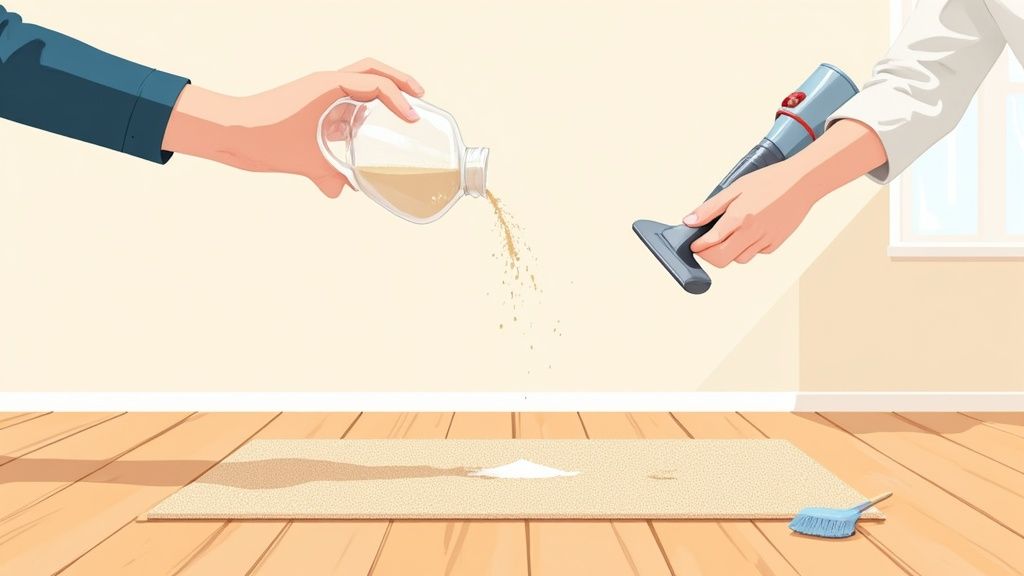
Cleaning a sisal rug isn't like cleaning any other floor covering. The key is to think dry and act fast whenever spills happen. The golden rule is simple: keep water away. Moisture is the enemy of sisal's natural plant fibres, and getting them wet is a surefire way to cause permanent browning, shrinking, and stubborn stains.
For routine care, nothing beats regular vacuuming (with a suction-only attachment) and using specially formulated dry-cleaning powders. These are by far the safest ways to keep your sisal looking its best.
Why Sisal Rugs Demand a Different Approach
Before you even think about grabbing a standard cleaning spray, it's vital to understand what makes sisal so unique. Unlike synthetic carpets engineered to repel liquids, sisal fibres act more like a sponge. They come from the Agave sisalana plant, and this natural makeup is the source of both their rustic charm and their cleaning headaches.
The single biggest mistake we see homeowners make is treating a sisal rug just like a common nylon or polyester carpet. Reaching for a steam cleaner or pouring water on a stain is a guaranteed recipe for disaster and can cause irreversible damage.
Moisture Is the Main Enemy
The number one reason sisal needs such careful handling is its extreme sensitivity to moisture. When these natural plant fibres get wet, a few things happen, and none of them are good for your rug.
- Browning and Water Stains: When wet, the fibres release natural tannins. As the rug dries, these tannins are drawn to the surface, leaving behind unsightly dark brown or yellow watermarks.
- Shrinkage and Warping: Water causes the fibres to swell up and then shrink as they dry out. This often leads to a warped, buckled appearance that is nearly impossible to flatten out again.
- Mould and Mildew Growth: Sisal is incredibly absorbent, meaning moisture can get trapped deep within the weave. This creates the perfect breeding ground for mould and mildew, which leads to musty odours and can cause the fibres to decay over time.
The core takeaway is simple: water is not your friend when cleaning sisal. Every cleaning method should aim to use the least amount of liquid possible, or ideally, none at all.
Understanding the Fibre Structure
That coarse, woven texture is a huge part of sisal's appeal, but it also creates tiny pockets where dirt and grit can get lodged deep down. Trying to scrub it out aggressively or using a vacuum's spinning beater bar will only fray and shred the delicate weaves, permanently ruining the rug's texture.
This is why gentle, consistent maintenance is so much more effective than a rare, harsh deep clean. In the UK, cleaning sisal rugs properly requires specialised knowledge due to their natural cellulosic fibre makeup, which reacts badly to both moisture and rough handling. The unsuitability of wet cleaning methods is a major reason why experts often recommend professional help for anything more than a minor spot.
To help you decide on the best course of action, here's a quick comparison of the most common cleaning approaches.
Sisal Rug Cleaning Methods At a Glance
| Cleaning Method | Risk Level for Sisal | Best For |
|---|---|---|
| Regular Vacuuming (Suction-Only) | Very Low | Routine maintenance, removing surface dust and grit. |
| Dry-Cleaning Powder | Low | General freshening up and lifting light, non-greasy dirt. |
| Minimal Damp Cloth (Blotting) | Medium | Immediate action on fresh liquid spills (use with extreme care). |
| Wet Shampooing/Steam Cleaning | Very High | Never recommended; guaranteed to cause browning and warping. |
This table makes it clear that sticking to dry methods is your safest bet.
For any significant cleaning job that goes beyond a simple spot treatment, calling in a professional dry-cleaning service is the smartest move. Taking the time to explore the benefits of professional rug dry cleaning can save you from making a costly mistake and will ultimately preserve the life of your beautiful rug. A professional service ensures a thorough clean without introducing the damaging risk of water.
Your Weekly Sisal Rug Care Routine
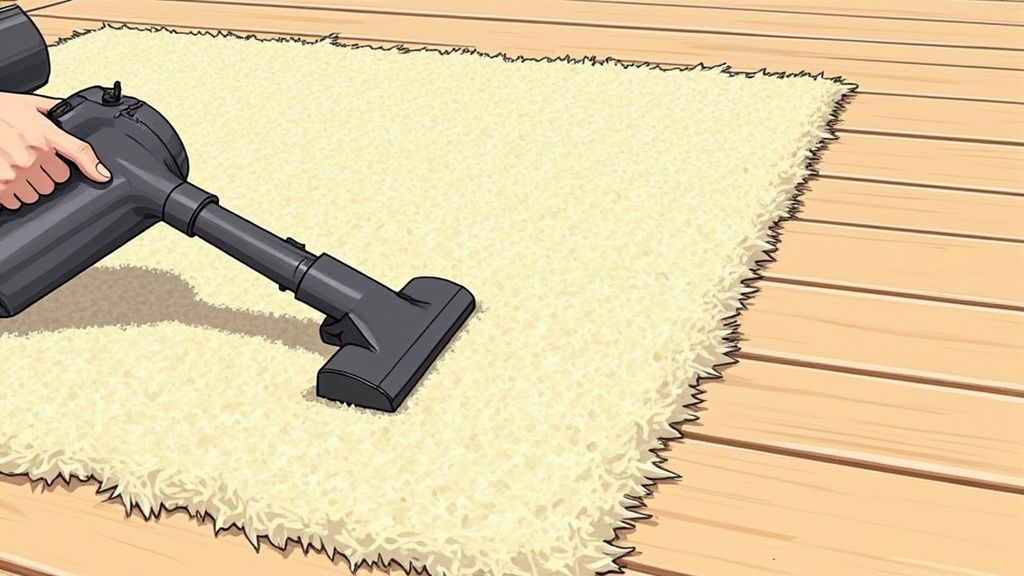
The real secret to keeping a sisal rug looking its best isn't some intensive, once-a-year deep clean. It all comes down to a simple, consistent weekly habit. A little bit of proactive care is all it takes to stop dirt and grit from working their way deep into the natural fibres, which is where the real damage starts.
Think of it like dusting your furniture—you wouldn’t wait for a thick layer to build up before taking action. The same idea applies here. Just a few minutes of gentle attention each week will keep your sisal looking fresh and prevent the kind of premature wear that can really take a toll.
The Correct Way to Vacuum Sisal
Regular vacuuming is the absolute cornerstone of good sisal care, but your technique is everything. Using the wrong attachment or setting can do far more harm than good, leaving you with frayed fibres and a fuzzy, worn-out look. The goal is to lift away the dirt, not to tear at the rug’s delicate weave.
The main culprit is your vacuum's rotating beater bar—that spinning brush designed to agitate synthetic carpets. Its stiff bristles are a sisal rug's worst enemy, as they'll snag, pull, and shred the natural plant fibres.
Instead, you must always switch to a suction-only setting or use a bare floor attachment. This approach gently but effectively pulls up dust, pet hair, and other surface debris without causing any physical damage. It's a non-negotiable step for proper sisal maintenance.
Pro Tip: Try vacuuming in different directions each time you clean. Go north-to-south one week, then east-to-west the next. This simple trick helps dislodge any stubborn particles caught deep within the weave from multiple angles for a much more thorough clean.
More Than Just Vacuuming
While vacuuming is vital, a truly effective routine includes a couple of other high-impact habits. These extra steps don’t take much time but make a massive difference in how evenly your rug wears and how fresh it stays over the years.
Here are a couple of key weekly habits to get into:
- Shake It Out (If Possible): If your sisal rug is a manageable size, take it outside once a week and give it a good, firm shake. This is a fantastic way to dislodge the deeper, heavier grit that even a powerful vacuum can sometimes miss.
- Rotate Your Rug: Every few months, make a point of turning your rug 180 degrees. This is especially important for rugs in high-traffic spots like hallways or living rooms. It prevents certain areas from taking all the foot traffic and helps even out any potential fading from sunlight.
By making these easy steps part of your routine, you’re actively preserving your rug’s integrity and appearance, which is always more effective than reacting to a problem later. For more general advice, you might find our guide on essential carpet cleaning tips helpful.
How to Tackle Spills the Moment They Happen
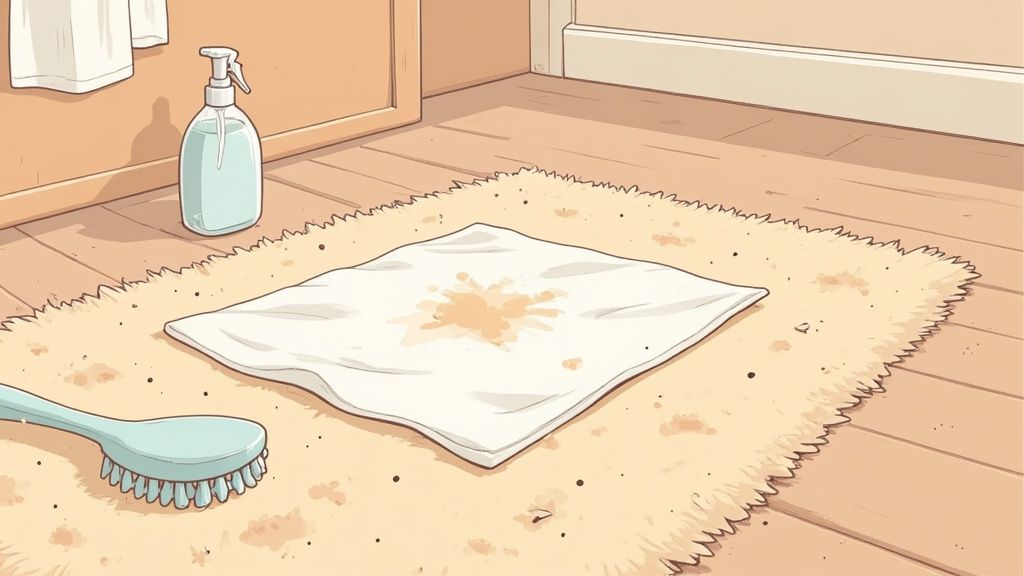
There’s that heart-stopping moment when a glass of red wine tips over, or a muddy paw dashes across your beautiful sisal rug. It can feel like a genuine emergency, but panic is your worst enemy here. What you do in the first few moments will make all the difference between a minor clean-up and a permanent, ugly stain.
The golden rule, above all else, is to act fast. Sisal is a natural plant fibre, which means it’s incredibly absorbent. A liquid spill will start wicking into the core of the weave almost immediately. The longer you wait, the deeper it goes, making your job infinitely harder. Speed is your greatest ally.
The Blot and Scrape Method
Now, your first instinct might be to grab the nearest cloth, get it wet, and start scrubbing for dear life. Please don't. That is single-handedly the worst thing you can do for your sisal rug.
Frantically rubbing a spill only grinds the liquid deeper into the fibres. It also damages the delicate plant material, causing it to fray and look fuzzy, a change that is unfortunately permanent. A gentle touch is what’s needed.
For any kind of spill, whether it's solid or liquid, this is your immediate two-part response:
- Scrape Up Solids: If something thick has landed on the rug—think mud, food, or a pet accident—reach for a dull knife or the edge of a spoon. Gently scrape the excess material off the surface. Always work from the outside of the spill inwards; this stops you from accidentally spreading it.
- Blot Liquids Immediately: For any liquid spill, grab a clean, dry, white cloth or a thick stack of paper towels. Using a white cloth is key to avoiding any colour transfer onto your rug. Press down firmly on the spill, allowing the cloth to absorb as much moisture as it can. Do not rub. Lift, find a fresh, dry section of the cloth, and press down again. Keep repeating this blotting motion until the cloth comes away dry.
This ‘blot, don’t rub’ technique is the most critical skill you can learn when it comes to caring for a sisal rug.
The goal is always to lift the spill out of the rug, not push it in. Every rub grinds the stain particles deeper into the plant fibres, making it a permanent part of the rug's structure.
Dealing with Different Types of Spills
While your initial reaction should always be to scrape and blot, the follow-up might change slightly depending on what you've spilt. A word of caution: any liquid you use must be applied sparingly. The biggest danger with sisal, after the initial stain, is creating those dreaded watermarks from the cleaning process itself.
- Red Wine or Coffee: After blotting until the area is as dry as possible, you can try this. Very lightly dampen a clean white cloth with a 50/50 solution of white vinegar and water. Gently blot the stained area—never saturate it. The vinegar can help to break down the tannins in the wine or coffee. Straight away, follow up by blotting with a completely dry cloth to lift any remaining moisture.
- Pet Accidents: Urine is acidic and can cause permanent discolouration if it’s left to sit. Once you’ve scraped and blotted the area, use the same minimal vinegar-and-water solution to blot the spot. The vinegar is great for helping to neutralise the ammonia.
- Greasy or Oily Stains: For oil-based spills from food or lotions, don't even think about using liquid. After blotting up as much as you can, generously sprinkle cornflour or bicarbonate of soda over the stain. Let it sit for a good few hours; it will work to absorb the grease. Afterwards, just vacuum it all up using a suction-only attachment.
If you're dealing with a particularly stubborn mark that isn't budging with these gentle methods, it’s wise to pause before reaching for harsher chemicals. For more advanced strategies, you might find some useful tips in our guide on how to remove stubborn carpet stains, though professional advice is recommended before adapting them for sisal. When in doubt, calling an expert is always the safest bet for set-in stains.
A Practical Guide to Dry Cleaning Sisal at Home
There comes a time when regular vacuuming just won't cut it anymore, and your rug needs a proper deep clean to feel fresh again. With sisal, this means you must put aside any thoughts of using water and instead embrace a good quality dry-cleaning powder. This is, by far, the safest and most effective way to give your rug an at-home refresh, as it lifts out stubborn dirt without any risk of moisture damage.
Think of these specialised powders as millions of tiny, absorbent sponges. Rather than dissolving dirt with liquid, they're designed to grab onto oily residues, dust, and grime. As the powder sits on the rug, it absorbs all that mess, which is then whisked away when you vacuum everything up. It’s a smart, water-free solution that's perfect for delicate natural fibres like sisal.
Preparing Your Rug for Cleaning
Before you even think about opening the cleaning powder, a thorough vacuum is non-negotiable. Go over the entire rug with a suction-only attachment, moving slowly and deliberately to pull up as much loose grit as possible from deep within the weave. This crucial first step allows the cleaning powder to get to work on the really ingrained dirt, instead of just the surface-level fluff.
Once you’ve vacuumed, it’s wise to spot-test the dry-cleaning product. Find a small, out-of-the-way area of your rug—a corner that’s usually tucked under a sofa is perfect—and apply a small amount. Follow the product’s instructions, then vacuum it up. This quick check ensures you won't get any unwelcome surprises like discolouration, giving you peace of mind to tackle the whole rug.
The Dry-Cleaning Process
With the prep work done, it's time for the main event. Begin by sprinkling the dry-cleaning powder evenly across the entire surface of the rug. You're not looking for a thick blanket of it; just a light, consistent coverage. Imagine you're dusting a cake with icing sugar.
Next, grab a soft-bristled brush—a dedicated carpet brush or even a soft hand brush works well. Gently work the powder into the sisal weave using light, circular motions. This helps the granules get right down into the texture where the dirt loves to hide. It's important to avoid aggressive scrubbing, as this can easily damage and fray the natural fibres. The idea is just to distribute the powder, not to scour the rug.
Let the powder sit for the manufacturer's recommended time, which is usually somewhere between 30 minutes and an hour. This dwell time is when the magic happens; the absorbent compound is busy pulling all that grime away from the fibres.
Once the time is up, the final step is to vacuum it all away. Using your vacuum's suction-only attachment again, go over the entire rug with care. Be methodical. Move slowly, passing over each section multiple times and from different directions to ensure you remove every last speck of powder—and all the dirt it has trapped.
To make things even clearer, this simple infographic breaks down the core steps for a successful deep clean at home.
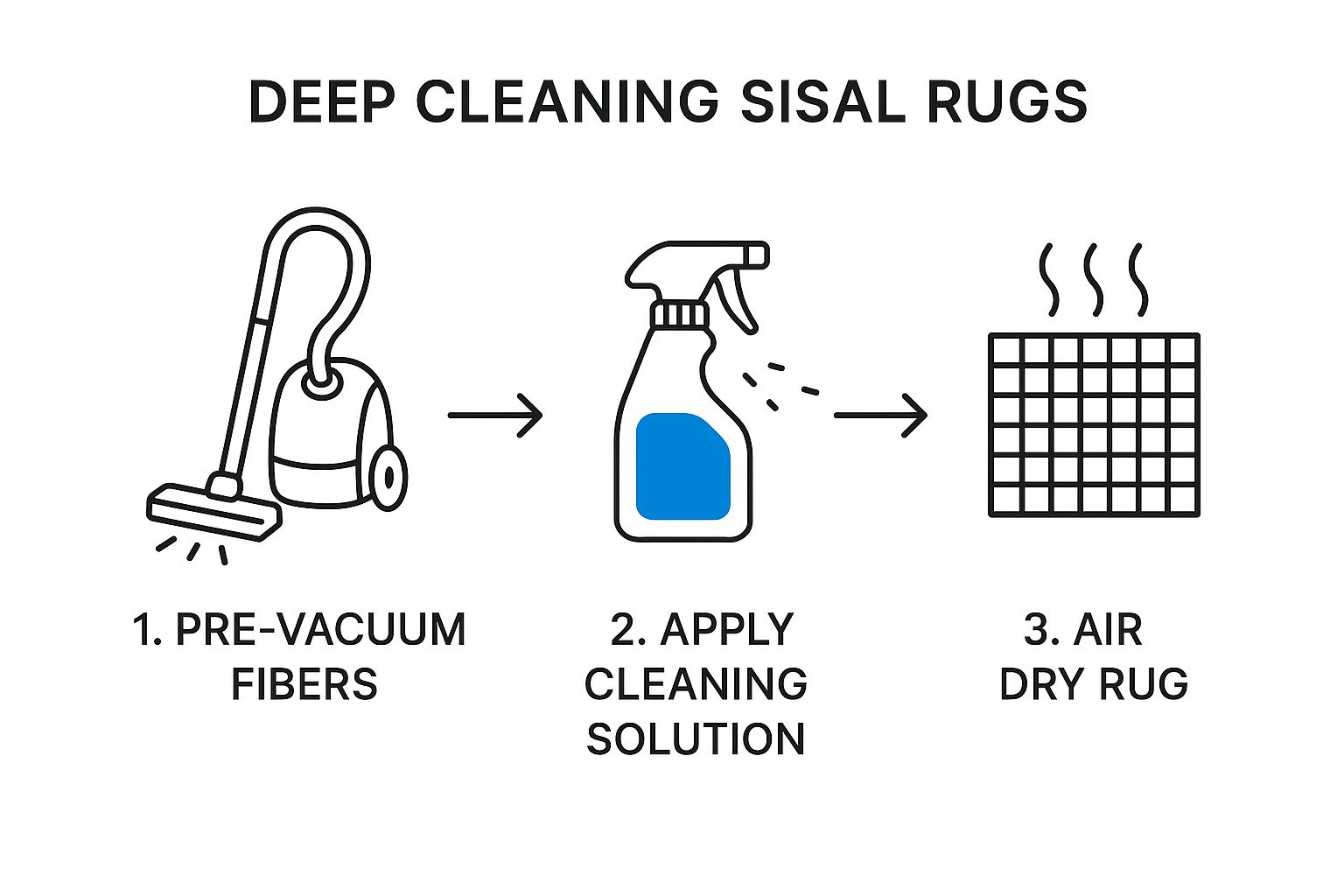
As the graphic shows, a great result comes from a simple, water-free process, from the initial prep to the final vacuum. The end result should be a brighter, fresher rug with a noticeably revived texture. If you're curious about other techniques, our guide on different professional rug cleaning methods offers a deeper look into how the experts do it.
Common Sisal Cleaning Mistakes and How to Avoid Them
Even with the best intentions, it's easy to make a wrong turn when cleaning a material as specific as sisal. These common mistakes can unfortunately lead to permanent damage, but they are also completely avoidable.
| Common Mistake | Why It's Harmful | What to Do Instead |
|---|---|---|
| Using Water or Steam | Sisal is highly absorbent and prone to water stains, browning, and shrinkage. Moisture can also weaken the fibres, making them brittle. | Always opt for a dry-cleaning powder or compound specifically designed for natural fibres. Tackle spills immediately by blotting, never rubbing. |
| Scrubbing Spills Aggressively | Vigorous scrubbing frays and breaks the strong sisal fibres, creating a fuzzy, permanently damaged patch on your rug. | Blot the spill gently from the outside in with a clean, dry cloth. For dried-on solids, gently scrape with a dull knife before vacuuming. |
| Using a Beater Bar Vacuum | The rotating bristles of a beater bar are too harsh for sisal. They can pull, snag, and fray the woven fibres, ruining the rug's texture. | Use a suction-only vacuum or a vacuum with the beater bar turned off. Regular, gentle suction is all you need. |
| Ignoring the Spot-Test | Cleaning products can sometimes cause discolouration or react unexpectedly with the natural dyes in a sisal rug. | Always test any cleaning powder on a small, hidden area (like under a sofa) before applying it to the entire rug. |
By keeping these points in mind, you can confidently clean your sisal rug, ensuring it stays beautiful for years to come without any costly mishaps.
Knowing When to Call a Professional Rug Cleaner

While looking after your rug at home is vital, there are definitely times when a DIY approach just won’t cut it. Knowing when to put down the cleaning supplies and pick up the phone can be the difference between a clean rug and a ruined one.
Think about a large, heavily soiled rug, a deep-set stain that’s been there for a while, or those dreaded watermarks that have already started to cause browning. These are clear signs that your at-home methods aren't going to be enough. In fact, trying to tackle these yourself can often make things much worse.
Finding the Right UK-Based Specialist
Once you’ve decided to bring in an expert, it’s crucial to choose the right one. Not every carpet cleaner has the know-how to handle the unique challenges of sisal. Asking a few key questions beforehand will protect your investment.
A true specialist will have proven experience with natural fibres and will immediately confirm they use a low-moisture or dry-cleaning system. This is non-negotiable. Many professionals stress that traditional wet cleaning methods can cause huge issues like browning and shrinkage, affecting up to 30% of rugs cleaned improperly.
You should also look for cleaners with specific industry certifications. For instance, an accreditation from an organisation like WoolSafe is a great sign that they know how to treat delicate, natural materials correctly. It shows a real commitment to using safe, approved products and methods.
A professional's value lies not just in their powerful machines, but in their expert knowledge. They can accurately identify the type of stain and apply the correct chemistry to remove it without harming the delicate sisal fibres.
An Investment in Your Rug's Longevity
Hiring a professional might seem like an extra cost, but it’s really an investment in the future of your rug. A specialist has access to industrial-grade equipment and advanced cleaning solutions far more effective than anything you can buy in a shop.
They can often restore your rug's appearance and texture, removing stains you thought were permanent. This not only makes your home look better but also protects the rug's financial value in the long run. By entrusting your sisal to an expert, you avoid the costly risk of accidental damage and ensure it remains a beautiful feature for years to come. To get a better idea of what's involved, you can read our overview of the professional carpet cleaning process, which details the steps we take.
Common Questions About Sisal Rug Care
Even when you've got a handle on the day-to-day cleaning, a few specific questions always seem to pop up with sisal rugs. Because it's a unique natural fibre, the usual cleaning advice you've heard for years often doesn't apply.
Here, we'll run through some of the most frequent queries we get from clients. Think of this as your quick-reference guide for those moments of uncertainty, giving you the confidence to look after your rug properly.
Can I Use a Steam Cleaner on My Sisal Rug?
The short answer is an absolute, emphatic no. Using a steam cleaner is probably the single most destructive thing you could do to a sisal rug. It’s a terrible combination of intense heat and high-pressure water, which is a disaster for natural plant fibres.
All that moisture will immediately cause dark, ugly water spots as the natural tannins in the sisal are released. What’s more, it will almost certainly cause the rug to shrink, buckle, or warp beyond repair. When it comes to deep cleaning a sisal rug, you have to stick to completely dry methods.
How Do I Get a Bad Smell Out of a Sisal Rug?
If you're dealing with a musty smell or a lingering pet odour, the best and safest fix is something you probably already have in your cupboard: bicarbonate of soda. Don't be tempted to reach for liquid deodorisers or fabric freshener sprays – the moisture will just cause stains.
Instead, just follow this simple, dry process:
- Sprinkle a generous amount of bicarbonate of soda evenly across the entire rug.
- Let it sit for at least a few hours. If the smell is particularly strong, leaving it overnight is even better, as this gives the powder time to absorb the odour.
- After it has sat, vacuum it up thoroughly. Use a suction-only attachment and go over the area several times to make sure you get all the powder out.
Is It Really Possible to Remove Water Stains from Sisal?
This is one of the biggest challenges in sisal care. Water stains are incredibly stubborn because they aren't just a mark on the surface; they're the result of a chemical reaction. The stain is caused by the natural tannins inside the sisal fibres being drawn to the surface by moisture as the rug dries.
You might find advice online suggesting you blot the stain with a lightly dampened cloth using a 50/50 mix of white vinegar and water. While this can sometimes help with very minor, very fresh spots, it's a huge risk. You could easily make the stain bigger or darker.
For any noticeable water stain, your best and safest option is to call in a professional cleaner who has specific experience with natural fibres like sisal.
What Is the Best Type of Vacuum for a Sisal Rug?
The perfect vacuum for a sisal rug is one with powerful suction, but crucially, one where you can use an attachment without a rotating beater bar. Canister vacuums with a hard floor head or a simple upholstery tool are usually great choices.
The aggressive, spinning bristles on a beater bar will catch and tear at the woven fibres of your rug. This causes irreversible fraying and gives it a fuzzy, damaged appearance. All you need is strong, gentle suction to lift dust and grit out from the weave.
At AG Carpet Specialists, we have the expertise to handle delicate natural fibres like sisal. If you're facing a stubborn stain or your rug needs a professional refresh, contact us for a free quotation and see the difference our specialised care can make. Visit us at https://www.agcarpetspecialist.co.uk.