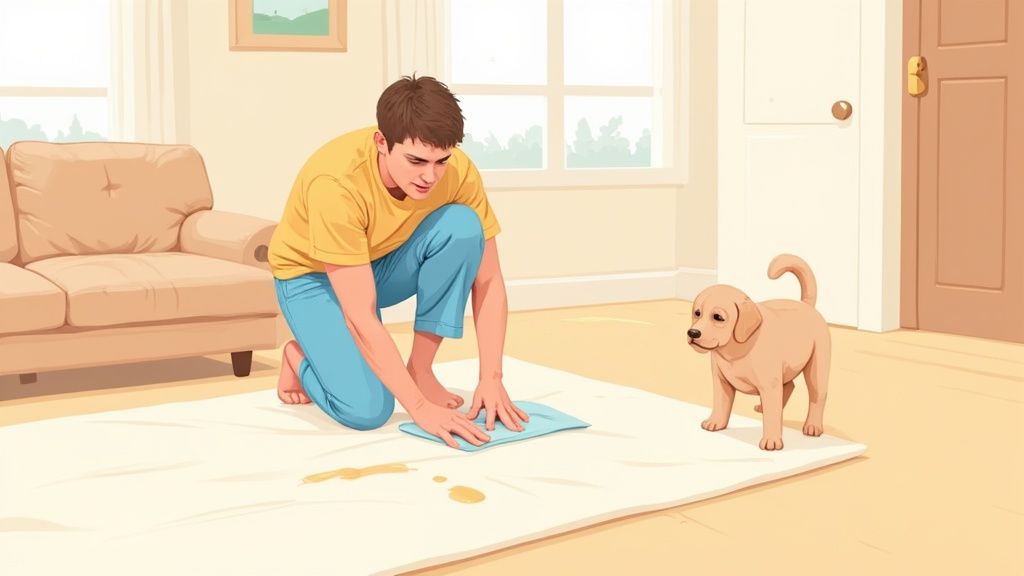
It's a moment every pet owner dreads: discovering an accident on the carpet. Let's be honest, cleaning pet urine from carpets properly involves a bit more than a quick wipe with a cloth. The real secret is acting fast with a cleaner that specifically targets and neutralises uric acid – that’s the culprit behind the smell that just won't quit. If you don't break down these pesky acid crystals, you're left with a permanent odour that acts like a 'go here' sign for your pet.
Why Pet Urine Stains Are So Stubborn
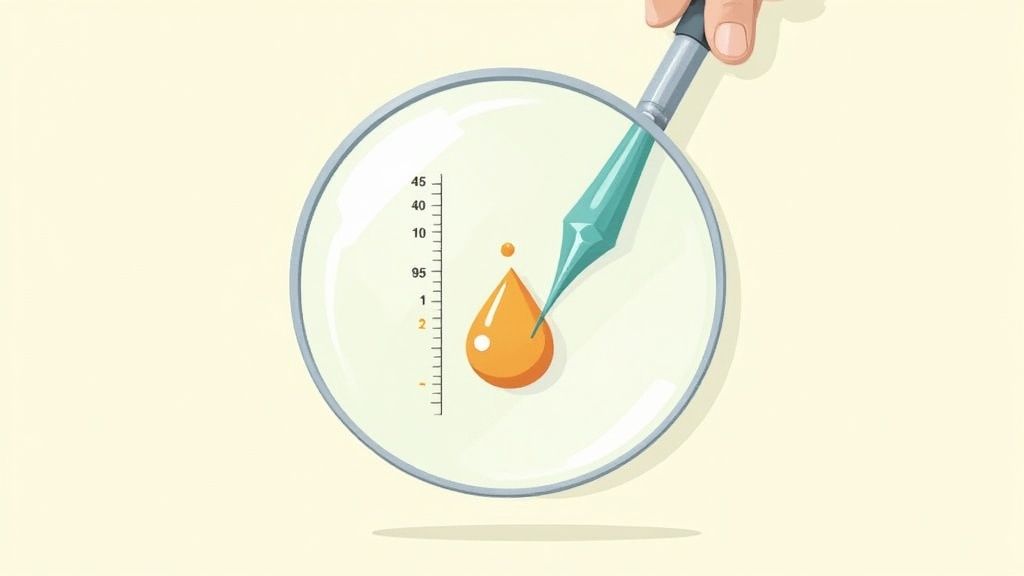
We’ve all been there. You clean a urine spot, it looks perfect, but a few days later—especially when it's damp or humid—that familiar smell is back. You're not imagining it; this is all down to the unique chemistry of pet urine.
When your pet has an accident, the urine doesn’t just stay on the surface. It soaks right through the carpet fibres, into the backing, and can often reach the underlay and even the subfloor beneath. As the water in the urine evaporates, what's left behind is a highly concentrated cocktail of chemical compounds.
The Science Behind the Smell
The main offender for that lingering odour is uric acid. While you can wash away other components with regular soap and water, uric acid isn't water-soluble. Instead, it forms powerful, odourless crystals that are incredibly tough and can lie dormant for years. The moment they get wet again—whether from humidity, a spill, or even another attempt to clean with water—they reactivate and release a potent ammonia gas. That’s when the smell hits you all over again.
This is exactly why a surface-level clean just won't cut it. Most household cleaners simply aren't designed to break down these stubborn crystals.
Key Takeaway: The lingering smell of pet urine comes from uric acid crystals embedded deep within your carpet and its padding. These crystals reactivate with moisture, causing odours to return long after you thought the problem was solved.
The Challenge for UK Pet Owners
This is a growing problem across the country. Pet ownership in the UK has soared, with a staggering 34 million pets reported in 2023. This includes roughly 12 million dogs and 12 million cats, many of whom joined families during the pandemic. As the PFMA's latest pet population report highlights, a lot of new owners found that toilet training was a bigger challenge than they first anticipated.
With so many more pets in our homes, more of us are facing the tricky task of cleaning up accidents. Getting it right isn't just about keeping your carpets looking good; it's about maintaining a clean and hygienic home for your family. While we're focusing on pet issues here, the same principles can apply to other spills. If you're struggling with different kinds of marks, you might find our guide on how to remove stubborn carpet stains helpful.
Your First Response to a Fresh Accident
We’ve all been there. That sinking feeling when you discover a fresh pet accident. It's a moment that can send you into a bit of a panic, but what you do in those first few minutes is absolutely critical. Your immediate actions can be the difference between a simple clean-up and a stubborn stain and smell that just won't go away.
The goal is to act fast and act smart, stopping the urine before it has a chance to soak deep into your carpet fibres and, worse, the underlay beneath.
The most important rule I can give you is this: blot, never rub. It’s tempting to get in there and scrub away, but that’s the worst thing you can do. Scrubbing just grinds the urine further into the carpet pile. It can also permanently damage the fibres, leaving them looking frayed and fuzzy.
Instead, grab a good, thick stack of paper towels or a clean, white, absorbent cloth. Press down firmly on the wet spot. You want to let the cloth do the work, soaking up as much of the liquid as you possibly can.
Keep repeating this with fresh, dry towels until you notice very little moisture is being absorbed. Always work from the outside edge of the stain inwards – this stops you from accidentally making the spot bigger. It's a simple technique, but it’s the absolute foundation for getting pet urine out of carpets effectively.
Prepare the Area With a Simple Rinse
Once you’ve blotted the area as dry as you can get it, the next step is to dilute whatever urine is left. Now, put down the steam cleaner and step away from the hot water tap. Heat is your enemy here. It can cause a chemical reaction that bonds the proteins in the urine to your carpet fibres, setting the stain permanently.
All you need is a small amount of cool water. Lightly dampen the area; you're not trying to soak the carpet all over again, just dilute the remaining urine.
Once you’ve applied the cool water, it’s back to blotting. This second round of blotting helps to lift out even more of the concentrated urine, getting the carpet ready for a proper deep clean.
For more detailed advice on tackling all sorts of spills, have a look at our comprehensive carpet cleaning tips which offer more professional insights to save your flooring.
The infographic below breaks down these crucial first steps for when you find a fresh pet urine stain.
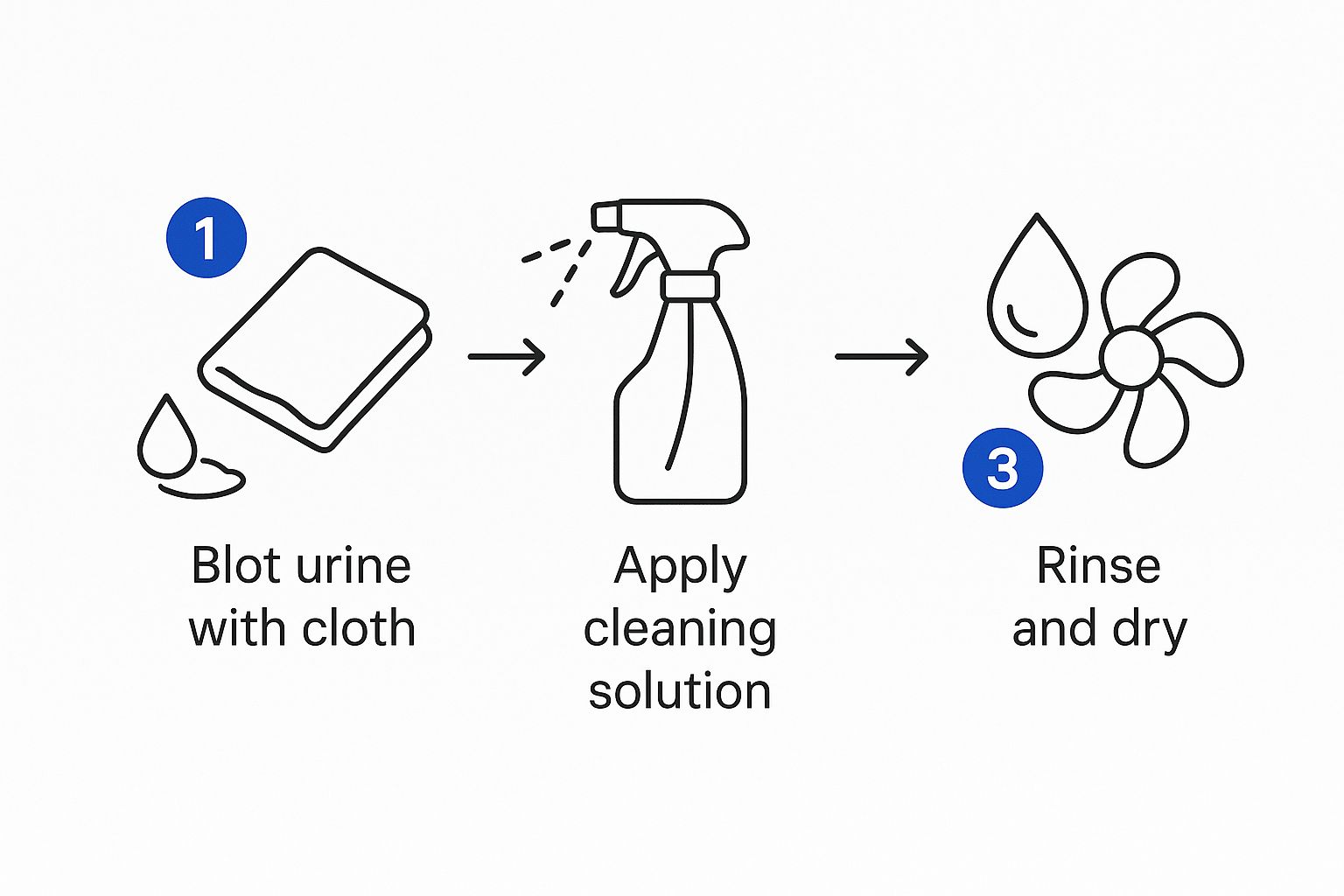
As you can see, a successful clean-up is all about following a methodical approach. You start with absorption before moving on to cleaning. By getting these initial steps right, you dramatically boost your chances of removing the stain completely and stopping those nasty odours from ever taking hold.
Choosing The Right Cleaning Method
Okay, you’ve done the immediate damage control by blotting and rinsing the area. That's the first battle won. Now it’s time to choose your weapon for the main fight: a deep-down clean that gets rid of the stain and, crucially, the lingering odour-causing culprits left behind.
You've really got two main contenders here: a trusty DIY homemade solution or a purpose-built commercial enzymatic cleaner. Each approach has its fans, and the right choice often comes down to the severity of the stain, your carpet type, and what you’ve got in the cupboard.
Let’s break down the options so you can make the best call for your home.
The Homemade Approach
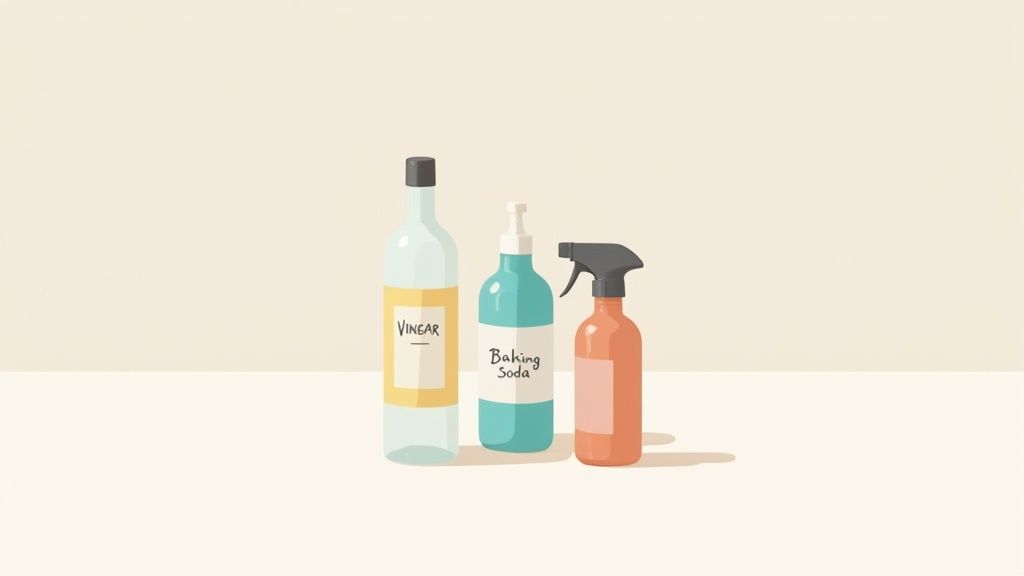
Many people swear by a simple, accessible recipe using two household staples: white vinegar and bicarbonate of soda. It’s an affordable and quick fix for cleaning up pet urine, which is why it’s so popular.
The science behind it is pretty straightforward. The acetic acid in vinegar helps to neutralise the ammonia in fresh urine, which is what causes that initial sharp smell. The bicarbonate of soda then works as a mild alkali, absorbing moisture and any lingering odours from the carpet fibres.
But this method definitely has its limits. While it can work reasonably well on very fresh, minor accidents, it doesn't tackle the root of the problem—those pesky uric acid crystals. Vinegar might neutralise the surface-level smells, but it won't break down the non-soluble crystals hiding deep in your carpet. This means the smell can easily come back, especially on a damp or humid day.
Expert Tip: If you decide to go the DIY route, always test your solution on a hidden patch of carpet first. Vinegar is acidic and can potentially discolour delicate fibres, particularly natural ones like wool.
The Power Of Enzymatic Cleaners
For a truly permanent fix, professionals like us will almost always recommend an enzymatic cleaner. These aren't just your standard carpet shampoos; they are sophisticated biological formulas packed with beneficial bacteria and enzymes.
Think of these enzymes as tiny, highly-specialised cleaning agents. Their one job is to find and "eat" the organic matter in the pet urine—specifically targeting the proteins and uric acid. They break these compounds down into simple, odourless substances like carbon dioxide and water, effectively destroying the source of the smell instead of just masking it.
This biological action is what stops your pet from having repeat accidents in the same spot. Pets are drawn to urinate where they can smell previous markings, so completely removing that scent is your best defence.
The debate between homemade and commercial solutions is a real one, especially for the 59% of new pet owners in the UK aged 16-34. For many young families, the effectiveness of a cleaner is paramount. You can discover more insights into pet ownership trends over at Dogster.com.
Deciding between a quick fix and a more powerful treatment can be tricky. To help you choose, here's a direct comparison.
DIY vs Enzymatic Cleaners: A Head-to-Head Comparison
This table breaks down the key differences between a common homemade solution and a commercial enzymatic cleaner when tackling pet urine.
| Feature | DIY Solution (Vinegar & Baking Soda) | Commercial Enzymatic Cleaner |
|---|---|---|
| Effectiveness | Best for fresh, minor stains. Does not break down uric acid crystals, so odours can return. | Highly effective on both new and old stains. Breaks down and eliminates uric acid for permanent odour removal. |
| Cost | Very low cost, as it uses common household items. | Higher initial cost per bottle, but a little goes a long way. More cost-effective in the long run. |
| Safety | Generally safe, but vinegar's acidity can pose a risk to certain carpet fibres like wool. | Specifically formulated to be safe for most carpets and upholstery. Always best to spot-test first. |
Ultimately, while a DIY solution might seem like a good idea for a fresh spill, an enzymatic cleaner is the only way to guarantee you've dealt with the problem for good.
If you’re thinking about deep cleaning methods more broadly, you might find our guide comparing carpet cleaning vs steam cleaning offers some valuable context for tackling bigger jobs.
How to Permanently Eliminate Urine Odours
You've cleaned a pet stain meticulously, but a few days later, that familiar, unpleasant smell creeps back in. This isn't your imagination. It's a clear sign that the real culprit—uric acid—is still embedded deep in your carpet fibres. To truly solve the problem, you have to go beyond surface-level cleaning and attack the odour at its source.
Regular carpet shampoos and your go-to household sprays just aren't up to the task. They might get rid of the visible stain and temporarily mask the smell, but they leave the uric acid crystals completely untouched. These crystals are the heart of the issue; they don't dissolve in water and can remain dormant for years, only to be reactivated by a bit of humidity, releasing that pungent ammonia odour all over again.
Why Enzymatic Cleaners Are Your Best Bet
To get rid of pet urine smells for good, you need a cleaner that wages a biological war on the stain. This is where enzymatic cleaners are absolutely essential. These aren't just soaps or detergents; they are sophisticated formulas packed with beneficial bacteria. These bacteria produce specific enzymes that are designed to break down and consume organic waste.
Think of it as deploying a microscopic clean-up crew. When applied, the enzymes immediately get to work, digesting the uric acid crystals and proteins found in urine. They effectively convert these smelly, complex compounds into simple, odourless elements like carbon dioxide and water. This process doesn't just cover the smell—it eliminates it chemically.
For a permanent fix, you must completely saturate the affected area with the enzymatic cleaner. The aim is to let the solution penetrate just as deeply as the urine did, reaching into the carpet backing and even the underlay, where the majority of the odour-causing crystals are hiding.
The Right Way to Apply an Odour Eliminator
How you apply the cleaner is just as important as what you use. Don't just give the stain a quick spray. You need to be generous with the product, working from the outside edge of the stain inwards to stop it from spreading. Make sure to treat an area roughly 50% larger than the visible spot, as urine spreads out significantly once it soaks into the padding underneath.
Let the cleaner sit for the recommended time on the label, which could be anywhere from 15 minutes to a few hours. This dwell time is crucial for giving the enzymes enough time to do their job properly. For a more detailed walkthrough, have a look at our complete guide on how to eliminate pet odours from your home.
This focus on biological solutions is part of a bigger picture. Health and environmental concerns are becoming more important in UK homes. With 59% of new pet owners being between 16 and 34, there’s a clear shift towards eco-friendly enzymatic products that neutralise odours rather than just masking them. This ties into a greater awareness of indoor air quality. You can find more on these pet ownership trends over at Pets4Homes.
A Final Deodorising Step
Once the enzymatic cleaner has worked its magic and you've blotted the area until it's almost dry, there's one last step you can take. Sprinkle a generous amount of bicarbonate of soda over the treated spot. Let it sit overnight, as it will help draw out any lingering moisture and odours from the carpet fibres.
The next morning, all you need to do is vacuum it up thoroughly. This finishing touch will leave your carpet looking clean and smelling genuinely fresh, making sure the accident is truly a thing of the past.
Strategies to Prevent Future Accidents
While it's handy to know how to tackle a pet urine stain, preventing them from happening in the first place is the real goal. Moving from a reactive mindset to a proactive one will save you time, a lot of stress, and ultimately, your carpet.
Often, when a pet starts urinating where they shouldn't, it’s not just a training issue. A sudden change in your pet’s toilet habits is a red flag that needs your attention right away.
Rule Out Underlying Issues
Before you assume it's a behavioural problem, your first stop should always be the vet. There are plenty of medical conditions that can cause a pet to have accidents indoors, including:
- Urinary tract infections (UTIs)
- Bladder stones or crystals
- Kidney disease
- Diabetes
- Age-related incontinence
A quick check-up can either identify a health problem that needs treating or give your pet a clean bill of health. Once you've ruled out medical causes, you can start looking at what else might be going on.
Stress is a huge factor in pet accidents. Things like a change in your daily routine, new furniture, or even a disagreement with another pet can be triggers. In multi-cat households, for example, stress over food and territory can lead to spraying. Learning how to feed multiple cats peacefully might be a surprisingly effective way to prevent future carpet stains.
A consistent routine is your best friend when it comes to prevention. Regular feeding times, frequent potty breaks (especially for dogs), and a clean litter box for cats create a predictable environment that reduces stress and reinforces good habits.
Make Your Home Accident-Proof
A few strategic changes around your home can also make a big difference. If your pet keeps returning to the same "problem spot," try placing a stylish, washable area rug over it. This breaks the cycle by introducing a new texture and scent. And let's be honest, cleaning a rug is far easier than deep-cleaning a fitted carpet.
Another powerful step is to have a professional-grade carpet protector applied. These treatments create an invisible shield on the carpet fibres. Instead of soaking in immediately, liquids will bead up on the surface, giving you that crucial extra time to blot them up before they can cause a permanent stain.
If you'd like to learn more about how these treatments work, we have a detailed guide on stain protection for carpets. It's a small investment that makes life much easier and helps keep your flooring looking its best for years to come. By combining these strategies, you can create a happy, harmonious home for everyone – paws included.
Still Have Questions About Pet Urine and Carpets?
Even with the best cleaning plan, some situations are trickier than others. When you’re dealing with pet urine, a few common questions always seem to pop up. Let's tackle some of the most frequent queries we hear from pet owners in the UK, offering clear, expert advice for those stubborn scenarios.
Can I Use a Steam Cleaner on Pet Urine Stains?
This is a question we get all the time, and our answer is always a firm no. It’s a common mistake, but you should absolutely avoid using a steam cleaner or any other heat-based method on pet urine stains.
The intense heat from steam actually causes a chemical reaction with the proteins in the urine. This process permanently bonds them to your carpet fibres, essentially "cooking" the stain and the odour right in. Once that happens, both the mark and the smell become nearly impossible to shift. Always stick to cool or lukewarm water for rinsing and cleaning.
How Do I Find Old, Dried Pet Urine Stains?
This is a real challenge. Old urine stains are often completely invisible to the naked eye but can still be the source of a persistent, unpleasant smell. Your pet can definitely still smell them, which is why they keep returning to the same spot to do their business.
The most effective way to locate these hidden culprits is with a UV (ultraviolet) or blacklight.
- Wait until it’s dark and turn off all the lights in the room for the best results.
- Slowly shine the UV light across your carpet, holding it about a foot above the fibres.
- You'll see the salts and proteins in the dried urine fluoresce, usually glowing a distinct yellowish-green colour.
This simple trick pinpoints every single old stain, allowing you to target your enzymatic cleaner precisely where it’s needed most. You might be surprised (and a little horrified) by what you find!
Pro Tip: When you find a glowing spot with the blacklight, circle it with a bit of chalk or place a small piece of masking tape next to it. That way, you won't lose track of the problem areas when you turn the main lights back on to start cleaning.
Are Homemade Cleaners Safe for All Carpets?
While DIY solutions using vinegar are popular online, they aren't a one-size-fits-all answer. These mixtures can be generally safe for many synthetic carpets, like nylon or polyester, but you have to be careful.
Vinegar is an acid, which means it has the potential to cause damage or discolouration, especially on natural fibres. Wool carpets, in particular, are very sensitive to changes in pH and can be permanently damaged by acidic cleaners.
Before you apply any homemade solution, always perform a spot test. Dab a small amount on an inconspicuous area – think inside a wardrobe or under a sofa – and wait to see if there’s any adverse reaction. This quick check could save you from a very costly mistake.
If you're facing a stubborn stain or simply want the peace of mind that comes with a professional deep clean, AG Carpet Specialists is here to help. Our certified technicians use advanced equipment and pet-safe enzymatic treatments to permanently remove pet urine stains and odours from your carpets. Visit us at https://www.agcarpetspecialist.co.uk for a free quotation.