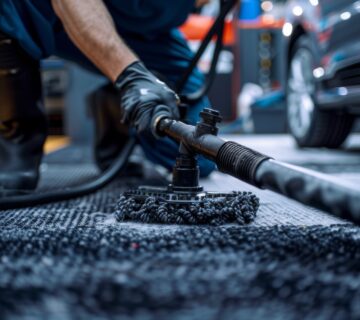
A beautiful rug can anchor a room, but dirt, stains, and allergens can quickly diminish its appeal. While a quick vacuum helps, deep cleaning is essential for maintaining your rug's colour, texture, and overall hygiene. However, not all rug cleaning methods are created equal. The right technique depends heavily on your rug's specific material, age, construction, and the type of soiling it has endured. Choosing incorrectly could lead to faded colours, damaged fibres, or even permanent shrinkage.
From the deep-penetrating power of hot water extraction for durable synthetics to the gentle touch required for delicate antique textiles, understanding your options is the key to achieving a pristine finish without causing harm. When considering different rug cleaning approaches, it's also worth looking into a new range of cleaning products that might be suitable for your rug type. This guide breaks down eight essential methods, providing a clear comparison to help you make an informed decision for your home or business needs in areas like Cheltenham, Gloucester, or Stroud. We'll explore the pros, cons, and ideal applications for each, ensuring you have the knowledge to select the perfect approach with confidence.
1. Hot Water Extraction (Steam Cleaning)
Hot water extraction, often called "steam cleaning," is one of the most effective and widely recommended rug cleaning methods for achieving a deep, restorative clean. Despite the name, it doesn't rely on steam but instead uses very hot water mixed with specialised cleaning solutions. This mixture is injected at high pressure deep into your rug's fibres, dislodging embedded dirt, allergens, and grime that regular vacuuming simply can't reach.
Almost immediately, a powerful suction mechanism extracts the hot water, along with all the dissolved soil and contaminants. This method is the go-to choice for professional services, from residential specialists restoring delicate Persian rugs to large-scale hotel maintenance programmes, because it delivers a superior level of hygiene and revives the rug's appearance.
When to Use This Method
Hot water extraction is ideal for durable synthetic rugs (like nylon or polyester) and some wool rugs that can withstand water. It is particularly effective for:
- High-Traffic Areas: Revitalising rugs in hallways and living rooms that appear flattened and dirty.
- Allergen Removal: Households with allergy sufferers or pets benefit immensely, as the process removes dust mites, pet dander, and pollen.
- Deep Stain and Odour Removal: It effectively tackles stubborn, set-in stains and lingering odours by flushing them out from the base of the fibres.
The following infographic highlights the key metrics associated with this powerful cleaning technique.
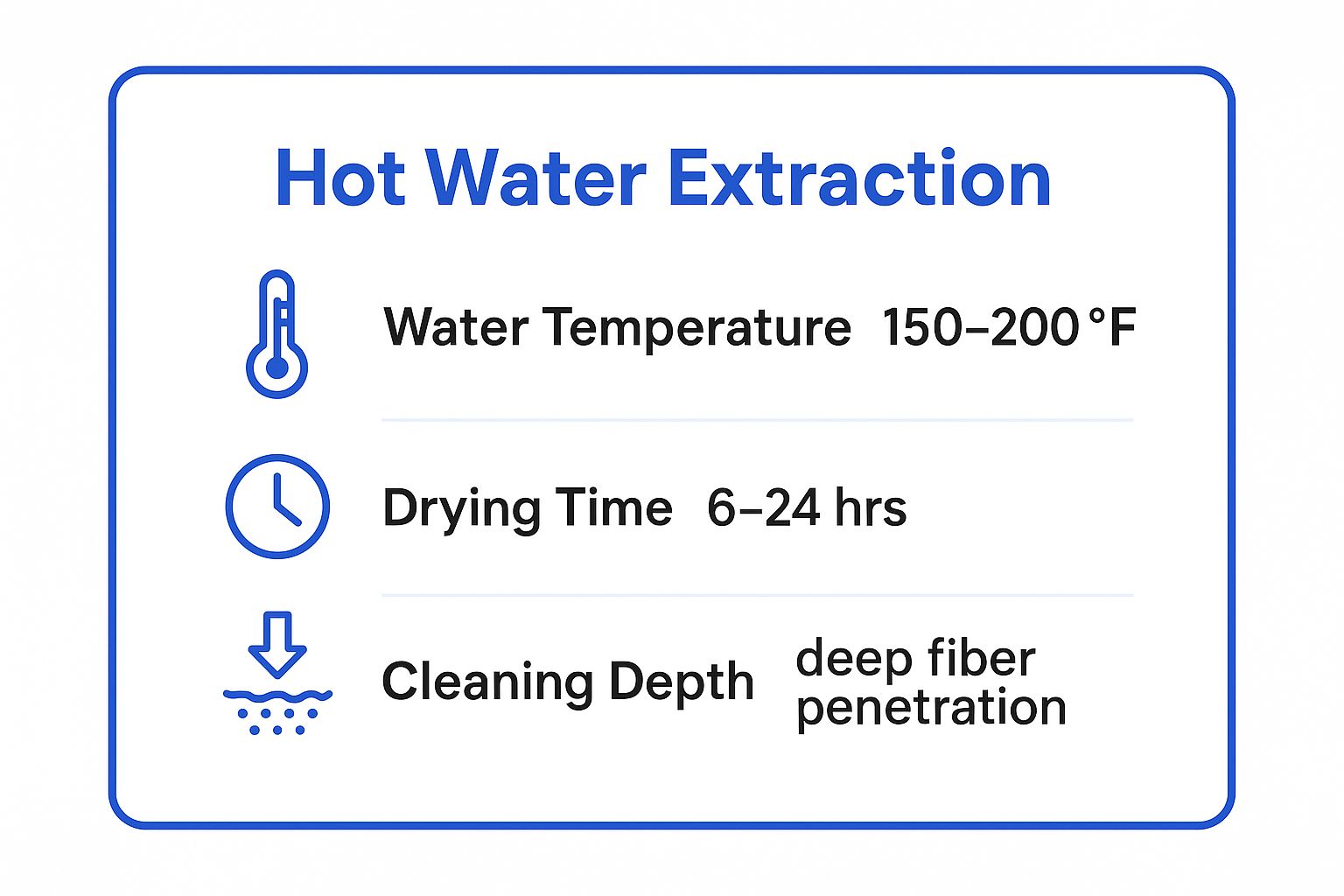
These figures show that while hot water extraction provides unparalleled deep cleaning, it requires significant drying time, a crucial factor to plan for.
Best Practices for Optimal Results
To get the most out of hot water extraction, proper preparation and execution are key.
- Always Pre-Vacuum: Thoroughly vacuum the rug first to remove loose surface dirt. This prevents turning dry soil into mud and allows the machine to focus on embedded grime.
- Pre-Treat Stains: Apply a suitable pre-treatment solution to any noticeable stains or heavily soiled patches. Let it sit for the recommended time before beginning the main extraction process.
- Ensure Good Ventilation: Open windows and use fans to create airflow, which significantly speeds up the drying process and prevents the development of mildew.
For a detailed walkthrough, you can explore this guide on how to deep clean carpets at home.
2. Dry Cleaning (Encapsulation)
Dry cleaning, also known as encapsulation, is a low-moisture rug cleaning method that offers a rapid and effective alternative to wet systems. This technique uses specialised chemical polymers or dry compounds that are worked into the rug fibres. These agents act like tiny sponges, absorbing and crystallising around dirt, soil, and grime, effectively "encapsulating" it without saturating the rug with water.
Once the cleaning agent has had time to fully bond with the dirt and dry, the resulting crystals are simply vacuumed away, lifting the grime from the rug. This method is highly favoured in commercial settings and for delicate materials, such as antique Oriental or silk rugs, where water damage is a significant concern. The near-instant drying time makes it an incredibly convenient choice.
When to Use This Method
Dry cleaning is the perfect solution when time is short or the rug material is too sensitive for water-based cleaning. It is particularly effective for:
- Water-Sensitive Rugs: Ideal for materials like silk, sisal, or jute, which can shrink, discolour, or weaken when exposed to water.
- Commercial Maintenance: Used in office buildings and hotels for quick, regular cleaning that doesn't disrupt business operations. Rugs are ready for foot traffic almost immediately.
- Antique and Delicate Rugs: The gentle nature of the process helps preserve the integrity and colour of valuable, older rugs.
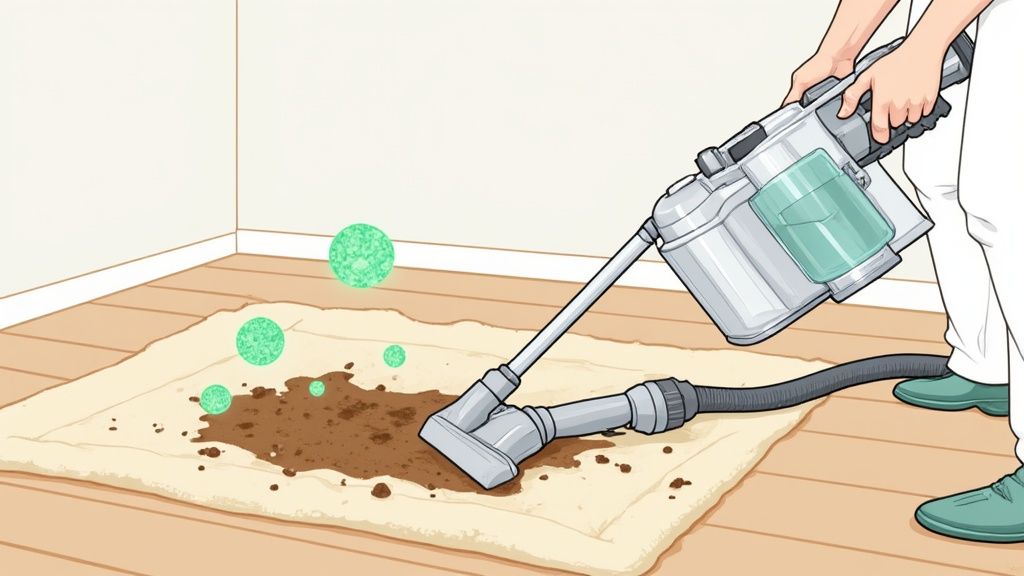
The primary benefit is speed, making it a standout choice among rug cleaning methods for areas that need to be used again quickly.
Best Practices for Optimal Results
Proper application is crucial to ensure the encapsulation process works effectively and leaves no residue behind.
- Pre-Vacuum Thoroughly: Always start by vacuuming the rug from multiple directions to remove all loose dirt and debris. This allows the cleaning compound to target embedded soil.
- Agitate Correctly: Use a soft brush or a specialised machine to gently work the compound deep into the rug pile. This ensures even coverage and maximum contact with the dirt.
- Allow Full Crystallisation: Be patient and wait for the compound to dry completely. Vacuuming too early will be ineffective and may leave behind a damp, sticky residue.
This approach is also a key component of many modern, sustainable cleaning strategies. You can find out more about these modern techniques and their benefits by exploring our guide to eco-friendly carpet cleaning.
3. Foam Cleaning
Foam cleaning, sometimes known as dry foam cleaning, offers a balanced approach that cleans more deeply than surface-level powders but uses significantly less moisture than hot water extraction. This method involves a specialised shampoo that is aerated into a thick, dense foam. The foam is applied to the rug's surface, where it works to encapsulate and suspend dirt particles within its structure.
After being agitated into the rug fibres with a brush or a machine, the foam crystallises as it dries, trapping the soil. A powerful vacuum cleaner is then used to extract the dried foam crystals, along with the captured dirt and grime. This low-moisture technique, popularised by brands like Bissell and Hoover, is favoured for its quick drying time and effectiveness on moderately soiled rugs.
When to Use This Method
Foam cleaning is an excellent choice for rugs that can handle a small amount of moisture but cannot be saturated, making it a versatile option for both residential and commercial settings. It is particularly well-suited for:
- Regular Maintenance: Ideal for periodic cleaning in commercial spaces like restaurants or retail stores where downtime must be minimised.
- Quick Touch-Ups: Perfect for freshening up rugs before hosting an event or for residential spot cleaning between professional deep cleans.
- Water-Sensitive Materials: A good option for certain types of natural fibre rugs that might shrink or discolour with excessive water.
Best Practices for Optimal Results
To achieve a uniform and residue-free finish with foam cleaning, the right technique is crucial.
- Test Foam Consistency: Before starting, dispense some foam to ensure it is thick and dry. Wet or runny foam can over-saturate the rug and defeat the purpose of this low-moisture method.
- Apply in Circular Motions: Use a soft brush to work the foam into the fibres with gentle, overlapping circular motions. This ensures even distribution and prevents matting the pile.
- Avoid Over-Application: A common mistake is using too much foam. Apply a thin, even layer; more foam does not necessarily mean a cleaner rug and can lead to sticky residue if not fully extracted.
- Allow to Dry Completely: Be patient and let the foam dry fully into its crystalline state. Vacuuming too soon will be less effective and may leave behind a damp, soapy residue.
4. Shampooing
Rug shampooing is a traditional and well-known cleaning method that uses a specially formulated, high-foaming cleaning agent. This shampoo is agitated into the rug's fibres, typically with a rotary brush machine, creating a thick lather that encapsulates and lifts dirt, soil, and grime away from the pile. Once the foam has done its work, it is left to dry into a crystallised powder.
The residue, along with the trapped dirt, is then thoroughly vacuumed away. This method was a staple for both professional services and ambitious DIY projects for decades, particularly popularised by brands like Hoover and Kirby. It remains one of the most recognisable rug cleaning methods due to its visual effectiveness in lifting surface-level dirt.
When to Use This Method
Shampooing is best suited for low-pile, durable synthetic rugs that can handle mechanical agitation and are not overly saturated with deep-set stains. It is particularly useful for:
- Routine Maintenance: Great for regular cleaning of rugs in commercial spaces like offices or rental properties where a quick visual improvement is needed.
- Lightly Soiled Rugs: Effectively revitalises rugs that are generally dusty or have light surface soiling rather than deep, penetrating stains.
- Grease and Oil Stains: The detergents in many shampoos are formulated to break down greasy or oily residues effectively.
Best Practices for Optimal Results
To avoid common pitfalls like sticky residue, executing the shampooing method correctly is crucial.
- Work in Small, Methodical Sections: Overlapping your strokes slightly, work in a small, manageable area at a time. This ensures you cover the entire surface evenly without over-saturating any single spot.
- Do Not Over-Wet the Rug: Use the minimum amount of shampoo and water needed to create a sufficient foam. Too much moisture can soak the backing and underlay, leading to prolonged drying times and potential mildew issues.
- Perform a Thorough Final Vacuum: This is the most critical step. Wait until the rug is completely dry, and then vacuum meticulously to remove all the dried shampoo residue and loosened dirt. A second pass in the opposite direction is recommended.
For more targeted advice, especially when dealing with specific blemishes before a full shampoo, you can find help on how to remove stubborn carpet stains.
5. Bonnet Cleaning (Spin Cleaning)
Bonnet cleaning, also known as spin cleaning, is a surface-level cleaning method favoured in commercial settings for its speed and minimal drying time. The process uses a rotary floor machine equipped with a large, absorbent pad, or "bonnet," which has been soaked in a specialised cleaning solution. As the machine spins, the bonnet agitates the top layer of the rug fibres and absorbs surface soil and grime.
This technique is not a deep clean but rather an interim maintenance method designed to keep rugs looking fresh between more intensive treatments. It is exceptionally popular for businesses that need to maintain a pristine appearance without significant operational downtime, such as in hotel lobbies, office buildings, and retail environments where quick turnaround is essential.
When to Use This Method
Bonnet cleaning is best suited for low-pile, commercial-grade carpets and rugs made from synthetic materials. It is not recommended for high-pile, plush, or delicate natural-fibre rugs as it can damage the fibres. It is highly effective for:
- Routine Commercial Maintenance: Keeping large carpeted areas in offices, hotels, and convention centres looking consistently clean.
- Quick Appearance Refreshes: Preparing a retail space before opening or cleaning a conference room between events.
- Lightly Soiled Areas: Tackling general surface dirt in spaces that don't suffer from deep, set-in stains.
It is one of the fastest rug cleaning methods, making it invaluable for maintaining appearances without disrupting business operations.
Best Practices for Optimal Results
To achieve the best outcome with bonnet cleaning and avoid common pitfalls, follow these professional tips.
- Change Bonnets Frequently: A dirty bonnet stops absorbing soil and will simply spread it around. Swap for a clean one as soon as it becomes visibly soiled.
- Don't Over-Wet the Surface: The bonnet should be damp, not saturated. Over-wetting can lead to residue build-up and longer drying times, defeating the purpose of the method.
- Follow with Deep Cleaning: Bonneting is a surface clean. It should be part of a larger maintenance schedule that includes periodic hot water extraction to remove the deep-down dirt it cannot reach.
For those interested in less aggressive, DIY-friendly solutions for interim cleaning, you can find useful recipes and techniques in this guide to natural carpet cleaner solutions.
6. Dry Compound Cleaning
Dry compound cleaning is a low-moisture or "dry" method ideal for rugs that are sensitive to water, such as those made from sisal, jute, or certain antique wools. This technique involves spreading a lightly moistened, absorbent, biodegradable compound over the rug's surface. The compound, often made from sawdust-like materials or soft polymers mixed with safe cleaning solvents, acts like tiny sponges to attract and absorb soil.
Once distributed, the compound is worked into the rug fibres using a special counter-rotating brush machine. As the brushes agitate the pile, the compound dislodges dirt and grime, which is then absorbed. The soiled compound is then thoroughly vacuumed away, leaving the rug clean, dry, and ready for immediate use. This makes it a popular choice for both residential homes needing a quick refresh and commercial settings where downtime is not an option.
When to Use This Method
Dry compound cleaning is one of the safest rug cleaning methods for delicate or non-water-safe materials. It is particularly effective for:
- Delicate Natural Fibres: Perfect for cleaning sisal, jute, coir, or seagrass rugs that can be damaged, discoloured, or warped by water.
- Antique and Handmade Rugs: Preserves the integrity of valuable Persian or Oriental rugs where colour bleed or fibre shrinkage is a major concern.
- Quick Maintenance: An excellent option for regular upkeep between deeper cleans, especially in busy households or offices.
- Emergency Spot Cleaning: Highly effective for tackling unexpected spills without saturating the rug.
Best Practices for Optimal Results
Proper application is crucial for achieving a clean finish without leaving behind any residue.
- Spread the Compound Evenly: Use a shaker or dispenser to apply a consistent, light layer across the entire rug. Avoid creating large clumps.
- Allow Adequate Dwell Time: Let the compound sit for the manufacturer-recommended time, typically 15-30 minutes, to give it sufficient time to absorb the soil.
- Agitate with the Right Brush: Use a brush with soft-to-medium bristles to work the compound into the fibres. Avoid overly stiff brushes that could damage the pile.
- Vacuum Thoroughly and Repeatedly: Vacuum the rug multiple times and in different directions to ensure all of the compound and trapped dirt is completely removed.
This method is particularly useful for pet owners. If you're struggling with specific pet-related issues, you can learn more about how to get rid of cat pee smell with targeted approaches.
7. Immersion Cleaning
Immersion cleaning is a highly specialised and intensive rug cleaning method that involves completely submerging the rug in a dedicated cleaning bath. This technique, often performed in a professional facility, uses a large volume of water mixed with gentle, pH-balanced cleaning solutions to achieve a full-saturation wash. It is the most thorough process available, cleaning the rug from front to back, deep within the foundation fibres.
Specialised equipment is used to gently agitate the water, ensuring the cleaning solution penetrates every part of the rug to dislodge deep-set dirt, contaminants, and odours. After the wash, the rug undergoes a comprehensive rinsing process to flush out all residues, followed by controlled drying. This method is the gold standard for restoring valuable, heavily soiled, or damaged rugs, and is frequently used by Persian rug restoration experts and high-end cleaning specialists.
When to Use This Method
Due to its intensity, immersion cleaning is reserved for specific situations and rug types, particularly hand-knotted Oriental and Persian rugs that are robust enough to handle full saturation. It is the best choice for:
- Heavily Soiled Rugs: For rugs that have years of accumulated dirt and grime that other methods cannot remove.
- Pet Urine and Odour Removal: It is exceptionally effective at flushing out pet urine crystals and eliminating persistent odours that have saturated the rug's foundation.
- Restoration Projects: Ideal for restoring the vibrancy and softness of antique or heirloom rugs.
- Flood or Water Damage: Professionals use immersion to properly clean and sanitise rugs that have been exposed to significant water damage.
Best Practices for Optimal Results
Immersion cleaning is almost exclusively a professional service, but understanding the process helps you choose the right provider.
- Professional Assessment is Crucial: Always have a specialist inspect your rug first. They will identify the fibre type, dye stability, and overall condition to ensure it can safely undergo immersion.
- Pre-Test for Colourfastness: A reputable service will always test a small, inconspicuous area for dye bleed before submerging the entire rug. This prevents colours from running and ruining the design.
- Ensure Proper Drying Conditions: The most critical phase is drying. Professional facilities use climate-controlled rooms with specific temperature and humidity levels to prevent shrinking, distortion, and mildew growth. Attempting this at home without the right environment is highly risky.
8. Ultrasonic Cleaning
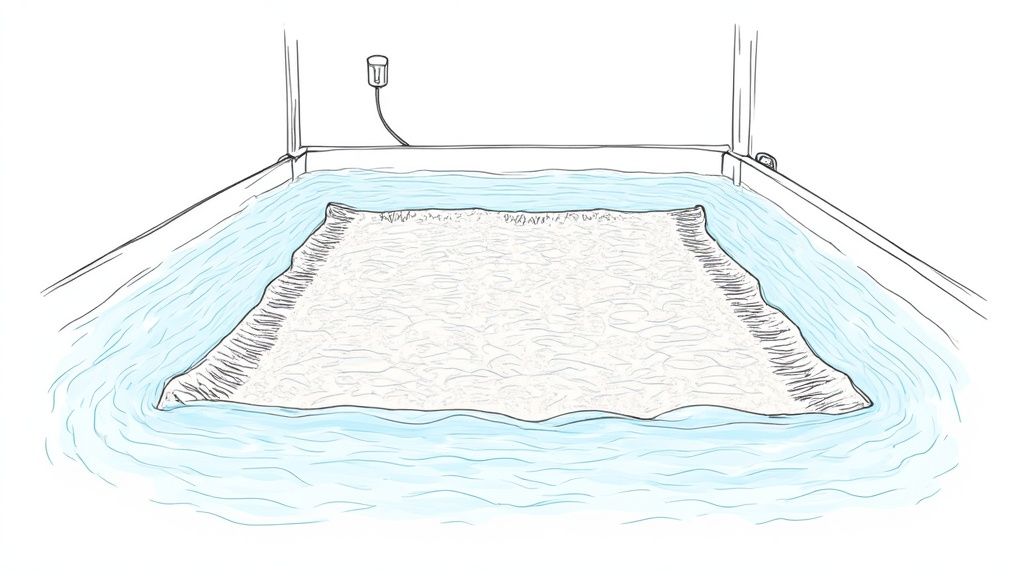
Ultrasonic cleaning is a highly advanced and specialised technique that uses high-frequency sound waves to achieve a microscopic level of clean. The process involves submerging the rug in a tank filled with a carefully selected cleaning solution. An ultrasonic transducer then generates sound waves, typically between 20 to 40 kHz, creating millions of microscopic bubbles that implode upon contact with the rug’s fibres. This implosion, known as cavitation, creates an intense yet gentle scrubbing action that dislodges dirt, grime, and even bacteria without any harsh mechanical brushing.
This cutting-edge approach is one of the most sophisticated rug cleaning methods available, prized for its ability to clean intricate designs and delicate materials without causing damage. It is a cornerstone of professional textile conservation, used by museum conservators and high-end restoration services to preserve priceless historical artefacts and antique rugs.
When to Use This Method
Due to its gentle nature and profound effectiveness, ultrasonic cleaning is the preferred choice for the most valuable and fragile textiles. It is the gold standard for:
- Antique and Heirloom Rugs: Safely cleaning antique Oriental or Persian rugs where fibre integrity is paramount.
- Delicate Materials: Ideal for silk, wool, and other natural fibres that could be damaged by traditional agitation or heat.
- Historical Textile Preservation: Used in museum settings to restore and conserve delicate tapestries and fabrics.
- Fire and Smoke Restoration: Effectively removes soot and smoke particles that have deeply penetrated the fibres.
Best Practices for Optimal Results
Ultrasonic cleaning is not a DIY method; it demands professional expertise and specialised equipment. To ensure a safe and successful outcome, several factors are critical.
- Seek Certified Professionals: This method should only be performed by highly trained and experienced technicians who specialise in textile restoration.
- Demand a Pre-Assessment: A thorough pre-assessment of the rug’s condition, dye stability, and fibre type is essential to determine the correct frequency and cleaning solution.
- Use Appropriate Solutions: The cleaning agent must be compatible with the rug’s material. A professional will select a pH-neutral, non-toxic solution tailored to the specific textile.
- Ensure Controlled Drying: After cleaning, the rug must be dried in a controlled environment with proper airflow and humidity levels to prevent any risk of colour bleeding or distortion.
Rug Cleaning Methods Comparison Overview
| Cleaning Method | Implementation Complexity ? | Resource Requirements ⚡ | Expected Outcomes ? | Ideal Use Cases ? | Key Advantages ⭐ |
|---|---|---|---|---|---|
| Hot Water Extraction (Steam Cleaning) | High – requires professional equipment and technique | High – hot water, pressure systems, suction | Deep fiber penetration, allergen removal | Deep cleaning most rug types, hotel & restoration | Deep cleaning, effective stain removal, no chemical residue |
| Dry Cleaning (Encapsulation) | Moderate – specialized solvents and equipment | Moderate – encapsulation polymers, vacuum | Surface to subsurface cleaning, quick drying | Delicate/water-sensitive rugs, commercial quick cleans | Fast drying, no shrinkage, prevents re-soiling |
| Foam Cleaning | Moderate – requires foam generator and agitation | Moderate – foam solution, mechanical brush | Good surface cleaning, moderate drying time | Routine maintenance, residential spot cleaning | Moderate drying, less over-wetting, easy application |
| Shampooing | Moderate to High – mechanical agitation and rinsing | Moderate – foamy detergent, brushes | Deep cleaning, but longer drying | Heavily soiled synthetic fiber rugs, cost-effective | Effective deep cleaning, good for synthetic fibers |
| Bonnet Cleaning (Spin Cleaning) | Low – rotary floor machine and bonnets | Low – absorbent bonnets, cleaning solution | Surface soil removal, very fast drying | Quick cleaning of commercial spaces | Very fast drying, cost-effective, easy operation |
| Dry Compound Cleaning | Low – spreading compound and vacuuming | Low – absorbent organic compounds | Surface cleaning, no drying time needed | Delicate rugs, emergency cleaning | No drying time, environmentally friendly, safe for fibers |
| Immersion Cleaning | High – complete submersion and specialized tanks | High – large equipment, water usage | Most thorough cleaning, cleans both sides | Heavily soiled, pet damaged, flood recovery | Thorough cleaning, effective odor removal, both-sided |
| Ultrasonic Cleaning | High – specialized ultrasonic equipment | High – advanced technology, expert operators | Deep cleaning without fiber damage | Antique, delicate rugs, museum textiles | Extremely gentle, precise cleaning, no agitation |
Making the Final Choice for a Flawless Finish
We've journeyed through a comprehensive landscape of professional rug cleaning methods, from the deep, restorative power of hot water extraction to the delicate precision of dry compound cleaning. Each technique offers a unique set of benefits, designed to tackle specific challenges and cater to different types of rug fibres, construction, and soiling levels. The key takeaway is that there is no single "best" method; the ideal choice is always the one that is safest and most effective for your specific rug.
Choosing correctly requires a thoughtful assessment. A modern, synthetic rug in a busy family living room might thrive with a periodic steam clean, while a priceless antique Persian rug would be irreversibly damaged by the same process. For that treasured heirloom, a gentle dry compound or meticulous hand-washing immersion clean is the only responsible choice. This decision-making process is the cornerstone of effective rug care.
Key Considerations for Your Rug
Before you proceed with any cleaning, synthesise what you’ve learned by asking these critical questions:
- What is the material? Is it a resilient synthetic like nylon or polypropylene, or a delicate natural fibre like wool, silk, or jute? The material dictates its tolerance for water, heat, and agitation.
- What is the construction? Is your rug machine-woven, hand-knotted, or tufted? Hand-knotted rugs are incredibly durable but require expert handling, while tufted rugs have a backing that can be damaged by excessive moisture.
- What is the type of soil? Are you dealing with general dust and grime, a specific food spill, a pet accident, or deep-set odours? The nature of the stain will guide the choice between surface-level bonnet cleaning and deep-penetrating immersion or enzyme treatments.
- What is your risk tolerance? While DIY methods can handle minor spills, improper technique or using the wrong solution on a valuable rug can lead to colour bleeding, fibre damage, or shrinkage. Professional services mitigate these risks entirely.
Expert Insight: The most significant error a rug owner can make is applying a one-size-fits-all approach. A professional technician’s first and most crucial step is always fibre identification and a colourfastness test in an inconspicuous area. This diagnostic step prevents disasters and ensures a flawless result.
Ultimately, understanding the different rug cleaning methods empowers you to be a better custodian of your valuable textiles. By investing in the correct care, you are not just cleaning a floor covering; you are preserving an piece of art, extending its lifespan, and enhancing the health and beauty of your home. For residents and businesses in Cheltenham, Gloucester, and Stroud, this knowledge ensures your spaces remain welcoming and pristine.
Ready to give your rugs the specialised care they deserve? The experts at AG Carpet Specialists possess the knowledge and equipment to identify the perfect cleaning method for any rug, from modern synthetics to delicate antiques. Contact AG Carpet Specialists today for a professional assessment and a free, no-obligation quotation to restore the beauty and freshness of your home.