Of course. Here is the rewritten section, crafted to sound like it was written by an experienced human expert, following all your specific instructions and formatting requirements.
Tackling pet urine effectively is about more than just a quick blot with a paper towel. To truly get rid of that stubborn smell, you need to go deeper and neutralise the uric acid crystals that are the real source of the problem. This means combining quick action with the right kind of cleaner—specifically, an enzymatic one designed to break down what soap and water leave behind.
Why Is Pet Urine So Stubborn?
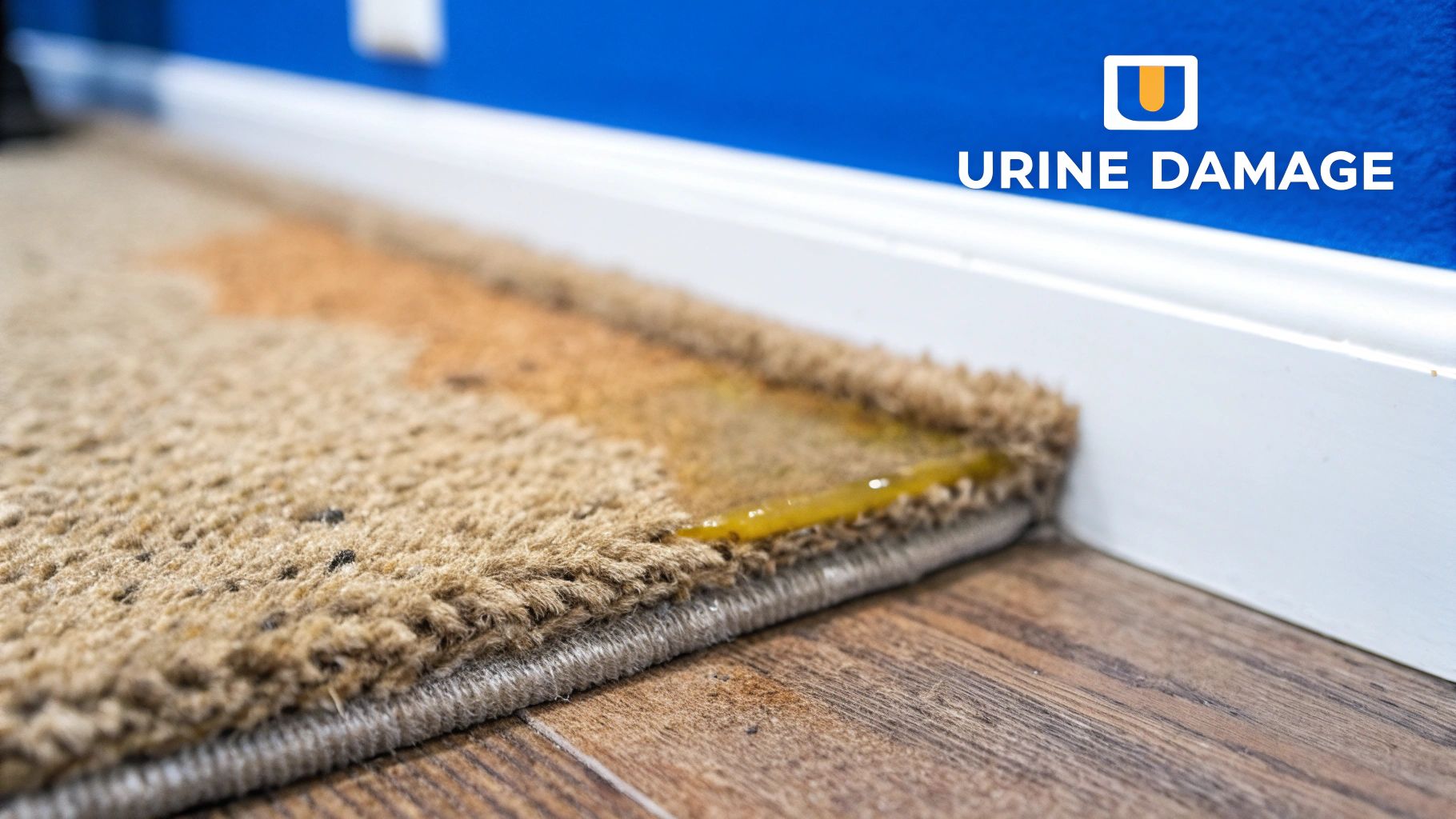
It’s a frustrating cycle that almost every pet owner in the UK knows well. You find an accident, clean it thoroughly, and the stain vanishes. But then, a few days later, especially when the weather gets a bit humid, that tell-tale smell creeps back. You're not imagining it. The problem is that the urine has penetrated far deeper than you can see.
Pet urine isn't like a simple tea or coffee spill. It’s a complex cocktail of urea, pigments, and proteins, but the real troublemaker is uric acid.
When your dog or cat has an accident, the liquid doesn't just sit on top. It quickly soaks through the carpet fibres, into the backing, and often reaches the underlay beneath. You can blot the surface dry, but what remains are non-soluble uric acid crystals that cling tightly to the carpet fibres. Your standard household sprays and soaps just won't shift them.
The Science Behind That Lingering Smell
The real issue starts when those hidden crystals get damp again. Humidity in the air, a steamy summer's day, or even your next attempt at cleaning the carpet can reactivate them. This releases ammonia and mercaptans, which create that distinct, pungent odour. It's the reason the smell seems to reappear from nowhere, long after you thought you'd dealt with it.
Key Takeaway: The challenge with pet urine isn't the visible stain; it's the invisible uric acid crystals. These crystals are the source of persistent odours and will reactivate with moisture, making it seem like the smell never truly left.
With around 10 million households owning a dog and 8.2 million owning a cat in the UK, this is a massive issue for carpets up and down the country. It's not just about the unpleasant smell, either. The moisture and acidity can cause real damage, weakening the carpet’s latex backing and leading to delamination or even rot over time. It shows why proper, specialised cleaning is so vital to protect your home and your flooring.
Beyond the Odour to Permanent Damage
If accidents happen in the same spot repeatedly, the problem gets worse. The acidic nature of the urine can actually bleach or dye the carpet fibres, causing permanent discolouration that no amount of cleaning can fix. This is why acting fast—and correctly—is so important. For more general advice, you might want to look at our guide on essential carpet cleaning tips.
Understanding why pet urine has such staying power is the first step. Once you know what you’re up against, you can learn how to finally defeat it for good.
How to Pinpoint Every Hidden Pet Stain
Sometimes, the most frustrating part of cleaning up after our pets isn't the actual scrubbing. It's that nagging feeling you've missed a spot. You can smell it, but you just can't see it. This is a classic problem, especially with older, dried stains that have faded into the carpet’s pattern.
Before you even think about treating the problem, you need to play detective and create a "stain map" of every single affected area. If you miss even one tiny spot, that unpleasant odour is guaranteed to come back. Luckily, there are a couple of proven methods to uncover every last accident.
Using a UV Blacklight
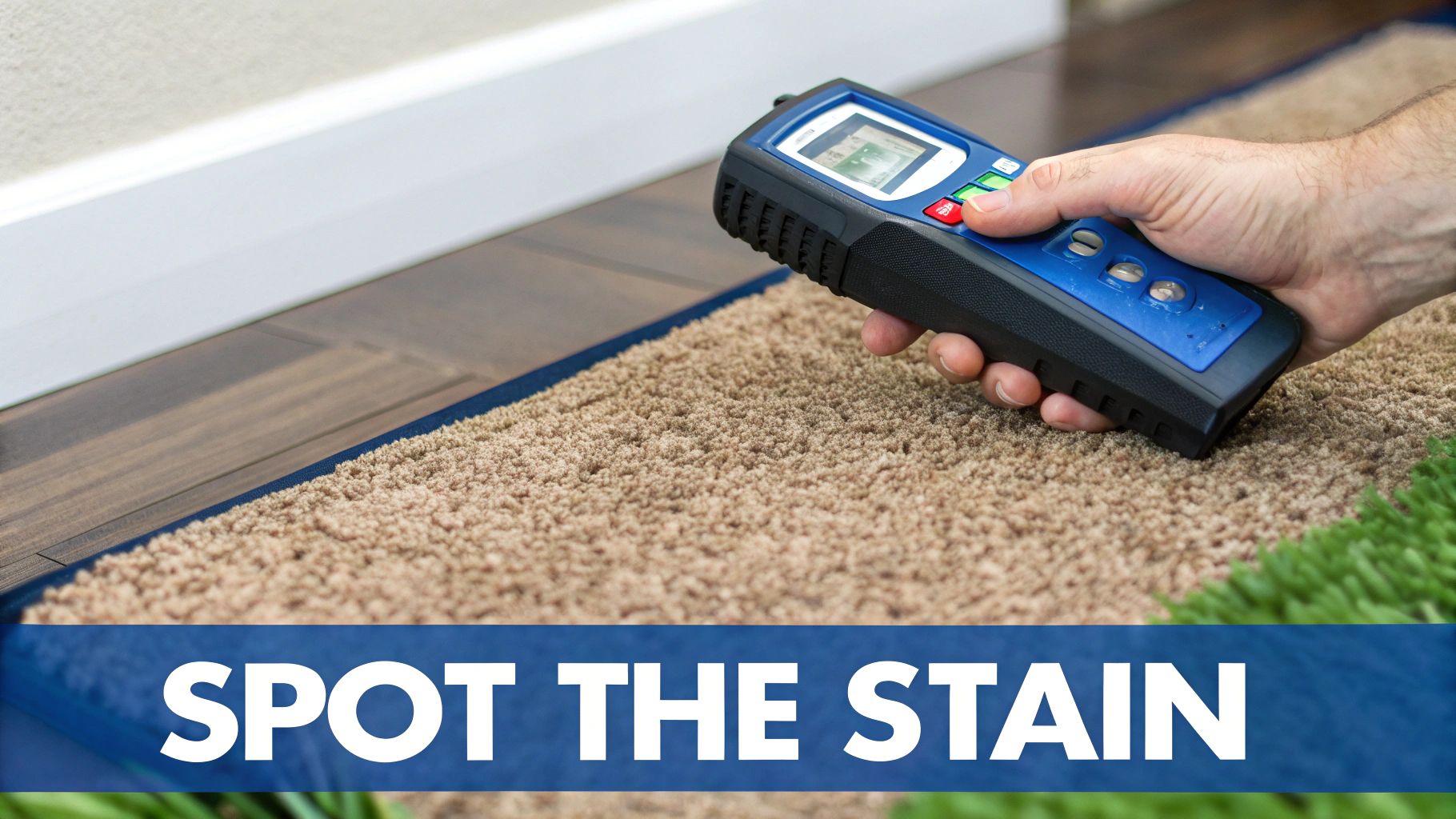
Without a doubt, the most effective tool for this job is a UV blacklight. This isn't just a fancy gadget; it's grounded in science. Dried urine contains phosphorus and proteins, particularly salts from uric acid, which just so happen to fluoresce—or glow brightly—when you shine an ultraviolet light on them.
To get this to work properly, you’ll need to set the scene. Kill all the lights in the room and pull the curtains shut to make it as dark as you possibly can. Then, slowly sweep the blacklight's beam across the carpet. Pay extra attention to the usual suspect areas: corners, along skirting boards, around furniture legs, and any spots where your pet loves to lounge.
When you see a spot glow, don't just try to remember where it is. Grab some chalk or a few sticky notes to mark the outside edge of each stain. This creates your physical map, making sure you treat the entire patch and not just the very centre.
When You Don't Have a UV Light
No blacklight? Don't worry, you can fall back on some good old-fashioned detective work. Believe it or not, your own nose is surprisingly good at locating the source of pet smells.
You'll need to get down on your hands and knees and methodically sniff the carpet in a grid pattern. It might feel a bit daft, but it’s a remarkably effective way to narrow down the problem area.
Once your nose has led you to the general location, it’s time to use your sense of touch.
- Feel for Changes in Texture: An old, dried stain can make the carpet fibres feel stiff, crusty, or just different from the softer surrounding area.
- Check for Dampness: Press a clean, dry paper towel firmly into the carpet where you suspect a stain. Even if it looks dry, the towel might pull up some residual moisture and a faint yellow colour you couldn't see before.
This hands-on approach takes a bit more time and patience, but combining your senses is a powerful way to find those stubborn, invisible sources of pet odour. Once you’ve marked every single stain, you're finally ready to start the cleaning process.
Effective DIY Solutions That Actually Work
When you find a pet accident, it’s tempting to grab the strongest chemical cleaner under the sink. But before you do, have a quick look in your kitchen cupboards. Believe it or not, some of the best and most eco-friendly solutions for tackling pet urine are probably already there.
Simple household staples like white vinegar and bicarbonate of soda can work wonders. The real secret is knowing how to use them properly to break down the urine's chemical structure, not just hide the smell or push the stain further into your carpet.
The Vinegar and Bicarbonate of Soda Method
This two-part method is a time-tested classic for good reason. White vinegar, a mild acid, is fantastic for neutralising the alkaline salts found in dried urine. Bicarbonate of soda (or baking soda) then comes in as a brilliant natural deodoriser, helping to lift any remaining moisture and residue from deep within the carpet pile.
Here’s how to tackle a fresh stain:
- First things first, blot the area with clean, white paper towels. Press down firmly to soak up as much of the urine as possible. Whatever you do, never scrub. Scrubbing just grinds the stain in and can permanently damage your carpet fibres.
- Next, mix up a simple solution of equal parts white vinegar and cool water in a spray bottle. Give the stained area a light misting, making sure to cover it all without completely soaking the carpet.
- Let the vinegar solution sit and work its magic for at least 15-20 minutes. This gives it enough time to break down the stubborn uric acid.
- Go back in with fresh paper towels and blot the area again to absorb the vinegar mixture.
- Finally, sprinkle a generous amount of bicarbonate of soda over the damp patch. You might even hear a little fizzing sound as it gets to work on any leftover vinegar.
Now, you just have to be patient. Leave the bicarbonate of soda until it's completely dry—this could take a few hours or even overnight. As it dries, it pulls out that lingering smell and moisture. Once it’s bone dry, a thorough vacuum is all it takes to lift it away. For a more comprehensive look at floor care, don't miss our guide on how to deep clean carpets at home.
The infographic below gives a great visual overview of the cleaning process, from identifying the stain right through to the final steps.
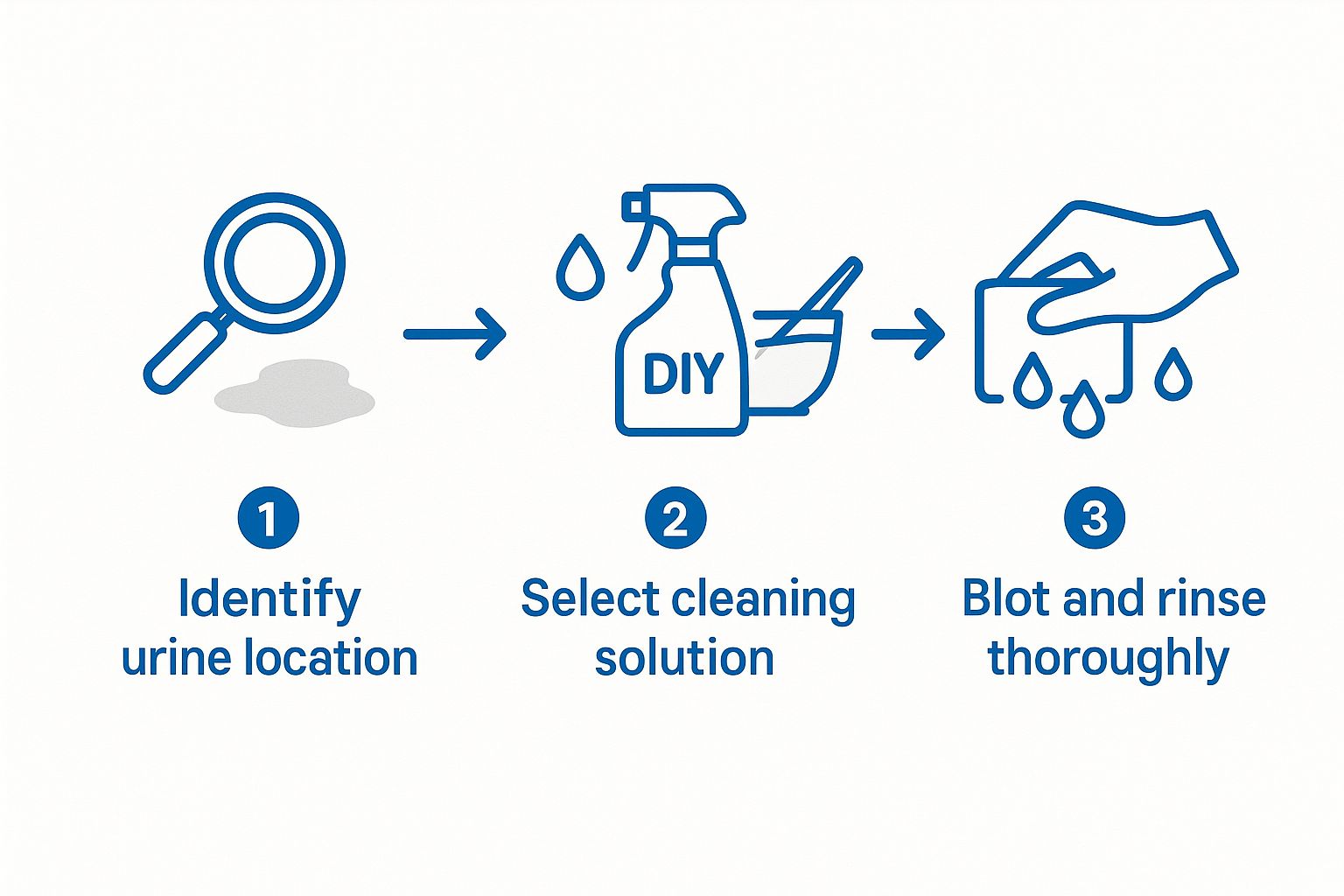
It’s a good reminder that a methodical approach, not frantic scrubbing, is what gets results.
Always Perform a Patch Test First
This is a step you absolutely cannot skip. Before you use any cleaning solution—whether it's a homemade mix or a shop-bought product—you must do a patch test. Carpet dyes, particularly in natural fibres like wool, can react badly to acidic solutions like vinegar.
Find a discreet spot to test your solution. This could be inside a wardrobe, under the sofa, or even on a spare carpet offcut if you have one. Apply a small amount of the cleaner, leave it for at least an hour (or until dry), and then check for any colour run or damage. It’s a simple check that could save you from a very expensive mistake.
Taking this quick precaution gives you the confidence that your chosen method is safe for your carpet, so you can focus on getting rid of the stain without causing any more problems.
Mastering the Use of Enzymatic Cleaners
When home remedies like vinegar and bicarbonate of soda haven’t quite done the trick, it’s time to bring in a specialist solution. Enzymatic cleaners are, without a doubt, the most powerful tool in your arsenal for getting rid of pet urine odours for good. Understanding how they work is the secret to getting professional-level results at home.
These aren't your typical carpet shampoos. Instead of just masking a smell or lifting surface-level dirt, enzymatic cleaners use bio-enzymes—a type of beneficial bacteria—to physically break down the organic matter causing the problem. Think of them as a microscopic clean-up crew that specifically targets and eats the uric acid crystals your pet left behind. This process doesn't just hide the smell; it completely destroys it at a molecular level.
Choosing the Right Product
The cleaning aisle can be a bit overwhelming, but finding an effective enzymatic cleaner is straightforward once you know what to look for on the label.
- Seek out "Enzymatic" or "Bio-Enzymatic" formulas: This is non-negotiable. If the bottle just says "odour remover," it’s likely a perfumed spray that won't solve the underlying issue.
- Check the ingredients for specific enzymes: The most effective products will often list protease (for breaking down proteins) and amylase (for targeting starches) as active ingredients.
- Avoid harsh chemicals: The best cleaners rely on bacteria and enzymes, not aggressive chemicals that could damage your carpet fibres or pose a risk to your pets.
It’s also vital to choose a product specifically designed for pet urine. While many enzymatic cleaners tackle organic stains, those made for pet accidents are optimised for the unique proteins and acids in animal waste. Cats, in particular, produce highly concentrated urine. For more specific advice on this, you can read our guide on how to get rid of cat pee smell.
The Correct Application Technique
This is where many people go wrong. A light spray over the top of the stain simply won't work. For the enzymes to be effective, they need to make contact with every last bit of urine.
The most common mistake we see is under-application. You must completely saturate the stain, including the area immediately around it. Remember, urine soaks down into the carpet backing and often the underlay, so your cleaner needs to follow that exact same path.
Once you’ve generously applied the cleaner, don't be tempted to dry it right away. These enzymes need a damp environment to stay alive and do their work. A great tip is to cover the treated area with a damp towel, and then a piece of plastic over that. This simple step stops the cleaner from evaporating and gives the enzymes the 12 to 24 hours they need to fully digest the uric acid.
After the waiting period is over, just remove the coverings and let the area air-dry completely, which might take a day or two. Once it's bone dry, a thorough vacuuming will lift away any leftover residue and help restore your carpet’s texture. The result should be a truly clean carpet, free from any lingering odours.
Knowing When to Call a Professional
Even with the best DIY methods and a cupboard full of powerful enzymatic cleaners, there are times when you simply have to admit defeat. Knowing when to stop scrubbing and bring in a professional for carpet cleaning pet urine isn't a sign of failure; it’s a smart decision that protects your investment and restores hygiene to your home.
So, how do you know when you’ve reached that point? A few clear signs tell you it's time to pick up the phone.
Persistent Odours That Just Won't Quit
You’ve followed every step. You’ve blotted, treated with vinegar, used an entire bottle of enzymatic cleaner, and let it dry for days. Yet, on a damp day, that familiar, unpleasant smell returns.
This is the most common sign that the urine has soaked far beyond the carpet fibres. It has likely penetrated the underlay and may have even reached the subfloor. No amount of surface cleaning can fix this, as the source of the odour is now completely inaccessible to your sprays and cloths.
Reappearing Stains After Cleaning
Another frustrating scenario is the "ghost stain." You clean a spot, it looks perfect, but a few days or weeks later, a faint yellowish or brownish ring reappears in the exact same place. This is caused by a process called wicking.
Wicking happens when dirt and urine residue from deep within the carpet pile and underlay are drawn up to the surface as the carpet dries. It’s a sure sign that your DIY cleaning, while well-intentioned, just didn't have the power to extract the problem from its source.
The Power of Professional Equipment
A key reason to call for help is the significant difference in equipment. Frankly, your hands and a spray bottle can't compete with the technology professionals use.
- High-Powered Hot Water Extraction: This is far more advanced than a rented steam cleaner. These machines inject a special cleaning solution deep into the carpet at high pressure, then use incredibly powerful vacuums to extract the dirty water, urine, and cleaning residue all at once.
- Industrial-Strength Treatments: Professionals have access to specialised, industrial-grade enzymatic treatments and deodorisers that are much more potent than anything available over the counter.
Industry reports consistently show that while household products often just mask smells, professional steam cleaning technology, combined with pet-specific enzymatic agents, is the most reliable way to break down the uric acid causing the issue. To learn more, check out these insights on professional pet odour removal.
If you suspect the urine has soaked into the underlay, or if you're dealing with multiple large stains, calling a professional is the only way to guarantee a complete solution. Attempting to fix a deep-seated problem yourself can sometimes make it worse.
When you're facing a stubborn pet urine problem, investing in expert help is often the most effective and least stressful solution. You can explore the benefits of our professional carpet cleaning services to see how we can restore your carpets to their best.
Frequently Asked Questions About Pet Urine on Carpets
Even when you think you have your cleaning routine down, it’s only natural to have a few questions. When dealing with something as stubborn as pet urine, knowing the right approach can be the difference between a quick fix and a lasting solution.
Here are some of the most common questions we get from UK pet owners about tackling pet accidents on their carpets.
Can I Use a Household Steam Cleaner on Pet Urine?
This is a very common question, but it’s absolutely crucial to understand the risk. Using a domestic steam cleaner on a urine stain is one of the biggest mistakes you can make. The intense heat from the steam essentially “cooks” the protein in the urine, bonding it permanently to the fibres of your carpet.
This process doesn't just lock the stain in, making it impossible to remove later, but it also amplifies the foul odour. Professional hot water extraction is a completely different method. We use specialised cleaning agents and incredibly powerful vacuums to flush out and remove the contaminants without setting them with heat. For a DIY approach, always stick to cool water and proper enzymatic treatments.
Will Bicarbonate of Soda Alone Remove the Smell?
Bicarbonate of soda is a brilliant natural deodoriser and does a great job of absorbing moisture and tackling surface-level smells. On its own, however, it’s not a complete solution.
While bicarb can certainly help, it simply doesn’t have the chemical power to break down the uric acid crystals deep in the carpet. These crystals are the real source of that persistent, lingering odour. Think of it as a useful step in your cleaning process—perhaps used after a vinegar solution—but it will rarely solve a set-in urine problem by itself.
Expert Insight: The only way to stop your pet from returning to the same spot is to completely eliminate the odour. If they can still detect even a tiny trace of old urine, their instinct will be to mark that spot again.
How Can I Stop My Pet from Urinating in the Same Spot?
Pets are creatures of habit, and their incredible sense of smell will always draw them back to the scene of a previous accident. To break this frustrating cycle, you have to completely get rid of the scent.
This is where enzymatic cleaners are worth their weight in gold; they are designed to destroy the odour molecules at the source rather than just covering them up. Once you are confident the area is clean and neutralised, you can try using pet-safe deterrent sprays. If the behaviour carries on, it’s always a good idea to check in with your vet to rule out any underlying medical or behavioural problems. For a truly clean home, it's also worth looking into related issues like managing pet dander and allergies, as the overall environment can affect your pet.
Many homeowners also wonder about the financial side of bringing in professionals. You can find out more about typical costs in our detailed guide on how much carpet cleaning costs.
For stubborn stains and odours that just won't budge, the expert team at AG Carpet Specialists is here to help. We use professional-grade equipment and eco-friendly solutions to restore your carpets and create a healthier home. Contact us today for a free, no-obligation quote.