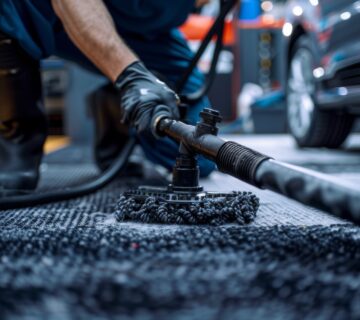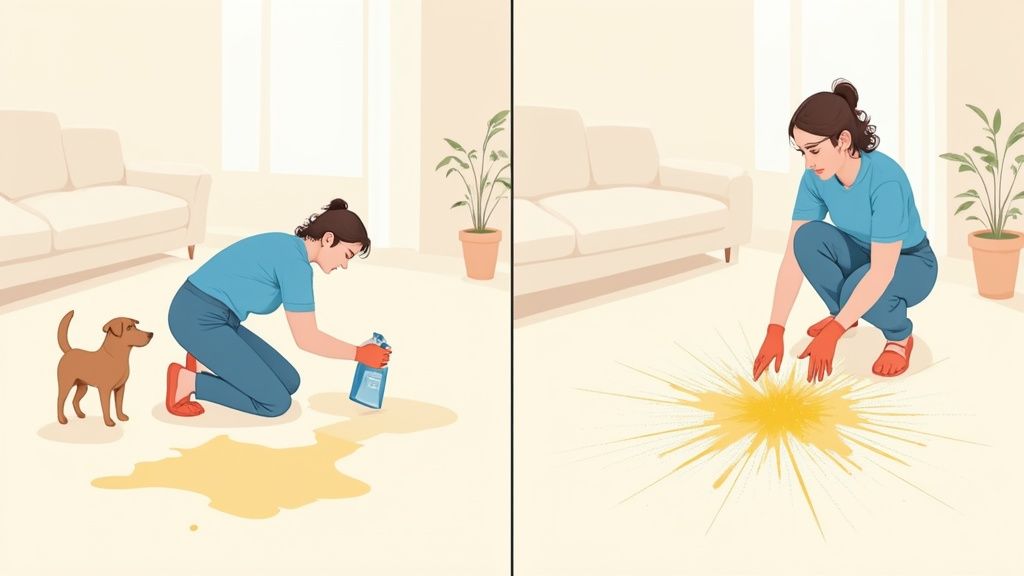
If you're going to get on top of a pet urine problem, you have to understand one crucial thing: a surface clean just won't cut it. To truly fix the issue, you need to bring out the big guns – an enzymatic cleaner. This is the only type of product designed to break down the uric acid crystals hiding deep within your carpet fibres, and it's the secret to getting rid of that stain and stubborn smell for good.
Understanding Why Pet Urine Stains Are So Stubborn
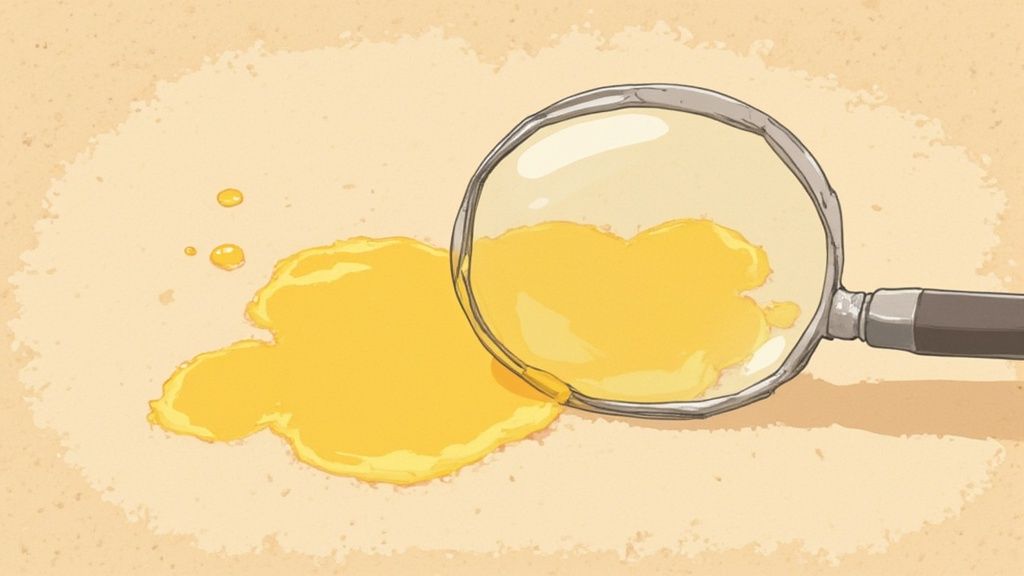
Have you ever cleaned a pet stain, thought you'd sorted it, only for that unmistakable odour to pop up again on a damp day? It's a classic, frustrating experience for pet owners, and there's a very specific reason it happens. The problem is all down to the complex chemistry of animal urine.
When a pet has an accident, the warmth of the urine helps it penetrate lightning-fast, seeping deep into the layers of your flooring. It’s not just sitting on top.
- Carpet Fibres: First, it soaks into the visible pile you walk on.
- Carpet Backing: Then it works its way through the tough woven backing that holds everything together.
- Underlay: From there, it saturates the spongy underlay, which acts like a sponge.
- Subfloor: In bad cases or with repeat offences, it can even reach the wood or concrete subfloor.
This deep, multi-layer saturation is the first challenge we face when it comes to properly cleaning animal urine from carpets.
The Science of the Smell
The real villain behind that smell that just won't quit is uric acid. While you can clean up some of the other components in urine with normal detergents, uric acid is different. It forms non-soluble salt crystals that are completely resistant to water and your average cleaning spray.
So, when you clean the area, you might remove the yellow stain and the immediate smell. But what you've left behind are those stubborn uric acid crystals, embedded deep in the carpet fibres, underlay, and maybe even the floorboards beneath.
I once had a client who was convinced their home was haunted by a phantom smell. They'd had their carpets cleaned twice, but the odour kept returning in the summer. A quick check with a UV light revealed old urine deposits deep in the underlay; the humidity was reactivating the uric acid crystals, releasing the ammonia smell all over again.
This reactivation is exactly why the smell seems to appear from nowhere. Any kind of moisture – whether it's humidity in the air, a steamy day, or even another attempt to clean with water – rehydrates those crystals and kick-starts the whole stinky cycle again.
A Growing Concern for UK Homeowners
This isn't a rare problem; it's a major reason people call in the professionals. The UK cleaning industry was valued at a huge £59.8 billion in 2021, and we've seen a definite rise in calls for specialist services like tackling animal urine in carpets. As more of us welcome pets into our homes, the need for proper solutions is growing.
You can explore more about the UK cleaning industry's growth and what’s driving it. It just goes to show you're certainly not alone in facing this tricky cleaning challenge.
A Practical Guide to Removing Urine Stains and Odours
When you find a pet accident, what you do in those first few moments can make all the difference. Get it right, and it's a simple clean-up. Get it wrong, and you could be dealing with a lingering smell for months to come. This isn't just about general advice; it’s a straightforward, actionable guide to properly tackling animal urine stains on your carpet.
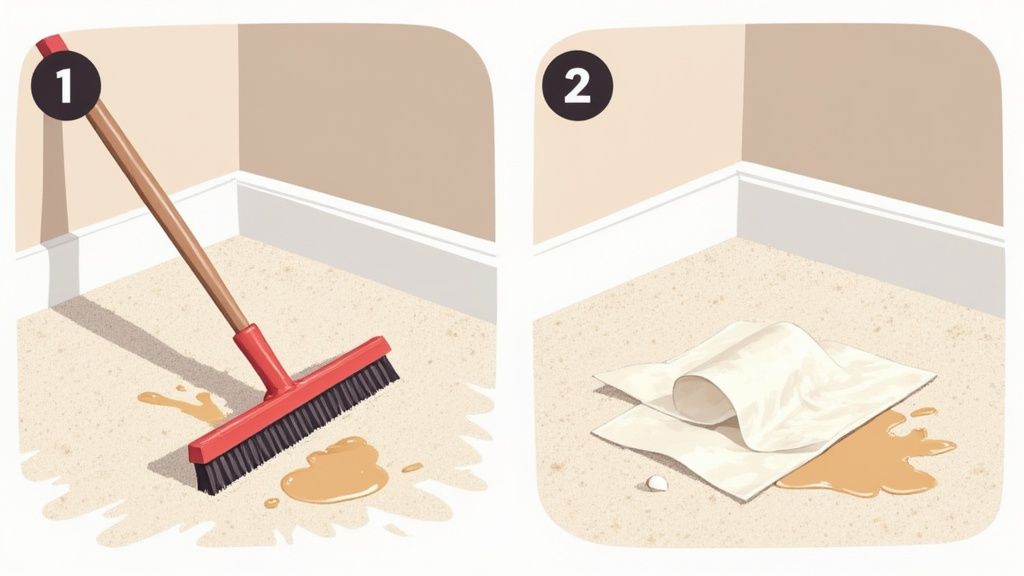
Your first thought might be to grab a brush and start scrubbing, but that's the worst thing you can do. Scrubbing just grinds the urine deeper into the carpet fibres and even into the backing. This spreads the stain and makes it exponentially harder to remove. You want to lift the urine out, not push it further in.
Always blot, never rub. The goal is to lift the urine out of the carpet, not force it deeper. Pressing down with an absorbent cloth draws the liquid up and away from the delicate fibres.
The Immediate Response: Fresh Accidents
For a new puddle, speed is everything. Get a thick stack of paper towels or a clean, white microfibre cloth and press down firmly on the wet spot. You want to absorb as much of the liquid as you possibly can. Keep using dry sections of the cloth until you can’t lift any more moisture out.
Once you’ve blotted the area dry, it's time to clean. This is where using the right product is non-negotiable. Your standard carpet shampoo or household spray simply won't do the job, as they don't tackle the unique chemical structure of urine.
Unleashing the Power of Enzymatic Cleaners
The real secret weapon in the fight against carpet cleaning animal urine is a good enzymatic cleaner. These brilliant products are packed with beneficial bacteria that produce enzymes. When you apply them to a stain, these enzymes get to work, literally consuming the uric acid crystals and breaking them down into simple, harmless gases that just evaporate away.
This biological process is the only method that truly and permanently gets rid of the source of the odour. Trying to mask it with air fresheners or neutralise it with vinegar will only give you temporary relief before the smell returns.
Here’s how to use an enzymatic cleaner effectively:
- Saturate the Area: After blotting, be generous with the enzymatic spray. You need to use enough cleaner to soak as deeply as the urine did—that means getting it into the carpet fibres, the backing, and maybe even the underlay.
- Give It Time: The enzymes need time to do their job. This isn't a five-minute spray-and-wipe. Check the product instructions, but most need the area to stay damp for several hours, sometimes up to 24, to fully digest all the uric acid.
- Cover and Wait: A great tip is to lightly cover the area with a damp towel. This stops it from drying out too quickly and creates the perfect environment for the enzymes to keep working.
- Blot and Dry: After the recommended time has passed, blot the area again with a clean, dry cloth to soak up any leftover moisture. Let the carpet air dry completely, which might take a day or two.
The struggle with stubborn stains like pet urine is a major reason the UK's carpet cleaning market is so robust. In fact, the carpet and upholstery cleaning services market was valued at around $3.99 billion in 2022, and carpet cleaning alone accounted for 72.71% of that. It just goes to show how much homeowners value a clean, fresh home.
Finding and Treating Old, Dried Stains
What about those stains you didn't notice right away? Old, dried urine stains are often invisible but are usually the source of those persistent, mystery smells. The first step is to find them.
Your best tool for this is an ultraviolet (UV) or "blacklight." Turn off the lights and slowly scan the UV light across your carpet. The salts in dried urine will glow, usually a dull yellow or green, revealing every old accident. I like to use small pieces of masking tape to mark the edges of each stain so I know exactly where to treat.
For a more detailed look at maintaining your carpets, our guide on how to deep clean carpets at home offers more expert tips.
Once you've found the old stains, you treat them with the same enzymatic process. The only difference is that crystallised, aged urine can be much more stubborn. You might need to repeat the treatment two or even three times to fully break down all the uric acid that has built up over time.
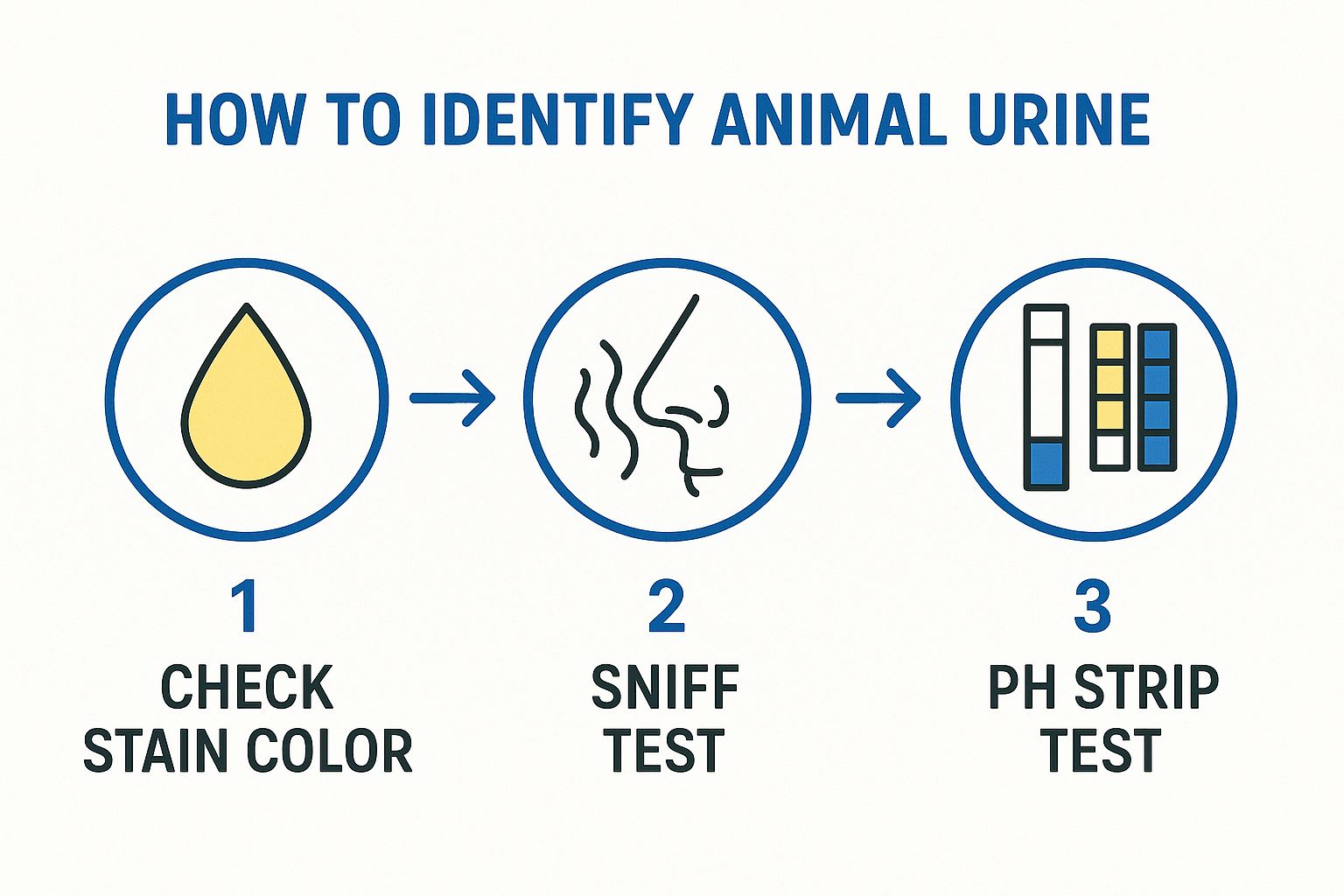
This image simplifies the initial steps for identifying a potential animal urine stain before you start treatment.
While this guide is focused on pet urine, understanding general stain removal techniques for carpets can be incredibly useful for other household spills.
DIY Cleaning Solutions vs Professional Enzymatic Cleaners
Many people are tempted to reach for household items like vinegar or baking soda first. While these can sometimes help with very fresh, minor stains, they often fall short when dealing with the complex chemistry of animal urine. Here’s a quick comparison to show why a specialised product is almost always the better choice.
| Cleaning Method | Effectiveness on Odour | Effectiveness on Stains | Risk of Carpet Damage | Best For |
|---|---|---|---|---|
| Vinegar & Water Solution | Low to Moderate. Temporarily neutralises ammonia smell. | Low. May lighten very fresh stains but won't remove them. | Moderate. Acid can damage wool or natural fibres. | Immediate, minor accidents on synthetic carpets when no other options are available. |
| Baking Soda Paste | Moderate. Absorbs surface odours and moisture. | Low. Doesn't break down the stain components. | Low. Generally safe but can leave a white residue. | Absorbing excess moisture after blotting a fresh stain. |
| Professional Enzymatic Cleaner | High. Permanently destroys uric acid crystals. | High. Breaks down the proteins that cause staining. | Very Low. Formulated to be safe for most carpets. | Any animal urine stain, both fresh and old. The definitive solution. |
Ultimately, while home remedies might seem like a quick fix, they rarely solve the underlying problem. Enzymatic cleaners are designed specifically for this job, and their effectiveness makes them the clear winner for achieving a truly clean and odour-free carpet.
Finishing the Job Properly
Once the enzymatic cleaner has worked its magic and the area is bone dry, the final touch is to give the spot a good vacuum. This helps lift the carpet fibres, restoring their natural texture and helping the treated area blend back in perfectly with the rest of the carpet.
Just remember that patience is crucial. The biological and chemical reactions needed to eliminate urine stains properly take time. If you rush the steps or use the wrong products, you'll just end up frustrated with a smell that won't go away. By following this science-backed approach, you can confidently handle any pet accident and bring that freshness back to your home.
Choosing the Right Cleaning Products and Tools
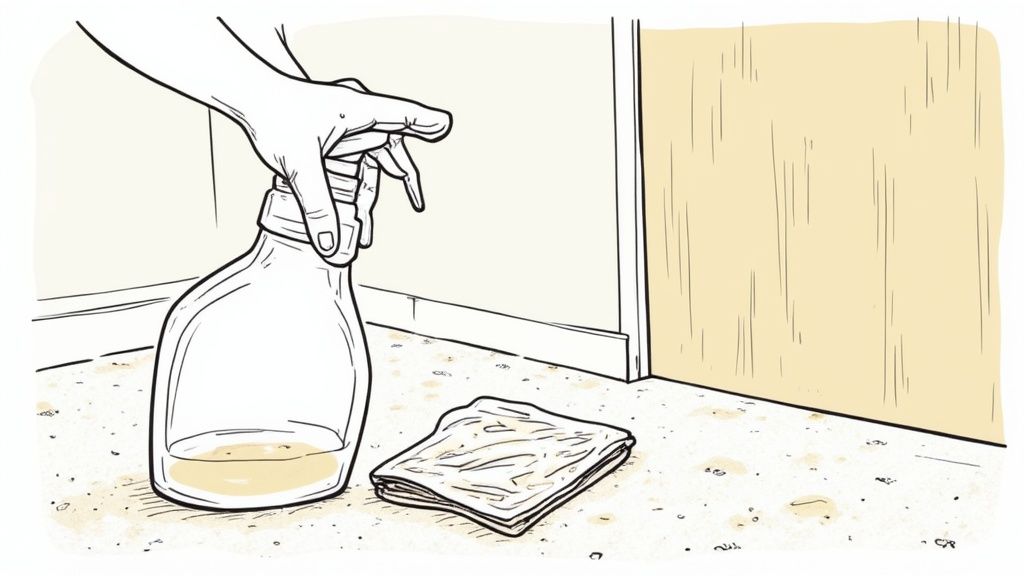
Walking into the cleaning aisle and seeing a wall of sprays, foams, and machines can feel pretty overwhelming. With so many options promising miraculous results, it’s easy to grab the wrong one and end up with a lingering smell or, even worse, a damaged carpet.
Choosing the right products isn’t just about cleaning; it’s about using the correct science to solve a very specific problem. The key is to understand that not all cleaners are created equal, especially when you're up against the stubborn chemistry of animal urine. The wrong product might mask the odour for a day or two, but it won't break down the uric acid crystals causing the real issue. This is why your first step is selecting a solution specifically formulated for the job.
Enzymatic Cleaners: The Gold Standard
For carpet cleaning animal urine, your most powerful ally is an enzymatic cleaner. As mentioned, these products contain beneficial bacteria that produce enzymes designed to break down and literally consume the organic matter in urine. Think of them as microscopic cleaning crews that digest the uric acid, proteins, and lipids until there's nothing left to cause an odour.
This biological process is precisely what makes them so effective. They don't just cover up the smell; they dismantle it at a molecular level, making them the non-negotiable choice for any pet owner dealing with carpet accidents.
My personal rule is simple: if it's a pet accident, it has to be an enzymatic treatment. Using anything else is like putting a plaster on a problem that needs stitches. You're just delaying the inevitable return of that awful smell.
For those interested in green cleaning, many effective and gentle options are available. You can learn more by exploring our guide on the best environmentally safe carpet cleaner choices for your home.
Oxidising vs. Bacterial Cleaners
While enzymatic cleaners are top-tier, you might also see oxidising and bacterial cleaners on the shelf. It really helps to know the difference.
- Oxidising Cleaners: These use ingredients like hydrogen peroxide to break down stain-causing chemicals through oxidation. They are excellent for removing colour from stains (like tea or wine) and can help with odours, but they don't always fully break down those complex uric acid crystals.
- Bacterial Cleaners: Often used interchangeably with enzymatic cleaners, these solutions contain live bacteria that produce the enzymes. They are highly effective but need the area to stay damp for a while to give the bacteria time to work.
For pet urine, a high-quality enzymatic or bacterial cleaner is almost always the best bet, as it targets the entire problem—the stain and the source of the odour.
Essential Tools for the Job
Having the right solution is only half the battle. You also need the right tools to apply it correctly and extract all the residue. You don't need a professional-grade van, but a few key items will make your life much easier and the results far better.
My recommended homeowner toolkit includes:
- White Microfibre Cloths: They're highly absorbent and perfect for blotting up fresh accidents without transferring any dye onto your carpet.
- A High-Quality Spray Bottle: If your cleaner doesn't come in one, a good spray bottle lets you saturate the area evenly and deeply.
- A UV Blacklight: An invaluable tool for finding old, hidden stains that are invisible in normal light but are the source of persistent odours.
- A Wet-Vac or Carpet Spot Cleaner: This is my top recommendation for homeowners. These machines are brilliant for flushing the area with clean water and extracting the cleaning solution and dissolved urine from deep within the carpet fibres.
The demand for effective home cleaning solutions has led to a booming market. The global carpet cleaner market was valued at USD 776.62 million in 2024, with UK consumers increasingly turning to machines that combine heating, suction, and scrubbing to tackle organic stains. This reflects a growing focus on home hygiene, especially in households with pets. You can find more insights on the rise of specialised carpet cleaners from Straits Research.
The Most Important Rule: Patch Testing
Before you apply any new product to a visible area of your carpet, you absolutely must perform a patch test. This is my non-negotiable rule, and ignoring it can lead to a cleaning disaster that's far worse than the original stain.
Find an inconspicuous spot—like inside a cupboard, under the sofa, or on a leftover carpet scrap. Apply a small amount of the cleaner according to the directions and let it sit for 24 hours. After it dries, check for any colour change, bleaching, or fibre damage. Only once you're certain it’s safe should you go ahead and treat the stain.
Common Mistakes That Can Make Pet Stains Worse
When you find a pet accident on the carpet, the natural instinct is to get it cleaned up immediately. While that speed is commendable, some of the most common cleaning methods can inadvertently make things a whole lot worse. They can embed the stain and odour so deeply that calling in a professional becomes your only way out.
Over the years, I've seen countless well-intentioned mistakes cause permanent damage. Knowing what not to do is just as important as knowing the right steps to take. Let's walk through the most common pitfalls so you can protect your carpet and avoid a costly catastrophe.
Reaching for the Steam Cleaner
One of the biggest mistakes I see homeowners make is pulling out a steam cleaner to tackle a urine stain. It sounds logical, doesn't it? Heat and steam are powerful cleaning tools, after all. But in this case, it’s the worst thing you could possibly do.
Animal urine is loaded with proteins. When you blast it with high heat, you're essentially cooking those proteins directly into your carpet fibres. This process creates a chemical bond, permanently setting the stain and locking in that awful odour for good. Once a urine stain has been heat-set, it becomes nearly impossible to remove, even for a seasoned pro like me.
It's a classic case of the "cure" being worse than the disease. While steam cleaning has its place, it's vital to know the difference between a standard deep clean and a specific stain treatment. To get a clearer picture, understanding the contrast between carpet cleaning vs steam cleaning is essential for any homeowner.
Using Ammonia-Based Cleaning Products
Another common error is grabbing a window cleaner or another household product that contains ammonia. This is a huge problem because of how your pet's nose works. A key chemical component of animal urine is ammonia, and it's one of the main scents they use to identify a toilet spot.
When you clean an area with an ammonia-based product, you're not really cleaning it from your pet's perspective. You're leaving behind a scent that smells remarkably similar to urine to them. Instead of deterring them, you’re basically putting up a big sign that says, "This is the toilet!" This encourages repeat offences in the exact same spot, creating a frustrating cycle that’s incredibly hard to break.
Never use ammonia to clean pet urine. It acts like a scent marker that invites your pet back to the scene of the crime, reinforcing the unwanted behaviour and making future accidents more likely.
Simply Masking the Odour
A quick spritz of air freshener might make the room smell nicer for a few hours, but it does absolutely nothing to solve the underlying issue. Masking the odour is a temporary fix that allows the real problem to fester deep within your carpet and underlay.
While the surface might smell like fresh linen, the uric acid crystals are still embedded in the fibres below. As we’ve discussed, these crystals just lie dormant, waiting to be reactivated by moisture. That unpleasant smell will always return. Relying on air fresheners just delays a proper clean-up and gives the urine more time to cause lasting damage. True carpet cleaning for animal urine is about complete elimination, not just covering it up.
Preventing Future Accidents and Managing Pet Behaviour
While effective carpet cleaning for animal urine is a crucial reactive measure, the ultimate goal is to stop accidents from happening in the first place. Real success comes from understanding the root cause of your pet's behaviour and creating a home environment where they're set up to succeed. This proactive approach doesn't just protect your carpets—it also fosters a happier, healthier relationship with your furry companion.
Preventing future mishaps really starts with figuring out the "why." An accident isn't just a random event; it's a form of communication. Your pet might be trying to tell you something about their health, their environment, or how they're feeling.
Identifying Common Triggers for Accidents
Before you can solve the problem, you have to pinpoint the trigger. Inappropriate urination often stems from a handful of common issues, from medical conditions to behavioural anxieties. A sudden change in toilet habits should never be ignored.
Start by considering these potential causes:
- Medical Issues: Conditions like urinary tract infections (UTIs), kidney disease, bladder stones, or diabetes can create a frequent and urgent need to urinate.
- Stress and Anxiety: Changes in the home, like a new baby, another pet, or even just moving furniture around, can trigger stress-related accidents.
- Scent Marking: If an area wasn't cleaned properly with an enzymatic cleaner, your pet's powerful nose can still detect lingering urine salts, identifying it as a designated toilet spot.
Sometimes, accidents are simply due to underlying health issues. For instance, understanding and managing feline lower urinary tract disease can be vital in preventing repeat occurrences in cats. If you suspect a health problem, your first step should always be a trip to the vet.
Creating a Pet-Friendly Environment
Once medical issues have been ruled out, you can focus on managing behaviour and optimising your home. For cat owners, this often means reassessing the litter box setup. Is it in a quiet, low-traffic area? Is it cleaned daily? Do you have enough boxes for the number of cats you have?
For dog owners, especially those with puppies, a solid and consistent potty routine is key. This means frequent trips outside—particularly after waking up, after meals, and just before bedtime. Positive reinforcement, like praise or a small treat when they successfully go outside, works wonders.
A common mistake is punishing a pet for an accident you discover later. They won't connect the punishment to the earlier act, which only leads to fear and confusion. Focus on positive reinforcement for good behaviour instead.
Properly cleaning previous accident sites is also a vital part of prevention. For a deeper dive into safe and effective methods, our guide on https://www.agcarpetspecialist.co.uk/2025/07/16/pet-friendly-carpet-cleaning/ provides some brilliant insights. By eliminating the scent markers, you remove the invitation for your pet to use that spot again.
Ultimately, combining a clean environment with a clear understanding of your pet’s needs is the most effective strategy for preventing future accidents.
Your Questions on Carpet Cleaning Animal Urine Answered
Even after mastering the basics, it's completely normal to have a few lingering questions about tackling those stubborn pet accidents. I get asked about these all the time by frustrated pet owners.
Let’s run through some of the most common queries to give you that extra bit of confidence.
Can I Use Vinegar and Baking Soda?
While you'll see vinegar and baking soda recommended everywhere for DIY cleaning, they're only a temporary fix for animal urine. Vinegar might help knock back the ammonia smell for a bit, and baking soda is decent at soaking up moisture.
But here’s the problem: neither of them touches the non-soluble uric acid crystals. These are the real culprits behind that lingering smell that comes back on a damp day. To get rid of the odour for good, you need an enzymatic cleaner. The enzymes literally consume the uric acid. Using vinegar first can sometimes hinder the enzymes, so it's always best to stick with a product made specifically for pet urine.
How Do I Find Old Hidden Urine Stains?
This is a classic problem. Old stains are often invisible, but they're still pumping out odour. The best tool for this job, hands down, is a UV (ultraviolet) blacklight.
Wait until it’s dark, turn off the lights, and slowly scan the UV light across your carpet, holding it about a foot or two above the fibres. The salts and proteins in old urine will glow, usually a dull yellow or green. I always tell my clients to mark the edges of the glowing spots with bits of masking tape. That way, you know you're treating the entire area.
This simple tool is a complete game-changer. It takes all the guesswork out of finding the true source of a smell, ensuring your cleaning efforts are focused exactly where they need to be. No more cleaning the wrong spot!
Finding and treating these hidden sources is absolutely crucial for complete odour elimination.
Will Professional Carpet Cleaning Remove the Odour?
A standard professional clean probably won't cut it, especially if the urine has soaked through the carpet backing and into the underlay. You have to specifically ask for a pet urine and odour removal treatment.
Professionals use specialised, high-strength enzymatic solutions and powerful sub-surface extraction tools. This equipment is designed to flush not just the carpet, but the underlay too. In really bad cases, we might even need to seal the subfloor. It's vital to tell the cleaning company about the pet issue beforehand so they arrive with the right gear and chemicals. When done correctly, a professional treatment is incredibly effective.
Of course, many homeowners wonder about the cost of a specialist service like this. To get a better idea of what's involved, you can learn more by exploring our detailed guide on how much does carpet cleaning cost.
Armed with this knowledge, you're far better prepared to handle whatever your furry friends throw at your carpets, keeping your home fresh and clean.
When DIY methods just aren't enough, professional expertise makes all the difference. AG Carpet Specialist offers advanced pet urine and odour removal treatments to restore your carpets and create a healthier home environment. Contact us today for a free, no-obligation quotation!