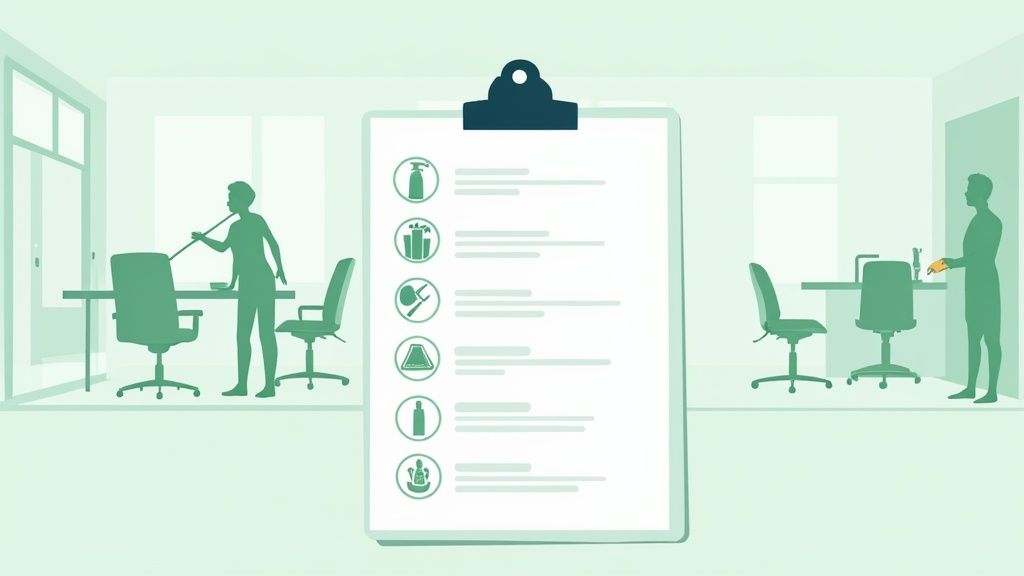
In today's competitive commercial landscape, a pristine environment is no longer a luxury, it's a fundamental expectation. A comprehensive commercial cleaning checklist is the cornerstone of a healthy, productive, and reputable business. It transforms routine tasks into a strategic system that safeguards employees, impresses clients, and protects your facility investment. Just as a well-structured plan is crucial for building a resilient cleaning strategy, having an effective inspection checklist is fundamental to upholding standards, much like maintaining vehicle safety and compliance.
This guide moves beyond simple mopping and dusting, offering a detailed, room-by-room breakdown of essential cleaning protocols. We will explore everything from high-touch surface sanitisation to specialised floor care, providing actionable steps and expert tips to elevate your cleaning standards. Whether you manage an office in Cheltenham, a retail space in Gloucester, or a commercial property in Stroud, this checklist will help you create a consistently clean and welcoming environment. We will cover seven core areas that every business must master for operational excellence.
1. High-Touch Surface Sanitisation: Your First Line of Defence
The most crucial element of any modern commercial cleaning checklist is a systematic approach to disinfecting high-touch surfaces. These are the points of frequent contact that act as primary vectors for pathogen transmission, including door handles, light switches, lift buttons, handrails, shared keyboards, and reception desks. A disciplined sanitisation process goes beyond a simple wipe-down; it involves using government-approved, hospital-grade disinfectants and adhering strictly to specified contact times to ensure pathogens are effectively neutralised.
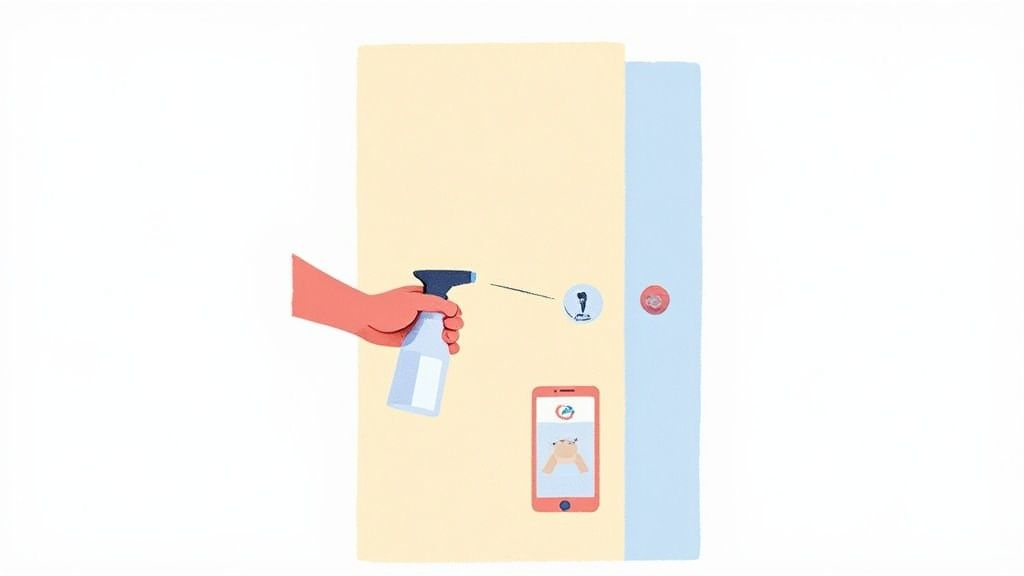
This focus on high-traffic areas is a non-negotiable step to protect the health of staff and visitors, drastically reducing the spread of illnesses. For instance, many NHS facilities and retail giants like Tesco have successfully implemented hourly cleaning protocols for these key surfaces to maintain a safe environment. This proactive measure not only enhances safety but also builds confidence among employees and customers.
Key Implementation Tips:
To ensure your high-touch surface sanitisation is both effective and efficient, consider these actionable strategies:
- Create a Rotation Schedule: Develop a clear, documented rota that outlines which surfaces need cleaning and at what frequency (e.g., hourly, bi-hourly). This ensures consistent coverage and accountability.
- Use Colour-Coded Cloths: Prevent cross-contamination between different areas, like kitchens and washrooms, by assigning specific coloured microfibre cloths to each zone.
- Train Staff on Contact Times: Proper disinfection requires the cleaning solution to remain on a surface for a specific duration, known as contact time. Ensure your cleaning team is trained on the correct dilution ratios and contact times for each product used.
- Maintain Cleaning Logs: Keep detailed logs to track when surfaces were cleaned. This provides a record of compliance for health and safety audits and helps identify any missed areas.
By making high-touch point cleaning a priority, you create a robust first line of defence against workplace illness. For more in-depth guidance on professional sanitisation techniques, you can explore our comprehensive commercial cleaning services.
2. Restroom Deep Cleaning and Maintenance
A cornerstone of any effective commercial cleaning checklist is a rigorous protocol for restroom deep cleaning and maintenance. Given their high traffic and inherent bacterial loads, washrooms demand specialised attention beyond a quick surface wipe. This involves the comprehensive sanitisation of all fixtures, including toilets, urinals, sinks, and mirrors, as well as floors, walls, and dispensers. A systematic approach is vital to control odours, prevent cross-contamination, and uphold a professional image.
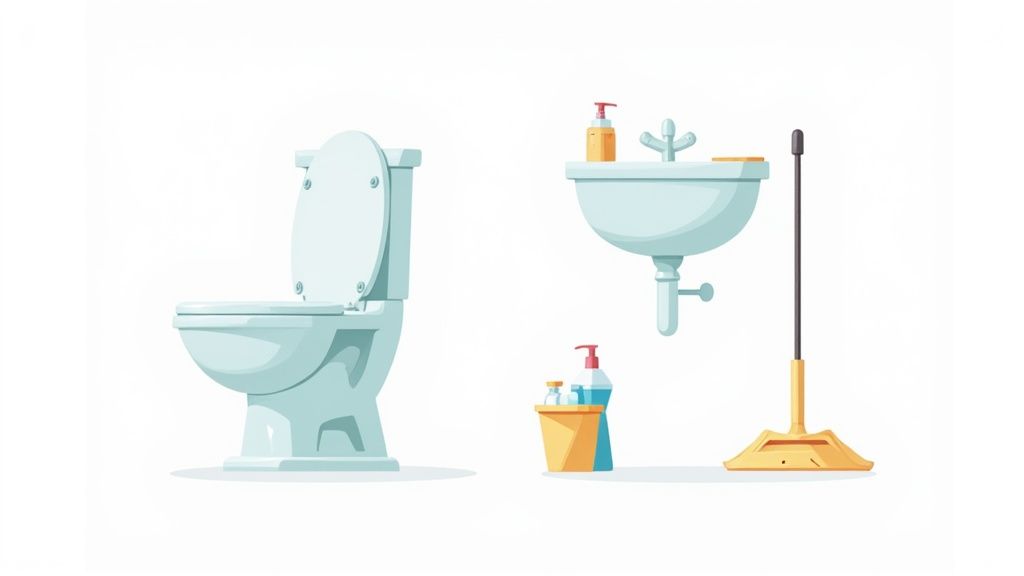
This task is critical not just for hygiene but also for compliance with health and safety regulations. High-traffic venues like major airports and shopping centres often maintain 24/7 cleaning teams or implement strict hourly cleaning schedules to manage hygiene effectively. For businesses, a pristine washroom reflects a high standard of care for both employees and clients, directly impacting their perception of your organisation.
Key Implementation Tips:
To maintain impeccable restroom hygiene consistently, integrate these proven strategies into your cleaning schedule:
- Adopt a Top-to-Bottom Method: Start cleaning from the highest points, like mirrors and partitions, and work your way down to the toilets and floors. This ensures that dust and debris fall onto uncleaned surfaces, preventing rework.
- Work from Clean to Dirty: Begin with lower-risk surfaces such as sinks and countertops before moving to the most contaminated areas like toilets and urinals. This strategy minimises the spread of harmful bacteria.
- Prioritise Supply Management: Regularly check and restock all dispensers, including soap, paper towels, and toilet rolls, multiple times a day. Consider automated, touch-free dispensers to further reduce contact points and improve hygiene.
- Maintain Detailed Cleaning Logs: Keep a visible and updated cleaning log inside the restroom. This practice demonstrates diligence, ensures accountability, and is essential for health department inspections, similar to the thorough documentation needed for an end of tenancy cleaning.
3. Floor Care and Maintenance Program
A comprehensive floor care and maintenance program is a cornerstone of any professional commercial cleaning checklist, ensuring longevity and preserving the appearance of your premises. This systematic approach goes beyond simple daily mopping, encompassing a full lifecycle of care for various surfaces like carpet, hardwood, tile, and vinyl. It involves daily maintenance to manage soiling, periodic deep cleaning to restore appearance, and protective treatments to guard against wear and tear, all of which are crucial for maintaining a professional and safe environment.

This strategy is vital for high-traffic environments where first impressions count. For example, retail stores often implement daily floor buffing with weekly deep cleaning, while healthcare facilities use specialised antimicrobial floor treatments to uphold stringent hygiene standards. By adopting a structured program, businesses protect their significant investment in flooring and project an image of quality and care.
Key Implementation Tips:
To develop a floor care program that delivers consistent, high-quality results, consider these actionable strategies:
- Implement Entrance Matting: Place high-quality matting systems at all entrances to trap dirt, moisture, and debris, significantly reducing the amount of soil tracked throughout the building.
- Use Correct pH-Balanced Cleaners: Ensure you are using the appropriate cleaning solutions for each specific floor type. Using the wrong product can cause irreversible damage, such as stripping sealant from hardwood or discolouring vinyl.
- Schedule Deep Cleaning Strategically: Plan intensive tasks like carpet extraction or floor stripping and waxing for off-business hours or weekends to minimise disruption to your operations.
- Document Maintenance Schedules: Keep a detailed log of all floor maintenance activities. This is essential for accountability, planning future work, and can be vital for complying with flooring manufacturer warranties.
A well-executed floor care plan is fundamental to maintaining both the aesthetic and functional value of your commercial space. For more detailed advice on specific surfaces, you can find valuable insights on how to properly maintain certain flooring types, such as our guide on how to clean wood floors.
4. Waste Management and Recycling Systems
An effective commercial cleaning checklist must include a comprehensive system for managing waste and recycling. This goes far beyond simply emptying bins; it involves a strategic approach to collecting, sorting, and disposing of various waste streams, including general waste, recyclables, and organic materials. Implementing a structured waste management programme is fundamental to maintaining a clean, professional environment, ensuring compliance with local regulations, and demonstrating corporate social responsibility.
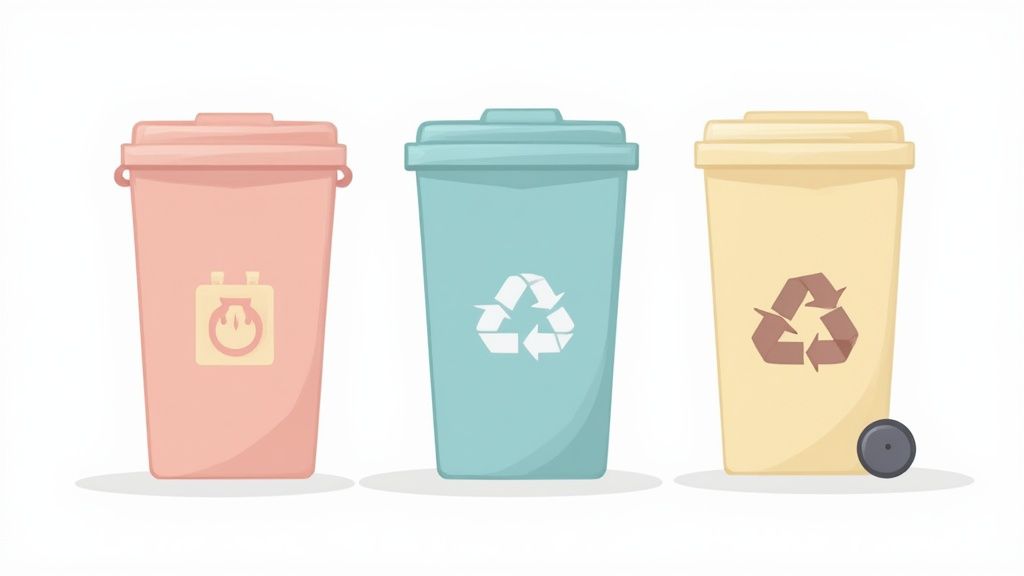
This systematic process helps businesses minimise their environmental impact and can even lead to cost savings. For example, many forward-thinking corporate offices have successfully implemented zero-waste-to-landfill programmes by partnering with specialised disposal services. Similarly, restaurants and food service businesses often establish thorough composting and recycling systems to divert a significant amount of waste from landfill, enhancing their sustainability credentials and appealing to eco-conscious customers.
Key Implementation Tips:
To develop a robust and efficient waste management system, consider these actionable steps:
- Conduct a Waste Audit: Regularly review your waste streams to identify what is being thrown away. This helps pinpoint opportunities to reduce, reuse, and recycle more effectively.
- Provide Clear Signage and Bins: Use colour-coded bins with clear, pictorial signage to make it easy for staff and visitors to sort waste correctly. This simple step drastically improves recycling rates.
- Establish Strong Partnerships: Collaborate with local recycling and waste disposal facilities to ensure you are following best practices and handling all materials, including any hazardous waste, in a compliant manner.
- Track Your Progress: Monitor and track waste reduction metrics over time. This data is invaluable for demonstrating the success of your programme, motivating staff, and identifying areas for further improvement.
5. HVAC System Cleaning and Maintenance
Often overlooked, the regular cleaning and maintenance of your building's HVAC system is a critical component of a comprehensive commercial cleaning checklist. This process involves more than just swapping a filter; it includes the deep cleaning of ductwork, vents, and core equipment to improve indoor air quality, enhance energy efficiency, and extend the system's lifespan. A clean HVAC system prevents the circulation of dust, allergens, and other airborne contaminants throughout your commercial space.
This proactive maintenance is essential for creating a healthy work environment. For example, many UK hospitals and schools implement rigorous HVAC cleaning schedules, often conducting annual duct cleaning during holiday periods to minimise disruption. Following guidelines from bodies like ASHRAE and NADCA ensures that your air remains clean and your system operates at peak performance, reducing both health risks and energy costs.
Key Implementation Tips:
To integrate HVAC maintenance into your cleaning protocol effectively, consider these practical steps:
- Schedule Off-Hours Servicing: Arrange for deep cleaning and maintenance to be performed outside of business hours to prevent disruption to your staff and customers.
- Use High-Efficiency Filters: Invest in high-efficiency particulate air (HEPA) filters where compatible, and adhere to a strict replacement schedule (e.g., monthly or quarterly) based on manufacturer recommendations.
- Maintain Detailed Records: Keep a log of all maintenance activities, including filter changes and professional servicing. This is crucial for warranty compliance and demonstrating due diligence.
- Partner with Certified Professionals: For complex tasks like duct cleaning or system servicing, always work with certified HVAC professionals who can ensure the job is done correctly and safely.
To ensure your HVAC system functions effectively for air purification, regular maintenance is vital. Discover the importance of servicing MVHR systems to maintain optimal performance and hygiene. By prioritising your building's respiratory system, you safeguard the wellbeing of everyone inside.
6. Window and Glass Surface Cleaning: Enhancing Light and Professionalism
A comprehensive commercial cleaning checklist must address the clarity and cleanliness of all glass surfaces. Professional cleaning of interior and exterior windows, glass partitions, and mirrors is vital for maintaining a pristine corporate image, maximising natural light, and ensuring unobstructed views. This task goes beyond a simple spray and wipe; it involves specialised techniques to achieve streak-free results, considering factors like weather conditions, glass type, and building height.
The impact of sparkling clean glass is immediately noticeable. For instance, retail storefronts rely on immaculate windows to attract customers, while corporate offices use clean glass to project an image of precision and care. Regular professional cleaning prevents the build-up of hard water stains, dirt, and pollutants that can permanently damage the glass over time, making it a crucial preventative maintenance task.
Key Implementation Tips:
To achieve flawless, professional-looking glass surfaces, incorporate these effective strategies:
- Choose Overcast Days: Schedule window cleaning for overcast, less windy days. Direct sunlight can cause cleaning solutions to evaporate too quickly, leaving behind unsightly streaks and residue.
- Use Professional Tools: Equip your team with high-quality squeegees, applicators (or T-bars), and lint-free microfibre cloths. For higher windows, a water-fed pole system offers a safer and more efficient alternative to ladders.
- Work from Top to Bottom: Always clean from the top of the glass downwards. This method ensures you catch any drips as you work, preventing streaks and the need to re-clean lower sections.
- Adhere to Safety Protocols: For any work at height, ensure staff are fully trained and equipped with the correct safety gear, adhering to all Health and Safety Executive (HSE) guidelines.
7. Carpet and Upholstery Deep Cleaning
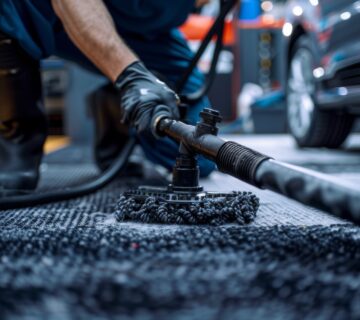
A thorough commercial cleaning checklist must address the maintenance of soft furnishings, as carpets and upholstery act as significant filters for dust, allergens, and pollutants. Comprehensive care involves more than just surface-level vacuuming; it requires a deep cleaning strategy to extract embedded dirt and sanitise fibres, which directly improves indoor air quality and extends the life of these valuable assets. Specialised techniques like hot water extraction are essential for maintaining a pristine and professional appearance in any commercial space.
This deep cleaning is critical for facilities where image and hygiene are paramount. For example, high-end hotels and corporate law firms rely on immaculate carpeting and furniture to project an image of quality and professionalism. Similarly, healthcare settings often utilise antimicrobial carpet treatments during deep cleaning to ensure a hygienic environment, while restaurants must deep clean dining room carpets and booth seating to meet stringent health codes.
Key Implementation Tips:
To integrate effective carpet and upholstery care into your cleaning routine, follow these proven strategies:
- Establish a Cleaning Frequency: Vacuum high-traffic areas daily and the entire facility at least weekly. Schedule professional deep extraction cleaning quarterly or bi-annually, depending on footfall.
- Implement Immediate Spot Treatment: Address spills and stains as soon as they occur. This prevents them from setting into the fibres and causing permanent damage or discolouration.
- Use Appropriate Cleaning Solutions: Ensure cleaners are pH-balanced and suitable for the specific fabric type to avoid damage. A professional service will test an inconspicuous area first.
- Ensure Proper Ventilation: After deep cleaning, adequate air circulation is crucial. Proper ventilation accelerates drying times and prevents the growth of mould and mildew within the fibres.
By investing in regular deep cleaning, you protect your assets and create a healthier, more inviting environment for everyone. To understand the advanced techniques involved, you can discover more about our professional upholstery and carpet cleaning services.
7-Point Commercial Cleaning Checklist Comparison
| Cleaning Service | Implementation Complexity ? | Resource Requirements ? | Expected Outcomes ⭐ | Ideal Use Cases ? | Key Advantages ⚡ |
|---|---|---|---|---|---|
| Deep Cleaning and Sanitization of High-Touch Surfaces | Moderate: requires frequent reapplication and staff training | EPA-approved disinfectants, cleaning staff, documentation | High effectiveness in reducing disease spread and compliance | High-traffic commercial areas, hospitals, schools | Quick implementation, boosts confidence, compliance with health standards |
| Restroom Deep Cleaning and Maintenance | High: labor-intensive with specialized equipment and chemicals | Specialty chemicals, cleaning equipment, frequent supply restocking | Maintains hygiene, prevents health code violations, improves satisfaction | Malls, corporate offices, restaurants, airports | Critical for compliance, prevents costly repairs, enhances customer experience |
| Floor Care and Maintenance Program | Moderate to High: requires multiple techniques and specialized training | Auto-scrubbers, buffers, vacuums, floor-specific chemicals | Extends floor life, enhances appearance, reduces slip risks | Retail, healthcare, offices, restaurants | Cost-effective, protects investment, improves indoor air quality |
| Waste Management and Recycling Systems | Moderate: requires staff training and monitoring systems | Multiple waste bins, signage, monitoring tools | Ensures compliance, reduces waste costs, supports sustainability | Offices, restaurants, healthcare, manufacturing | Enhances reputation, improves hygiene, supports corporate goals |
| HVAC System Cleaning and Maintenance | High: needs certified technicians and specialized equipment | Certified professionals, specialized cleaning tools | Improves air quality, reduces energy costs, extends system lifespan | Hospitals, offices, schools, retail stores | Prevents system failures, reduces allergens, improves efficiency |
| Window and Glass Surface Cleaning | Moderate: weather-dependent, requires safety equipment | Squeegees, microfiber cloths, elevated access tools | Enhances appearance, maximizes natural light, maintains property value | Corporate offices, retail, restaurants, high-rises | Improves image, reduces lighting costs, boosts morale |
| Carpet and Upholstery Deep Cleaning | High: specialized equipment and training needed, drying time | Commercial vacuums, extractors, cleaning chemicals | Extends lifespan, improves air quality, removes odors and stains | Hotels, law firms, healthcare, restaurants | Prolongs fabric life, cost-effective, maintains comfort and appearance |
Partnering for a Pristine Workspace
Navigating the complexities of maintaining a commercial space can feel overwhelming, but this detailed guide simplifies the process. By breaking down tasks into a comprehensive commercial cleaning checklist, you now have a strategic blueprint for creating a consistently clean, healthy, and inviting environment. From the daily sanitisation of high-touch surfaces to the scheduled deep cleaning of carpets and HVAC systems, each point on this list plays a vital role in upholding professional standards and ensuring employee well-being.
The true value of this checklist lies not just in knowing what to do, but in its consistent and expert application. A meticulously organised cleaning programme demonstrates a commitment to quality that resonates with both your staff and your clients. It moves beyond mere tidiness, actively reducing health risks, prolonging the life of your valuable assets like flooring and furniture, and ultimately boosting productivity in a space that people are proud to occupy.
Implementing this framework systematically is the key to transforming your workspace. It requires dedication, specialised equipment, and a deep understanding of best practices, particularly when incorporating eco-friendly solutions. For many businesses, managing this in-house can be a significant drain on time and resources. This is where professional expertise becomes invaluable, ensuring every task is performed to the highest standard without disrupting your core operations. By entrusting these critical duties to seasoned professionals, you not only guarantee a pristine outcome but also reclaim valuable time to focus on growing your business.
Ready to elevate your business environment beyond the checklist? For businesses in Cheltenham, Gloucester, and Stroud, AG Carpet Specialists offers comprehensive commercial cleaning solutions that bring this guide to life. Contact us today for a free, no-obligation quotation and discover how our expert team can implement a tailored cleaning programme for your unique needs.