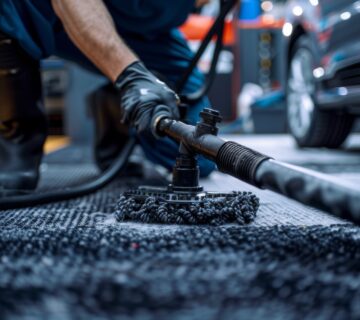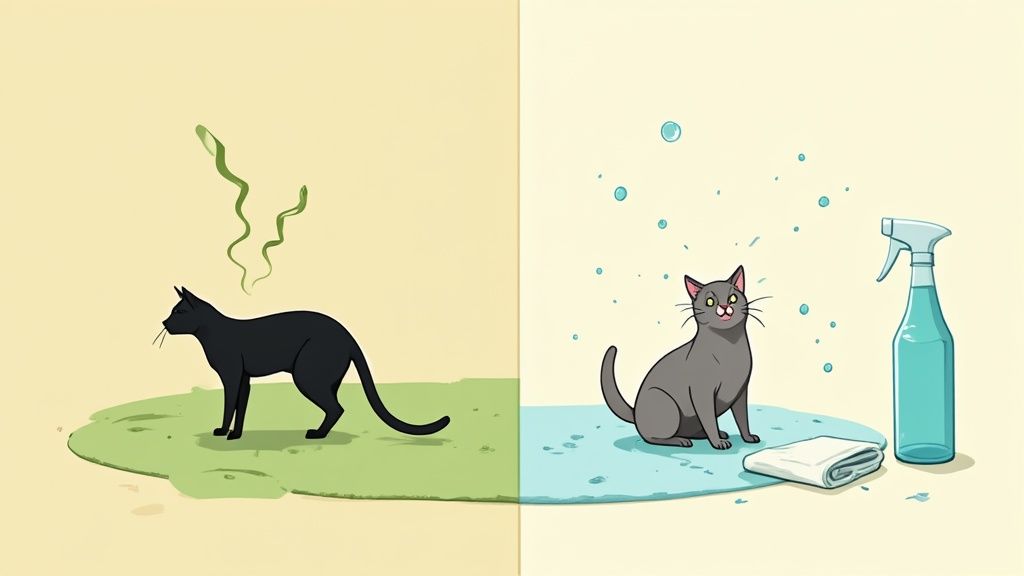
To get rid of that awful cat urine smell for good, you first have to understand what you’re up against. The secret weapon isn’t your standard household spray; it's a specialised enzymatic cleaner. This type of cleaner is designed to break down the uric acid in cat pee – the stubborn culprit that most traditional cleaners simply can't handle. Using one ensures the odour is completely destroyed, not just temporarily hidden.
Why Cat Urine Smell Is So Hard to Remove
If you've ever cleaned up a pet accident only for that unmistakable ammonia scent to creep back a few days later, you’re definitely not alone. It’s a common and incredibly frustrating experience for cat owners, and there’s a scientific reason why that smell is so persistent. Unlike other spills, cat urine is a complex chemical mixture that evolves over time.
At first, the smell is just from urea and bacteria. But the real problem is the uric acid. This nasty component isn't water-soluble and forms tough, odourless crystals that cling tightly to surfaces like carpet fibres, upholstery foam, and even wooden floorboards.
The Problem with Standard Cleaners
This is where many common household cleaners fail. Products containing ammonia or bleach are completely ineffective against these uric acid crystals. In fact, ammonia-based cleaners can make the problem much worse. Since urine already contains ammonia, using a cleaner with a similar scent can actually encourage your cat to return to the same spot to mark its territory again.
Even worse, when you use a water-based cleaner, it might seem like it's working initially. But the moisture simply reactivates the uric acid crystals, often making the smell even more powerful once the area dries. This is why you might suddenly notice the odour reappearing on a humid day, long after you thought you'd dealt with the problem.
The core issue isn’t just about cleaning the surface; it's about breaking down the chemical structure of the urine itself. Without targeting the uric acid, the smell will always have a pathway to return.
A Common Issue for UK Cat Lovers
This is a challenge faced in homes all across the UK, where our love for feline companions is stronger than ever. With an estimated 11 to 12.5 million pet cats in the country, the battle against cat urine odour is a familiar one. Cat ownership boomed during the pandemic, bringing the realities of indoor pet care—and odours—into sharp focus for millions of families. You can read more about these trends in UK pet ownership on Catster.com.
The first step in any successful clean-up is to act fast. For a fresh stain, your immediate response can make all the difference in stopping the odour from becoming a permanent fixture. Before we get into the deep-cleaning methods, here's a quick guide for what to do the moment you discover an accident.
Quick Guide for Tackling Fresh Cat Urine Stains
When you find a fresh spot, time is of the essence. The right moves can prevent a small accident from becoming a major, lingering problem. This table breaks down what you need to do immediately.
| Immediate Action | Why It's Critical | Common Mistakes to Avoid |
|---|---|---|
| Blot, Don't Rub | Blotting with a thick paper towel or cloth lifts liquid out. Rubbing just pushes the urine deeper into the carpet pad or upholstery, making it much harder to remove. | Scrubbing the area vigorously. This embeds the stain and can damage carpet or fabric fibres, creating a permanent fuzzy patch. |
| Rinse with Cold Water | After blotting, lightly rinse the area with cold water and blot again. This helps dilute any remaining urine before it has a chance to set properly. | Using hot water or steam. Heat can chemically bond the proteins in urine to the fibres, essentially setting the stain and odour permanently. |
| Avoid Harsh Chemicals | Stick to pet-safe solutions. Bleach can damage materials and is toxic to pets, while ammonia-based products can encourage re-marking. | Grabbing the first cleaner under the sink. Always check if a product is safe for both your pet and the surface you are treating. |
Following these initial steps correctly sets you up for success when it comes to the more intensive cleaning required for complete odour removal.
How to Find Hidden Cat Pee Stains
There's nothing more maddening than knowing the smell of cat urine is lingering in a room, but being completely unable to see the source. Dried, older urine stains can become totally invisible on carpets and upholstery, yet they continue to release that awful odour, especially on humid days. To win this battle, you need to become a bit of a stain detective.
Your most powerful tool for this mission is a UV blacklight torch. It sounds technical, but it’s a game-changer. Cat urine contains phosphorus and certain proteins that glow brightly under ultraviolet light, making invisible stains stand out clearly. It's a simple but incredibly effective way to uncover every single problem area, not just the one you already know about.
Choosing and Using Your UV Blacklight
When you're looking for a UV torch, you'll find not all are created equal. For finding pet stains effectively, you need a light that operates in the 365–385 nanometre (nm) wavelength range. This specific spectrum is what makes the salts in dried urine fluoresce brightly. Cheaper LED torches often just produce a lot of visible purple light, which can actually make it harder to see the stains.
Once you’ve got the right torch, the method is straightforward but works best with a little preparation.
- Wait until it's dark: The glowing stains will be much easier to spot in a completely dark room. Wait for night-time and turn off every single light.
- Block out extra light: Close all your curtains and blinds to stop any ambient light from streetlights sneaking in.
- Scan slowly and get low: Hold the torch about one to three feet away from the surface you’re checking. Slowly sweep it across carpets, furniture, and even up the base of the walls.
- Mark what you find: When you discover a glowing spot, don't just rely on your memory to find it again. Mark the location immediately with something like small pieces of masking tape or chalk.
You might genuinely be surprised by what you uncover. We often find stains not just on the floor, but also on the legs of furniture, skirting boards, and even low-hanging curtains. Remember that cats can spray vertically against a surface, so be sure to check those areas too.
A thorough UV light inspection is the difference between a temporary fix and a permanent solution. By mapping out every single stain—old and new—you ensure that your cleaning efforts target the complete source of the odour, leaving no hidden culprits behind.
Interpreting What You See
As you begin your search, it helps to know what you’re looking for. Cat urine stains usually glow a dull, yellowish-green colour under the UV light. Don’t be alarmed if you spot other glowing areas; many common household items can fluoresce, including some cleaning products, wallpaper glue, and even certain fibres in your carpet.
The key is to focus on the characteristic dull yellow or green patches and splatter patterns that point to pet urine. Once you have marked all the suspicious areas, you’ll have a complete map of every spot that needs treating. This methodical approach is crucial for finally getting rid of the odour for good. You can find more comprehensive advice in our full guide on https://www.agcarpetspecialist.co.uk/2025/06/26/how-to-get-rid-of-cat-pee-smell/. This map is your blueprint for a targeted, effective cleaning strategy.
Getting The Most Out of Enzymatic Cleaners
If there's one "secret weapon" in the fight against cat urine smell, it has to be a good enzymatic cleaner. Yet, so many people tell me they're disappointed when these products fail to deliver. The problem usually isn't the product itself—it's how it's being used. Just spraying it on the surface simply won't cut it.
Enzymatic cleaners aren't your typical air fresheners. They're much cleverer than that. These formulas contain beneficial bacteria that produce enzymes, which are essentially biological catalysts. Instead of masking the odour, they actively hunt down and break down the complex organic compounds found in cat urine. The main target? Those stubborn uric acid crystals that are the true source of that never-ending smell.
It’s this biological process that makes them so incredibly effective. When you use them correctly, you're not just cleaning; you're destroying the odour at a molecular level, making sure it can't come back.
Choosing a High-Quality Cleaner
The market is flooded with products all claiming to eliminate pet odours, but they are not all created equal. When you're picking an enzymatic cleaner, take a moment to read the label. You're looking for products that specifically mention they contain active enzymes or live bacteria designed for pet urine. Steer clear of anything that relies heavily on perfumes or is just "scented," as these will only hide the problem for a short time. A truly effective cleaner feels more like a scientific solution than a simple household spray.
The infographic below shows the basic process for using these cleaners properly.
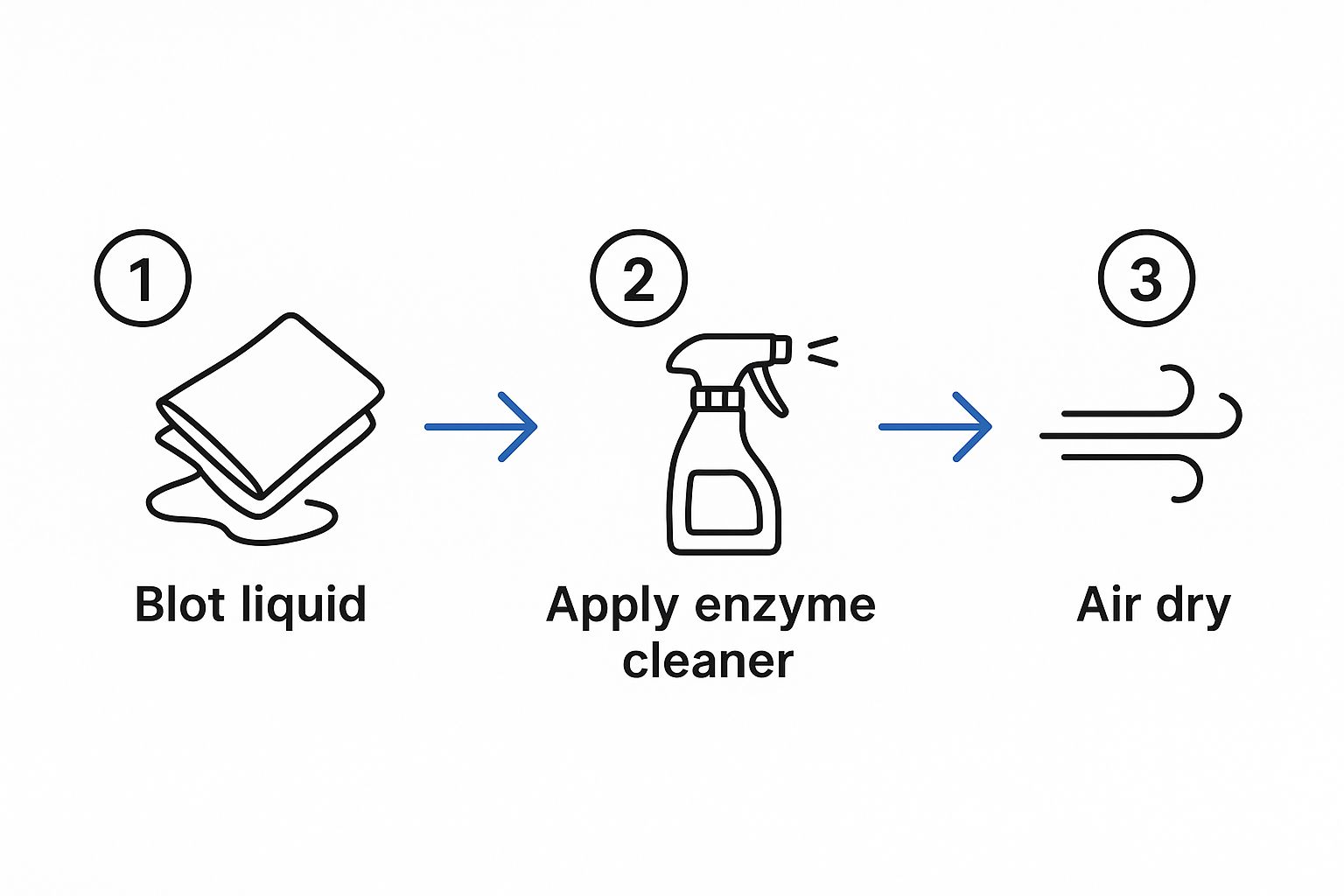
This simple flow—blot, apply, and dry—is the foundation of any successful treatment and makes sure the product can do its job.
The science behind why cat urine is so persistent is well-known. Its unique chemical cocktail includes ammonia, urea, and uric acid crystals. These crystals dig deep into porous surfaces like carpets and upholstery, which are common in homes across the UK. In fact, enzymatic cleaners are proven to be highly effective, neutralising odours in 85-90% of cases by breaking down this resilient uric acid.
The Critical Steps for Effective Application
To truly get rid of that cat urine smell, you have to mimic the original accident. This means the cleaner must get to every single spot the urine touched.
Don't Be Shy with Saturation
This is no time for a light spritz. You need to apply enough of the solution to completely soak the affected area, plus a small border around the visible stain. The goal is to get the cleaner to penetrate just as deeply as the urine did—right through the carpet fibres, into the underlay, and sometimes even to the subfloor below.
Dwell Time is Non-Negotiable
Here’s where most people go wrong. The enzymes need time to work their magic. After soaking the area, you must let it sit. This "dwell time" could be anywhere from 30 minutes to several hours, depending on the product's instructions and how bad the stain is. During this time, the enzymes are busy breaking down and effectively "eating" the uric acid.
A great tip is to cover the treated spot with a damp towel or a bit of plastic sheeting. This keeps the area moist, preventing the enzymes from drying out and becoming inactive before they’ve finished their work.
Proper Extraction and Drying
Once the dwell time is up, you need to get all that excess moisture out. Blot the area thoroughly with clean, dry towels, pressing down firmly to soak up as much liquid as you can. If you have one, a wet-vac is brilliant for extracting the solution from deep within carpet fibres.
After blotting, just let the area air dry completely. This might take a day or two. Resist the temptation to use heat from something like a hairdryer, as this can interfere with any remaining enzyme activity and might even damage your carpet. Once it's bone dry, the odour should be completely gone.
For those really stubborn or widespread issues, understanding professional techniques for carpet cleaning pet urine can offer valuable insight into how the experts tackle these tough jobs.
You'll need to slightly adjust your approach for different surfaces:
- Upholstery: Be a bit more careful with saturation here. Always test the cleaner on a hidden spot first to check for colour-fastness. Blot very, very thoroughly or use a wet-vac to avoid leaving watermarks.
- Mattresses: These are extremely absorbent. You'll need to use a generous amount of cleaner and plan for a much longer drying time. Standing the mattress on its side can help improve airflow.
- Hard Surfaces: On sealed floors, you can usually just spray and wipe. But for unsealed wood or grout, the cleaner needs to soak in to reach any urine that has been absorbed.
By following these specific steps, you give the enzymatic cleaner the best possible chance to work its magic and permanently eliminate the odour right from the source.
Safe and Effective DIY Cleaning Methods
While a top-quality enzymatic cleaner is always your best bet for a permanent fix, sometimes you're caught out by an accident and need to act fast with whatever you have to hand. Luckily, your kitchen cupboard probably holds a trusty duo for a first-response clean-up: white vinegar and bicarbonate of soda.
Before you reach for anything, though, it’s vital to know what to avoid. So many people instinctively grab bleach or ammonia-based cleaners, but this is a huge mistake. Not only are they useless against the uric acid crystals in cat pee, but ammonia-based products can actually encourage your cat to urinate in the same spot again. Why? The smell mimics their own markings.
Instead, a simple two-part process using household staples can give you a surprisingly effective initial treatment. This method focuses on neutralising the immediate odour and then absorbing anything that's left.
The Vinegar and Bicarbonate of Soda Method
This approach works wonders on fresh stains but can also make a dent in older ones. Think of it as your first line of defence before you bring in a more powerful enzymatic treatment. Just remember to always spot-test any cleaning solution on a hidden bit of your carpet or upholstery first to make sure it doesn’t cause any discolouration.
Part One: Neutralising with Vinegar
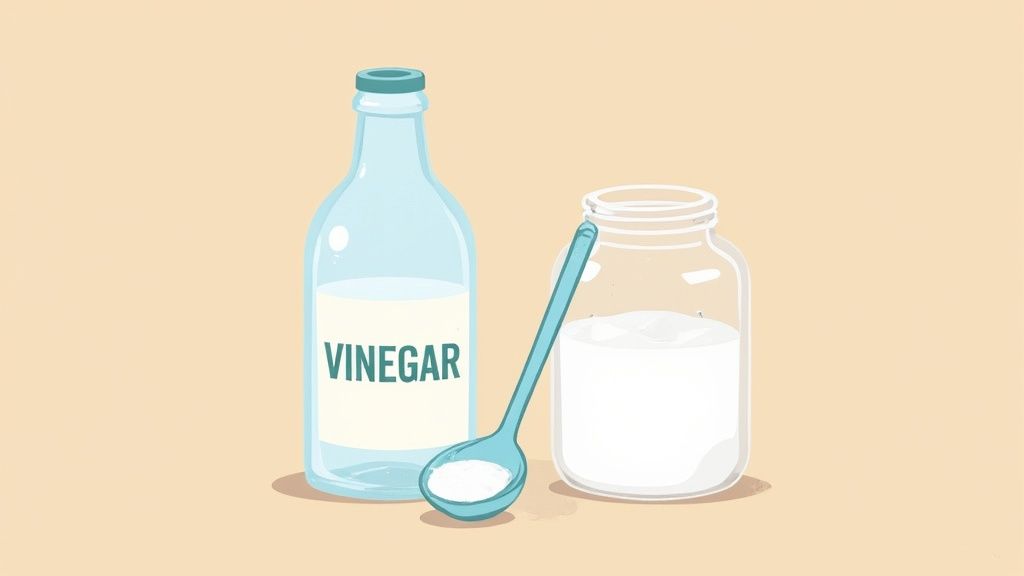
First, you’ll need to mix up your cleaning solution. Combine equal parts of white vinegar and cool water in a spray bottle—a cup of vinegar to a cup of water works well. Vinegar is a mild acid that gets to work on the alkaline salts that form in dried urine, helping to break down that powerful initial ammonia smell.
After blotting up as much of the fresh urine as you possibly can with a thick, clean towel, liberally spray your vinegar solution onto the stain. Don't be shy; you need to saturate it. The mixture has to penetrate just as deeply as the urine did to be effective. Let it sit for at least 10 to 15 minutes, then use a fresh, clean cloth to blot the area dry again.
Part Two: Absorbing with Bicarbonate of Soda
Once the area is mostly dry, it's time for step two. Sprinkle a generous layer of bicarbonate of soda (you might know it as baking soda) directly over the entire affected area. Bicarb is fantastic at absorbing moisture and odours from deep within the carpet fibres.
A common mistake is being too stingy with the bicarbonate of soda. You need a noticeable, thick layer that completely covers the stain. This ensures it has enough power to draw out any remaining moisture and neutralise lingering acidic odours left behind by the vinegar.
Let the bicarbonate of soda sit on the carpet for several hours, or even overnight if you can. The longer it sits, the more effective it will be. Once it's had plenty of time to work its magic, use your vacuum cleaner to thoroughly hoover up all the powder. You'll probably need to go over the spot a few times to get it all out.
Understanding the Limitations of DIY Methods
It's really important to be realistic about what this DIY method can achieve. While the vinegar and bicarb combination is excellent for tackling the immediate smell of a fresh accident, it does have its limits. This approach primarily neutralises and absorbs the smell on the surface, but it doesn't have the oomph to break down the resilient uric acid crystals at a molecular level.
What does this mean for you? Well, while the smell might seem to have vanished, it can suddenly reappear on humid days or if the area gets damp again. Think of this method as a highly effective emergency response, not a permanent cure.
For older, set-in stains or situations where a cat has repeatedly used the same spot, a DIY solution is unlikely to be enough. In these cases, the urine will have soaked deep into the carpet underlay or maybe even the subfloor beneath. For a deeper understanding of when professional help is needed, our guide on pet urine carpet cleaning offers detailed insights into tackling severe contamination.
Ultimately, a commercial enzymatic cleaner is the only way to guarantee the complete destruction of the odour-causing uric acid. However, for a quick and safe initial clean-up using items you already own, this two-step process is an invaluable tool to have in your arsenal.
When You Need to Call a Professional Cleaner
There comes a point in the battle against cat urine where you have to admit your best DIY efforts just aren't cutting it. It’s a frustrating moment, I know, but an important one. If you’ve scrubbed and sprayed a spot multiple times only for that pungent odour to creep back, it’s a sure sign the problem has gone far beyond the surface.
This usually means the urine has penetrated deep into the layers of your flooring or furniture. With carpets, it has almost certainly soaked through the fibres, past the backing, and into the absorbent underlay. In the worst cases, it may have even reached the wooden or concrete subfloor beneath. Once it’s in these hidden layers, no amount of surface treatment will ever fully neutralise the source.
The same goes for upholstered furniture. That accident on the sofa can seep deep into the dense foam cushions. You might clean the fabric cover until it looks pristine, but the core of the problem remains locked inside, ready to release its odour with the slightest change in temperature or humidity.
Signs the Problem Is Too Deep for DIY
Knowing when to call for professional help will save you a lot of time, money, and sanity. The signs are usually crystal clear once you know what you’re looking for.
You're likely dealing with a deep-set problem if:
- The smell keeps returning: You clean the area, it smells fresh for a day or two, but then the odour slowly comes back. This is the classic symptom of a job that needs more power.
- The odour is widespread: You can’t pinpoint a single spot. Instead, a whole room has a general, lingering smell of cat urine you just can't shift.
- Stains reappear visually: Sometimes, after cleaning, a faint stain can "wick" its way back to the surface as the carpet dries. This tells you the soiling is coming from deep within the pile or underlay.
The crucial takeaway is this: If the urine has gone beyond the surface fibres of your carpet or upholstery, home remedies will only ever be a temporary fix. Professional equipment is specifically designed to tackle this kind of deep-level contamination.
What to Expect from a Professional Service
Professional cleaners have powerful tools that are simply unavailable for domestic rental or purchase. Their primary weapon is usually a hot water extraction machine, often called steam cleaning. This equipment injects a specialised cleaning solution and hot water deep into the carpet at high pressure, and then immediately extracts the dirty, contaminated water with an industrial-strength vacuum.
They also have access to professional-grade odour neutralisers that are far more potent than anything you can buy in the shops. A good company won't just mask the smell; they will use specific treatments to break down and destroy the uric acid crystals for good.
When you're ready to bring in an expert, it’s a good idea to know https://www.agcarpetspecialist.co.uk/2025/07/22/how-to-prepare-for-professional-carpet-cleaning/ to get the best possible results. When vetting a company, ask them directly if they have experience and specific treatments for cat urine. A reputable specialist will confidently explain their process, reassuring you they can solve the problem permanently.
Preventing Future Accidents by Understanding Your Cat
Cleaning up a mess is one thing, but stopping it from happening again is the real win. To get rid of cat urine smell for good, you need to think less about cleaning products and more about cat psychology. Figuring out why your cat is weeing outside their litter box is the only way to prevent it from becoming a recurring nightmare.
Inappropriate urination is a cat’s way of telling you something isn't right. It could be a medical problem, a behavioural issue, or even a bit of both. One thing is for sure: it’s never done out of spite. It’s a cry for help. Your first and most important job is to rule out any health problems.
Is It Medical or Behavioural?
Before you do anything else, book a trip to the vet. Conditions like urinary tract infections (UTIs), bladder stones, kidney disease, or diabetes can make urination painful or hard for them to control. Your vet can run a few simple tests to either diagnose or rule out these common culprits.
If your cat gets a clean bill of health, then it's time to put on your detective hat and look at behavioural triggers.
Common reasons a cat might avoid the litter box include:
- Stress and Anxiety: A new baby, another pet, or even just moving the sofa can be enough to unsettle a cat.
- Litter Box Aversion: The box might be dirty, in a noisy part of the house, too small, or they just don’t like the feel of the litter you've chosen.
- Territorial Marking: This is particularly common in homes with multiple cats or where your cat can see neighbourhood cats through a window.
A 2023 survey of UK cat owners revealed that around 20% had dealt with their cat marking territory with urine. This was often linked to stress, having multiple cats (a factor for the 40% of UK owners with more than one), or simply poor litter box hygiene. The good news? Owners who used enzymatic cleaners and made litter box management a priority saw a 70% success rate in solving the problem. You can learn more about these pet ownership trends at World Animal Foundation.
Creating a Five-Star Litter Box Experience
Try to see the litter box from your cat's point of view. They're looking for a clean, private, and safe spot to do their business. Getting your setup right is one of the most effective changes you can make.
The golden rule for litter boxes is one per cat, plus one extra. So, if you have two cats, you need three litter boxes. Place them in different, quiet locations around your home to prevent any competition and ensure there’s always a clean option ready.
Here's a quick checklist to review your current setup:
- Location: Is the box in a quiet, low-traffic area, well away from their food and water bowls?
- Size: Is it big enough for your cat to get in and turn around comfortably?
- Cleanliness: Are you scooping it at least once a day and changing the litter out completely on a regular basis?
- Litter Type: Many cats have a strong preference for fine-grained, unscented clumping litter. A recent change in brands could easily be the cause of the problem.
A healthy, balanced diet is also crucial for your cat's overall wellbeing and can help reduce stress-related behaviours. Consider rewarding them with things like high protein cat treats as part of a positive reinforcement routine.
By getting to the root of the issue—whether it's medical or environmental—you're well on your way to creating a harmonious, odour-free home. For tips on keeping things fresh in the long term, check out our guide on pet-friendly carpet cleaning.
Your Top Questions About Cat Urine Odour Answered
Even with the best advice, you're bound to have a few specific questions when you’re on your hands and knees tackling a stubborn stain. We get it. Here are some quick, straightforward answers to the questions we hear most often from cat owners at their wits' end.
Can You Ever Really Get Cat Urine Smell Out of Wood Floors?
Yes, you absolutely can, but your success hinges on one crucial factor: whether the wood is sealed. If your floor has a solid, intact varnish or sealant, the urine mostly pools on the surface. A good clean with a quality enzymatic product, followed by a wipe-down, should sort it out for good.
The real headache begins with unsealed or poorly sealed wood. Here, the urine can seep deep into the porous grain, making it incredibly tough to remove. In these challenging situations, you might actually need to sand down the affected patch and reseal it to completely lock in and get rid of any lingering smell.
Why Does the Smell Suddenly Get Worse When It Rains?
This is something we hear all the time, and it’s incredibly frustrating. The simple answer is humidity. Old urine stains leave behind uric acid crystals, which lie dormant when they're dry. As soon as the moisture in the air increases – on a rainy or humid day, for example – these crystals rehydrate and start releasing that pungent ammonia smell all over again.
That returning odour doesn't mean your cleaning failed. It's a classic sign that microscopic uric acid crystals are still lurking. This tells you it's time to bring in a more powerful, professional-grade enzymatic cleaner to fully break down the source of the problem.
Will Using Bleach Stop My Cat from Peeing in the Same Spot?
Definitely not. In fact, this is one of the worst things you can do and could easily make the problem worse. For one, bleach is completely useless against the uric acid in cat urine. It also has the potential to ruin your carpets and upholstery.
Even more importantly, cats often interpret the strong, sterile smell of bleach as a territorial challenge from another animal. This can actually encourage them to go back and re-mark the spot to claim it as their own. Always stick to cleaners specifically designed for pet urine.
Are Professional Cleaning Products Safe for My Pets?
Any reputable and professional cleaning company will always put the safety of your family, including your pets, first. The vast majority of professional-grade enzymatic cleaners and odour treatments are non-toxic and environmentally friendly once they have completely dried.
When you're booking a service, just ask what products they plan to use and get confirmation that they are pet-safe. A trustworthy company will have no problem being transparent about their methods, giving you peace of mind that your home will be both clean and safe for your furry friends.
When DIY methods just aren't cutting it for those stubborn odours that have soaked deep into your carpets and furniture, it's time to call in the experts. AG Carpet Specialists uses professional-grade equipment and pet-safe solutions to permanently eliminate odours at their source. For a cleaner, fresher home in Cheltenham, Gloucester, or Stroud, visit us at https://www.agcarpetspecialist.co.uk for a free quotation.