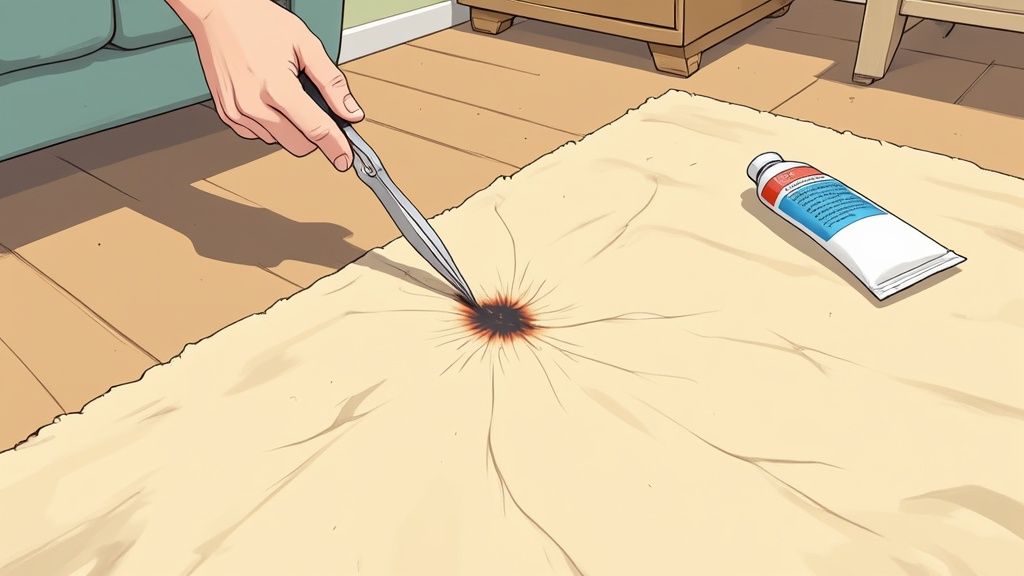
We’ve all been there. That heart-stopping moment you lift the iron and see its perfect, scorched outline branded onto your lovely carpet. It’s a dreadful feeling, but take a breath. It happens more often than you think, and in many cases, it’s not the end of the world for your flooring.
An iron burn isn't like a simple spill you can blot away. It's a physical burn where the carpet fibres have been singed, or worse, completely melted. So, before you grab the nearest cleaning spray and start scrubbing—which can make things worse—the first step is to calmly figure out what you’re dealing with.
How Bad Is It Really?
Your next move depends entirely on the level of damage. Is it a faint, brownish mark on the tips of the tufts, or a hard, black crater where the carpet has melted right down to the backing? Getting this right is crucial.
- Light Scorch: You'll see some browning or stiffness on the very tips of the fibres, but they're still intact. This is the best-case scenario for a DIY fix.
- Moderate Burn: The fibres are clearly melted, curled, and blackened. They probably feel quite hard and brittle.
- Severe Burn: You're looking at an actual hole. The carpet backing is exposed, and the surrounding fibres are completely gone.
The biggest mistake people make is treating a melted burn like a stain. If you try to scrub a severe burn, you'll just fray the healthy carpet around it, making any future professional repair stand out even more.
To help you decide what to do next, here’s a quick guide.
Burn Severity Assessment Guide
Use this table to quickly identify the level of damage and determine the best course of action for your iron burn.
| Severity Level | Visual Signs | Recommended First Step |
|---|---|---|
| Light Scorch | Faint brown or yellow discolouration on the tips of the fibres. No melting. | Try a DIY removal method first. |
| Moderate Burn | Fibres are visibly melted, curled, and blackened. The area feels hard/brittle. | Attempting a DIY fix is risky; consider professional advice. |
| Severe Burn | A visible hole in the carpet where the backing is exposed. Fibres are gone. | Skip DIY. This requires a professional carpet patch repair. |
This assessment is your starting point. Trying to scrub a severe burn will only cause more damage, so a clear-headed diagnosis saves you time, money, and a lot of frustration.
Why Acting Quickly Matters
With carpets covering roughly 50% of floors in the average UK home, a noticeable burn can really spoil the look of a room. Iron burns are one of the most common accidents carpet repair specialists are called out for. One company, for example, reported attending three separate iron burn jobs across Hampshire, West Sussex, and Surrey in just a five-day period. You can read more about how frequently these mishaps occur over at Carpet Damage Limitation.
Gathering Your Carpet Repair Toolkit
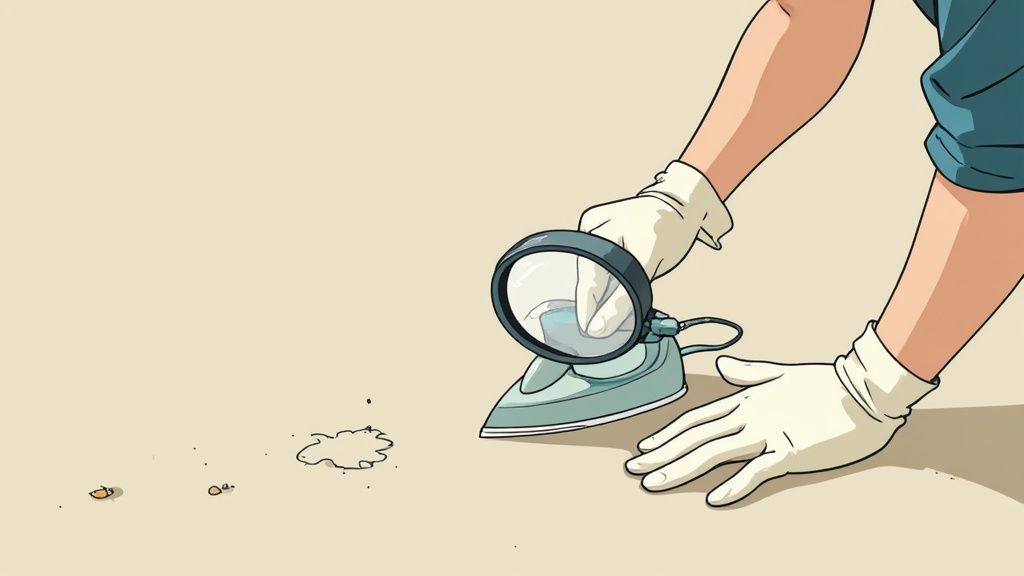
Before you even think about tackling an iron burn on your carpet, you need to get your supplies in order. I’ve seen it happen many times: acting in a panic with the wrong tools can turn a small scorch mark into a much bigger problem. It’s best to think of this as putting together a specialised first-aid kit for your floor.
The good news is that most of the items you’ll need are probably already in your home. You don't need any expensive, fancy equipment, just the right items for what is quite a delicate job. A little preparation now will help you work efficiently without accidentally making things worse.
Essential Tools for Minor Burns
If you’re dealing with a light scorch mark where the fibres are just browned or discoloured on the very tips, your toolkit is pretty straightforward. The goal here is to carefully trim away the damaged ends and clean up any lingering marks.
- Small, Sharp Scissors: A pair of nail or embroidery scissors are perfect for this. Their fine points give you the control to snip only the burnt tips of the carpet tufts, preventing you from cutting too deep.
- Fine-Grit Sandpaper: Got a small piece? It can be used to gently scuff away any surface discolouration that remains after trimming, helping to blend the repaired area.
- A Fine-Toothed Comb: After the repair, use the comb to gently brush and fluff up the carpet fibres. This simple step makes the spot much less noticeable.
- White Vinegar and a Clean Cloth: A simple solution of diluted white vinegar and water is great for cleaning the area and lifting any final traces of the scorch.
Supplies for Deeper Burn Repairs
What if the burn is more severe and has melted deep into the pile? This usually calls for a patch repair, which means you’ll need a few extra items on hand.
In my experience, the single most valuable thing you can have for a deep burn repair is a small, matching carpet offcut. Always save leftovers from a new carpet installation; tuck them away in the loft or a cupboard for emergencies just like this one.
You’ll also need a sharp utility knife and some strong carpet adhesive to cut out the damaged section and fit the new patch seamlessly. While this kind of repair is more involved, having the proper tools makes it a manageable task.
If the damage looks a bit much to handle, it’s worth taking a moment to weigh your options. Comparing the cost of a DIY attempt against the carpet cleaning cost for a professional repair can help you decide the best course of action.
How to Fix Light Scorch Marks
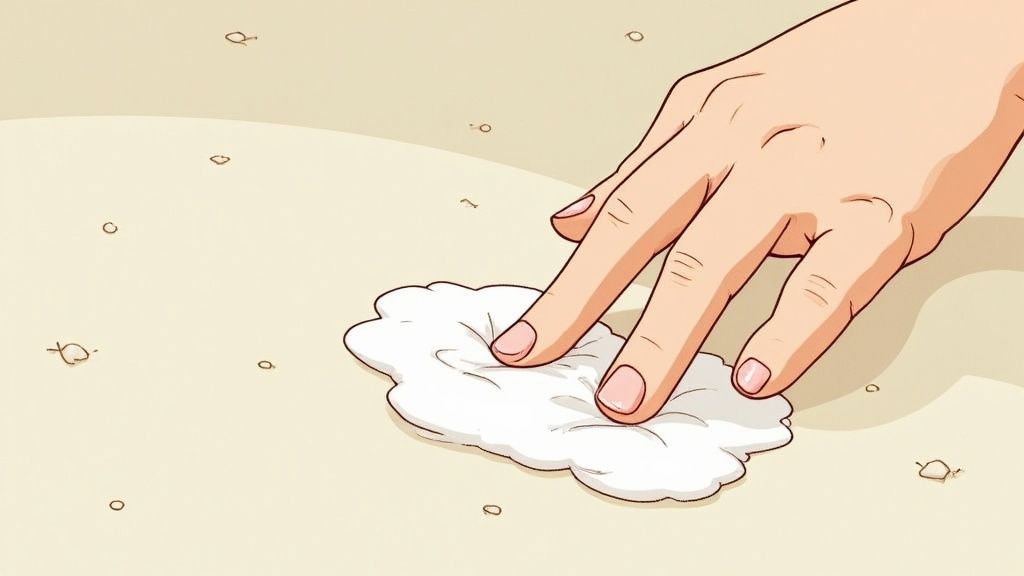
If your assessment shows you're dealing with a light scorch mark, you can breathe a little easier. An iron burn on carpet of this type usually just means the fibres are discoloured on the surface but are still structurally sound. In these cases, a patient and careful DIY approach can often bring your carpet back to life without needing to call in a professional. The real key here is to work delicately to avoid making the problem worse.
Your first move is a careful trim. Grab a small, sharp pair of nail or embroidery scissors and meticulously snip off only the browned tips of the carpet tufts. You're aiming to remove the visible damage without cutting the fibres so short that you create an obvious dip in the pile. Just take your time, working on one small cluster of fibres at a time.
Sanding and Cleaning the Area
Once you’ve trimmed away the worst of the burnt ends, you might still see a faint bit of discolouration left behind. This is where a little piece of fine-grit sandpaper can work wonders. Very, very gently, rub the sandpaper over the affected fibres. This light abrasion helps to lift any remaining scorched residue and blends the texture of the trimmed fibres in with the surrounding carpet.
After sanding, it's time for a final clean-up. You can make a simple but effective cleaning paste using baking soda and a little water. Apply the paste to the mark and let it sit for a few minutes; this will help lift any stubborn, lingering stains. Then, gently blot it away with a clean, damp cloth.
Pro Tip: Before you put any cleaning solution on your carpet—even a natural one like a baking soda paste—always test it on a hidden spot first. Find a patch inside a wardrobe or under a heavy piece of furniture to make sure it doesn't cause any unexpected bleaching or colour changes.
Final Touches for a Seamless Finish
After blotting the area clean, let it dry completely. For the final touch, use a comb to gently fluff the carpet fibres up. This helps them stand upright and blend back in with the rest of the pile, which is crucial for making the repair as invisible as possible.
Minor scorches often only damage the very surface of the fibres and can sometimes be improved with household items like baking soda, which is great for breaking down burnt residue. Deeper iron burns that have melted the carpet backing, however, will need more intensive repairs. For general upkeep after your repair, you might also find our guide on how to deep clean carpets at home useful.
Repairing Deeper Burns with a Carpet Patch
Sometimes, an iron burn on carpet is more than just a surface scorch. If the heat has melted the fibres all the way down to the backing, you’ll be left with a hard, dark crater that trimming simply won’t fix. This is when you need a more robust solution: a carpet patch.
It might sound intimidating, but patching involves cutting out the ruined section and replacing it with a perfectly matched piece of spare carpet. With a bit of patience and the right technique, you can make the damage practically disappear.
Your first task is to find a donor piece of carpet. Ideally, you’ll have an offcut left over from when the carpet was first fitted—it's always a good idea to stash these away for this exact kind of emergency. If not, you’ll need to get creative. Look for a hidden spot to source a small piece, like from inside a wardrobe, under a heavy bookcase, or behind a radiator.
This chart can help you decide on the best approach when you first discover the burn.
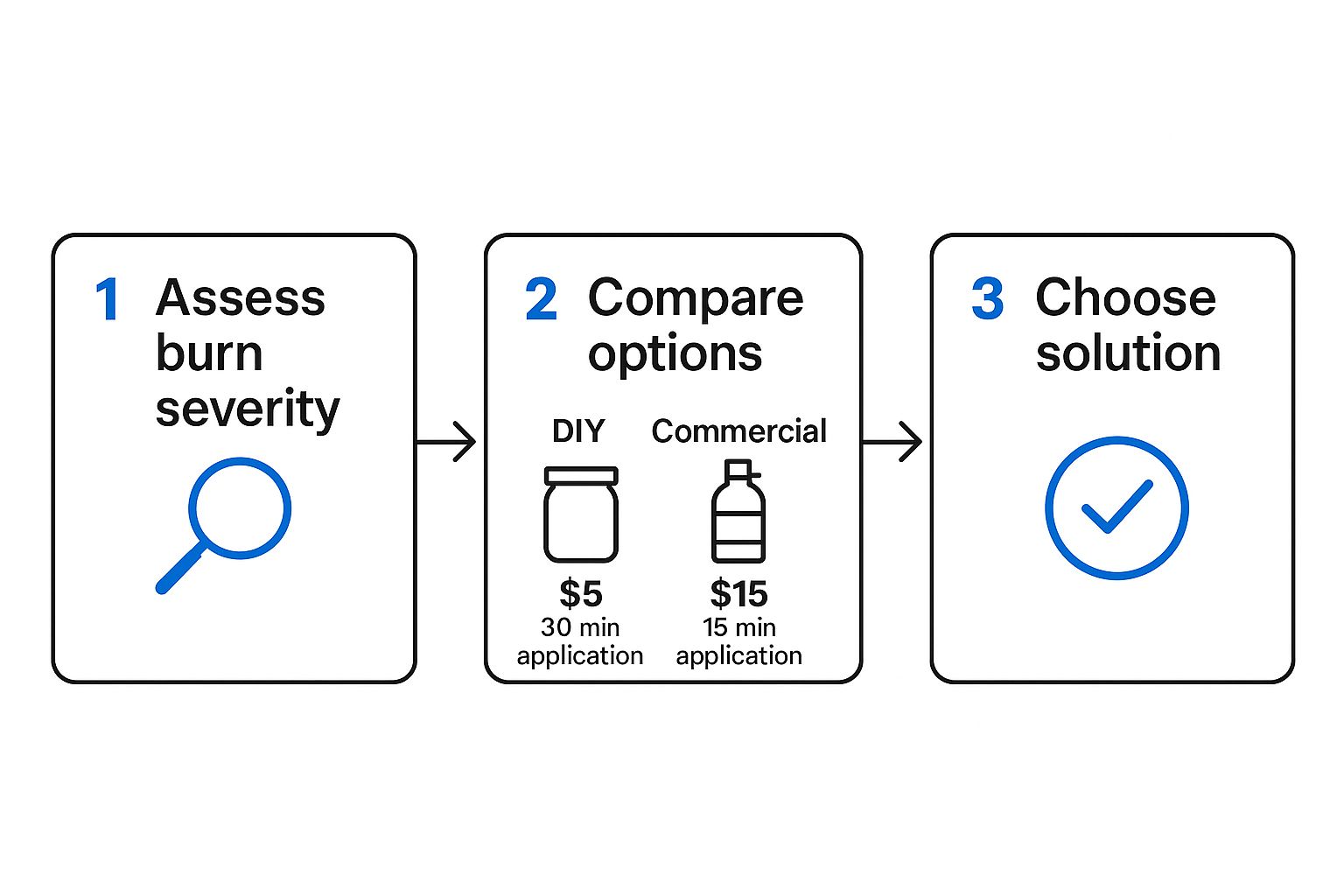
As the visual guide shows, a quick assessment of the damage is the first step, helping you compare your repair options and choose the right path forward.
Creating and Fitting Your Patch
Once you’ve got your donor carpet, precision is key. Start by making a template. Just place a piece of paper over the burn and trace its outline. Use this template to cut out your patch from the donor piece with a sharp utility knife, making sure to cut from the backing side to avoid fraying the fibres.
One critical detail you can't overlook is the pile direction—the natural lean of the carpet fibres.
A common mistake is ignoring the pile direction. If the patch’s pile runs against the surrounding carpet, it will catch the light differently and stand out, no matter how perfectly it’s cut.
After cutting the patch, lay it over the burnt area and carefully trace around it onto the main carpet. With your utility knife, cut out the damaged section. Now, apply a specialised carpet adhesive to the backing around the hole’s edges.
Firmly press the new patch into place, double-checking that the pile direction is perfectly aligned. Once the glue has set, gently run a comb over the seams to fluff up and blend the fibres. This will help create a near-invisible finish.
If this all feels a bit too much, or the burn is in a high-traffic, very noticeable area, it’s always wise to call in the experts. Exploring professional carpet cleaning and repair services can save you the stress and guarantee a seamless result.
Knowing When to Call a Carpet Repair Professional
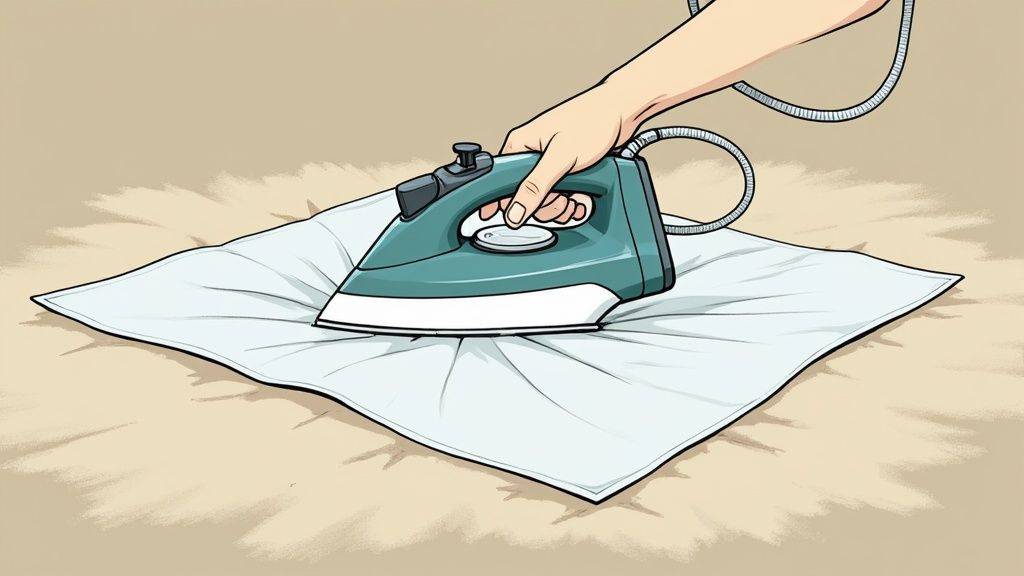
While a bit of DIY can sometimes sort out a light scorch, it’s vital to know when you’re out of your depth. Trust me, trying to fix a severe iron burn on carpet by yourself can easily make things worse and lead to a much bigger, more expensive problem down the line. Sometimes, the smartest move is to put down the scissors and pick up the phone.
So, how do you know when it’s time to call in the cavalry? It really comes down to honestly assessing the damage. If you’re looking at any of these situations, it’s time for an expert.
- The burn is large or deep: Any damage that’s bigger than a 50p coin, or a burn that has completely melted the fibres right down to the carpet’s backing, is a job for a professional.
- It’s in a high-traffic area: A DIY patch right in the middle of a busy hallway or your living room is far more likely to stand out or even come undone over time.
- You have a patterned carpet: Trying to match and patch a complex pattern, like you’d find on a Wilton or Axminster carpet, is almost impossible to get right without specialist skills and tools.
The Professional Advantage
When you hire a professional, you're not just paying for their time; you're paying for their expertise and their specialised kit. We have access to industrial-grade adhesives, precise colour-matching dyes, and micro-shearing tools that blend a repair so perfectly you’d never know it was there. We can even perform something called fibre grafting, a meticulous process where individual carpet tufts are transplanted for a truly invisible mend.
Deciding to call an expert isn't giving up; it’s making a smart choice to get a flawless, lasting result. A botched DIY job can often make a professional repair more complex and costly later on.
If you’re on the fence, it never hurts to get an expert opinion. Learning more about the professional carpet repair services available can help you see what’s possible and ensure your carpet is restored the right way, the first time.
Frequently Asked Questions About Iron Burns
https://www.youtube.com/embed/XEheV37JyXw
Even after you’ve tackled a repair, it’s natural to have a few more questions about dealing with an iron burn on carpet. We get asked about these all the time by homeowners across the UK, so here are some quick answers to the most common queries.
Can I Use Hydrogen Peroxide on an Iron Burn?
While you might see tips online suggesting hydrogen peroxide for stains, it’s a very risky move for a burn. An iron burn isn't just a stain; the fibres have been physically melted and fused.
Applying a bleaching agent like peroxide won't fix the melted texture. Instead, it’s highly likely to create a new, permanently lightened patch. This often looks even more obvious and worse than the original burn mark. It's much safer to stick to the physical removal methods, like carefully trimming the scorched tips or carrying out a patch repair.
Will My Home Insurance Cover the Damage?
If you have accidental damage cover included in your home insurance, you might be covered for a severe iron burn. The first step is always to check the small print of your specific policy.
Keep in mind that you'll almost certainly have an excess to pay. For small to medium-sized burns, this excess could easily be more than the cost of calling in a professional carpet specialist. We always recommend getting a repair quote first before you make a claim—it helps you see which option is truly the most cost-effective.
The best strategy is always prevention. Make sure you use a sturdy, dedicated ironing board set up away from busy walkways. And never, ever leave a hot iron unattended, especially if you have children or pets in the house.
Is an Iron Burn Similar to Other Household Accidents?
While the immediate damage from a hot iron is quite unique, the need for proper restoration connects it to other common household issues. For example, knowing how to handle severe pet accidents involves a similar understanding of how deep-down fibre damage can occur. You can find more helpful advice in our guide on removing pet urine from carpets.
And while this article is all about carpet, having a good understanding of how to look after other surfaces is useful for general home maintenance. Good laminate flooring care, for instance, requires a different set of preventative steps but is just as important.
For a professional, guaranteed solution to any carpet damage, trust the team at AG Carpet Specialists. We have the tools and expertise to restore your carpet flawlessly. Contact us today for a free, no-obligation quotation at https://www.agcarpetspecialist.co.uk.