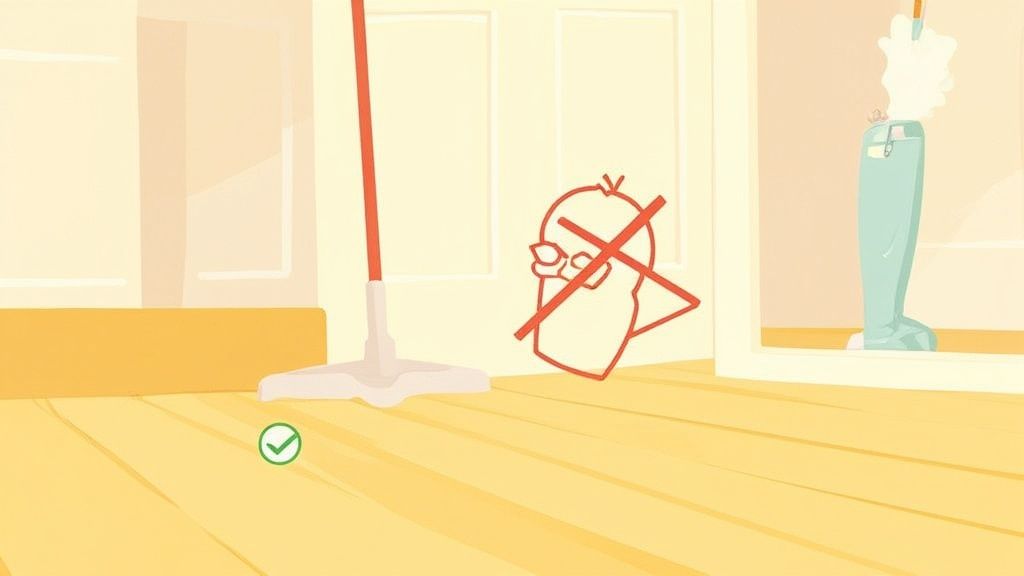
Let's get straight to the point: using a steam cleaner on your wooden floors is something almost every flooring expert will tell you to avoid. It might seem like a fantastic idea for a deep, sanitising clean, but you're essentially hitting a natural, organic material with intense heat and moisture. It’s a recipe for disaster that can cause permanent, irreversible damage to your beautiful timber flooring.
Why Steam and Wood Simply Don't Get Along
You probably love the way your steam mop leaves your kitchen tiles gleaming, but don't be tempted to use it on your wood flooring. It's a costly mistake in the making. The problem comes down to the very nature of wood itself. As a porous, natural material, timber reacts to its surroundings—especially to changes in heat and moisture.
How Steam Undermines Your Floor's Defences
Your wooden floor has a protective layer, usually polyurethane, varnish, or oil, which is there to guard it against everyday spills and scuffs. This finish isn't a completely impenetrable shield, though. It has microscopic pores and can develop tiny cracks or gaps over time, particularly between the planks as the wood expands and contracts with the seasons.
When you blast it with a steam cleaner, you’re forcing hot, high-pressure vapour directly onto that surface. This creates a perfect storm for damage to unfold:
- Moisture Infiltration: The hot steam easily finds its way through those tiny imperfections in the sealant, delivering moisture straight into the raw timber beneath.
- Swelling and Warping: Once that moisture seeps into the wood grain, the fibres absorb it and start to swell. This can cause the planks to cup (curl at the edges), warp, or even buckle upwards.
- Finish Damage: The intense heat from the steam can also soften, cloud, or even strip the protective finish, leaving your floor looking dull, blotchy, and unprotected.
The real kicker is that this damage often isn't immediately obvious. You might steam your floors once or twice and think everything looks fine. But with each pass, moisture builds up inside the wood, leading to gradual but permanent harm.
The Problem with Your Warranty
Another critical factor to consider is your flooring warranty. Steam cleaners work by boiling water and releasing it as vapour, which can easily leave excess moisture behind. Unlike a non-porous surface like ceramic tile, hardwood will soak this moisture up, causing it to swell and eventually crack.
Because of this, many flooring manufacturers explicitly state that using a steam mop on their products will void your warranty. Taking a steam cleaner to your floor is a massive gamble—one that could leave you with a ruined floor and no way to get it repaired or replaced. For a deeper dive into why the pros warn against it, you can find more information from the experts at Simply Floor Cleaning.
To make the risks clearer, it helps to see a direct comparison. Steam cleaning is an aggressive method, whereas recommended techniques are all about gentle, controlled cleaning.
Steam Cleaning vs Safe Methods for Wooden Floors
| Feature | Steam Cleaning | Wood-Safe Cleaning |
|---|---|---|
| Moisture Level | High and uncontrolled | Minimal and controlled (damp mopping) |
| Temperature | Extremely high heat | Room temperature |
| Impact on Finish | Can strip, cloud, or melt the finish | Cleans and protects the finish |
| Risk to Wood | High risk of swelling, warping, and cupping | Low risk when done correctly |
| Warranty Status | Often voids the manufacturer's warranty | Preserves the warranty |
Ultimately, while the power of steam is tempting, the safe and proven methods are designed to work with your floor’s natural properties, not against them.
Identifying Your Floor Type Before You Clean
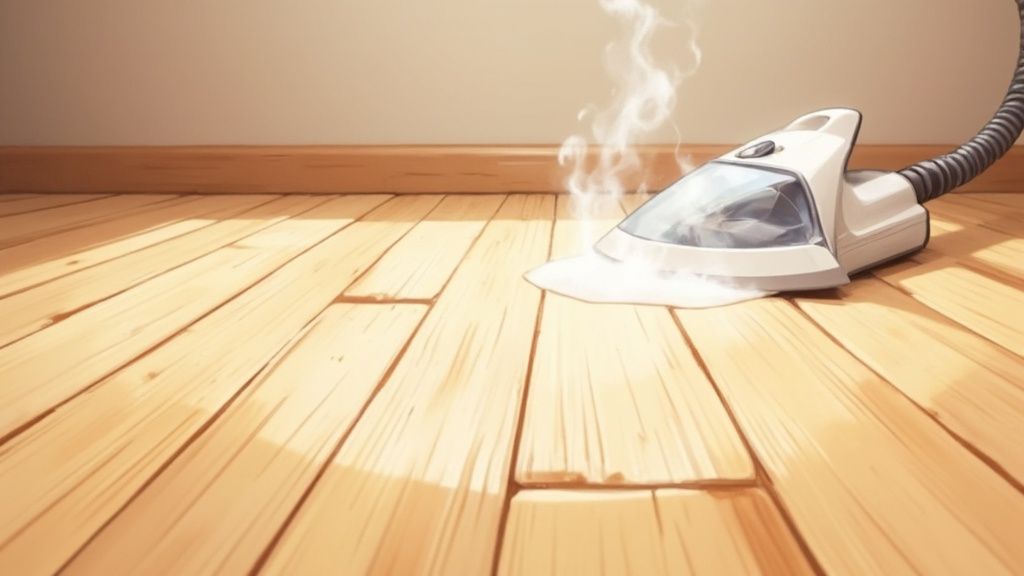
Before you even think about plugging in a steam cleaner, you need to play detective with your floor. Not all wooden floors are the same, and the type of finish protecting your timber is the single most important factor. Getting this wrong isn't just a minor mistake; it can be the difference between a beautifully clean floor and one that's permanently ruined.
The main difference lies between sealed and unsealed floors. A sealed floor has a protective layer on top—usually polyurethane, varnish, or lacquer—that acts as a shield against moisture and dirt. An unsealed floor, on the other hand, is treated with finishes like oil or wax that soak into the wood, leaving the grain more exposed.
The Simple Water-Drop Test
Figuring out what you're working with is simpler than you might think. You don't need any special kit, just a couple of drops of water. Find a discrete spot on your floor, perhaps in a corner or under a sofa, and let a single drop of water fall onto the surface.
Now, just watch and see what happens.
- It Beads Up: If the water droplet sits on top of the wood, forming a tight bead that doesn't soak in, you almost certainly have a sealed floor. The polyurethane or varnish is doing its job by repelling the liquid.
- It Soaks In: If the water quickly darkens the wood and disappears into the surface after a few minutes, your floor likely has an oil or wax finish. It could also mean the original sealant has completely worn away over time.
This little test gives you the crucial information you need. While we strongly advise against steam cleaning any wooden floor, using one on an unsealed surface is a guaranteed disaster. The porous wood will drink up the hot moisture like a sponge, leading to ugly dark stains, swelling, and even warping.
A sealed surface offers a thin veil of protection, but it’s not invincible. High-pressure steam can still find its way through microscopic cracks between planks or in worn areas of the finish, creating cloudy white blotches under the varnish that are impossible to remove.
Recognising Different Finishes
Beyond the water test, you can often identify a finish by just looking and feeling. Polyurethane-sealed floors usually have a noticeable sheen, from satin to high-gloss, and feel smooth and almost plastic-like. In contrast, oiled or waxed floors tend to have a more natural, low-lustre appearance that feels much closer to raw timber.
Understanding these differences is key to keeping your floors looking their best for years. For a complete overview of cleaning methods suited to different surfaces, you can explore our detailed guide on how to clean wood floors.
Right, so you understand the dangers of steam cleaning. Let’s talk about the proper way to get those wooden floors looking their best without causing any damage. The professional approach isn't about brute force or extreme temperatures; it's a gentle, methodical process that preserves your floor's finish and integrity. Forget the steam mop and adopt a routine that cleans effectively and safely.
The whole thing starts with good preparation. It's not just the visible muck you're fighting—it's the tiny bits of grit and dust that act like sandpaper under your feet, slowly scratching and dulling your floor's protective layer.
First, Get Rid of the Debris
Before you even think about getting the floor wet, you need to clear away all the loose dirt. Imagine trying to wash a sandy car; you'd just grind the grit into the paintwork. The same logic applies here. Mopping a gritty floor will just push those abrasive particles around, doing more harm than good.
For this first step, your best friends are simple but highly effective:
- A Soft-Bristled Broom: The classic choice for a reason. It gently coaxes dust, pet hair, and crumbs away without scratching the surface.
- A Hardwood-Safe Vacuum: A vacuum is great, but only if you can switch off the beater bar or brush roll. Those spinning bristles are designed for carpets and can easily scratch the sealant on a wooden floor. The ideal tool is a vacuum with a specific hardwood attachment that uses soft bristles.
This image shows just how crucial it is to start with a surface that's free from debris.
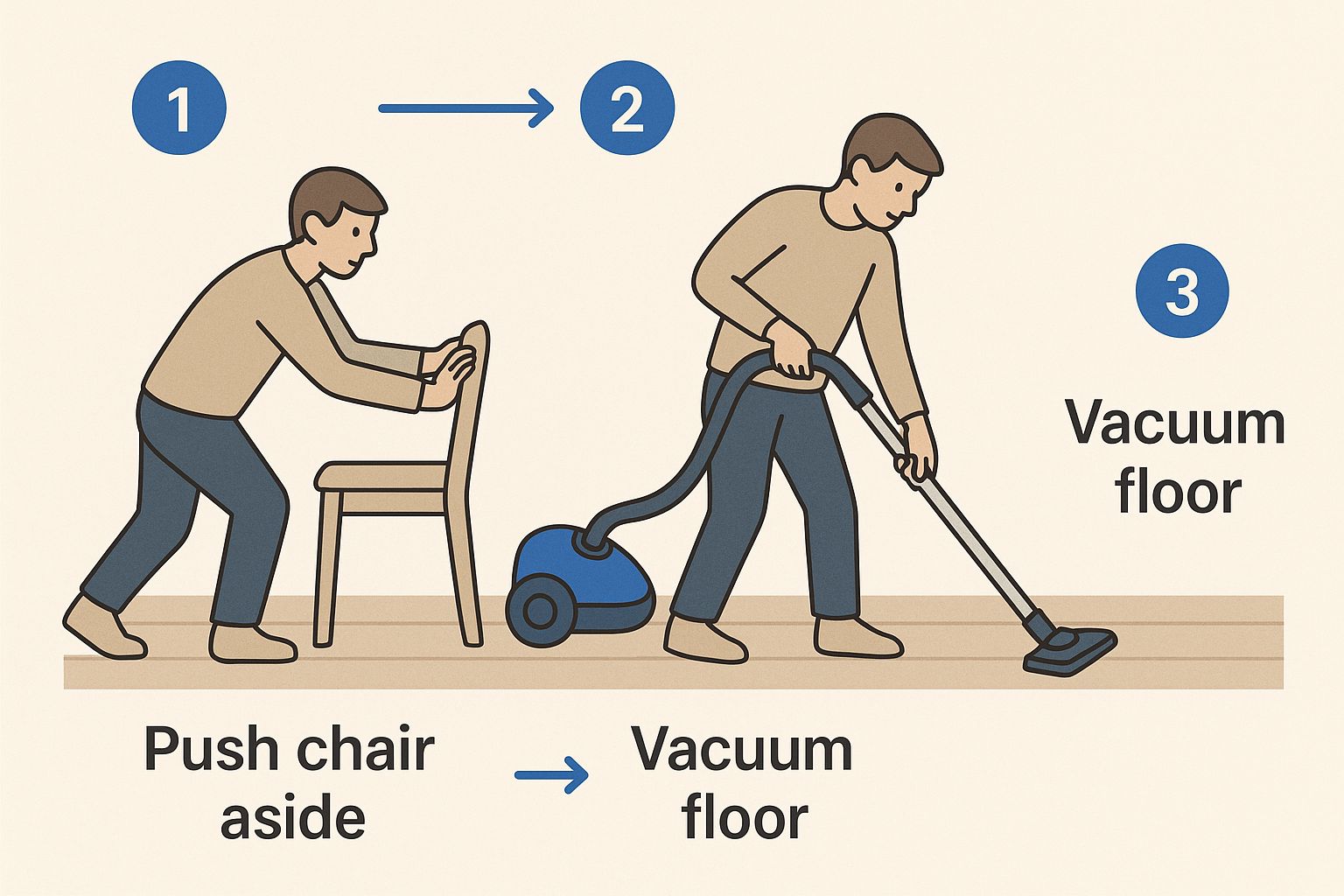
As you can see, taking a moment to sweep or vacuum properly is the essential first move to stop scratches from happening when you start cleaning.
Perfecting the Damp Mop Method
Once the grit is gone, it's time for the main event. The absolute golden rule here is damp, not wet. After steam, too much water is wood's biggest threat. Your aim is to use just enough moisture to lift grime without giving it a chance to soak into the gaps between the planks.
This is where a good quality microfibre mop is worth its weight in gold. Microfibre is brilliant at trapping dirt and gets the job done with far less water. Wring your mop out until it feels almost dry to the touch before you make a single pass on the floor.
A common pitfall is leaving the mop too wet, thinking more water equals a deeper clean. With wood, it’s the exact opposite. If your mop is leaving puddles or even a heavy film of water that doesn't dry within 60 seconds, it is far too wet.
When it comes to cleaning solutions, always pick one that's made specifically for wood. These are generally pH-neutral, which means they won't dull or strip the protective finish like an acidic or alkaline cleaner might. Follow the manufacturer's instructions for mixing; adding extra can leave behind a sticky residue that attracts more dirt.
Work in small, manageable sections, always moving your mop in the same direction as the wood grain. This helps clean out the tiny textures in the wood and leaves a much more uniform, streak-free finish. If you hit a stubborn sticky patch, apply a bit more elbow grease or go over it a second time rather than soaking the area. For those looking to achieve an even deeper lustre, our guide on hardwood floor cleaning and polishing has some more advanced tips.
Finally, if you notice any lingering damp spots, give them a quick wipe with a clean, dry, soft towel. This final check guarantees that no moisture is left behind, giving you a result that is not only perfectly clean but, more importantly, perfectly safe for your floor. Stick to this process, and your floors will look fantastic for years.
Effective Alternatives for a Deeper Clean
When your trusty damp mop just isn’t cutting through the grime anymore, it's completely understandable why the idea of steam cleaning wooden floors sounds so good. You’re after that deep, satisfying clean, but you need to do it without taking any major risks with your beautiful timber. Thankfully, there are some powerful and safe alternatives that deliver those impressive results you’re looking for.
The secret is to move away from any method that blasts your floor with heat and high-pressure moisture. Instead, we need to turn to tools and techniques that have been specifically designed for wood floors. These alternatives focus on effective scrubbing action combined with minimal liquid, which is crucial for protecting your floor's delicate finish.
Specialised Hardwood Cleaning Machines
For a genuinely deep clean that gives steam a run for its money, it’s worth looking into a specialised hardwood floor cleaning machine. These bits of kit are a world away from a standard steam mop. Rather than hitting your floor with hot vapour, they use a clever combination of gentle scrubbing brushes and a precisely controlled amount of wood-safe cleaning solution.
Think of it as a professional valet for your floor. The machine applies the cleaner, lightly scrubs away any embedded dirt and scuffs, and then immediately vacuums up the dirty liquid. This leaves your floors noticeably cleaner than mopping ever could, but without any of that dangerous leftover moisture.
These machines are engineered to solve the exact problem that makes steam so risky. By using a controlled amount of liquid and instantly removing it, they prevent moisture from ever having a chance to seep between the planks or damage the protective finish.
This approach is a stark contrast to some common cleaning habits. A survey on UK floor cleaning habits found that while almost 15% of people use steam cleaners on carpets, a surprising 27.5% only ever vacuum their hard floors, skipping wet cleaning altogether. This really highlights that homeowners are looking for effective deep cleaning methods for hard surfaces but are rightly cautious. It underlines the need for safe alternatives like these dedicated hardwood machines.
Effective Spot-Treating Techniques
Not every deep-cleaning job calls for a full-floor treatment. For those isolated problems like scuff marks from shoes, sticky spills in the kitchen, or greasy spots, targeted spot-treating is your best and safest bet.
Here are a few of our tried-and-tested methods for common issues:
- Black Scuff Marks: Often, a simple pencil eraser is all you need. For more stubborn marks, a little bit of baking soda on a damp cloth can provide a gentle abrasive action. Just rub lightly, wipe the area clean with a fresh damp cloth, and dry it straight away.
- Sticky Residue: For things like sticker adhesive or dried-on juice, never scrape with anything metal. Instead, apply a small amount of mineral spirits (white spirit) to a soft cloth and gently rub the area until the residue dissolves. Afterwards, clean the spot with your usual pH-neutral wood cleaner to get rid of any solvent traces.
- Grease Stains: If you've dropped something oily, you need to act fast. The goal is to lift the grease out of the wood's grain. Use your standard hardwood floor cleaner and a microfibre cloth to break down and lift the oil.
These targeted approaches give you the intensive cleaning power you need for specific problems. They deliver the kind of results people hope for from steam, but in a way that is perfectly safe for your floor. Using the right techniques is crucial, just as it is for other surfaces in your home. For those with carpets, our guide to eco-friendly carpet cleaning has some great tips for maintaining a healthy living environment.
Long-Term Floor Care and Damage Prevention
While knowing the right way to clean is vital, looking after your wooden floors for the long haul is really about everyday habits. True preservation comes from being proactive. If you can shift your mindset from just doing a deep clean every now and then to ongoing, daily care, you'll dramatically extend the life and beauty of your timber flooring.
It's less about intense scrubbing and more about stopping the damage that makes those big cleans necessary in the first place.
The most effective strategy I’ve seen starts right at your doorstep. You absolutely must have high-quality doormats at every entrance to your home. Think of them as your first line of defence, trapping the abrasive grit, dirt, and moisture that would otherwise get tracked inside and ground into your floor's finish. A simple mat prevents countless tiny scratches that build up over time.
Creating a Scratch-Free Zone
Once you're inside, your furniture is the next biggest threat. Every single time a chair scrapes back from the dining table or a sofa gets nudged, it has the potential to leave a lasting mark.
This is where felt furniture pads become your best friend. Applying these simple, inexpensive pads to the bottom of all furniture legs is one of the easiest and most impactful things you can do.
- For stationary items: Things like sofas, cabinets, and bookcases that don't move often are fine with self-adhesive felt pads.
- For chairs and tables: I always recommend using nail-in felt pads. They're far more durable and won't shift or fall off with the constant movement of dining chairs.
Taking just five minutes to fit these pads can save you from years of staring at ugly scratches and the costly repairs needed to fix them.
Remember, the goal isn't just to avoid major gouges. It's about protecting the floor's sealant. Once that top layer is compromised by thousands of tiny scratches, it loses its sheen and its ability to repel dirt and moisture effectively.
The Power of Daily Dry Cleaning
Another cornerstone of long-term care is something I call 'daily dry cleaning'. This just means a quick sweep every day with a soft-bristled broom or a quick pass with a hardwood-safe vacuum. This simple routine dramatically reduces the amount of grit that acts like sandpaper under your feet. It also means you won't need to do a full damp mop or steam clean nearly as often.
This is especially important because dust isn't just harmless fluff. Research shows that typical household dust on hard floors is made up of about 70% dead skin and 30% outdoor material. If you let that build up, it becomes abrasive. And if you only use a dust mop, a lot of it just resettles within 24 hours. You can read more about UK house cleaning statistics at TopCleaners.co.uk.
Finally, be obsessive about spills. Water, juice, or anything else should be wiped up the moment it hits the floor. Letting spills sit gives moisture a chance to seep between the planks and cause damage from within. These simple preventative steps are the real secret to keeping your wooden floors looking pristine for a lifetime. This principle of proactive care applies to other surfaces too; for example, you can see similar advice in our guide on natural stone floor cleaning.
Frequently Asked Questions About Wood Floor Care
Even when you understand the risks, it's natural to have questions about using steam cleaners on wood. The world of floor care can be a minefield, with bold marketing claims often clashing with advice from seasoned experts. This section gives you clear, direct answers to the common queries we hear from homeowners, helping you protect your timber flooring with confidence.
What If a Steam Mop Is Marketed as Safe for Sealed Hardwood?
This is a very common point of confusion, and it's easy to see why. You'll find plenty of steam mops sold with "low moisture" settings, but the fundamental problem doesn't go away: you're still applying concentrated heat and vapour to a natural, porous material.
Even the most perfectly sealed floor has microscopic gaps. These are often between the planks or in areas where the protective finish has naturally worn down over time. Heat and steam are experts at finding their way into these tiny weak spots.
When this happens repeatedly, the trapped moisture can cause a host of problems:
- A cloudy or milky film appearing under the finish.
- The growth of mould or mildew deep within the wood itself.
- Delamination, where the layers of engineered wood start to peel apart.
It's a significant risk to take for a moment of cleaning convenience. Most flooring manufacturers are very clear: using a steam cleaner will void your warranty. The safest bet is always to stick with manufacturer-approved methods, like damp mopping with a good pH-neutral cleaner.
How Can I Disinfect Wooden Floors Without Using Steam?
Getting a hygienic clean without resorting to steam is absolutely achievable. There are several wood-safe disinfecting cleaners on the market formulated specifically for hardwood floors. The key is to look for products that are free from harsh chemicals like bleach or ammonia, as these can strip the finish and leave your floor looking dull.
For a gentle, home-made alternative, a heavily diluted white vinegar solution can do the trick. A good ratio is 60ml of white vinegar mixed into 4 litres of warm water. This creates a solution with mild disinfectant properties that isn't overly acidic.
However, always test any new cleaning solution on a small, hidden area first (like under a rug or a piece of furniture) to ensure it doesn't negatively affect your floor's finish.
My Wooden Floor Has a Sticky Residue How Do I Remove It?
Sticky spots are a real nuisance, but they can be dealt with safely without damaging your floor.
First, try the simplest approach: buff the area with a clean, dry microfibre cloth. Sometimes, the friction alone is enough to lift the residue. If that doesn't work, apply your standard pH-neutral wood floor cleaner directly to the spot and wipe it clean.
For more stubborn, tacky messes—like residue from tape or a sugary spill—you can use mineral spirits (also known as white spirit). Apply a very small amount to a soft cloth and gently rub the affected area. Mineral spirits are a solvent but are generally safe for modern polyurethane finishes.
Crucially, you must immediately clean the spot with your regular wood floor cleaner to remove any lingering solvent, then wipe the area completely dry. Never use soap-based products, as they are notorious for leaving behind a dulling film that actually attracts more dirt. This careful approach is far safer than harsh chemicals, a key consideration when you revitalise your home with professional carpet cleaning in Cheltenham or care for other delicate surfaces.
For professional wood floor restoration that brings back the natural beauty of your timber without risk, trust the experts. Contact AG Carpet Specialists today for a free quotation at https://www.agcarpetspecialist.co.uk.