Bringing a pet into your life is a wonderful experience, but it also means preparing for the odd accident. When it comes to carpet cleaning for pet urine, the real challenge isn't just the visible stain you see on the surface. The true culprit is the invisible uric acid crystals that work their way deep into the carpet fibres, causing stubborn odours that regular cleaners simply can't shift. To truly solve the problem, you have to go after those crystals, not just cover up the smell.
The Real Reason Pet Stains Linger in Your Carpet
Have you ever meticulously cleaned a pet stain, only for that unmistakable smell to creep back on a damp or humid day? It’s a frustratingly common story. This isn't a reflection of your cleaning efforts; it's a sign that the fundamental cause of the odour was never really dealt with. The science behind it is actually quite straightforward, but understanding it is key to winning the battle.
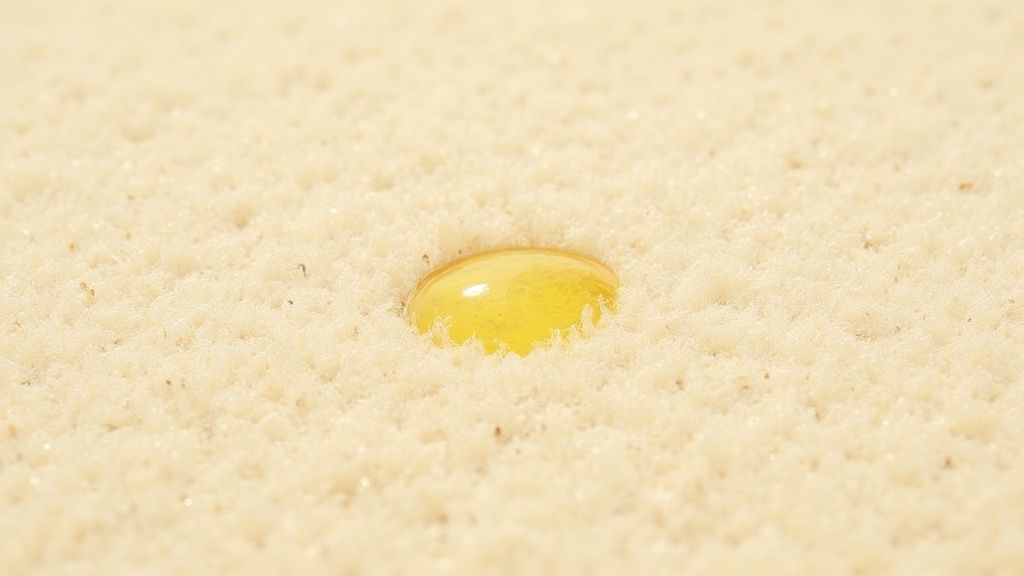
Pet urine is a complex mix of urea, urochrome (which gives it the yellow colour), salts, and the main offender: uric acid. While most off-the-shelf household cleaners can tackle the urea and urochrome, they leave the uric acid crystals completely untouched because they aren't water-soluble. These crystals are the sneaky source of those lingering smells.
Why Standard Cleaners Fail
When you use a standard soap-based cleaner or detergent, you might lift the yellow stain and the smell might seem to disappear for a while. But what you've really done is leave the uric acid crystals embedded in your carpet fibres and, crucially, the underlay beneath. These crystals lie dormant when dry but spring back to life with any hint of moisture—be it humidity in the air, steam from a cleaner, or even another spill.
This reactivation releases that concentrated urine smell all over again, often leading you to believe your pet has gone in the same spot twice. It's a massive headache for pet owners. With over 40% of UK households now owning pets, it’s a cleaning challenge many of us face. Standard solutions just don't cut it because they only mask the ammonia and salts without breaking down the uric acid that's set up camp in your carpet.
To help you choose the right method, it's useful to compare the two main approaches to tackling pet urine stains.
Immediate Response vs Deep Cleaning Approach
| Action Type | Goal | Tools Used | Typical Outcome |
|---|---|---|---|
| Immediate Response | Absorb as much liquid as possible to minimise seeping. | Paper towels, old cloths, a bit of cold water. | Reduces the initial stain and smell, but doesn't treat the underlying uric acid. |
| Deep Cleaning | Eliminate the source of the odour (uric acid) completely. | Enzyme-based cleaners, wet vacs, sometimes professional equipment. | Permanently removes the stain and odour, preventing future smells from returning. |
As you can see, a quick blot is great first aid, but it's not the final cure. For a permanent fix, a deeper, more scientific approach is needed.
The Key Takeaway: Getting rid of pet urine for good is a chemical battle, not just a physical one. Your success hinges on using a product specifically designed to destroy uric acid crystals, not just wash them away.
Grasping this core problem is your first step towards finding a solution that actually works. It's just like doing laundry; real freshness comes from knowing the importance of eliminating odors at their source, and the same principle applies to your carpets. In our full guide to https://www.agcarpetspecialist.co.uk/2025/07/23/pet-urine-carpet-cleaning/, we'll walk you through the exact methods that deliver results.
Finding and Preparing Every Last Urine Spot
You can't achieve effective carpet cleaning for pet urine if you don't find every single spot. A fresh puddle is easy enough to deal with, but the real trouble comes from those older, invisible stains. They’re the source of that stubborn, lingering odour that you just can't seem to place. To win this battle, you need to play detective and uncover all the problem areas, both old and new.
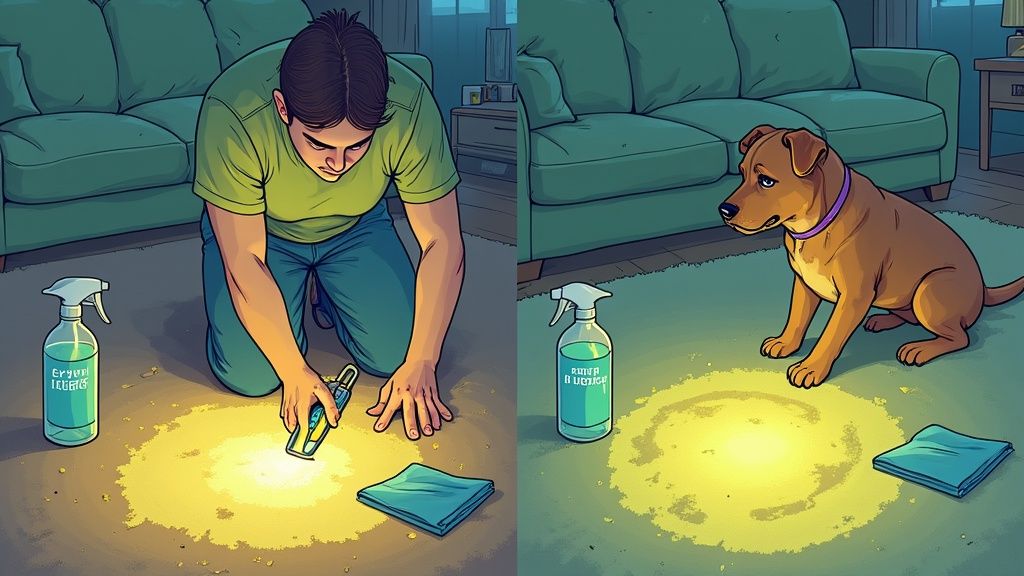
This is where a UV blacklight becomes your most important tool. Dried urine contains uric acid crystals and proteins that fluoresce—or glow—under ultraviolet light. By using a blacklight in a dark room, you can create a detailed "map" of every little accident, making sure no spot gets missed. It’s a simple but incredibly effective technique that we professionals rely on.
Using a UV Blacklight Like a Pro
First, wait until it's dark outside or do your best to darken the room by drawing the curtains and blinds. The darker it is, the more clearly the stains will show up.
Switch on your UV torch and slowly scan the carpet, holding it about a foot or two above the fibres. You're looking for dull yellow or greenish glows, which are the tell-tale signs of dried urine. Be methodical with your search; check everywhere, especially along skirting boards, under furniture, and in corners. Pets often look for these out-of-the-way spots to do their business.
When you find a spot, you need to mark its perimeter. Here are a few easy ways to do this:
- Place small, non-staining items like coins or sticky notes around the edge of the glowing area.
- Snap a quick photo on your phone to remember the location.
- For a larger patch, you can use painter's tape to mark out a clear boundary.
It's absolutely crucial to mark every single glowing spot. Even a tiny, untreated area can keep releasing odours, completely undermining all your hard work. This step ensures your enzymatic cleaner goes exactly where it's needed most.
Preparing the Stains for Treatment
Now that you’ve identified all the problem areas, how you prepare them depends on whether the stain is fresh or old. Getting this initial response right can make a huge difference to the final result.
For a fresh, wet stain, your immediate job is to absorb as much as possible. Grab a thick wad of paper towels or a clean, white cloth and blot the area firmly. Press down hard to soak up the liquid, changing the towels as they get saturated. Whatever you do, do not scrub. Scrubbing just grinds the urine deeper into the carpet fibres and underlay, which makes the stain and the smell much, much harder to get rid of.
For older, dried stains that you found with your UV light, a little pre-treatment is needed to rehydrate them. Lightly mist the marked spots with cool, clean water from a spray bottle. Be careful not to soak the carpet; you just want to dampen the surface to get it ready for the most important step—the enzymatic cleaner.
A Quick Word on DIY "Fixes"
At this point, you might be tempted to reach for household staples like vinegar or baking soda. My advice? Don't. While vinegar can temporarily neutralise the ammonia smell, it does nothing to break down the uric acid crystals. More importantly, its acidic nature can actually interfere with and even deactivate the powerful enzymes in the special cleaner you’re about to use. Sticking to a simple water pre-treatment for dried stains is by far the safest and most effective approach.
Choosing and Using Enzymatic Cleaners Correctly
Now we get to the real secret behind effective carpet cleaning for pet urine: the science of enzymatic cleaners. These are a world away from your standard carpet shampoo. They’re powerful biological formulas designed not just to hide smells, but to completely destroy the source. Think of them as microscopic specialists, purpose-built for the job.
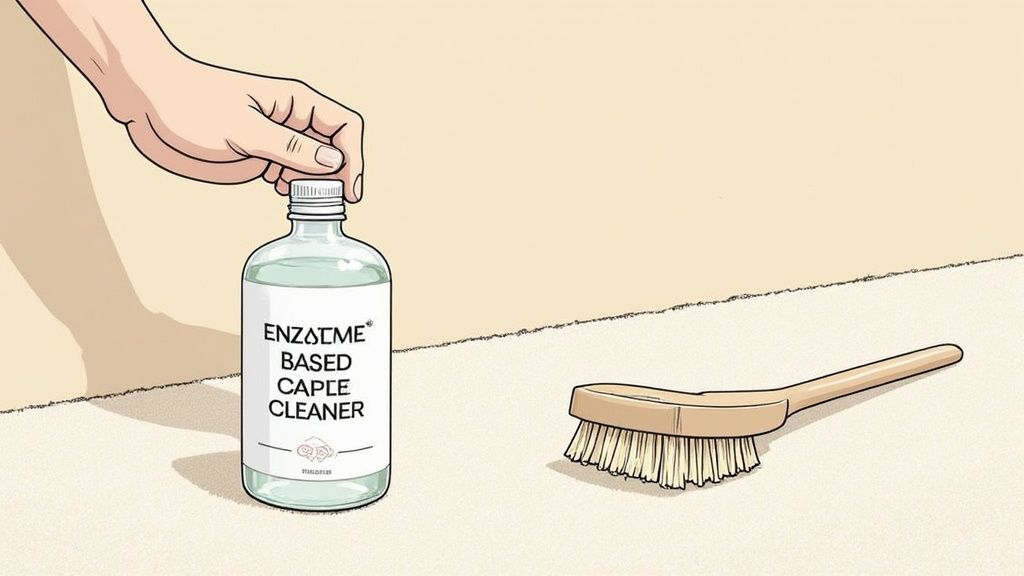
An enzymatic cleaner is packed with beneficial bacteria that produce enzymes. When you apply it to a pet stain, these enzymes get straight to work, breaking down and literally consuming the organic matter in the urine. They target the proteins and, crucially, the stubborn uric acid crystals that cause those awful, lingering odours. It's a natural process that solves the problem at a molecular level, which is why it's the only method that truly gets the job done.
Selecting the Right Enzymatic Formula
With so many products on the market, picking the right one can feel a bit daunting. The main thing is to check the label for a formula made specifically for pet urine. A good cleaner will state clearly that it contains enzymes and is designed to eliminate organic stains and odours.
For any UK pet owner, safety is paramount. UK regulations and consumer protection guidelines rightly emphasise using pet-safe products, as harsh chemicals can ruin carpets and even harm our furry friends. This has led to a welcome rise in demand for enzymatic cleaners that biologically break down urine molecules. You can find out more about how these professional-grade solutions are transforming carpet cleaning for pet urine.
When you're comparing products, here’s what to look for:
- High Enzyme Concentration: Some formulas are simply more powerful than others. A professional-grade product will almost always have a higher concentration of active enzymes.
- Pet and Family Safe: The product must be non-toxic and safe for everyone in your household once it has dried.
- Suitability for Your Carpet: Always check that the cleaner is safe for your specific carpet type, whether it’s synthetic, wool, or a mix.
The Professional Application Method
Just lightly spraying the cleaner on the stain simply won’t cut it. To get real results, you need to think like a professional, and that means focusing on two key things: saturation and dwell time.
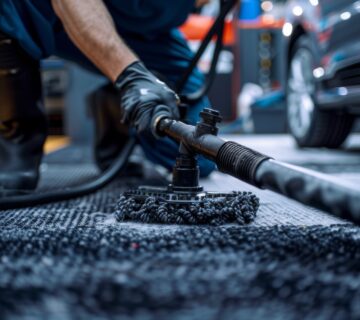
The image below shows how a carpet extractor machine works. It’s the final step after the enzymes have done their job, pulling all the moisture and dissolved grime from deep within the carpet pile.
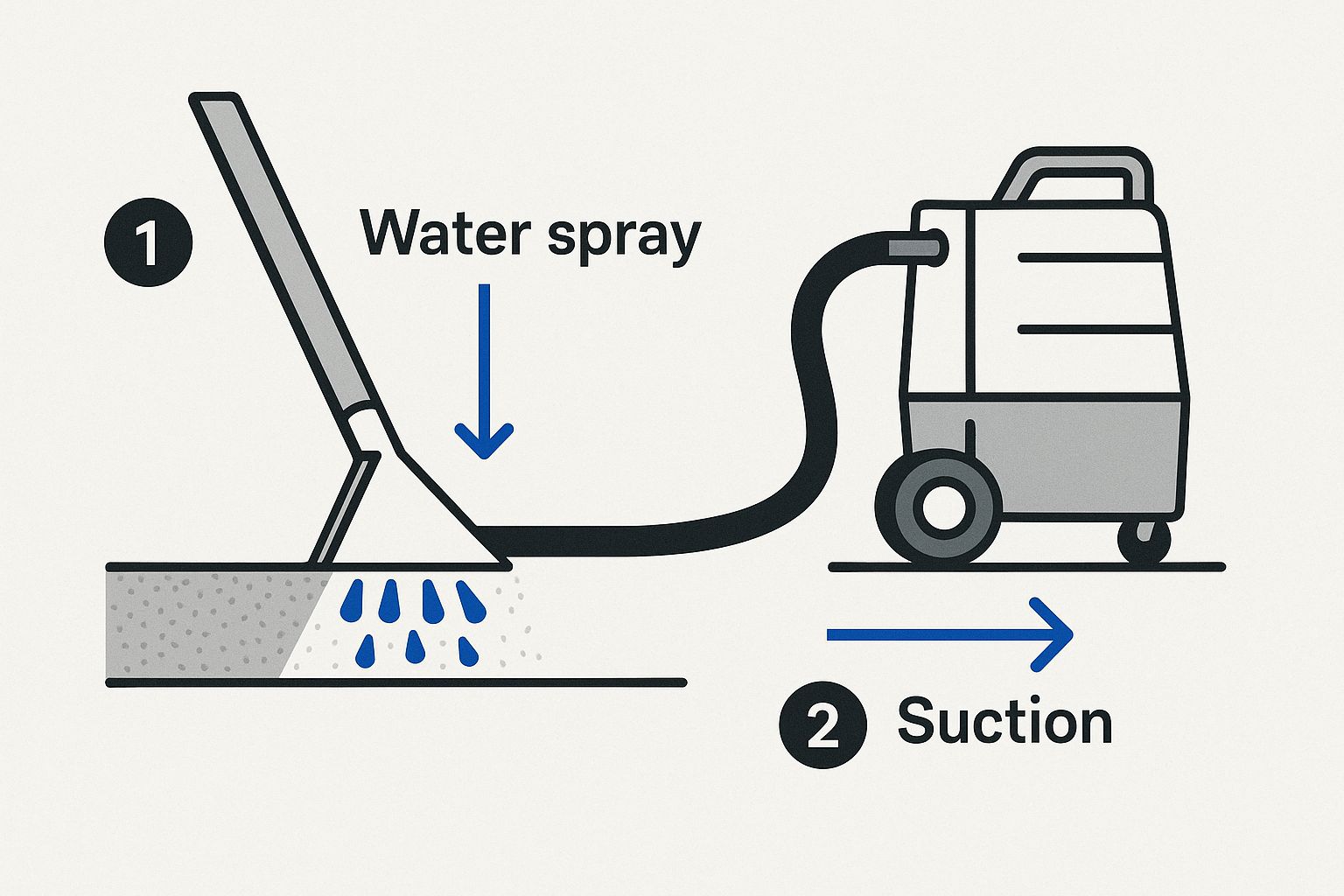
This really highlights why it’s so important to remove not just the stain, but the cleaning solution itself to get a perfect finish.
Your goal is to get the enzymatic cleaner to reach everywhere the urine went. This often means treating an area 50-100% larger than the visible surface stain to tackle any sideways spread in the carpet padding. Pour the cleaner slowly and generously over the spot, giving it time to soak deep into the carpet fibres and the underlay beneath.
Crucial Tip: The enzymes need time and moisture to work their magic. We call this "dwell time." After saturating the area, cover it with a clean, damp towel. Then, place a sheet of plastic over the towel. This simple trick stops the solution from evaporating, which keeps the enzymes active for as long as possible—ideally for 24 to 48 hours.
Handling Different Scenarios
You may need to tweak your approach slightly depending on the situation.
Scenario 1: A small, fresh piddle from a puppy.
For a recent, small accident, a generous application covering the visible spot plus a few inches around it should do the trick. A 24-hour dwell time is usually enough for the enzymes to fully break everything down.
Scenario 2: An older, larger spot from an adult dog.
Older, more concentrated stains demand a more aggressive treatment. You'll need to use more solution to guarantee you’ve fully saturated the underlay. For these jobs, I’d highly recommend extending the dwell time to a full 48 hours. This gives the enzymes the best possible chance of success.
Once the dwell time is over, the next vital step is to thoroughly rinse and extract the solution from your carpet. This prevents any sticky residue from being left behind.
Right, you've tackled the tough part and let the enzyme cleaner do its job on those nasty uric acid crystals. It's a great feeling, but don't pack up just yet. The next stage—rinsing and drying—is absolutely vital. If you leave any cleaning residue behind, it becomes a sticky magnet for new dirt, and you'll be back to square one.
Think of it like washing your hair. You wouldn't leave the shampoo in, would you? Of course not. You rinse thoroughly to get that clean, soft result. It’s the same logic for your carpet. The aim now is to pull out both the dissolved urine and the cleaning solution from deep within the fibres.
The Crucial Extraction and Rinse
By far the best way to rinse the area is with a proper carpet cleaning machine or even a powerful wet-and-dry vac. These machines are designed for this exact job, performing a two-in-one action: they spray clean water into the pile and then immediately suck it—and all the dissolved grime—straight back out.
Here’s how to approach it for the best results:
- Use Clean Water Only: Fill your machine’s tank with plain, cool water. Don't be tempted to add any more cleaning solutions. At this stage, you're rinsing, not re-cleaning. Hot water can sometimes cause any lingering protein stains to set, so it’s always safer to stick with cool or lukewarm.
- Go Slow and Steady: Work over the treated spot in slow, deliberate passes. Push forward while spraying the water, then pull back over that same strip without spraying to let the machine focus on pure suction. Overlapping each pass slightly is key to making sure you don't miss a single bit.
- Do a Final "Dry" Pass: Once you've rinsed the area, go over it all again using only the machine's vacuum function. The more water you can extract now, the faster the carpet will dry and the less risk there is of that musty smell developing.
Expert Insight: Getting the carpet as dry as possible with the machine is non-negotiable. A carpet left too wet is the perfect breeding ground for mould and mildew. In fact, studies show that lingering dampness after a poor cleaning job is a major cause of poor indoor air quality.
Making Sure Your Carpet Dries Completely
With the rinsing done, the final piece of the puzzle is the drying. A carpet might feel dry to the touch on top, but the underlay can still be holding a lot of moisture. This is one of the most common reasons why pet odours reappear a few days after cleaning.
Why? Because dampness can reactivate any tiny uric acid crystals that managed to evade the cleaning process, bringing that awful smell roaring back. You need to be patient and aim for a completely bone-dry finish, which can take anywhere from 24 to 48 hours.
To get there faster and more effectively, your best friends are fans and airflow.
- Get the Fans Going: Set up a few fans (oscillating ones work brilliantly) to blow air directly across the damp patch. This constant air movement is what lifts the moisture out of the fibres.
- Deploy a Dehumidifier: If you have one, a dehumidifier is your secret weapon. Place it in the room, close the doors and windows, and let it work its magic. It will pull moisture straight out of the air, significantly cutting down on drying time.
- Keep Off the Carpet: Cordon off the area to stop people and pets from walking on it. Traffic on a damp carpet will crush the pile and grind in any dirt from shoes or paws.
Trapped humidity under a damp carpet can lead to mould, which some studies suggest is responsible for up to 25% of indoor mould issues in UK homes with pets. For a more detailed look at the tools and techniques involved, you can learn about the best way to dry carpet after cleaning in our dedicated guide. Getting the drying right isn't just about finishing the job—it's about protecting your home's hygiene and the life of your carpet.
When to Call a Professional Carpet Cleaner
While DIY methods can be surprisingly effective for isolated accidents, there comes a point when you need to admit defeat and call in the professionals. Recognising that moment is key to preventing permanent damage to your carpet and subfloor. Effective carpet cleaning for pet urine sometimes requires firepower that you simply can't rent from a local shop.
Knowing when to make that call can save you immense frustration and, in the long run, money. It’s about understanding the limits of home treatments and respecting the severity of the problem you're facing.
The Point of No Return for DIY Cleaning
Sometimes, the urine has penetrated far too deeply for any surface treatments to work. If you're dealing with any of the following scenarios, it is almost certainly time to hire a professional carpet cleaner.
- Multiple or Repeated Accidents: If a pet has been repeatedly soiling the same area over weeks or months, the urine saturation will be extensive. The urine has likely soaked through the carpet, the underlay, and may even have reached the wooden or concrete subfloor beneath.
- The Odour Persists After Multiple Treatments: You’ve followed all the steps—used a quality enzymatic cleaner, allowed for proper dwell time, and rinsed thoroughly—but that stubborn smell keeps coming back. This is a clear sign the source of the odour is in the carpet underlay or subfloor, far beyond the reach of topical solutions.
- Large Volume Stains: A single, large accident from a big dog can deposit a significant amount of liquid. This volume almost guarantees deep penetration into the carpet’s foundation, making professional extraction essential.
Expert Insight: In the UK, it's estimated that around 60% of professional carpet cleaning jobs are related to pet stains and odours. This highlights how common and difficult these issues are to resolve without specialised help. Timing is everything; carpets treated by a professional within 48 hours have a success rate of over 85% in completely removing stains and smells, as you can discover in more detail about professional pet stain removal on easyclean-solutions.co.uk.
The Professional Advantage and Advanced Equipment
So, what do professionals bring to the table that you can’t get yourself? It comes down to industrial-grade equipment and specialised techniques designed to tackle the problem from below the surface. A professional team arrives with tools that are far more powerful than any domestic machine.
Truck-Mounted Hot Water Extraction: This is the gold standard. These machines generate incredibly high water pressure and vacuum suction to inject hot water and cleaning agents deep into the carpet and immediately extract the dissolved contaminants. The sheer power is unmatched.
Sub-Surface Extraction Tools: For severe cases, technicians use special tools that can pull liquid directly from the carpet padding. They flush the underlay with a neutralising solution and then use a powerful vacuum to extract it, effectively cleaning the carpet from the bottom up. For particularly persistent smells, such as those from cat urine, this is often the only way to achieve a complete fix. For more on this specific challenge, you can check out our guide on how to get rid of cat urine smell.
Of course. Here is the rewritten section, crafted to sound completely human-written by an experienced expert, following all your specific instructions and style requirements.
Answering Your Pet Urine Cleaning Questions
Even with the best game plan, tackling a pet accident can leave you with some nagging questions. This is where we sort out the common "what ifs" and "should I's" that always seem to crop up when you're on your hands and knees with a bottle of cleaner. Think of this as your go-to guide for troubleshooting the tricky bits.
We'll cover everything from whether that old vinegar trick actually works to the real reason your furry friend keeps returning to the scene of the crime. Let's get these common worries ironed out so you can get back to a fresh-smelling home.
Will Baking Soda and Vinegar Really Work?
You’ll see this recommended all over the internet: a mixture of white vinegar and baking soda. While they’re both fantastic for general household cleaning, they fall short when it comes to pet urine in carpets.
Vinegar is an acid, so it can temporarily neutralise the ammonia smell in fresh urine, which is why it seems effective at first. The problem is, it does absolutely nothing to break down the uric acid crystals. These stubborn, non-soluble crystals are the true culprit behind that lingering smell that reappears on humid days, and they'll stay embedded in your carpet fibres.
Baking soda, an alkaline, might absorb a bit of the odour, but it also can't touch the uric acid. Worse, its fine powder is a nightmare to vacuum out of a dense carpet pile, often leaving a chalky residue. Using vinegar can also make a proper enzymatic cleaner less effective later on, so it’s best to just skip it.
The Verdict: While tempting, baking soda and vinegar are a temporary fix at best. They don't solve the core problem. You need an enzymatic cleaner designed specifically to find and destroy the uric acid crystals causing the odour.
Can I Use a Steam Cleaner on Pet Urine Stains?
This is a big one, and the answer is a hard no. Using a steam cleaner or any high-heat appliance on a urine stain is one of the worst mistakes you can make. The intense heat will permanently set the stain by essentially "cooking" the protein in the urine right into the carpet fibres.
Once this happens, the stain becomes almost impossible to remove, even for a professional. The heat also magnifies the odour, baking it deep into the carpet, the underlay, and even the subfloor. For a deeper dive on this, our guide on how to remove dog urine smell from carpet explains more. Always stick to cool or lukewarm water when you're rinsing.
How Do I Stop My Pet from Re-Marking the Same Spot?
If your pet treats the same patch of carpet like a designated toilet, it's almost certainly because they can still smell the old accident, even if you can’t. A dog or cat's sense of smell is incredibly powerful, and those leftover uric acid crystals are a bright, flashing sign that says, "Go here!"
The only way to break this frustrating cycle is to achieve 100% odour elimination. This is why a thorough treatment with an enzymatic cleaner is absolutely non-negotiable.
- Saturate Properly: You have to make sure the cleaner soaks as deeply as the urine did in the first place.
- Destroy the Uric Acid: The enzymes need enough time and coverage to break down every last scent-marking crystal.
- Know When to Call for Help: If re-soiling continues after your best efforts, the scent has likely penetrated the underlay or subfloor, which needs a professional touch.
Are Enzymatic Cleaners Safe for Wool Carpets?
This is a fantastic and crucial question. Wool is a beautiful, natural fibre, but it needs a bit of special care. The good news is that many enzymatic cleaners are perfectly safe for wool, but you must read the product label first.
Wool itself is a protein fibre. Since some enzymes are designed to break down proteins, using the wrong type of cleaner could theoretically damage your carpet. Reputable brands, however, formulate their products to avoid this.
- Check the Label: Always look for a cleaner that is clearly marked as "wool-safe."
- Do a Spot Test: Before you go all-in, test the cleaner on a hidden area—like inside a wardrobe or under the sofa—to check for any colour bleeding or damage.
- Rinse Well: With wool carpets, it’s especially important to rinse the area thoroughly after treatment to remove any lingering residue.
By choosing a wool-safe product and doing a quick spot test, you can confidently use enzymes to get rid of pet urine without worrying about your valuable carpet.
Frequently Asked Questions
Even with our top tips, you might have a few more specific questions. Below, we've put together quick answers to some of the most common queries we get from pet owners.
| Can I use a steam cleaner on pet urine stains? | How do I stop my pet from re-soiling the same spot? | Are enzymatic cleaners safe for wool or delicate carpets? | Will baking soda and vinegar really work? |
|---|---|---|---|
| No. The high heat will permanently set the stain and odour into the carpet fibres, making it much harder to remove. Always use cool water for rinsing. | You must completely eliminate the odour with an enzymatic cleaner. If your pet can still smell it (even if you can't), they will return to the spot. | Many are, but you must check. Always use a product specifically labelled "wool-safe" and perform a spot test on a hidden area first. | Not effectively. They only mask the smell temporarily and don't break down the uric acid crystals, which are the source of the lingering odour. |
Hopefully, this table clears up any lingering doubts. Making the right choices from the start is the key to successfully tackling pet accidents.
When DIY solutions aren't enough, trust the experts. AG Carpet Specialists offers professional, pet-safe carpet cleaning services in Cheltenham, Gloucester, and Stroud. Our advanced techniques and powerful equipment eliminate even the most stubborn pet stains and odours from deep within your carpet and underlay. Contact AG Carpet Specialists today for a free quotation and a fresher, healthier home.