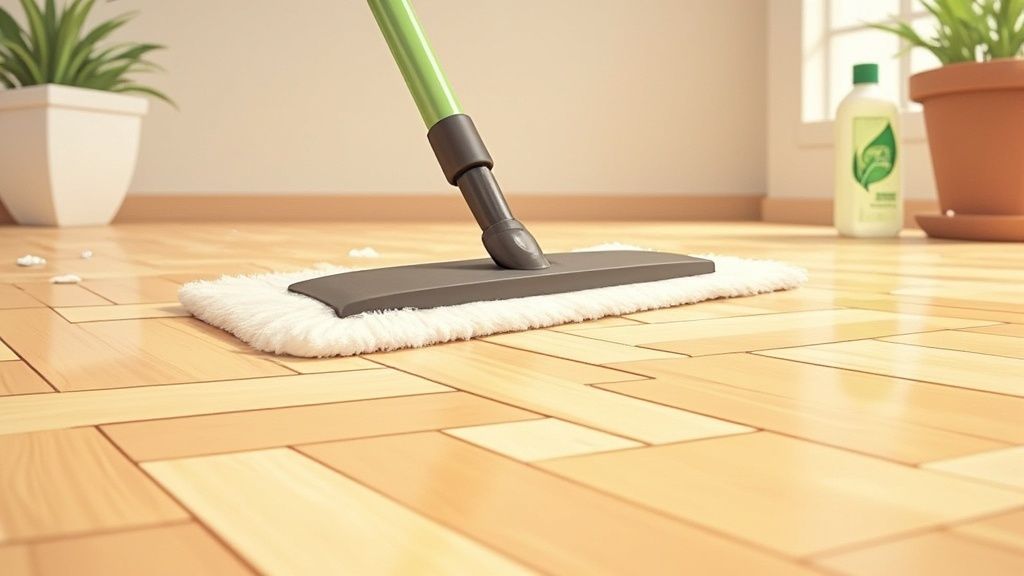
To clean parquet flooring properly, the secret lies in using a damp mop—never a wet one—paired with a pH-neutral cleaner. You must avoid using excessive water or steam at all costs.This can cause the small, delicate wood blocks to swell, warp, and suffer permanent damage. Consistent, gentle care is what truly preserves its intricate beauty.
Your Essential Parquet Floor Care Framework
Parquet flooring brings a special kind of warmth and character to a home, but its stunning geometric patterns mean it needs a specific care routine. Unlike standard plank flooring, the seams between the small wood blocks are far more vulnerable to moisture. This is precisely why the golden rule of parquet care is to treat water as an enemy, not a friend.
The "damp-not-wet" mopping method is absolutely non-negotiable. Think of it less like a deep wash and more like giving the floor a quick, gentle wipe-down. When you mop, your microfibre pad should be wrung out so well that it feels almost dry to the touch. It should never leave any standing water behind, which prevents moisture from seeping into the joins and compromising the adhesive or the wood itself.
A Simple Cleaning Cadence
Establishing a solid routine is the best way to keep your floors looking pristine without feeling overwhelmed. A simple, consistent schedule stops abrasive grit and dirt from building up, which can dull the finish over time.
This quick reference table makes it easy to stay on top of your maintenance tasks.
Parquet Cleaning Frequency Guide
| Task | Frequency | Key Objective |
|---|---|---|
| Quick Sweep | Daily (in high-traffic areas) | Prevent grit and dirt from being tracked through the house. |
| Vacuum & Damp Mop | Weekly | Remove accumulated dust and light grime from the entire floor. |
| Deep Clean | Monthly or Bi-Monthly | Use a pH-neutral cleaner to tackle stubborn spots and restore shine. |
Following this simple cadence helps protect your investment without overdoing it.
Here’s a more detailed look at what that routine involves:
- Daily Tasks: Quick sweeps in high-traffic zones like hallways, kitchens, and entryways. This only takes a few minutes but makes a huge difference in preventing dirt from spreading.
- Weekly Tasks: A thorough vacuum using a soft brush attachment, followed immediately by a damp mop. This combination lifts away the fine dust and grime that settles during the week.
- Monthly/Bi-Monthly Tasks: Time for a slightly deeper clean. Use a recommended pH-neutral wood floor cleaner to tackle any persistent spots and give the floor back its natural lustre.
Adopting this structured approach transforms parquet care from a dreaded chore into a manageable habit. The goal is always consistent, gentle maintenance. This is far more effective—and safer—than infrequent, aggressive cleaning sessions that risk harming the delicate wood. This is the real foundation for mastering how to clean parquet flooring.
The Gentle Art of Daily and Weekly Cleaning
The real secret to keeping your parquet flooring looking incredible for years isn't a once-a-year deep clean. It all comes down to consistent, gentle care. The small daily and weekly habits you build are what prevent abrasive dirt and grit from scratching the finish and dulling its beautiful sheen. Honestly, these simple actions make the biggest difference over time.
Your most important daily task is a quick sweep, especially in high-traffic zones like the entryway or kitchen. We're not talking about a major cleaning session here—just a five-minute habit to lift any fresh dirt before it gets ground into the wood. For this, your choice of tool really matters. An electrostatic microfibre mop is fantastic for grabbing that fine dust, but a good old-fashioned soft-bristled broom works well too.
If you'd rather use a vacuum, just make sure you’re using a soft-bristled brush head attachment. Whatever you do, never use a vacuum with a spinning beater bar. Those stiff, rotating bristles are notorious for putting fine scratches into the delicate surface of parquet.
Mastering Your Sweeping and Mopping Technique
Here’s a little pro tip: when you sweep or vacuum, try to move with the grain and pattern of the wood blocks. It’s a small detail, but it makes a noticeable difference in lifting dust from the tiny seams between each piece of wood. This is especially true for those intricate herringbone or chevron designs.
For your weekly clean, once you've swept or vacuumed, it's time for a damp mop. The golden rule here is damp, not wet. Your mop pad should be wrung out so well that it doesn't leave any visible puddles or standing water behind. This light touch is all you need to lift away grime without risking moisture damage. The principles of careful cleaning apply to all floor types, and you can discover more in our guide to professional carpet cleaning tips.
Key Takeaway: Think of daily cleaning as prevention. By removing those small, abrasive particles of dirt and grit every day, you're actively protecting the floor's finish from the thousands of tiny scratches that build up and lead to a dull, worn-out look.
Responding to Spills Immediately
Accidents happen to everyone, but they don't have to mean permanent damage. The trick is to act fast. Whether it's a splash of water from the sink or a dreaded drop of red wine, blot the spill straight away with a clean, dry cloth.
Always work from the outside of the spill towards the centre. This stops you from accidentally spreading it further. After you've soaked up the liquid, use a separate, slightly damp cloth to gently wipe the area clean, and then follow up immediately with a dry cloth to make sure no moisture is left behind. This quick reaction is your best defence against stains and water damage. Given that the UK parquet market accounts for about 20.3% of the broader European market, taking proactive care of this valuable feature in your home is essential. You can explore more about these market trends and their growth on Cognitive Market Research.
Deep Cleaning Parquet Floors Safely
Even with the best weekly cleaning routine, there comes a point where your beautiful parquet floors need a bit more TLC. A proper deep clean is vital for getting rid of that stubborn, built-up grime that can make the wood look dull, restoring its natural shine and rich colour. This isn’t about scrubbing with all your might; it's about using a careful, safe method to bring your flooring back to life.
The most important part of a safe deep clean is picking the right cleaning product. Your absolute go-to should be a pH-neutral cleaner made specifically for wood floors. These cleaners are designed to be gentle on your floor's protective finish, whether it’s lacquer, oil, or wax.
It’s so easy to just grab a common household cleaner like vinegar or an all-purpose spray, but honestly, that’s a huge mistake. Their acidic or alkaline properties can cause serious damage.
Using the wrong cleaner can strip away the protective sealant, leaving the wood underneath exposed and vulnerable. Over time, this makes the floor look dull and lifeless and can even lead to permanent discolouration. Always, always check the label to make sure a product is safe for sealed wood floors.
The process for how to clean parquet flooring properly isn't complicated, but it does need the right touch to avoid causing any harm.
Choosing the Right Tools and Technique
Your main tool for this job is a good-quality microfibre mop. Its fine fibres are brilliant at grabbing dirt without being abrasive. When you're mixing up your cleaning solution, make sure to follow the manufacturer's instructions for dilution exactly—using more product won't make it cleaner and can just leave behind a sticky mess.
The technique you use is what really makes the difference:
- Damp, not wet: Dunk your mop head in the solution and then wring it out until it's just barely damp. You shouldn't see any drips at all.
- Work in small areas: Mop a small section at a time, trying to follow the grain of the wood pattern as you go.
- Dry immediately: As soon as you've mopped a section, use a separate, dry microfibre cloth or a dry mop head to buff the area. This step is absolutely crucial; it stops any moisture from sitting on the surface and causing damage.
This visual guide breaks down the deep cleaning process, showing a gentle but effective cycle.
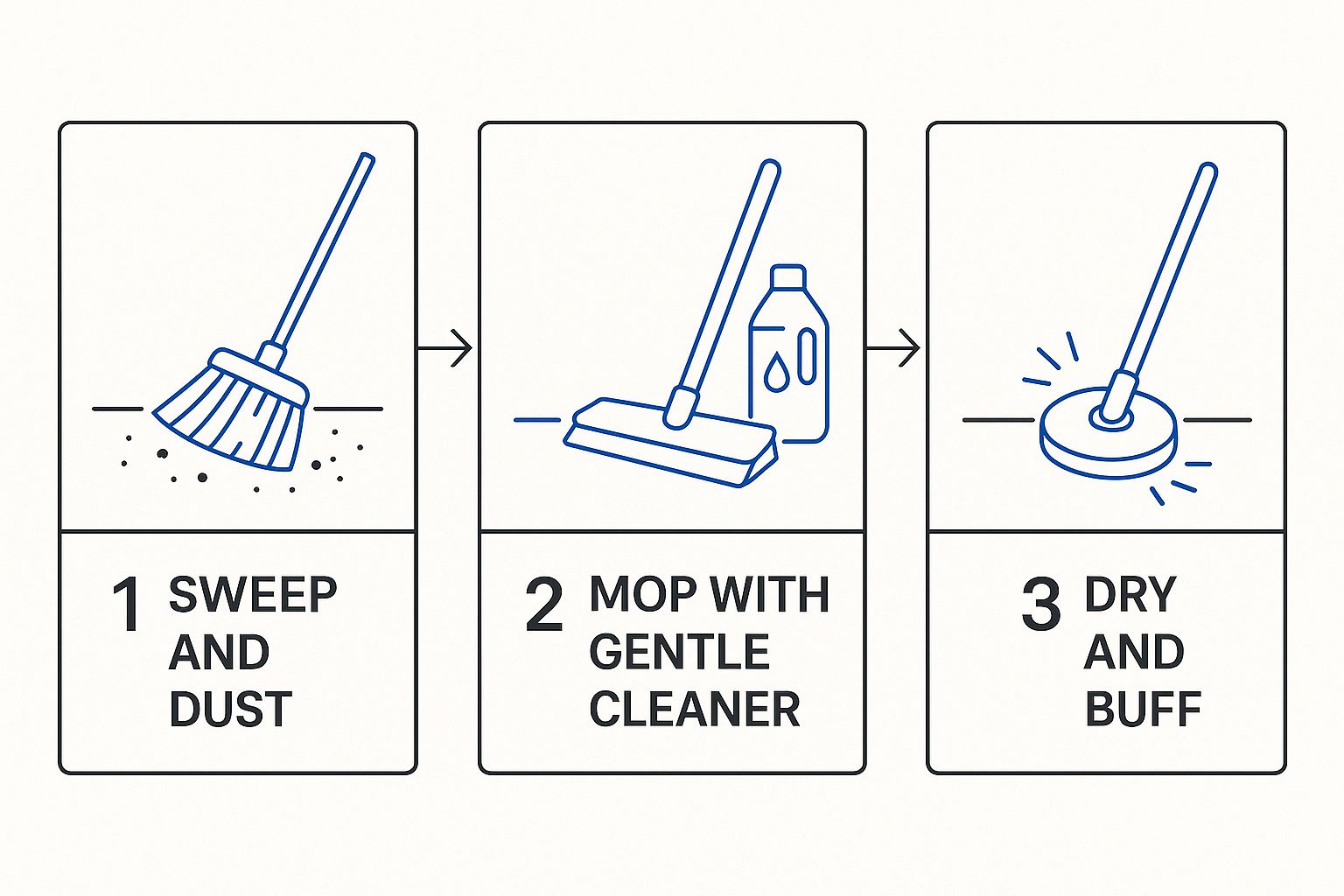
The key takeaway here is the simple, safe cycle: remove loose dirt first, use the smallest amount of moisture to clean, and then remove that moisture straight away to protect the wood.
Tackling Stubborn Marks and Residue
From time to time, you'll come across tough scuff marks from shoes or sticky patches that a quick damp mop just won't shift. Whatever you do, resist the temptation to scrub hard with a scouring pad—you’ll just scratch the finish.
Instead, put a small amount of your pH-neutral cleaner directly onto a microfibre cloth and gently rub the mark in a circular motion. For something really stubborn, like residue from a sticker, a tiny drop of mineral spirits on a cloth can help dissolve it, but you must test it on a hidden spot first (like under a rug). For a truly comprehensive deep clean, especially if you're dealing with a lot of built-up grime, a powerful wet-dry vacuum cleaner can safely lift dirt from your parquet without any risk.
Deep cleaning isn't something you need to do all the time. For most homes, doing this every two to four months is plenty to keep your floors looking their best. By using the right products and a gentle approach, you can easily revive your parquet without risking any damage. For more professional tips and specialised methods, you can learn more about our dedicated parquet flooring cleaning services which are perfect for even the most delicate floors.
Effective Eco-Friendly Cleaning Solutions
You really don't need harsh, abrasive chemicals to get your parquet flooring looking brilliantly clean. Making the switch to eco-friendly solutions isn't just a fleeting trend; it’s a smart choice for the health of your family, your pets, and the wood itself. A greener approach is all about nourishing the floor, not stripping it bare.
This move towards sustainable home care is something we're seeing more and more. The UK wood flooring market, where parquet is a huge feature, is predicted to grow from a value of USD 1.6 billion in 2025 to USD 3.2 billion by 2031. This boom is driven by people wanting natural materials and finishes, which naturally leads to a demand for gentler cleaning methods.
Crafting Your Own Gentle Floor Cleaner
One of the best and most budget-friendly ways to clean parquet is with a simple solution you can make yourself. All it takes is a bit of plant-based soap and some water.
- Castile Soap Solution: Grab a spray bottle, fill it with warm water, and add about a quarter-teaspoon of unscented liquid castile soap. It's a mild, vegetable-oil-based cleanser that does a fantastic job of breaking down dirt and grime without being harsh on your floor's finish.
- Essential Oil Boost: For a fresh scent and some extra cleaning power, add 5-10 drops of an essential oil. Lavender, tea tree, or lemon are all great choices, as many have natural antibacterial properties.
When we talk about truly eco-friendly cleaning, it’s worth thinking about the ingredients. Professionals often use ultrapure water for streak-free cleaning on delicate surfaces because it leaves no residue. This same principle applies perfectly to your parquet floors—using pure, simple ingredients gives you a better, cleaner finish.
Expert Tip: Always use a spray bottle for your homemade cleaner instead of a mop and bucket. This gives you complete control over how much water goes onto the floor, which is key to getting that perfect "damp, not wet" finish that wood loves.
Choosing Plant-Based Commercial Cleaners
If making your own cleaner isn't for you, there are plenty of excellent plant-based commercial options out there. The trick is to know what to look for on the label.
You want a product that clearly states it is pH-neutral and safe for sealed wood floors. Look for ingredients like plant-derived surfactants (from coconut or corn) and natural solvents. It’s just as important to know what to avoid: stay away from products with ammonia, chlorine, or strong alkalis, as these can dull your beautiful finish over time.
These principles for safe, gentle cleaning can be applied to other surfaces in your home too. You can see how we approach it in our guide for creating a natural carpet cleaner. By adopting these gentle, eco-conscious habits, you'll ensure your parquet floors stay a stunning, healthy centrepiece in your home for many years to come.
Proactive Strategies for Long-Term Protection
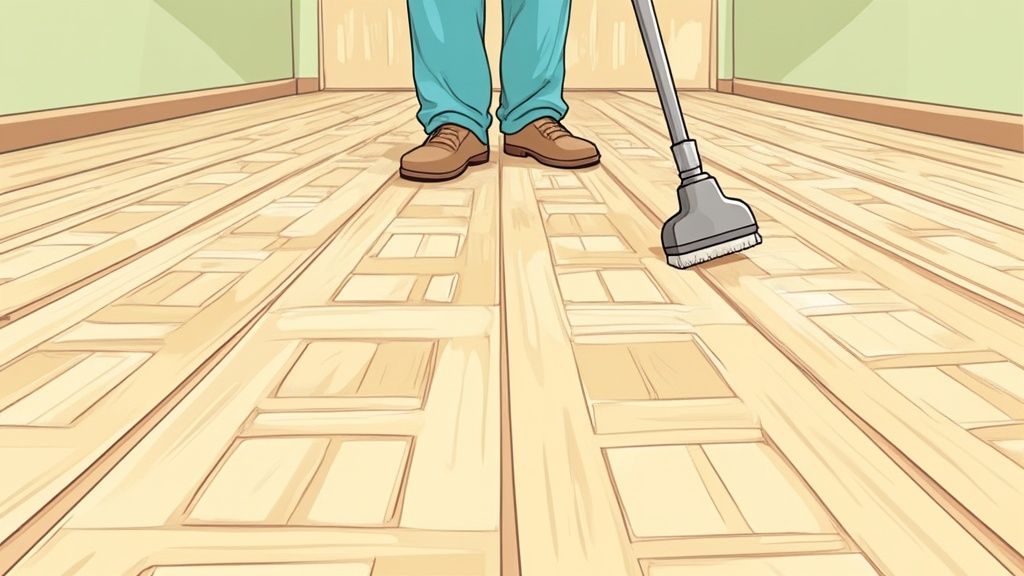
While knowing the right way to clean your parquet floor is half the battle, the best defence is a good offence. Prevention is always, always easier than cure. It's much simpler to stop damage from happening in the first place than it is to deal with scratches, water marks, or dents down the line.
Think of long-term protection as a series of simple habits and physical barriers that shield your floor’s beautiful finish from its biggest enemies: grit from outdoors, heavy furniture, and moisture.
This is more relevant than ever. With the UK construction market seeing a significant boom—new housing registrations in the South East alone hit 25,960 units in 2022—more and more homeowners are looking after beautiful features like parquet. Given that repair and maintenance account for 19.6% of all construction activity, getting protection right from the start is a wise move. You can see more on these trends over at Mordor Intelligence.
Creating Physical Barriers
Your first line of defence starts at the door. Good, durable doormats at every entrance—one outside, one inside—will catch the vast majority of the grit, dirt, and moisture that would otherwise be tracked across your beautiful floors.
Inside your home, a few small additions can make a world of difference:
- Felt Furniture Pads: Honestly, these are non-negotiable. Every single piece of furniture that rests on your parquet, from the dining chairs to the hefty sofa, needs felt pads on its feet. They are the single best way to prevent the constant scuffs and scratches from daily use.
- Area Rugs: In high-traffic spots like hallways or the main living area, an area rug or runner is your floor's best friend. It takes the brunt of the footfall, protecting the wood underneath while also adding a bit of comfort and style.
- Protective Mats: For areas where spills are a real risk, like under your pet's water bowl or a toddler's high chair, a small waterproof mat is an absolute lifesaver.
Key Takeaway: Don’t think of these as optional extras; they're essential insurance for your investment. A few quid spent on good felt pads and a quality mat can genuinely save you hundreds in repair bills.
Understanding Your Floor's Finish
Not all parquet floors are created equal, and the type of finish protecting your wood dictates how you should care for it. Figuring out what you have is the first step to proper long-term maintenance.
- Polyurethane/Lacquer: This is a modern surface sealant that creates a durable, plastic-like layer over the wood. It’s highly resistant to water and wear, but it can be scratched. For a deeper dive, our guide on hardwood floor cleaning and polishing has you covered.
- Oil Finish: An oil finish penetrates into the wood, protecting it from within. It provides a beautiful, natural matte look and feel. Scratches are less obvious, but the floor will need re-oiling periodically to keep it nourished and protected from spills.
- Wax Finish: This is a more traditional finish that also soaks into the wood, giving it a lovely low-sheen lustre. It's less resistant to water and stains than modern finishes and needs occasional re-waxing to maintain its protective barrier.
There's a simple way to test your finish. Find an out-of-the-way spot and place a single drop of water on the floor. If the droplet beads up and just sits there, you almost certainly have a polyurethane or lacquer finish. If it starts to soak in after a few minutes and leaves a dark spot, it’s likely an oil or wax finish.
Knowing this difference is absolutely crucial. It helps you choose the right cleaning products and take the correct protective steps, ensuring your stunning parquet floor stays that way for a lifetime.
Common Questions About Parquet Floor Care
Looking after parquet flooring can feel a bit different from other surfaces, and it's natural to have questions. To help you feel confident, we've put together answers to some of the queries we hear most often from homeowners. Getting these details right is the key to avoiding common pitfalls and keeping your floors looking magnificent.
Can I Use a Steam Mop on Parquet Flooring?
We get asked this a lot, and the answer is a firm and absolute no. You should never use a steam mop on any real wood floor, and this is especially true for the intricate patterns of parquet. The combination of intense heat and moisture is a recipe for disaster.
The powerful steam can force its way past the protective finish, seeping into the seams between the individual wood blocks. This can quickly weaken the adhesive holding the pattern together, causing the wood to swell, warp, or even lift away entirely. Stick to the tried-and-true method: a well-wrung-out microfibre mop is all you need to clean parquet safely.
How Do I Fix Minor Scratches?
It’s always disheartening to spot a new scratch on your beautiful floor, but thankfully, minor marks can often be handled without calling in the professionals. The right technique really depends on the type of finish your floor has.
For floors with a modern lacquer or polyurethane finish, you can often disguise light surface scuffs with a wax repair stick or a dedicated scratch-hiding polish. Just make sure you pick one that matches your floor's sheen, whether it’s matte, satin, or gloss. If you have an oiled or hard-waxed floor, you can sometimes buff out smaller scratches using a tiny amount of the correct maintenance oil or wax on a soft, clean cloth.
Important Note: If a scratch is deep enough to catch your fingernail, it's always best to get professional advice. A DIY attempt on a deeper gouge can sometimes make the problem more obvious and much harder to repair properly down the line.
What's the Best Way to Clean with Pets?
Living with pets means daily cleaning becomes non-negotiable. Pet hair and dander aren't just an allergy concern; they're also abrasive. A quick daily sweep or vacuum using a soft brush attachment is vital to prevent this grit from dulling your floor's finish over time.
Of course, accidents are part of life with pets. The trick is to clean them up immediately. Use an enzymatic cleaner specifically formulated for use on wood floors. These cleaners work at a molecular level to break down and neutralise the odour-causing bacteria, stopping smells from lingering. For more persistent issues, our guide on tackling pet urine in home furnishings has more in-depth advice on safe and effective stain removal. Always double-check that your general floor cleaner is non-toxic and pet-safe.
At AG Carpet Specialists, we understand the unique challenges of maintaining beautiful floors. If you're struggling with stubborn stains or feel your parquet needs a professional refresh, contact us today for a free quotation.