That awful cat pee smell that just won't go away isn't in your head. It’s actually a complex chemical reaction happening right there in your carpet fibres. If you really want to achieve successful cat urine removal carpet, you need to understand what makes it so uniquely stubborn. This isn't just a simple stain; it’s a problem that unfolds in stages and needs a very specific game plan to sort out for good.
Why Cat Urine Is So Hard to Remove from Carpet
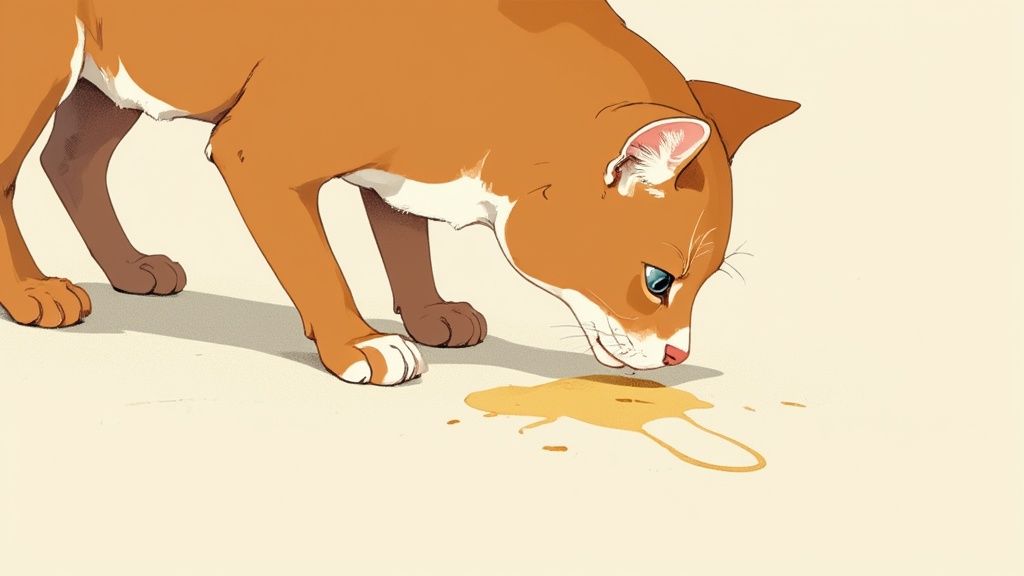
Have you ever spent ages cleaning a pet stain, only to have that pungent smell reappear the moment it gets a bit humid? It's a frustratingly common experience, and it happens because cat urine literally changes its chemical makeup over time. This transformation is what makes it so incredibly difficult to shift with standard household cleaners.
When it first appears, cat urine is acidic, with a pH of around 5 to 6. This is the perfect breeding ground for bacteria, which creates that first wave of unpleasant odour. But as the urine dries and starts to decompose, its chemistry shifts dramatically. The pH level skyrockets to an alkaline state of 10 to 12. At this point, it's so alkaline it can cause chemical burns to your carpet fibres, leading to permanent discolouration. This is exactly why getting to it immediately is always the best course of action.
The Real Culprit Uric Acid Crystals
The most persistent and troublesome part of cat urine is the uric acid. While other components might wash away, uric acid forms non-soluble salt crystals that bury themselves deep into the carpet fibres and, crucially, the underlay beneath. These crystals are the true source of that recurring smell.
Key Takeaway: Just cleaning the surface of the carpet won't cut it. Those uric acid crystals are activated by moisture. This means any dampness—from humidity in the air to a well-intentioned steam clean—will "wake them up," releasing that potent ammonia smell all over again.
This is precisely why your usual go-to cleaners like soap, vinegar, or baking soda just don't work in the long run. They might mask the smell for a little while, but they do nothing to break down the uric acid crystals. The only way to truly solve the problem is with an enzymatic cleaner. These specialist products contain enzymes that are designed to digest and destroy these crystals at a molecular level, getting to the root of the problem.
Our complete guide explains more about how to get rid of cat pee smell by targeting the source of the odour, not just covering it up.
Your Essential Toolkit for Cat Urine Removal
Before you can even think about treating a cat urine stain, you need the right gear on hand. Having your toolkit ready to go is more than half the battle, trust me. Quick action with the correct supplies is what stops a minor accident from becoming a permanent, lingering problem that costs you a fortune down the line.
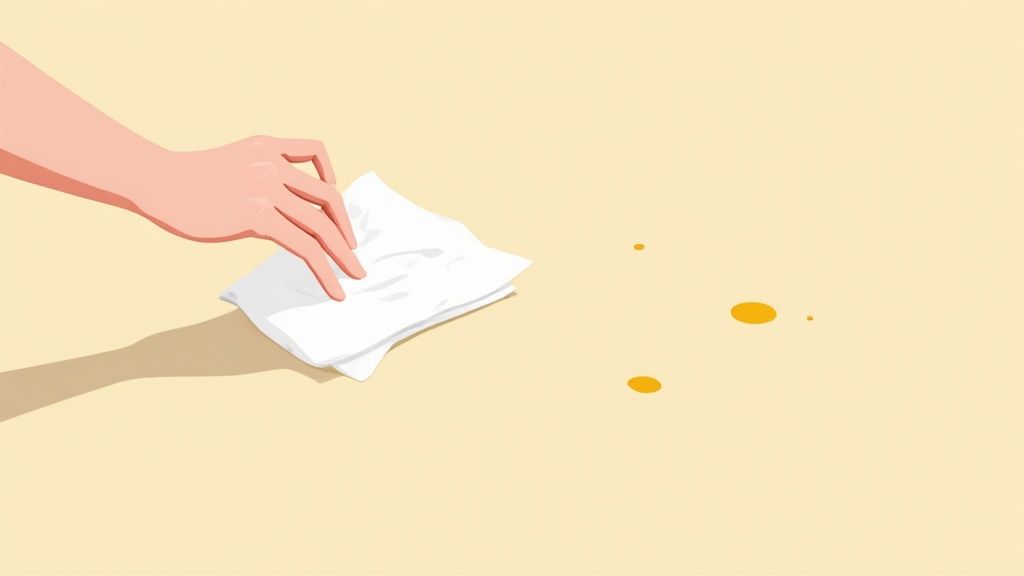
Your first line of defence is a stack of highly absorbent paper towels or a few plain white cloths. The immediate goal is to blot, blot, and blot some more. You want to lift as much of the urine out of the carpet fibres as you possibly can without rubbing it in.
After that comes the single most important item in your arsenal: a high-quality enzymatic cleaner. This is non-negotiable. These cleaners contain specific biological enzymes that physically break down and digest the uric acid crystals in cat urine. It's the only thing that will permanently eliminate that stubborn, recurring smell.
Comparing DIY vs. Enzymatic Cleaners
Many people are tempted to reach for household staples like vinegar or bicarbonate of soda. While they can help with the initial stain and some of the surface odour, they simply can't compete with a purpose-built enzymatic cleaner for getting rid of the underlying cause of the smell. Here's a quick comparison.
| Cleaning Agent | Effectiveness on Odour | Effectiveness on Stain | Best For |
|---|---|---|---|
| Vinegar & Water | Temporary masking | Fair, especially on fresh stains | Initial, emergency clean-up |
| Baking Soda | Good for surface odours | Minimal | Absorbing moisture and surface smells |
| Enzymatic Cleaner | Excellent, permanent removal | Excellent on old and new stains | Complete breakdown of uric acid |
Ultimately, while DIY solutions have their place, only an enzymatic cleaner will give you the peace of mind that the problem is truly gone for good.
Finding Those Hidden Stains
Unfortunately, the stain you can see is often just the tip of the iceberg. To do the job properly, you need to play detective and find every single spot.
- UV Blacklight: This is your secret weapon. Wait until it's dark, turn off the lights, and scan your carpets with the blacklight. Old, dried urine stains will glow a dull yellow or green, revealing the true extent of the issue. You might be surprised what you find!
- Wet-Vac (Optional): If you're dealing with a large, heavily saturated area, a wet-vac is a game-changer. It's brilliant for extracting all the dirty cleaning solution and dissolved urine from deep within the carpet pile and even the underlay.
A methodical approach is absolutely essential. From my experience, especially in the UK rental market, untreated pet urine is one of the leading causes of very expensive flooring damage. It soaks right through the carpet backing into the subfloor, and property managers are wise to it. They often use UV lights and moisture meters during their end-of-tenancy checks to uncover these hidden disasters.
Having these tools ready means you can act fast and get it right the first time. For a more detailed look into the techniques the professionals use, take a look at our comprehensive guide on pet urine carpet cleaning.
The Proven Method for Fresh Cat Urine Stains
Catching a pet accident the moment it happens is a small victory, but it's what you do next that really counts. Acting fast is the single most important factor in successfully removing cat urine from your carpet. This isn't a time for guesswork; a precise, methodical approach is what will stop the stain from setting and the odour from becoming a permanent resident.
Your first instinct might be to grab a cloth and start scrubbing furiously, but please don't. That’s the worst thing you can do. Scrubbing just grinds the urine deeper into the carpet fibres and the underlay, spreading the problem and making it much harder to tackle.
Instead, your immediate goal is simple: absorption. Grab a thick stack of paper towels or a clean, white cloth and blot the area using firm, steady pressure. Keep swapping for a fresh, dry towel until it comes up almost dry.
Mastering the Enzymatic Cleaner
Once you’ve blotted up as much liquid as you possibly can, it’s time to bring in the specialist – an enzymatic cleaner. This is the only way you'll truly eliminate the uric acid crystals that cause that signature, lingering smell.
Whatever you do, don't be tempted to use hot water or a steam cleaner at any stage. The heat can chemically bond the urine proteins to the carpet fibres, setting the stain permanently.
For the cleaner to be effective, it needs to follow the same path the urine took. This means you must completely saturate the stain and a small margin around it. A light surface spray just won't cut it, as it won’t reach the underlay where the real problem is brewing. Let the cleaner dwell for the time recommended on the bottle, usually between 15-30 minutes, to give those enzymes a real chance to work their magic.
Expert Tip: After applying the enzymatic solution, cover the damp area with a clean, colour-fast towel. Then, place something heavy on top, like a stack of books. This "poultice" effect helps to wick the dissolved urine up from the underlay and into the towel as it dries.
This visual guide shows just how straightforward using an enzymatic cleaner can be.
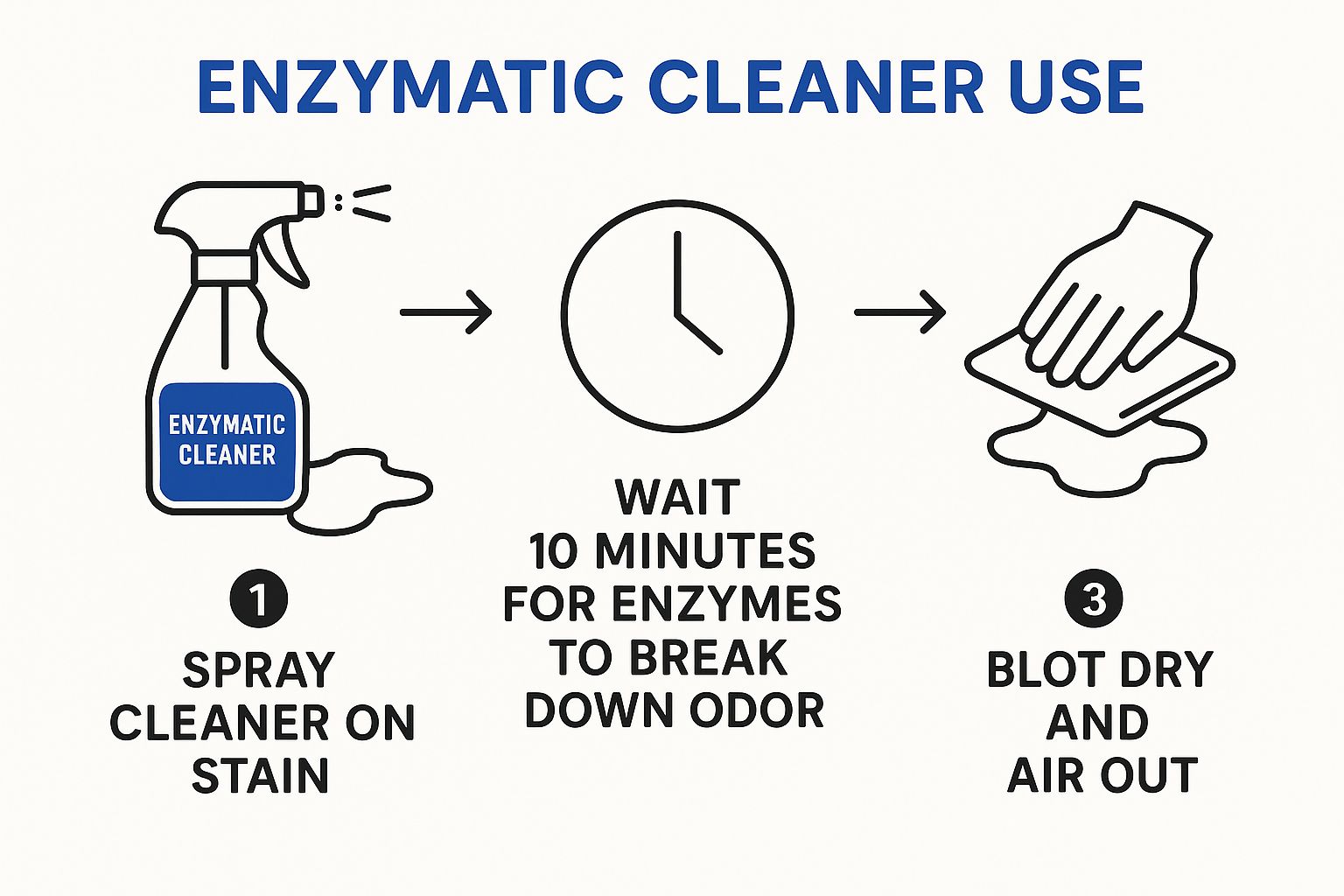
As you can see, the key is simply allowing the enzymes enough time to break down the odour-causing compounds before you blot the area dry.
Final Steps for a Fresh Finish
After the enzymatic cleaner has had sufficient time to work, grab another clean, dry cloth and blot the area one last time to absorb any excess moisture. It’s completely normal for the odour to seem stronger for a short time during this process – that's just the urine crystals being reactivated before being destroyed for good.
Now, let the carpet air-dry completely, which could take a day or two. You can speed this up by opening a window or using a fan. Once it's fully dry, give it a good vacuum to lift the carpet fibres and restore their natural texture.
Understanding the full journey your carpet undergoes is crucial for keeping it in top condition. You can learn more about our professional carpet cleaning process for a deeper insight into how we achieve flawless results every time.
How to Tackle Old and Dried Cat Urine Stains
Finding an old, dried cat urine stain can feel like a real headache. Don't throw in the towel just yet, though. While these spots are definitely more stubborn than fresh ones, you can absolutely get them out with the right approach. The main problem is that the urine has had time to crystallise and bond deep within the carpet fibres, often seeping right through to the underlay.
First, you need to play detective. Old urine stains often dry invisible, but they can’t hide from a UV blacklight. In a dark room, switch on the light and watch for the tell-tale dull yellow or green glow. This will show you the true scale of the problem. You might be surprised to see how much a small spot on the surface has spread underneath.
Once you've mapped out every single spot, the real work begins. This isn't a quick fix; proper cat urine removal carpet treatment for old stains is a marathon, not a sprint. Be prepared for multiple rounds of cleaning over a few days.
Advanced Treatment for Set-In Stains
When you're up against a truly baked-in stain, patience is your best friend. The aim is to rehydrate those nasty uric acid crystals so the enzymes in your cleaner have enough time to break them down completely.
- Saturate Properly: Don't be shy with the enzymatic cleaner. Apply it generously, making sure it soaks right through the carpet to reach the underlay below. The cleaner has to follow the exact same path the urine took to be effective.
- Give It Time: Cover the wet area with a damp towel and then a layer of plastic wrap. This little trick stops the cleaner from drying out. You need to let it sit for at least 12-24 hours so the enzymes can work their magic uninterrupted.
- Extract and Check: After the long wait, use dry towels or a wet-vac to pull out as much of the liquid as you can. Let the area air-dry fully. Once it's dry, give it a sniff test. If you can still smell even a hint of cat urine, you’ll need to repeat the whole process.
For the most stubborn cases where you know the urine has soaked deep into the padding, a carpet injector syringe is a fantastic tool. It allows you to inject the cleaning solution directly into the underlay, tackling the odour right at its source.
Getting rid of these old stains is a crucial step towards a fresh, clean-smelling home. For a more comprehensive look at keeping your house odour-free, learn how to eliminate pet odors with our expert techniques.
When to Call a Professional Carpet Cleaner

Sometimes, despite your best efforts, the DIY approach to cat urine removal carpet treatment simply won't cut it. Knowing when it's time to hand the job over to a professional can save you a world of frustration and, more importantly, protect your home from long-term damage.
There are a few tell-tale signs that it’s time to call in the experts. Perhaps the affected area is very large, or the cat has repeatedly returned to the same spot over a long period. In these cases, you can almost guarantee the urine has soaked right through into the underlay and possibly even the subfloor. That's a deep-seated problem that simple surface cleaning can't resolve.
When DIY Methods Fall Short
Even after using powerful enzymatic cleaners, you might find that unmistakable odour still lingers. That persistent smell is a dead giveaway that uric acid crystals are still active, hiding deep within your carpet's structure. This is where professionals have a distinct advantage: access to commercial-grade equipment and solutions that are leagues beyond anything available to the public.
They use powerful, truck-mounted hot water extraction systems that blast a cleaning solution deep into the carpet and immediately pull it back out with incredible suction. This process flushes out contaminants from the underlay that home machines simply leave behind.
Making the call to an expert isn’t admitting defeat; it’s a smart move to protect your investment. If you're curious about the full scope of what they can do, you might be interested in the benefits of professional carpet cleaning services.
Keep in mind that if a stubborn stain just won't come out, it could be considered property damage. It’s always useful to understand how property damages are handled during a move-out, especially if you're in a rental situation.
Still Have Questions About Cat Urine Removal?
Even with the best guide, you're bound to run into some head-scratching moments when tackling cat urine on your carpets. Let's walk through a few common questions that pop up for pet owners in the middle of a clean-up.
These are the real-world problems you might face at home. For instance, you've scrubbed away, but a strange smell seems to appear out of nowhere a day later. Or maybe you're wondering if that old home remedy is really up to the job. These answers will help you troubleshoot those tricky situations and get the job done right.
Common Cat Urine Conundrums
-
Can I just use vinegar and baking soda instead of an enzymatic cleaner?
While vinegar is great for neutralising the initial ammonia smell and baking soda can help absorb odours, neither of them will break down the stubborn uric acid crystals left behind. An enzymatic cleaner is essential because it actually digests and eliminates these crystals at a molecular level. Think of vinegar as a good first aid step, but you need the specialised enzyme product to guarantee the odour is gone for good. -
Why does my carpet suddenly smell worse after I’ve cleaned it?
This is actually a good sign! When you apply a cleaning solution, the moisture reactivates any dried urine salts buried deep in the carpet fibres, which releases a big burst of that ammonia scent. It’s alarming, but it proves the cleaner is reaching the source of the problem. Don't panic; as the area dries and the enzymes complete their work, that smell will completely disappear. -
How do I stop my cat from peeing on the carpet again?
Your first priority is to make sure every last trace of the old scent is gone by using a high-quality enzyme treatment. Cats are drawn back to familiar smells, so incomplete cleaning is often the culprit. If the spot is truly scent-free and the behaviour continues, it's time to investigate other causes like medical issues, stress in the home, or a dislike of their litter tray. A chat with your vet is always a sensible next step.
Key Insight: A temporary spike in the ammonia smell during cleaning means the treatment is working, not failing.
While this guide focuses on cat urine, you might find some useful tips in this broader advice on removing pet odors and stains that covers a wider variety of messes.
Happy cleaning, and here's to fresh, beautiful carpets!
Ready to get your carpet smelling fresh again? Contact AG Carpet Specialists for professional, eco-friendly cleaning solutions across Cheltenham, Gloucester and Stroud at https://www.agcarpetspecialist.co.uk