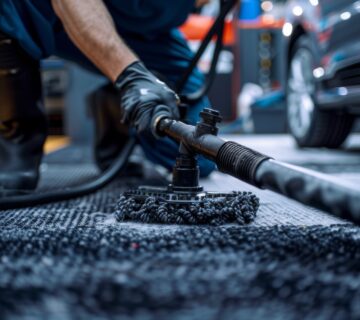
Here’s the thing many people miss: the secret to an immaculate clean isn't the machine. It’s the prep work. Honestly, a successful commercial carpet cleaning job is 90% strategy and 10% execution, and it all starts before we even plug anything in. Getting this initial assessment right is what separates a quick surface-level job from a true, deep restoration.
Your Pre-Cleaning Assessment and Strategy
Before any equipment even touches the floor, a detailed inspection is what sets the stage for success. This isn't just a quick look-around; it’s a proper diagnostic that dictates every decision we make, from which cleaning solution to use to the best method for the job.
This careful, strategic approach is a cornerstone of the UK's professional cleaning sector, an industry that hit a market size of a staggering £59.8 billion back in 2021. The real value we professionals bring is in this planning, making sure our clients' investments are properly looked after. If you're interested in the numbers, you can explore the UK cleaning industry statistics to see just how much the industry has grown.
First things first, we need to identify the carpet's construction and what it's made of. Is it a tough, looped nylon you often see in busy office corridors, or a softer, cut-pile polyester in a hotel reception? Each material behaves differently when faced with heat, moisture, and cleaning chemicals.
- Nylon: Incredibly durable and bounces back well, which is why it's a go-to for high-traffic spots. It handles hot water extraction like a champ, but you need to be careful with the pH levels of your solutions.
- Olefin (Polypropylene): This one is great against stains and moisture, so you’ll often find it in entranceways. The downside? It’s a magnet for oily soils, which means you’ll need specific cleaning agents to break them down.
- Polyester: Known for holding vibrant colours and having a soft feel, but it's not as resilient as nylon. It can start to look matted and flattened in areas with a lot of footfall.
Conducting a Thorough Site Inspection
Once you know the carpet type, it's time to walk the entire area with a critical eye. You need to map out the flow of traffic – those main pathways from the entrance to the desks, or from the lift to the conference rooms. These well-trodden lanes will need a good pre-spray and maybe a bit more agitation than the quiet corners.
Look for specific problems beyond the general day-to-day grime. Have you spotted coffee spills near the kitchen, ink marks under desks, or some mystery stains in a back office? Making a note of these lets you bring the right spot-treatment chemicals for the job. It's also about managing your client's expectations – you can point out any permanent stains or existing damage before you even start.
A professional's checklist isn't just about spotting dirt. It's about understanding the whole environment—identifying hazards, noting where furniture is, and planning how to ventilate the area for a safe, efficient clean.
Preparing the Area for Cleaning
With the assessment done, the last bit of prep is clearing the space. This means more than just moving a few chairs out of the way. It's crucial to talk to the office or facilities manager about the cleaning schedule to cause as little disruption as possible.
Then comes the pre-vacuum. Never, ever skip this. A meticulous vacuum can pull out up to 80% of the dry, gritty soil that would otherwise turn straight to mud the moment you introduce water. Taking the time to do this properly means your cleaning solutions can get to work on the deep-down, embedded grime instead of just the surface-level dust. The result? A far better clean that lasts much longer.
Choosing The Right Cleaning Method and Tools
Deciding on the best way to clean a commercial carpet is more than just picking a machine; it's about making a strategic choice based on what the facility truly needs. The real skill lies in knowing when a deep, restorative clean is required versus when a quick, low-moisture maintenance job will do the trick. Getting this right can make or break your results and hugely impacts the business's daily routine.
Think about it: a bustling hotel lobby with constant foot traffic can't afford to be out of commission for hours on end. On the other hand, a corporate office scheduling its quarterly deep clean has a bit more breathing room for longer drying times. Understanding this fundamental difference is what separates the pros from the amateurs.
Matching the method to the environment is the key to getting the job done right, whether you're tackling a full-scale restoration or just performing regular upkeep.
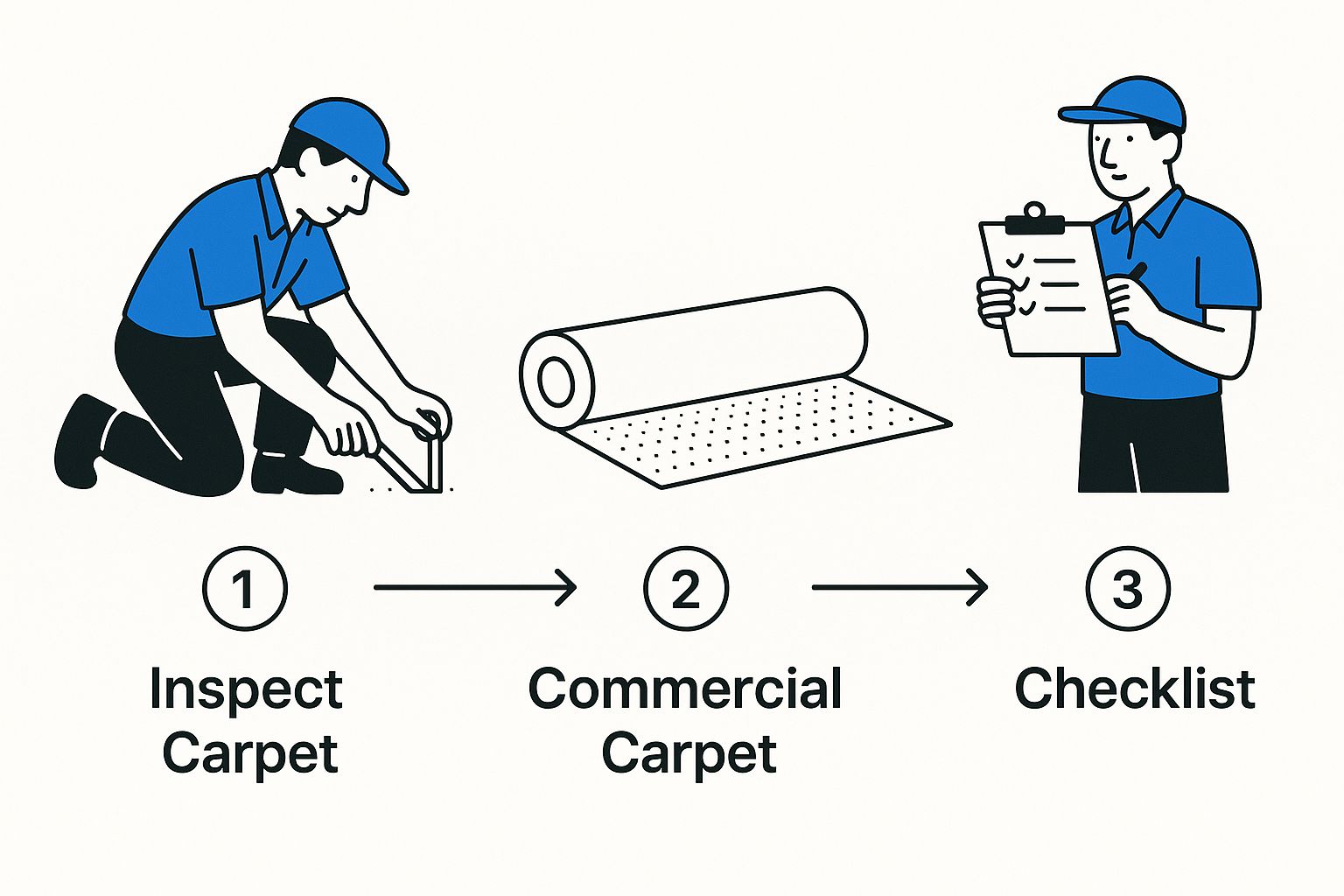
As you can see, a proper assessment—from measuring high-traffic zones to identifying specific soil types—is what points you directly to the best cleaning strategy.
Deep Cleaning vs Low-Moisture Systems
In the world of professional carpet cleaning, the two main approaches are Hot Water Extraction (HWE) and low-moisture methods like encapsulation. It's not that one is better than the other; they're simply tools for different jobs.
Hot Water Extraction, which you might know as steam cleaning, is really the gold standard for a deep, thorough clean. It works by using high-pressure hot water and powerful cleaning agents to flush out all the embedded grime, allergens, and bacteria from deep within the carpet fibres. This makes it the go-to choice for places like pubs, restaurants, or healthcare settings where hygiene is absolutely non-negotiable.
Low-moisture systems, however, are all about speed and convenience. Encapsulation cleaning is a great example. It uses a special polymer-based solution that forms crystals around dirt particles as it dries. A quick vacuum afterwards, and the carpet is clean and ready for foot traffic in less than an hour. It’s a lifesaver for 24/7 operations or regular maintenance cleans in busy offices.
Commercial Carpet Cleaning Method Comparison
To make the choice clearer, here's a simple breakdown of the most common methods we use in the field.
| Method | Best For | Drying Time | Effectiveness |
|---|---|---|---|
| Hot Water Extraction (HWE) | Deep, restorative cleaning; removing heavy soiling and allergens | 4-12 hours | Excellent for deep sanitation and stain removal |
| Encapsulation | Regular maintenance in high-traffic commercial spaces | Under 1 hour | Very good for surface soil; prevents wick-back |
| Bonnet Cleaning | Quick surface cleaning and appearance maintenance | 1-2 hours | Good for a quick refresh but doesn't deep clean |
| Dry Compound Cleaning | Water-sensitive carpets; 24/7 facilities with no downtime | Immediate | Effective for light soiling and regular upkeep |
Each technique has its place, and a true professional knows exactly when to deploy each one for the best possible outcome.
Matching Equipment to the Method
Once you've settled on a method, your equipment choice follows naturally. Every tool is built for a specific purpose, and using the right gear is essential for achieving a professional finish.
- Truck Mounts: These are the real heavyweights. As powerful HWE machines, they provide incredible heat and suction, delivering the most thorough clean you can get. They're perfect for large commercial areas, provided you have ground-floor access.
- Portable Extractors: When you're dealing with high-rise buildings or spaces where a truck mount just can't reach, a portable HWE machine is your best friend. Modern portables might not have the raw power of a truck mount, but in skilled hands, they deliver fantastic results.
- Rotary & Cylindrical Brush Machines: For low-moisture methods, these are your workhorses. They're designed to agitate the cleaning solution deep into the carpet, a crucial step for both encapsulation and bonnet cleaning.
Ultimately, the best tool is the one that fits the job. A powerful truck mount is overkill for a small office's monthly clean, while a bonnet machine won't cut it for a heavily soiled restaurant carpet in need of restoration.
Sometimes, carpets need more than just a standard clean. If you come across bigger problems like a pest infestation, it's wise to look into specialized flea treatments for carpets to make sure the issue is handled safely and effectively. Knowing the full scope of what you might face is a huge part of providing comprehensive https://www.agcarpetspecialist.co.uk/2024/10/27/commercial-carpet-cleaning-services/. A true professional knows when to deep clean and when it’s time to call in a specialist.
Executing a Flawless Deep Clean
With all the prep work done and the right cleaning method selected, it’s time to get down to the business of cleaning. This is where Hot Water Extraction (HWE) really proves its worth as the gold standard in the industry for a truly deep, restorative clean. It's so much more than just spraying hot water; it’s a precise technique that, when performed correctly, lifts embedded soil and grime from the very base of your carpet’s fibres.
The sheer effectiveness of this method is a huge reason why cleaning commercial carpet is such a critical service. In fact, within the UK's general building cleaning sector, carpet cleaning is the largest segment by revenue. The industry hit an estimated £9.4 billion in 2024, showing steady growth of 3.6% annually over the last five years. For those interested in the numbers, you can read the full industry analysis on ibisworld.com.
The Art of Pre-Spraying and Spot Treatment
Before we even start the main extraction, we go straight for the problem areas we identified during our initial walkthrough. Those high-traffic lanes—the tell-tale paths worn into the carpet from daily use—get a healthy application of a specialised pre-spray solution. This isn't your average off-the-shelf cleaner; it’s a carefully selected chemical agent formulated to break down the specific types of soil common in that environment, like grease, oils, and gritty dirt.
We let that pre-spray "dwell" for a few minutes. This is a crucial step. It gives the chemicals time to work their way into the fibres and start emulsifying the dirt, which makes it far easier for the extraction machine to flush it all out. For really stubborn stains like coffee, ink, or food spills, we apply a specific spot treatment, sometimes working it in gently with a soft brush to make sure it penetrates deep into the stain.
The real secret to effective stain removal isn't muscle; it's chemistry. You're not just scrubbing. You're using a specific solution to counteract the stain's chemical properties. An acidic cleaner for a tannin stain like coffee, or an alkaline one for greasy soils—it’s all about using the right tool for the job.
Mastering the Wand Technique
Once the pre-spray has had time to do its thing, the extraction process begins. Using the wand correctly is a skill that takes real practice to master, as it directly affects not only how clean the carpet gets but also how quickly it dries.
The trick is to maintain a slow, steady pace with slightly overlapping strokes. This ensures you get even coverage and prevents any streaking. A typical pass involves spraying the hot water and cleaning solution on the forward stroke, followed by one or two "dry passes" on the return stroke without spraying any liquid.
Those dry passes are absolutely non-negotiable. They let the machine's powerful vacuum pull as much moisture back out of the carpet as possible, which is vital for preventing over-wetting. If you leave too much moisture behind, you’re asking for trouble with mould, mildew, and a nasty problem called "wicking," where deep-seated dirt travels up the wet fibres as the carpet dries, causing old stains to reappear. While many deep cleaning principles are universal, you can see some different approaches in our guide on how to deep clean carpets at home.
Final Touches for a Professional Finish
After the main extraction is finished, a couple of final steps make a world of difference. We often apply a pH-neutralising rinse during the final pass. This removes any leftover detergent residue, which can attract fresh dirt and leave the carpet feeling stiff or sticky if it’s left behind.
Neutralising the carpet leaves it feeling soft, looking fresh, and helps it stay cleaner for longer. Lastly, managing your equipment in a live commercial space is crucial for safety. Hoses need to be routed carefully to avoid creating trip hazards, and "wet floor" signs must be clearly displayed to protect staff and visitors. While this guide focuses on carpets, a truly pristine office often integrates broader comprehensive workspace cleaning practices.
Post-Cleaning Steps for Lasting Results
A professional job doesn’t end when the extraction machine is switched off. The steps you take immediately after cleaning are what truly lock in the results and leave a lasting impression on your client. These finishing touches are what separate the amateurs from the professionals serious about cleaning commercial carpet to the highest standard.
The first, and arguably most satisfying, step is grooming the carpet. Using a specialised carpet rake, we reset the carpet pile, ensuring all the fibres stand up uniformly. This simple action works wonders, erasing any wand marks left by the machine and giving the floor that brand-new, professionally finished look.
But grooming isn't just for aesthetics. It also plays a practical role by separating the fibres, which helps to speed up the drying process. A well-groomed carpet simply dries faster and more evenly.
Accelerating Dry Times Effectively
Controlling moisture is crucial after a deep clean. Leaving a commercial carpet damp for too long is a recipe for disaster, as it creates the perfect breeding ground for mould and mildew. This is where our professional-grade air movers and dehumidifiers come in.
We strategically place several high-velocity air movers across the cleaned area to create powerful airflow that lifts moisture directly from the carpet fibres. In particularly humid environments, pairing these with a commercial dehumidifier pulls excess moisture from the air, creating the best possible drying environment.
Pro Tip: We position air movers to create a vortex-like effect. Pointing them along the walls in the same direction circulates air efficiently around the entire room, rather than just pointing them straight at the floor. This technique can reduce drying times by up to 50%.
Applying Carpet Protector for Future Defence
Once the carpet is completely dry, applying a carpet protector is a valuable final step. Products like Scotchgard create an invisible shield around each fibre, making it much harder for spills to penetrate and turn into permanent stains. This protective barrier also helps repel dry soil, making future vacuuming far more effective.
Applying it correctly is key:
- We use a dedicated sprayer for an even, consistent mist.
- The spray is applied in overlapping passes to ensure complete coverage.
- The carpet is then groomed again with a rake to work the protector deep into the fibres.
Explaining these benefits to clients shows we're a long-term partner invested in protecting their assets. Of course, proper client communication and preparation are just as important as the cleaning itself. For more insights, check out our detailed guide on how to prepare for professional carpet cleaning. By mastering these post-cleaning steps, we ensure the results of our hard work last for months, not just days.
Building a Proactive Maintenance Programme
The best way to protect your client's flooring investment is to shift away from costly, reactive clean-ups. Instead, you need a smart, proactive maintenance plan. A well-designed programme doesn't just extend the life of commercial carpets; it keeps them looking professional all year round. This positions you as a long-term partner, not just a service they call in an emergency.
This strategic approach is more important than ever. The UK's contract cleaning services market was valued at around £13.2 billion in 2023 and is only set to grow. This tells us there’s a real demand for professional, scheduled maintenance that delivers consistent results.
A truly successful programme is built on three core pillars, each one tailored to the facility’s specific needs.
Designing a Customised Schedule
Let's be honest, no two facilities are the same. A primary school has completely different wear patterns than a corporate head office or a bustling retail store. The trick is to build a schedule based on actual foot traffic and usage, not a one-size-fits-all template.
A solid plan should integrate three different types of care:
- Preventative Care: This is your daily line of defence. It involves placing high-quality entrance mats to trap dirt at the door and sticking to a rigorous daily vacuuming schedule.
- Interim Cleaning: This is done monthly or quarterly, targeting those high-traffic lanes. Using low-moisture methods like encapsulation helps maintain the carpet's appearance without causing significant downtime.
- Restorative Cleaning: This is the deep clean. Using Hot Water Extraction, it’s typically scheduled once or twice a year to get rid of deeply embedded soil and bring the carpet back to life.
A proactive plan saves money. By preventing soil build-up, you avoid the premature wear and tear that leads to expensive replacement. It’s about maintaining an asset, not just cleaning a floor.
This same logic applies to other parts of a commercial property. While your focus is on the flooring, it’s all part of a larger ecosystem of building upkeep, which is covered well in this excellent commercial building renovation guide. Just as a structured plan maintains carpets, a strategic approach preserves the entire building's value.
This integrated thinking can easily be applied to other furnishings, too. For businesses with lots of fabric-covered seating in reception areas or break rooms, adding a plan for commercial upholstery cleaning is a logical next step, ensuring a consistently clean environment from top to bottom.
Frequently Asked Questions About Commercial Carpet Cleaning
It’s completely normal to have questions when you're looking into professional cleaning for your business. In our experience, facility managers and business owners often have similar concerns, usually focused on downtime, costs, and what kind of results they can realistically expect.
Getting these questions answered upfront is the best way to build trust and make sure everyone is on the same page. It’s all about clear communication.
How Often Should a Commercial Carpet Be Professionally Cleaned?
This is easily the most common question we get, and the honest answer is: it really depends on the foot traffic. A busy hotel lobby or restaurant carpet is going to need far more attention than a quiet boardroom that’s only used a few times a week.
As a general guide, we recommend the following schedule:
- High-Traffic Areas (e.g., main corridors, reception areas): A deep clean every 3-6 months.
- Medium-Traffic Areas (e.g., open-plan offices): A deep clean every 6-12 months.
- Low-Traffic Areas (e.g., private offices, meeting rooms): A deep clean is usually sufficient annually.
Of course, this schedule should be supported by regular interim cleaning, like encapsulation, to keep things looking fresh between the deeper cleans.
How Long Does It Take for the Carpet to Dry?
Drying time is a huge concern, especially for businesses that can't afford long periods of disruption. The cleaning method we use is the single biggest factor here.
Hot Water Extraction, which is the most thorough deep-cleaning method, typically needs between 4 to 12 hours to dry completely. We use professional air movers to speed this up significantly. In contrast, low-moisture methods like encapsulation cleaning can have the carpet dry and ready for foot traffic in under an hour.
It often comes down to balancing the need for a restorative deep clean with the practical need to keep your business running smoothly.
What Is the Best Method for High-Traffic Carpets?
For those really high-traffic areas that take a constant beating, we’ve found a combination approach delivers the best results. You absolutely need the deep, restorative power of Hot Water Extraction a few times a year to pull out all the embedded grit and allergens.
In between these deep cleans, interim maintenance using encapsulation is perfect. It’s a low-moisture method that's brilliant for keeping those busy walkways looking sharp without causing major downtime. Many professional techniques can be adapted for different needs, and we cover some of these core ideas in our guide to essential carpet cleaning tips. This proactive strategy stops dirt from building up, which not only extends the life of your carpet but also maintains a consistently clean and professional appearance for your clients and staff.
Ready to create a healthier, cleaner environment for your business? The team at AG Carpet Specialists uses state-of-the-art equipment and tailored cleaning plans to restore your commercial carpets. https://www.agcarpetspecialist.co.uk