Eco-friendly rug cleaning isn't just a buzzword; it's a practical approach to keeping your home clean without relying on harsh chemicals. It boils down to using non-toxic, biodegradable products and methods that use less water. Ultimately, it’s about choosing gentler, sustainable solutions that are safe for everyone in your home—especially children, pets, and those with allergies. This way, you're not just cleaning a rug; you're improving your home's air quality and taking a more responsible approach to maintenance.
Why Natural Rug Cleaning Matters Now More Than Ever
The decision to go for eco-friendly rug cleaning has well and truly moved from a niche choice to a mainstream priority for creating healthier living spaces. Homeowners are far more conscious of what goes into the products they bring into their homes, particularly on surfaces where their kids and pets spend so much time. Think about it: traditional rug cleaners often contain volatile organic compounds (VOCs), which can linger in the air long after cleaning and contribute to respiratory issues or allergies.
This shift in awareness isn't just happening within our homes. Across the UK, the entire cleaning industry is making a significant move towards greener practices, where sustainability is no longer a bonus but an expectation. While it’s tricky to find exact figures just for rug cleaning, the trend is undeniable. Businesses are swapping out harsh chemicals for biodegradable detergents and investing in reusable tools. This industry-wide change is a direct response to what we, as consumers, are demanding: safer, more responsible cleaning solutions. You can find more details on this green industry trend and its wider impact.
Protecting Your Home and Family
Honestly, the most powerful reason to make the switch is the direct benefit to your family’s health. When you use conventional cleaners, toxic residues can get trapped in the rug fibres, and they don't just disappear. These residues can be absorbed through the skin or inhaled, posing a real risk to the most vulnerable members of your household.
Choosing natural alternatives completely sidesteps this problem. Instead of synthetic fragrances that just cover up odours with yet more chemicals, eco-friendly options often use simple, effective ingredients like bicarbonate of soda to absorb and neutralise smells right at the source.
A clean home shouldn't come at the cost of your health. Eco-friendly rug cleaning ensures the air you breathe is free from harsh chemical fumes, making your living space a true sanctuary.
A Greener Planet, One Rug at a Time
The effects of our cleaning choices ripple out much further than our own front doors. Many of the chemicals found in standard rug shampoos are non-biodegradable. When they get washed away, they end up in our waterways, where they can harm aquatic life and disrupt delicate ecosystems. An eco-friendly approach, on the other hand, relies on plant-derived, biodegradable ingredients that break down safely without causing harm.
What's more, many eco-friendly rug cleaning methods are specifically designed to use far less water. Techniques like dry compound cleaning or low-moisture encapsulation are not only brilliant at getting rugs clean but also conserve a precious resource. It’s a small adjustment to your routine that adds up to a much larger, positive impact on environmental preservation.
Building Your Eco-Friendly Cleaning Arsenal
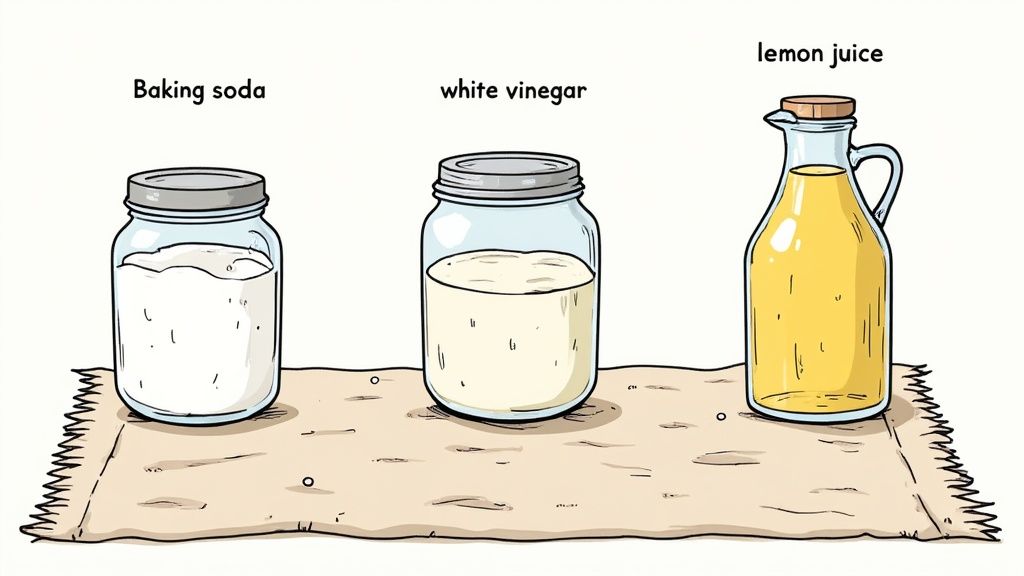
Before you even think about tackling a stain, let's get your kit together. Effective eco-friendly rug cleaning isn't about stocking up on dozens of chemical-heavy products; it's about knowing which simple, powerful tools to have at the ready. With the right supplies, you’ll be surprised at what you can handle without ever reaching for something harsh.
Your first line of defence is a solid vacuum cleaner. I always recommend one with a HEPA (High-Efficiency Particulate Air) filter. This isn't just a fancy feature—it’s a game-changer for air quality. A HEPA filter traps all those microscopic nasties like dust mites, pet dander, and pollen, stopping them from being circulated back into your room.
Next, it's time to ditch the disposable paper towels for good. A stack of reusable microfibre cloths is far more effective. They actually grip onto dust and dirt particles instead of just smearing them around. Plus, you can wash and reuse them hundreds of times, which makes a huge difference in reducing household waste.
The Power Players in Your Pantry
Now for the real magic. You don't need a lab-designed formula for a deep clean. In my experience, some of the best cleaning agents are probably sitting in your kitchen cupboard right now. These simple staples are the foundation of any green cleaning routine.
To get started, you'll want to gather a few essential items. I've put together a quick table to show you exactly what you need and why it works so well.
Essential Eco-Friendly Rug Cleaning Supplies
| Item | Purpose | Eco-Friendly Benefit |
|---|---|---|
| White Vinegar | Dissolves dirt, neutralises odours, mild disinfectant | Non-toxic, biodegradable, and a cheap, multi-purpose cleaner. |
| Bicarbonate of Soda | Deodorises and provides gentle abrasive power for stains | A natural mineral that is non-toxic and safe for homes with pets and children. |
| Castile Soap | Gentle, all-purpose cleaner for most rug fibres | Plant-based, biodegradable, and free from synthetic detergents and harsh chemicals. |
| Microfibre Cloths | Wiping, blotting, and applying cleaning solutions | Reusable and machine-washable, drastically reducing paper towel waste. |
| Stiff-bristled Brush | Loosens embedded dirt and works solutions into fibres | Durable and reusable, avoiding disposable plastic scrubbers. |
| Spray Bottle | Precisely applying homemade cleaning solutions | Reusable, allowing you to mix small batches and reduce product waste. |
These items are your core toolkit. Having them on hand means you’re prepared for everything from routine upkeep to sudden spills.
The real beauty of this approach is its elegant simplicity. You get incredible cleaning power from nature itself, without any of the toxic fumes or mystery ingredients found in commercial cleaners.
Simple Tools for a Superior Clean
Beyond those core ingredients, a few basic tools will make your life much easier and your cleaning far more effective. A good stiff-bristled brush is perfect for working your cleaning solution deep into the rug's pile to loosen stubborn, ground-in dirt.
You'll also want an empty spray bottle. It’s absolutely essential for spot-treating stains, as it lets you apply your homemade vinegar or soap solution with precision, right where you need it.
By pulling together this straightforward kit, you're doing more than just preparing to clean a rug—you're adopting a healthier, more sustainable way to care for your home. If you want to explore more recipes, our guide on creating your own natural carpet cleaner is the perfect next step. This simple arsenal empowers you to keep your rugs looking fantastic while ensuring your home is a safe, healthy space for everyone in it.
Deep Cleaning Your Rugs the Natural Way
Alright, you've gathered your green cleaning supplies, and now it's time for the hands-on part. When it comes to eco-friendly rug cleaning, the secret isn't brute force or harsh scrubbing. It's about using smart, gentle techniques to get a truly deep clean, leaving your rugs looking vibrant and feeling fresh without any nasty chemical leftovers.
Let's walk through the process.
The very first thing you need to do—and don't skip this—is to give your rug a proper vacuuming. But here's a tip from the pros: flip it over and vacuum the underside first. This is a brilliant trick to loosen all that deep-down grit and dust, shaking it up toward the surface. Once you've done that, flip it back to the right side and vacuum again. You’ll be shocked at how much more dirt comes out.
Before you go any further, you must do a quick colour-fastness test. Even with natural cleaners, it's better to be safe than sorry. Find a small, hidden spot on your rug, maybe a corner that's always under the sofa. Dab a little of your cleaning solution there, let it sit for a couple of minutes, and then press a clean, white cloth onto it. If any of the rug's colour transfers to the cloth, stop right there. Your dyes aren't stable, and it's time to call in a professional.
Creating and Applying Your Cleaning Solution
For most rugs, a simple mix of equal parts white vinegar and warm water does the trick beautifully. Just pop it into a spray bottle for easy application. If you're dealing with stubborn odours or need a bit more cleaning power, bicarbonate of soda is your best friend. Mix it with a tiny bit of water to create a thick, spreadable paste.
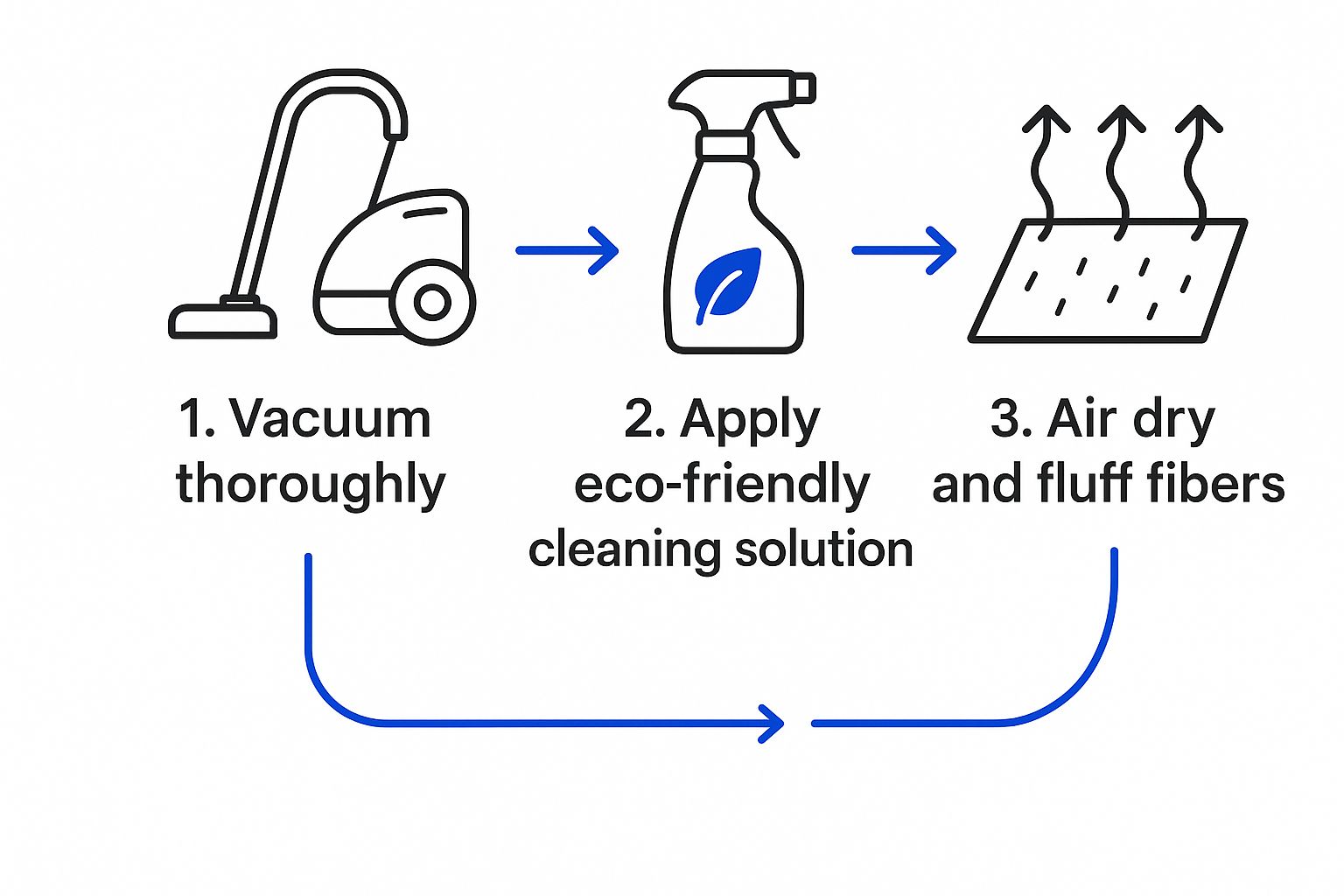
When you're ready to clean, tackle the rug in small, manageable sections. Lightly spray your vinegar solution onto one area at a time. Be careful not to completely soak the fibres—this is a common mistake that can lead to mildew and damage the rug’s backing. You just want to dampen the pile.
For those extra smelly rugs, spread your bicarbonate of soda paste in a thin layer over the surface. Let it sit for at least an hour; for really tough odours, leaving it overnight works wonders. The bicarb will work its magic, absorbing both smells and moisture.
Rinsing and Drying for a Perfect Finish
After applying your chosen solution, grab a soft-bristled brush and gently work it into the pile using light, circular motions. This helps lift the dirt from every angle of the fibres.
Next up is the "rinse." Dampen a clean microfibre cloth with fresh water, wring it out well, and start blotting the area you just cleaned. This lifts away both the dirt and the cleaning solution itself.
A crucial tip: Never, ever rub a wet rug. This can damage the fibres and just pushes the dirt deeper. Always use a firm, blotting motion. Press down with a clean, dry cloth to soak up as much moisture as possible.
Keep blotting with dry cloths until the rug feels only slightly damp. The final step is drying, and it's just as important as the cleaning. If you can, raise the rug by draping it over a couple of chairs or a clothes airer so air can circulate underneath. Pointing a fan at it will speed things up and prevent any musty smells from setting in.
Once it's completely dry, a final vacuum will fluff up the pile and remove any leftover bicarbonate of soda.
These methods are fantastic for keeping your rugs in top shape. If you're keen to learn more, our detailed carpet cleaning tips provide even more great advice for all sorts of situations.
How to Handle Tough Stains Without Harsh Chemicals
Spills happen, it's just a part of life. But a dreaded splash of coffee or wine doesn't mean you have to run for a bottle of harsh, chemical-filled stain remover. You'd be surprised what you can achieve with a few simple items from your kitchen pantry, using some tried-and-tested eco friendly rug cleaning techniques.
The absolute golden rule is to act quickly. The faster you get to a spill, the less chance it has to set into the fibres and become a permanent mark. Always begin by blotting—never, ever rub—with a clean, dry microfibre cloth. Your goal is to soak up as much of the liquid as you can before you start treating the stain itself.
Tackling Red Wine and Coffee Spills
A splash of red wine on a pale rug can send anyone into a panic, but your hero is probably sitting right there in your kitchen cupboard: table salt. After blotting the initial spill, pour a generous amount of salt directly onto the fresh stain. You'll see the salt begin to draw the wine out of the rug fibres. Just let it sit until it turns pink, then vacuum it all up. Any leftover discolouration can usually be lifted with a damp cloth.
Coffee stains follow a similar principle. Blot the spill right away, then mix up a simple solution of one part white vinegar to two parts water. Lightly spray this onto the stain and gently blot with a clean cloth. Always work from the outside of the stain inwards, which stops it from spreading.
For a more detailed look at dealing with different kinds of spills, you might find it useful to learn how to remove stubborn carpet stains with a variety of methods.
Erasing Greasy Food Marks
Greasy stains from things like butter or a dropped slice of pizza need a different strategy. Here, you're not just lifting colour; you're trying to absorb the oil itself. Cornflour or bicarbonate of soda work wonders for this.
First, gently scrape off any solid bits of food. Then, get to work with the powder.
- Sprinkle Liberally: Make sure you completely cover the greasy patch with a thick layer of cornflour or bicarbonate of soda.
- Let It Sit: Give the powder at least an hour to do its job. For really big or stubborn stains, leaving it for a few hours is even better.
- Vacuum Thoroughly: Once the powder has absorbed the oil, simply vacuum it all away.
- Final Clean: If there’s a faint mark left, mix a single drop of a gentle castile soap with some water, dab it on with a cloth, and then blot the area dry.
This method is so effective because the fine powder has a huge surface area, letting it soak up grease from deep within the rug's pile.
Neutralising Pet Accidents Naturally
Pet accidents are a double challenge—they leave a stain and an odour that can encourage your pet to use the same spot again. White vinegar is your best friend here because it effectively neutralises the ammonia in urine, which is key to eliminating that lingering smell.
After blotting up as much of the moisture as you possibly can, spray the area with a mix of equal parts white vinegar and water. Let it soak for a good few minutes before blotting it dry. This doesn't just clean the stain; it removes the odour-causing bacteria, which is absolutely essential for a truly clean rug.
Once the spot is almost dry, sprinkle a good amount of bicarbonate of soda over it. This will draw out any remaining moisture and neutralise any leftover smells. Leave it for an hour or so, then give it a final vacuum. This two-step process gets rid of both the visible stain and the invisible odour without using overpowering chemical air fresheners.
How to Choose a Genuinely Green Commercial Cleaner

While mixing your own cleaning solutions at home is fantastic, sometimes you just can’t beat the convenience of a ready-to-use product from the shop. The problem is, the cleaning aisle can be a minefield of "greenwashing," where products shout about being eco-friendly but aren’t genuinely safe or sustainable. Learning to read the labels is your best defence.
Truly green products are honest about what they contain—and what they leave out. A genuinely eco-friendly rug cleaning solution will be built on plant-derived ingredients and biodegradable formulas. This isn’t a niche market anymore; it's become a mainstream expectation in the UK. In fact, sales of eco-friendly cleaning products surged by a remarkable 30% in 2024 alone, thanks to a big shift in what we as consumers want.
Decoding the Labels
To avoid being misled by clever marketing, you need to become a bit of a label detective. Look right past the leafy logos and nature-themed packaging and get straight to the ingredient list.
Here’s what you should be looking for:
- Plant-Derived Ingredients: Seek out cleaners that use things like citrus oils for cutting through grease or coconut-based surfactants for lathering. These are effective and come from renewable sources.
- Third-Party Certifications: Trustworthy logos are your best shortcut. Keep an eye out for seals like Leaping Bunny (guaranteeing it's cruelty-free) or Ecolabel, which verifies that a product meets strict environmental and performance standards.
- Biodegradable Formulas: This is a crucial one. It ensures the product will break down naturally once it goes down the drain, preventing harm to rivers and aquatic ecosystems.
Remember, a vague claim like "natural" or "eco" without any proof is often just marketing fluff. True green brands are proud to be transparent about their formulas and certifications.
Red Flags to Avoid
Knowing what to avoid is just as important as knowing what to look for. Certain ingredients are immediate red flags, giving away that a product probably isn't as green as its packaging claims.
Steer clear of any cleaners that list these chemicals:
- Phosphates: These are notorious for causing algal blooms in waterways, which can starve aquatic life of oxygen.
- Chlorine: A harsh chemical that can create toxic by-products and irritate your lungs.
- Synthetic Fragrances: These often hide phthalates, which have been linked to hormone disruption and can trigger allergies. A gentle, natural scent from essential oils is a much better sign.
By arming yourself with this knowledge, you can walk down the cleaning aisle with confidence. For more specific guidance on products that meet these standards, take a look at our detailed review of the best eco-friendly carpet cleaning products. Your choice makes a real difference, helping you maintain a clean home that’s also safe for your family and kind to the planet.
Got Questions About Eco-Friendly Rug Care?
Switching to eco-friendly rug cleaning is a fantastic move, but it's only natural to have a few questions. I hear them all the time. People often wonder if a gentler approach is genuinely powerful enough to tackle real-life messes, or if it's truly safe for their most cherished rugs. Let's clear up some of the most common queries so you can feel completely confident.
One of the first things people ask me is whether simple household staples like vinegar and bicarbonate of soda can really get a rug deep-down clean. The answer is a big, unequivocal yes. These ingredients aren't just old wives' tales; they work on a molecular level to break down grime and neutralise odours, rather than just covering them up with chemical fragrances. Their effectiveness is proven by generations of use – you simply don’t need harsh chemicals for a beautifully clean result.
Safety is another hot topic, especially when it comes to delicate or valuable rugs made from wool or silk. While most natural cleaning solutions are incredibly mild, my golden rule is to always do a quick patch test first. Just apply a tiny amount to a hidden spot, like under a sofa, to check for colour-fastness. This simple step gives you peace of mind that the rug's dyes are stable and won't bleed.
Are Eco-Friendly Methods Effective on Tough Stains?
This is a big one. Can a homemade solution really stand up to a dreaded red wine spill or a muddy paw print? Absolutely. The secret isn't brute force; it's about technique and timing.
Acting fast is your best weapon. Blotting the spill immediately to lift as much as possible is crucial. From there, it's about choosing the right natural ingredient for the job. For instance, salt is brilliant for drawing out a fresh wine stain, while a sprinkle of cornflour works wonders on greasy marks.
It’s less about a single "powerful" product and more about smart, targeted action. We dive much deeper into specific stain-fighting recipes in our guide to eco-friendly carpet cleaning, which is packed with advice for all sorts of scenarios.
How Often Should I Clean My Rugs This Way?
There's no single answer here, as it really depends on your home. A rug in a busy hallway or a house full of kids and pets will naturally need cleaning more often than one in a quiet guest room.
As a general rule of thumb, I recommend a proper deep clean every 12 to 18 months, supported by regular vacuuming and immediate spot treatments whenever accidents happen.
The real goal of green cleaning goes beyond just removing stains. It's about cultivating a healthier home environment. Consistent, gentle care prevents the build-up of dust, allergens, and grime, which keeps your indoor air quality purer and your rug looking fantastic for years to come.
This steady, gentle approach is far kinder to your rug's fibres than occasional, aggressive chemical cleanings, preserving its beauty and ensuring your home remains a safe, healthy sanctuary.
Frequently Asked Questions
Here are some quick answers to a few more questions we often get about green rug cleaning.
| Question | Answer |
|---|---|
| Are natural cleaners safe for pets and children? | Yes, that's one of their biggest benefits! Ingredients like vinegar, bicarbonate of soda, and water are non-toxic, so you don't have to worry about harmful residues left behind on surfaces where kids and pets play. |
| Do eco-friendly methods leave a smell? | Some natural ingredients, like vinegar, have a distinct smell when wet, but it completely disappears once the rug is dry. Unlike synthetic fragrances, they neutralise odours rather than masking them, leaving your rug smelling genuinely fresh and clean. |
| Is this approach more expensive than using commercial cleaners? | Not at all! In fact, it's usually much more affordable. Basic ingredients like white vinegar and bicarbonate of soda are incredibly cheap and versatile, saving you a small fortune compared to buying specialised chemical sprays. |
| Can I use these methods on antique or oriental rugs? | With extreme caution. While gentle, these valuable rugs often have delicate natural dyes. Always perform a patch test. For anything of high value or sentimental importance, we strongly recommend consulting a professional to avoid accidental damage. |
Hopefully, that clears things up! Eco-friendly cleaning is effective, safe, and smart – a win for your rugs and your home.
When your rugs need a professional touch that aligns with your eco-friendly values, AG Carpet Specialists offers expert cleaning with safe, non-toxic solutions. Contact us today for a free quotation and experience the difference professional care can make.