That sinking feeling when you smell singed fibres and see an ugly black mark on your otherwise pristine carpet is all too familiar. But don't despair! A small accident doesn't automatically mean you need a costly replacement. A successful burn carpet repair is often well within your reach, as long as you act quickly and correctly.
Depending on how bad it is, you can usually sort the problem yourself. For minor scorches, it's a case of blending the fibres. For deeper burns, a patch is the way to go.
Your First Moves After a Carpet Burn
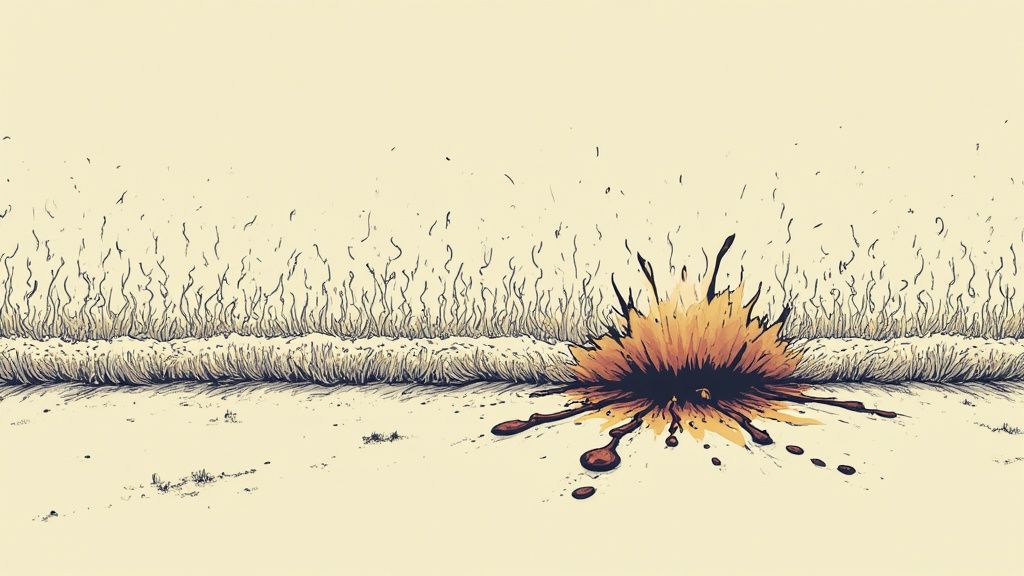
Those first few moments after a carpet burn are absolutely crucial. What you do right away can stop the damage from getting worse and make the final repair much simpler. It doesn't matter if it was a dropped iron, a stray bit of ash, or a pair of hair straighteners left on the floor for a second too long – the initial steps are always the same.
First things first, get the hot object off the carpet safely. Pop it on a heat-proof surface and double-check for any lingering embers or smouldering fibres. Once you're sure the immediate danger is over, you can focus on the damage. Don't rush into a fix; just take a breath and have a proper look at what you're dealing with.
Evaluating the Burn Severity
With the area safe, it's time to get a good look at the burn. Get right down on the floor and examine the fibres up close. Is it just a surface scorch, or has the burn gone deep into the carpet? This quick assessment will decide your entire repair plan.
You'll usually find one of two types of damage:
- Surface Scorch: This is the best-case scenario. The tips of the carpet fibres are just singed and discoloured, but the backing and structure underneath are fine. The fibres might feel a bit stiff or melted to the touch.
- Deep Burn: This is a bit more serious. The burn has melted the fibres right down, possibly even reaching the carpet's backing or the underlay. You might see a proper hole or a hard, black, melted patch.
Key Takeaway: The depth of the burn is far more important than how wide it is. A wide but shallow scorch from an iron is often easier to fix than a tiny but deep cigarette burn that’s gone right through the carpet's foundation.
Choosing Your Repair Path
Your initial assessment will point you towards one of two main DIY repair methods.
For those minor surface scorches, a technique called fibre blending works wonders. This involves carefully trimming away the damaged tips of the fibres and sometimes grafting in a few new fibres taken from a hidden spot, like inside a cupboard or under a sofa.
For deeper burns where the fibres and backing are wrecked, a carpet patch is really your only option. This means cutting out the entire damaged section and slotting in a perfectly matching piece of donor carpet. Figuring out which path to take from the start will save you time and make sure you get the right tools for a successful burn carpet repair.
How to Assess the Damage and Prep for Repair
Before you even think about reaching for the scissors or glue, the most critical step in fixing a carpet burn is a proper, honest assessment. It's so easy to jump the gun, but a hasty repair on a deep burn often looks worse than the original damage. The aim here is a seamless fix, and that starts with getting up close and personal with the problem area.
Get right down on the floor, at eye level with the burn. Gently push the surrounding fibres apart to see what you're really dealing with. Are just the tips singed and discoloured? Or has the heat melted right down into the carpet's pile? Now, touch it. A light scorch will just feel a bit stiff or crusty, but a serious burn will have created a hard, melted lump where the fibres have fused together. This simple touch test gives you a huge clue about which repair method you'll need.
Understanding Burn Severity
Your main goal is to figure out if this is a surface-level problem or if the burn has actually damaged the carpet's core structure. Look beyond the obvious black mark. Can you see the carpet's backing? If the burn has gone clean through, you're past the point of a simple fibre trim and are firmly in carpet patching territory.
This image gives a great visual breakdown of the different levels of burn damage you might be facing.
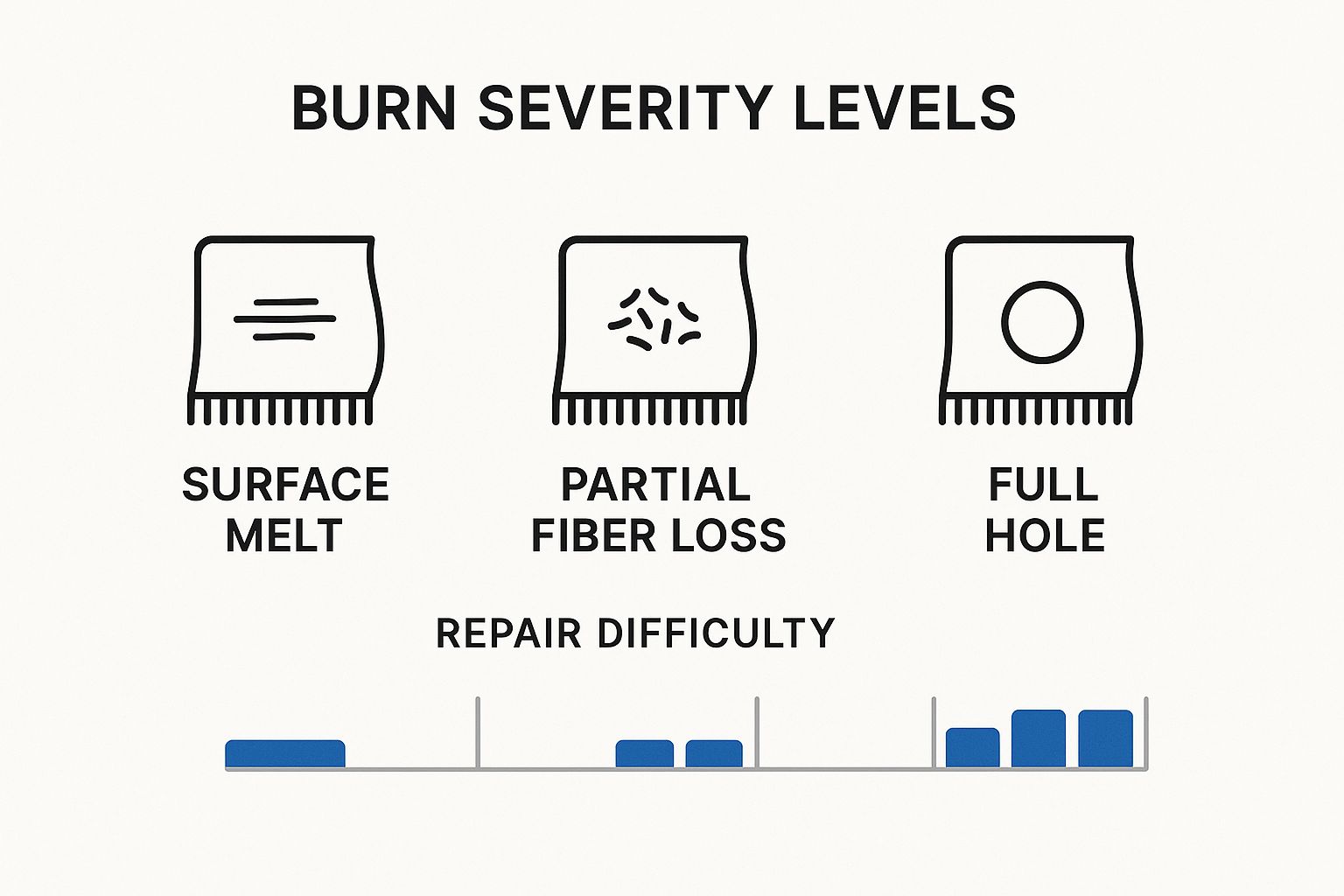
The key thing to realise is that the difficulty ramps up significantly once the damage goes deeper than the very tips of the fibres. Surface scorches are often a manageable DIY task, but a proper hole demands a lot more patience and the right tools to avoid an obvious-looking patch.
Gathering Your Repair Toolkit
Once you've got a handle on the severity, it's time to gather your supplies. Trust me, having everything within arm's reach before you start saves a world of panic later on when you're trying to find something while the adhesive is setting.
For a Fibre Blending Repair (Minor Scorches):
- Small, sharp scissors: A pair of curved nail scissors works wonders for getting a precise cut on burnt fibre tips.
- Tweezers: You'll need these for plucking out stubborn melted bits and carefully placing the new fibres.
- Strong carpet adhesive: Don't skimp on this. A strong-bonding glue that dries clear is an absolute must.
- Donor fibres: These can be carefully harvested from a hidden spot, like the carpet inside a wardrobe or under a sofa that never moves.
For a Carpet Patch Repair (Deep Burns):
- A sharp utility knife: A fresh, sharp blade is non-negotiable for getting clean, straight cuts.
- A donor carpet patch: Make sure it's larger than the burn mark you need to remove.
- Double-sided carpet tape or adhesive: Tape is usually more forgiving for beginners, but a liquid adhesive will give you a stronger, more permanent bond.
- A straight edge or ruler: Essential for ensuring your cuts are perfectly square and neat.
Choosing Your Burn Carpet Repair Method
Deciding between blending fibres and cutting a patch can feel daunting. This quick comparison should help you choose the right path based on the damage you're facing.
| Consideration | Fibre Blending (Small Scorch Marks) | Carpet Patching (Deep Burns) |
|---|---|---|
| Best For | Light surface scorches where only the tips of the fibres are burnt. | Holes, melted lumps, and burns that have gone through to the backing. |
| Difficulty Level | Beginner-friendly. | Intermediate. Requires patience and a steady hand for clean cuts. |
| Tools Needed | Scissors, tweezers, carpet glue. | Utility knife, donor patch, adhesive or carpet tape, straight edge. |
| Visibility of Repair | Virtually invisible if the colour match is good. | Can be seamless, but a poor cut or pattern mismatch can be noticeable. |
| Time Required | Quick; usually under 30 minutes. | More involved; can take an hour or more to get it right. |
Ultimately, the goal is an invisible mend. For tiny scorches, fibre blending is your best bet. For anything more substantial, patching is the only way to achieve a professional-looking result.
It’s no surprise that homeowners are keen to repair rather than replace. With UK household spending on carpets and floor coverings hitting nearly £1.2 billion in a recent quarter, it's clear we invest a lot in our flooring. This significant outlay naturally makes maintaining and repairing our carpets a priority. If you need to document the damage for any reason, a homeowner's guide to property damage assessment is a fantastic resource. For more in-depth techniques, our own guide on https://www.agcarpetspecialist.co.uk/2025/08/07/how-to-get-burns-out-of-carpets/ walks you through the entire process.
A Practical Guide to Carpet Patching
If you're dealing with deeper burns that have gone right through the fibres or even damaged the carpet's backing, a simple fibre-blending trick won't cut it. This is where a proper carpet patch is needed—a tried-and-tested method for a seamless burn carpet repair. It might sound like a job for the pros, but with a steady hand and a bit of patience, you can get a result that's virtually invisible.
The first, and most crucial, part of the job is finding a matching piece of carpet to act as a donor. You can't just grab any old offcut; it needs to be an identical match in colour, texture, and even wear. A brand-new piece will stick out like a sore thumb against a well-trodden living room carpet.
Finding the Perfect Donor Carpet
Luckily, the best donor patches are often hidden in plain sight. Most homes have spots where the carpet is untouched by feet or sunlight, making it a perfect match for the more visible areas of the room.
- Inside a Wardrobe: The carpet tucked away inside a built-in wardrobe is usually in pristine condition and is almost never seen.
- Under Heavy Furniture: Have a look under a hefty sofa, a solid bookcase, or a bed that hasn't moved since the dawn of time.
- Leftover Offcuts: If you were savvy enough to keep some scraps after the carpet was fitted, now’s their time to shine. Check the loft, garage, or that cupboard under the stairs.
Once you’ve found your source, cut a piece that's a little bigger than the burn. This gives you some wiggle room when you trim it down to size later on.
Pro Tip: When you take the donor piece from its hiding spot, swap it with the burnt piece you've just cut out. It won't be a perfect fit, but it’s much better than leaving a bare patch inside a wardrobe or under the sofa.
Cutting and Fitting Your Patch
With your donor piece in hand, it’s time to deal with the damaged section. Precision is everything here. A wonky cut will be painfully obvious, so take your time. Using a sharp utility knife and a straight edge, carefully cut a neat square or rectangle around the burn mark, making sure your cuts go clean through the carpet and its backing.
After you've removed the damaged bit, use it as a template. Lay it over your donor piece and trim the new patch to the exact same size. This is where the real skill comes in. You must pay close attention to the pile direction—that’s the natural lean of the carpet fibres.
Run your hand over both the patch and the carpet around the hole. It'll feel smooth in one direction and a bit rougher in the other. For a truly invisible mend, you have to align the pile of the patch with the pile of the surrounding carpet. Get this wrong, and the patch will catch the light differently, making it stand out immediately. To get a better handle on this, have a look at our detailed guide on professional carpet patching repair.
Finally, it's time to secure your perfectly trimmed patch. For most DIY repairs, a high-strength, double-sided carpet tape is the simplest and most forgiving choice. Stick it to the subfloor around the edges of the hole, then press your patch firmly into place. For a more permanent solution, you could use a specialised carpet adhesive, but be warned—it sets quickly and leaves very little room for error.
Pro Tips for an Invisible Carpet Repair
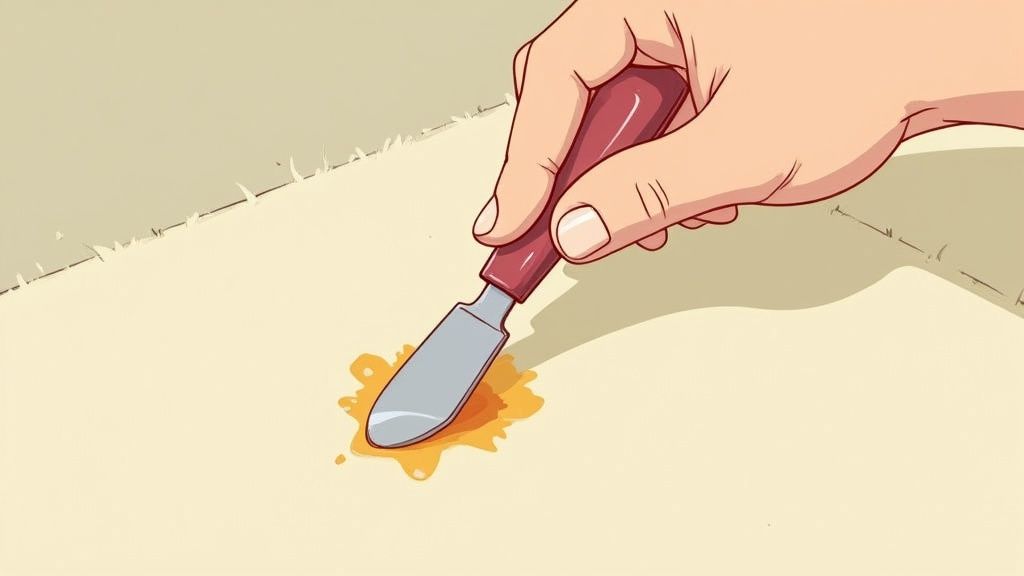
Getting a patch to fit just right is a great feeling, but the real magic behind a truly invisible burn carpet repair is in the finishing touches. These are the little professional tricks that take a repair from good to completely undetectable. It’s all about blending the fibres and making that repaired spot look like it was never damaged in the first place.
Once you’ve let the adhesive fully cure, the first job is to tackle the seam. It doesn't matter how perfectly you've cut the patch; there will always be a faint line where the new piece meets the existing carpet. Your goal is to make that line disappear.
Fluffing and Blending the Seams
Start by gently working a stiff carpet brush, or even an old toothbrush, along the seams. This simple action helps lift and mix the fibres from both the patch and the surrounding carpet, which starts to blur the sharp edge of your repair.
After a good brushing, bring out the vacuum cleaner. The suction is great for pulling up any loose fibres, but it also helps the pile of the patch stand upright so it can settle in and align with the rest of the carpet. You don't need to be aggressive with it; a few gentle passes will do the trick.
Expert Insight: For a truly seamless blend, use your fingers to gently massage the fibres along the seam in a circular motion. This 'fluffs' them together, breaking up any stiffness from the adhesive and creating a much more natural transition.
The Fibre Blending Method for Minor Scorches
If you're just dealing with a minor scorch mark instead of a deep, serious burn, you can often skip the patch repair entirely. Fibre blending is a more delicate technique, but it’s incredibly effective for these surface-level marks.
This method is a bit like carpet surgery. First, grab a pair of small, curved scissors and carefully trim away just the blackened, melted tips of the carpet fibres. The aim here is to remove the damage without creating a noticeable divot in the pile.
Next, you need to graft in some new fibres. Carefully snip a few undamaged fibres from a hidden spot, like inside a wardrobe or under a heavy piece of furniture. Place a tiny droplet of strong, clear-drying fabric adhesive at the base of the trimmed area. Then, using tweezers, carefully place the new fibres into the glue. It requires a steady hand and a bit of patience, but the result is a flawless fix for small blemishes.
Tackling Colour Matching and Patterns
Colour matching is often the biggest giveaway of a DIY repair. If your donor patch is a slightly different shade because of sun exposure or general wear, you can sometimes blend it by lightly misting the area with water and brushing the fibres together as it dries. For more detailed advice on maintenance and keeping your carpet’s colour vibrant, have a look at our professional carpet cleaning tips.
Working with patterned carpets adds another layer of complexity, where precision is everything. When you cut both the damaged section and the donor patch, you must ensure the pattern aligns perfectly. Even being a millimetre out can make the repair stand out like a sore thumb. Take your time, measure multiple times, and only cut once. This careful, methodical approach is what makes a professional repair completely undetectable.
Knowing When to Call a Professional
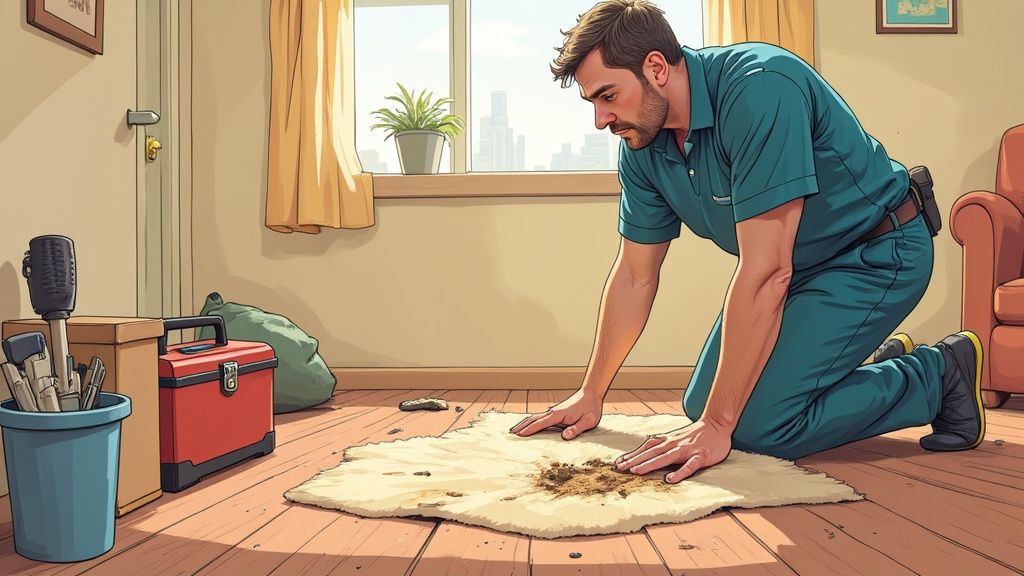
There’s a real sense of satisfaction in a successful DIY burn carpet repair, but sometimes the smartest thing you can do is put down the tools and pick up the phone. Knowing your limits is the difference between a quick fix and a costly, irreversible mistake. Let’s be honest, not every burn mark is a job for a home remedy.
Think of it this way: an expert has seen it all before. They turn up with specialised tools, industry-grade adhesives, and a trained eye for detail that’s impossible to replicate without years of experience. They know the ins and outs of different carpet types and how to get a truly invisible finish, especially in busy areas where a dodgy repair will stick out like a sore thumb.
Signs You Need an Expert
If you’re looking at any of the following situations, I’d strongly recommend getting a professional involved. Trying to tackle a complex repair without the right skills can often make the damage worse and even harder for an expert to sort out later.
- Extensive Damage: If the burn is bigger than a couple of inches across, or you have multiple scorch marks dotted around, it’s time to call in the pros. They have the right techniques for larger patches that won’t compromise the carpet’s structure.
- Delicate or High-Value Carpets: Materials like wool, silk, or premium woven carpets can be unforgiving. One wrong cut can lead to fraying or discolouration that you just can’t fix.
- Complex Patterns: Trying to line up a patch on a carpet with an intricate geometric or floral pattern is a real headache. A professional has the skill to make sure the design flows seamlessly, as if the burn never happened.
- Damage to the Underlay: Has the burn gone right through the carpet backing and melted the underlay? That’s a sign of a much more serious problem that a simple surface patch won’t solve.
Key Consideration: Don't forget that your time and peace of mind are valuable. A professional repair is usually done quickly, comes with a guarantee, and saves you the potential stress and frustration of a DIY job gone sideways.
The Professional Advantage
A proper carpet technician doesn't just replace the burnt bit; they restore your floor. Their ability to source the perfect donor material and blend the seams until they vanish is a skill honed over countless jobs. They also ensure the structural integrity of your carpet is maintained, helping it last longer.
The UK floor covering market is a big deal, and that includes essential services like carpet burn repair. Projections show the industry growing to around £4.24 billion by 2030, with homes like yours making up over 64% of that. It just shows how much homeowners value their flooring, making professional services a vital part of looking after it. You can find more details about the UK's flooring industry growth to see the trends for yourself.
Of course, regular maintenance is also key to a carpet's lifespan. You might find our guide on the benefits of eco-friendly carpet cleaning helpful for keeping your floors in top condition.
Common Questions About Burn Carpet Repair
Even with the best instructions, it's natural to have a few questions before you start tackling a carpet burn. We get asked these all the time, so let's run through the most common queries to give you that extra bit of confidence.
One of the first things people want to know is the cost. While a DIY fix is always going to be the most budget-friendly option, getting a professional in for a small, single burn in the UK will typically cost between £75 and £150. For more significant damage, the price will go up, but it's almost always a smarter financial choice than replacing the entire carpet.
Can I Fix a Burn on a Berber or Patterned Carpet?
You absolutely can, but you'll need a steady hand and a bit more patience. Berber carpets, with their looped design, can be tricky. The golden rule is to cut between the loops, never through them, or you risk the whole thing starting to unravel.
With patterned carpets, the game is all about perfect alignment. Your donor patch has to match the surrounding pattern exactly. Being off by even a few millimetres will make the repair stick out like a sore thumb. So, as the old saying goes, measure twice and cut once.
What if I Can't Find a Donor Patch?
This is a classic problem, especially if your carpet was laid years ago and the offcuts are long gone. If you can't find a discreet spot to take a patch from (think inside a wardrobe or under a heavy sofa), calling in a professional is your best bet. We have access to a huge range of carpet samples and can even use specialised techniques like fibre grafting to build a near-perfect match from scratch.
Expert Insight: Whatever you do, don't use a piece of carpet from another room, even if it looks like a close match. Subtle differences in wear, dye lots, and even the direction of the pile will become glaringly obvious once the patch is in place.
Is the Glue or Tape Strong Enough for High-Traffic Areas?
Yes, provided you use a quality product. A good carpet adhesive or purpose-made double-sided carpet tape is designed to be incredibly durable. As long as it's applied correctly to a clean, dry subfloor, your patch will hold firm, even in a busy hallway or the middle of the living room. The key is giving it enough time to fully cure before you start walking on it.
This trend of repairing instead of replacing is only getting bigger. It's a more sustainable and cost-effective approach to home maintenance, which is why the global carpet repair market is projected for significant growth through 2032. You can learn more about the remarkable growth expected in the carpet repair sector and see why it's becoming the go-to solution for homeowners.
Sometimes, a burn leaves more than just a mark; it can leave a smell too. If a cigarette was the culprit, you might find our guide on removing pet and smoke odours from carpet helpful.
If you've taken a look at the damage and decided it's a job for the experts, AG Carpet Specialists is here to help. Our technicians deliver professional, seamless repairs across Cheltenham and the surrounding areas. Contact us today for a free, no-obligation quote and let's get your carpet looking its best again. Visit us at https://www.agcarpetspecialist.co.uk.