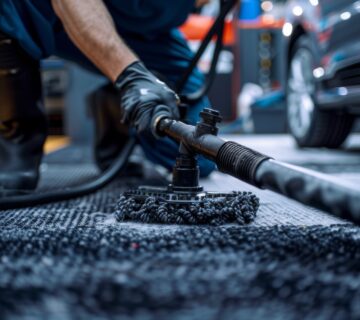
That lingering pet smell isn't just a nuisance; it's a chemistry problem happening deep within your carpet fibres. When a pet has an accident, the urine doesn't just sit on the surface. It soaks right through the carpet, into the backing, and often settles deep into the underlay and even the subfloor.
This is where the real trouble starts. Pet urine contains several compounds, but the one that causes the most persistent odour is uric acid. While other elements create that initial sharp smell, it’s the uric acid crystals left behind that are responsible for the long-lasting, recurring funk.
The Science Behind That Stubborn Smell
You might have tried standard carpet shampoos or household cleaners, only to have the smell return a few days later. That’s because these products simply can't break down the resilient uric acid crystals. They might clean the surface and mask the smell with a nice fragrance for a while, but they haven't touched the core of the problem.
The moment humidity rises or the area gets damp again, those uric acid crystals reactivate. Suddenly, that unpleasant smell is back, sometimes even stronger than before. It’s a common frustration and the reason a spot you thought was clean can suddenly start smelling again on a rainy day.
The key takeaway here is you're not just fighting a stain; you're fighting a chemical compound that has embedded itself into multiple layers of your flooring. Simply scrubbing the surface is like painting over a water stain on the ceiling—it does nothing to fix the leaky pipe above.
This is an incredibly common challenge, especially considering there are around 34 million pets in UK households. In fact, pet urine is a leading cause of persistent household odours, which is why effective removal is such a high priority for pet owners. You can see the scale of pet ownership in the latest UK data from the Pet Food Manufacturers’ Association (PFMA).
Act Fast When Accidents Are Fresh
When you discover a fresh accident, every second counts. Acting quickly can stop the urine from penetrating deeper into the carpet and underlay, which makes the whole cleanup process significantly easier and more effective.
The first few minutes are absolutely critical. Knowing what to do immediately is the first step in learning how to eliminate pet odors for good, rather than just covering them up.
Here’s a quick guide for those crucial first moments.
Immediate Action Plan for Fresh Pet Accidents
| Action Step | Why It Works | What to Avoid |
|---|---|---|
| Blot, Don't Rub | Blotting with a clean, dry cloth or paper towels lifts the liquid out. Rubbing just pushes it deeper into the carpet fibres and spreads the problem. | Scrubbing vigorously: This damages carpet fibres and pushes the urine further down. |
| Use Cold Water | After blotting, lightly dampen the area with cold water and continue blotting. This dilutes the remaining urine without setting the stain. | Hot water or steam: Heat can permanently set protein stains and bond the odorous compounds to the carpet fibres. |
| Apply an Enzyme Cleaner | Once you've blotted as much as possible, apply a high-quality enzyme cleaner. This starts breaking down the uric acid immediately. | Household cleaners with ammonia: Pets are often attracted back to the smell of ammonia, which can encourage them to soil the same spot again. |
Following these initial steps will give you a massive head start in preventing a simple accident from becoming a permanent, smelly problem.
Assembling Your Pet Odour Removal Toolkit
As any seasoned pet owner knows, success in the war against pet odours begins long before you actually start scrubbing. It all comes down to having the right tools ready to go at a moment's notice. Think of it as your own dedicated 'pet accident first-aid kit'.
Being prepared means you can act fast, which is absolutely vital for stopping urine from soaking deep into the carpet underlay and causing a permanent problem. A well-stocked toolkit isn't just about convenience; it's about tackling the issue properly without making things worse.
Your Essential Cleaning Arsenal
Building your kit doesn't mean you need to buy every cleaning product under the sun. It's about having a few key items that perform specific, crucial jobs in the battle against those stubborn smells.
Here’s what every pet owner should have on hand:
- High-Absorbency Cloths or Paper Towels: These are your first line of defence. You'll need a good supply to blot up as much liquid as you can from a fresh accident.
- A Quality Enzyme Cleaner: This is the non-negotiable hero product. An enzymatic cleaner is scientifically formulated to break down the uric acid crystals that create that lingering, unmistakable smell. Standard cleaners just can't do this.
- A Wet/Dry Vacuum: Invaluable for sucking up moisture and the cleaning solution after you've treated the area. Getting the spot as dry as possible is key to preventing mildew and ensuring the odour doesn't return.
- A UV Torch: This little gadget is a game-changer. It helps you find old, dried stains that are completely invisible in normal light but are still causing a pong. In a dark room, old urine stains will glow under the UV light, showing you exactly where to treat.
With these items in your cupboard, you're set for both emergency clean-ups and a bit of detective work on older, more mysterious smells.
Cleaners to Avoid at All Costs
Knowing what not to use is just as important as knowing what to use. Many common household products can actually make the situation far worse, setting stains permanently or even making the odours stronger over time.
A crucial word of warning: be extremely careful with steam cleaners or any kind of heat on an untreated urine stain. The heat can bond the proteins in the urine to the carpet fibres, essentially "cooking" the smell in and making it almost impossible to ever remove.
You should also give any ammonia-based cleaners a wide berth. Since urine already contains ammonia, using a product with a similar scent can confuse your pet and actually encourage them to soil the same spot again. Sticking to your curated toolkit is the safest and most effective way for removing pet odours from carpet for good.
Choosing Your Cleaning Solution: DIY vs Commercial
When you’re staring down at a fresh pet accident, the classic debate starts: do you grab the homemade stuff from the cupboard or a specialist product from the shop? Honestly, both have their place, but which one actually works depends entirely on how old and how bad the stain is.
Making the right call here is the difference between truly removing pet odours from your carpet and just covering them up for a few days.
A simple DIY mix of white vinegar and bicarbonate of soda can be a fantastic first line of defence for minor, brand-new spots. Many a pet owner has reached for this combo in an emergency.
The chemistry is pretty sound. Pet urine is alkaline, so the acetic acid in vinegar gets to work neutralising the immediate smell. The bicarb then does a decent job of soaking up the remaining moisture and absorbing any surface-level pong. The big problem? This method can’t touch the underlying uric acid crystals that cause that lingering smell.
The Power of Enzymatic Cleaners
While a vinegar solution might deal with the initial ammonia whiff, it's completely outmatched by the non-soluble uric acid that’s responsible for odours coming back. This is where a proper enzymatic cleaner is non-negotiable. These aren't your standard carpet shampoos; they are powerful bio-enzymatic formulas packed with beneficial bacteria.
These microscopic helpers produce enzymes that are specifically designed to break down and consume the organic waste in pet urine—including those stubborn uric acid crystals. They literally eat the source of the smell, converting it into harmless, odour-free things like carbon dioxide and water.
Think of it like this: a DIY cleaner is like wiping a spillage off the floor. An enzymatic cleaner is like sending in a microscopic clean-up crew to completely dismantle the problem at a molecular level, so it can never return.
Getting this right is a big deal for UK households. With 31% of homes owning dogs and 26% owning cats, pet accidents are just a part of life. In fact, research shows that a massive 40% of pet owners say lingering urine smells are a major source of stress. You can read more about these UK pet ownership statistics on dogster.com. Using the right product makes all the difference.
DIY vs Enzymatic Cleaners: A Head-to-Head Comparison
To make the choice clearer, let’s break down the key differences between a pantry staple and a purpose-built solution.
| Feature | DIY Solution (Vinegar & Bicarb) | Enzymatic Cleaner |
|---|---|---|
| Primary Action | Neutralises ammonia, absorbs surface odour | Breaks down organic matter and uric acid crystals |
| Effectiveness | Best on fresh, minor surface stains | Highly effective on new, old, and deep-set stains |
| Odour Removal | Temporary masking of smells | Permanent elimination of the odour source |
| Cost | Very low | Moderate |
| Best For | Immediate, first-response treatment | Deep cleaning, stubborn odours, and repeat accidents |
Ultimately, while the DIY route is cheap and cheerful, it’s a surface-level fix. For a genuine, lasting solution, an enzymatic cleaner is the only way to go.
Making an Informed Decision
So, which should you use? It really does come down to the situation you’re facing. If you’ve caught a puddle within minutes, a quick vinegar and bicarb treatment might just do the trick as an initial step.
But for any of these scenarios, you absolutely need to reach for an enzymatic cleaner:
- Old or dried stains: Once the stain has set, the uric acid has crystallised deep in the fibres.
- Recurring odour spots: If a smell keeps coming back, especially when it’s humid, that’s the uric acid talking.
- Mystery smells: You can smell it but can’t see it? Once you find the spot, only an enzymatic treatment will kill the odour for good.
- Porous surfaces: Natural fibres can soak up liquids like a sponge. For tricky materials, it’s worth seeking out specific advice, like our guide on how to clean sisal carpets.
At the end of the day, homemade remedies are handy to have, but enzymatic cleaners offer a scientifically proven, permanent fix for stubborn pet odours.
A Practical Guide to Deep Cleaning Pet Stains
Alright, let's get down to the practical side of things. It’s one thing to understand why a smell is there, but another thing entirely to get rid of it for good. This is the process we use to truly eliminate pet odours at the source, not just cover them up for a few days.
When you spot a fresh accident, what's the first thing you want to do? Scrub it, right? Stop right there. That's honestly the worst thing you can do. Rubbing or scrubbing forces the liquid deeper into the carpet, pushing it right through to the underlay.
The correct method is to blot firmly. Grab some clean paper towels or an old white cloth and press down hard. Your goal is to soak up as much of the liquid as you can. Always work from the outside of the stain inwards to stop it from spreading.
Saturating the Source of the Smell
Once you’ve blotted the area dry, it's time to bring in your cleaner – ideally an enzymatic one. The key here isn't just to make the surface damp; you need to completely saturate the spot. Think about where the urine went – you need the cleaner to follow the exact same path.
This means being generous with the solution. You need enough to soak through the carpet fibres and, most importantly, into the underlay. That’s where the real stink hides. A light spray on top simply won't cut it.
The process isn't complicated, but every step matters, as this little chart shows.
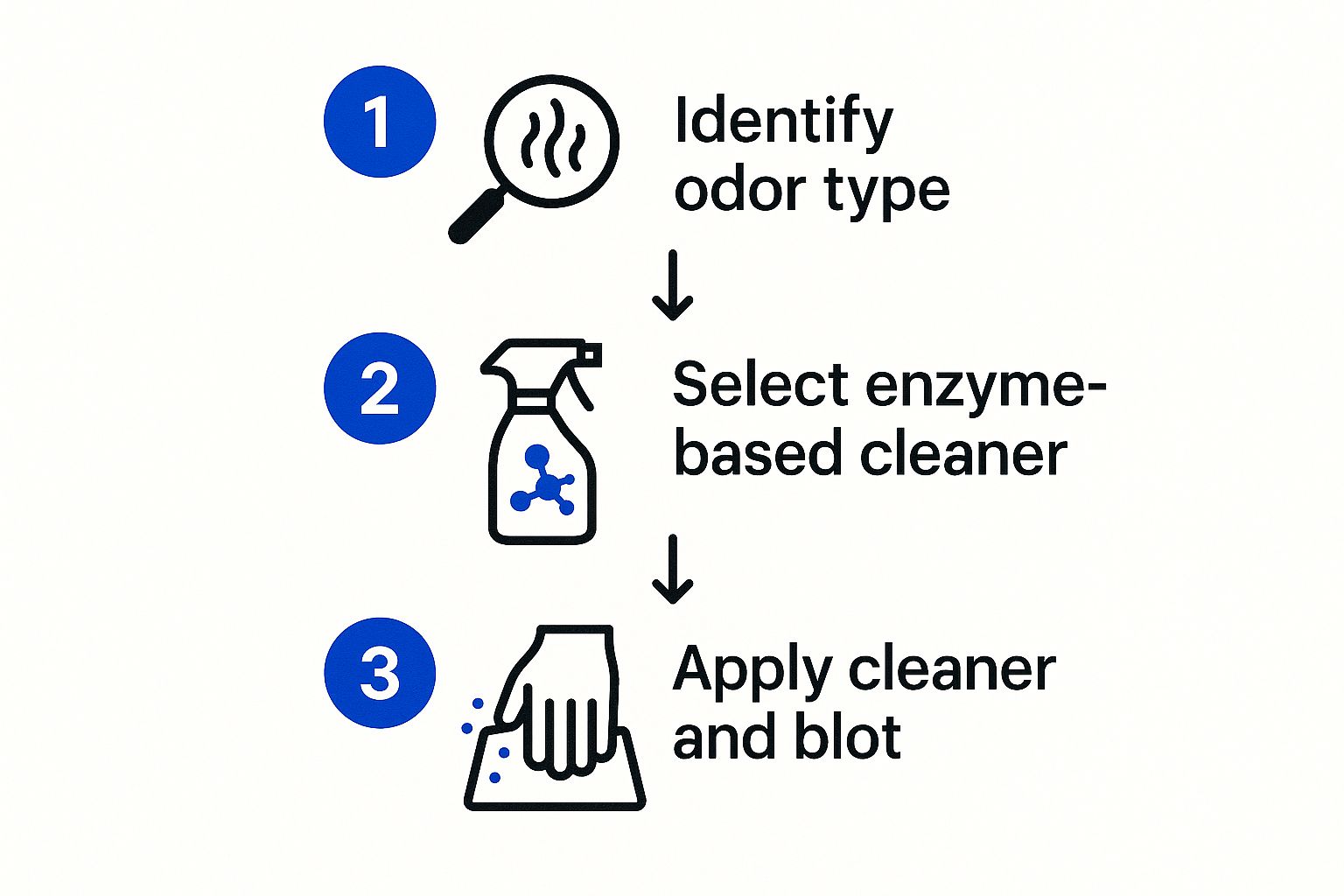
It really comes down to a simple, methodical approach: find the problem, choose the right tool for the job, and then use it properly.
The Importance of Dwell Time
After you've applied an enzymatic cleaner, the next step is the easiest and most important: do nothing. This waiting period is called dwell time, and it’s when the cleaner actually does its job. The good bacteria in the formula need time to "wake up" and produce the enzymes that literally eat the uric acid crystals causing the smell.
If you rush this part, the product won’t work properly. For really bad or old stains, you might need to let the solution sit for several hours to be effective.
Professional Tip: We often cover a treated area with a damp towel. This stops the solution from drying out too quickly and gives the enzymes the maximum time to work. Pop an overturned laundry basket on top to keep curious pets and family members away.
Always check the instructions on your specific product, but for stubborn, lingering smells, more dwell time is almost always better. For a deeper dive, our guide on cleaning pet urine in carpet has even more specific advice.
Extraction and Thorough Drying
Once the enzymes have had time to work, it's time to get everything out. You need to extract both the cleaning solution and all the broken-down waste it has created. A wet/dry vacuum is perfect for this.
Go over the spot several times from different directions to suck up as much moisture as possible. No wet/dry vac? No problem. You can go back to blotting with clean, dry towels. Put your full body weight on them to absorb as much liquid as you can.
Finally, you absolutely must let the area dry completely. A damp carpet is a perfect home for mildew and mould, and you’ll just be trading one bad smell for another.
Here are a few tricks to speed up the drying process:
- Get the Air Moving: Open the windows or point a fan directly at the damp patch.
- Bring in a Dehumidifier: If you have one, placing it in the room will pull moisture out of the air and the carpet, cutting down drying time.
- Keep Off: Try to avoid walking on the area until it’s 100% dry to stop the carpet fibres from getting matted and flattened.
This blot, saturate, wait, extract, and dry method is the proven way to permanently solve pet odour problems, whether they happened five minutes ago or five months ago.
When to Call a Professional Carpet Cleaner
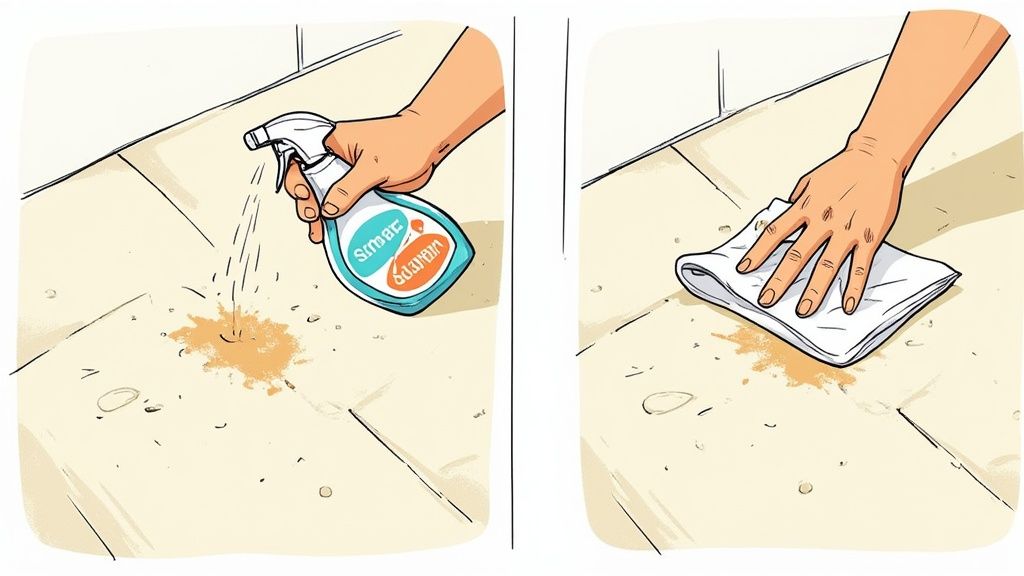
Sometimes, no matter how hard you try, that smell just won’t shift. You've scrubbed, you've used every DIY trick in the book, and you've saturated the area with enzyme cleaners, but the odour lingers. It’s a frustrating moment for any homeowner, but it’s also a clear sign the problem has gone deeper than any household equipment can reach.
Knowing when to admit defeat is actually the first step to winning the battle. If an odour keeps coming back in the same spot, it’s a tell-tale sign that the source has soaked right through the carpet, into the underlay, and possibly even the subfloor. Similarly, if a faint smell seems to hang in the air across the entire room, you’re probably dealing with multiple, widespread accidents that are impossible to pinpoint and treat one by one.
Persistent or widespread odours are a dead giveaway that the source is out of reach for consumer-grade products. At this point, you're no longer just cleaning the carpet; you're trying to treat the very structure of your floor.
This is a huge issue here in the UK, where over 57% of households own a pet. That's a lot of potential for accidents, and it's driving a massive demand for expert help. In fact, professional cleaners have seen demand for pet odour removal treatments grow by as much as 30% in recent years. It just goes to show how common—and stubborn—these problems really are.
The Professional Advantage: Equipment and Expertise
When you call in a professional, you're not just getting a person with a machine; you're getting an arsenal of powerful, commercial-grade equipment that goes far beyond anything you can rent or buy.
The workhorse for any true professional is a hot water extraction machine. This isn't your average carpet washer. It blasts a high-pressure, heated cleaning solution deep into the carpet pile and then uses immense suction to pull it—and all the dirt, bacteria, and odour-causing nastiness—straight out. It’s a flushing process that cleans right down to the base of the fibres.
For the really tough jobs, an expert might bring out a specialised tool like a sub-floor extractor. This incredible device is designed to pull moisture and odours directly from the carpet padding and the subfloor itself, tackling the problem at its absolute source. It’s this level of deep cleaning that highlights the benefits of professional cleaning services over any DIY attempt.
How to Choose the Right Professional
Be warned: not all carpet cleaners are created equal, especially when it comes to pet odour removal. Hiring a generalist service could end up making things worse. For instance, if they use steam without the right pre-treatment, they can actually "cook" the proteins in the urine, permanently setting the stain and smell.
Before you hire anyone, make sure you ask some very specific questions:
- Do you specialise in pet urine and odour removal?
- What’s your exact process for tackling deep-set odours?
- Do you always use enzymatic pre-treatments before extraction?
- Can you offer any guarantee for complete odour removal?
A genuine expert will have no trouble walking you through their multi-step process. They should also be able to discuss the pet-safe and eco-friendly products they use—a crucial consideration for any pet owner. For more on this, our guide to environmentally friendly carpet cleaning offers some great insights.
Frequently Asked Questions About Pet Odour Removal
Even when you think you've done everything right, a few questions always seem to come up when you’re dealing with stubborn pet smells. Getting the right answers can be the difference between a temporary fix and a permanent solution. Let's tackle some of the most common queries we hear from clients.
Will Steam Cleaning Alone Remove Pet Urine Odour
This is a really important one, and the short answer is no. In fact, just steam cleaning a urine spot can make the problem much, much worse.
While steam cleaning is fantastic for general dirt, hitting an untreated urine stain with high heat will permanently set it. The heat basically "cooks" the proteins in the urine, bonding them right into the carpet fibres. Once that happens, the smell is locked in for good.
To use heat safely, you must pre-treat the area with a high-quality enzymatic cleaner first. Those enzymes need time to work their magic and break down the uric acid crystals. Only after that crucial step is it safe to use heat effectively.
How Can I Stop My Pet From Soiling the Same Spot
It’s a classic frustration for pet owners: you clean a spot until it looks perfect, only for your dog or cat to go right back to it. This happens because their incredibly powerful sense of smell can pick up on tiny urine traces that we can't detect at all. The secret is total odour elimination, not just covering it up.
An enzymatic cleaner is your best tool here because it completely destroys the scent molecules that attract them back. Once the carpet is clean and fully dry, you could also try making the area less inviting. Maybe place a piece of furniture over it for a while or use a pet-safe deterrent spray. It’s also a good idea to chat with your vet to rule out any medical issues, as repeat soiling can sometimes be a sign of a health problem.
Are Homemade Cleaners with Vinegar Truly Effective
DIY solutions using vinegar and bicarbonate of soda have their place, but it's important to understand their limits. For a very minor, fresh accident, vinegar can help neutralise the immediate ammonia smell, and bicarb is great for soaking up liquid. Think of it as a good first-aid measure.
However, these homemade cleaners are powerless against the stubborn, non-soluble uric acid crystals that cause that lingering, long-term odour. For older or deeper stains, a DIY approach just won't cut it. A scientifically formulated enzymatic cleaner is the only way to get to the root of the problem for complete and permanent odour removal. For a more consistent approach, understanding how often to clean carpets can also make a big difference in keeping your whole home fresh.
The bottom line is that while DIY methods can help in an emergency, they only tackle the surface smell. For true, lasting success, enzymatic treatments are essential for breaking down the chemical compounds that cause persistent odours.
Sometimes, even the cleanest homes can face other odour challenges. For more general advice on indoor air quality, you might find some useful strategies for fixing musty room smells in this guide.
If you're dealing with a pet odour problem that feels impossible to solve, it might be time to call in the professionals. AG Carpet Specialists uses advanced, pet-safe treatments to eliminate odours at their source, leaving your carpets genuinely clean and fresh. Contact us today for a free quotation at https://www.agcarpetspecialist.co.uk.