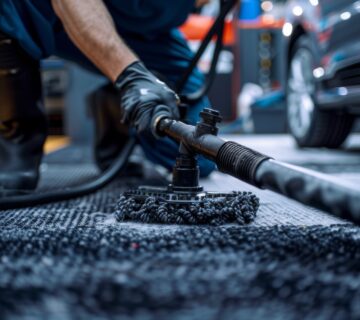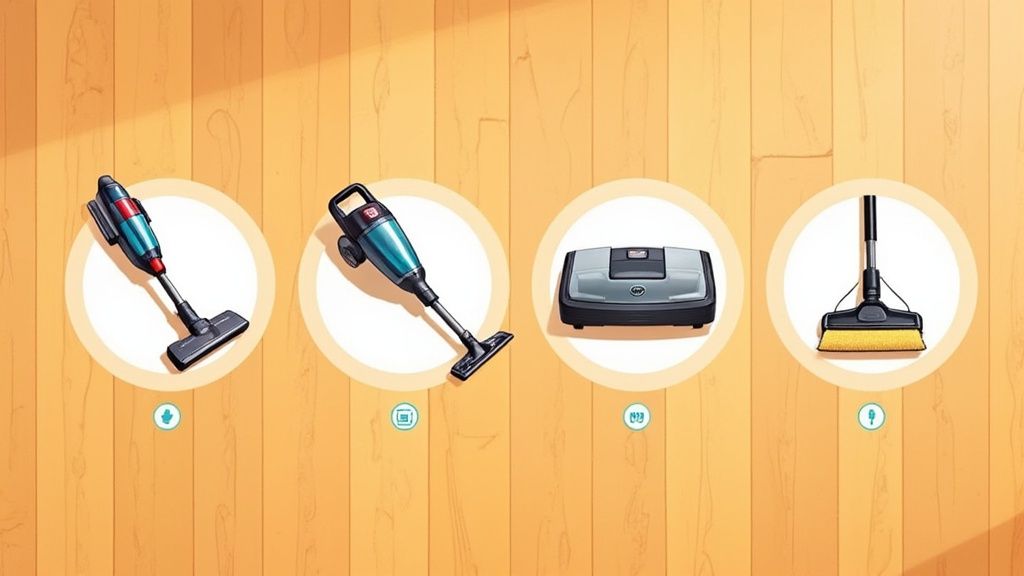
When it comes to finding the best hardwood floor cleaning machines, you're really looking at wet-dry vacuums. These machines have cracked the code, blending gentle scrubbing with just the right amount of water to avoid any damage. Brands like Bissell, Tineco, and Shark are household names for a reason—they get the dirt out without soaking the wood, which is crucial for protecting your floor's finish in the long run.
Protecting Your Investment in Hardwood Floors
Choosing the right machine isn’t just about cleaning; it’s about preserving the beauty and value of your hardwood floors for years to come. This guide goes beyond the basic specs on a box to give you a real-world comparison. Pick the wrong tool, and you could be looking at irreversible water damage, scratches from harsh brushes, or a permanently dulled finish.
Hardwood is much more sensitive than tile or laminate, so it needs special treatment. It's all about finding that perfect balance between powerful cleaning and careful moisture control. We’ll break down the main types of cleaners out there to help you see exactly what you need.
Key Machine Categories
- Wet-Dry Vacuums: These are the all-in-one workhorses. They vacuum up debris and mop at the same time, giving you fantastic control over how much water is used.
- Dedicated Polishers: Think of these as a tool for occasional maintenance, not daily cleaning. They’re designed specifically to restore shine and apply protective coats.
- Robotic Mops: Perfect for light, daily upkeep. These automated cleaners handle dust and minor spills with zero effort on your part.
The demand for better cleaning technology is growing right alongside the popularity of hardwood floors. The global hardwood flooring market was valued at USD 56.32 billion in 2025 and is expected to hit USD 74.5 billion by 2029. This boom shows just how many people are looking for gentle but effective ways to care for their floors.
Of course, looking after your floors is just one part of keeping your home in top shape. A holistic approach is always best, and a complete home maintenance checklist can be a massive help in protecting your entire property. To get the most from your machine and your flooring, check out our detailed guide on https://www.agcarpetspecialist.co.uk/2025/09/03/how-to-maintain-hardwood-floors/ for more expert tips.
Evaluating Different Types of Floor Cleaning Machines
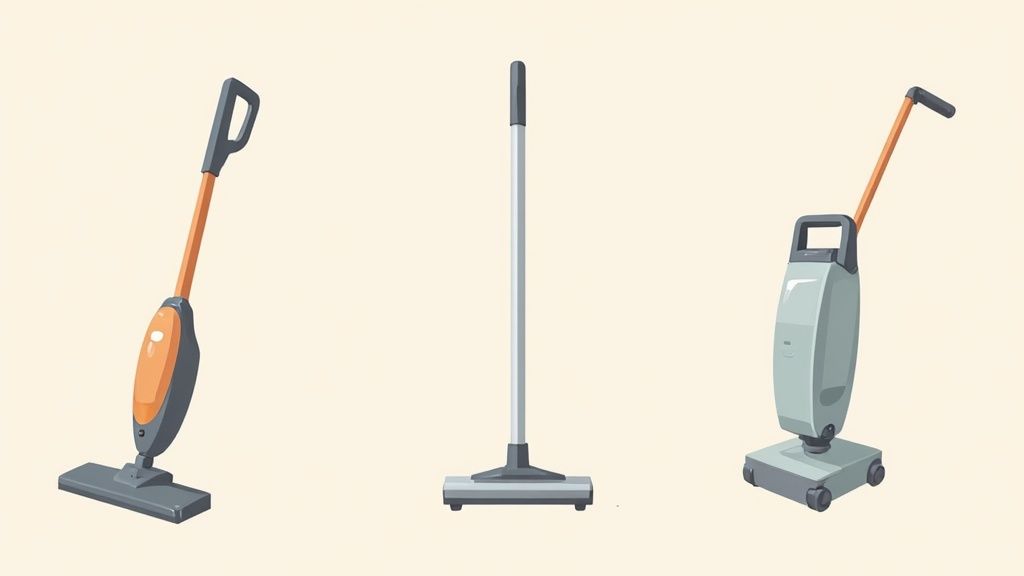
Before you start looking at specific models, it’s a good idea to get your head around the main categories of hardwood floor cleaners. Each type works differently and is really built for different cleaning jobs. Picking the right category from the start is the first, most important step in finding the perfect machine for your home.
This basic knowledge is what will help you match a machine's core function to your lifestyle and the specific needs of your flooring. Let's break down the main options on the market.
Upright Wet-Dry Vacuums
Think of these as the all-in-one powerhouses of floor care. An upright wet-dry vacuum sucks up dry debris like crumbs and pet hair while simultaneously mopping the floor with a cleaning solution. Their biggest plus is their superior water control; they scrub and then immediately suction the dirty water away.
This makes them fantastic for a proper deep clean, especially for tackling sticky kitchen spills or refreshing high-traffic hallways without soaking the wood. If you're someone who wants a thorough clean in one go and is ready to ditch the old mop and bucket, this is where you should be looking.
Robotic Vacuum and Mop Combos
For anyone who puts convenience first, a robotic vacuum-mop combo is a game-changer. These smart little gadgets navigate your home all by themselves, doing a bit of light vacuuming and mopping to keep daily dust and minor grime under control. Their "set-and-forget" appeal is undeniable.
Just be aware, they don’t have the muscle to handle big spills or properly stuck-on dirt like an upright model can. It's best to see them as a tool for keeping things tidy between deeper cleans—perfect for busy professionals or anyone who just wants to cut down on daily chores.
Key Differentiator: The choice between an upright and a robotic model often comes down to your cleaning philosophy. Uprights offer deep, on-demand power, while robotics provide continuous, low-intensity maintenance.
Steam Mops: A Cautious Approach
Steam mops clean with high-temperature water vapour, which is great for sanitising surfaces. However, they come with a serious risk for hardwood floors. That combination of intense heat and moisture can easily get past the wood's protective finish, which could lead to warping, swelling, and permanent damage.
In fact, most flooring experts, including the National Wood Flooring Association, strongly advise against using them on wood. If you absolutely must, you need to be certain your floor is perfectly sealed with no gaps, and you should always use the lowest possible steam setting. It’s well worth understanding the full risks of steam cleaning wooden floors before you even consider it.
Specialised Floor Polishers
Now, floor polishers (or buffers) are not for your weekly clean. These are maintenance tools, designed specifically to bring back the shine and apply a protective coating to your floor's finish. They use rotating pads that gently buff the surface, removing scuffs and really enhancing the wood’s natural lustre.
These machines are best suited for homeowners who want to give their floors a proper refresh every few months or whenever they start to look a bit dull. They don't vacuum or wash; their one and only job is surface restoration.
Comparing the Top Hardwood Floor Cleaning Machines
Picking the right machine for your hardwood floors isn't just about ticking boxes on a feature list. It's about understanding how a machine will actually perform in your home, day in and day out. A powerful wet-dry vacuum might be a lifesaver for a busy family with pets and kids, while the gentle, consistent work of a robot mop could be the perfect fit for a smaller, modern flat.
This comparison gets into the practical differences that really matter for protecting your investment. We'll look at top models through the lens of what keeps hardwood healthy and looking its best, moving beyond simple specs to give you advice that fits your situation.
Cleaning Effectiveness Showdown
The real test, of course, is how well they clean. This isn't just about raw power; it’s the combination of scrubbing action, smart solution delivery, and efficient dirt removal that makes a real difference.
- For Stubborn Grime: Upright wet-dry vacuums are generally the champions here. Their motorised brush rollers actively scrub the floor, which is far more effective at lifting dried-on spills and ground-in dirt than the passive pads on most robotic mops.
- For Daily Dust and Pet Hair: This is where robotic models truly shine. They can run every day, preventing the build-up of dust, allergens, and pet hair. This constant, low-effort maintenance keeps floors looking consistently fresh. While they might struggle with a sudden muddy paw print, their regularity is a massive advantage.
Water Control: A Critical Factor
If there's one public enemy of hardwood floors, it's excessive moisture. The best machines are specifically engineered to use the absolute minimum amount of water necessary to get a great clean. This is where you see the biggest engineering differences between models.
A top-tier wet-dry vacuum, for example, is a closed-loop system. It sprays a very controlled mist of cleaning solution, scrubs the floor, and then instantly vacuums the dirty water back up into a separate tank. The whole process ensures liquid sits on your floor for just a few seconds.
By contrast, some robotic mops use a simpler system where a water tank drips onto a microfibre pad. It's fine for a light mop, but it offers far less control and can sometimes leave wetter patches behind, especially if the robot pauses over a single spot.
Expert Insight: The National Wood Flooring Association consistently advises against oversaturation. A machine's ability to recover the water it dispenses is arguably its most important feature for safeguarding wood floors from potential warping or finish damage.
User Experience and Maintenance
A machine is only as good as its usability. If it's a pain to move around, a hassle to clean after use, or needs constant babysitting, it’s probably going to end up gathering dust in a cupboard.
Manoeuvrability: Cordless upright models give you fantastic freedom, making it easy to navigate around furniture and into tight spots. The trade-off is that they can be heavier to push than a simple, lightweight spray mop. Robotic cleaners are the kings of hands-off convenience, but they do require you to prep the room by picking up cables, small rugs, and other obstacles.
Maintenance: Don't forget the clean-up after the clean-up. Many wet-dry vacuums now have self-cleaning cycles that flush the brush and internal tubes—a huge time-saver. Robotic models need their dustbins emptied, water tanks refilled, and mop pads washed regularly. If you neglect this, performance will drop off quickly, and you might notice some unpleasant odours.
Before we dive into a detailed table, this chart gives a quick visual comparison of how the different machine types stack up on key metrics.
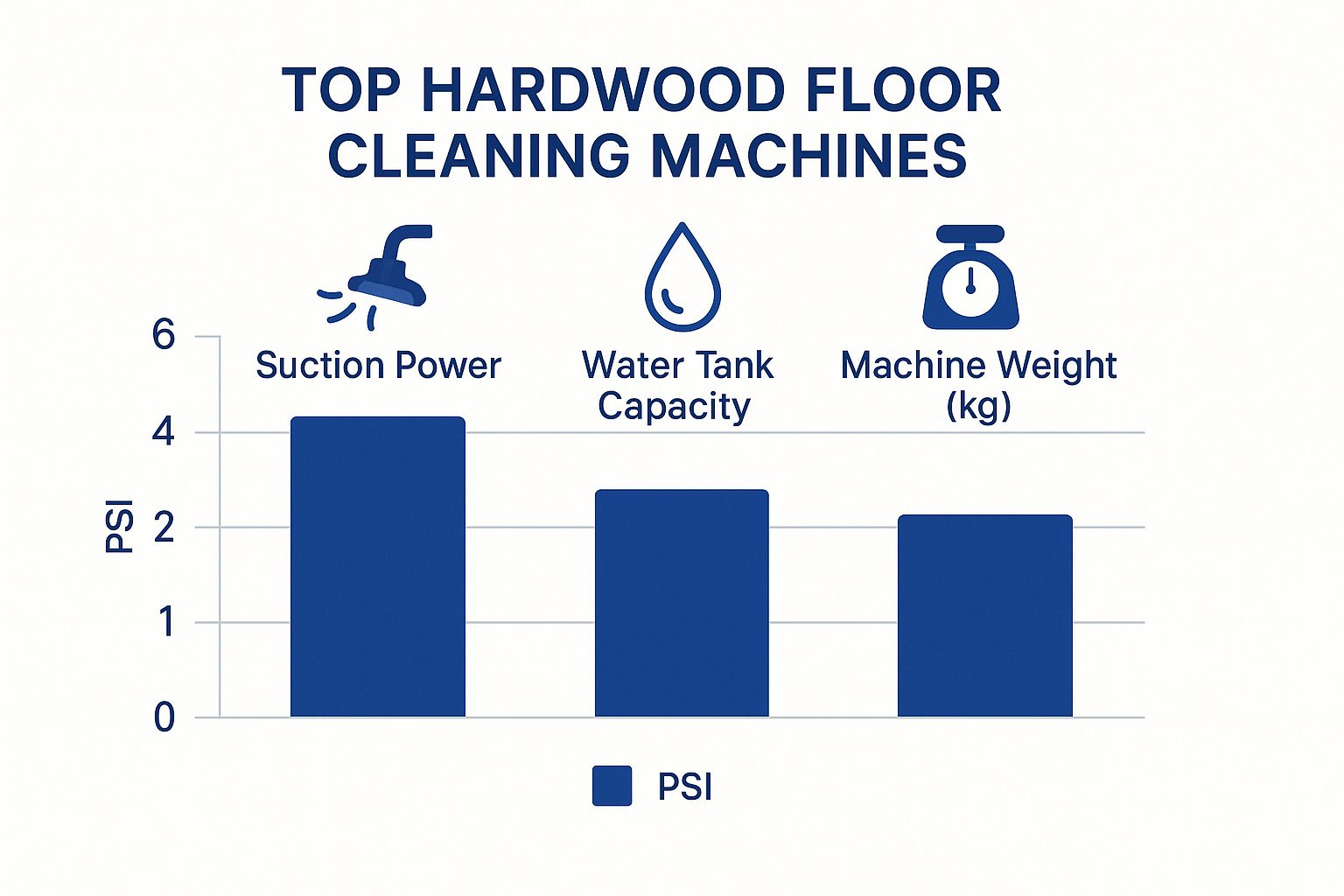
As the chart highlights, there's a clear trade-off: upright models deliver more power and capacity but come with more weight, whereas robotic cleaners prioritise a lightweight, compact design for autonomous cleaning.
To help you decide, let's break down the key features of some leading models side-by-side.
Feature Comparison of Leading Hardwood Floor Cleaners
| Model | Machine Type | Best For | Water Control System | Key Feature |
|---|---|---|---|---|
| Model A | Upright Wet-Dry Vac | Busy homes with spills & high traffic | Two-Tank System (clean/dirty) | Self-cleaning cycle |
| Model B | Robotic Mop & Vac | Daily, hands-free maintenance | Smart Drip & Pad System | LiDAR smart navigation |
| Model C | Cordless Stick Vac/Mop | Quick clean-ups & smaller spaces | On-demand spray | Ultra-lightweight design |
| Model D | Commercial-Grade Polisher | Restoring shine and deep cleaning | Minimal moisture applicator | Dual-rotating scrub heads |
This table shows how each machine is designed for a different purpose. Your choice depends entirely on whether you need deep-cleaning power or set-and-forget convenience.
Unique and Specialised Features
Beyond the core functions, a few specialised features can make a huge difference, depending on your home and cleaning challenges.
- Edge Cleaning: Many newer upright models have enhanced edge-to-edge brush designs. This allows them to get right up against skirting boards and under cabinet edges, where dirt and dust love to hide.
- Smart Navigation: High-end robotic cleaners use LiDAR or advanced cameras to map your home with incredible accuracy. This means they clean in efficient, straight lines and are much better at avoiding obstacles.
- Solution Control: Some premium machines let you adjust how much cleaning solution is sprayed onto the floor. This is a brilliant feature for hardwood, allowing you to use a light mist for daily cleans and a bit more for sticky messes.
Ultimately, the best hardwood floor cleaning machines are the ones that fit your lifestyle and home. For a closer look at what the professionals do for the toughest jobs, you might find our guide on the deep cleaning of hardwood floors insightful.
Choosing the Right Machine for Your Lifestyle
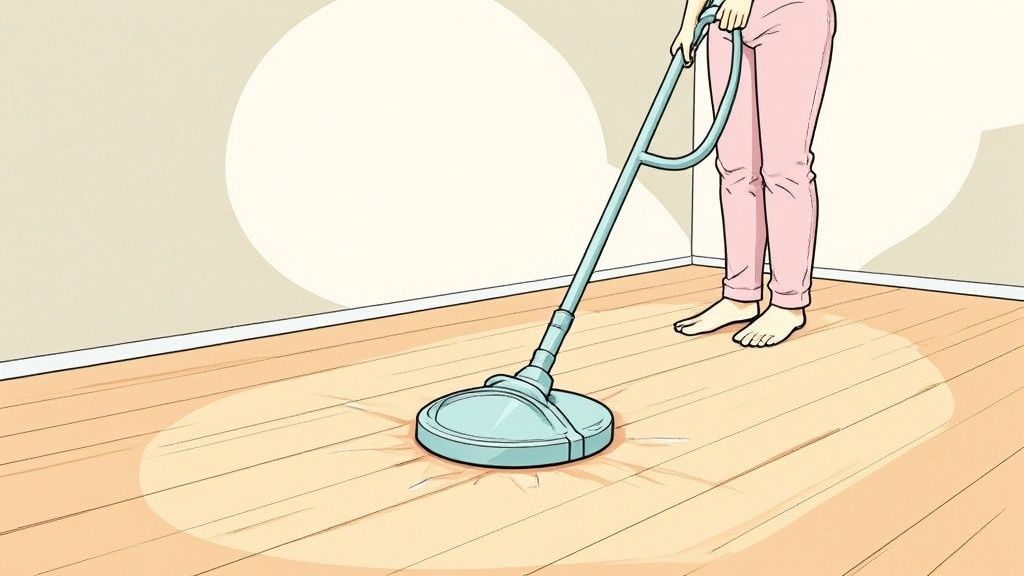
The very best hardwood floor cleaning machine isn't the one with the most features—it's the one that actually fits into your daily routine. A high-spec model might seem like a great idea, but if it's too cumbersome for your flat or too complicated for a quick clean, it will end up gathering dust.
This section is all about connecting your personal needs to the right technology. We'll look at a few common scenarios to help you figure out which features will make a real difference in your home, ensuring you end up with a tool you'll genuinely use and appreciate.
The Best Machine for Homes with Pets
If you share your home with pets, you're not just dealing with dust. You're tackling a constant cycle of pet hair, dander, muddy paws, and the odd accident. This calls for a machine that delivers both powerful suction and proper sanitisation.
For most pet owners, an upright wet-dry vacuum is the ideal solution. Look for models with tangle-free brush rollers specifically designed to handle fur without getting clogged. A two-tank system is also essential; it keeps the clean and dirty water separate, so you're actually cleaning the floor instead of just moving germs around.
The Ideal Choice for Apartments and Busy Professionals
Living in a smaller space or working to a hectic schedule means convenience is king. A bulky, corded machine is a nightmare in a compact flat, making lightweight, cordless, or automated options far more practical.
Here’s what to look for:
- Cordless Stick Vacuums: Perfect for grab-and-go cleaning. They’re easy to whip out for quick messes and can be tucked away in a small cupboard.
- Robotic Mop-Vacs: For the ultimate hands-off approach, a robotic model can run while you’re out, taking care of daily dust and light mopping duties.
- Compact Design: Make sure any machine you choose is nimble enough to easily manoeuvre around furniture in tight spaces.
A machine’s weight and storage footprint are just as important as its cleaning power in a smaller home. The less friction there is to start cleaning, the more often you'll do it.
Matching Your Machine to Your Floor Type
Not all hardwood floors are created equal. The finish on your floor dictates the kind of care it needs, and using the wrong machine can strip protective coatings or cause moisture damage.
First, you need to identify your floor’s finish. Most modern floors are sealed with a polyurethane or polyacrylic topcoat. These are pretty resilient and can handle a variety of machines, as long as water use is kept to a minimum. On the other hand, floors with oiled or waxed finishes are more porous and demand very specific care. For these delicate surfaces, a machine that uses a buffing pad with a specialised, manufacturer-approved cleaner is often the only safe bet. You can find more details on this in our guide to engineered wood floor cleaning.
The rising demand for these handy cleaning tools is part of a much bigger picture. Here in the UK, the floor cleaner market is projected to grow at a compound annual growth rate (CAGR) of about 5.9% through 2035. This expansion is overwhelmingly driven by household demand, which makes up roughly 69% of the market and shows just how much we value reliable and efficient floor care. You can read more about the UK floor cleaner market trends on futuremarketinsights.com.
Proper Use and Maintenance for Lasting Results
Getting your hands on a top-tier hardwood floor cleaning machine is a brilliant first step, but how you use and look after it will determine its long-term performance. Getting the operation right isn't just about keeping the machine happy; it’s crucial for the health of your beautiful wooden floors.
It's surprisingly easy to make a mistake that causes long-term problems. For instance, using too much water is a classic blunder that can lead to wood swelling or warping over time. You should always stick to the manufacturer's guidelines on solution-to-water ratios and moisture settings to avoid soaking your floor.
Mastering Your Machine for Flawless Floors
To really get your money's worth, you need a solid, consistent routine. Before you even think about wet cleaning, a quick go-over with a vacuum or a good sweep is non-negotiable. This simple first step gets rid of loose grit and debris that could otherwise get dragged across the surface by the machine’s rollers, potentially scratching the finish.
Next, make sure you're using a pH-neutral cleaning solution that's been made specifically for hardwood. Harsh chemicals, whether acidic or alkaline, found in many all-purpose cleaners can strip the protective seal right off your wood. This leaves it looking dull and makes it much more vulnerable to damage. Many brands will recommend their own formulas for the best results.
Crucial Takeaway: A machine is only as good as the prep work and products you pair it with. Skipping the pre-clean or grabbing the wrong cleaning fluid can completely cancel out the benefits of even the most advanced cleaner.
You can see this trend in the UK's floor cleaner market, where supermarkets and hypermarkets command a 39.27% revenue share in 2024. It shows a real consumer shift towards specialised, easy-to-use cleaning technologies that protect valuable flooring like hardwood.
Essential Machine Maintenance Routines
A little bit of regular maintenance will keep your machine running smoothly for years. If you neglect it, you’ll not only get a poor clean, but you could end up spreading dirt and bacteria around your home.
Just follow this simple checklist after every few uses:
- Clean the Brush Rollers: Pull out any tangled hair, fluff, and other gunk. Most models have rollers that pop out easily to make this a doddle.
- Rinse the Tanks: Always empty and give both the clean and dirty water tanks a good rinse to stop mould, mildew, and nasty smells from building up.
- Check and Clean Filters: Clogged filters are a real killer for suction power. Wash or replace them exactly as the manufacturer suggests.
Building these small steps into your cleaning routine protects both your investment in the machine and your floors. If you're keen to learn more professional techniques, our guide to wood floor cleaning and polishing has plenty more expert advice.
Common Questions About Looking After Hardwood Floors
Even when you've got one of the best machines for the job, a few questions always seem to pop up. Getting the right answers is crucial for protecting your investment and making sure you can clean with confidence. Let's tackle some of the most common queries to clear up any confusion.
Getting these basics right is the key to moving from just owning a great tool to truly mastering it for the long-term health of your floors.
Can I Use a Steam Mop on Hardwood Floors?
Honestly, using a steam mop on a hardwood floor is a bit of a gamble, and most flooring experts would advise against it. The intense heat and moisture can work their way through the floor's protective seal, even if it looks perfectly intact. This can lead to the wood warping, swelling, and suffering long-term damage deep within its fibres.
While some manufacturers do market their steam mops as safe for sealed hardwood, the risk is still significant. If your floor has even the tiniest gaps between boards or microscopic scratches in the finish, steam will find its way in and can cause damage that you just can't undo. A good wet-dry vacuum offers a far safer and more controlled way to clean.
How Often Should I Be Wet Cleaning My Hardwood Floors?
The perfect schedule for a wet clean really comes down to your home life. A busy house with kids and pets running about might need a proper wet clean once a week to keep on top of grime and spills. On the other hand, a quieter home where shoes are left at the door might only need it once or twice a month.
Key Guideline: The aim is to clean as needed, not to a strict schedule. You want to avoid over-exposing the wood to moisture. If a daily sweep or quick vacuum keeps the floor looking fresh, save the deep wet clean for when you start to see grime building up in the high-traffic spots.
Remember, a regular dry clean to get rid of abrasive grit and dust is the most important daily task. Wet cleaning is what you do to tackle the dirt that a dust mop just can't handle.
Are Premium Hardwood Floor Cleaners Really Worth the Money?
Absolutely. It’s true that a premium machine costs more upfront, but its real value comes from the long-term protection it gives your floors. These machines are specifically designed to give a deep clean using minimal moisture—a feature that cheaper, all-purpose tools simply can't match.
Investing in one of the best hardwood floor cleaning machines also saves you a huge amount of time and effort with every use. More importantly, by preventing accidental water damage and preserving your floor's finish, it helps you avoid the much higher costs of refinishing or replacing your flooring down the line. The precision and safety they provide make them a very smart investment for any homeowner with hardwood floors.
For professional wood floor restoration and deep cleaning that brings back the original lustre of your flooring, trust the experts. Contact AG Carpet Specialists today for a free quotation and discover how our specialised services can transform your home. Learn more at https://www.agcarpetspecialist.co.uk.