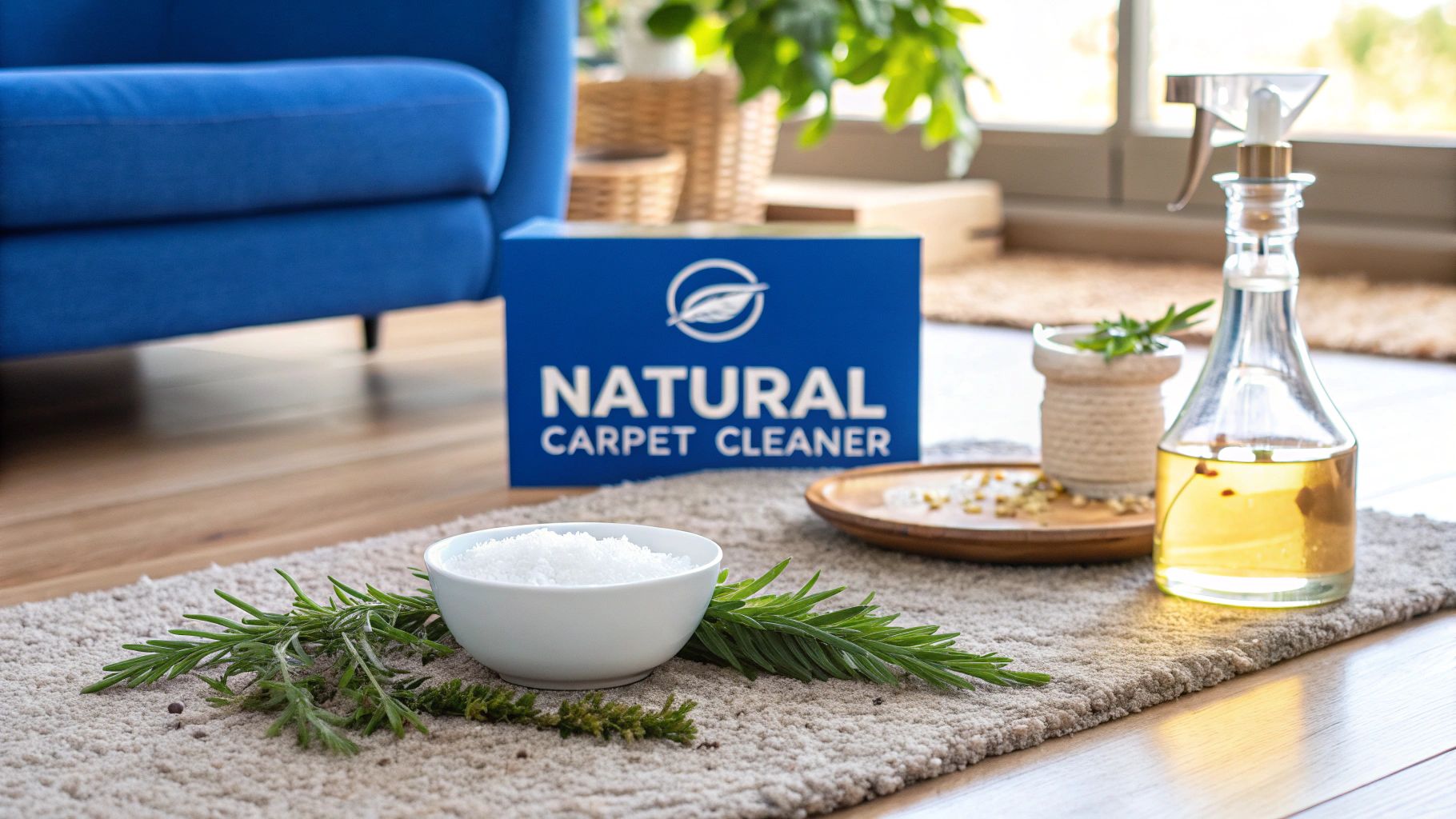
When you hear the term "natural carpet cleaner," what comes to mind? It’s simply a cleaning solution made from everyday, non-toxic ingredients you probably already have in your cupboards, rather than complex, synthetic chemicals. Think of it as choosing whole foods over processed snacks, but for your home. It’s about creating a healthier indoor space using substances you can actually recognise and trust.
What Makes a Carpet Cleaner Truly Natural?
The word "natural" isn't just a marketing buzzword; it signals a real shift in how we think about keeping our homes clean. Instead of relying on powerful chemicals with names you can't pronounce, a natural carpet cleaner gets its power from simple, often edible, ingredients. The entire philosophy is to clean effectively without leaving behind potentially harmful residues where you and your family live.
This is especially important in homes with small children or pets, as they spend the most time down on the floor. Opting for natural solutions is a fantastic way to minimise their exposure to the irritants that can sometimes be found in standard commercial products.
The Core Principles of Natural Cleaning
At its heart, natural cleaning is all about simplicity and safety. The goal is to avoid harsh ingredients that can linger in your carpet fibres or the air long after you've finished the job. This desire for a healthier home is one of the biggest reasons more and more people are turning to natural cleaning methods.
You can see this trend reflected across the UK cleaning industry, which contributed around £59.8 billion back in 2021. With approximately 40% of under-35s now hiring professional cleaners, many are specifically asking for natural, eco-friendly options to improve their indoor air quality.
To get a quick sense of the differences, this table breaks it down:
Natural vs Conventional Carpet Cleaners at a Glance
| Attribute | Natural Carpet Cleaner | Conventional Carpet Cleaner |
|---|---|---|
| Ingredients | Plant-based, mineral-based (e.g., vinegar, baking soda) | Synthetic chemicals, detergents, surfactants |
| Safety | Generally safe for pets and children; non-toxic | May contain irritants or volatile organic compounds (VOCs) |
| Environmental Impact | Biodegradable and eco-friendly | Can contain phosphates and chemicals harmful to waterways |
| Scent | Mild, natural scents or no scent at all | Often strong, artificial fragrances |
| Effectiveness | Excellent for general cleaning and deodorising | Highly effective on tough, set-in stains |
As you can see, the choice often comes down to balancing raw cleaning power with the desire for a safer, more eco-conscious home environment.
The real aim of a natural carpet cleaner isn’t just to lift dirt, but to do so in a way that supports the health and well-being of your entire household. It’s about getting that deep clean without making compromises on safety.
This principle of using safer ingredients isn't limited to our homes. It’s the same thinking that applies when people choose an environmentally safe car wash soap, where the goal is to get a great result without damaging the local ecosystem. Whether it's for your carpets or your car, the concept is the same.
If you’re ready to give it a go yourself, our guide on how to deep clean carpets at home is the perfect place to start.
Unlocking Your Pantry's Cleaning Power
Believe it or not, you don't need a lab coat or a complex chemical kit to tackle common carpet messes. Your kitchen pantry is already stocked with a surprisingly powerful cleaning arsenal. Many everyday ingredients have fantastic properties for lifting stains and killing odours, all without the harsh chemicals.
Think of bicarbonate of soda (or baking soda) as a tiny, natural sponge. When you sprinkle it over your carpet, its unique structure gets to work absorbing and trapping nasty smells, rather than just covering them up. This makes it an absolute hero for dealing with lingering pet odours or that general musty scent that can build up over time.
White vinegar, on the other hand, is your acidic champion. Its low pH is brilliant for dissolving the kind of alkaline grime that builds up in busy areas of your home—think dirt, sticky spots, and general foot-traffic residue. It’s simple science, but it’s incredibly effective.
The Dynamic Duo for Stains and Smells
Now, when you combine bicarbonate of soda and white vinegar, you get that classic, satisfying fizz. This isn't just for show! That bubbling reaction actively works to agitate and loosen dirt from deep within the carpet fibres, pushing it to the surface where you can easily wipe it away.
Here’s a quick look at your pantry’s top performers:
- Bicarbonate of Soda: The go-to for absorbing and neutralising smells. It’s also a gentle abrasive that helps scrub away dirt without damaging delicate carpet fibres.
- White Vinegar: The acetic acid in vinegar is a natural disinfectant and a fantastic solvent for breaking down mineral deposits and even soap scum.
- Salt: A brilliant first-response tool. When sprinkled on a fresh, wet spill like red wine, salt draws the liquid up and out of the carpet fibres before it gets a chance to stain.
Understanding what each ingredient does best means you can mix and match to create a custom natural cleaner for almost any carpet emergency. The power of these simple household items doesn't stop at your floors, either—you can find many effective homemade cleaner recipes for other tough jobs around the house, like cleaning your oven.
A Note on Application
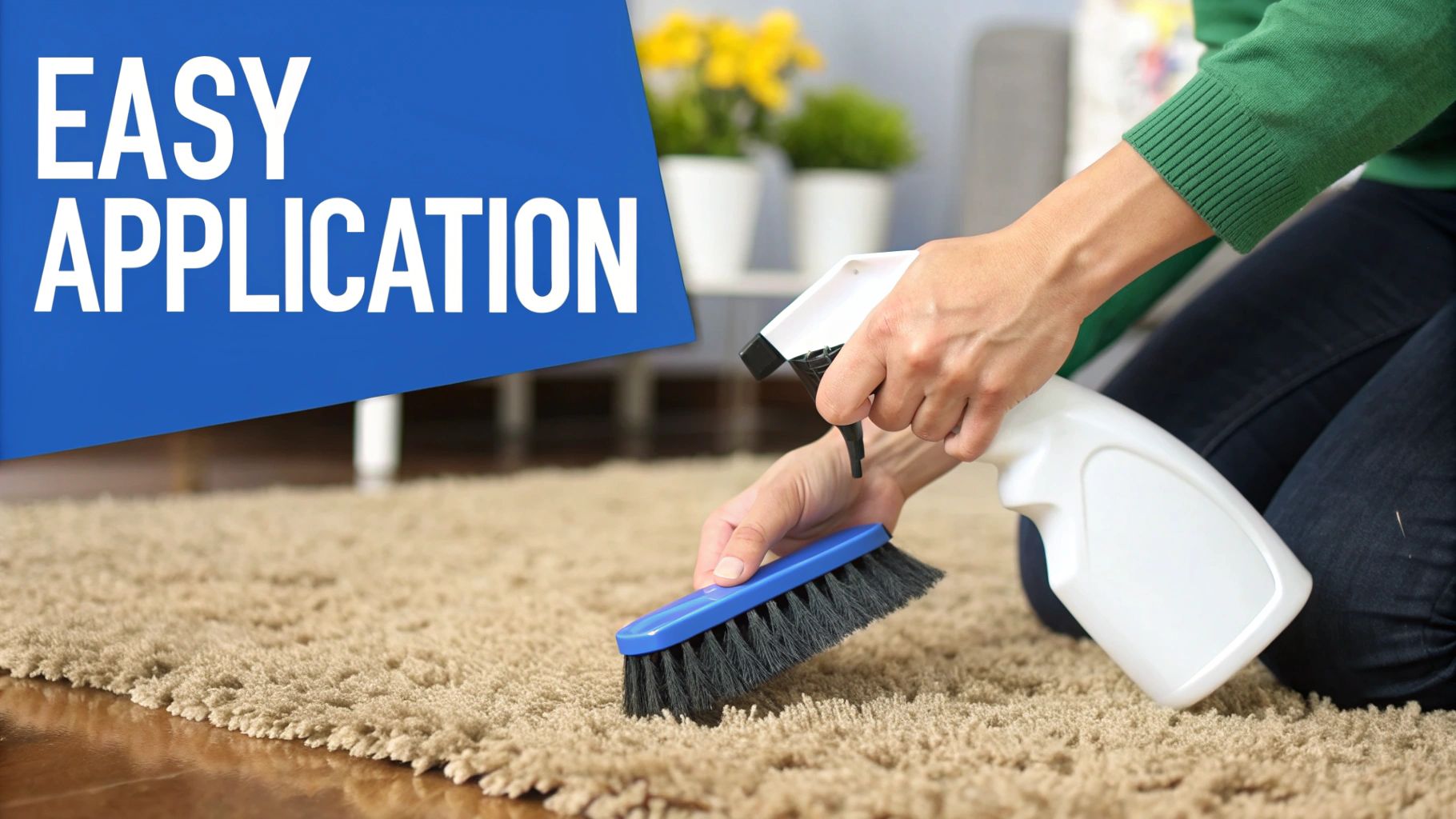
Knowing how to apply these cleaners is just as crucial as knowing what’s in them. A common mistake is to over-saturate the carpet. Too much liquid can seep into the underlay, creating a damp environment that’s a perfect breeding ground for mould and mildew.
Key Takeaway: The goal is to use just enough of your DIY solution to treat the problem. Always blot, never rub, and make sure the area is completely dry before you walk on it again to avoid attracting more dirt.
For example, a thick paste of bicarb and water is perfect for targeting a specific stain, whereas a light dusting of dry bicarb is all you need for general deodorising. For more expert advice, be sure to check out our essential carpet cleaning tips to get that flawless, professional finish.
Right, so you've seen just how powerful those everyday items in your kitchen cupboards can be. Now it's time to roll up our sleeves and put that power into action. Making your own natural carpet cleaner is surprisingly simple, and it's a fantastic way to get effective, safe results without harsh chemicals.
We’ve put together three tried-and-tested recipes to help you tackle everything from a general refresh to stubborn grime and those heart-stopping spills.
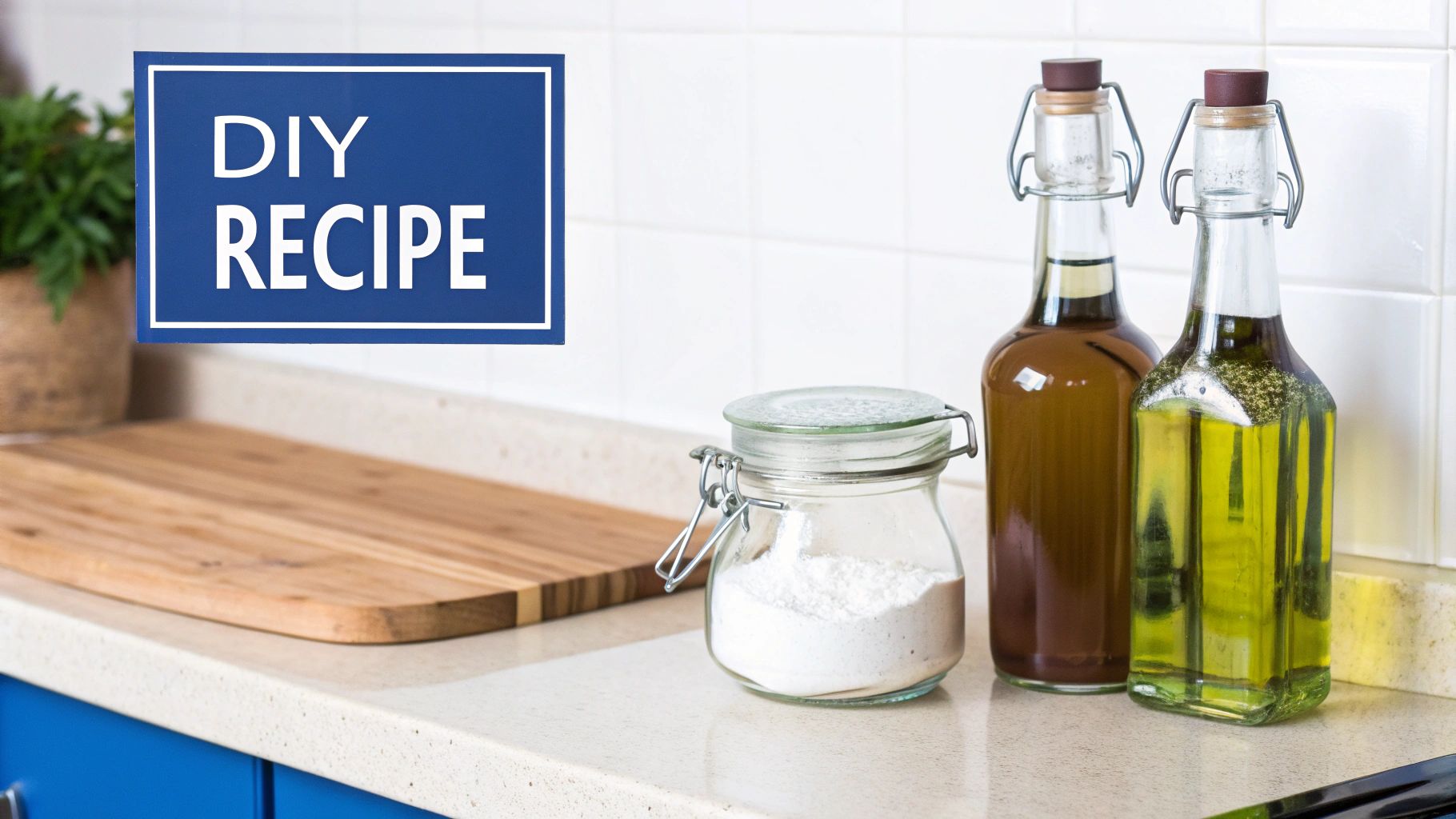
These recipes are designed to be straightforward, using exact measurements so you get dependable results every single time. With these guides in hand, you'll be ready to face any carpet catastrophe with confidence. Just remember the golden rule of carpet care: always patch test your solution on a small, out-of-the-way spot first to make sure it doesn't affect the colour.
Recipe 1: The Ultimate Deodorising Powder
Over time, even the most spotless carpet can start to smell a bit stale. This is especially true in homes with pets or in damp weather. This easy powder mix works like a charm, pulling out unwanted odours and leaving your room smelling instantly fresher.
You Will Need:
- 250g Bicarbonate of Soda
- A few drops of lavender essential oil (optional, and check it's pet-safe if you have furry friends)
Instructions:
- Pop the bicarbonate of soda into a small bowl. If you're using essential oil, add it now and use a fork to break up any lumps and mix it all together thoroughly.
- Lightly sprinkle the powder all over your carpet. Feel free to be a bit more generous on high-traffic areas or your pet's favourite napping spot.
- Let it sit for at least 30 minutes. For a really deep deodorising treatment, you can leave it for a few hours. This gives the bicarb time to work its magic and absorb those odours.
- Vacuum your carpet properly, making sure you get all the powder up.
Recipe 2: The Deep-Cleaning Paste for Grime
For those well-trodden paths that always look a bit darker than the rest of the carpet, a simple powder just won't cut it. This paste gives you that extra bit of scrubbing power needed to lift out embedded dirt, all without soaking your carpet fibres.
You Will Need:
- 100g Bicarbonate of Soda
- 100g Salt
- 60ml White Vinegar
Instructions:
- In a bowl, mix the bicarbonate of soda and salt. Now, slowly pour in the white vinegar – it will start to fizz!
- Stir it all together until you have a thick, spreadable paste. That fizzing action is what helps to get the dirt loose.
- Using a cloth or a sponge, apply the paste directly onto the grimy patches, working it gently into the carpet fibres.
- Let the paste dry completely. This is a really important step, so be patient.
- Once it's dry, scrape off any excess and give the area a thorough vacuum.
Just remember, the real secret to success with any DIY cleaner is a bit of patience and using the right technique. If you rush things or scrub too hard, you might not get the results you want. Gentle blotting is always the way to go, not aggressive rubbing.
Recipe 3: Targeted Spot Treatment for Spills
Accidents are a fact of life. Whether it’s a splash of coffee or a toppled glass of wine, acting fast is the key. This spray is your first line of defence against stains setting in. For more advanced tips, our guide on how to remove stubborn carpet stains has some brilliant expert advice.
You Will Need:
- 250ml Warm Water
- 1 tbsp White Vinegar
- 1 tsp Mild Washing-up Liquid
Instructions:
- Pour all the ingredients into a clean spray bottle and give it a gentle shake to mix.
- Lightly mist the stained area. You don't want to soak the carpet, just dampen the stain.
- Let the solution sit for 5-10 minutes so it can start breaking down the spill.
- Take a clean, dry cloth and gently blot the area to absorb the liquid. Never, ever rub, as this can push the stain deeper into the fibres.
- Repeat if you need to, then let the spot air dry completely.
The Real Benefits of Going Natural
Choosing a natural carpet cleaner is about so much more than just getting rid of a few stains. It's a conscious decision that creates a positive ripple effect throughout your entire home, fostering a healthier, safer, and more sustainable space for you and your loved ones. The benefits are tangible, touching everything from your family's health and the planet to your bank balance.
This move towards healthier homes is catching on. In fact, the global market for carpet and upholstery cleaning hit an impressive USD 67.4 billion in 2025, with a huge chunk of that growth fuelled by our increasing desire for better indoor air quality. Think about it: your carpet acts like a giant filter, trapping dust and allergens, which makes your choice of cleaner absolutely crucial.
Improved Health and Air Quality
One of the biggest wins is the immediate improvement in your home's atmosphere. Many conventional cleaners release something called volatile organic compounds (VOCs) into the air, which can hang around long after you've put the bottle away. For anyone with asthma, allergies, or chemical sensitivities, these compounds can be a real source of irritation.
A natural carpet cleaner, on the other hand, gets the job done with simple, non-toxic ingredients. You can breathe a sigh of relief knowing you aren't spreading unnecessary chemicals where your kids and pets love to play. It's a total game-changer, especially for households with little ones or furry friends. Our guide on cleaning pet urine from carpets dives into why natural solutions are often the best bet for these tricky situations.
By eliminating harsh chemicals, you're not just cleaning your carpet; you're actively purifying the air in your home, making it a safer sanctuary for everyone inside.
Environmental and Financial Wins
The good news doesn't stop at your front door. Common DIY ingredients like vinegar and bicarbonate of soda are completely biodegradable. This means they break down without a trace, so they won't pollute our waterways or harm wildlife, shrinking your home's environmental footprint one clean at a time. This mindset often extends to other areas of home maintenance, like opting for eco-friendly pest control treatments to keep things green.
And let's not forget the clear financial perk. A bottle of white vinegar and a box of bicarb cost just a fraction of what you'd pay for a specialised commercial cleaner. By mixing your own effective solutions, you're getting a powerful clean for mere pennies. It just goes to show that a healthier home doesn't have to come with a hefty price tag.
DIY Solutions vs Professional Natural Cleaning
Deciding between a DIY natural carpet cleaner and calling in a professional often comes down to saving money versus saving time. It’s a classic dilemma. While your homemade solutions are brilliant for day-to-day upkeep and catching spills as they happen, the pros bring a different level of cleaning power to the table, especially for stubborn, set-in stains or delicate carpets.
The right choice really depends on what you're up against. A fresh coffee spill on a durable synthetic carpet? That’s a perfect job for a quick DIY vinegar spray. But if you’re looking at a whole house that needs a deep refresh, or a precious wool rug that demands a gentle touch, investing in professional expertise is often the wiser move.
Weighing Your Options
The decision isn't just about cost. You also need to think about effectiveness, your available time, and the specific cleaning challenge you're facing. A DIY approach gives you total control over the ingredients and is incredibly kind to your wallet for routine maintenance. On the other hand, professional services bring specialised equipment and know-how that can genuinely restore carpets, making them look almost new again.
To help you figure out the best path forward, here are a few key factors to consider:
- Cost: DIY recipes use inexpensive household staples, making them extremely cost-effective for regular cleaning tasks.
- Time: Whipping up a quick spot cleaner takes minutes, but deep cleaning an entire room is a serious investment of your time and effort.
- Effectiveness: Homemade cleaners are fantastic for surface-level stains and general deodorising, but professional gear delivers a much deeper, more thorough clean.
- Convenience: Let's be honest, nothing beats the ease of having a trained technician come in and handle the entire job from start to finish.
Choosing Your Cleaning Approach: DIY vs Professional
To make the decision clearer, here’s a straightforward comparison to help you weigh your options based on what matters most to you.
| Factor | DIY Natural Cleaning | Professional Natural Service |
|---|---|---|
| Best For | Fresh spills, light odours, regular upkeep | Deep-seated grime, annual deep cleans, delicate carpets |
| Cost | Very low, uses common household ingredients | Higher initial investment, but can extend carpet life |
| Effectiveness | Good for surface-level cleaning and maintenance | Excellent for removing allergens and embedded dirt |
| Time & Effort | Quick for spot cleaning, but time-consuming for large areas | Minimal effort required from you; frees up your time |
| Equipment | Basic household items (spray bottles, cloths, vacuum) | Industrial-grade hot water extractors and tools |
Ultimately, a mix-and-match strategy often works best. Use your DIY solutions for the small, everyday messes and book a professional clean for that annual deep restoration.
When to Call in the Professionals
While DIY methods have their place, there are definitely times when bringing in an expert is the smartest choice. Carpet cleaning is a major part of the UK's £9.4 billion general building cleaning market, so professionals are focused on delivering top-tier, efficient results. They come armed with powerful, truck-mounted hot water extraction machines that the rental units you might find simply can't compete with, effectively flushing out deeply embedded dirt, dust mites, and allergens. You can get a better idea of how these factors play into the cost of professional carpet cleaning in our detailed guide.
This image helps to visualise the key differences between various cleaning approaches.
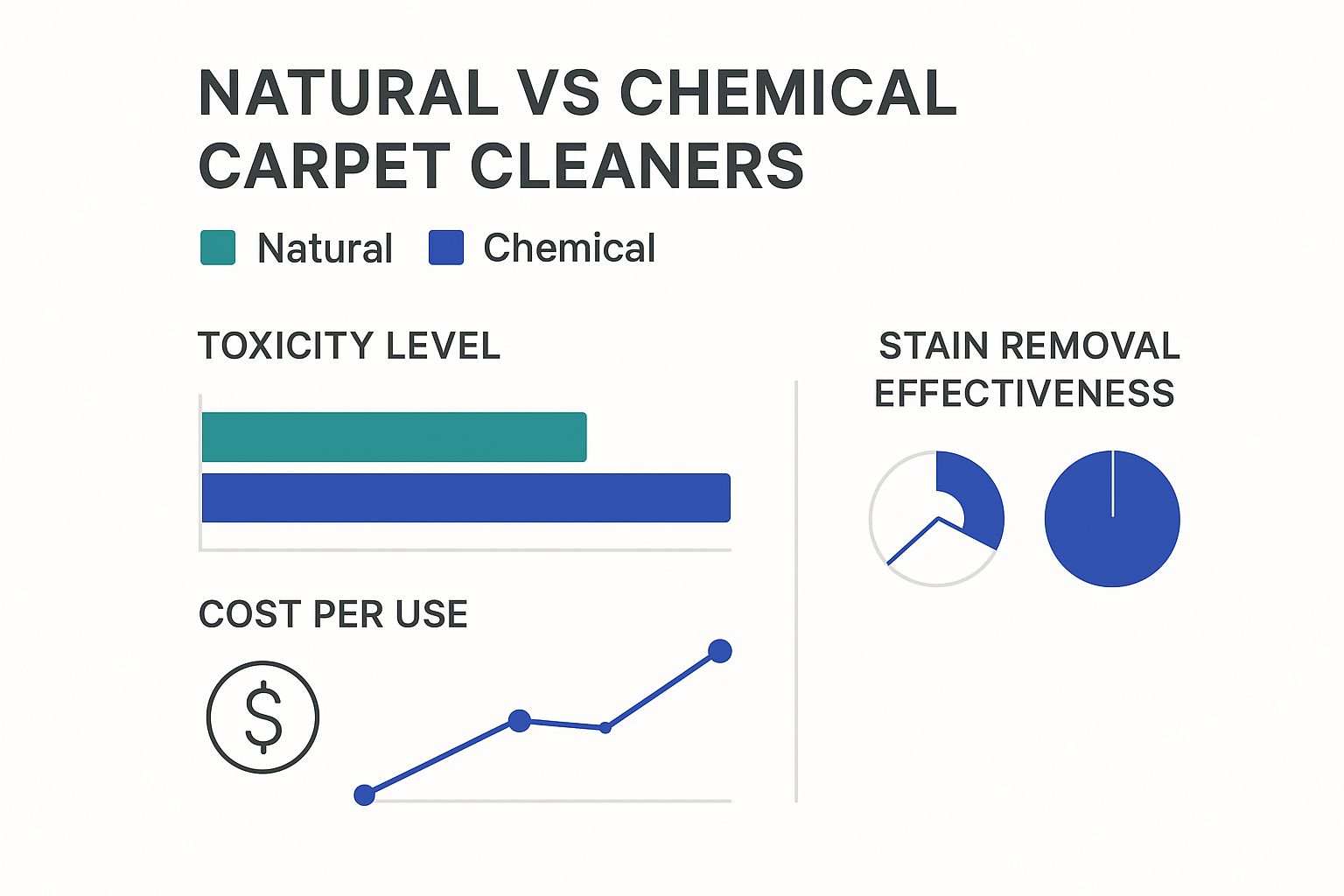
The data here is quite clear: natural options give you a low-toxicity solution for a minimal cost, though professional-grade chemical cleaners might have a slight edge when it comes to sheer stain-lifting power.
Key Insight: The most practical approach is often a hybrid one. Use your homemade natural carpet cleaner for routine deodorising and immediate spot treatments, but plan for a professional deep clean once a year. This maintains your carpet’s appearance and longevity, giving you the best of both worlds—everyday safety and periodic professional power.
Your Natural Carpet Cleaning Questions Answered
Dipping your toes into the world of natural carpet cleaning often brings up a few questions. It’s completely normal to wonder if a DIY solution will work on your specific carpet type, or just how effective it can be on stubborn marks.
We get it. That's why we’ve put together this section to tackle those common queries head-on. Our aim is to give you clear, practical answers so you can clean your carpets with confidence and get the brilliant results you’re looking for.
Can I Use Natural Cleaners on Any Type of Carpet?
This is probably the most crucial question, and the answer is: it depends. While common ingredients like bicarbonate of soda are wonderfully gentle, some carpet fibres demand a bit more caution.
Natural materials, particularly wool and silk, can be sensitive to anything that’s too acidic or too alkaline. This means using strong, undiluted white vinegar could potentially harm the fibres. For these delicate carpets, it's vital to heavily dilute any acidic ingredients you use.
The Golden Rule: Always do a patch test. Find a small, out-of-the-way spot—like inside a wardrobe or under the sofa—and apply a tiny bit of your cleaning mix. Let it dry completely and check for any colour running or damage before you tackle the whole carpet.
If you have an antique, vintage, or especially valuable carpet, your safest bet is always to check the manufacturer's care guide or have a chat with a professional cleaner first.
How Often Should I Clean My Carpets Naturally?
There’s no one-size-fits-all answer here; the best cleaning schedule really depends on the rhythm of your home. You can use these pointers as a guide to build a routine that works for you.
- Monthly Maintenance: A light sprinkle of bicarbonate of soda once a month works wonders for general deodorising and keeping things fresh.
- Quarterly Deep Clean: For busy, high-traffic areas like hallways, stairs, and the main living room, a deeper clean every 3-6 months is a good rule of thumb.
- As Needed for Families: If you have pets or small children, you’ll likely find that a more frequent deep clean—maybe every three months—is needed to keep on top of the extra dirt and odours.
And of course, for any spills or accidents, spot-treat them immediately. The faster you act, the higher your chances of stopping a permanent stain from setting in.
Will DIY Cleaners Work on Old Set-In Stains?
It's important to have realistic expectations when you’re up against old, set-in stains. A natural carpet cleaner is fantastic on fresh spills because it can lift the mess before it properly bonds with the carpet fibres.
An old stain, however, is a different beast entirely. Over time, the staining agent creates a chemical bond with the carpet material itself, making it much harder for any cleaner—natural or chemical—to remove it completely.
A DIY cleaning paste can definitely lighten and improve the look of an old stain, but achieving 100% removal might not be possible. It could take a few attempts, or it might be a job that calls for the specialised equipment and powerful extraction methods of a professional service.
Are Essential Oils Safe for Pets in Carpet Cleaners?
This is a critical safety point for any pet owner. While essential oils smell lovely, many are actually toxic to cats and dogs. Oils like tea tree, wintergreen, citrus (lemon, orange), and pine are especially dangerous if your pet ingests them or absorbs them through their paws.
The safest approach is simply to leave essential oils out of your cleaning mixture if you have pets. If you really want to use one, you absolutely must:
- Choose an oil known to be safer, like lavender, and check with your vet first.
- Make sure it is extremely diluted within your cleaning solution.
- Keep the room well-ventilated while you clean and as it dries.
- Ensure the carpet is bone dry before letting your pets back in the room.
Your pet’s safety always comes first. When in doubt, skip the essential oils.
Ready to experience a truly professional clean without the harsh chemicals? The team at AG Carpet Specialists uses advanced equipment and eco-friendly solutions to restore your carpets safely and effectively. Contact us today for a free quotation and see the difference our expertise can make.