Let’s start by clearing up a common point of confusion: the whole carpet cleaning vs steam cleaning debate often boils down to a simple mix-up of terms. True steam cleaning isn't really a method we use for carpets. The intense heat from actual steam can be too much for the fibres, potentially causing damage like shrinking or warping.
What most people are actually looking for when they ask for "steam cleaning" is a powerful deep-cleaning method called Hot Water Extraction (HWE). This technique uses pressurised hot water mixed with professional cleaning solutions to get deep into your carpet pile, and it doesn't rely on steam at all.
Understanding Your Cleaning Options
When you’re ready to book a professional clean, knowing the right language is the first step towards getting the fantastic results you're after. Here in the UK, you have a few distinct methods to choose from, each designed for different situations and carpet types. In reality, your choice isn't between steam and carpet cleaning, but between Hot Water Extraction and other techniques like Dry Carpet Cleaning.
This breakdown shows the key differences in resources and time needed for the main deep-cleaning method compared to its alternatives.
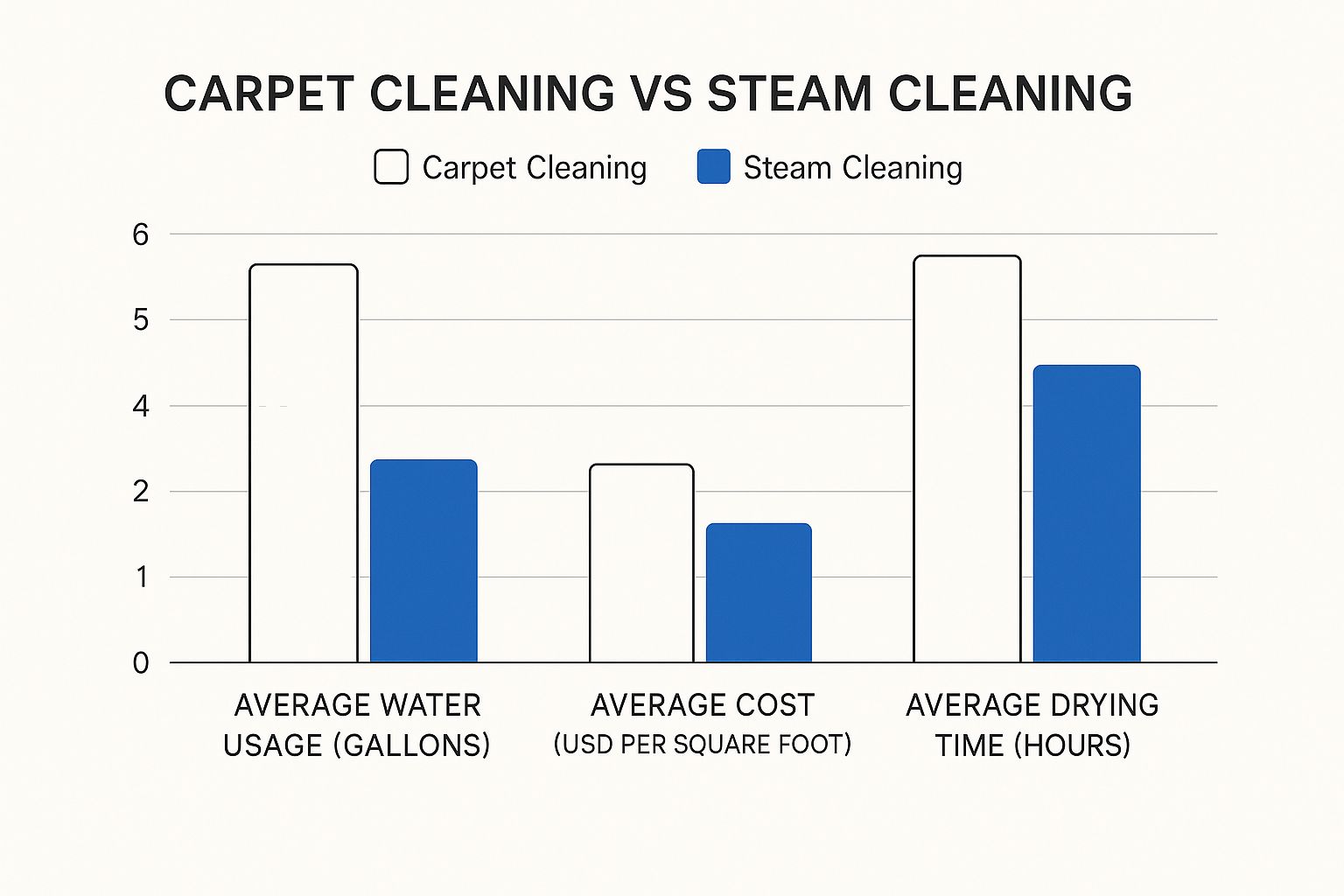
As you can see, the method often called 'steam cleaning' uses quite a bit more water and takes longer to dry. That's a crucial factor for busy households or businesses that can't afford a lot of downtime.
"The biggest misunderstanding we encounter from homeowners is the term 'steam cleaning'. What they almost always mean is Hot Water Extraction. It’s a method that flushes out dirt from deep within the carpet using pressurised hot water and cleaning agents, which is then immediately extracted back out with powerful suction."
To help you make the best choice for your home, let’s compare the main professional services you're likely to come across.
Quick Guide to Common Carpet Cleaning Methods
For a quick overview of how the most popular methods stack up, this table breaks down the essential differences between Hot Water Extraction, Dry Carpet Cleaning, and the more traditional Carpet Shampooing.
| Feature | Hot Water Extraction (Steam Cleaning) | Dry Carpet Cleaning | Carpet Shampooing |
|---|---|---|---|
| Cleaning Agent | Hot water and specialised cleaning solutions | Absorbent compound or powder | High-foaming detergents |
| Drying Time | 4-12 hours, depending on conditions | 30-60 minutes (virtually dry) | 12-24 hours or longer |
| Cleaning Depth | Very deep; removes embedded soil and allergens | Surface to moderate; excellent for maintenance | Deep, but can leave residue if not rinsed properly |
| Best For | Restorative cleaning, heavily soiled areas, allergy sufferers | Offices, 24/7 businesses, quick maintenance cleans | Neglected carpets requiring aggressive cleaning |
Each technique has its place, and understanding these key differences will help you decide which service is the perfect fit for your carpets and your schedule.
Why UK Homes Demand Deeper Cleaning
Here in the UK, the days of a quick vacuum being 'good enough' are long gone. The demand for professional carpet cleaning has shot up, and it's easy to see why. Our busy modern lives and a much sharper focus on home hygiene mean a proper deep clean is now a priority for families in Cheltenham, Gloucester, and right across the country. It’s not just about getting rid of visible dirt; it’s about creating a genuinely healthier home, free from the dust, allergens, and hidden grime that build up over time.
This change in mindset has fuelled incredible growth in the professional cleaning industry. Think about this: the number of cleaning companies in the UK jumped from just under 46,000 in 2010 to over 75,500 by 2023. This isn't just a statistic; it shows how essential services like professional carpet cleaning have become for maintaining a modern home.
The Rise of Specialised Services
With more people seeking professional help, the demand for specialised cleaning has also grown. Homeowners are savvy now—they know a single approach doesn’t work for every problem. They're looking for specific solutions, whether it's tackling stubborn pet odours or eliminating the fine dust that sets off allergies.
This is precisely why the carpet cleaning vs steam cleaning debate is so relevant. If you don't understand the different methods, how can you choose the right one for your home? Knowing what each service delivers is key to getting the results you want, whether that's a full-scale restorative clean or just a quick refresh.
As households increasingly prioritise health, the demand for services that can effectively remove allergens and microbial contaminants from carpets has risen. This consumer focus directly influences the types of professional cleaning methods that gain popularity.
This boom in the industry gives you more choice than ever, but it also means you need to be better informed. When you understand the difference between a powerful hot water extraction clean and a faster dry-cleaning method, you're empowered to make the best decision for your home and your carpets.
Making an Informed Choice
At the end of the day, picking the right professional service is what unlocks the full benefits—both for your home's appearance and your family's health. A professionally cleaned carpet doesn't just look and feel fantastic; it also improves your indoor air quality. That’s a huge plus for families, pet owners, and anyone who suffers from allergies.
To get those brilliant results, you need to know what a professional service can truly achieve. We break this down in our guide on the benefits of professional carpet cleaning services. Choosing a trusted local specialist who uses modern equipment and safe, effective products is the best way to ensure your home gets the care it deserves, revitalising your space and protecting your flooring investment.
How Hot Water Extraction Really Works
You’ve probably heard it called ‘steam cleaning’, but Hot Water Extraction (HWE) is the correct term for what we consider the gold standard in deep, restorative carpet cleaning. It’s a common misconception, but the process doesn't actually rely on steam. Instead, it’s a powerful, precisely controlled method using very hot water, specialised cleaning solutions, and high-pressure equipment.
This technique is designed to get right down to the base of your carpet fibres. The high-pressure spray of hot water and cleaning agent penetrates deep, dissolving the stubborn, embedded grime, allergens, and sticky spots that your household vacuum could never hope to touch. Think of it as a complete flush-out for your floors.
The Two-Stage Process
The real effectiveness of Hot Water Extraction comes down to its meticulous two-part action. This is what truly separates it from simpler surface-level cleaning methods.
-
Step 1: The Injection: First, our machine sprays a fine mist of hot water mixed with a carefully chosen, eco-friendly cleaning solution deep into the carpet pile. This powerful blast immediately starts to loosen dirt, break down oily residues, and neutralise odours trapped within the fibres.
-
Step 2: The Extraction: Almost instantly, a high-powered, commercial-grade vacuum suctions the dirty water, cleaning agents, and all the dislodged filth back out of the carpet. This extraction phase is absolutely crucial; it removes the contaminants entirely rather than just shifting them around.
This complete removal is what leaves your carpets not just looking clean, but hygienically clean. For a more detailed, step-by-step breakdown, you can see our professional carpet cleaning process from start to finish.
The real magic of Hot Water Extraction is in the 'extraction'. It’s not enough to dissolve dirt; you have to pull it completely out of the home. This is what truly improves indoor air quality and removes deep-seated allergens.
Addressing the Drying Time Concern
In the past, one of the main drawbacks of this method was the long drying time. Thankfully, modern advancements have completely changed the game, making HWE far more convenient for busy households and businesses across the UK.
Thanks to huge improvements in extraction technology and the development of low-moisture techniques, what once might have taken a full day to dry can now often be ready in just a few hours. We can now deliver the deepest clean possible with minimal disruption to your day. This evolution is why HWE remains the most sought-after method for homeowners who prioritise true hygiene.
Comparing Alternative Carpet Cleaning Methods
While Hot Water Extraction is a fantastic choice for a deep, restorative clean, it’s certainly not the only professional method on the market here in the UK. Knowing the alternatives is key to choosing the right approach for your specific carpets and situation, especially when you need to weigh up the depth of the clean against convenience. The whole carpet cleaning vs steam cleaning debate gets a lot bigger when you bring other specialised techniques into the mix.
Let's look at two other common methods you might come across: Dry Carpet Cleaning and the more traditional Carpet Shampooing. Each one works on a completely different principle from HWE and has its own distinct place.
Dry Carpet Cleaning: The No-Downtime Option
Just as the name implies, Dry Carpet Cleaning uses very little moisture, which makes it an incredibly convenient option. Instead of hot water, this method relies on an absorbent, biodegradable powder compound that a specialised machine works deep into your carpet fibres.
This compound acts like millions of tiny sponges, soaking up dirt, oils, and general grime. After a few moments, the machine, fitted with counter-rotating brushes, lifts the compound—and all the trapped dirt—right back out of the carpet.
The biggest draw for dry cleaning is the speed. With almost zero drying time, you can walk on the carpets immediately after the job is finished. This makes it the perfect solution for busy commercial spaces like offices, hotels, or shops that can't afford to cordon off areas for hours on end.
It's also a great choice for routine maintenance cleans in the home, keeping carpets looking fresh between deeper cleans without any of the disruption.
Carpet Shampooing: An Aggressive Approach
Carpet shampooing is one of the older methods still in use, but it’s typically reserved for specific situations. Think heavily soiled, neglected carpets that need some seriously aggressive cleaning action. The technique involves applying a high-foaming detergent to the carpet and working it in with a motorised rotary brush.
The idea is that the thick foam encapsulates the dirt, which you then vacuum away once the carpet is fully dry. However, this method comes with a pretty major risk. If it isn't rinsed out with extreme care, a sticky soap residue can be left behind. This residue doesn't just feel unpleasant; it acts like a magnet for fresh dirt, meaning the carpet gets grubby again much faster.
Because of this drawback and the very long drying times (often 12-24 hours), most modern professionals have moved on to more advanced methods like Hot Water Extraction for deep cleaning.
Of course, while we're talking about professional deep cleaning, day-to-day upkeep is just as important. For pet owners, you might find this guide on the best vacuum cleaners for homes with pets really helpful for keeping on top of things.
Choosing the Right Method for Your Home
So, how do you settle the carpet cleaning vs steam cleaning debate for your own home? Honestly, the right choice always comes down to your unique situation. The best method really depends on your carpet’s material, your lifestyle, and what you’re trying to achieve with the clean.
Let's move past the technical jargon and look at some real-world scenarios. By thinking about your own home, you can confidently decide between the deep, restorative clean of Hot Water Extraction and the fast, gentle approach of Dry Carpet Cleaning.
The Busy Family with Kids and Pets
For a bustling household full of kids and pets, carpets take a real beating. They have to contend with a constant stream of muddy paws, accidental spills, and pet dander. In a high-traffic home like this, hygiene is everything, and your main goal is to get rid of that deep-down grime and lingering allergens.
Recommendation: Hot Water Extraction
This is the clear winner for a busy family home. Its power to flush out embedded dirt, bacteria, and allergens from deep within the carpet fibres gives you a level of clean that other methods simply can't touch. It’s the most reliable way to properly sanitise your floors and create a healthier environment for your family. Yes, it takes longer to dry, but if you plan it for a day when you can open the windows or head out for a few hours, it's easily managed.
A Flat with Delicate Wool or Natural Fibre Carpets
If your home is fitted with delicate carpets made from natural materials like wool, jute, or seagrass, your number one concern is avoiding damage. These natural fibres are incredibly sensitive to too much water, high heat, and harsh chemicals, which can easily lead to shrinking, discolouration, or permanent fibre damage.
Recommendation: Dry Carpet Cleaning
For these sensitive materials, dry cleaning is without a doubt the safest and most effective option. It uses a special low-moisture compound that absorbs dirt without the risk of saturating the carpet. This approach prevents potential damage while still doing a fantastic job of lifting dirt and reviving the pile, keeping your valuable carpets looking their best.
When you're dealing with natural fibres like wool, it’s all about control. A low-moisture or dry cleaning method gives a professional the control they need to clean thoroughly without risking damage to those delicate fibres.
Tackling Seasonal Allergies or End of Tenancy Cleans
For anyone suffering from allergies, the mission is to remove the maximum amount of dust mites, pollen, and other microscopic nasties from the carpet. In the same way, an end-of-tenancy clean demands the most thorough results possible to leave the property looking and feeling immaculate for the next tenants.
Choosing the right carpet clean is a critical step for a fresh start when moving. For more help with managing your move, have a look at this comprehensive moving house checklist.
Recommendation: Hot Water Extraction
The sheer power of HWE to pull contaminants from deep within the pile makes it perfect for these jobs. It removes a much higher percentage of allergens than other methods, which can make a huge difference to your home's indoor air quality. For a move-out clean, it restores carpets to a practically new condition. And while you might be tempted to try it yourself, understanding how to deep clean carpets at home will give you a real appreciation for what the professionals can achieve.
Understanding UK Carpet Cleaning Costs
When you're weighing up different cleaning methods, let's be honest, the final price is often a big part of the decision. In the UK, professional carpet cleaning doesn't come with a simple, one-size-fits-all price tag. The cost is shaped by several key things, from how big your rooms are to the exact service you need.
At its heart, the price is usually about labour and time. A quick dry clean on a small bedroom carpet is naturally going to cost less than a deep Hot Water Extraction for a large, heavily soiled living room. The state of your carpet plays a huge part too; tackling stubborn stains or getting rid of pet odours takes more specialised products and time, which will be factored into your quote.
Economic Factors Affecting Your Quote
It's also helpful to look at the bigger picture. The UK's cleaning sector is a massive industry, pulling in £9.4 billion in revenue in 2024, and carpet cleaning is a huge slice of that pie. This market is sensitive to what's happening in the wider economy, like the rise in the National Living Wage to £11.44 per hour in April 2024. Since carpet cleaning relies heavily on skilled labour, these wage increases can squeeze profit margins, which sometimes influences the prices we all see. You can learn more about how these trends affect the industry on IBISWorld.
Understanding these background factors helps you see a quote not just as a price, but as a reflection of fair wages, professional equipment costs, and the time required to do the job properly.
This context is crucial when you're comparing quotes in the carpet cleaning vs steam cleaning debate. A higher price might mean you're getting a more thorough, labour-intensive method like Hot Water Extraction, which gives you a deeper, more hygienic clean.
Ultimately, the best way to figure out your budget is to get a detailed quote. For a full breakdown of what you can expect, have a look at our guide on how much carpet cleaning costs. Once you understand what goes into the pricing, you can properly evaluate the quotes you get and choose a service that offers real value and protects your investment.
Frequently Asked Questions
When it comes to looking after your floors, we know you've got questions. We hear them all the time! Here, we’ve put together some clear, straightforward answers to the most common queries we get about professional carpet cleaning.
How Often Should I Have My Carpets Professionally Cleaned?
For a typical household, we recommend getting a professional deep clean every 12 to 18 months. This is a great rule of thumb, but it’s not set in stone.
If your home has pets, young children, or anyone who suffers from allergies, you'll probably find that a clean every 6 to 12 months is much better for maintaining a hygienic space and keeping the air quality fresh.
Is Steam Cleaning Safe For Wool Carpets?
This is a really important question where the language used can be confusing. True, high-temperature steam cleaning is not safe for wool. The intense heat can cause the natural fibres to shrink, warp, or become permanently damaged.
However, the method most people call "steam cleaning" is actually Hot Water Extraction (HWE). In the hands of a trained professional, HWE can be perfectly safe for wool. We just need to adjust the water temperature and use specific, wool-safe cleaning solutions. Always double-check the exact method and products with your technician before they start.
The key to safely cleaning delicate materials like wool isn't just the method, but the technician's expertise. A professional will know exactly how to adjust pressure, temperature, and cleaning agents to protect your investment while delivering a superb clean.
Is Professional Cleaning Worth The Cost Compared To a DIY Rental?
While hiring a DIY machine might seem like a good way to save money, they often don’t deliver the results you're hoping for. The professional equipment we use is vastly more powerful, meaning it pulls out far more dirt and, crucially, more water. This helps prevent problems like residue build-up or even mould growth from a carpet left too damp.
A professional clean gives you a deeper, longer-lasting, and far more hygienic result. For more ways to keep your carpets looking fresh between our visits, have a look at our essential carpet cleaning tips. At the end of the day, investing in a professional service is the best way to protect your carpets and ensure your home is as healthy as it can be.
Ready to see the difference a professional clean can make? Contact AG Carpet Specialists for a free, no-obligation quote and let us revitalise your home or business. Visit us at https://www.agcarpetspecialist.co.uk to learn more.