
Think of stain protection as an invisible raincoat for every single fibre of your carpet. It works by stopping spills from soaking in and becoming permanent, ugly marks. The treatment causes liquids to bead up on the surface, which gives you that all-important window to clean up messes before they have a chance to set. It's a surprisingly simple way to keep your carpet looking its best and extend its life.
How Stain Protection Works Its Magic on Your Carpet
Picture this: you've just had a lovely new, light-coloured carpet fitted. It’s like a fresh white t-shirt. Even a tiny drop of coffee or red wine can sink into the threads in a flash, leaving behind a stubborn stain that seems impossible to shift. That’s because carpet fibres are naturally porous and absorbent, ready to drink up any liquid they meet. This is exactly where stain protection changes the game entirely.
At its heart, a stain protector coats each carpet fibre with a clear, liquid-repelling shield. It’s not a solid sheet of plastic over the top; instead, it bonds directly to the fibres. The process is a lot like how wax works on your car’s paintwork. When it rains, the water doesn’t just flatten out and soak the surface—it forms little beads and rolls straight off.
The Critical Window of Opportunity
That beading effect is the biggest advantage of stain protection. When a spill happens, the liquid is held on the very tips of the carpet fibres instead of immediately diving deep into the pile and the backing underneath.
This delay is your golden opportunity. A protector turns a potential disaster into a simple clean-up job, buying you precious minutes to grab a cloth and blot the spill away without any frantic scrubbing.
Without that invisible barrier, a spillage starts its journey deep into your carpet's structure within seconds. It soaks the fibres, spreads into the padding, and can even seep into the subfloor, which often leads to discolouration, mould, and nasty, lingering smells.
More Than Just Stain Prevention
While stopping stains is the main event, the benefits certainly don't end there. By creating this protective layer, the treatment also helps your carpet fight off everyday dirt and grime. Dry soil and dust have a much harder time clinging to the slick, protected fibres, which means your vacuum cleaner can pull away far more debris, much more easily.
This has a few brilliant knock-on effects for your home:
- Easier Maintenance: Your regular vacuuming becomes more effective, keeping your carpet looking fresh for much longer.
- Improved Durability: By cutting down on the amount of abrasive grit working its way into the pile, the protector helps reduce the wear and tear that makes carpets in busy areas look flat and tired.
- Preserved Texture: The coating helps keep that original soft feel of your carpet by preventing dirt from matting the fibres together.
Ultimately, investing in effective stain protection for carpet is one of the smartest things you can do. To get a better idea of what's out there, you can explore the different types of stain protectors for carpets in our detailed guide. It's a proactive step that protects your investment, makes cleaning easier, and keeps your carpet looking beautiful for years to come.
Unpacking the Science Behind Stain Repellents

To really get why a stain protector is so effective, we need to zoom in and look at the clever chemistry happening on a microscopic level. It's not magic, but it's close – it’s a sophisticated science designed to give every single fibre in your carpet its own invisible, high-performance raincoat.
At its heart, this technology uses powerful polymers to change the "surface energy" of the carpet fibres. Think of it like waxing your car. The protector creates a surface so slick that liquids simply can't get a grip. Instead of soaking in, spills are forced to bead up on the surface, just waiting for you to blot them away.
Most of the protectors you'll find today fall into two main camps: fluoropolymers and silicones.
The Power of Fluoropolymer Protectors
When you hear professionals talk about the best of the best, they're usually talking about fluoropolymer-based protectors. They are the gold standard, offering comprehensive stain protection for carpet against almost anything you can throw at it. These compounds create an incredibly stable, low-energy shield on each fibre, making them amazing at repelling both water-based and oil-based spills.
Imagine giving each carpet fibre a coating similar to a non-stick frying pan. When you accidentally drop a bit of greasy food or oily dressing, it just can’t bond with the treated surface. This dual-action repellency is what makes fluoropolymers so incredibly useful in a real-world home.
- Oil Repellency (Oleophobic): This is the game-changer. It fends off greasy spills from things like salad dressing, butter, or cooking oil.
- Water Repellency (Hydrophobic): Of course, it's also brilliant at repelling water-based liquids like coffee, juice, and the dreaded red wine.
- Durability: The chemical bond is seriously strong, meaning the protection can stand up to regular foot traffic and vacuuming for a good long while.
This robust defence system ensures your carpet is shielded from the most common household mishaps. The demand for this kind of protection is soaring; the global market for these products is expected to grow at an annual rate of about 8.8% between 2025 and 2031. It's clear that homeowners are keen to prolong their carpet's life, and you can explore more market insights about carpet stain repellents to see the full picture.
Understanding Silicone-Based Alternatives
Silicone-based protectors are another popular choice, and they're particularly well-known for their fantastic performance against water-based spills. They work by creating a highly water-repellent (hydrophobic) barrier around the fibres. When something like a soft drink hits the surface, it beads up instantly.
The catch? They have very little, if any, oil repellency. While they're great against a spilled glass of water or squash, they offer minimal defence against anything greasy or oily. This makes them a more specialised choice, not an all-in-one solution.
Think of it this way: A silicone protector is like a standard raincoat—great in a downpour but not much help if you spill olive oil on it. A fluoropolymer protector is more like advanced technical outerwear that repels both rain and oil, offering more complete protection.
Deciding between them really comes down to what your home life looks like. For a busy kitchen or dining area where greasy spills are a real risk, a fluoropolymer-based product offers far better peace of mind. But for a bedroom where oily messes are less likely, a silicone protector might be perfectly adequate.
Choosing Your Approach: DIY vs. Professional Application
So, you’re convinced that stain protection is a good idea. The next big question is, who’s going to apply it? You’re essentially at a fork in the road: do you roll up your sleeves and tackle it yourself, or do you call in the professionals?
Both options can lead to a better-protected carpet, but they offer vastly different experiences when it comes to cost, effort, and the final quality of the protection. Let's break down the differences to help you decide which path is right for your home, your budget, and your peace of mind.
The DIY Method Explained
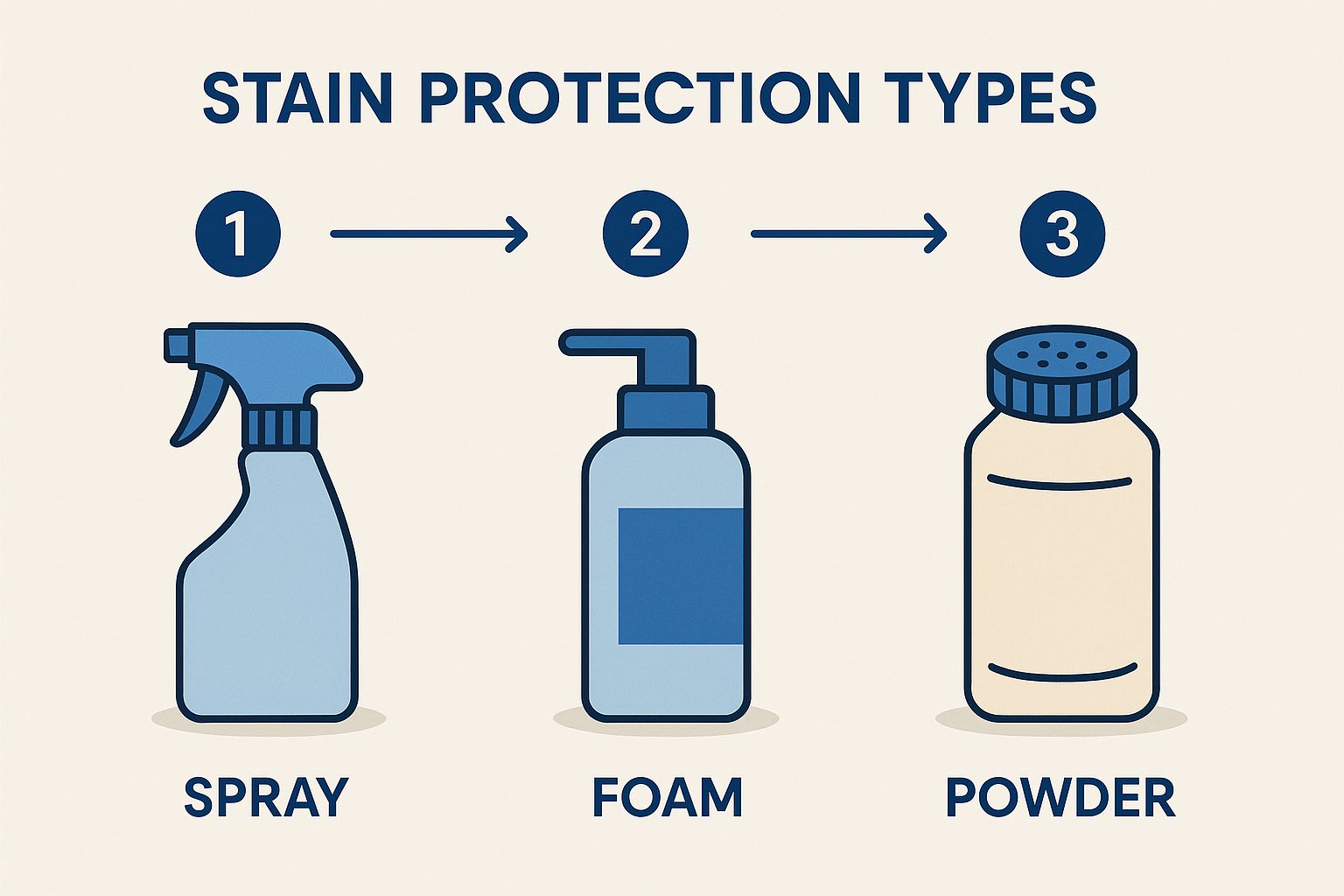
The Do-It-Yourself route has an obvious appeal. You can find off-the-shelf spray protectors in most supermarkets or hardware shops, and they're relatively inexpensive. This approach puts you in complete control, allowing you to apply the treatment whenever it suits you. For a small area rug or a quick touch-up between professional cleans, a good quality DIY product can be a perfectly sensible choice.
But doing it yourself means you become the technician, and success depends entirely on your preparation and application. The first rule is non-negotiable: your carpet must be spotlessly clean. Trying to apply a protector over a dirty carpet is like waxing a muddy car – the barrier simply won't stick to the fibres properly and is doomed to fail.
Once the carpet is clean and fully dry, you can start the application. Always make sure the room is well-ventilated and test the product on a hidden spot first (under the sofa is a good bet) to check for any colour changes. The key is to apply the spray in a steady, overlapping pattern to get even coverage.
The biggest challenge with any DIY application is getting it consistent. It’s incredibly easy to accidentally soak one area and completely miss another, leaving you with patchy, unreliable protection that could let you down when you need it most.
Despite the hurdles, a carefully done DIY job can still provide a decent layer of defence against everyday spills. It's a great option if you're on a tight budget or just looking to protect low-traffic spots like a guest bedroom. Just be ready for the time it takes to move furniture, clean thoroughly, apply the product, and wait for it to dry.
The Professional Service Advantage
Hiring a professional service takes things to a completely different level. A trained technician doesn’t just show up with a can of spray; they arrive with powerful, specialised equipment designed to apply the protector as a fine, high-pressure mist. This technique forces the solution deep into the carpet pile, wrapping every single fibre from top to bottom. It’s a level of uniform coverage that's pretty much impossible to achieve with a can from the shops.
Professionals also have access to premium, trade-only formulas. These are often fluoropolymer-based protectors that offer much stronger repellency against both water-based spills (like coffee) and oil-based stains (like salad dressing). This is a game-changer for busy family homes where all sorts of accidents are bound to happen. Knowing you’ve got a professional-grade shield gives you a huge advantage when disaster strikes. For example, knowing how to clean red wine from your carpet is much less stressful when the wine is beading up on the surface instead of instantly soaking in.
Perhaps the biggest perk is the guarantee that often comes with a professional job. This provides real peace of mind, assuring you that the treatment has been applied correctly and will perform as promised for a set period, usually around 12-18 months. That’s a level of accountability you just don’t get from a DIY product.
To make the choice clearer, let's compare the two approaches side-by-side.
Comparing DIY vs Professional Carpet Protection
| Factor | DIY Application | Professional Service |
|---|---|---|
| Cost | Lower upfront cost (price of the product). | Higher initial investment (service fee). |
| Effectiveness | Moderate; depends heavily on application quality. | High; deep, even coverage with stronger formulas. |
| Durability | Shorter lifespan; may need reapplication sooner. | Longer-lasting protection, often 12-18 months. |
| Convenience | Apply on your own schedule, but requires significant time and effort. | Quick and hassle-free; the technician handles everything. |
| Equipment | Basic aerosol can or trigger spray bottle. | Specialised high-pressure sprayers for deep penetration. |
| Guarantee | None; results are entirely up to you. | Often includes a warranty for peace of mind. |
Ultimately, the right choice comes down to your priorities. If you value thoroughness, longevity, and a hassle-free experience, investing in a professional service is almost always the better bet.
A Step-by-Step Guide to DIY Carpet Protection

Taking the DIY route for carpet protection can be a really satisfying job. You get full control over safeguarding your investment, but getting a professional-level result is about more than just a quick spray-and-pray. Success is all in the prep work and a careful, methodical application.
This guide will walk you through each step, helping you sidestep the common mistakes and make sure your efforts pay off with a tough, effective shield against spills and stains. With the right technique, you'll create a barrier that keeps your carpet looking its best for much longer.
Preparing Your Carpet for Treatment
First things first: you absolutely cannot apply a protector to a dirty carpet. Trying to do so is a bit like painting over a dusty wall—the treatment just won't stick properly to the fibres. You'll end up with patchy coverage and a finish that fails almost right away. So, the first step, always, is a deep, thorough clean.
Start by getting all the furniture out of the room so you can get to every inch of the carpet. Next, give it a really good vacuum. Go over each section several times and from different angles to pull up as much dry soil and debris as you possibly can. This first vacuum is a critical foundation for what comes next.
Once it's vacuumed, a deep clean is a must. For the best results, use a carpet cleaning machine or even hire a professional to be sure all the embedded grime, oils, and old cleaning residues are gone. If you're doing it yourself, stick to the machine's instructions and be careful not to use too much shampoo, as that can leave a sticky residue behind. Let the carpet dry completely before moving on; this can take 24 hours or more.
The Application Process Step by Step
With a clean and bone-dry carpet, you're ready to apply the stain protection for carpet. Before you start, make sure the room is well-ventilated by opening up windows and doors.
-
Choose Your Product: Go for a high-quality, reputable DIY carpet protector spray. Read every word of the instructions on the can before you begin, as the exact method can vary a bit from brand to brand.
-
Perform a Patch Test: Find a hidden spot, like inside a wardrobe or under a piece of furniture that never moves. Spray a small amount of the protector there and let it dry to check for any colour changes or unwanted reactions.
-
Apply with a Systematic Pattern: Begin in the corner furthest from the door and work backwards, so you don't have to walk over your work. Hold the spray bottle about 30-45 centimetres from the carpet. Apply a light, even mist using a sweeping, overlapping motion, just like you would with a can of spray paint.
Crucial Tip: Whatever you do, don't oversaturate the carpet. A heavy, soaked application won't create a stronger barrier. It will just make the carpet feel stiff, take an age to dry, and waste your product. Two light, even coats are always better than one drenched one.
- Cover in Two Directions: After you've done your first pass across the whole room, apply a second light coat at a 90-degree angle to the first. This cross-hatch pattern is the secret to getting complete, uniform coverage without missing any spots.
Curing and Final Touches
The last step is maybe the easiest but also the most important: just be patient. The protective shield needs time to cure and properly bond with the carpet fibres. Keep everyone—kids, pets, and your own feet—off the treated area for at least 2-4 hours, or for whatever time the product label recommends.
Let the carpet dry out completely, which could take up to 24 hours depending on the humidity and airflow in the room. Once it's fully dry, you can move your furniture back in. All your careful work will be rewarded with a resilient, stain-resistant carpet that's ready to handle the rigours of everyday life.
Keeping Your Protected Carpet Looking Its Best
Applying a quality stain guard is a brilliant first step, but it’s the day-to-day care that really keeps that protective shield working for the long haul. Think of it like a good non-stick pan; even the best coating needs the right treatment to keep performing at its best. This guide will walk you through the simple habits that make all the difference.
With the right routine, you can seriously extend the life of your stain protection for carpet, making sure it’s always ready to fend off those heart-stopping spills. It’s not about intense effort, but consistent, gentle maintenance that stops that invisible barrier from breaking down under the wear and tear of daily life.
This proactive approach is becoming more and more common. In the UK, demand for effective carpet care is on the rise, especially with so many of us living in busy urban areas. With around 75.7% of the UK population living in towns and cities in 2023, effective and time-saving stain management solutions are more important than ever.
Your First Line of Defence: Regular Vacuuming
It might sound almost too simple, but your vacuum cleaner is the most important tool you have for preserving your carpet's stain protection. Every day, we track in tiny particles of dirt, sand, and grit on our shoes. On a microscopic level, these particles are incredibly abrasive—they act just like sandpaper against your carpet fibres.
As people walk across the carpet, this grit grinds away at the protective coating, slowly but surely wearing it down. A good, thorough vacuum removes these abrasive bits and pieces before they can do any lasting damage. This one simple act keeps that protective shield intact and working as it should.
How to Tackle Spills on a Treated Carpet
When a spill inevitably happens, having a protected carpet gives you a massive advantage. But how you react in that moment is crucial. The golden rule is simple yet absolutely vital.
Always blot, never rub. Rubbing or scrubbing a spill can force the liquid straight past the protective barrier and deep into the carpet fibres. Even worse, it can fray the fibres themselves, permanently damaging the carpet's texture.
Here’s the right way to handle it:
- Act Quickly: The protector buys you time, so use it. Deal with the spill as soon as you spot it.
- Blot Gently: Grab a clean, dry, white cloth or some paper towel and gently press down on the spill. Let the cloth do the work and absorb the liquid.
- Work from the Outside In: Start blotting at the outer edge of the spill and move towards the centre. This clever trick stops you from spreading the stain outwards.
- Repeat as Needed: Keep using fresh sections of your cloth until no more liquid is being soaked up.
For more stubborn spots, you might need a gentle cleaning solution. It's essential to pick one that’s approved for use on protected carpets, as harsh chemicals can strip the stain guard right off. To help you handle these situations, our detailed guide offers more carpet cleaning tips for all sorts of different stains.
Scheduling Professional Care and Reapplication
Even with the most careful daily maintenance, the protective barrier on your carpet will naturally wear down over time. This is especially true in high-traffic areas like hallways, stairs, and living rooms. To keep it performing at its peak, a professional deep clean and reapplication of the stain guard are essential.
For most households, we recommend getting this done every 12 to 18 months. A professional clean gets rid of the deep-seated dirt that even the best home vacuums can't reach, and reapplying the protector restores that shield to its full strength. For property owners, building carpet protection into your annual plan can be as important as these general spring cleaning and maintenance tips. This regular professional attention is what keeps your carpet well-defended, vibrant, and fresh year after year.
Matching Protectors to Different Carpet Materials
Choosing the right stain protection for your carpet isn't a simple one-size-fits-all job. The real secret to success is matching the protector to the material under your feet. Think of it this way: you wouldn't use the same cleaning product on a delicate silk blouse and a rugged pair of jeans, would you?
Different carpet fibres have unique properties that demand a specific approach. Applying the wrong type can be useless at best and damaging at worst. The key difference lies in how natural and synthetic fibres react to liquids, and understanding this is the first step to genuinely protecting your investment.
Protecting Natural Carpet Fibres
Carpets made from natural materials like wool, sisal, or jute bring a beautiful, organic texture to any room. The downside? Their fibres are incredibly absorbent and can be quite sensitive to harsh chemicals, making them prone to staining.
Wool carpets are a huge feature in UK homes. The UK's carpet and rug market was valued at around £770 million in 2023, with wool holding nearly half the market share at 49%. Because its natural fibres are so delicate, effective stain protection is crucial to maintaining its quality.
For these materials, it's vital to use a protector specifically formulated for natural fibres. These products create a repellent barrier without changing the carpet’s colour or feel. Using a standard, aggressive chemical protector could lead to yellowing or even weaken the delicate fibres over time.
Guarding Synthetic Carpet Fibres
Synthetic carpets—think nylon, polyester, or polypropylene—are the real workhorses of the modern home. They're known for being durable and are naturally more resistant to stains than their natural counterparts. In fact, many new synthetic carpets come with a factory-applied stain protector already bonded to the fibres.
While this initial treatment is fantastic, it doesn’t last forever. Foot traffic, sunlight, and especially professional steam cleaning will gradually wear it down. That’s why it’s a smart move to have a professional apply a booster coat of stain protector for carpet after every deep clean, usually every 12 to 18 months. This tops up the original shield, keeping the protection robust and effective. To learn more, check out our guide on maintaining your stain protector for carpet.
Eco-Friendly and Sustainable Options
As more of us look for healthier, more sustainable home solutions, the carpet care industry has taken note. For the health-conscious homeowner, there's now a wide range of eco-friendly and non-toxic stain protection options available.
These green formulas are perfect for any home but are especially suited for natural fibre carpets and households with children, pets, or allergy sufferers. They offer powerful stain repellency using plant-based or water-based formulas, giving you peace of mind without any harsh chemicals or strong odours.
Common Questions About Carpet Stain Protection
Even when you know the benefits, it’s completely normal to have a few questions before you commit. We often hear homeowners asking about safety, how long the protection lasts, and what it can realistically do. Getting clear answers is key to making a confident choice for your home.
This section tackles the most frequent queries we get. We’ll give you straightforward, honest answers to help you feel fully informed about adding that extra layer of defence to your carpets.
Is Carpet Stain Protector Safe for My Kids and Pets?
Absolutely. Once it has fully cured, modern stain protection for carpet is designed to be completely safe for the whole family, including children and pets. The crucial part is following the application instructions properly. This simply means making sure the room has good ventilation while we work and keeping everyone off the carpet until it's totally dry.
Any reputable professional will use products that have been rigorously tested for household safety. If you have specific worries about allergies or sensitivities, just let us know. We can use low-VOC (Volatile Organic Compound), non-toxic, or eco-friendly formulas for your complete peace of mind.
How Long Does Carpet Stain Protection Actually Last?
How long the protection lasts really depends on a few things. A factory-applied treatment on a new carpet might last for several years, but its effectiveness will naturally fade over time with foot traffic and cleaning.
A professional application typically provides solid protection for 12 to 18 months. A DIY spray you buy in a shop might need reapplying every 6 to 12 months to keep it working well.
Areas that get a lot of use, like hallways and stairs, will obviously see the protection wear down faster. It’s also worth remembering that harsh cleaning methods or strong chemicals can strip the protector away sooner. That’s why we always recommend reapplying it after every professional deep clean to keep your carpets fully shielded.
Will Stain Protection Make My Carpet Invincible?
No, but it’s the next best thing! It makes your carpet stain-resistant, not completely stain-proof. The best way to think of it is as a shield that buys you precious time. When a spill happens, the liquid will bead up on the surface, giving you a vital window to blot it up before it soaks deep into the fibres.
It massively improves your chances of removing something that would otherwise be a permanent stain. However, it can't work miracles against everything. Some highly aggressive substances can still cause damage, such as:
- Harsh chemicals like bleach or acid-based cleaning products.
- Strong dyes you might find in some foods or kids' craft supplies.
- Pet urine, which is acidic and can cause real damage to fibres if left to sit. For more specific advice on this, our guide on tackling pet urine in carpets is a real lifesaver.
Even with a protected carpet, acting fast is always your best line of defence.
Ready to give your carpets the professional defence they deserve? The team at AG Carpet Specialists uses premium, family-safe protectors to shield your investment from life's little accidents. Contact us today for a free, no-obligation quote!