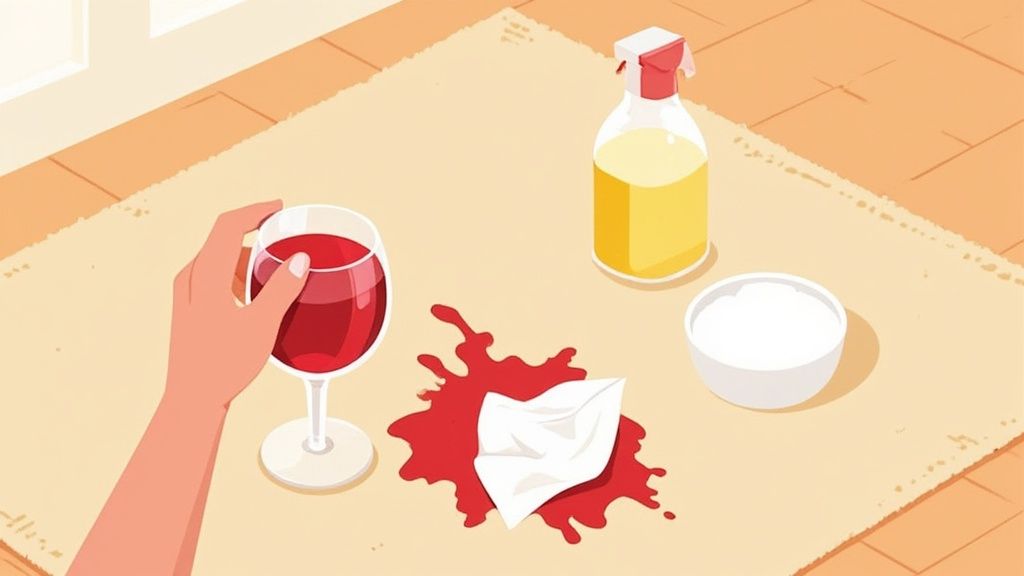
It’s a moment we all dread: the slow-motion tumble of a glass of red wine onto a light-coloured carpet. That feeling of panic is real, but what you do next is what truly matters. Your first instinct must be to blot the stain immediately with a clean, dry cloth. The goal is simple – absorb as much of that wine as you possibly can.
Whatever you do, never rub or scrub. It’s a natural reaction, but it’s the worst thing you can do, as it just grinds the stain deeper into the carpet fibres.
Why Time Is Your Worst Enemy
As soon as red wine makes contact with your carpet, a chemical reaction starts. The wine is packed with natural pigments and tannins, and they are desperate to form a permanent bond with the fibres of your carpet. Understanding this is the secret to stopping a spill from becoming a permanent stain. Your immediate response is far more important than any fancy cleaning solution you might use later on.
What you do in those first five minutes can genuinely be the difference between a minor clean-up job and a permanent, ugly mark. In fact, professional carpet cleaners across the UK often say that quick action within this short window can boost your chances of completely removing the stain by up to 70%. This is particularly true for the UK's favourite carpet choices—creams and beiges—which make up around 45% of the market and unfortunately show up every little mark. You can find more insights into stain removal from the experts at Carpet Bright UK to see just how critical timing is.
This image shows exactly how quickly a red wine stain can take hold.
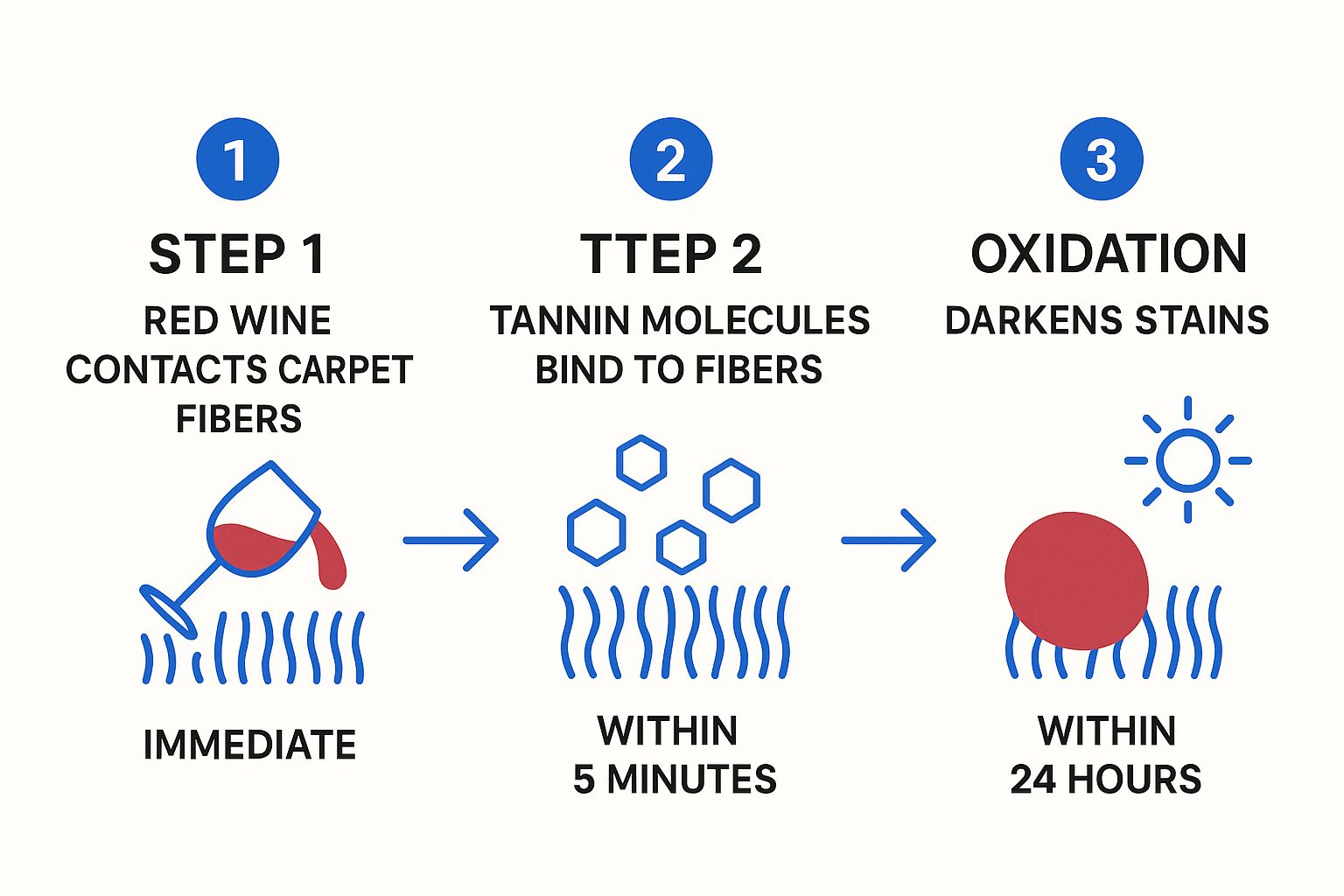
As you can see, the tannins start to bind almost instantly. Within a few hours, oxidation kicks in, which is the process that darkens the stain and really sets it in place.
When a spill happens, it's easy to make a mistake. To help you act correctly under pressure, here’s a quick guide on what to do—and what to avoid—in those crucial first moments.
Immediate Actions for a Red Wine Spill
| Do This Immediately | Why It Works | What to Avoid |
|---|---|---|
| Blot with a dry cloth | Lifts liquid out of the fibres | Rubbing or scrubbing |
| Apply cold water | Dilutes the wine without setting it | Using hot water |
| Work from outside in | Prevents the stain from spreading | Pouring solution directly |
Following these simple 'dos and don'ts' is your best defence against a lasting red wine disaster.
Common Mistakes That Set Stains
So many well-intentioned efforts can actually make a wine stain worse. The most common mistake we see is panicked scrubbing. This doesn’t just push the wine deeper; it can also fray and damage the carpet fibres themselves, making the area look fuzzy and worn.
Another huge mistake is applying any kind of heat. Reaching for hot water or, even worse, a steam cleaner, will effectively 'cook' the red wine pigments right into the carpet. This creates a permanent chemical bond that even the professionals will struggle to break.
The golden rule is simple: Blot, don’t rub. Use cold water, not hot. This initial first aid is your best defence against a lasting red wine catastrophe.
By steering clear of these common pitfalls, you give yourself the best possible shot at getting every last trace of that spill out. Always remember, the aim is to lift the wine out of the carpet, not to drive it further in.
Proven DIY Stain Removal Methods That Actually Work
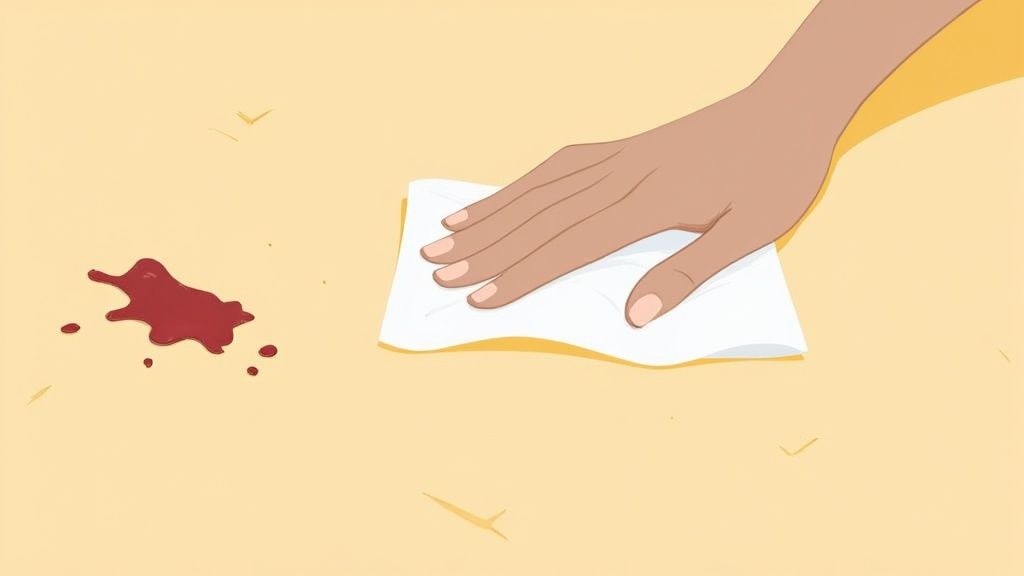
Right, so you've blotted up the worst of the spill. What now? The good news is you probably don't need to dash to the shops for a specialist cleaner. Many of the most effective solutions for tackling red wine are likely already sitting in your kitchen cupboards.
Before you try any of these, a word of caution: always do a quick patch test. Find a hidden spot of carpet – under the sofa or inside a wardrobe is perfect – and test a small amount of your chosen solution. This is a crucial step to make sure you won’t cause any discolouration or damage.
The Classic Salt Trick
It sounds almost too simple to work, but this is one of the oldest and most reliable methods for a reason, especially on a fresh spill. After you've blotted as much wine as possible, pour a generous amount of table salt directly onto the stain. Don't be shy – you want to create a thick, visible layer.
The salt immediately gets to work, drawing the wine up and out of the carpet fibres through a process called osmosis. You’ll need to leave it for several hours, or even overnight, until it’s completely dry and has turned a satisfying shade of pink. Once it's hard and crusty, just vacuum it all up. You’ll be surprised how much of the stain comes with it.
The Fizzing Power of Bicarbonate of Soda and Vinegar
For stains that need a bit more of a fight, the combination of bicarbonate of soda and white vinegar creates a brilliant fizzing action that helps break down the stubborn pigments in the wine.
Here's the plan:
- Create a thick paste by mixing three parts bicarbonate of soda with one part water.
- Spread this paste over the entire red wine stain.
- Lightly spray a bit of white vinegar on top and watch it start to bubble and fizz.
- Let the mixture do its thing until it's completely dry, then vacuum up the remaining powder.
A great bonus of this method is that the bicarb is a fantastic natural deodoriser. If you're keen on green cleaning, there are plenty of other ways to make a powerful natural carpet cleaner at home.
The Hydrogen Peroxide and Washing-Up Liquid Solution
When you're faced with a tougher, more set-in stain, this combination can be a real lifesaver. However, it's a much stronger solution, so that patch test we talked about is absolutely non-negotiable here. Hydrogen peroxide can have a mild bleaching effect, especially on natural fibres.
Crucial Tip: Never use this method on wool or dark-coloured carpets without testing extensively first. It is best suited for light-coloured, synthetic carpets.
In the UK, red wine spills are a leading cause of carpet damage. The National Carpet Cleaners Association (NCCA) found that a simple method using a solution of hydrogen peroxide boasts an impressive 85% success rate when used correctly. They recommend a mix of three parts hydrogen peroxide to one part clear washing-up liquid.
Apply it sparingly, let it sit for just a few minutes, and then blot it away gently with a clean, damp cloth. The NCCA also warns that using the wrong techniques, like applying hot water, can actually set the stain permanently, causing irreversible damage in over 40% of cases.
Adapting Your Method for Different Carpet Types

When you're faced with a red wine spill, it's easy to panic and grab the first cleaning solution you can find. But hold on a moment. Treating a carpet stain with the wrong product is a bit like using the wrong key for a lock; you won’t get very far, and you could end up doing more harm than good.
Not all carpets are created equal. A method that works wonders on a tough synthetic carpet might completely ruin delicate natural fibres. It's a lesson many learn the hard way.
For instance, robust synthetic materials like polyester or nylon are built to withstand a lot. They can often handle a carefully applied hydrogen peroxide solution without any issues. But if you were to try that on a wool carpet, you’d be in for a nasty surprise – it can strip the colour right out and damage the fibres permanently.
What to Do with Natural Fibre Carpets
Wool carpets are a popular choice in UK homes, but they are incredibly absorbent and don’t react well to harsh, high-pH chemicals. When you're tackling a red wine spill on a wool carpet, you have to be gentle. Aggressive scrubbing is out of the question, as it will cause the delicate fibres to felt and fray. You’ll be left with a fuzzy, damaged patch that looks far worse than the original stain.
For natural materials like wool, a gentler approach is essential. A simple mixture of cool water and white vinegar is a much safer bet, as it works by gently breaking down the wine's pigments without destroying the carpet's structure. Other natural fibres like sisal have their own specific needs, which you can learn all about in our guide on how to clean sisal carpets.
To help you choose the right approach, here's a quick comparison for common carpet types.
Red Wine Stain Removal by Carpet Type
| Carpet Material | Recommended DIY Solution | Key Precautions |
|---|---|---|
| Wool | White vinegar & cool water (1:2 ratio) | Avoid hot water and vigorous scrubbing to prevent felting. Blot, don't rub. |
| Synthetic (Nylon, Polyester) | Hydrogen peroxide & dish soap (small amount) | Test on a hidden spot first. Don’t oversaturate the area. |
| Sisal & Jute | Club soda or salt | Act immediately. Use minimal moisture as these fibres are prone to water stains. |
Remember, these are just general guidelines. Always test your solution on an inconspicuous area first.
Understanding the Financial Risk
Getting this wrong can be a costly mistake. It's estimated that UK home insurance providers pay out around £25 million annually for accidental carpet stain claims, with red wine being a major culprit.
For the 20% of UK households with wool carpets, a failed DIY attempt often means calling in a professional, which can cost upwards of £150 per treatment. You can find real-world examples of what it takes for professionals to fix these stains on forums like CleanTalk.
Key Takeaway: Always figure out what your carpet is made of before you start. If you’re not sure, check for a label under a corner or test your cleaning solution on a patch of carpet that's completely out of sight.
How to Tackle Old or Dried Red Wine Stains
Finding an old red wine stain from last night—or even last week—can feel like a real sinking moment. Once the wine has dried, its tannins and pigments have had plenty of time to set deep into your carpet’s fibres. This makes the stain a lot more stubborn than a fresh spill. But don't give up just yet; it's often still possible to lift the mark.
The trick to dealing with a dried red wine spill is to rehydrate it first. You can't effectively treat a stain that has completely set into the carpet. Gently mist the area with a small amount of cool water. Be careful not to soak it, as this can make the stain bleed or cause "wicking," where the stain reappears later as the carpet dries.
A Patient, Multi-Stage Approach
Once the stain is slightly damp again, it’s time to bring in a more powerful, slow-acting solution. A simple paste made from three parts bicarbonate of soda and one part water can work wonders.
- Apply the paste generously, making sure it covers the entire stain.
- Let it sit until it's completely dry. This could take a few hours, but patience is your best friend here.
- As the bicarb paste dries, it will slowly draw the rehydrated wine pigments up and out of the carpet fibres.
- When it’s hard and crusty, vacuum the area thoroughly to remove all the residue.
For a particularly tough mark, you might need to repeat this process a couple of times.
Remember, the key to removing a dried stain is rehydration followed by a slow-acting lifting agent. Rushing the process or scrubbing aggressively will only embed the stain further and potentially damage the carpet fibres.
If you find the stain is resisting these household methods, it may be time to explore some more advanced techniques. You can learn more about how to remove stubborn carpet stains in our detailed guide, which covers other powerful solutions for those really difficult situations.
Knowing When to Call a Professional Carpet Cleaner
Sometimes, despite your best efforts, that red wine spill is just too stubborn for DIY methods. Knowing when to put down the cloth and pick up the phone can save you a world of trouble and stop you from accidentally making things worse.
If you’re dealing with a delicate material like a silk or antique rug, calling in a professional is always the safest bet. The same goes for stains that cover a large area or have had a lot of time to settle deep into the fibres—you’ll need more power than what household products can offer. For extensive stains, considering professional residential cleaning services is a wise move for expert intervention.
When DIY Isn't Enough
Have you ever cleaned a stain, only for it to reappear as the carpet dries? This frustrating issue is called wicking, and it's a common problem with deep spills. It happens when the wine that soaked into the carpet's backing and underlay slowly travels back up the fibres to the surface.
Professionals use powerful hot water extraction machines that blast a cleaning solution deep into the carpet and then immediately suck all the dirty water out. This process is far more effective at preventing wicking than any home remedy.
These machines, paired with specialised solvents, can break down the stubborn tannins in red wine that your homemade solutions often leave behind. If you'd like to understand the real difference their equipment makes, you can explore the typical professional carpet cleaning process and see exactly why it's often the best solution for a serious red wine emergency.
Common Questions About Red Wine Stain Removal
When a glass of red wine tumbles onto the carpet, a bit of panic is natural. Even with the best intentions, questions pop up. Should I use that spray under the sink? What about the salt trick I’ve heard about? Getting the right answers fast is often the difference between a minor cleanup and a permanent reminder of the spill.
Many people’s first instinct is to reach for a commercial carpet stain remover, and for good reason—many of them are incredibly effective. The most important thing is to always check the label first. You need to be sure it’s safe for your specific carpet material, particularly if you have delicate wool or natural fibres. Always do a quick patch test on a hidden spot, like inside a cupboard or under the sofa.
Can I Use Salt on a Fresh Spill?
The classic salt trick is another common query, and yes, it really can work wonders on a fresh spill. Salt is brilliant at drawing the wine out of the carpet fibres through osmosis before it has a chance to set properly.
For the best results, you need to act while the spill is still wet. Just pile a generous amount of salt over the stain, let it dry (you'll see it turn pink as it soaks up the wine), and then vacuum it all up. You can then treat any faint marks left behind.
A frequent mistake is being too shy with the salt. You need to be generous and create a thick mound that completely covers the wet area. This is what maximises absorption and lifts the stain out of the fibres.
What About Dried Red Wine Stains?
Tackling a dried red wine stain is a much bigger challenge, but it’s not always a lost cause. The first, most crucial step is to rehydrate the area. Gently dampen the stain with a small amount of cool water to prepare the carpet fibres for cleaning.
Once it's damp, you can try a more heavy-duty solution, like a paste made from bicarbonate of soda, and let it sit for a few hours. Success isn't guaranteed with old stains, and honestly, calling in a professional is often the most reliable way to handle them.
Of course, prevention is always better than cure. Investing in a protective treatment for your carpet can save you a lot of future stress. You can find out more in our guide to professional stain protection for your carpet.