That sinking feeling when you spot a dark, ugly burn mark on your carpet is all too familiar. But don’t panic just yet. You can often fix carpet burn marks yourself by gently trimming the charred tips of the fibres with small scissors, especially for minor scorches. If the damage is deeper, creating a seamless patch using donor fibres from a hidden area is the most effective solution.
Your First Steps for Fixing a Carpet Burn
Discovering a burn mark on your lovely carpet is frustrating, to say the least, but a quick and calm response can make a world of difference. Before you start grabbing any tools or cleaners, your first job is to play detective.
You need to figure out exactly what you're dealing with, as this will dictate your entire repair strategy. Not all burns are created equal, and trying to fix a deep melt like a minor scorch could actually make the problem much worse.
Assess the Damage Severity
Get down and take a close look at the affected area. Are just the very tips of the fibres blackened and stiff? This is what we call a minor scorch, really common with synthetic materials that tend to melt rather than char.
Or has the heat gone deeper, creating a noticeable crater and maybe even damaging the carpet’s backing? Getting this part right is the first and most critical step.
A simple inspection will tell you what you need to know. Gently touch the fibres; if they feel brittle and break away easily, it's likely a surface burn. If the area feels hard, melted, and flat, the damage is more significant. This initial assessment stops you from wasting time on a method that just won't work.
To make it even clearer, here's a quick way to size up the situation.
Quick Guide to Carpet Burn Assessment
| Burn Severity | What It Looks Like | Your First Action |
|---|---|---|
| Minor Scorch | The very tips of the fibres are dark, stiff, or slightly melted. | Gently trim the tips with small, sharp scissors. |
| Moderate Burn | A noticeable dip or crater, with melted and hardened fibres. The backing is likely intact. | This often requires the "patching" method. |
| Severe Burn | A deep, hard crater where the fibres and backing are fused or destroyed. The underlay might be visible. | A professional repair or a larger patch is usually needed. |
This table should help you quickly identify the damage and choose the right path forward.
Key Takeaway: The type of burn determines the repair method. A superficial scorch on synthetic fibres requires a different approach than a deep burn that has destroyed the carpet's structure. Rushing in without assessing can lead to a more obvious, permanent patch.
Gather Your Basic Repair Kit
Once you know what you're dealing with, it's time to gather a few simple tools. You don't need a professional kit for these initial stages. Most successful home repairs begin with basic household items you probably already have.
You’ll want to have:
- Small, Sharp Scissors: Nail clippers or even embroidery scissors are perfect for getting a precise trim.
- Fine-Grit Sandpaper: This can be surprisingly useful for gently buffing away light surface scorches.
- A Vacuum Cleaner: Absolutely essential for cleaning up any debris before and after the repair.
- A Damp Cloth: Perfect for gently cleaning the area without soaking the carpet backing.
Having these items ready to go sets you up for a much better chance of success with the repair methods that follow. Before you attempt any fix, it's always a good idea to ensure the surrounding carpet is clean to help the repair blend in seamlessly. For guidance on this, our advice on how to deep clean carpets at home provides a solid foundation for preparing the area.
Fixing Minor Carpet Burns Yourself
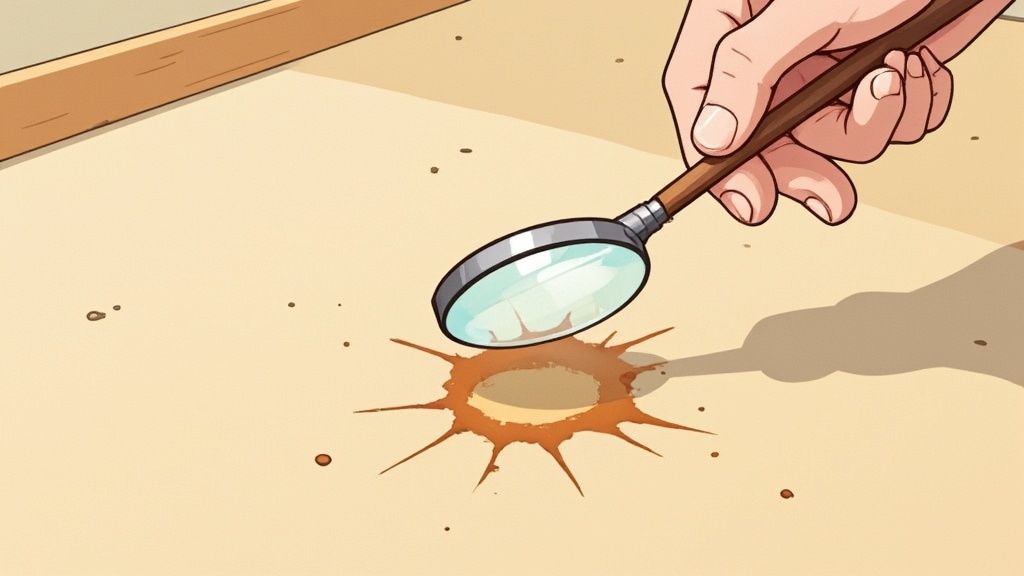
If you're dealing with a small, superficial burn, you can often sidestep the cost of a professional and get a fantastic result with just a little patience. This DIY method is ideal for those all-too-common mishaps, like a stray ember from the fireplace or a hot iron that’s momentarily kissed the surface.
The aim here isn't a major repair job, but a simple and effective cosmetic tidy-up. By carefully trimming away the damaged tips of the carpet fibres, you can make minor burns all but vanish, especially if you have a thicker pile carpet where the fix can be easily disguised.
The Trimming Technique Explained
Precision is everything with this method. The trick is to remove only the scorched, melted part of the fibre without going so low that you create a noticeable dip or bald patch. It’s less like carpet surgery and more like giving it a very careful haircut.
Think of it this way: when a carpet fibre gets singed, usually only the very tip is damaged. Your task is to snip off just that blackened end, leaving the healthy, untouched fibre below.
For this, you'll need a pair of small, sharp scissors. Manicure scissors are perfect, and even nail clippers can work wonders because their compact size gives you excellent control. Steer clear of large kitchen scissors – they make it far too easy to take off more than you intended.
Pro Tip: Before you start snipping, try gently tugging at the burnt fibres with tweezers. Often, the charred bits are so brittle they’ll just break away, saving you some effort and lowering the risk of trimming too much.
A Step-by-Step Guide to Trimming Burns
With your tools at the ready, it's time to get to work. Make sure you're in a well-lit area so you can see exactly what you’re doing.
- Isolate the Damaged Fibres: First, gently separate the burnt fibres from the healthy ones around them. This helps you focus only on the areas that need trimming.
- Trim with Care: Using your small scissors or clippers, snip off the blackened tips of each affected fibre. Work one by one, trying to cut them level with the surrounding undamaged fibres.
- Vacuum Up the Debris: Once you've finished trimming, grab a vacuum cleaner with a hose attachment and clear away all the tiny black particles and snipped ends. This is key for a clean finish.
- Fluff and Blend: With the area clean, use your fingers or a stiff brush (a clean toothbrush is great for this) to gently fluff the trimmed fibres and help them blend back into the surrounding pile.
In the UK, carpet burns from household accidents are incredibly common. For minor scorches, roughly the size of a 5p or 50p coin, this trimming technique is a tried-and-tested solution. Most UK carpets are made from synthetic fibres that melt rather than burn to ash, making this method particularly effective. You can even find community threads on forums like PistonHeads discussing how others have fixed similar issues.
This approach works brilliantly for minor surface damage. However, if the burn has gone deeper and left a small hole, you’ll likely need a more involved solution. For those cases, our guide on how to fix holes in carpets offers the next level of advice you'll need.
Advanced Repair with a Carpet Patch
Sometimes, a simple trim and fluff just won't be enough. For those more serious burn marks—maybe from a dropped curling iron or a stray ember from the fireplace—it’s time to look at a more advanced repair. A carpet patch is your best bet for a virtually invisible fix on deeper, more significant damage.
The method involves cutting out the damaged section of carpet and replacing it with a perfect, undamaged piece. It might sound a bit intimidating, but with a steady hand and a bit of patience, you can get a professional-looking result that blends right into the rest of your flooring.
This is the basic idea: check the damage, get your tools ready, and prep the area before you do any cutting.
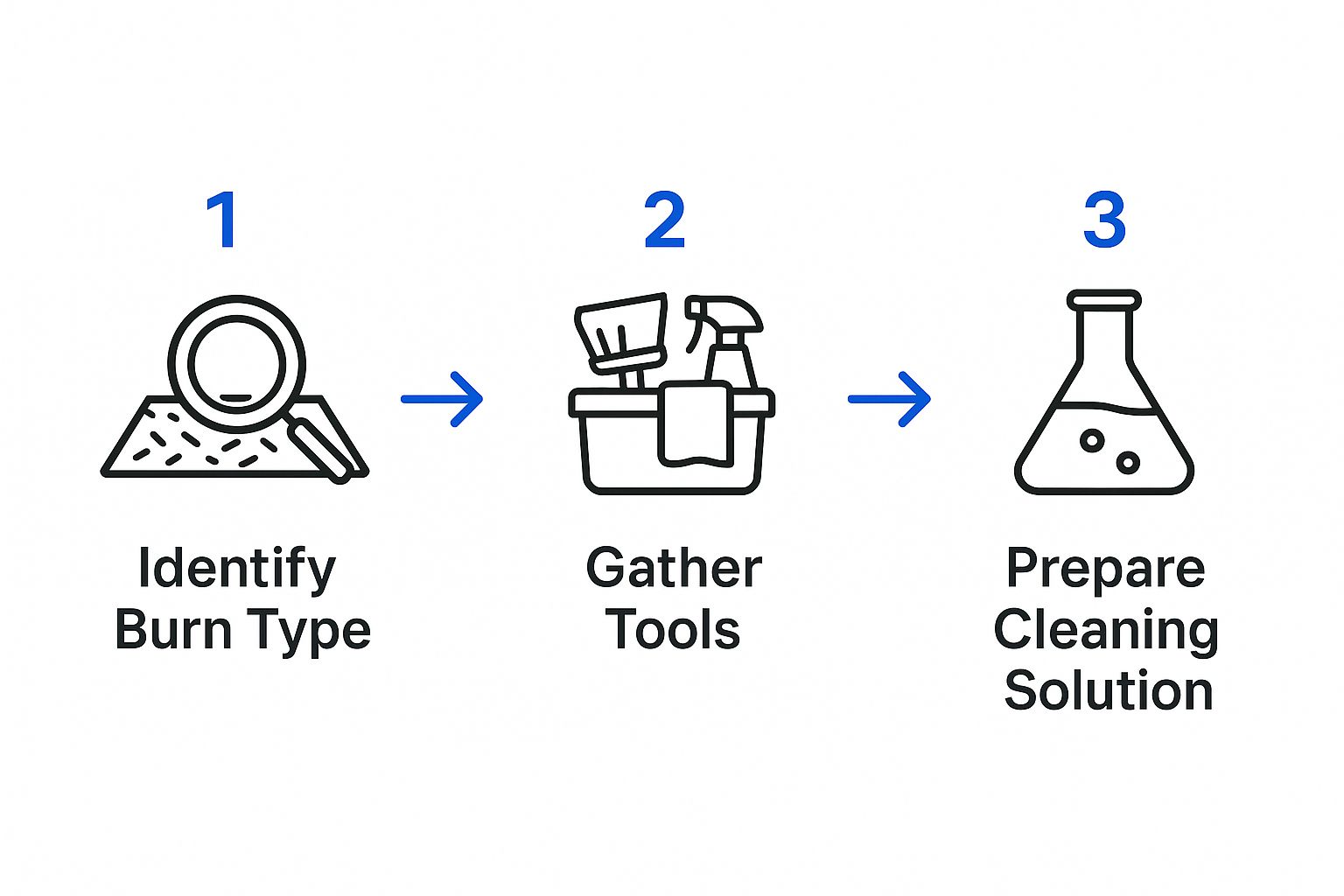
As you can see, a good repair starts with careful assessment and preparation.
Sourcing Your Donor Carpet
The secret to a great patch repair is finding a perfect carpet match. Ideally, you’ll have a leftover scrap from when the carpet was first fitted. If not, don't worry—you just have to be a little clever about where you look.
Find a spot where the carpet is completely hidden from view.
- Inside a built-in wardrobe or a storage cupboard.
- Under a heavy piece of furniture that never moves, like a large sofa or a bookcase.
- From a forgotten corner of the room that's always covered.
These "donor" areas are fantastic because the carpet there has aged and faded at the same rate as the rest of the room, meaning the colour and texture will be an exact match. Use a sharp utility knife to carefully cut out a small, neat square.
Executing the Patch Repair
Once you have your donor piece, you can get to work on the damaged spot. The aim here is to make the replacement as tidy and unnoticeable as possible.
Start by placing your donor patch over the burn mark; this will be your template. Carefully cut around it with your utility knife to remove the burnt section of carpet. Take your time—clean, straight cuts are key.
Now for the adhesive. Don't be tempted to use standard super glue, as it dries hard and brittle, which will create a stiff, obvious patch. Instead, you need a specialised carpet seam adhesive. This glue is formulated to stay flexible once it dries, so the patch can move naturally with the rest of the carpet.
Apply a thin, even bead of the adhesive to the subfloor or carpet backing where you just removed the damaged piece. A little goes a long way; too much glue can seep up through the fibres and cause a real mess.
Crucial Insight: For a truly seamless blend, you must pay attention to the direction of the carpet pile. Run your hand over the donor patch and the surrounding carpet to feel which way the fibres lean. You need to align the pile on your patch so it runs in the exact same direction as the main carpet.
Gently press the new patch into place, making sure the pile is perfectly aligned. If any adhesive squeezes out, wipe it away immediately with a damp cloth. To finish, place something heavy—like a stack of books—on top of the repair and let it dry for at least 12 hours. Once it's fully set, fluff up the fibres around the seam with your fingers to help blend it in.
For a deeper dive, our complete guide to carpet patching repair techniques has even more expert tips.
When to Call a Carpet Repair Professional
While the DIY methods we've covered are brilliant for small mishaps, there are definitely times when it's wiser to step back and get a professional in. Sometimes, trying to tackle severe damage without the right experience or gear can actually make the problem worse, turning a minor burn into a very obvious and costly repair.
Knowing your limits is the key. If the burn mark is bigger than a £2 coin, has gone right through to the carpet backing, or is slap bang in the middle of a high-traffic area, it’s probably time to consider getting some expert help. A specialist has tools and techniques that are far more advanced than a simple patch job.
Expert Repair Techniques
When you bring in a carpet repair specialist, they bring a level of precision that’s almost impossible to achieve on your own. For burns, they'll typically use one of two professional methods: re-tufting or a bonded insert.
-
Re-tufting: This is an incredibly meticulous process. A technician will individually weave new carpet fibres directly into the carpet's original backing, essentially rebuilding the damaged area strand by strand. It’s the perfect solution for smaller, deeper burns where the rest of the carpet is in good shape.
-
Bonded Inserts: For larger or more serious burns, a specialist will cut out the damaged section with surgical precision. They then fit a perfectly matched donor piece of carpet, using special heat-bonding tape to create a seamless join that’s strong enough to withstand daily foot traffic and regular vacuuming.
Finding a Reputable Service in the UK
Knowing when to call for help is one thing, but finding the right person for the job is just as important. The best place to start is by looking for local specialists with a solid track record and plenty of verifiable customer reviews.
Before you commit, make sure you ask them a few key questions:
- Are you experienced with this particular type of carpet fibre (e.g., wool, polypropylene)?
- Can you show me a portfolio of previous burn repairs you've carried out?
- Does your quote include everything, or are there extra charges for materials?
- What kind of guarantee do you offer on your work?
A true professional will have no problem answering these. They should be able to give you a clear idea of what to expect and the final cost before they even start. If you want to understand more about the wider benefits, our guide on what to expect from professional carpet cleaning services has more detail.
Key Consideration: While paying for a professional repair costs more upfront than a DIY kit, it often saves you a significant amount in the long run by avoiding the need to replace the entire carpet. A flawless repair can add years to your carpet's life.
Ultimately, the choice between DIY and a professional comes down to the extent of the damage and your own confidence. For those deeper, more noticeable burns, a specialist can deliver an invisible mend that restores your carpet perfectly. Remember, too, that ongoing care like professional carpet shampoo services can help maintain your carpet's overall look and blend in any minor, lingering imperfections.
Preventing Future Carpet Burns
Now that you’ve managed to fix that unsightly burn mark, the last thing you want is for it to happen again. The good news is that preventing future accidents is a lot simpler than carrying out a repair. It really just comes down to building a few mindful habits to protect your flooring and keep it looking its best.
Most carpet burns come from everyday household items. Think about things like portable heaters—make sure they’re sitting on a heat-proof mat, not directly on the carpet itself. Be just as careful with candles and incense burners; they should always be on a stable, protected surface, well away from any walkways. Even a spilt mug of hot tea can singe carpet fibres, so getting into the habit of using coasters on the floor is a small but effective change.
Why Repairing Is the Greener Choice
Beyond saving yourself a bit of work, there’s a strong environmental argument for protecting the carpets you already have. Choosing to fix a small burn mark instead of replacing an entire room’s worth of carpet is a far more sustainable option. Carpet waste is a serious issue, and by repairing, you're doing your bit to reduce that impact.
To put it in perspective, the UK's carpet industry has a massive environmental footprint. Back in 2019, an estimated 130,000 tonnes of carpet ended up being incinerated, which in turn released around 243,000 tonnes of CO2. That’s a staggering figure, and it really drives home why extending a carpet’s life through proper care and repair is so vital. By learning how to remove carpet burn marks, you’re not just saving a bit of cash; you're also making a much more eco-friendly choice. You can find out more about this and see why UK consumers are leaning towards repairs over replacements.
Simple Ways to Protect Your Carpet
You don't need to go to extreme lengths to prevent burns. A few thoughtful adjustments around the house can make all the difference.
- Use Fireplace Guards: If you have an open fire, a sturdy screen isn't just a suggestion—it's essential. It’s the only thing stopping stray embers from landing on your carpet and causing multiple scorch marks in an instant.
- Create Safe Zones for Heat Tools: Have a designated spot with a hard surface for using things like hair straighteners or curling wands. Never, ever rest them on the carpet, not even for a second.
- Be Smart with Furniture: Use furniture or even a well-placed rug to create a natural barrier around heat sources. This can help guide foot traffic away from potential danger spots.
A Proactive Approach: The best way to deal with future damage is to stop it before it starts. Applying a high-quality spray can make your carpet more resilient to everyday accidents. You can learn more by checking out our guide on finding the best stain protector for your carpet.
At the end of the day, a little bit of foresight is all it takes. By making these simple practices part of your routine, you can enjoy a beautiful, burn-free carpet for many years to come.
Frequently Asked Questions About Carpet Burns

Even with the best instructions, you're bound to have a few questions when you're in the middle of a repair. We get it. Below, we’ve answered some of the most common queries that come up when tackling a carpet burn, helping you get the job done right the first time.
Can I Use Sandpaper on a Light Scorch Mark?
You can, but you need to be incredibly careful. For a very light scorch mark on a dense, low-pile carpet, you might get away with gently buffing the burnt tips with fine-grit sandpaper.
The trick is to always move in the same direction as the carpet pile – never scrub back and forth. You have to check your progress after every couple of strokes. Honestly, it’s very easy to overdo it and end up with a fuzzy, worn patch that looks even worse than the burn did. For most synthetic carpets that melt rather than char, we always recommend carefully trimming the melted tips with a pair of sharp scissors. It’s a much safer bet.
What Is the Best Glue for a Carpet Patch?
Getting the right adhesive is absolutely crucial for a repair that blends in seamlessly. Your best bet is to find a specialised carpet adhesive or a strong, flexible fabric glue.
A lot of people reach for super glue, but that's a big mistake. It dries rock-hard and brittle, creating a stiff patch that feels obvious underfoot and can easily crack or peel away over time. The ideal choice is a latex-based carpet seam adhesive; it stays flexible and allows the patch to move naturally with the rest of your flooring.
When you're applying it, just use a thin, even layer. You don't want it oozing up and sticking the carpet fibres together, which is a dead giveaway of a DIY repair.
Will My Landlord Charge Me for a Small Burn?
This is a classic question, and the answer really depends on your tenancy agreement and how bad the damage is. If it’s a tiny, perfectly repaired mark on an already well-worn carpet, you might be able to class it as fair wear and tear.
However, a noticeable, ugly burn mark is almost always considered damage. In that case, your landlord could deduct the cost of a professional repair from your security deposit. By following the techniques in this guide, you can make the fix practically invisible, which massively boosts your chances of avoiding any charges. A clean, well-executed repair shows you’ve taken responsibility for the accident.
If you're looking at a burn that seems too daunting for a DIY job, don't take the risk of making it worse. AG Carpet Specialists provides expert carpet repair services throughout Cheltenham, Gloucester, and Stroud. Our certified technicians have the tools and experience to make those burns vanish, restoring your carpet's look and feel. Visit us at agcarpetspecialist.co.uk for a free quotation.