When cleaning a sisal rug, the golden rule is to avoid water at all costs. You absolutely must use a dry cleaning method.
If a spill happens, act fast. Immediately blot it with a dry, clean cloth, then apply a specialised dry cleaning powder designed for natural fibres. Let the powder sit and do its work absorbing the spill, then vacuum it up thoroughly using a suction-only setting on your cleaner. This water-free approach is critical to prevent the permanent staining and shrinkage that sisal fibres are so prone to.
Why Sisal Rugs Demand a Different Approach
Before you even think about reaching for a damp cloth to tackle a mark on your new sisal rug, it’s vital to understand what makes this material so different. Unlike synthetic carpets, sisal is a natural plant fibre, coming from the Agave sisalana cactus. Its rustic charm lies in that coarse, durable texture and its lovely earthy tones, but that natural origin is also its biggest weakness when it comes to cleaning.
The main problem is how sisal reacts to moisture. The fibres are incredibly absorbent, meaning they soak up liquids almost instantly. This isn't like a nylon rug where a spillage might bead on the surface for a moment. With sisal, liquid goes straight into the core of the fibre, which often leads to permanent water spots or a dark, ring-like stain as it dries. This reaction is known as cellulose browning, and it’s a real headache to try and fix.
The Dangers of Moisture
Getting a sisal rug wet can cause several problems that are often irreversible. Knowing these risks is the first step in learning how to look after your rug properly.
- Shrinkage and Warping: When the natural fibres get soaked and then dry out, they contract and shrink. This can make the rug warp, buckle, or curl up at the edges, and it will probably never lie flat again.
- Permanent Staining: As we’ve mentioned, water itself can leave a permanent mark. Spills from things like red wine or coffee are even worse, as the colour gets locked deep inside the absorbent fibres.
- Mould and Mildew: If a sisal rug doesn't dry completely and quickly, the trapped moisture creates the perfect environment for mould and mildew to grow. This leads to musty smells and can be a health concern.
The golden rule for sisal care is simple: treat it more like wood than fabric. You wouldn't pour a bucket of water on your hardwood floors to clean them, and the same logic applies here. Prioritising dry methods is non-negotiable for preserving your rug's integrity.
This simple fact is the foundation for all effective sisal cleaning techniques. Whether you're dealing with a fresh spill or just doing routine maintenance, the aim is always to keep moisture to an absolute minimum. It’s why the process is so different from standard carpet cleaning. To get a better idea of how this fits into the bigger picture, you can explore various professional rug cleaning methods and see how they contrast with typical water-based approaches.
Your Essential Sisal Cleaning Toolkit
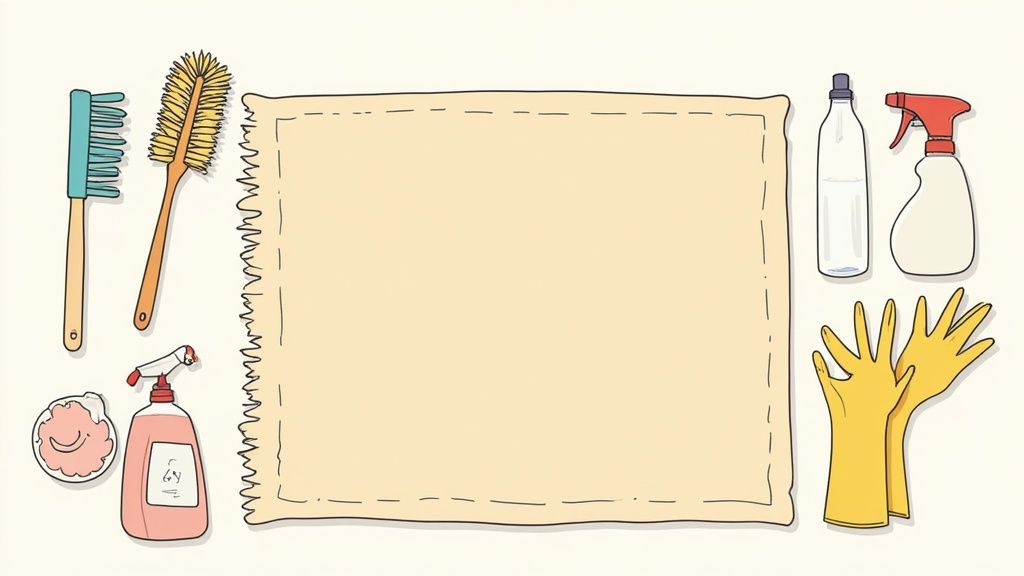
When it comes to cleaning a sisal rug without causing damage, being prepared is half the battle. We’ve all been there: a glass of red wine tips over, and panic sets in. The first instinct is often to grab the nearest all-purpose cleaner, but that’s usually a recipe for disaster with natural fibres like sisal.
Putting together a dedicated cleaning kit before you need it is the smartest move you can make. Think of it as a first-aid box for your rug. Having the right tools on hand means you can act quickly and correctly, often making the difference between a small clean-up and a permanent, ugly stain.
The Core Components for Sisal Care
Your toolkit doesn't need to be complex or expensive, but every item has a crucial role to play. Using the wrong product, like a standard wet carpet shampoo, introduces moisture that can cause irreversible browning, watermarking, and warping.
Here’s a look at what you absolutely must have ready to go.
- A Vacuum with a Suction-Only Setting: This is your number one tool for day-to-day care. Never use the beater bar or a rotating brush on sisal—it will snag, fray, and eventually destroy the beautiful woven fibres.
- Specialised Dry Cleaning Powder: This is your secret weapon for spills. These absorbent compounds are specifically made to lift stains from natural fibres without using any water.
- Clean, White Absorbent Cloths: Essential for blotting up any liquid the second it hits the rug. Always use white cloths to avoid any risk of dye from the cloth transferring to your rug.
- A Soft-Bristle Brush: You'll need this to gently work the dry cleaning powder into the stained area without being too harsh on the fibres. An old, soft-bristled toothbrush is perfect for tiny spots.
- A Dull Knife or Spatula: Perfect for carefully scraping off any solid or semi-solid spills, like mud or dropped food, before you start any blotting.
To make things even clearer, here’s a quick checklist of everything you'll need.
Sisal Cleaning Toolkit Checklist
| Tool/Product | Purpose | Key Consideration |
|---|---|---|
| Vacuum (Suction-Only) | Routine dirt and dust removal. | Crucial: Disable or remove the beater bar to prevent fibre damage. |
| Dry Cleaning Powder | Absorbing liquid and lifting stains without water. | Choose a product specifically formulated for natural fibres like sisal or jute. |
| White Microfibre Cloths | Blotting fresh liquid spills immediately. | Must be white and highly absorbent to prevent colour transfer. |
| Soft-Bristle Brush | Working cleaning powder into the stain. | Soft bristles are key to avoid fraying the delicate sisal weave. |
| Dull Knife/Spatula | Scraping away solid messes. | Use a gentle lifting motion to avoid pushing the spill deeper into the rug. |
Having these items organised and accessible means you’re ready for anything.
Having your sisal cleaning toolkit ready is more than just convenient; it's a preventative strategy. In a moment of crisis, you're less likely to reach for a damaging, water-based cleaner if the right tools are already within arm's reach.
Of course, regular upkeep is just as important as dealing with emergencies. In fact, most experts agree that weekly vacuuming is the single most critical thing you can do for your sisal rug. Just remember to use a suction-only setting to avoid the kind of damage a beater bar can inflict.
For an even longer life, you might want to consider applying a protective treatment designed for natural fibres. If you're curious, have a look at our guide on choosing the best stain protector for your carpet.
Mastering Your Weekly Maintenance Routine
The best defence against a stubborn stain on a sisal rug is simply not letting it happen in the first place. Proactive, consistent care is the real secret to keeping your rug looking fresh for years, drastically cutting down on the need for more intensive deep cleans. A simple weekly routine is your strongest weapon against the dirt and grit that inevitably tries to settle into those beautiful natural fibres.
This isn't just about looking good, it's about preserving the rug itself. Think of fine dust and dirt particles as tiny, sharp blades. With every footstep, they grind away at the sisal, slowly but surely damaging the fibres. Getting them out quickly protects the rug's structure and stops that dull, tired look from developing, especially in busy parts of the room.
Perfecting Your Vacuuming Technique
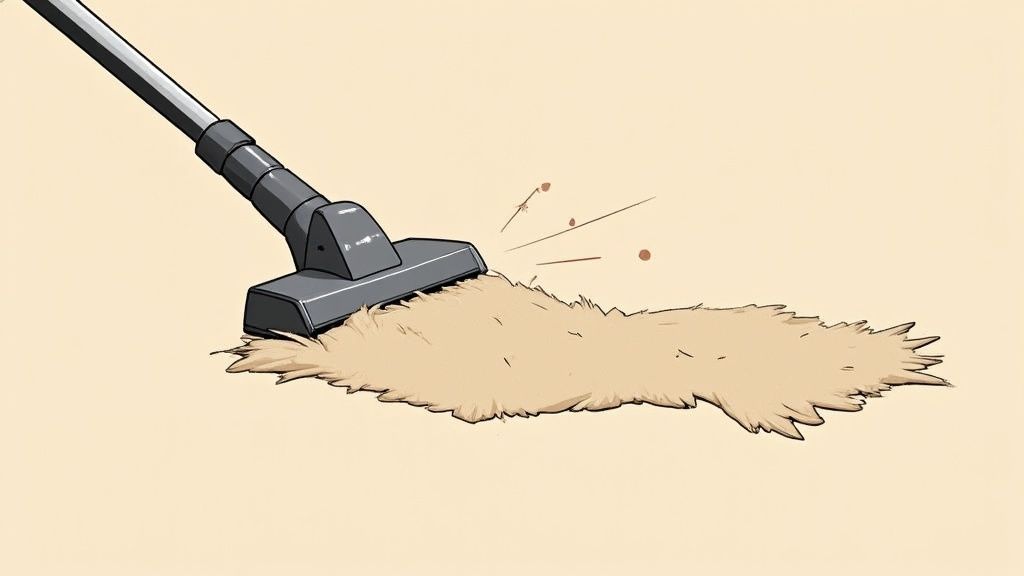
Vacuuming is the cornerstone of your weekly care, but how you do it is incredibly important. The wrong approach can cause more harm than good, leading to frayed and unravelled fibres. Your vacuum's biggest enemy here is the rotating beater bar – its aggressive brushing is far too harsh for sisal's delicate weave.
For safe and effective cleaning, you absolutely must use a suction-only attachment. If your vacuum doesn't have a separate one, check that you can switch the beater bar off completely before you start.
- Vary Your Direction: Run the vacuum over the entire rug from top to bottom, then go over it all again from side to side. This criss-cross pattern is fantastic for lifting out particles trapped deep in the weave that a single pass would miss.
- Go Slowly: Don't rush it. A slower, more deliberate pace gives the suction time to work its magic and pull stubborn dirt from between the fibres.
- Mind the Edges: Be extra gentle around the bound edges of your rug. You don't want to snag the stitching.
Expert Tip: Try to see vacuuming as a preventative measure, not just a chore. A consistent weekly schedule can remove over 80% of the abrasive dirt that would otherwise get ground in, protecting the fibres from premature wear and tear.
The Importance of Regular Rotation
Another simple but vital part of your maintenance plan is rotation. Much like the tyres on a car, your rug wears unevenly depending on the flow of foot traffic. The path from the sofa to the doorway or the spot right in front of your favourite armchair will naturally see more use, which can lead to noticeable fading and thinning over time.
To fight this, get into the habit of rotating your rug 180 degrees every three to six months. It’s a small action that makes a huge difference, helping to distribute wear and tear evenly across the whole surface. This ensures your rug ages gracefully and keeps a uniform appearance for much longer.
By building these simple habits into your weekly schedule, you’re not just cleaning your rug – you're actively preserving your investment. For more general advice that can help with other floor coverings, you might find our carpet cleaning tips a handy resource for the rest of your home.
How to Handle Spills and Stains Without Water
When a spill happens on your beautiful sisal rug, your first instinct is often the very worst thing you can do. It's human nature to reach for a wet cloth, but with sisal, that's a surefire way to create a bigger problem. Think of this as your emergency guide, built around one golden rule: keep water away.
Speed is everything. The natural fibres in sisal are incredibly absorbent, which means you have only a very brief window to act before a spill becomes a permanent mark. Having your cleaning kit ready to go means you can jump into action immediately.
The Immediate Response Plan for Spills
Whether it’s a slosh of tea or a dropped piece of toast (buttered side down, of course), the first few moments are critical. Your main goal is to get as much of the spill up as possible before it has a chance to soak deep into the fibres.
- For solids or semi-solids (like mud or food): Grab a dull knife or a spatula. You'll want to gently scrape the substance from the surface of the rug. Always work from the outside edge of the spill inwards to stop it from spreading.
- For liquids: A clean, dry, white absorbent cloth is your best tool. Press it firmly onto the spill to blot up the moisture. It’s crucial that you never rub or scrub. This will only force the liquid deeper and can cause the delicate fibres to fray. Keep blotting with fresh, dry sections of the cloth until you can’t lift any more liquid.
The faster you act, the better your chances. A stain that’s blotted within seconds is far more likely to come out completely than one left for even a minute. This quick response does most of the heavy lifting, making the next step much more effective.
This visual guide shows the essential steps for a successful spot treatment.
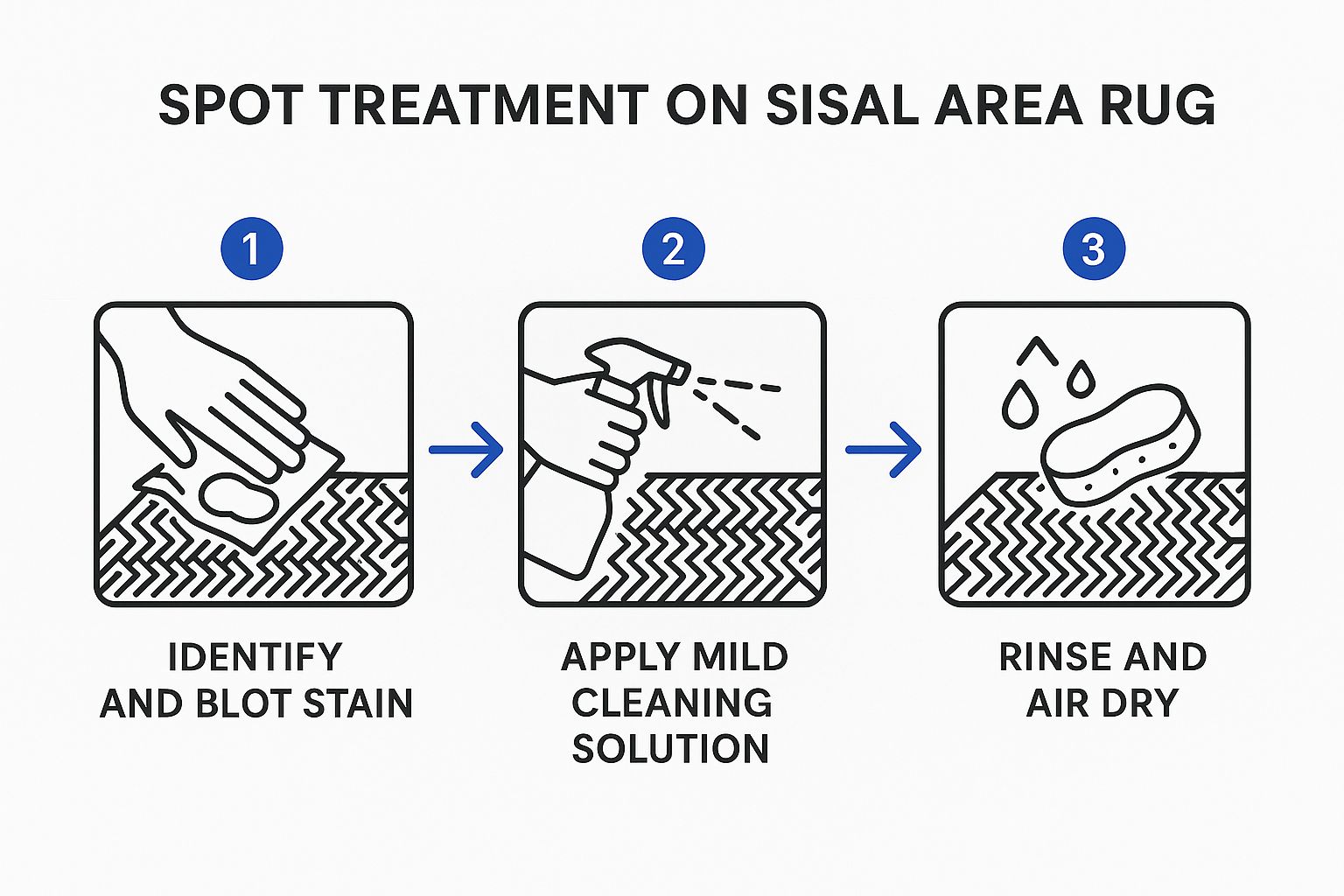
As you can see, the process is all about immediate blotting, followed by a careful cleaning application and, most importantly, a thorough drying phase to prevent any moisture damage.
Using Dry Cleaning Powder Effectively
Once you’ve removed all the excess, it's time for your secret weapon: a good-quality dry cleaning powder. These specially designed compounds are brilliant at pulling the last of the residue out of natural fibres without adding any damaging moisture.
First, sprinkle the powder generously over the entire stained area. Don’t be shy with it—you want a nice, thick layer that completely covers the spot.
Next, take your soft-bristle brush and gently work the powder into the rug’s weave. This gentle agitation ensures the powder makes full contact with the stain hidden within the fibres.
Now comes the easy part: patience. You need to let the powder sit and do its job for the time recommended on the packaging, which is usually between 30 minutes and a couple of hours. During this time, it’s actively absorbing the spill.
Finally, grab your vacuum cleaner with its suction-only attachment and thoroughly vacuum up all the powder. Make sure to go over the area several times, and from different directions, to get every last grain. The stain should lift away right along with the powder.
Using the right method is vital because incorrect cleaning attempts are the number one cause of damage. In fact, here in the UK, over 80% of stains and damage to sisal carpets are a direct result of someone trying to clean them with water. Sticking to dry techniques is the cornerstone of proper sisal care. If you want to understand more, our guide on professional rug dry cleaning provides more detailed information on why this approach is so important.
When to Call in a Professional for Sisal Rug Care
While regular vacuuming and quickly tackling small spills are things you can certainly handle yourself, it’s vital to know when a cleaning job is out of your league. Recognising your limits can be the difference between a successful clean-up and a costly, permanent mistake. Some situations just come with risks that only a specialist, armed with the right tools and knowledge of natural fibres, can safely manage.
Trying to sort out deep-set or complex problems without proper training can easily make things worse. A small, fixable issue can quickly spiral into a permanent disaster. Sometimes, protecting your investment means admitting defeat and calling for professional backup.
Red Flags That Mean It's Time for an Expert
If you come across any of the following problems, your best and safest bet is to get in touch with a professional who specialises in natural fibre rugs. These are definitely not issues to experiment with at home.
- Serious Water Damage: Has your rug been soaked from a flood, a huge spill left too long, or a bad cleaning attempt? Don't try to fix it yourself. Professionals have specialised drying gear to prevent the warping, shrinkage, and mildew that are almost guaranteed to happen otherwise.
- Deep-Set or Old Stains: Stains that have been sitting for days, weeks, or even longer have likely bonded with the sisal fibres. Aggressively scrubbing at them will only damage the weave, making professional help essential.
- Pet Urine or Odours: Pet accidents are notoriously tricky. The uric acid in urine needs special enzymatic cleaners to break it down and fully neutralise the smell. Your standard household cleaner just won't cut it.
- Pervasive Musty Smells: A lingering musty smell is a dead giveaway for mould or mildew growing deep within the rug's fibres. This requires professional treatment to get rid of it safely and effectively.
Understanding the Professional Approach
Here in the UK, sisal rugs need a bit of special attention. Their natural fibres love to soak up moisture from the air, which makes traditional wet cleaning methods a really bad idea. Soaking a sisal rug with a steam cleaner can cause irreversible damage like shrinking or the edges curling up.
Professionals use very low-moisture or completely dry-cleaning methods. They have specialised machines and cleaning compounds that do the job properly. This ensures a deep clean without the risk of water damage, keeping the rug's texture and structure just as it should be.
If you decide that professional help is the way to go, it's so important to know what you're looking for. A bit of research goes a long way, and you can get some great pointers on finding the best cleaning company to make sure you pick a reputable expert.
For a proper look at what a professional service involves, have a read of our guide on the complete carpet cleaning process. It’ll give you a clear idea of the careful steps a qualified technician will take to get your sisal rug looking its best again.
Common Questions About Cleaning Sisal Rugs
Even with a good guide, it's natural to have a few more questions when you're dealing with a unique material like sisal. You want to get it right, and being a little cautious is smart. We often hear the same queries from homeowners, so we've put together some clear answers to the most common ones.
Think of this as a quick troubleshooting guide for those "what if" moments that inevitably pop up.
Can I Use Bicarbonate of Soda on My Sisal Rug?
While bicarbonate of soda is a brilliant natural cleaner for lots of things around the house, it’s one to skip for your sisal rug. The powder is so fine that it’s almost impossible to get it all out from between the rug’s coarse, tightly woven fibres.
Any particles left behind can work their way deep into the pile. Over time, this residue acts like tiny, abrasive grains of sand, wearing down the natural fibres with every step. It’s a much safer bet to stick with a dry carpet cleaning powder made specifically for natural fibres. These are designed with the right particle size to grab onto dirt and odours and then be vacuumed away completely, leaving nothing damaging behind.
My Sisal Rug Has a Musty Smell. What Can I Do?
A musty, damp smell is almost always a red flag for a moisture problem. It could be from a spill that didn't quite dry, high humidity in the room, or even a well-intentioned but misguided cleaning attempt with too much water.
Your first, and most critical, job is to get that rug 100% dry.
- Sun and Air: If you get a dry, sunny day, take the rug outside. Lay it flat for a few hours and let the sunlight and fresh air work their magic. It's one of the best natural ways to kill odours and moisture.
- Boost Circulation: Can't get it outside? Open the windows and set up some fans to blow air across the rug’s surface. A dehumidifier running in the room is also fantastic for pulling moisture out of the rug and the air.
Once you’re absolutely certain the rug is bone dry, you can go after any lingering smell. Sprinkle a good-quality dry carpet cleaning compound over the entire rug, let it sit for the time stated on the package, and then vacuum it up thoroughly using a suction-only setting. Whatever you do, avoid liquid deodorisers or fabric sprays—they’ll just reintroduce moisture and bring you right back to square one.
Remember, a musty smell is a symptom of trapped moisture. Simply masking the odour won't solve the underlying issue. The priority must always be on thorough drying to prevent the growth of mould and mildew, which can permanently damage the rug.
Is It Safe to Place a Sisal Rug in a Kitchen or Bathroom?
We strongly advise against putting sisal rugs in high-moisture areas like kitchens, bathrooms, utility rooms, or damp basements. The reason is all down to the nature of the fibre itself.
Sisal is highly hygroscopic—a technical way of saying it loves to soak up moisture from the air around it. In a kitchen or bathroom, it will constantly absorb steam, humidity, splashes, and spills.
This ongoing exposure to moisture will lead to a whole host of problems that you can't reverse. You'll likely see permanent water stains and ugly brown spots (a process called cellulose browning). Even worse, it creates the perfect environment for mould and mildew to grow, which can rot the rug’s fibres from the inside out. For these damp-prone areas, you’re far better off choosing a rug made from a synthetic, moisture-resistant material like polypropylene.
For stubborn stains or deep-set odours that DIY methods just can't shift, don't risk damaging your beautiful rug. The expert team at AG Carpet Specialists uses professional-grade, low-moisture techniques to safely and effectively restore natural fibre rugs. Contact us today for a free, no-obligation quote and let us bring your sisal rug back to life.