Getting rid of dust mites isn't about one magic solution; it's about making your home less inviting for them. By controlling humidity, washing bedding in hot water, and using allergen-proof covers, you can seriously disrupt their environment. The goal is to make your home, especially the bedroom, a much less hospitable place for these microscopic pests through some targeted cleaning and simple environmental management.
Why Dust Mites Thrive in UK Homes
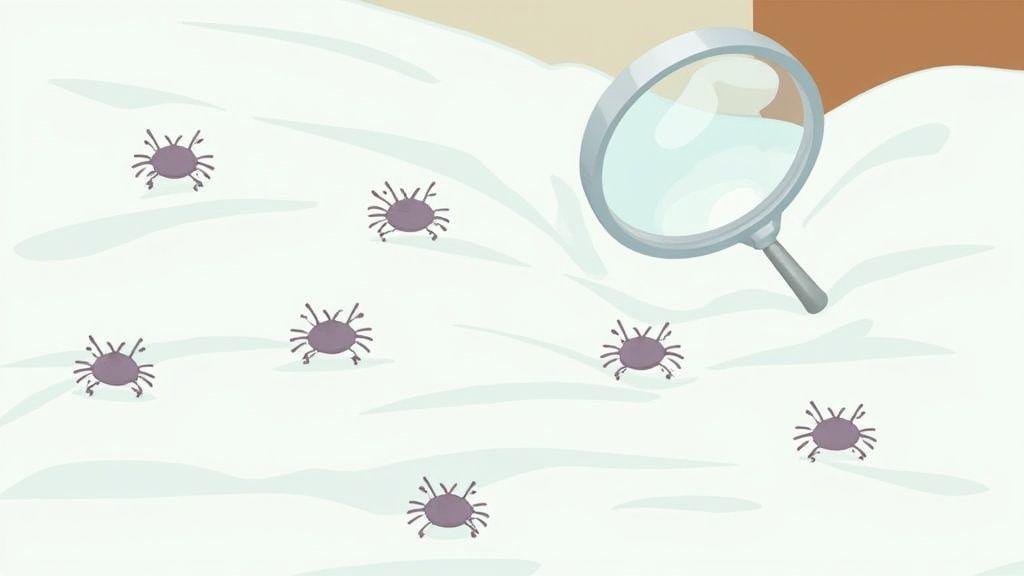
Before you can tackle a dust mite problem, it helps to know what you’re up against and why they feel so at home in the UK. House dust mites are microscopic arachnids—tiny relatives of spiders—that are completely invisible to the naked eye. They don’t bite or sting you. Their diet consists of the tiny flakes of dead skin that we and our pets shed every single day.
The typical UK climate is practically a perfect breeding ground. Dust mites absolutely love temperatures between 20-25°C and prefer humidity levels over 50%. Our temperate weather, combined with well-insulated homes that often trap moisture, creates this ideal environment right inside our houses.
The Connection to Allergies and Asthma
For most of us, dust mites are completely harmless. But for a lot of people, their waste particles and decaying bodies are powerful allergens. When these microscopic particles get kicked up into the air—by something as simple as making the bed or walking on the carpet—they’re easily inhaled and can trigger an allergic reaction.
If this sounds familiar, you might be experiencing symptoms like:
- Sneezing and a runny or blocked nose
- Itchy, red, or watery eyes
- A persistent cough or wheezing
- Itchy skin or eczema flare-ups
For anyone with asthma, exposure to dust mite allergens is a serious concern and a common trigger for asthma attacks, which can lead to significant breathing difficulties.
You'd be surprised at how widespread the issue is. Allergy UK reports that a staggering 44% of adults in Britain suffer from at least one allergy, with house dust mites being a primary culprit. With over 20% of the population affected by allergic conditions, it's clear these tiny pests have a big impact, forcing almost a third of sufferers to change their daily routines just to manage symptoms. You can read more about the UK's allergy statistics on Kleenex.co.uk.
Where Dust Mites Hide in Your Home
Dust mites are creatures of habit. They need warmth, humidity, and a steady food source (our dead skin cells), so they tend to congregate in very specific areas. It’s important to remember that their presence isn't a sign of a dirty house; they’re just a natural, albeit unwelcome, part of most indoor ecosystems.
To really get a handle on the problem, you need to know where to look. They’re almost always found in soft furnishings where dead skin cells and moisture can build up.
Where Dust Mites Hide in Your Home
Here’s a quick rundown of the most common dust mite hotspots and why they love these areas so much.
| Location | Why It's a Hotspot | Key Action |
|---|---|---|
| Mattresses & Bedding | We spend hours here every night, shedding skin cells directly onto the surface. It's warm, often humid, and full of food. | Use allergen-proof covers and wash bedding weekly in hot water (60°C). |
| Carpets & Rugs | The deep fibres trap skin flakes, dust, and moisture, creating a protected, stable environment. | Vacuum regularly with a HEPA filter vacuum and consider professional steam cleaning. |
| Upholstered Furniture | Sofas and armchairs are just like mattresses—they collect skin cells and absorb moisture from the air and our bodies. | Vacuum weekly using an upholstery attachment. |
| Curtains & Drapes | Fabric curtains collect airborne dust and can hold moisture, especially near windows where condensation forms. | Wash or steam clean them regularly according to the fabric care instructions. |
| Stuffed Toys | Often found on beds, these are soft, fibrous, and collect dust and skin cells, making them a mini-paradise for mites. | Wash them frequently in hot water or place them in the freezer for 24 hours. |
Recognising these hotspots is the first step towards getting them under control. By focusing your cleaning efforts on these key areas, you can effectively disrupt their lifecycle and significantly reduce the number of allergens in your home. This guide is all about showing you how to do that with targeted, eco-friendly methods.
Turn Your Bedroom into an Allergen-Free Zone
We spend about a third of our lives in bed, which, unfortunately, makes the bedroom ground zero in the battle against dust mites. They absolutely thrive there, thanks to the perfect mix of warmth, humidity, and a steady food supply from our shed skin cells. The good news is, you can turn this mite paradise into a personal sanctuary with a few targeted changes.
The real secret isn't a single, frantic deep clean. It's about creating an environment where they simply can't flourish. This means building a simple, sustainable routine that keeps their numbers down day in, day out.
Start with Your Bedding
Your duvet, pillows, and sheets are where the dust mite party is really at. The single most effective thing you can do is wash all your bedding—sheets, pillowcases, the lot—at least once a week in hot water.
A wash cycle at 60°C or higher is what you’re aiming for. This temperature is hot enough to kill the mites outright and break down the allergens in their waste products, which is what actually triggers the allergic reactions.
For a little extra eco-friendly punch, try adding a few drops of eucalyptus essential oil to the rinse cycle. It smells fantastic and has natural properties that help keep mites at bay.
House dust mites thrive in warm and humid indoor environments, making control of these factors critical for reducing allergen levels in UK homes. They prefer indoor temperatures between 20 to 30°C and humidity levels above 60%, conditions often found during the UK’s warmer ‘mite season’ from May to August. Regular cleaning of bedding at temperatures exceeding 60°C can significantly reduce mite allergen concentrations.
Protect Your Mattress and Pillows
Washing your linens is a great start, but the mattress and pillows themselves are massive reservoirs for dust mites. Since you can't exactly pop your mattress in the washing machine, the best solution is to put up a physical barrier.
This is where high-quality, allergen-proof protectors come in. You want to look for covers made from a tightly woven microfibre fabric with a pore size smaller than 10 microns. This weave is so fine that mites and their allergens can't get through, effectively sealing them away from you while you sleep.
- Mattress Encasements: These zip all the way around your mattress, offering complete protection.
- Pillow Protectors: They work the same way, zipping around your pillow before you put your normal pillowcase on.
- Duvet Covers: An allergen-proof cover for your duvet adds another crucial layer of defence.
When you're kitting out your bedroom, the type of bedding you choose also makes a huge difference. You can discover the Top 7 Hypoallergenic Bedding Materials to really fortify your sleep space against allergens.
Create a Mite-Unfriendly Environment
Beyond the bed itself, a few simple tweaks to your room's environment can have a massive impact. Just airing out the bedroom for 15 minutes every day helps drop the humidity and temperature that mites love.
Instead of making the bed first thing, pull the duvet right back. This allows the moisture from your body to evaporate from the sheets and mattress, making it a much less hospitable place for mites to set up camp.
This is just one piece of the puzzle, of course. For a more comprehensive plan, our guide on how to reduce allergens in your home offers plenty more tips that work hand-in-hand with these bedroom-focused efforts. By combining these simple, consistent habits, you can seriously reduce the dust mite population and finally get a healthier, more restful night’s sleep.
Deep Clean Carpets and Upholstery Naturally

While your bedroom is often the main battleground, don't overlook your carpets and soft furnishings. They're a close second when it comes to dust mite hotspots. Think about it – the deep, dense fibres of a carpet or a comfy sofa create the perfect hideout, trapping the skin cells mites feed on and holding onto moisture. Tackling these areas is a non-negotiable step if you're serious about reducing dust mites throughout your home.
The good news? You don't need an arsenal of harsh chemicals to see a real difference. In fact, some of the most effective methods are completely natural, relying on simple ingredients you probably already have, plus the power of heat and good filtration. These strategies are all about removing existing allergens and making your soft furnishings far less appealing for future mite populations.
Harness the Power of HEPA Filtration
Your vacuum cleaner is your best friend in this fight, but it's crucial to have the right kind. To truly capture those microscopic dust mite allergens, you absolutely need a model equipped with a High-Efficiency Particulate Air (HEPA) filter.
A standard vacuum without one can actually make things worse by simply churning these tiny particles back into the air. A HEPA filter, on the other hand, is specifically engineered to trap 99.97% of particles as small as 0.3 microns. That’s more than enough to capture dust mite waste, which is typically around 10-24 microns.
For the best results, get into a routine of vacuuming high-traffic areas at least twice a week, and other carpeted spaces weekly. And don't forget to use the upholstery attachment on your sofas, armchairs, and even curtains to get into all the nooks and crannies where dust loves to hide.
An Eco-Friendly Carpet Freshener
For a simple, non-toxic deep clean between professional visits, bicarbonate of soda is a fantastic tool. It's brilliant at deodorising fabrics and helping to lift out dirt. When you combine it with certain essential oils, you can also help to inhibit mite activity.
Here’s a simple but effective method I recommend:
- Mix Your Formula: Grab a jar and combine a cup of bicarbonate of soda with 10-15 drops of tea tree or eucalyptus essential oil. Both are well-known for their natural cleansing properties.
- Apply to Surfaces: Lightly sprinkle the mixture over your carpets, rugs, and upholstered furniture. You just need a fine, even layer.
- Let It Sit: Leave the powder to do its work for at least 30 minutes, or even up to a couple of hours if you have the time. This allows it to absorb odours and lets the essential oils get to work.
- Vacuum Thoroughly: Using your HEPA filter vacuum, carefully go over the area to suck up all the powder, which will lift the trapped dust and allergens along with it.
If you're looking for more inspiration, there are many effective ways to create a natural carpet cleaner using simple household ingredients.
It's a common mistake to think that a carpet that looks clean is free from allergens. Dust mite populations can be thriving deep within the fibres, completely out of sight. Regular deep cleaning, not just a quick surface vacuum, is what removes the allergens at their source.
Sanitise with Steam Cleaning
For the ultimate chemical-free deep clean, nothing beats the power of steam. Professional steam cleaning uses high-temperature water vapour that penetrates right to the base of your carpet and upholstery fibres. This intense heat is lethal to dust mites, killing them and their eggs instantly.
The process doesn't just sanitise; it also breaks down and flushes out the allergenic proteins found in their waste. Because it only uses water, it's a perfectly safe and eco-friendly choice for any home, especially those with children, pets, or anyone sensitive to chemicals. Booking a professional clean once or twice a year can completely reset the allergen load in your home, making your weekly maintenance far more effective.
Manage Your Home's Air and Humidity
It’s one thing to clean surfaces, but if you really want to get the upper hand on dust mites, you need to think about the air in your home. These microscopic critters don't just need dead skin cells to eat; they're incredibly fussy about their environment. By taking control of your indoor climate, you can make your home a pretty miserable place for them to live.
The secret weapon here is humidity. Dust mites are strange in that they don't drink water. Instead, they absorb all the moisture they need straight from the air. Get the relative humidity below 50%, and they can't survive, let alone reproduce. Their population will start to crash.
Hitting that magic number is more straightforward than you might think. A quality dehumidifier is an excellent investment, particularly for damper rooms like bedrooms or basements where mites love to congregate. But you can also make a huge difference with a few simple tweaks to your daily habits.
Practical Steps for Lowering Humidity
Little adjustments, especially during the UK's damp winters and surprisingly humid summers, can have a massive impact on your home's moisture levels.
- Ventilate After Showers and Cooking: These activities release huge bursts of steam. Always flick on the extractor fan or crack open a window for 15-20 minutes afterwards to send that moisture outside where it belongs.
- Aerate Daily: Get into the habit of opening windows for a bit each day, even when it's cold. This simple act swaps out stale, damp indoor air for fresh, drier air from outside.
- Be Smart with Houseplants: We love our plants, but they naturally release moisture. Try grouping them together in one or two areas instead of scattering them all over the house. This contains the humidity source.
- Rethink Your Laundry Routine: Drying wet clothes on radiators is a one-way ticket to a damp, mite-friendly room. If you have to dry laundry inside, pop a dehumidifier in the same room to capture all that evaporating water. The same principles apply to drying soft furnishings, and you can learn more about the best way to dry carpet after cleaning.
To take the guesswork out of it, grab a cheap digital hygrometer. It’s a small device that gives you a live reading of the humidity in any room. You'll know instantly if you need to air the room out or switch on the dehumidifier.
Natural vs Chemical Dust Mite Solutions
When tackling dust mites, you have a choice between natural, environmental controls and more conventional chemical treatments. Here’s a quick comparison to help you decide which approach is right for your home.
| Method | Effectiveness | Pros | Cons |
|---|---|---|---|
| Dehumidifier | High | Eco-friendly, tackles the root cause, improves overall air quality. | Initial purchase cost, requires electricity. |
| HEPA Air Purifier | High | Removes existing allergens, helps with pollen and dander too. | Requires filter changes, initial cost. |
| Hot Water Washing | High | Kills mites and washes away allergens effectively. | Only suitable for washable items like bedding. |
| Chemical Sprays | Moderate-High | Quick and easy to apply on carpets and upholstery. | Can contain harsh chemicals, may require reapplication. |
| Diatomaceous Earth | Moderate | Natural and non-toxic powder that dehydrates mites. | Can be messy, may irritate lungs if inhaled. |
Ultimately, a combined approach often works best. Managing humidity and purifying the air provides a long-term solution, while other methods can target specific problem areas.
Purify the Air You Breathe
While lowering humidity stops new generations of mites from thriving, an air purifier is your best bet for dealing with the allergens they’ve already left behind. These machines are brilliant; they simply suck in the air from a room and push it through a series of fine filters.
For anyone with a dust mite allergy, the non-negotiable feature is a HEPA (High-Efficiency Particulate Air) filter. This is the gold standard. A true HEPA filter is engineered to trap incredibly small particles, including dust mite droppings, pollen, and pet dander, effectively pulling them out of the air you breathe.
Pop one in your bedroom and let it run. Since you spend a third of your day there, cleaning the air in that one room can make a world of difference to your sleep quality and morning sniffles. It's a proactive step that creates a much healthier space.
Build a Sustainable Anti-Mite Cleaning Routine
Lasting success against dust mites isn't about one frantic deep clean; it’s all about consistency. A single blitz might bring some temporary relief, but those microscopic pests will quickly repopulate if you don't stick with a plan. The real key is building a manageable, long-term cleaning routine that fits into your life without feeling like a massive chore.
The goal is to weave small, effective actions into your daily, weekly, and monthly schedule. This steady approach stops dust mite populations from bouncing back and makes sure your home stays a healthier, more comfortable space for good.
Creating a Manageable Schedule
Breaking down the tasks makes the whole process feel far less overwhelming. Think of it as simply adding a few small, mite-busting habits into your existing routine.
Daily Habits (5-10 Minutes)
- Aerate the Bedroom: First thing in the morning, pull your duvet right back and crack open a window for at least 15 minutes. This simple act releases trapped moisture and lowers the humidity, making your bed a much less appealing home for mites.
- Wipe Down Surfaces: Grab a damp, microfibre cloth and give high-dust spots like bedside tables and windowsills a quick wipe. Damp dusting is brilliant because it traps allergens instead of just flicking them into the air.
Weekly Tasks (30-60 Minutes)
- Hot Wash Bedding: This one is non-negotiable for allergy sufferers. Wash all your sheets, pillowcases, and duvet covers on a 60°C cycle. That's the magic number to kill mites and neutralise their allergens.
- Vacuum Thoroughly: Get the hoover out and give all carpets, rugs, and upholstered furniture a proper clean, ideally with a HEPA filter model. Don't forget to pay extra attention to those hidden spots under beds and sofas where dust loves to gather.
Monthly Chores (1-2 Hours)
- Wash Curtains and Pillows: Always check the care labels first, but try to wash curtains, duvets, and pillows. If they aren’t machine washable, you could look into professional eco-friendly cleaning or use a steam cleaner at home. For more advice on this, check out our guide to eco-friendly carpet cleaning.
- Deep Clean Upholstery: Take the time to vacuum your sofa cushions on all sides and use the attachments to get right into all the crevices.
House dust mite allergy is a major health issue in the UK, especially concerning asthma. Research shows that sensitivity to these allergens is particularly prevalent in certain groups and is worsened by specific living conditions, highlighting the need for effective environmental control. To understand more, you can discover more insights about these public health findings.
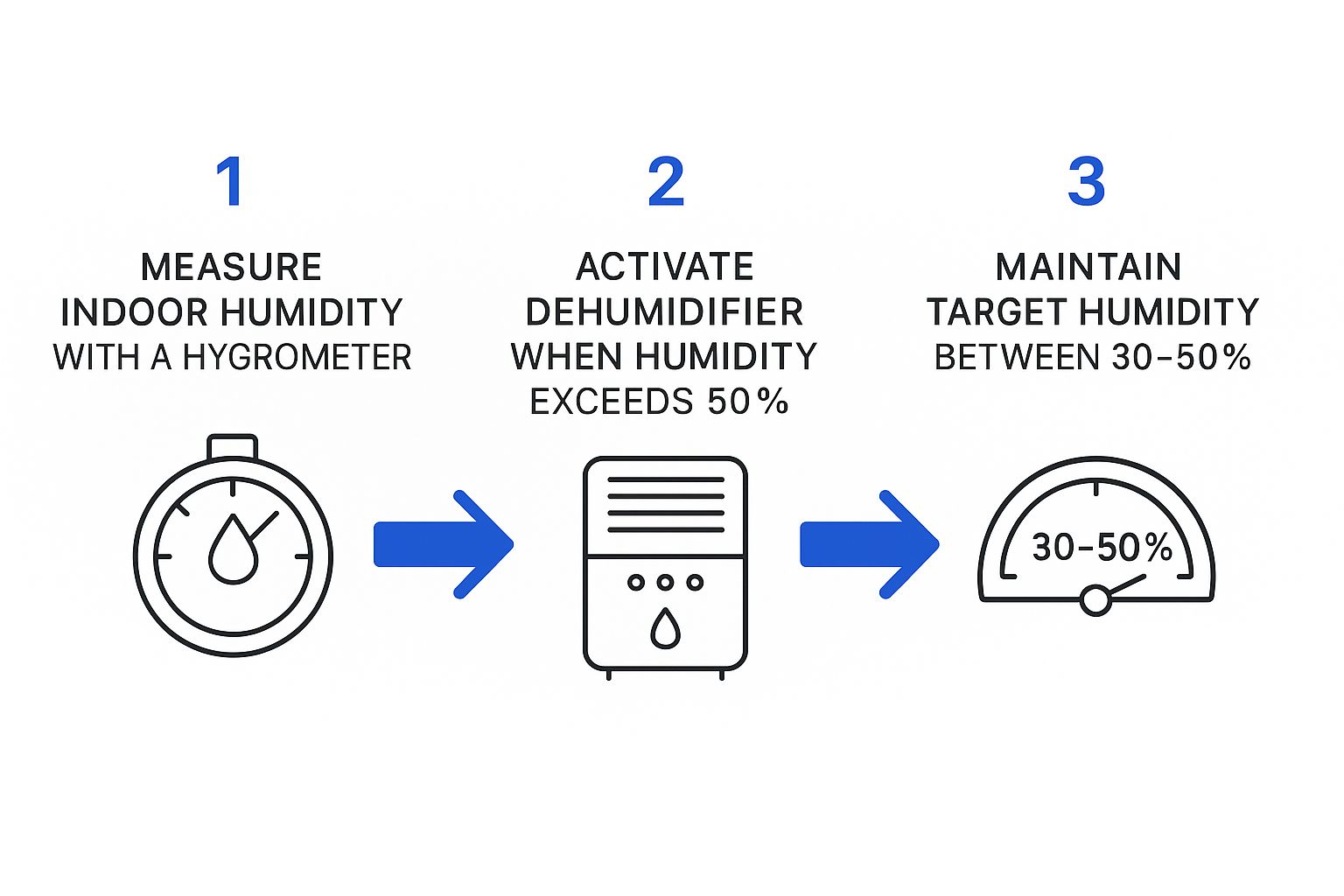
As this shows, consistently keeping humidity below the 50% threshold is a powerful, proactive strategy that directly disrupts the dust mite life cycle.
Common Questions About Dust Mite Control
When you first start tackling a dust mite problem, it's normal to have a few questions. Knowing what to expect helps you set realistic goals and actually see the progress you're making towards a healthier home.
Let's get one thing straight from the outset: can you get rid of dust mites completely? The honest answer is no. Dust mites are a natural, if unwelcome, part of almost every home. The goal isn't total eradication—which is pretty much impossible—but effective control.
By following the strategies we've talked about, like hot-washing your bedding, keeping an eye on humidity, and deep cleaning soft furnishings, you can massively reduce their numbers. You're basically making your home a place they can't stand to be, and that's the real key to long-term relief.
Are Expensive Air Purifiers Necessary?
This is a question I get asked all the time, and it really depends on your specific situation. A good quality air purifier with a HEPA filter is fantastic for snatching allergens out of the air, but it's not always the first or only thing you should reach for.
There are some very effective, and often cheaper, alternatives that can make a huge difference:
- Ventilation is Your Friend: Just opening your windows for 15-20 minutes a day can do wonders. It swaps out that stale, allergen-heavy indoor air for fresh air from outside.
- Tackle the Humidity: A dehumidifier is often a smarter investment. It attacks the root of the problem by creating an environment that's too dry for mites to survive and multiply.
- Upgrade Your Vacuum: A vacuum cleaner with a solid HEPA filter is a game-changer. It ensures you’re trapping allergens from surfaces instead of just blowing them back into the air.
The best approach always combines cleaning your surfaces with controlling the environment. An air purifier is a brilliant tool to have, especially in the bedroom, but it works best when you’re also getting mites and their allergens out of your carpets, bedding, and furniture.
How Quickly Will I See Results?
You'll need a bit of patience, but you should notice an improvement fairly quickly. After getting into a consistent routine, most people with mild to moderate allergies tell me they feel a difference within just one to two weeks.
Of course, this can vary. It depends on how high the allergen levels were to begin with and how sensitive your allergies are. The first few deep cleans, particularly a professional one, will get rid of a massive amount of existing allergens. To keep things that way, knowing how often to clean carpets and upholstery is vital. Sticking to your new weekly and monthly schedule stops the mite population from bouncing back, meaning you can keep breathing easier.
Ready to drastically reduce dust mites and allergens in your home? The team at AG Carpet Specialists uses professional-grade steam cleaning and eco-friendly solutions to deep clean your carpets and upholstery, eliminating mites at the source. Visit us at https://www.agcarpetspecialist.co.uk for a free quote and a healthier home.