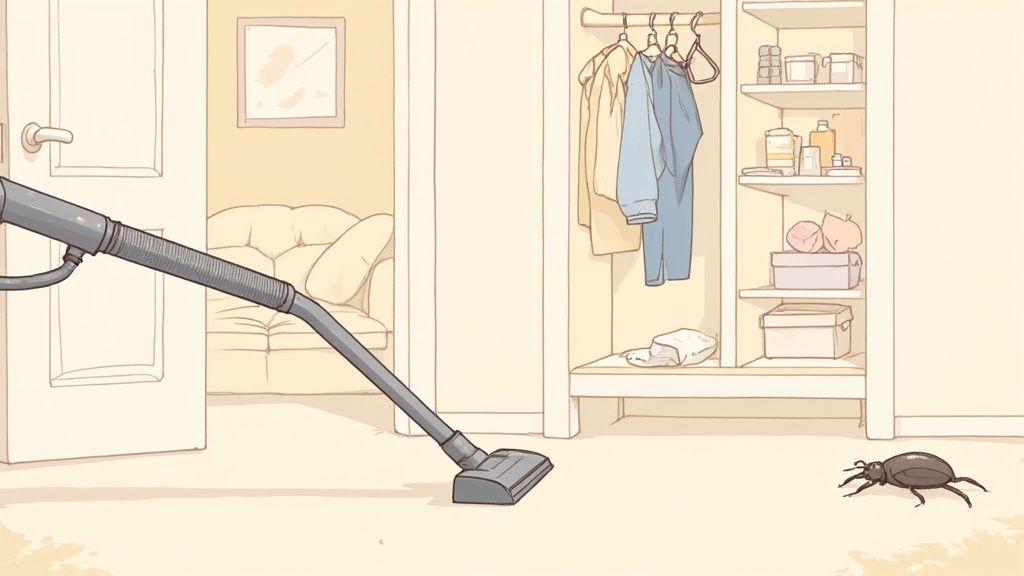
To stop carpet beetles in their tracks, you need a two-pronged attack: cut off their food supply and block their way in. This really comes down to rigorous cleaning routines, storing natural fibres correctly, and sealing up any gaps in your home’s exterior that adult beetles might sneak through.
Understanding the Carpet Beetle Threat in UK Homes
Before you can win the battle, you have to know your enemy. Spotting a tiny, speckled beetle on a windowsill here in the UK might not seem like a big deal, but it’s often the first clue to a much larger problem hiding out of sight. These little insects are more than just a passing annoyance; they kick off a destructive cycle that can ruin expensive wool carpets, your favourite jumpers, and priceless family heirlooms.
The real culprits aren't the adult beetles you’ll see fluttering near lights. It’s their larvae that cause all the chaos. Often called "woolly bears" because of their hairy appearance, these tiny grubs have a massive appetite for anything made from natural, animal-based materials. They thrive in dark, quiet spots where they can eat and grow undisturbed, which is why you often don't find them until the damage is already done.
Identifying the Common Intruders
In British homes, we typically deal with two main species: the varied carpet beetle and the furniture carpet beetle. Both are tiny, measuring just 2 to 5 mm, with a distinctive mottled pattern of brown, black, and white or yellow scales on their backs.
Their life cycle starts when a female lays between 40 and 100 eggs, which then hatch into larvae in about two weeks. It's these larvae that chew through materials rich in keratin—think wool, fur, feathers, leather, and silk—causing damage that simply can't be repaired.
This puts several items in your home at high risk:
- Wool Carpets and Rugs: Their number one target, offering an endless buffet.
- Clothing: Wool, cashmere, or silk jumpers and suits stored away in wardrobes.
- Upholstered Furniture: Sofas and armchairs that contain natural fibre padding.
- Stored Textiles: Blankets and curtains tucked away in cupboards or the loft.
The Subtle Signs of an Infestation
Catching an infestation early is absolutely key to preventing widespread damage. Since the larvae are so small and secretive, you need to become a bit of a detective and look for the subtle clues they leave behind.
One of the most common signs is finding their shed skins. As the larvae grow, they moult, leaving behind brittle, empty casings that look like tiny, hairy shells. You’ll usually find these along skirting boards, under furniture, or in the corners of wardrobes where dust and fluff gather.
Another tell-tale sign is their faecal pellets. These are minuscule black or brown specks, almost like grains of sand or pepper, and they’ll be concentrated in the areas where the larvae have been feeding.
Finally, of course, is the damage itself. Unlike moths, which leave clean-cut holes, carpet beetle damage often looks like irregular, grazed patches on the surface of a carpet. On clothes, you might find several small, scattered holes instead of one big one. These pests can also stir up irritants in the air; for more on that, have a look at our guide on how to reduce allergens in your home.
Key Takeaway: The damage from carpet beetles is caused exclusively by the larval stage. If you see adult beetles, it’s a sign that larvae are likely feeding somewhere dark and hidden within your home. Ignoring the adults means allowing the destructive cycle to continue unchecked.
Proactive Cleaning And Home Maintenance Routines
When it comes to carpet beetles, prevention is all about consistent, thoughtful housekeeping rather than a single, massive clean-up. Your best defence is a strong offence. This means weaving specific cleaning and maintenance tasks into your regular routine to make your home completely unwelcoming for these pests.
It's about getting past the surface-level tidy. Carpet beetles thrive in the forgotten nooks and crannies of our homes—those places where dust, pet hair, and natural fibres pile up undisturbed. By targeting these hidden hotspots, you can disrupt their lifecycle long before a full-blown infestation takes hold, saving you a lot of stress and money down the line.
Beyond Basic Vacuuming: A Deeper Clean
Regular vacuuming is the cornerstone of carpet beetle prevention, but its power lies in how thoroughly you do it. A quick zip across the middle of the room just won't cut it with these stubborn pests.
You've got to focus on the areas where debris loves to hide. Use your vacuum’s crevice tool to get right into the edges where the carpet meets the skirting boards. Make a point of pulling furniture away from the walls to clean underneath; these dark, quiet spots are prime real estate for larvae. Pay extra attention under sofas, beds, and heavy bookcases.
Here's what a more effective vacuuming session looks like:
- Move the Furniture: Don't just clean around it. Once a month, shift big items to get to the carpet underneath.
- Use Your Attachments: The crevice tool for edges and the brush tool for upholstery are your best friends in this fight.
- Empty Straight Away: Always empty your vacuum cleaner bag or canister outside the house immediately after cleaning. This stops any captured larvae or eggs from finding their way back in.
This infographic shows exactly why that deep clean is so important. It breaks down the carpet beetle lifecycle, illustrating how proactive cleaning can stop them from developing from an egg into a destructive larva.
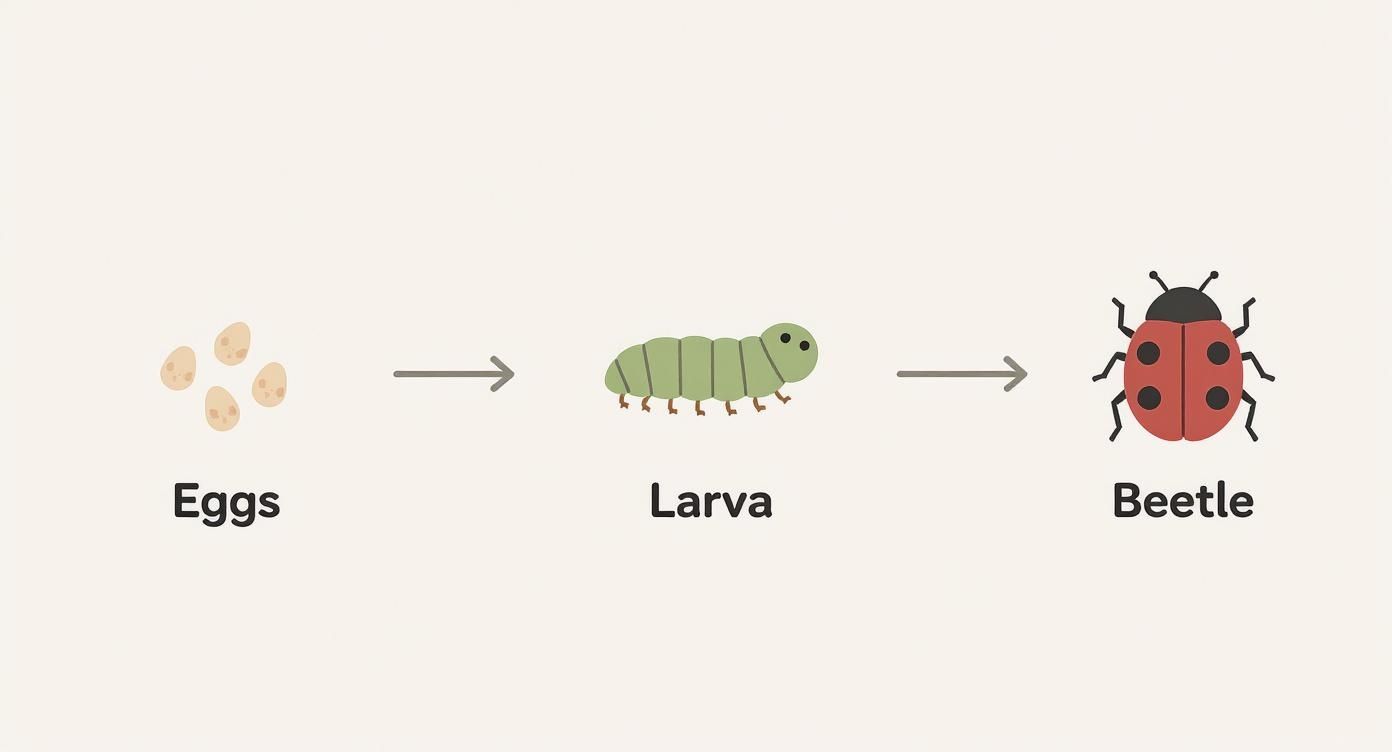
Seeing this progression from egg to adult beetle really highlights why targeting those hidden, undisturbed areas where larvae feed is absolutely crucial for prevention.
The Power Of Heat And Steam
While a good vacuuming session removes adult beetles, larvae, and some eggs, heat is your ultimate weapon for total eradication on surfaces that can take it. Carpet beetle eggs and larvae simply can't survive high temperatures.
Steam cleaning is brilliant for this. The hot, penetrating steam kills all life stages on contact, getting deep into your carpet pile and upholstery fibres. You can hire a professional service or use a domestic steam cleaner on carpets, rugs, and fabric furniture. For a more detailed guide, have a look at our article on how to deep clean carpets at home.
For smaller items like curtains, throws, cushion covers, and bedding, a hot wash cycle (60°C or higher) in your machine will kill any lingering pests. Popping them in the tumble dryer on a high heat setting adds another layer of security. Always check the care label first, of course, but try to make this a seasonal job for items you don't wash every week.
Carpet Beetle Prevention Cleaning Checklist
To stay on top of things, a structured routine is your best bet. This checklist breaks down essential cleaning tasks by room, helping you eliminate potential food sources and habitats for carpet beetles before they can get established.
| Area/Room | Weekly Task | Monthly Task | Seasonal Task (4x a year) |
|---|---|---|---|
| Living Room | Vacuum all carpeted areas, including under cushions and rugs. Dust surfaces. | Move sofas and chairs to vacuum underneath. Use attachments along skirting boards. | Steam clean carpets and upholstery. Wash throws and cushion covers on a hot cycle. |
| Bedrooms | Wash bedding in hot water. Vacuum floors, especially under the bed. | Vacuum inside wardrobes and drawers. Clean behind headboards and dressers. | Wash curtains and duvets. Inspect woollens and other natural fibres for signs of damage. |
| Kitchen/Pantry | Sweep/vacuum floors. Wipe up all crumbs and food spills immediately. | Check stored dried goods (flour, pasta, cereals) for signs of pests. Wipe down shelves. | Deep clean pantry, discarding out-of-date items. Pull out appliances to clean behind them. |
| Loft & Storage | N/A | Check for signs of pests, especially around stored natural fabrics or old bird nests. | Sort through stored items. Vacuum the area thoroughly. Remove any old nests. |
Following a checklist like this turns prevention into a manageable habit, making your home a much less inviting place for pests.
Fortifying Your Home's Defences
A spotless interior is only half the battle. Adult carpet beetles usually fly into our homes from outside, drawn in by lights and looking for a safe place to lay their eggs. Sealing up their entry points is a vital step for long-term prevention.
Start by having a good look around the outside of your house. Search for small cracks and gaps around window and door frames, and where utility pipes enter the building. Use a suitable sealant or caulk to fill them in.
Next, check your window and door screens. Even a tiny tear is a wide-open invitation for a beetle. Repair or replace any damaged screens to create a solid barrier. It’s also a smart move to check lofts and chimneys for old birds' nests, as these are notorious breeding grounds. Getting rid of them eliminates a major source of potential infestations.
Finally, think about the materials inside your home. It helps to be familiar with different fabric types, such as durable British fabrics like twill weave, as their characteristics can influence your cleaning approach. Tightly woven fabrics can be less tempting for larvae, and knowing your textiles helps you care for them properly. By combining a meticulous cleaning schedule with solid home maintenance, you build a fortress against carpet beetles.
Safeguarding Your Wardrobe with Smart Storage
It’s not just your carpets at risk; your wardrobe is a prime target for carpet beetle larvae. They see your prized wool jumpers, silk scarves, and cashmere coats as a gourmet meal rather than cherished clothing. Effective storage isn't just about tidying things away—it's about creating an impenetrable fortress to protect your textiles.
You need to rethink how you store seasonal or rarely-used items. Simply placing them on a dark shelf is practically rolling out the welcome mat for pests. The real goal is to create a physical barrier that larvae simply cannot get through, cutting them off from their food source completely.
The Non-Negotiable First Step: Clean Everything
Before a single item goes into storage, it must be spotless. This is the single most important step, and one that people often skip. Larvae are attracted to more than just natural fibres; they're drawn to the human traces left behind.
Think of spills, food stains, sweat, and body oils as flavour enhancers for these pests. A tiny, invisible stain on a wool coat makes it a five-star meal. A thorough clean removes these powerful attractants, making your clothes far less appealing.
For the best results:
- Dry-clean valuable items like wool suits, cashmere, and silk garments before putting them away for the season.
- Wash everything else on the highest temperature the fabric can safely handle to kill off any hidden eggs or larvae.
- Ensure items are completely dry before packing. Any lingering moisture can lead to mould and mildew, which is a whole other problem.
Choosing Your Storage Wisely
Cardboard boxes and standard fabric bags offer almost no protection. Larvae can chew through cardboard, and adult beetles will find their way through the loose weave of most bags. To truly protect your wardrobe, you need to invest in better storage solutions.
Airtight plastic containers with secure lids are an excellent choice, creating a solid barrier that pests can't breach. For bulkier items like duvets or winter jumpers, vacuum-sealed bags are a lifesaver. They don't just save an incredible amount of space; they remove all the air, making it impossible for larvae to survive inside.
Expert Tip: Avoid the temptation to cram too much into one container. Overstuffing can damage delicate fibres and create deep-set wrinkles. Give your textiles a little breathing room, even inside an airtight box.
This thinking extends beyond your clothes. Understanding the principles of proper storage for fabrics is key to protecting everything from vintage heirlooms to spare upholstery material you might have tucked away.
Harnessing Natural Repellents
While airtight storage is your main defence, adding natural repellents gives you an extra layer of protection, especially for items you access more often. These are a fantastic, non-toxic alternative to old-fashioned mothballs and their harsh chemicals.
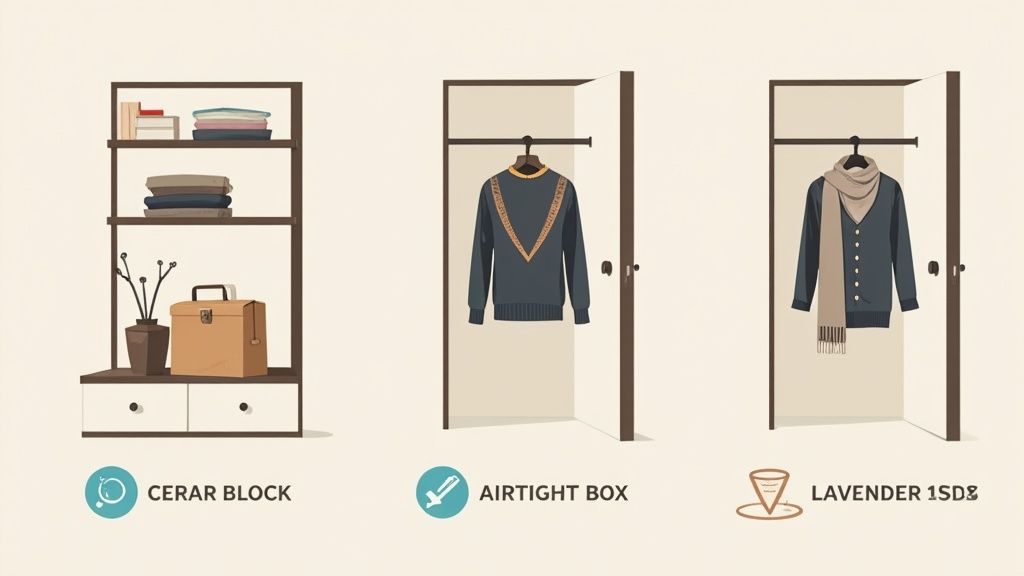
Cedar is probably the most well-known natural pest deterrent. The oils in the wood have properties that put carpet beetles and other pests off.
- Cedar Blocks or Balls: Pop them in drawers or on wardrobe shelves.
- Cedar Hangers: An excellent choice for hanging valuable wool suits or coats.
- Cedar Sachets: Tuck them into the pockets of your stored garments.
Just remember that the scent of cedar fades over time. Give the wood a light sand every few months to release a fresh layer of those fragrant, protective oils.
Lavender is another pleasant-smelling and effective option. You can place dried lavender sachets in drawers, hang them in wardrobes, or pack them into storage containers. Not only does it help deter pests, but it also leaves your clothes with a lovely, subtle scent. This same logic applies to other soft furnishings, and you can learn more about protecting them in our guide on how to clean upholstery at home.
Effective Natural and DIY Control Methods
More and more, households are looking for ways to tackle pests without resorting to harsh chemicals. The good news is that when you're up against carpet beetles, there are several highly effective natural and DIY methods that can disrupt their lifecycle and get them out of your home. These strategies use simple, easy-to-find materials to hit an infestation where it hurts, zeroing in on killing the larvae and putting off the adult beetles.
These methods aren't just a safer choice for your family and pets; they put you in the driver's seat. From powders that dry out the destructive larvae to natural repellents that make your home an unwelcome place for them, you can build a solid defence using things you might already have in your kitchen cupboards.

Using Desiccants to Dehydrate Larvae
One of the most powerful natural weapons in your arsenal against carpet beetle larvae is diatomaceous earth (DE). This fine, chalky powder comes from the fossilised remains of tiny aquatic organisms. While it feels soft to us, on a microscopic level, its particles are incredibly sharp.
When a larva crawls through DE, these sharp particles scratch its waxy outer shell, causing it to lose moisture, dehydrate, and die. It’s a completely physical method of pest control, which means the beetles can't build up a resistance to it.
For the best results with diatomaceous earth:
- Choose Food-Grade DE: Always make sure you're using food-grade diatomaceous earth. It's unheated and safe for use in homes with children and pets.
- Apply a Light Dusting: Using a duster or just your hand, apply a very fine layer where you've seen activity. Pay close attention to carpet edges, underneath furniture, inside wardrobes, and along skirting boards.
- Leave and Vacuum: Let the DE sit for a few days to a week. This gives any hidden larvae a chance to come into contact with it. Afterwards, vacuum the area thoroughly.
Another option is boric acid. It's also a naturally occurring compound but needs a bit more caution than DE, particularly if you have pets that might lick the treated spots. It acts as a stomach poison for any larvae that ingest it while grooming. Apply it sparingly in out-of-the-way places, like under carpets or inside wall voids where pests might be travelling.
Creating Your Own Repellent Sprays
Carpet beetles, like a lot of insects, can't stand strong smells. You can use this to your advantage by mixing up your own natural repellent sprays with essential oils. These are ideal for treating surfaces where you can't use a powder, like curtains, upholstery, and inside drawers.
Peppermint and clove oils are especially good choices. We might find their strong scents pleasant, but they're overwhelming for pests and will encourage adult beetles to find somewhere else to lay their eggs.
To make a simple spray:
- Fill a clean spray bottle with water.
- Add 10-15 drops of peppermint or clove essential oil (or a mix of both).
- Add a small splash of white vinegar, which helps the oil and water mix together.
- Give it a good shake before each use and lightly mist the areas you're concerned about.
Important Note: Always test your spray on a small, hidden patch of fabric first to make sure it doesn't cause any staining or discolouration. This is particularly crucial for delicate materials like silk.
The Cleaning Power of Vinegar
Vinegar is a true multi-tasker—a great cleaner and a mild insecticide. A simple solution of equal parts white vinegar and water can be used to wipe down hard surfaces like shelves, window sills, and the inside of empty drawers. This not only cleans away dust and potential food sources but will also kill any eggs or larvae it comes into contact with.
While it's brilliant on hard surfaces, avoid spraying vinegar directly onto delicate natural fibres without testing first, as its acidity could cause damage. For carpets and rugs, looking into a specific natural carpet cleaner is often a safer and more effective way to go.
Monitoring with Simple Glue Traps
A big part of knowing how to prevent carpet beetles is understanding the size of your problem. Simple sticky glue traps, which you can find at most hardware shops, are an excellent way to monitor the situation. They won't solve a full-blown infestation by themselves, but they give you incredibly useful feedback.
Place them on window sills, near doorways, and inside wardrobes. Since adult beetles are drawn to light, windows are a prime spot to catch them. By checking these traps regularly, you can get a good idea of whether the beetle population is growing or shrinking, helping you see just how well your control methods are working.
Knowing When to Call a Professional Pest Controller
Sometimes, despite your best efforts with the hoover and natural deterrents, a carpet beetle problem can simply get out of hand. DIY methods are fantastic for prevention and tackling small, localised issues, but a widespread infestation needs a much stronger, more strategic approach. That’s where the professionals come in.
Knowing when you’ve hit that wall is key. Putting off the decision to call in an expert can lead to irreversible damage to your carpets, furniture, and other prized textiles. If your own control measures just aren't making a noticeable dent in the problem, it’s definitely time to get some professional help.
Clear Signs You Need an Expert
It can be tough to admit defeat, but there are some tell-tale signs that an infestation has moved beyond a simple DIY fix. A professional pest controller has access to treatments and equipment that are far more effective than anything you can buy off the shelf.
You should seriously consider making that call if you notice any of these things:
- Larvae in Multiple Rooms: Finding larvae in one area is a concern, but finding them in the living room, a bedroom, and on the landing points to a deep-rooted, systemic problem.
- Significant Visible Damage: If you’re discovering threadbare patches on your carpets, multiple holes in clothing, or damage to upholstered furniture, the larvae have been feasting for a long time.
- Persistent Adult Sightings: Seeing adult beetles on your windowsills every day, even after a thorough deep clean, suggests the original breeding source is still active and well-hidden.
These signs usually mean the infestation has taken hold in hard-to-reach places like inside wall cavities, under floorboards, or deep within your loft insulation.
What to Expect From a Professional Service
Getting in touch with a pest control service in the UK is a straightforward process. The first step is always a detailed inspection. A trained technician will methodically search your home to pinpoint the source and scale of the infestation, looking in places you might never have thought of.
In the UK, carpet beetles have actually become a bigger textile pest than even clothes moths. The larvae of common species, like the variegated carpet beetle, can feed for up to a year in hidden spots like underfloor voids and insulation—areas that are rarely disturbed until the damage becomes obvious. You can find out more about these pests on the British Pest Control Association website.
A Professional Assessment: The real value of a professional isn’t just in their powerful treatments, but their diagnostic skill. They can distinguish between different pests, identify all potential breeding sites, and create a targeted plan that solves the root cause, not just the symptoms.
After the inspection, they’ll talk you through a proposed treatment plan. This could involve a few different methods, depending on how bad the infestation is and where it’s located.
Common professional treatments often include:
- Targeted Insecticide Application: Professionals use controlled-application insecticides that are highly effective and can get deep into carpet fibres and crevices where larvae love to hide.
- Heat Treatments: For very severe infestations, some companies might recommend a chemical-free heat treatment. This involves raising the temperature of a room to a level that kills beetles at every stage of their life cycle.
- Follow-Up Visits: A good, reputable service will often schedule a follow-up visit to make sure the treatment was a success and to deal with any stubborn pockets of the infestation.
Ultimately, investing in expert help saves you time, stress, and the cost of replacing valuable items. After treatment, keeping up a rigorous cleaning schedule is vital. You might find our guide on professional carpet cleaning services helpful for keeping your home protected in the long run.
Your Carpet Beetle Questions Answered
Even when you’ve got a solid prevention plan, it's completely normal to have a few nagging questions about these little pests. Getting to grips with their behaviour is the best way to make your efforts count and give yourself some much-needed peace of mind.
Here, we tackle some of the most common queries we hear from homeowners across the UK when they’re dealing with a potential carpet beetle problem.
What’s the Main Reason I Have Carpet Beetles in My House?
It really boils down to two simple things: they’ve found a food source and an easy way to get in. Adult beetles actually feed on pollen, so they often just fly in through an open window or get brought inside accidentally on a bouquet of fresh flowers. Once they’re in, their one mission is to find a dark, quiet spot to lay their eggs.
They are programmed to seek out places near a ready meal for their larvae. That means natural fibres like wool, silk, and leather, but also less obvious spots where lint, pet hair, or even food crumbs have built up. An infestation often starts in a forgotten corner – think under a heavy sofa, at the back of a wardrobe, or tucked away in loft insulation.
Can I Get Rid of Carpet Beetles for Good?
While it’s tricky to guarantee they’ll never come back, you can absolutely get rid of an active infestation and keep your home beetle-free with consistent effort. Eradication isn’t a one-and-done job; it's a long-term commitment. The real key is diligence.
A thorough initial clear-out has to be followed by a strict, regular cleaning schedule, properly storing any vulnerable natural textiles, and sealing up any gaps they might be using to get in. You might still spot the odd adult beetle that finds its way inside, but a solid prevention strategy will stop a new infestation from ever taking root.
Takeaway Insight: Think of it less like a single battle and more like ongoing home maintenance. A clean, sealed home offers no food and no shelter, forcing adult beetles to find somewhere else to lay their eggs. This persistent approach is the secret to long-term success.
Are Carpet Beetles Harmful to Me or My Pets?
The good news is that carpet beetles aren't harmful in the way we think of other pests. They don’t bite, they don’t sting, and they don’t carry any diseases that can be passed to people or animals. The risk they pose is indirect, but it's still one to take seriously.
The main issue comes from the larvae, often called 'woolly bears'. They’re covered in tiny, coarse hairs that can cause a skin reaction in people with sensitivities. This can look like an itchy, red rash, and it’s sometimes mistaken for bed bug bites. While this allergic reaction isn't a direct threat to your health, the discomfort it causes, on top of the damage they do, makes them a pest you want dealt with.
If you're dealing with a stubborn carpet beetle issue or just want to ensure your home is professionally protected, AG Carpet Specialists can help. Our expert team uses eco-friendly solutions to deep clean carpets and upholstery, getting rid of pests and their food sources. Visit us at https://www.agcarpetspecialist.co.uk for a free quotation and restore the health of your home.