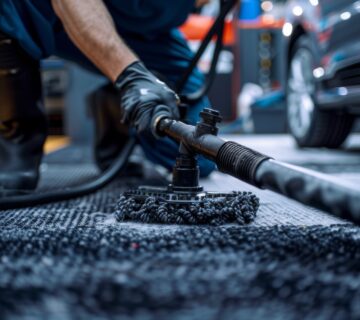
It’s that sinking feeling, isn't it? That moment you spot a dark, sticky smear of tar on your otherwise lovely carpet. It’s a common mishap, especially if there’s been roadworks nearby or a bit of DIY roofing, but it feels like a disaster. Tar has an oily, incredibly adhesive quality that makes it cling to carpet fibres for dear life, and it can seem like a permanent fixture.
That initial moment of panic is understandable, but what you do in the next few minutes is absolutely crucial.
Why Tar Stains Are So Tricky
Tar is a petroleum-based substance, which is a technical way of saying it hates water. That’s why your usual go-to method of scrubbing with soap and water is the worst thing you can do here. It won’t lift the stain; it will just spread the oily mess and make the problem bigger.
The longer tar is left, the more it cures and hardens into the carpet’s yarn, making it a real challenge to remove. This is a huge issue for homeowners, and it’s a big part of the professional cleaning industry. In fact, the UK carpet and upholstery cleaning market was worth nearly £3.3 billion in 2022, with carpet cleaning making up a massive 72.7% of that. You can see the full breakdown on the UK cleaning services market at GrandViewResearch.com.
Your First Moves: Contain the Situation
Before you even think about solvents or deep cleaning, your first job is damage control. A quick and calm response can stop a small spot from turning into a major headache.
When you find a fresh tar stain, every second counts. The goal is to act before it has a chance to set deep into the carpet fibres. The table below outlines the essential first steps you need to take immediately.
Immediate Actions for a Fresh Tar Stain
| Action | Why It's Critical | What to Use |
|---|---|---|
| Scrape Off Excess Tar | Removes the bulk of the tar before it can be pushed deeper into the carpet. | A dull butter knife, the edge of a spoon, or an old credit card. |
| Work from the Outside In | Prevents the stain from spreading outwards and becoming larger. | Always move your tool from the edge of the stain toward the centre. |
| Blot, Don't Rub | Rubbing grinds the tar into the carpet fibres, making it much harder to remove. | A clean, white microfibre cloth or plain paper towels. |
| Apply a Solvent Gently | The solvent will start to break down the tar's oily structure. | A small amount of eucalyptus oil on a cloth is a great first choice. |
Acting quickly and correctly with these steps will make the full removal process much more successful.
Getting these initial steps right is genuinely half the battle. Your immediate goal isn't to make the stain vanish in five minutes. It's to stop it from setting and spreading, which is the perfect setup for a proper, successful clean.
Preparing for a Successful Tar Removal Mission
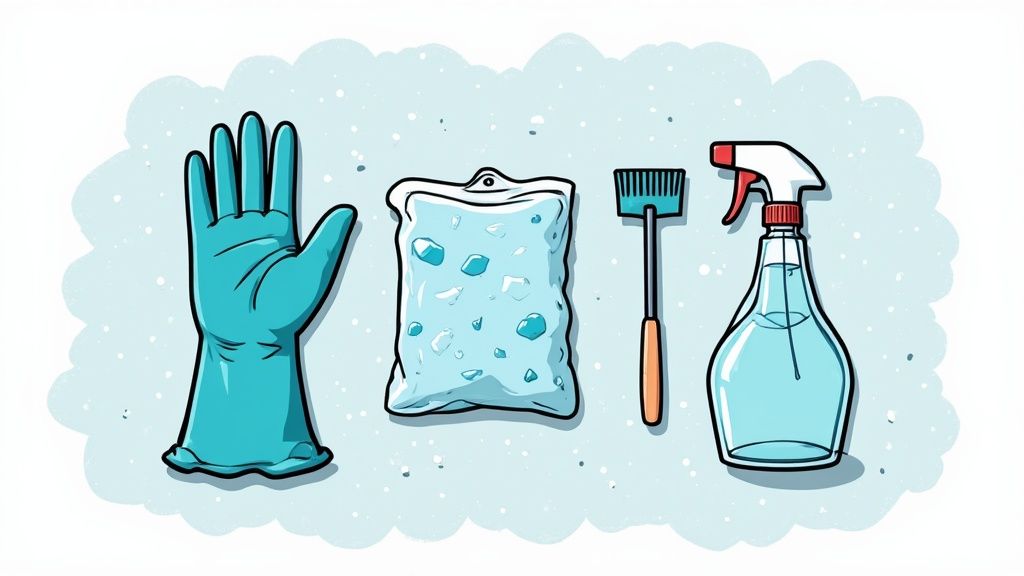
Before you even think about grabbing a cleaning solution, a little prep work is essential. I've seen it countless times: someone rushes in, tries to scrub the tar, and ends up pushing that sticky mess deeper into the carpet fibres. It turns a simple spot clean into a real nightmare. So let's get the groundwork right first.
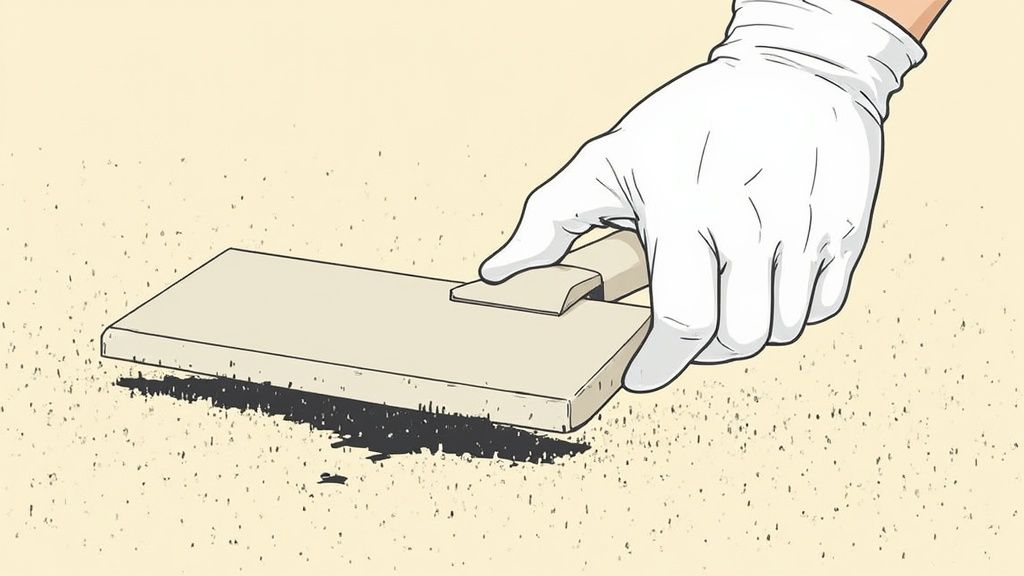
Your first job is to deal with any solid, raised bits of tar sitting on the surface. Whatever you do, don't wipe it! That’ll just smear it into a bigger problem. Instead, find a dull-edged tool – a butter knife or the edge of a spoon works perfectly.
Scrape Away the Excess
Gently work from the outside edge of the stain towards the middle, carefully scraping the surface. This little trick stops you from spreading the tar outwards. The aim isn't to get rid of the stain completely at this stage, but to lift off any clumps. Less solid tar on the surface means less work for your cleaner later on.
After you've scraped off as much as you can, the next step is absolutely crucial for protecting your carpet.
Always, and I mean always, test your cleaning solution on a hidden patch of carpet first. A spot inside a wardrobe, under the sofa, or on an offcut if you have one is ideal. This simple check is your best defence against disasters like discolouration or fibre damage.
The Importance of a Patch Test
Just dab a small amount of your chosen cleaner onto that hidden spot and blot it gently with a clean, white cloth. Let it dry completely and then check for any changes in colour or texture. It's a five-minute job that can save you a world of heartache and lets you move forward with confidence.
Getting the prep right is a fundamental skill for any carpet care. If you're looking for a more comprehensive guide on maintaining your floors, take a look at our article on how to deep clean carpets at home.
A Practical DIY Method for Removing Tar
Now that you’ve scraped off the excess, it's time to deal with the stain left behind. Tar is an oily, sticky mess, so you need to fight it with a solvent that can break down its structure. Water is completely useless here; it will just sit on top and won't do a thing. You need something with an oily base.
You might have the perfect solution sitting in your cupboard already. Everyday household items can be surprisingly effective. Things like eucalyptus oil, a light penetrating oil like WD-40, or even a small dab of butter or margarine can start to dissolve the tar's grip on your carpet fibres.
Applying the Solvent Correctly
First, pick your solvent. Then, apply a small amount to a clean, white microfibre cloth. Never pour it directly onto the carpet. This is a common mistake that can lead to oversaturating the area and damaging the carpet's backing. Using a cloth gives you total control.
Gently dab the tar stain with your cloth, always working from the outside edge towards the centre. This is a crucial technique to stop the stain from spreading outwards. You should start to see the tar transferring from the carpet to your cloth. As this happens, keep switching to a clean part of the cloth to avoid just smearing the grime back onto the carpet. The golden rule here is to blot, don't rub. Rubbing just grinds the tar deeper into the fibres.
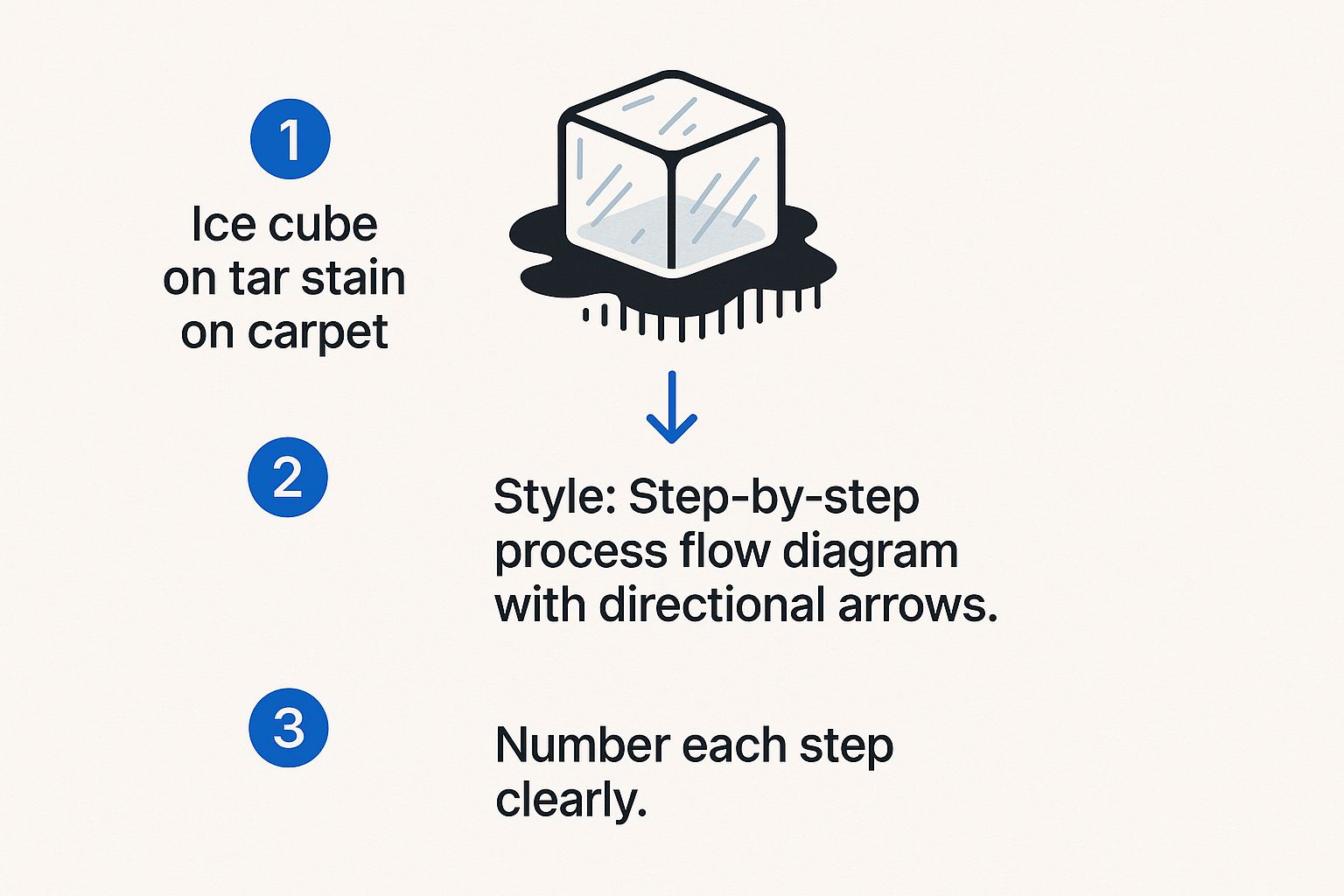
While some guides suggest freezing the tar first, we find that using a solvent to dissolve it is often a far more effective approach for this specific kind of stain.
Removing the Oily Residue
Once the tar has gone, you'll probably be left with an oily patch from the solvent. Don't worry, this is a totally normal part of the process. To tackle this, you just need a mild degreaser, and a simple mix of warm water with a few drops of washing-up liquid works perfectly.
Pro Tip: Mix about one teaspoon of washing-up liquid into a pint of warm water. It's tempting to add more soap, but too much will leave a sticky residue of its own, which will attract more dirt later. In this case, less is definitely more.
Take a fresh, clean cloth and blot the oily area with your diluted washing-up liquid solution to cut through the grease. Next, take another cloth dampened with plain water and blot again to rinse the area. Finally, press a dry cloth or a thick stack of paper towels firmly onto the spot to soak up as much moisture as you can.
After successfully removing the stain, it's worth thinking about future protection. You can learn more about how a professional stain protector for carpet can make the next clean-up a whole lot easier. Let the area air dry completely, and your carpet should look as good as new.
Tackling Stubborn Tar Stains and Residue
Sometimes, a tar stain puts up a real fight. This is especially true if it’s had time to cure deep into the carpet fibres. When a homemade solvent isn't quite cutting it, it might be time to bring in a specialised commercial tar remover. These products are formulated with more potent ingredients, specifically designed to dissolve those stubborn, set-in stains.
When you're choosing a product, look for ones containing citrus-based solvents (like d-Limonene) or other hydrocarbon solvents. But you need to proceed with caution. Many of these aggressive cleaners are simply unsuitable for natural fibres.
If you have a wool or silk carpet, avoid harsh chemicals at all costs and always perform a patch test in a hidden area first. The last thing you want is to remove the tar but also the carpet’s colour along with it.
Dealing With Lingering Oiliness
Even after the black, sticky tar is gone, you might notice a faint, greasy residue left behind. This oily mark is a common side effect of both the tar itself and the solvents used to remove it. Fortunately, there are a couple of effective ways to lift this final trace of the stain.
A simple paste made from bicarbonate of soda and a little water can work wonders here.
- Apply the paste directly to the oily spot.
- Let it dry completely, which can take a few hours.
- Once it's dry and cakey, vacuum it up thoroughly. The bicarbonate of soda cleverly absorbs the oil as it dries.
For a slightly stronger approach, you can carefully use a cloth lightly dampened with rubbing alcohol. Just remember to blot gently and never, ever saturate the area.
The most important rule for any persistent stain is patience. Rushing the process with aggressive rubbing or harsh chemicals is the fastest way to cause permanent damage. Work in patient, gentle stages.
No matter which method you use, it's always a good idea to finish with a final blot using a clean, damp cloth. This helps to rinse away any remaining solution. Dealing with various marks is all part of home maintenance; for more advice, you can learn more by checking out our guide on how to remove stubborn carpet stains.
When to Call in the Carpet Cleaning Professionals
While it's great to have some DIY tricks up your sleeve for small, fresh tar spots, there are definitely times when trying to fix it yourself can make things a whole lot worse. Knowing when to step back is key to protecting your carpet. Sometimes, the best thing you can do is put down the cleaning cloth and pick up the phone.
Think about the size of the mess. A couple of tiny tar drops are one thing, but a large, smeared-in stain is a completely different beast. Professionals come armed with powerful, industry-grade solvents and machinery, like hot water extraction systems, that you just can't replicate at home. They can tackle a big stain without the risk of overwetting the carpet, which can lead to serious damage to the backing and underlay.
When Professional Help Is a Must
There are a few clear signs that it’s time to call for backup. You should seriously consider hiring a professional if:
- The stain is on a delicate material: Carpets made from wool, silk, or certain plush synthetics need a specialist’s touch. The wrong approach can cause irreversible shrinkage, colour bleeding, or texture damage.
- The tar has completely set: Old, hardened tar stains are incredibly stubborn. They often require specific chemical treatments to break them down before they can be extracted.
- Your DIY attempts have failed: If you've given it your best shot and the stain isn't budging, stop! Adding more products can create a nasty chemical cocktail, potentially setting the stain permanently or damaging the carpet fibres.
The UK's cleaning industry is a huge and advanced sector, valued at around £59.8 billion back in 2021. This means today's professionals are better equipped than ever with the right technology and training for tough jobs like tar removal. For a deeper dive into these figures, check out the UK cleaning industry statistics on Policybee.co.uk.
Ultimately, getting a professional in can save you a lot of time, stress, and potentially the high cost of replacing an entire carpet. If you do decide to call in the experts, it's a good idea to know how to prepare for professional carpet cleaning to make sure the process goes smoothly and you get the best possible result.
Common Questions About Removing Tar from Carpet
When you’re staring down a stubborn tar stain, it’s completely normal to have a few questions running through your mind. Getting the right advice is often the difference between a successful clean-up and accidentally making things a whole lot worse. Let's tackle some of the most frequent queries we get from homeowners.
Can I Use Petrol or Paint Thinner to Remove Tar?
While it might seem tempting to reach for something strong like petrol or paint thinner, we strongly advise against it. Yes, they’ll dissolve tar in a flash, but they can also dissolve your carpet’s latex backing, melt synthetic fibres, and strip the colour right out. Not to mention the hazardous fumes they release. It's far safer to stick with household oil-based methods or a professionally formulated commercial product designed for the job.
Will Freezing Tar with an Ice Cube Work?
This is a popular trick that works wonders for things like chewing gum or candle wax, making them brittle and easy to snap off. Tar, however, is a different beast altogether. Freezing it might make it harder, but trying to chip it away usually just shatters it into tiny, sharp particles. These then get pushed even deeper into the carpet fibres, turning a single stain into a much bigger mess. A solvent that dissolves the tar is a much better strategy.
Your best defence against future tar stains is prevention. A strict 'shoes off at the door' policy, especially during nearby roadworks, and durable doormats at every entrance can save you a world of hassle.
What Is the Best Approach for Wool Carpets?
You absolutely need to be extra cautious with wool carpets. Gentle, natural oil-based solvents like eucalyptus oil are generally safe, but you must perform a patch test in an unseen area first. Avoid aggressive chemical solvents and any kind of high heat at all costs, as they can cause permanent damage. If the stain is large or you feel at all unsure, your safest bet is to call a professional who specialises in natural fibres.
The principles for tackling stubborn spots often carry over to other cleaning challenges around the house. For example, if you're dealing with mineral deposits on other surfaces, you can learn how to remove hard water stains effectively with similar care and attention. For more general advice on keeping your floors looking their best, take a look at our essential carpet cleaning tips.
If you're facing a tar stain that seems too daunting for a DIY approach, don't hesitate. Contact AG Carpet Specialists today for a free quotation and let our experts restore your carpet safely and professionally. Find out more at https://www.agcarpetspecialist.co.uk.