If you're used to cleaning standard carpets, tackling a sisal rug for the first time can be a bit of a shock. The golden rule is simple: keep it dry. You’ll need to rely on dry cleaning methods, immediate blotting for any spills, and regular vacuuming with a suction-only head to protect those delicate natural fibres. Whatever you do, steer clear of steam cleaners and wet shampooers—water is the enemy here, causing permanent stains and warping.
Why Sisal Rugs Demand a Different Approach
Before you even grab a cloth, it's crucial to understand what makes a sisal rug so different. This isn’t your average synthetic carpet; it’s made from the natural plant fibres of the Agave sisalana plant. This gives it that beautiful, rustic texture, but it also comes with a major weakness: it absolutely cannot stand water.
Think of sisal fibres like tiny, absorbent straws. They are naturally hygroscopic, which means they eagerly soak up moisture from the air, let alone a direct spill. When the fibres get wet, they swell up. As they dry, they tend to shrink unevenly. This is exactly what causes those dreaded watermarks, buckling, and a rough, distorted feel that can permanently ruin your beautiful rug.
The Problem with Traditional Cleaning
This is precisely why your usual carpet cleaning methods are completely off the table for sisal. A steam cleaner or a wet shampooer, which works wonders on nylon or polyester, would be a disaster. The huge amount of moisture would saturate the fibres, leading to a whole host of problems:
- Permanent Water Stains: Dark rings form where water has pooled and dried, leaving a lasting mark.
- Warping and Shrinkage: The rug can quickly lose its flat shape, with edges curling up and the whole thing shrinking out of place.
- Fibre Degradation: Moisture weakens the natural plant fibres, making them brittle and much more likely to break.
- Mould and Mildew: If a rug isn't dried out almost instantly, moisture trapped deep in the weave can lead to musty smells and nasty mould growth.
In fact, UK carpet care experts consistently highlight moisture control as the number one priority for natural fibre rugs. Industry data even shows that up to 40% of damage complaints for sisal rugs are a direct result of improper water exposure. This is why professionals almost always recommend dry cleaning methods to keep the rug’s structure and appearance intact. For more expert advice, check out these in-depth sisal maintenance guides.
The most important thing to remember when learning how to clean a sisal area rug is to adopt a 'dry-first' mindset. Your vacuum and a soft brush are your best friends—not a bucket and sponge.
By respecting what makes sisal unique, you can avoid these common cleaning disasters and keep your rug looking fantastic. Our comprehensive guide on how to clean a sisal rug provides more specific, safe, and effective techniques. Understanding why sisal reacts to water the way it does is your best defence against accidental damage.
Your Essential Sisal Cleaning Toolkit
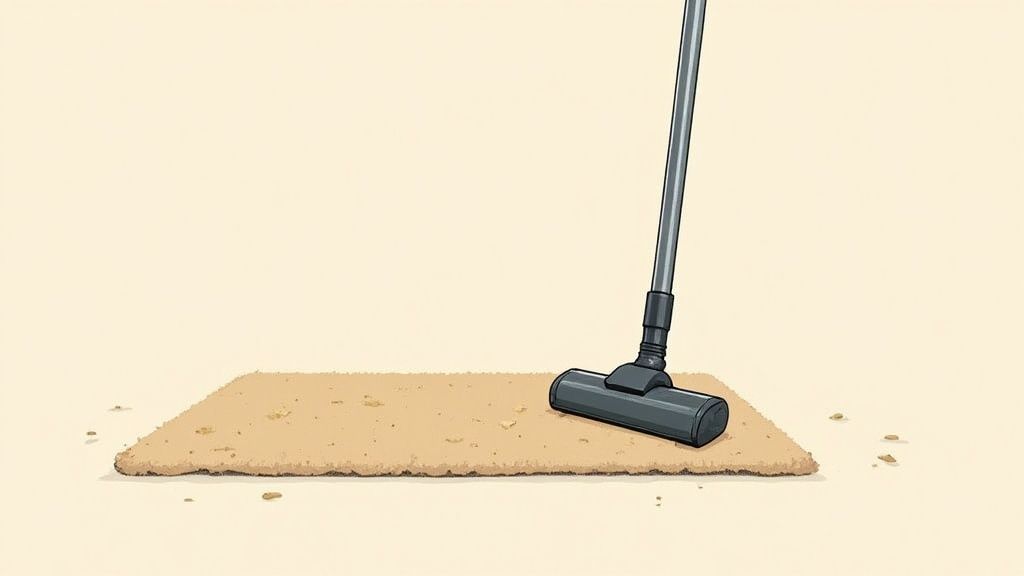
When a spill happens, the last thing you want is a frantic search for the right supplies. Speed is everything with sisal. Having a dedicated care kit ready to go means you can tackle accidents immediately, which is your best line of defence against a permanent stain.
The most crucial piece of equipment in your arsenal is a vacuum cleaner with a suction-only setting. I can’t stress this enough: never use a vacuum with a rotating beater bar on a sisal rug. That aggressive brushing action will pull, snag, and fray the natural fibres, causing irreversible damage to the weave. Always disengage the brush or use a hard floor attachment to gently lift away dust and grit.
Beyond the vacuum, a few everyday items are absolute must-haves. A good stack of clean, white, absorbent cloths is essential for blotting up spills without any risk of colour transfer. You'll also want a soft-bristled brush (an upholstery brush works perfectly) for working in dry cleaning powders or gently agitating dried dirt. And a tool you might not expect? A dull knife or a simple spatula. They're brilliant for carefully scraping off solid messes like dried mud or food without harming the fibres.
Choosing Your Cleaning Agents
With sisal, always remember two golden rules: "less is more" and "dry is best." You’d be surprised how effective simple kitchen staples can be. For a fresh greasy mark, a generous sprinkle of cornstarch or salt can work wonders, drawing the oil out of the fibres before you vacuum it all away.
For a deeper clean, however, you'll need to turn to a specialised product. There are some excellent dry-cleaning powders on the market made specifically for natural fibres like sisal. You just sprinkle the absorbent compound over the rug, gently work it into the weave, let it sit, and then vacuum it up. It lifts the dirt right out without introducing any dreaded moisture. It’s worth noting that the techniques for a large rug are very similar to those you’d use if you need to learn how to clean sisal carpet, as both demand a water-free approach.
A critical takeaway is that you should never use standard carpet shampoos, soaps, or detergents. These products introduce too much moisture and often leave a sticky residue that attracts even more dirt, creating a bigger problem than the original stain.
So, when should you reach for the salt shaker versus a commercial powder? It really depends on the stain you're facing.
DIY vs Commercial Sisal Cleaning Solutions
Here's a quick comparison to help you decide which solution is right for the job.
| Solution Type | Best For | Pros | Cons |
|---|---|---|---|
| DIY (e.g., Salt, Cornstarch) | Minor, fresh greasy spots or absorbing small liquid spills. | Extremely affordable, readily available, and completely natural. | Limited cleaning power for set-in stains or general grime. |
| Commercial Dry Powder | General deep cleaning, refreshing the entire rug, and tackling larger soiled areas. | Highly effective at lifting embedded dirt and oils without water. | More expensive and requires purchasing from a specialised retailer. |
Ultimately, having both on hand is the best strategy. A DIY solution is perfect for immediate, minor incidents, while a quality commercial powder is your go-to for more significant cleaning tasks and keeping your rug looking its best long-term.
Building a Simple Maintenance Routine
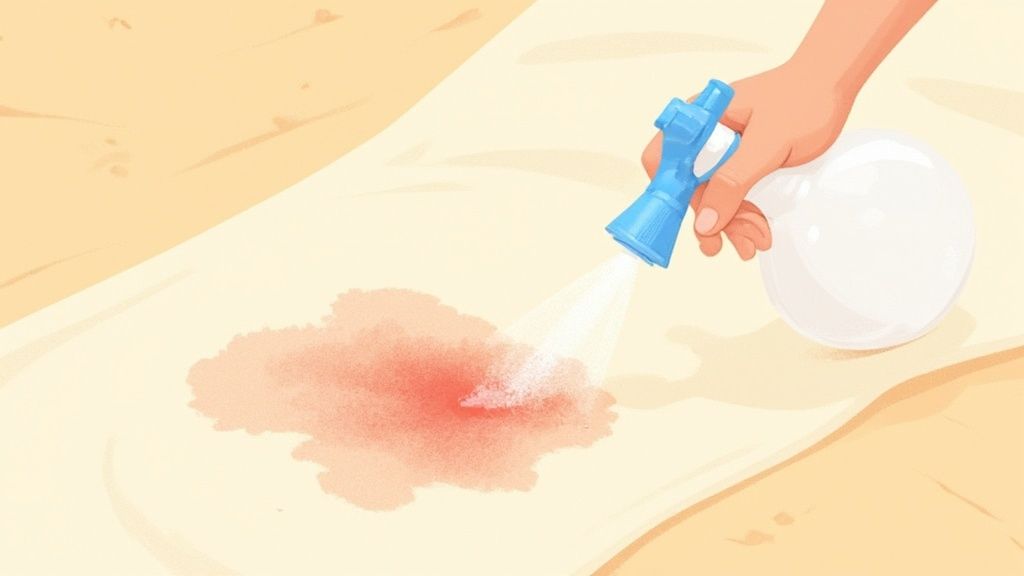
The real secret to a long-lasting sisal rug isn't some miracle cleaning product; it's all about consistent, preventative care. A simple but effective maintenance routine is your best line of defence against the daily build-up of dirt that can damage the rug's delicate natural fibres over time.
The single most important task is regular vacuuming. For high-traffic areas like hallways or living rooms, you should aim to vacuum at least twice a week. In less busy spots, like a bedroom, a thorough weekly session will do the trick. This consistent effort is crucial because it stops dirt and grit from working their way deep into the weave, where they can act like sandpaper and cause premature wear.
The Correct Vacuuming Technique
It’s not just about how often you vacuum, but how you do it. Always use a suction-only setting on your cleaner. The aggressive rotating bristles of a beater bar are far too harsh for sisal's plant fibres and will quickly cause fraying, pulling, and irreversible damage. If your vacuum doesn't have an option to turn the brush off, just use the hard floor or upholstery attachment instead.
This isn’t just a friendly suggestion; it’s a critical step in preserving your rug. UK professional cleaners report that using improper vacuum settings can lead to 20-30% faster fibre degradation in just one year compared to using the correct suction-only method.
Pro Tip: When you vacuum, make sure to go over the rug from multiple directions—north to south, then east to west. This simple trick helps to dislodge and lift out the fine dust that has settled deep within the rug's textured weave.
Simple Habits for Long-Term Care
Beyond vacuuming, a couple of other straightforward habits can make a huge difference in your rug's appearance and lifespan. These small actions reduce overall wear and tear, meaning you'll spend far less time dealing with intensive cleaning down the line.
- Rotate Your Rug: At least once a year, give your rug a 180-degree turn. This ensures that foot traffic and any sun exposure are distributed evenly across the surface, preventing one area from fading or wearing out faster than the rest.
- Use Doormats: Placing high-quality doormats at every entrance to your home is a game-changer. They will catch the majority of dirt, mud, and moisture before it ever gets a chance to reach your beautiful sisal rug. For more ideas on this, check out these tips for maintaining various entrance mats.
This proactive approach is truly fundamental to proper sisal care. And while these steps will handle all the day-to-day upkeep, it's also worth understanding other professional rug cleaning methods to get a fuller picture of comprehensive textile care.
Handling Spills and Stains Immediately

When an accident happens on your sisal rug, what you do in those first few seconds is critical. The natural fibres are incredibly absorbent, so a quick and calm response can be the difference between a simple clean-up and a permanent, ugly stain.
The absolute golden rule is to blot, never rub. I can't stress this enough. Rubbing a liquid spill—be it coffee, wine, or a pet accident—only grinds the liquid deeper into the fibres. Worse, it can cause the sisal to fray. Grab a clean, dry, white cloth (to avoid any colour transfer) and press down firmly on the spill to soak up as much as possible. Keep using fresh, dry sections of the cloth until it comes away dry.
Tackling Liquid Spills
Once you’ve blotted up the worst of it, you need to deal with any lingering moisture. This is key to preventing those tell-tale water rings that often appear after a spill, a common headache when learning how to clean a sisal area rug.
A great trick is to gently cover the damp patch with a bit of cornflour or salt. These act as natural absorbents, drawing out the final traces of dampness from the weave. Just leave it for a couple of hours, then vacuum it up thoroughly using a suction-only setting.
For something a bit more stubborn, like a dreaded drop of red wine, you might need to be a bit more proactive. Mix a simple solution of equal parts white vinegar and water. Lightly dampen a clean cloth with it—make sure it’s not dripping wet—and gently blot the stained area. Immediately after, grab a hairdryer on its coolest setting and dry the spot completely. This step is vital to stop a watermark from forming.
Dealing with Solid or Greasy Messes
What about solid spills, like a blob of jam or a muddy footprint? Here, your instincts might tell you to wipe it up, but you need to do the exact opposite: let it dry completely. Trying to clean up wet mud or food will just smear it into the rug, turning a small mess into a huge one.
Once the spill has hardened, you can gently scrape it off with the dull edge of a butter knife or a spatula. Always work from the outside of the spill inwards to avoid spreading it further. After you've lifted away the solid bits, give the area a good vacuum to pick up any loose debris.
Resisting the urge to immediately scrub a solid spill is one of the hardest but most effective habits to learn. Patience is your best tool for preventing a simple mess from becoming a permanent mark on your beautiful rug.
If a greasy mark remains after scraping, cornflour is your best friend again. Sprinkle it over the greasy spot, pat it in gently, and let it sit for at least an hour to absorb the oil. Vacuum it away, and the stain should be much better. For more advanced techniques, our guide on how to remove stubborn carpet stains offers extra solutions that can be carefully adapted for minor spots on sisal.
How to Deep Clean Your Rug Without Water
Every so often, a quick spot clean just won't cut it. For a proper refresh that gets deep into the fibres, you need a different approach. With sisal, this means sticking to a completely water-free method to revive your rug without causing damage. The most effective technique, and one we professionals in the UK rely on, is using a high-quality commercial dry-cleaning powder.
Think of this absorbent compound as a collection of tiny, powerful sponges. You simply sprinkle the powder generously and evenly across the entire surface of the rug. It’s been specifically designed to attract and bond with the oils, dirt, and general grime that work their way deep into the sisal weave over time.
Working the Powder into the Fibres
Once the powder is scattered, the next job is to gently work it in. Grab a soft-bristled brush—an upholstery brush is ideal for this—and move it in multiple directions across the rug. This gentle agitation helps the cleaning granules get right down into the weave, ensuring they make contact with all that trapped dirt.
There's no need to scrub aggressively here; patience is key. The aim is to make sure the powder is thoroughly distributed, not to damage the delicate fibres. Let the powder sit for the manufacturer's recommended time, which is usually at least an hour. This dwell time is crucial for the compound to do its job and fully absorb the dirt and any lingering odours.
This guide shows you the crucial steps to take if any moisture gets on your rug, whether from a spill or during cleaning, to make sure it dries properly.
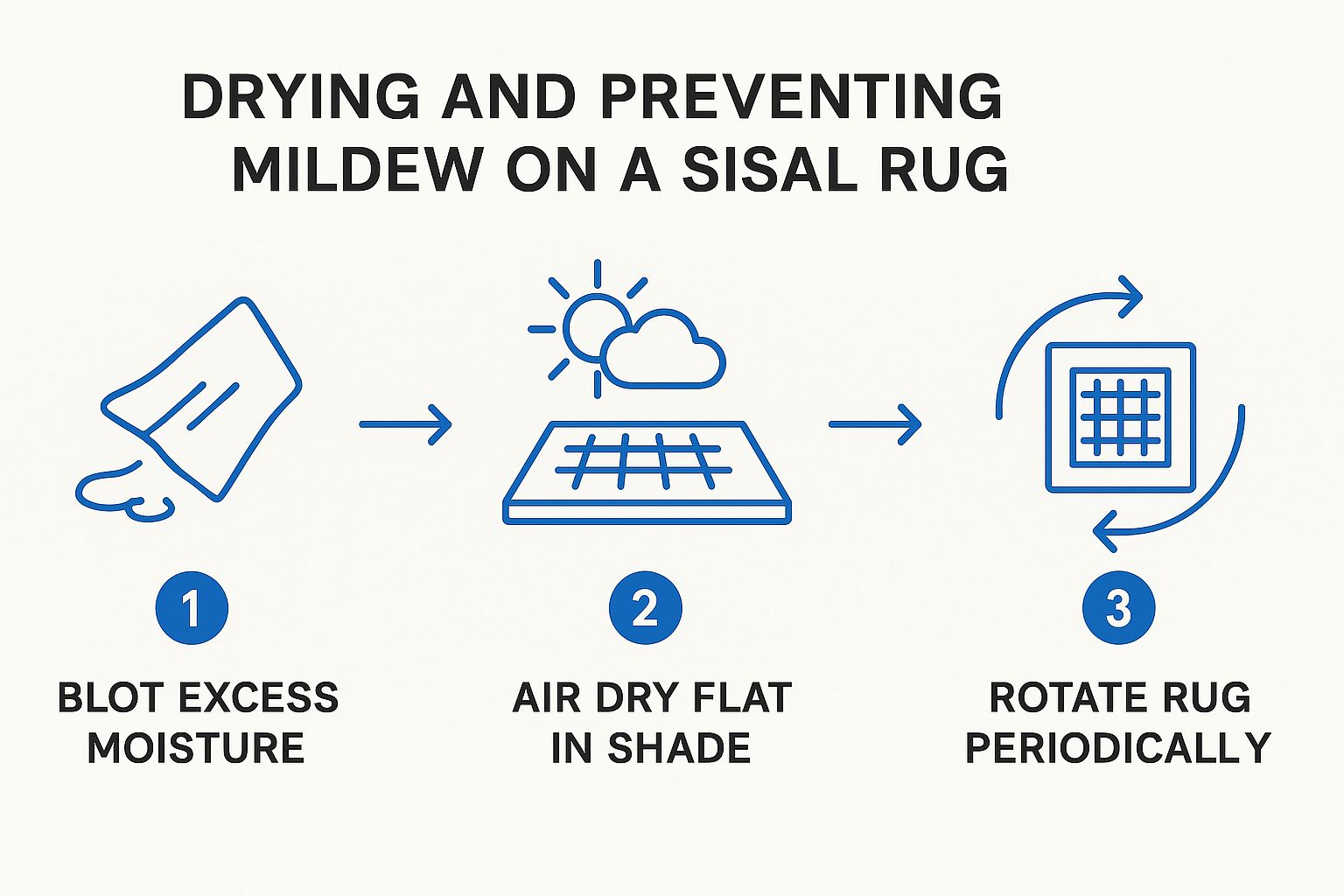
As you can see, immediate blotting, shaded air drying, and rotating the rug are essential to prevent any lasting watermarks or mildew.
The Final Vacuum and Results
After the powder has worked its magic, the final step is to vacuum it all away. Set your vacuum cleaner to its suction-only setting and move slowly and methodically across the entire rug. You’ll probably need to go over each area several times to be certain all the powder, and the dirt it has absorbed, is completely gone.
The result? A noticeably brighter and fresher-smelling rug, all achieved without a single drop of water. This completely removes the risk of shrinkage, mould, or those notorious watermarks that can ruin sisal. It’s a technique widely endorsed by experts for good reason; professional services across the UK often use systems that avoid water to prevent damage. Plus, the rug can be used straight after cleaning.
The real beauty of a dry-cleaning powder is its ability to deliver a deep clean with zero risk. It lifts out accumulated grime and revitalises the rug’s appearance safely and effectively, making it the best choice for an all-over refresh.
This method really is the cornerstone of responsible sisal maintenance. For more in-depth advice, our complete article on how to clean a sisal rug provides even more tips for keeping your natural fibre flooring in perfect condition.
Your Top Sisal Cleaning Questions Answered
https://www.youtube.com/embed/fn-by9j6v-k
Even with the most careful planning, looking after a sisal rug can throw a few curveballs your way. I get it. Below, I’ve pulled together some of the most common questions we hear from homeowners across the UK, with clear, practical answers to help you handle anything that comes up.
Can I Ever Use Water on My Sisal Rug?
This is the big one, and the honest answer is almost always no. Think of water as the absolute last resort, only for the smallest, most stubborn of marks.
Sisal fibres are like a sponge—they soak up moisture instantly and are incredibly prone to 'watermarking'. This leaves a permanent dark ring around the damp spot that you just can't get out. Water also makes the fibres shrink and warp, leaving them feeling brittle and rough once they finally dry.
If you are backed into a corner and have to use a liquid, it must be a 50/50 mix of white vinegar and water. Apply it with a barely damp cloth, using the absolute minimum amount possible. Crucially, you must dry the area straight away with a hairdryer on its cool setting.
What Should I Do About a Musty Odour?
That musty, damp smell is a huge red flag for trapped moisture. It’s a sign that mould or mildew could be just around the corner.
Your first job is to get that rug bone dry. If you get a dry, sunny day, take it outside and let it air out for several hours. I always recommend placing it face down first so the backing gets a chance to breathe properly.
If the British weather isn't cooperating, set up some fans or a dehumidifier in the room to pull the moisture out of the air and the rug fibres. For a smell that just won't quit, bicarbonate of soda is your best friend.
Sprinkle a liberal amount of bicarbonate of soda all over the rug. Leave it to work its magic for a few hours, or even overnight if you can, and then vacuum it all up thoroughly. It’s a brilliant natural deodoriser that soaks up odours without adding any risky moisture.
It’s a simple, completely dry technique that works wonders for refreshing your rug.
Is It Safe to Use a Carpet Shampooer?
Absolutely not. Please, don't do it. Using a wet carpet shampooer or a steam cleaner on a sisal rug is one of the fastest ways to ruin it for good. The intense heat and sheer volume of water will cause serious shrinkage, curling at the edges, and massive water stains.
The natural fibres will completely lose their texture and strength, quickly becoming weak and frayed. Professional cleaners across the UK are all in agreement on this: these methods are out. The only safe options are suction-only vacuuming and specialised dry-cleaning powders designed for natural fibres.
How Can I Protect My New Rug from Future Stains?
With sisal, an ounce of prevention is truly worth a pound of cure. Many retailers will offer a stain-inhibitor treatment, like SisalGuard, which can be applied before the rug even leaves the shop. This treatment creates an invisible barrier that helps repel liquids, buying you precious time to blot up spills before they set in.
If your rug didn't come pre-treated, you can buy and apply these products yourself. However, it's absolutely vital to test the spray on a small, hidden spot first—under a sofa, for example—to make sure it doesn’t affect the rug’s colour or texture.
Beyond treatments, a few simple habits can make a world of difference:
- Use Doormats: A good quality doormat at every entrance will trap the worst of the dirt, mud, and moisture before it ever gets near your sisal.
- Strategic Placement: If you’re really worried about spills (and have kids or pets), consider placing your sisal rug in a lower-traffic area. It might be happier in a bedroom than right under the dining room table.
For professional help with stubborn stains or a deep clean for any type of rug or carpet, the certified technicians at AG Carpet Specialists are here to help. Using eco-friendly products and advanced techniques, we safely restore the beauty of your floors. Contact us today for a free quotation and see the difference our expert care can make.