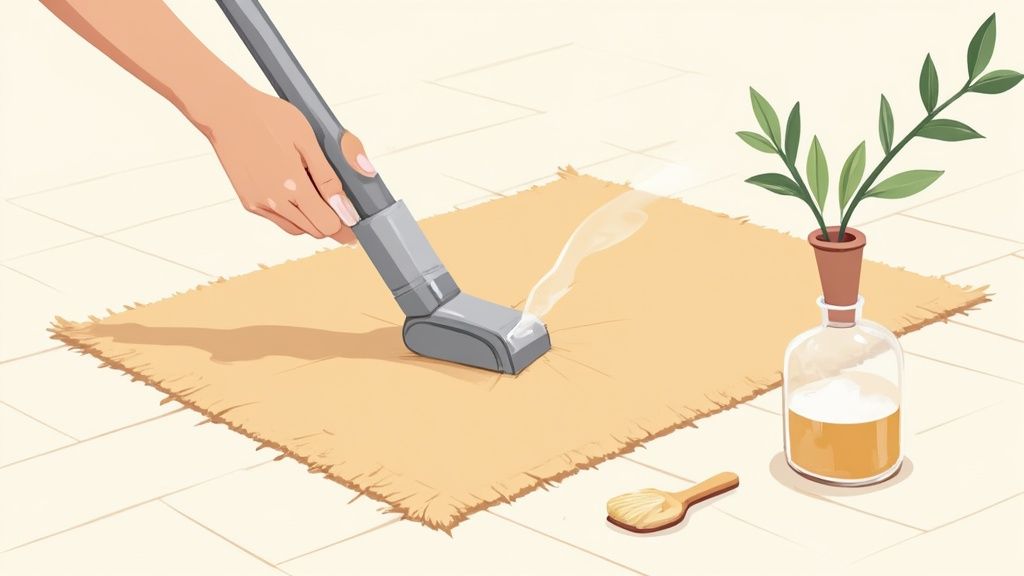
If you're wondering how to clean a sisal rug, there's one golden rule that trumps all others: use as little water as possible, or better yet, none at all. Unlike their synthetic counterparts, these beautiful natural plant fibres are incredibly absorbent. Get them too wet, and you’re looking at permanent damage, often in the form of ugly browning or water stains.
Why Sisal Rugs Need Special Care
Before you even think about grabbing a standard carpet cleaner and a damp cloth, you need to understand what makes sisal unique. Its fibres act like a dry sponge. The second any liquid makes contact, the fibres soak it up, swell, and often release their natural tannins. These are plant compounds that create a very distinct brown or yellowish stain that’s almost impossible to remove.
This sensitivity is just part of the material's character. Here in the UK, cleaning a sisal rug properly means respecting its natural composition. These durable, eco-friendly rugs come from the Agave sisalana plant and are prized for their rustic texture, but they absolutely must be kept dry to prevent swelling, shrinking, or permanent staining. You can learn more about the UK area rug market and its popular materials to see how natural fibres fit in.
I learned this lesson the hard way after a small coffee spill. My first instinct was to grab a wet cloth and start scrubbing. Big mistake. It just made the stain bigger and darker. The water not only spread the coffee but also pulled out the rug's own tannins, leaving a permanent, tell-tale ring. It’s a very common error that can turn a tiny accident into a major headache.
The Science Behind Sisal and Water
The problem goes beyond simple staining. When sisal fibres get soaked, they expand and then shrink unevenly as they dry out. This process can cause the entire rug to warp or buckle, ruining its flat, neat appearance for good. The very same tight weave that gives sisal its renowned strength becomes a major weakness when saturated with liquid.
Key Takeaway: The best way to think about sisal care is to treat it more like a wooden floor than a fabric carpet. You wouldn't soak your hardwood floors to clean them, and the same logic applies here. A "dry-first" approach is always your safest bet.
To look after your rug and keep its natural beauty intact, you have to shift your mindset away from conventional wet-cleaning methods. Your go-to tools should be suction, blotting, and dry absorbent powders. This guide is built on those principles to help you sidestep those common, costly mistakes.
To help you get started, here is a quick-reference table to master the basics of sisal rug care.
Sisal Rug Care At a Glance Dos and Don'ts
| Action | Why It Matters | Recommended Frequency |
|---|---|---|
| Vacuum with a suction-only head | Prevents the beater bar from fraying or damaging the natural fibres. | 1-2 times weekly |
| Blot spills immediately | Absorbs liquid before it soaks in and causes stains or fibre damage. | As needed |
| Rotate the rug | Ensures even wear and sun exposure, preventing fading in one area. | Every 6-12 months |
| Use a dry-cleaning powder | Safely lifts dirt and odours without the risk of water damage. | For deep cleaning as needed |
| Never steam clean or shampoo | Water saturation will cause permanent browning, warping, and shrinking. | Never |
| Avoid scrubbing spills | Rubbing pushes the stain deeper and can break down the rug's fibres. | Never |
Following these simple rules is the most effective way to protect your investment and keep your sisal rug looking fantastic for years.
Your Essential Prep for a Damage-Free Clean
Before a single drop of cleaner touches your rug, a little bit of prep work goes a very long way. It's tempting to jump straight into tackling a stain, but that's often a recipe for disappointment. I've found that successfully cleaning a sisal rug is almost entirely dependent on what you do before you start working on the actual grime or spill.
These preparatory steps aren't just suggestions; they’re essential for protecting the delicate natural fibres. Getting this right ensures your efforts lead to a refreshed rug, not a damaged one.
First Things First: The Right Vacuuming Technique
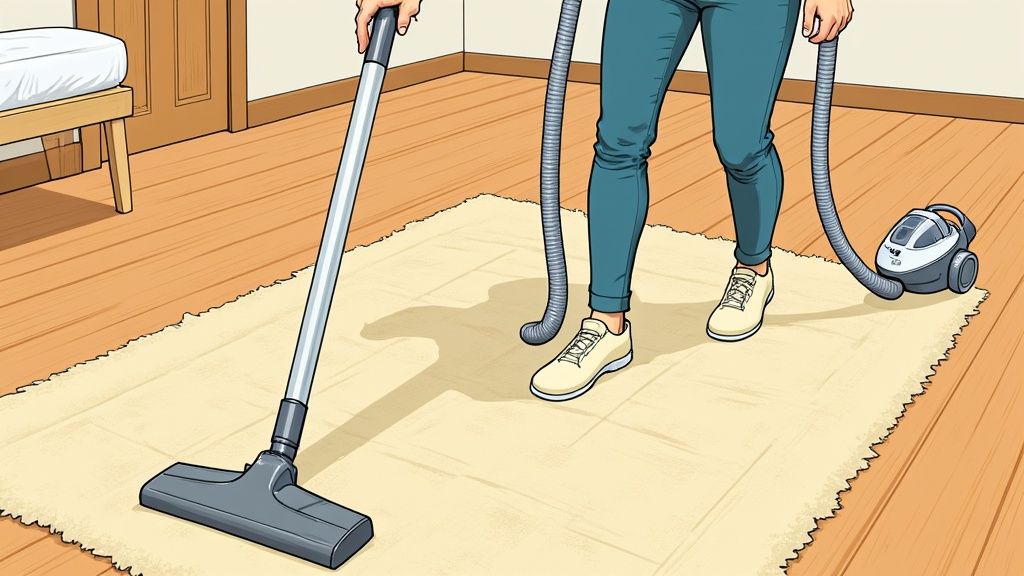
Your initial step should always be a thorough vacuuming. But how you vacuum is critical. The single most important rule is to turn off or disengage the beater bar. A spinning brush is far too aggressive for sisal's woven texture and will quickly cause the fibres to fray, snag, or fuzz.
Instead, switch to a suction-only attachment, like an upholstery brush or a bare floor head. Go over the entire rug several times, moving in different directions—first along the weave, then against it. This helps lift as much trapped dirt and grit as possible and prevents you from turning loose soil into mud during the cleaning phase.
Create the Perfect Workspace
Once the loose debris is gone, think about where you're working. This might seem like a small detail, but it's crucial for preventing one of sisal’s biggest enemies: mildew. Always try to work in a well-ventilated space.
I learned this the hard way with a small rug in a stuffy hallway. Even with minimal moisture, the lack of airflow meant it took ages to dry and developed a faint, musty smell. Now, I always open a window or, if possible, move the rug to a room where I can use a fan to keep the air moving. This simple adjustment dramatically cuts down drying time and stops mould in its tracks.
For more in-depth guidance on this, our specialists have shared their insights on how to clean sisal carpets effectively, reinforcing the importance of a proper setup.
The All-Important Patch Test
Finally, before you apply any cleaning solution—even a trusted eco-friendly one—you must perform a patch test. Sisal dyes can be unpredictable and are prone to bleeding or discolouration when moisture is introduced.
Pro Tip: Always test your cleaning solution on an inconspicuous area of the rug first. Choose a spot that's usually hidden, like underneath a sofa or in a discreet corner.
Here's how to do the test:
- Apply a tiny amount of your chosen cleaner to a clean, white cloth.
- Gently dab the hidden spot on the rug. Do not rub.
- Wait a few minutes, then blot the area with a fresh, dry part of the cloth.
- Check both the cloth and the rug for any signs of colour transfer or browning.
If you see no change, you can proceed with confidence. Mastering these simple preparations is your best insurance policy against accidentally ruining the beautiful, natural look of your sisal rug.
How to Tackle Spills and Stains Instantly
When an accident happens on your beautiful sisal rug, your immediate response is absolutely everything. Unlike a forgiving synthetic carpet, sisal gives you a very narrow window to act before a simple spill becomes a permanent stain. Think of it as an emergency plan where every second really does count.
The key is to act quickly but calmly. It doesn't matter if it's a splash of red wine during a party or a muddy paw print from a rainy walk; the core principles for cleaning a sisal rug are the same: use minimal moisture and, whatever you do, don't rub.
The First, Crucial Moments After a Spill
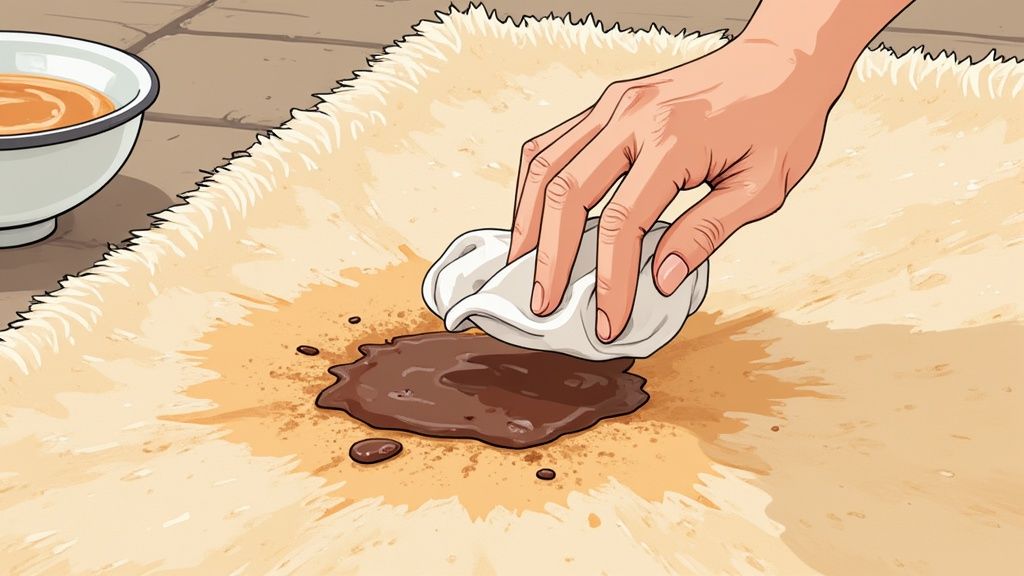
Your number one goal is absorption. For any liquid spill—be it coffee, juice, or wine—you need to grab a clean, dry, and highly absorbent cloth. A thick wad of paper towels works well, too. I always recommend using a plain white cloth, as it guarantees no dye will transfer from the cloth onto your rug.
Press the cloth firmly down onto the spill, letting it soak up as much liquid as it can. You must blot, never rub or scrub. I can't stress this enough. Rubbing will only force the liquid deeper into those natural fibres, which worsens the stain and can even damage the rug's delicate weave. Keep replacing the cloth with a fresh, dry one as it gets saturated, and continue blotting until you can't lift any more moisture out.
What about more solid or semi-solid messes like mud, dropped food, or a pet accident? The approach is slightly different. First, gently scrape off any excess solids using something dull, like a spatula, a spoon, or even the edge of a credit card. Always work from the outside of the spill inwards to avoid making it bigger.
Crucial Insight: Sisal’s natural absorbency is both its weakness and your advantage in that first minute. Quick, effective blotting can lift an astonishing amount of liquid before the fibres truly soak it in and release their browning tannins.
Creating Your Go-To Cleaning Solution
Once you've blotted up the excess, you can start tackling what's left. Put those harsh chemical cleaners back under the sink. A simple, eco-friendly solution is nearly always more effective and much safer for your sisal.
A fantastic, gentle option is a simple mix of equal parts white vinegar and water. Another reliable choice is a few drops of mild, clear washing-up liquid dissolved in a small bowl of lukewarm water. The trick, no matter what you use, is to use as little liquid as possible.
Here’s how to apply it with control:
- Lightly dampen a clean, white cloth with your chosen solution. The cloth should feel damp, not wet.
- Gently blot the stained area, starting from the edges and working towards the centre.
- Don't oversaturate the fibres. Your goal is to lift the stain, not soak the entire rug through.
- After blotting with the cleaning solution, take a separate clean cloth dampened with only plain water and blot again. This helps "rinse" away any residue.
- Finally, grab a completely dry cloth and blot the spot one last time, absorbing as much of the remaining moisture as you possibly can.
These blotting methods are quite universal across different carpet types. For those interested in general textile care, exploring broader carpet cleaning tips can provide an excellent foundation.
Once you’re done, point a fan at the damp spot or use a hairdryer on a cool setting to speed up drying. This is a vital final step to prevent those notorious water marks from forming.
A Gentle Deep Cleaning Method That Actually Works
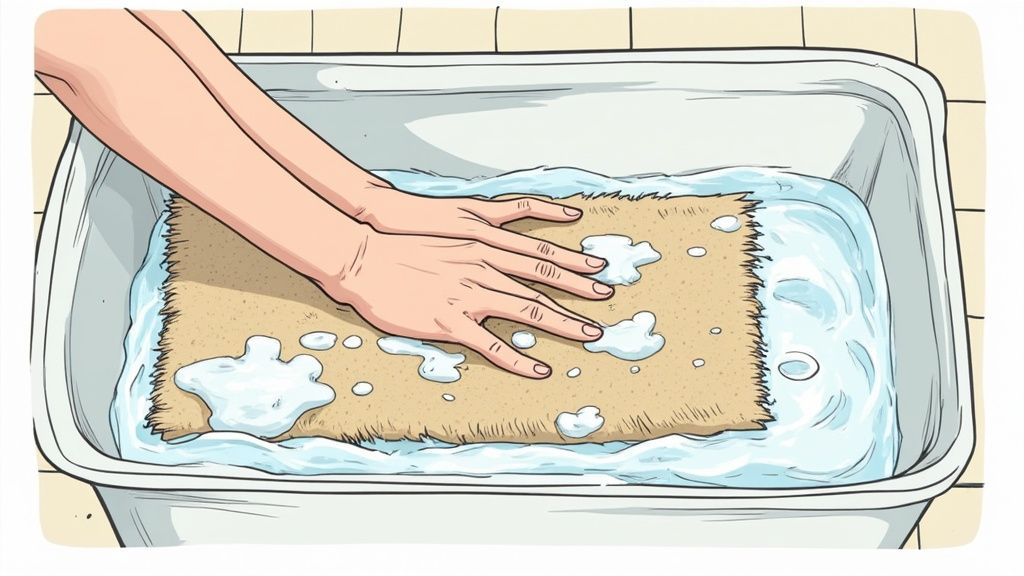
When your entire rug starts looking a bit tired and a simple spot treatment just won't cut it, it’s time for a gentle deep clean. For a sisal rug, this means you need to forget everything you might know about traditional carpet cleaning. Powerful steamers, wet shampooers, and buckets of soapy water are completely off-limits; they will cause irreversible damage.
Instead, the safest and most effective way to refresh your rug is with a 'dry clean' method at home, using a specially formulated absorbent powder. This is the professional’s choice for lifting away the general, built-up grime and dust that accumulates over time. Think of it less like washing and more like using a powerful sponge to soak up dirt from deep within the rug's natural weave.
Choosing the Right Dry-Cleaning Powder
The success of this process hinges on using an absorbent compound specifically designed for natural fibres. These aren't just any powders; they are essentially micro-sponges engineered to attract and absorb oily residues and embedded dirt without using moisture.
When shopping, look for products explicitly labelled as safe for sisal, jute, or other natural fibres. Many high-quality options are eco-friendly and plant-based, which we always recommend. These powders work by breaking down grime without any liquid, ensuring your rug's fibres stay completely dry. This is crucial for preventing the browning, water stains, and warping that are so common when wet methods are used on sisal.
The Dry-Cleaning Process Explained
The method itself is straightforward, but a little patience is required to get it right.
- First, a thorough vacuum: Start by giving your rug a good vacuuming with a suction-only head to lift all loose surface dirt.
- Apply the powder: Liberally sprinkle the dry-cleaning powder evenly across the entire surface of the rug. Don't be shy with it – you want a consistent layer covering every inch.
- Work it in: Using a soft-bristled brush, gently work the powder into the weave. Move the brush in different directions (up and down, side to side) to ensure the powder penetrates deep into the fibres where dirt likes to hide. The goal here is gentle agitation, not aggressive scrubbing.
Let the powder sit for the manufacturer's recommended time, which is usually between 30 minutes and an hour. This dwell time is critical, as it allows the absorbent particles to do their job and bond with the dirt and oils.
Once the time is up, vacuum the rug thoroughly once more, again using your suction-only attachment. Go over the rug several times from multiple directions to ensure you've removed all the powder and the dirt it has trapped. You should find your rug looks noticeably brighter and feels much fresher.
The image below illustrates a similar moisture-avoidant principle for drying your rug after a minor spot clean, highlighting the importance of airflow and patience—two key themes in all sisal care.
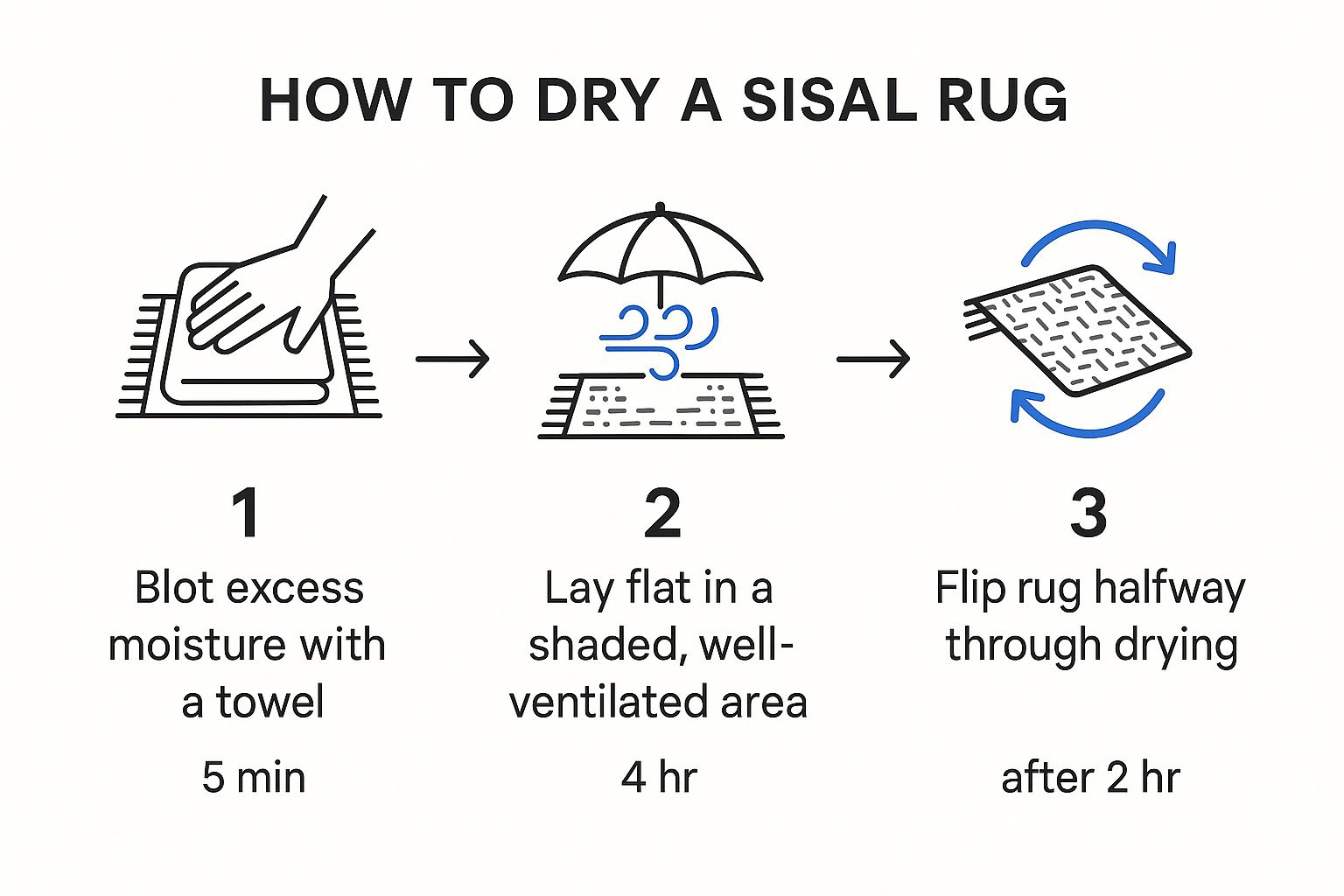
Just as the graphic shows, managing moisture and promoting airflow are fundamental, whether you're dealing with a small spill or carrying out a full deep clean.
Drying and Maintaining Your Clean Sisal Rug
So, you’ve sorted out the spill. Now comes the most important part of the entire process: drying. I can't stress this enough – getting this stage right is absolutely non-negotiable when you clean a sisal rug. Even a hint of leftover moisture can cause permanent browning, invite mildew, or even warp the fibres beyond repair.
Your best friend here is good old-fashioned air circulation. As soon as you've finished blotting a cleaned area, you need to do everything you can to get it dry. A simple household fan pointed directly at the damp patch is a brilliant start. If you happen to have a dehumidifier, even better. Pop it next to the rug and let it work its magic, pulling moisture from the air and the rug itself.
Critical Drying Mistakes to Avoid
There's a common temptation to grab a hairdryer to speed things up, but this can be a disaster for your rug. Never use a hairdryer on a hot setting, a heat gun, or try to dry the rug next to a radiator. That kind of intense, direct heat will scorch the natural fibres, leaving them brittle and permanently discoloured. A cool setting on a hairdryer, held at a good distance, is okay in a pinch, but honestly, powerful air circulation is always the safer bet.
Expert Insight: Proper drying isn't just about avoiding a new stain; it's about protecting the rug's structure. When a rug dries quickly and evenly, it stops the individual fibres from shrinking at different speeds, which is what causes that awful buckling or warping you sometimes see.
Shifting to Long-Term Maintenance
Looking after a sisal rug is about more than just damage control after a spill. A few simple, proactive habits are what will truly extend the life and beauty of your investment, keeping it looking fantastic for years to come.
These easy maintenance routines really do make all the difference:
- Rotate Your Rug: Every six to twelve months, give your rug a 180-degree turn. This simple trick ensures that foot traffic and any sunlight exposure are spread out evenly, preventing one area from wearing out or fading faster than the rest.
- Use Furniture Pads: Heavy furniture is the enemy of a woven rug. It can easily crush and create permanent dents in the sisal. Popping protective pads or coasters under the legs of sofas, coffee tables, and chairs helps to distribute the weight and save the fibres.
- Embrace Regular Vacuuming: Get into a consistent vacuuming routine, but make sure you use a suction-only attachment. This stops abrasive dirt and grit from getting ground deep into the weave, where it acts like sandpaper and slowly breaks down the fibres from within.
Understanding how long different materials need to dry is a key part of proper care. For a deeper dive on this topic, you can learn more about how long carpet takes to dry in our dedicated guide.
Knowing When to Call a Professional
While the DIY methods we've covered are brilliant for day-to-day upkeep and tackling those small, heart-stopping spills, there comes a point where even the most dedicated owner needs to bring in the experts. Knowing your limits is the key to protecting your beautiful sisal rug. If you’re dealing with a major liquid disaster, a stain that just won’t budge, or the first hint of mildew, it’s time to pick up the phone.
Honestly, trying to tackle a serious issue yourself—like a pet accident that’s soaked through or a full glass of red wine—can often do more harm than good. You risk pushing the stain deeper into the fibres or, worse, causing that dreaded browning by using too much liquid. A true professional has specialised, low-moisture extraction gear and cleaning solutions designed specifically for natural fibres. They can often save a rug you might have already written off.
Finding the Right Expert
Here’s a crucial tip: not all carpet cleaners are created equal, especially when it comes to sisal. When you’re vetting potential companies, be upfront. Ask them directly if they have proven experience with natural fibre rugs like sisal.
You need a company that uses a dry-cleaning process. If they mention steam cleaning or hot water extraction, it's an immediate red flag. Thank them for their time and move on. Those methods are fantastic for synthetics but spell disaster for sisal.
A recent report actually showed that 30% of sisal rug owners in the UK now invest in professional cleaning every year. They understand just how sensitive these fibres are to water and stubborn stains. These specialist services rely on dry compounds, careful vacuuming, and protective treatments to get the job done right.
Key Investment: Try to think of professional cleaning not just as an expense, but as a savvy investment in your home. For a valuable piece like a sisal rug, expert help prevents permanent damage and can massively extend its life, saving you a small fortune in the long run.
The process of choosing a good rug cleaner isn't so different from other home services. It’s a great skill to have, and you can find some excellent general advice on finding trusted professional services to help you. Once you’ve booked them, it’s also a good idea to know how to prepare for professional carpet cleaning; a little prep work ensures they can get straight to it and deliver the best results.
Frequently Asked Questions About Sisal Rug Care
Even with the best guides, it’s completely normal to have a few specific questions pop up when you're dealing with how to clean a sisal rug. The unique character of these natural fibres means they don’t always behave like standard carpets, leading to practical questions that need clear answers. We’ve pulled together some of the most common queries we get, so you can look after your rug with complete confidence.
Sisal is loved for its incredible durability, but let's be honest, it's not known for its softness. While you can't change the rug's inherent texture, placing a high-quality, thick rug pad underneath can make a world of difference. It adds a surprising amount of cushioning underfoot, boosting comfort without changing the rug’s classic, rustic look.
Can I Use a Steam Cleaner on Sisal?
In a word: no. Steam cleaning is one of the absolute worst things you can do to a sisal rug. The intense combination of high heat and excessive moisture is a surefire way to cause permanent, irreversible damage.
The steam will instantly saturate the plant fibres, forcing them to swell up and release their natural tannins. This process, known as 'cellulose browning', results in large, unsightly brown or yellow water stains that cannot be removed. On top of that, the fibres will almost certainly shrink unevenly as they dry, causing the rug to warp and buckle, ruining its flat, neat appearance for good.
Key Reminder: When it comes to cleaning sisal, dry or near-dry methods are your only safe bet. Stick to absorbent powders for a deeper clean and immediate, careful blotting with minimal moisture for any spills.
How Do I Handle Pet Odours?
We get this question a lot. Pet accidents happen, and the lingering smells can be particularly stubborn in natural fibres. For urine, the most critical first step is to blot, blot, and blot again to absorb as much of the liquid as you possibly can.
Once you’ve blotted thoroughly, you can tackle the odour with a simple solution of equal parts white vinegar and water. Vinegar is fantastic for neutralising the ammonia in urine, which is what causes that sharp, unpleasant smell.
- Lightly dampen a clean, white cloth with your vinegar solution.
- Carefully blot the affected area—don’t rub!
- Follow up by blotting with a different cloth dampened with plain water to rinse.
- Finally, dry the spot completely, using a fan or hairdryer on a cool setting to speed things up.
For more persistent problems or older stains, our guide on tackling pet urine in carpets has more advanced techniques that could be very helpful.
Is It Possible to Soften a Sisal Rug?
Unfortunately, the coarse, slightly scratchy feel is simply part of the sisal fibre's nature. There aren't any conditioning treatments or products that can truly soften it without risking damage to the fibres. Some people find their rug relaxes a tiny bit over many years of foot traffic, but this change is minimal.
If you crave softness but love the look of sisal, layering is your best friend. Try placing a smaller, plush rug—like a wool or soft cotton throw—on top of the sisal in a seating area. This way, you get the best of both worlds: the robust, natural foundation of sisal with a touch of cosy comfort right where you need it most.
If you're facing a stubborn stain or feel your rug just needs a professional touch, AG Carpet Specialists provides expert, low-moisture cleaning services designed for delicate natural fibres. Contact us today for a free quotation and let our team restore the beauty of your sisal rug safely and effectively.